

Why a Convertible Newborn Nest Crib Works in a Small Nursery
A convertible newborn nest crib is a compact sleep system designed to change as your child grows, often moving from a newborn bassinet or cradle setup into a crib, toddler bed, or daybed. For a small space, choose one with a firm, properly fitted mattress, an adjustable mattress height, sturdy hardware, and clear safety compliance for every stage.
It can replace the need to find room for several separate sleep products. That means a calmer nursery layout, less furniture to move later, and one thoughtfully designed piece that can stay useful well beyond the newborn months.
The best options balance this flexibility with non-negotiable safe-sleep basics: a flat, firm surface; no gaps around the mattress; and no loose pillows, nests, bumpers, or soft bedding inside the crib during sleep. Look for durable natural wood, low-emission finishes, and certifications such as GREENGUARD Gold, JPMA, or documented compliance with applicable CPSC and ASTM requirements. For fabric accessories used outside the sleep space, OEKO-TEX certified materials offer an added chemical-safety signal.
CocoMi Baby Boutique was created by parents who wanted beautiful, safe, and thoughtfully designed baby products that combine style, comfort, and practicality. Our handcrafted baby essentials use natural, chemical-free materials and European-quality craftsmanship, helping parents evaluate how a convertible newborn nest crib can fit into a safe, elegant, space-conscious nursery.
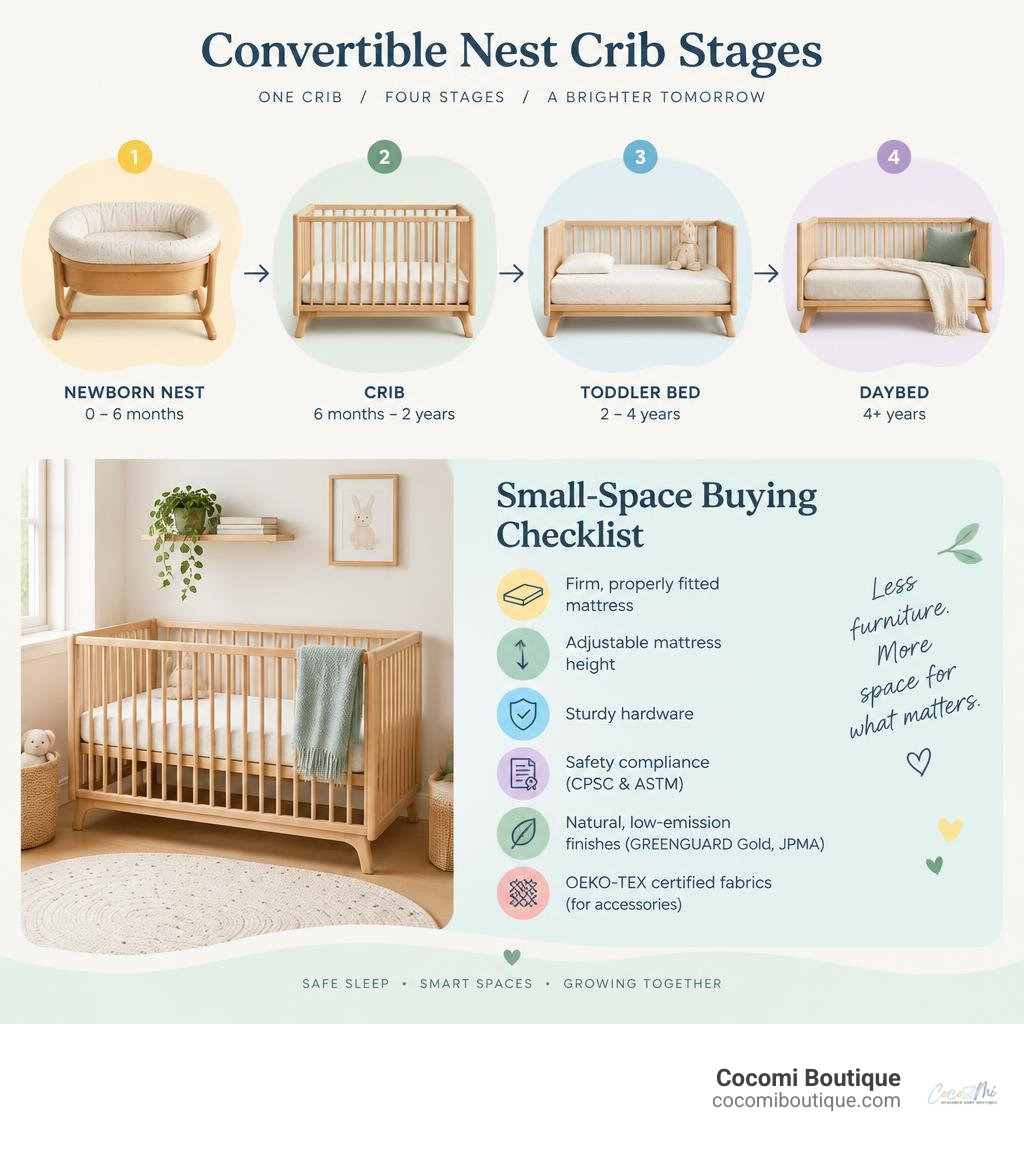
Convertible newborn nest crib basics:
For broader safety guidance, the CDC Safe Sleep recommendations provide helpful evidence-based standards for creating a secure infant sleep environment.
Understanding the Convertible Newborn Nest Crib and Multi-Stage Design
When setting up a cozy nursery in a compact apartment or shared bedroom, bulky furniture can quickly overwhelm the room. A multi-stage sleep system changes the entire dynamic. Instead of purchasing a succession of separate baby beds, these modular systems start with an intimate, nest-like sleeping environment for a newborn and expand across multiple configurations as your child gains independence.
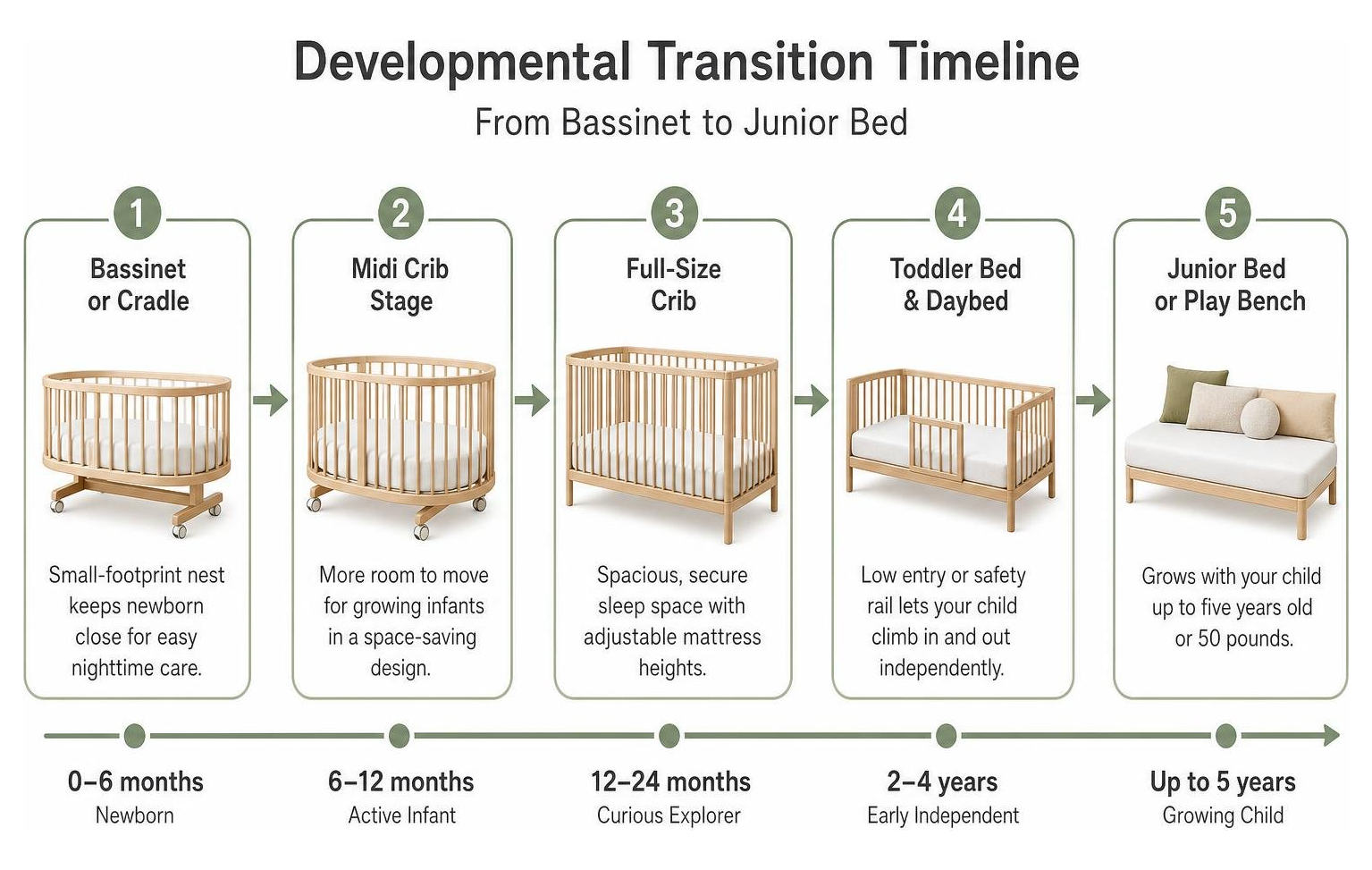
Modern multi-stage designs use thoughtful engineering to transform through several key milestones:
- Bassinet or Cradle Mode: A small-footprint nest setup that keeps your newborn close to your bedside, making middle-of-the-night feeds and soothing effortless.
- Midi Crib Stage: An intermediate size that offers more rolling space for active infants while saving floor area compared to standard full-size frames.
- Full-Size Crib: A spacious, secure sleep sanctuary featuring adjustable mattress heights to protect curious babies as they learn to sit and stand.
- Toddler Bed & Daybed: With a toddler safety rail or low side opening, your child can safely climb in and out on their own schedule.
- Junior Bed or Play Bench: Many heirloom builds convert into a mini sofa or extended junior bed, accommodating children up to five years old or 50 pounds.
To understand how dedicated loungers and sleep stations fit alongside structured furniture, parents often reference The Complete Guide to Baby Nests. Investing in a versatile modular crib constructed from solid woods like renewable beech or sustainable New Zealand pine gives your nursery an enduring centerpiece that adapts to every milestone.
5 Key Reasons Parents Choose Convertible Nest Designs for Small Spaces
Parents navigating small-space living quickly realize that nursery planning is about intentional curation. A versatile nest crib eliminates clutter while providing a dedicated, secure haven for your baby. Here is why modern families embrace this all-in-one approach.
1. Seamless All-in-One Growth from Bassinet to Toddler Bed
Traditional baby setups require buying a standalone bassinet, disassembling it after five months, storing it, and then assembling a large standard crib. A convertible nest crib simplifies that transition by using integrated conversion components.
During the first several months, the smaller bassinet or midi cradle creates a cozy, enclosed feel reminiscent of the womb. When your little one outgrows the bassinet dimensions or starts rolling over, you simply expand the frame into a midi or full-size crib using the included hardware. Later, the lower frame converts into a child-accessible daybed.
This consistent sleep environment provides psychological comfort. Your child stays familiar with their sleep surroundings, easing the developmental leap from a secure infant crib to a toddler bed.
2. Space-Saving Footprint Ideal for Compact Nurseries
In urban lofts, historical townhomes, or cozy master bedrooms, every square foot counts. Standard cribs take up considerable real estate—often around 54 inches in length and 30 inches in width from day one. A convertible nest crib allows you to utilize a much smaller footprint during the first 6 to 12 months.
| Sleep Setup Option | Typical Dimensions (L x W) | Floor Space Occupied | Usable Lifespan | Portability & Flexibility |
|---|---|---|---|---|
| Standalone Bassinet | ~33" x 20" | ~4.5 sq. ft. | 0 to 5 months | High, but quickly outgrown |
| Standard Traditional Crib | ~54" x 30" | ~11.2 sq. ft. | 0 to 24 months | Stationary, takes maximum room |
| Convertible Nest Crib (Multi-Stage) | 34" x 25" (Stage 1) -> 54" x 30" (Stage 4) | ~5.9 sq. ft. expanding to ~11.2 sq. ft. | 0 to 5+ years | Locking caster wheels, scales with room |
Many multi-stage cribs feature removable, locking swivel caster wheels. You can glide the cradle from your bedside directly into a sunlit corner of the living room during morning wakeups, then lock it securely in place.
3. Long-Term Cost Efficiency and Durability
Quality nursery furniture is an investment. Purchasing a standalone bassinet, a standalone crib, and a toddler transition bed separately adds up quickly in retail costs, shipping, and packaging waste.
Choosing a well-engineered convertible nest crib means you make a single furniture purchase built from durable, renewable hardwood. Dense timbers like European beech naturally resist daily dings, scratches, and hardware wear. To decide whether modular resting solutions fit your home layout, exploring is a baby nest worth it helps clarify your day-to-day nursery needs. High-grade joinery and resilient hardware ensure the frame remains rock-solid through years of reconfigurations.
4. Certified Chemical Safety and Non-Toxic Finishes
Newborns spend up to 16 hours a day sleeping, and their developing respiratory systems are sensitive to airborne chemicals. Convertible nest cribs designed for safety undergo rigorous third-party screening.

Look for these essential health and environmental standards:
- GREENGUARD Gold Certification: Screens products for more than 10,000 volatile organic compounds (VOCs) and chemical emissions to protect indoor air quality.
- Non-Toxic, Water-Based Finishes: Lead-safe, phthalate-safe stains and paints ensure that even when teething babies explore the crib rails, their contact surfaces are completely harmless.
- FSC-Certified Hardwoods: Verifies that timber comes from responsibly managed forests.
- OEKO-TEX Certified Textiles: Guarantees that fabric pads, covers, and linings are free of harmful substances, an ethos mirrored in our organic certified newborn nest bedding accessories.
5. Multi-Functional Nursery Styling and Portability
Compact spaces thrive on visual lightness. Heavy, dark, boxed-in crib designs can make a small room feel crowded. Modern convertible nest cribs feature airy spindles, gently arched profiles, and minimalist Scandinavian styling that keep sightlines open and nurseries feeling calm.
Soft neutral tones—such as warm natural washes, ivory, soft creams, and gentle wood grains—blend effortlessly into any decor. When your child transitions to a daybed or play couch, the furniture continues to serve as an elegant seating element in their playroom or bedroom. Discovering design-forward nursery solutions is effortless when you explore beyond the crib to create a harmonious sanctuary.
How to Choose the Best Mattress and Safety Features
A versatile frame requires an equally dependable mattress and proper safety safeguards. Because convertible cribs change shapes, mattress fit and firmness require careful attention.
Selecting the Right Mattress for a Convertible Newborn Nest Crib
Infant safety begins with a completely flat, ultra-firm sleeping surface. Soft cushions or memory foam toppers create suffocation hazards for infants who cannot yet push themselves up.
- Stage-Specific Sizing: Ensure custom bassinet pads (often 1 to 2 inches thick) and midi mattresses sit perfectly flush against the frame. There should be no gap wider than two fingers between the mattress edge and the crib slats.
- Dual-Firmness Crib Mattresses: When expanding to the full-size crib, choose a dual-sided mattress. One side provides the rock-firm density infants need, while the reverse side features a slightly softer layer for toddler comfort.
- Breathable Organic Covers: Pair your mattress with a safe sleep newborn nest philosophy using natural cotton muslin or a breathable infant nest liner to promote continuous airflow and wick moisture during sleep.
Essential Safety Certifications and Build Quality
Always confirm that your convertible crib meets or exceeds mandatory consumer safety benchmarks:
- CPSC & ASTM International Standards: Mandates structural integrity, secure fastener strength, and strict slat spacing (no wider than 2 3/8 inches) to prevent entrapment.
- JPMA (Juvenile Products Manufacturers Association) Seal: Confirms the crib has been tested in independent accredited laboratories for physical stability.
- Adjustable Mattress Heights: Look for at least three to four height settings. Keep the platform high for newborn accessibility, and lower it progressively as your baby learns to sit and stand.
Step-by-Step Maintenance and Assembly Tips
Because a convertible crib undergoes disassembly and reassembly across several years, proper maintenance keeps the structure rigid and safe for its entire lifespan.
Assembling Your Convertible Newborn Nest Crib Safely
- Clear a Soft Workspace: Assemble the furniture over a soft nursery rug or blanket to prevent scratching the wood finish.
- Sort and Label Conversion Hardware: Place conversion brackets, extra bolts, and specialized tools into labeled pouches. Store them in a secure nursery drawer so you can locate them easily years later.
- Align Joints Manually First: Thread all bolts loosely by hand before tightening with tools. This prevents cross-threading and ensures the frame squares up evenly.
- Conduct Regular Safety Audits: Every three months, inspect the frame. Tighten any bolts that have loosened from daily use and check that locking casters remain securely fastened.
- Clean with Gentle Care: Wipe solid wood surfaces with a soft, dry cotton cloth. Avoid abrasive cleaners, bleach, or solvent-based sprays that could degrade non-toxic protective finishes.
Frequently Asked Questions About Convertible Nest Cribs
At what age should you convert from the bassinet stage to the full crib?
Most babies transition out of the bassinet stage between 4 and 6 months of age, or as soon as they reach approximately 15 to 20 pounds. More importantly, observe physical milestones: if your baby begins rolling over, pushing up on hands and knees, or looks cramped against the bassinet sides, it is time to expand to the midi or full crib configuration.
Are convertible nest cribs safe for newborns and infants?
Yes, when used according to standard safe-sleep guidelines. Ensure the crib is assembled with its dedicated, firm, flat mattress pad, and keep the sleep area completely bare—free of loose blankets, pillows, bumper pads, or soft loungers. Always position your baby on their back to sleep.
How do convertible cribs save money compared to traditional setups?
A convertible crib bundles multiple developmental sleep stages into one modular system. Instead of purchasing an independent bassinet, an infant crib, and a separate toddler bed, you invest once in an heirloom piece. With high-grade hardwoods and included conversion components, you gain up to five years of daily utility.
Conclusion
Creating a welcoming, safe, and organized nursery in a small space does not mean compromising on style or quality. A convertible newborn nest crib offers an intelligent blend of compact proportions, chemical safety, and adaptable craftsmanship that evolves alongside your child.
At CocoMi Baby Boutique, we share your passion for natural, beautifully crafted nursery essentials. Founded by parents who understand the need for practical luxury, our boutique curates handcrafted pieces made from chemical-free, OEKO-TEX certified fabrics and sustainable materials. From delicate muslin swaddles to handcrafted Moses baskets, our collection brings gentle comfort to your home. Explore our online boutique and discover more thoughtful nursery inspiration and parent guides to design the perfect peaceful haven for your newborn.