

Find the Right Sleep Sack Medium for Growing Babies

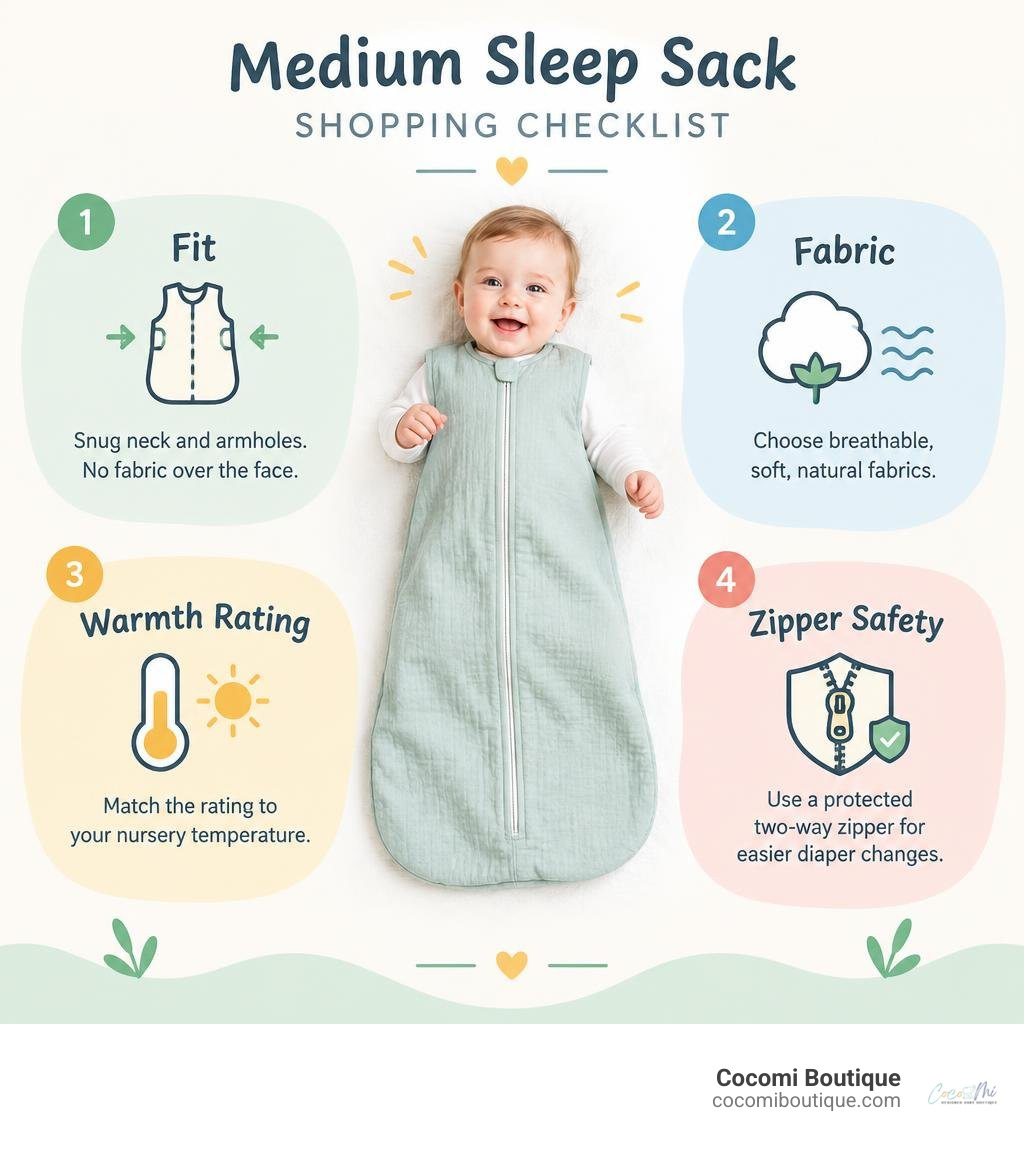
A sleep sack medium is a wearable blanket for babies who have outgrown newborn swaddling and need free arm movement. Choose it by your baby's current weight and length, then confirm that the neck and armholes fit securely enough that the fabric cannot move over the face. Do not size up for future growth.
Medium sizing varies by brand, but it often suits babies around 6 to 12 months. Look for breathable, soft fabrics, a warmth rating that matches the nursery temperature, and practical details such as a protected two-way zipper for easier nighttime diaper changes. A well-fitted sleep sack replaces loose crib blankets while keeping bedtime simple, cozy, and polished.
At CocoMi Baby Boutique, we create thoughtfully made baby essentials with a focus on natural materials, comfort, and European safety standards. In this sleep sack medium roundup, we will help you focus on secure fit, gentle fabrics, and the details that matter for restful nights.
Handy sleep sack medium terms:
Why Choose a Sleep Sack Medium for Safe and Sound Sleep
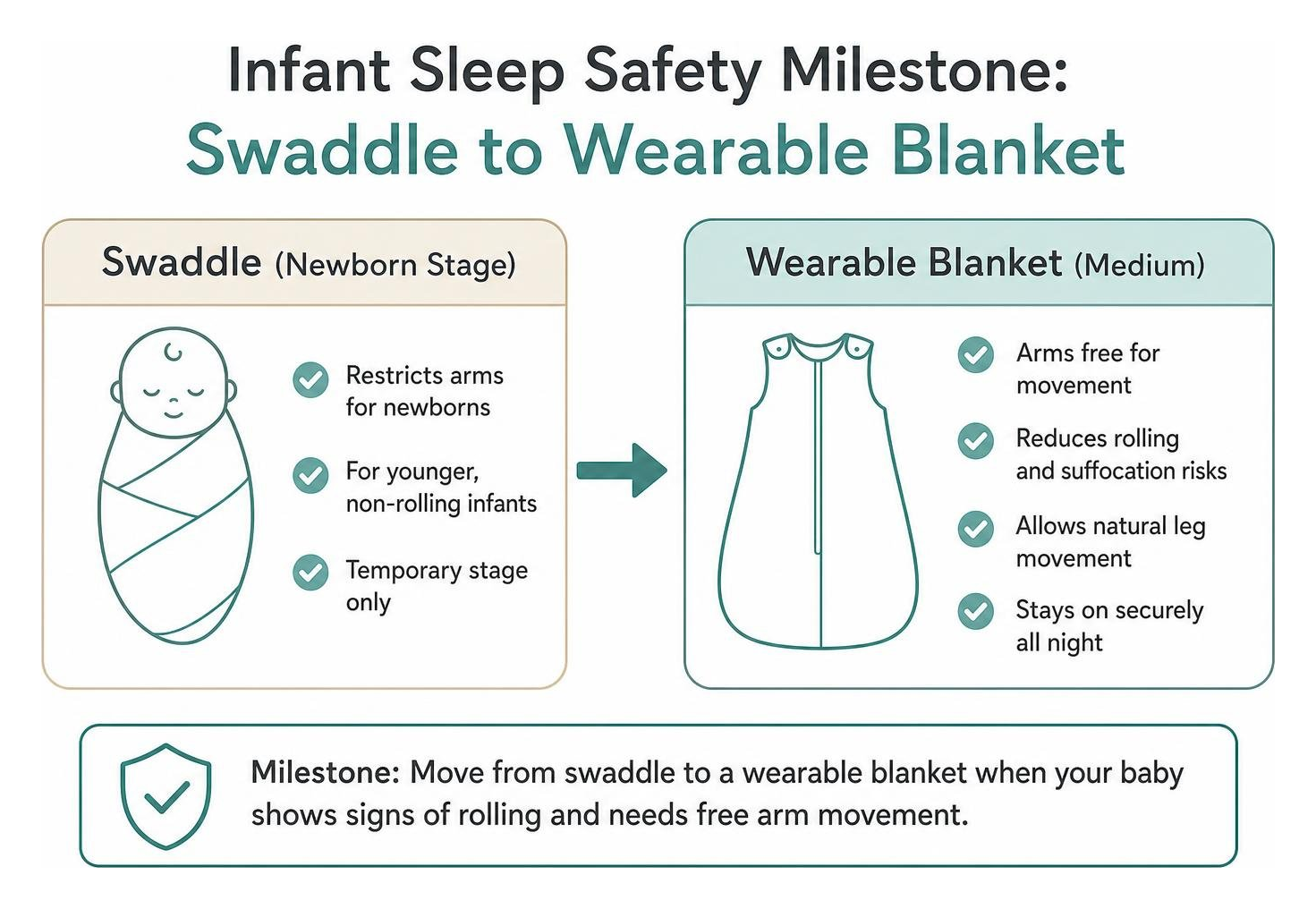
Transitioning an infant out of a swaddle is one of the most critical developmental milestones of the first year. As babies develop greater upper body strength and begin showing signs of rolling over, restricting their arms becomes a safety hazard. This is where an appropriately sized wearable blanket becomes an essential part of the nursery routine.
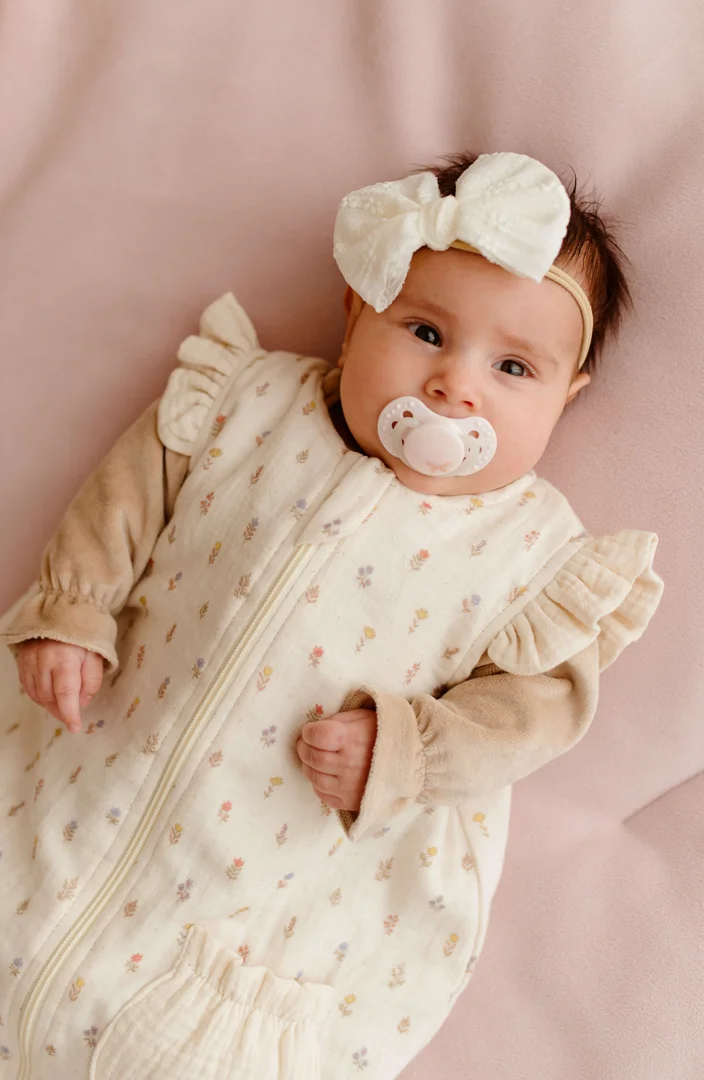
Safe sleep guidelines established by pediatric health authorities, including the American Academy of Pediatrics, emphasize maintaining a clear crib environment free of loose quilts, pillows, and traditional blankets. Loose bedding poses significant suffocation hazards and increases the risk of Sudden Infant Death Syndrome (SIDS). A properly fitted sleep sack for babies stays securely on your baby throughout the night, providing comforting warmth without any fabric rising near the mouth or nose.
Beyond preventing loose bedding risks, a size medium wearable blanket supports healthy physical development. Traditional swaddling or overly tight clothing can restrict leg extension and hip flexion, potentially aggravating hip dysplasia. A quality wearable blanket features a bell-shaped, spacious bottom pouch that allows your infant to freely kick, flex their legs, and rest in the natural "frog-leg" position recommended by orthopedic specialists.
Sizing Guidelines: When to Transition to a Sleep Sack Medium
Knowing precisely when to move up from a small size to a medium prevents both safety risks and disrupted sleep. While age is a helpful general benchmark, your baby’s current weight and standing length are the true indicators of a secure fit.
A size medium is generally tailored for infants weighing between 16 and 24 pounds, typically corresponding to lengths of 26 to 30 inches (roughly 6 to 12 months of age).
| Sleep Sack Size | Typical Age Range | Weight Range (lbs) | Length Range (in) | Primary Fit Checklist |
|---|---|---|---|---|
| Small | 0 – 6 months | 10 – 18 lbs | 23 – 26 in | Snug collar, no arm restriction |
| Medium | 6 – 12 months | 16 – 24 lbs | 26 – 30 in | Two-finger neck clearance, roomy lower pouch |
| Large | 12 – 18 months | 22 – 30 lbs | 30 – 35 in | Secure torso, ample kick room |
| Extra Large | 18 – 36 months | 26 – 36 lbs | 35 – 40 in | Free standing stability, torso security |
When fitting your baby in a medium size, check two critical areas:
- The Neck Opening: Ensure the collar rests flat against the upper chest. You should be able to slide two fingers comfortably between the fabric and your baby's neck. The neckline must never pull upward over the chin.
- The Armholes: The arm openings must fit cleanly around the shoulders without gaping so wide that your infant could pull their arms inside the garment.
Never purchase a larger size with the idea that your baby will "grow into it." Excess fabric around the chest and neckline creates dangerous bunching that compromises safe sleep practices.
Swaddles vs. Wearable Blankets: Key Differences
While swaddles and wearable blankets serve the shared purpose of keeping infants warm and secure, their structural designs support completely different stages of development.
Parents often rely on an organic swaddle sack guide 2026 during the newborn stage to help soothe the natural Moro (startle) reflex. However, once that reflex fades and rolling begins—often around 3 to 5 months—swaddling must cease immediately.
Wearable blankets provide complete freedom for the arms and shoulders. If an infant rolls onto their stomach during the night, free arms allow them to lift their head, push up against the mattress, and reposition their airway safely. This uninhibited movement also encourages gross motor skill progression without sacrificing continuous thermal comfort.
Best Materials and Construction for Infant Sleepwear
Infant skin is delicate and highly permeable, making the choice of textile just as important as the structural design of the garment. When curating bedtime essentials, we prioritize European safety standards, OEKO-TEX Standard 100 certification, and certified organic fabrics.

Textiles bearing strict certifications guarantee that the material has been rigorously tested against hundreds of harmful chemicals, heavy metals, formaldehyde, and toxic dyes. Hypoallergenic natural fibers protect sensitive skin from contact dermatitis, eczema flare-ups, and heat rashes, allowing your baby to sleep peacefully without irritation.
Thoughtful construction details elevate infant sleepwear from basic utility to everyday luxury:
- Two-Way Inverted Zippers: Enable smooth diaper access from the bottom without exposing the baby's chest to cool room air.
- Zipper Guards and Pull Covers: Soft fabric tabs protect delicate neck skin and chins from metallic contact or accidental pinching.
- Interior Seam Bindings: French seams or flatlock stitching prevent rough edges from rubbing against sensitive skin during movement.
Top Fabric Choices for a Sleep Sack Medium
Natural fibers excel at temperature regulation by allowing excess heat to escape while retaining gentle warmth close to the body.
- Multi-Layer Cotton Muslin: Revered for its open weave, lightweight feel, and exceptional breathability. Our luxury muslin baby sleeping bag soft breathable gentle becomes softer with every wash, creating an airy cocoon that prevents nighttime overheating.
- Organic Cotton Knit: Offers a smooth, stretchy hand-feel that moves naturally with active sleepers. For younger infants starting their journey, garments like the baby natural cotton knit sleeping bag soft breathable 0-6m establish that foundation of breathable comfort.
- Natural Bamboo Viscose: Highly moisture-wicking and silky to the touch, making it an excellent choice for warmer climates or babies prone to night sweats.
Understanding TOG Ratings for Year-Round Comfort
Thermal Overall Grade (TOG) measures the thermal resistance and warmth of infant textiles. Selecting the proper TOG rating ensures your baby stays warm without risking overheating, which is a significant factor in infant sleep safety.
- 0.5 TOG (Warm Weather / Summer): Designed for warm room temperatures between 74°F and 78°F (23°C – 26°C). Typically constructed from single- or double-layer muslin.
- 1.0 TOG (All-Season / Standard): Ideal for ambient nursery temperatures between 68°F and 72°F (20°C – 22°C). This versatile rating pairs well with a standard cotton onesie or long-sleeve sleeper.
- 2.5 TOG (Cool Weather / Winter): Crafted for cooler nurseries kept between 61°F and 68°F (16°C – 20°C), featuring gentle thermal padding for cozy winter insulation.
Always assess your nursery's ambient temperature rather than the outdoor weather when choosing bedtime layers. Check your baby's nape of the neck or upper back—it should feel comfortably warm, not damp or hot.
Essential Features and Care Tips for Infant Wearable Blankets
Daily infant essentials require practical durability alongside refined design. High-quality construction ensures that a favorite sleeping sack maintains its shape, softness, and safety features through frequent wash cycles.
To preserve the integrity of premium natural fibers:
- Prepare Before Washing: Close all zippers completely and turn the garment inside out to protect the outer weave and zipper teeth from snagging.
- Wash with Gentle Detergents: Use a plant-based, fragrance-free detergent on a delicate, cold-water cycle to prevent fiber breakdown.
- Dry Naturally or Low: Tumble dry on low heat or lay flat to air dry in the shade. High heat can shrink natural organic cotton fibers and warp zipper tracks.
Transitioning to Next Stages: Sleep Sacks with Legs
As infants transition into toddlerhood and begin pulling up on crib rails, their sleepwear needs evolve once again. For active little ones who crave mobility before bed and upon waking, modern transitional sleepwear offers the ideal solution.
A muslin sleep sack with legs or a cotton sleep sack with legs provides all the safety and warmth of a traditional wearable blanket while allowing free foot movement. Options like our premium cotton toddler sleep sack with legs 1-2 years allow early walkers to safely stand, step, and lounge without tripping on excess fabric.
Frequently Asked Questions About Size Medium Sleep Sacks
How do I know if a size medium sleep sack fits properly?
A proper fit ensures safety and comfort. When zipped up, the collar should rest comfortably below the chin, allowing two adult fingers between the neckline and your baby's neck. The armholes should be snug enough to prevent arms from slipping inside the torso area. The bottom of the sack should provide several inches of extra length so your baby can extend their legs fully without pressing against the fabric.
What age and weight is a medium sleep sack designed for?
Most medium wearable blankets are calibrated for infants between 6 and 12 months of age, weighing approximately 16 to 24 pounds, and measuring 26 to 30 inches in length. Always prioritize weight and length over age when selecting a size, especially during rapid growth spurts.
Can my baby roll over while wearing a medium sleep sack?
Yes. Because size medium wearable blankets feature sleeveless armholes, your baby retains full use of their arms and shoulders. If they roll onto their stomach during sleep, they can easily push up, turn their head, and adjust their position safely.
Conclusion
Creating a tranquil, safe, and restorative sleep space is one of the most rewarding parts of early parenthood. Choosing a high-quality wearable blanket ensures your growing baby experiences peaceful nights wrapped in gentle, breathable comfort.
At CocoMi Baby Boutique, our story began just like yours: as parents searching for baby essentials that were truly safe, chemical-free, elegant, and durable. We handcraft our collections using premium natural textiles certified to strict OEKO-TEX European safety standards. From our boutique in Northbrook, IL, serving families across the greater Chicago area, to our online store delivering nationwide, we are dedicated to supporting your family's most precious milestones.
Explore our curated collection of baby sleeping bags and explore more expert baby care guides to bring handcrafted elegance and peaceful rest into your baby's nursery tonight.