

Introduction

The best swaddle sacks combine ergonomic, hip-healthy designs with breathable organic cotton or muslin, secure two-way zippers, and safe arm containment that calms the startle reflex without restricting development. These structured sleep garments recreate the gentle boundaries of the womb, helping newborns settle into longer, more restful sleep while keeping loose fabric away from the face. In the womb, babies spend months nestled in a warm, confined environment where every movement is met with gentle boundaries. Once born, the world feels vast and unstructured. Newborns possess an active Moro reflex—a sudden, involuntary startle reflex that causes their arms to jerk outward, frequently waking them from deep slumber.
Swaddling recreates that womb-like serenity, soothing infant distress and encouraging continuous, restful sleep. Historical records show that swaddles have been used since 4000 B.C., underscoring a timeless human tradition of wrapping little ones for comfort. In 2026, safe sleep standards emphasize that wearable sleep garments must combine comforting containment with strict developmental safety, preventing loose fabric from covering the face while maintaining optimal airflow.
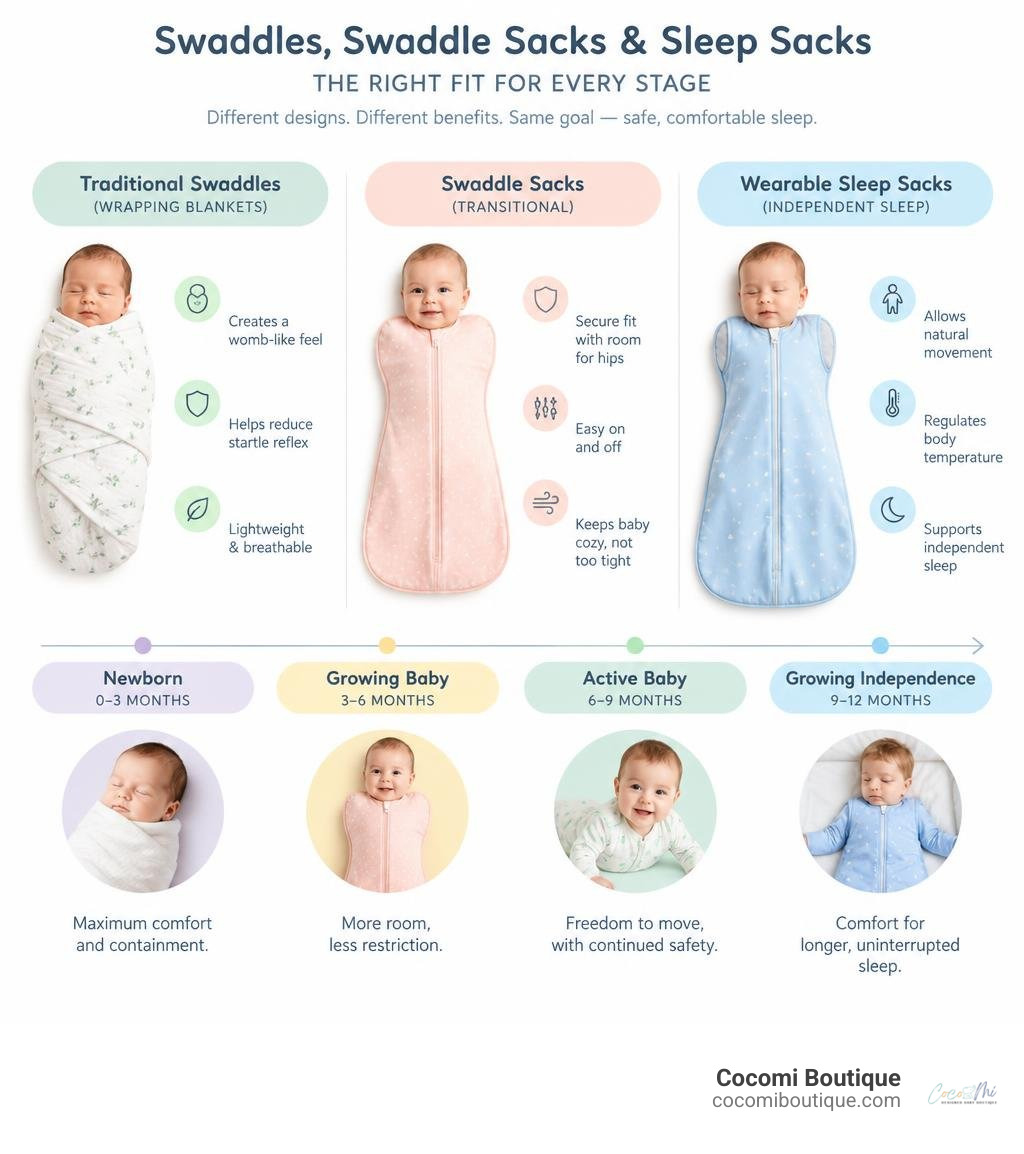
Swaddles vs. Swaddle Sacks vs. Sleep Sacks: Understanding the Differences
Navigating baby sleepwear can feel overwhelming when faced with dozens of product descriptions. While the terms are sometimes used interchangeably, traditional swaddles, structured swaddle sacks, and wearable sleep sacks serve distinct developmental purposes across an infant's first year of life.
Parents exploring traditional wrapping can refer to our swaddling blanket complete guide to understand the mechanics of classic muslin squares. As babies grow and develop motor skills, their sleepwear must adapt accordingly to balance comfort and safety.
Traditional Muslin Wraps vs. Structured Swaddle Sacks
Traditional swaddles consist of large, flat sheets of fabric—often woven cotton or bamboo muslin—that caregivers manually fold and tuck around the newborn. While versatile and soft, mastering the fabric folding technique at two o'clock in the morning requires patience and practice. An active infant can kick free of a loose wrap, creating untucked fabric within the crib.
Structured swaddle sacks solve this challenge by integrating secure closures, such as quiet two-way zippers or soft wrap-around wings. They deliver escape-proof security, providing consistent chest compression without requiring intricate folding. For exhausted parents, a structured sack provides immediate peace of mind by maintaining safe sleep stability throughout the night.
Wearable Blankets and Sleeping Sacks for Older Infants
Once an infant demonstrates mobility milestones, sleepwear must shift from containment to unrestricted movement. A wearable muslin sleep sack or sleeveless baby sleeping bag provides cozy warmth without pinning the arms. These garments feature open armholes and a roomy bell-shaped base, giving rolling infants the freedom to push up, reposition their head, and move safely across their sleep surface.
Essential Features That Define the Best Swaddle Sacks
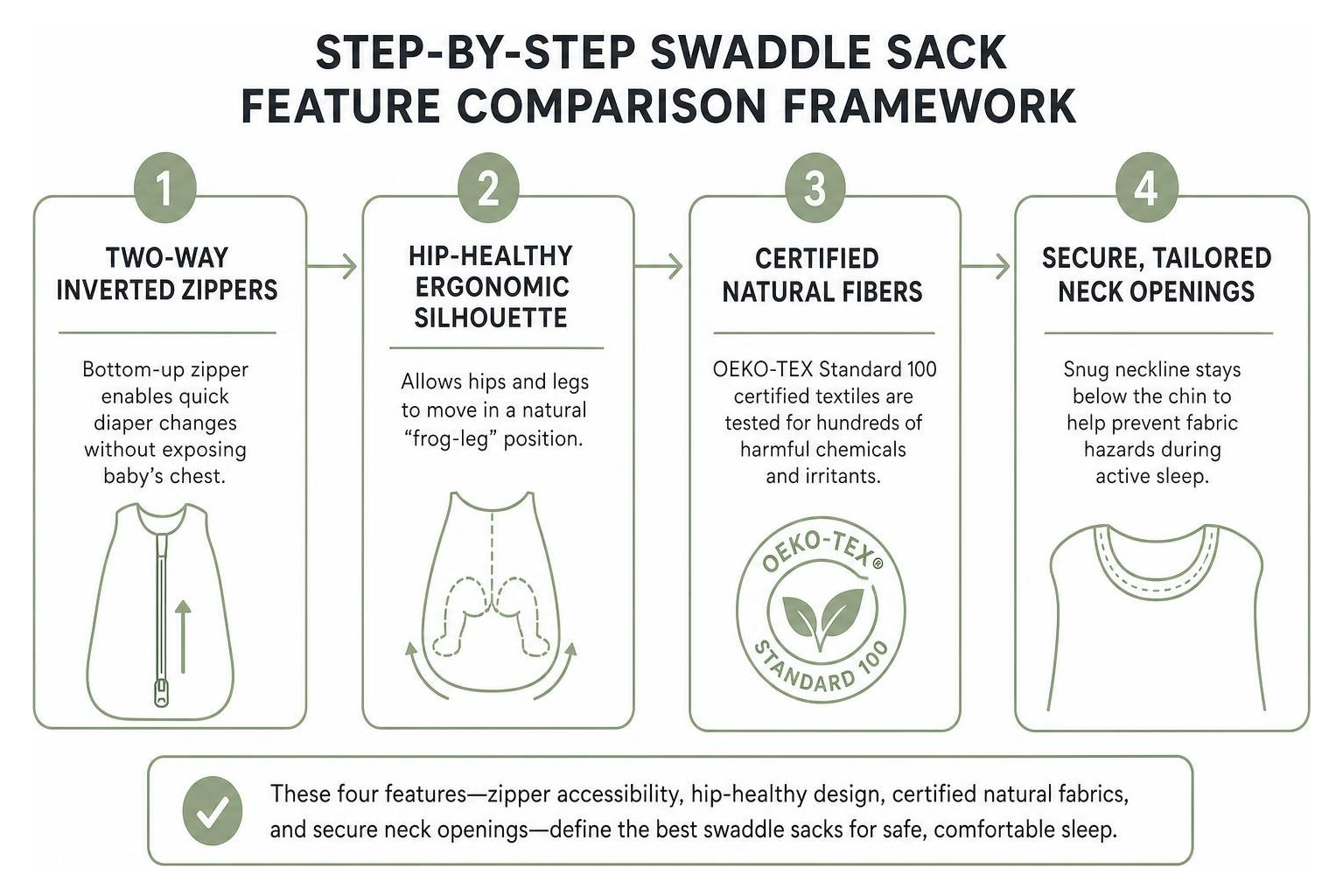
When evaluating sleep sacks for newborns, safety, ergonomic construction, and premium materials take precedence over decorative trends.
- Two-Way Inverted Zippers: A zipper that unzips from the bottom hem upward allows parents to change a wet diaper quickly without exposing the baby's chest to chilly room air.
- Hip-Healthy Ergonomic Silhouette: The International Hip Dysplasia Institute emphasizes that swaddles must never bind the hips or legs tightly together. The legs should be able to bend upward and outward in a natural "frog-leg" position.
- Certified Natural Fibers: Infant skin is delicate and prone to contact irritation. Garments certified under European OEKO-TEX standard 100 ensure textiles are thoroughly tested against hundreds of harmful chemicals and irritants.
- Secure, Tailored Neck Openings: The neckline must fit snugly around the shoulders without riding up over the chin or mouth, preventing fabric hazards during active sleep.
Reputable independent reviews, such as safe sleep swaddle testing by Wirecutter, consistently highlight that ease of use and fabric breathability are the primary factors separating great swaddles from average ones.
How the Best Swaddle Sacks Support Infant Development and the Startle Reflex
The Moro reflex is a normal neurological response present from birth until around 3 to 4 months of age. When a baby experiences a sudden sensation of falling, a loud noise, or a shift in temperature, their arms splay out abruptly.
A well-constructed swaddle sack gently holds the arms across the torso or upward near the cheeks. This containment prevents unintentional wake-ups while keeping hands close to the face so babies can practice natural hand-to-mouth self-soothing. Fold-over mitten cuffs provide an added layer of skin protection, keeping sharp newborn fingernails from scratching delicate cheeks.
Choosing the Best Swaddle Sacks by Season and TOG Rating
Thermal Overall Grade (TOG) measures the thermal insulation of children's sleepwear. Selecting the proper TOG rating prevents both dangerous overheating and disruptive nighttime chills.
| TOG Rating | Room Temperature Range | Ideal Fabric & Layering |
|---|---|---|
| 0.5 TOG | 75°F to 81°F (24°C to 27°C) | Ultra-lightweight open-weave muslin; pair with a short-sleeve bodysuit or diaper alone. |
| 1.0 TOG | 68°F to 73°F (20°C to 23°C) | Breathable organic cotton knit; ideal for year-round indoor nursery climates. |
| 2.5 TOG | 61°F to 68°F (16°C to 20°C) | Multi-layer or lightly quilted natural cotton; pair with long-sleeve cotton sleepers. |
For detailed nursery temperature advice, our organic swaddle sack guide offers in-depth layering recommendations. During warmer months, implementing summer swaddling techniques ensures your baby remains comfortable and dry.
Top 6 Swaddle Sack Styles for Newborn Comfort and Restful Sleep
Every baby arrives with unique sensory preferences and sleep habits. The following six swaddle sack designs represent the most effective, parent-tested silhouettes available for early infancy.
When evaluating newborn swaddles, comparing arm positions and fabric elasticity helps you select the perfect match for your family's routine.
| Swaddle Sack Style | Arm Position | Primary Fabric | Best TOG Rating | Key Benefit |
|---|---|---|---|---|
| 1. Classic Two-Way Zipper | Arms across chest or down | 100% Organic Cotton Knit | 1.0 TOG | Fast, silent midnight diaper access |
| 2. Arms-Up Self-Soothing | Hands elevated beside head | Stretch Cotton Jersey | 0.5 – 1.0 TOG | Supports natural hand-to-mouth soothing |
| 3. Adjustable Wing Wrap | Arms down or wrapped snug | Organic Cotton Interlock | 1.0 – 1.5 TOG | Customizable torso compression |
| 4. Convertible Transition | One arm out / Both arms out | Cotton Muslin Blend | 1.0 TOG | Gradual milestone adaptation |
| 5. Multi-Layer Breathable Muslin | Flexible wrap closure | 100% Pure Muslin Cotton | 0.5 – 1.0 TOG | Superior airflow for sensitive skin |
| 6. Ergonomic Torso Band | Free legs / Wrapped torso | Premium Cotton Knit | 1.0 TOG | Colic soothing and full hip mobility |
1. The Classic Two-Way Zipper Swaddle Sack
The classic two-way zipper swaddle sack is a nursery essential for tired parents. It combines the snug torso containment of a traditional swaddle with the effortless simplicity of a zip-up garment.
- Effortless Midnight Diaper Changes: The inverted lower zipper pull allows you to unzip the bottom of the sack while keeping the infant's chest wrapped and warm.
- Protective Zipper Garages: Soft fabric tabs at the neckline and base shield sensitive skin from direct metal or plastic contact.
- Consistent Compression: Eliminates the risk of shifting knots or loose flaps during the night.
2. The Arms-Up Self-Soothing Swaddle Sack
While some babies prefer their arms tucked tightly over their chest, many naturally settle with their hands resting upward near their ears.
- Supports Natural Sleep Posture: Patented wings allow the baby to sleep in their preferred hands-up position while still dampening the Moro startle reflex.
- Hand-to-Mouth Contact: Fabric-covered wings permit gentle facial friction and thumb sucking, enabling babies to self-soothe back to sleep without assistance.
- Discourages Unsafe Rolling: The structured silhouette helps keep young infants centered comfortably on their backs.
3. The Adjustable Wing Swaddle Wrap Sack
For infants who find security in firm pressure, an adjustable wing wrap sack offers customizable containment.
- Targeted Chest Hug: Soft wings wrap snugly around the torso using fabric-friendly micro-fasteners that hold securely without noisy, harsh tearing sounds.
- Adaptable Fit: Adjusts easily as your newborn gains weight and lengthens over their first few months.
- Flexible Arm Placement: Lets you position arms down, across the chest, or crossed over the abdomen depending on what brings your baby the most comfort.
4. The Convertible Transition Swaddle Sack
As infants approach the developmental milestone of rolling, a convertible sack makes weaning smooth and stress-free.
- Removable or Snap-Open Sleeves: Features zippered or snapped arm wings that allow you to free one arm at a time.
- Two-Stage Design: Functions as an escape-proof swaddle during the first two months, then transforms into an arms-free sleeping bag for months three to six.
- Reduces Sleep Disruptions: Allowing the baby to adjust to one free arm before opening both prevents sudden sleep regressions during motor transitions.
5. The Multi-Layer Breathable Muslin Swaddle Sack
Woven muslin remains a gold standard in newborn comfort due to its open weave, lightweight drape, and natural temperature regulation.
- Cloud-Soft Pre-Washed Texture: Natural muslin softens with every wash, remaining gentle against sensitive or eczema-prone newborn skin.
- High Breathability: Open air pockets woven directly into the fabric prevent humidity buildup and trapped heat.
- Gentle Elasticity: Conforms to your baby’s natural body contours without creating restrictive pressure points.
6. The Ergonomic Torso Band Swaddle Sack
Designed with an emphasis on digestive comfort and unrestricted hip freedom, this style focuses compression exclusively where it is needed most.
- Gentle Belly Support: A wide, elasticized inner band wraps around the abdomen to deliver soothing pressure for babies experiencing gas or colic.
- Bell-Shaped Pouch: The lower half opens into an extra-wide leg sack, allowing full hip flexion, kicking, and joint development.
- Modular Temperature Control: Can be worn over bare legs on warm evenings or paired with footed cotton pajamas during cooler months.
Pediatric Safety Standards and Transition Milestones
Safe sleep practices form the foundation of every newborn routine. Following established pediatric guidelines protects your baby while supporting their natural developmental milestones.

The American Academy of Pediatrics (AAP) safe sleep recommendations include:
- Always place infants on their back for every sleep period until their first birthday.
- Maintain a firm, flat, bare sleep space free of loose blankets, pillows, bumper pads, and plush toys.
- Keep the nursery at a comfortable ambient temperature (68°F to 72°F / 20°C to 22°C).
- Follow proven practices for safe swaddling for newborns from the day you bring your little one home.
The Risks of Weighted Swaddles and Sleep Gear
In recent years, pediatric medical authorities—including the American Academy of Pediatrics—have issued clear warnings against weighted sleep sacks, weighted swaddles, and weighted blankets for infants. Major national retailers have discontinued these products due to documented safety concerns.
Weighted products place continuous external pressure on an infant's pliable ribcage. This localized weight can restrict natural chest expansion, compress developing lungs, and compromise oxygen intake. Furthermore, weighted garments can hinder a baby's instinctive ability to move their head or push themselves up if they inadvertently roll into an unsafe position. Safe infant sleepwear should always be lightweight, minimal, and completely unweighted.
Step-by-Step Guide to Transitioning Out of a Swaddle Sack
The transition out of a swaddle sack should begin at the very first signs of rolling, which often occurs between 8 and 12 weeks of age.
- Watch for Early Cues: Look for signs such as hip twisting during sleep, rocking side-to-side, or arching the back off the mattress.
- Start with One Arm Out: Unzip or open one arm wing during naptime while keeping the torso wrapped snugly.
- Transition Both Arms: After 3 to 5 days of restful one-arm sleep, release the second arm to allow full upper-body freedom.
- Graduate to a Sleeveless Sleeping Bag: Move your baby into a standard, loose-fitting sleep sack that keeps their body warm while leaving both arms entirely unrestricted.
Common Swaddling Mistakes and How to Avoid Them
Even well-intentioned caregivers can encounter common swaddling pitfalls:
- Wrapping Hips Too Tightly: Forcing an infant's legs straight down can lead to hip dysplasia. Always ensure the bottom of the sack is roomy enough for the baby's legs to bend and kick freely.
- Overheating with Synthetic Fabrics: Polyester and synthetic fleece trap body heat and moisture against the skin. Opt for natural, breathable fibers like organic cotton and open-weave muslin.
- Swaddling Past the Rolling Age: Continuing to restrain a baby’s arms after they have gained the physical strength to flip onto their tummy creates a suffocation hazard.
- Positioning Fabric Near the Airway: Ensure neckline closures sit flat against the upper chest and never ride up over the jawline.
Frequently Asked Questions About Swaddling and Infant Sleep Gear
When should I stop using a swaddle sack with my baby?
You should stop using any arms-in swaddle sack as soon as your baby shows any signs of attempting to roll over, typically between 2 and 4 months of age. Once an infant rolls, they must have both arms free to lift their head and adjust their airway.
Are swaddle sacks easier for midnight diaper changes than traditional blankets?
Yes. Swaddle sacks equipped with two-way bottom-up zippers or fold-over bottom pouches let you access dirty diapers in seconds. You can wipe and change your baby without unfastening their chest wrap, keeping them calm and sleepy throughout the process.
What fabric is safest for newborn swaddle sacks?
100% certified organic cotton and pure woven muslin are widely regarded as the safest fabric choices for newborn sleepwear. These natural fibers allow air to circulate freely, wick away nighttime perspiration, and are free from harsh chemical finishes that could irritate delicate newborn skin.
Conclusion
Choosing the right sleep gear is one of the most thoughtful decisions you will make during your newborn's earliest months. By focusing on breathable organic materials, ergonomic hip room, and practical features like two-way zippers, you create a safe, comforting sleep space that helps your baby rest peacefully.
At CocoMi Baby Boutique, we craft heirloom-quality essentials with pure, natural materials that meet rigorous European safety standards. We invite you to explore our thoughtfully curated nursery collections and find more parenting guidance at the CocoMi Baby Boutique journal.