

The Summer Swaddling Dilemma: Balancing Comfort and Safety
Swaddling is a wonderful tool for soothing newborns, but summer heat can make parents worry about overheating. Since babies can't regulate their body temperature well, this is a valid concern. However, you don't have to give up the benefits of swaddling, like calming the startle reflex and promoting better sleep.
The key to a safe warm weather swaddle is finding the right balance. This means choosing breathable fabrics like cotton muslin or bamboo, using a low TOG rating (0.2-1.0), dressing your baby in minimal layers, and keeping the room cool (68-72°F or 20-22°C).
I'm Monika Jarog, and I've dedicated my work to creating handcrafted, natural baby essentials that prioritize both comfort and safety. Through designing breathable baby wraps and understanding the nuances of warm weather swaddle solutions, I've helped countless parents keep their babies secure and cool.
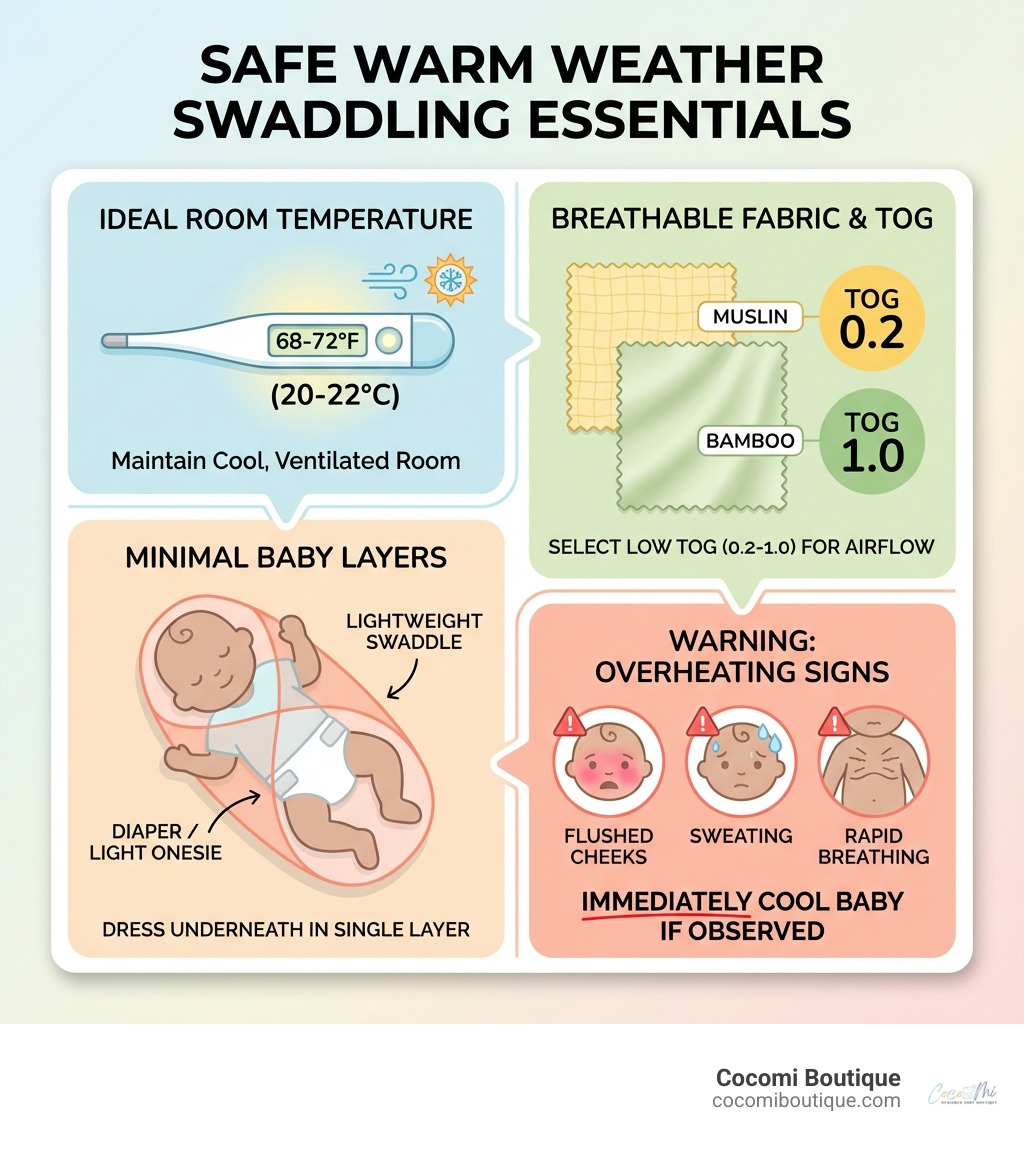
The Summer Swaddling Dilemma: Balancing Comfort and Safety
Swaddling is beloved for its ability to soothe newborns, but summer heat raises concerns about overheating. Infants can't regulate their body temperature well, and excess heat can lead to discomfort, disrupted sleep, and in severe cases, increase the risk of SIDS (Sudden Infant Death Syndrome). According to the American Academy of Pediatrics safe sleep guidelines, maintaining an appropriate sleep environment temperature is crucial for infant safety. A loose swaddle can also be a suffocation risk.
The good news is that babies can be safely swaddled in warm weather with careful adjustments. The key is using lightweight fabrics, controlling the room temperature, and dressing your baby minimally. For more comprehensive guidance, refer to our The Ultimate Guide to Safe Swaddling for Newborns.
Recognizing and Responding to Overheating
Vigilance is your best tool. Check your baby's temperature by feeling the skin on their chest or the back of their neck. If it's hot or sweaty, they are too warm. Don't rely on their hands or feet, as these often feel cooler.
Signs of overheating include:
- Flushed cheeks
- Sweating, especially around the neck
- Rapid breathing
- Heat rash
- Damp hair
- Restlessness or fussiness
- Lethargy
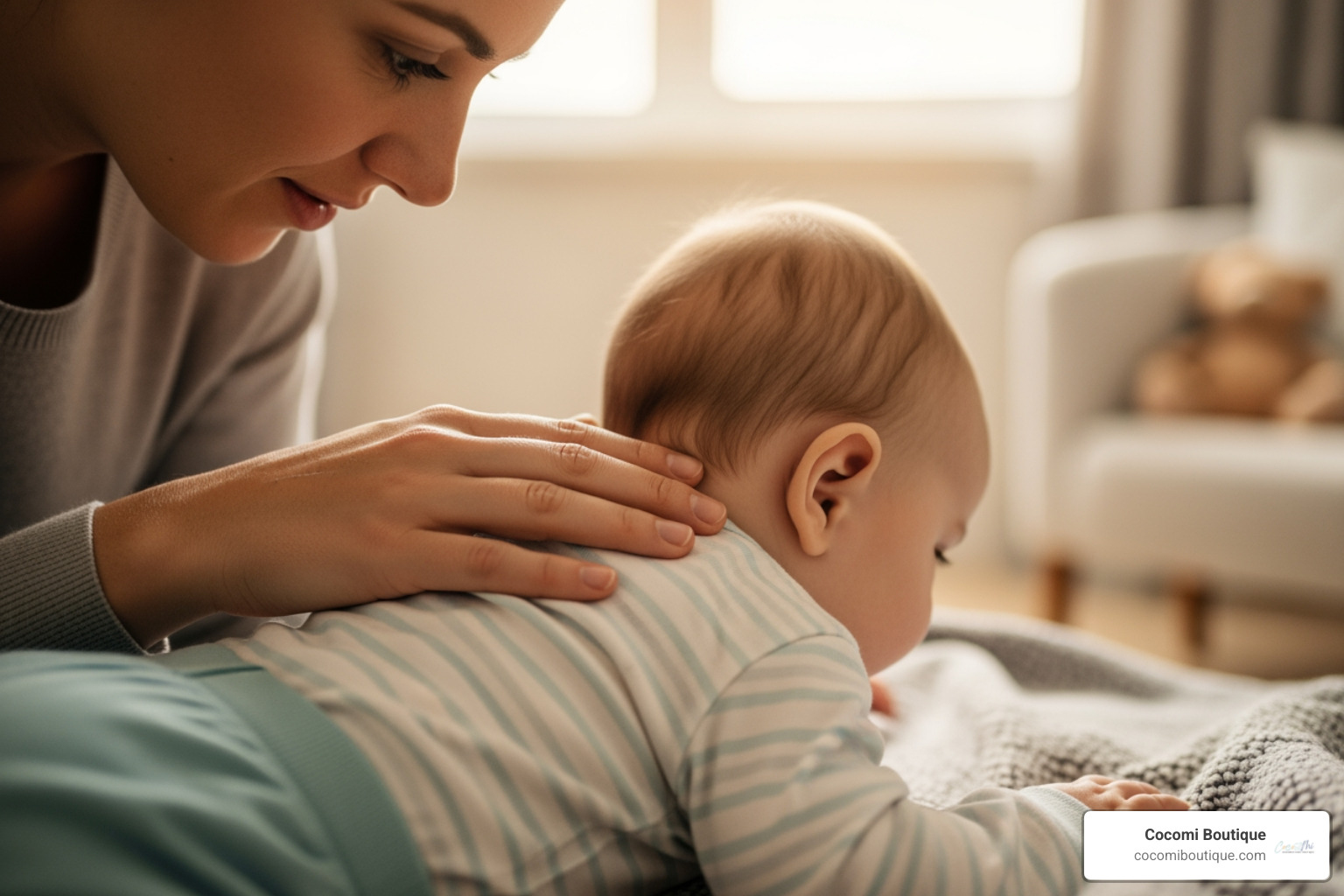
If you notice these signs, act quickly: remove layers, move your baby to a cooler room, and offer fluids (breast milk or formula) if they are awake. Always trust your instincts and adjust your baby's clothing or environment if you feel something is off.
Choosing the Perfect Warm Weather Swaddle
Selecting the right warm weather swaddle is crucial for your baby's comfort and safety. The material is the most important factor in preventing overheating. Prioritize natural, breathable fabrics that allow air to circulate and wick away moisture. Avoid synthetic fabrics like polyester and fleece, which trap heat. For more insights on selecting the ideal swaddle, you might find our guide on Finding the Best Swaddle for Sweet Dreams helpful.
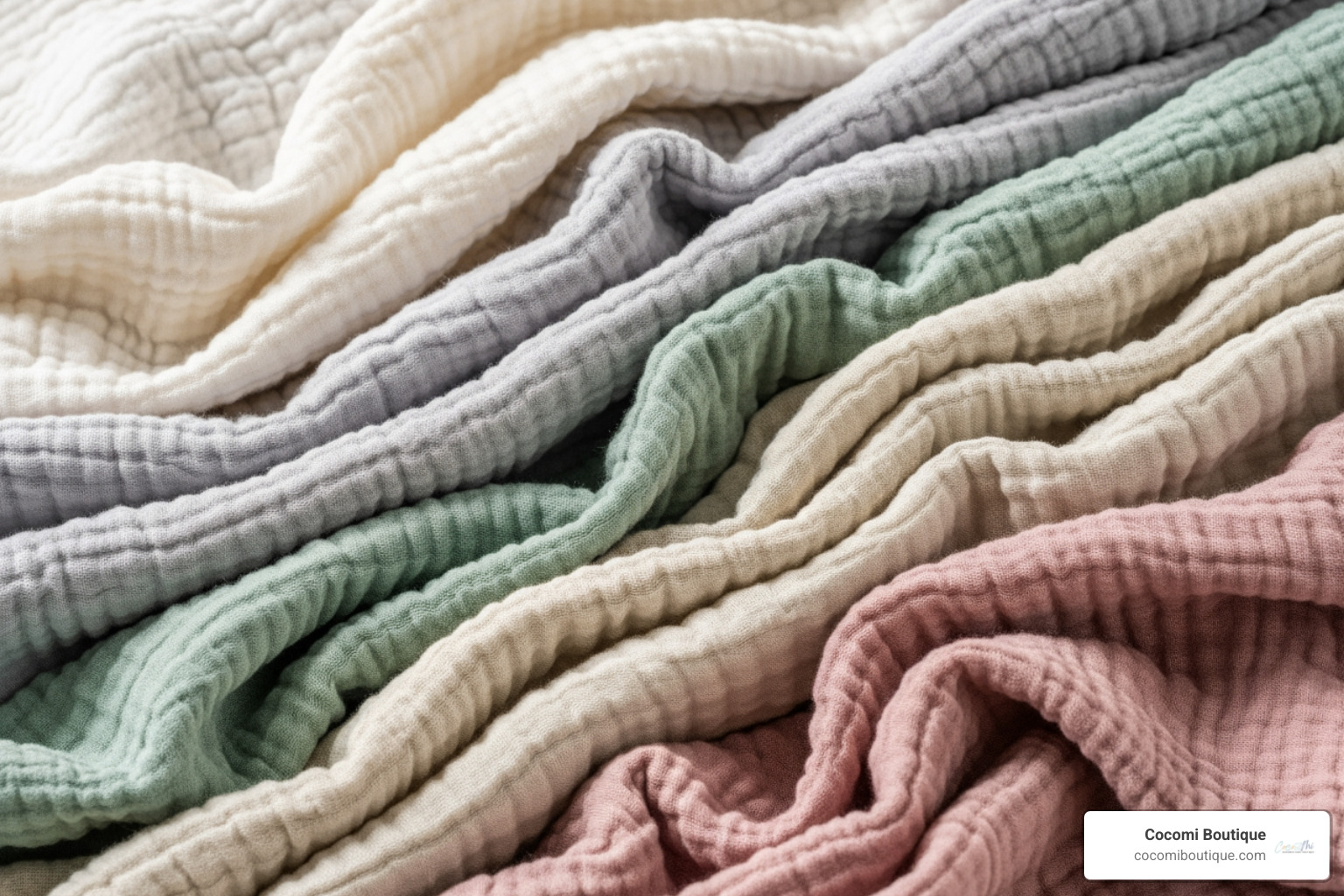
The Best Materials for Summer Swaddles
At Cocomi Boutique, we focus on lightweight and breathable fabrics to ensure the highest standards of comfort and safety. Here are the top choices:
Cotton Muslin: A classic choice for summer, muslin is lightweight, soft, and has an open weave for excellent airflow. It's gentle on sensitive skin and gets softer with each wash. Learn more in our guide, All About Muslin Baby Blankets, and explore the softness of our Ultimate Guide to Cotton Muslin Baby Blankets.
Bamboo Fabric: Known for its silky-soft texture, bamboo is naturally moisture-wicking, hypoallergenic, and highly breathable, making it an excellent choice for keeping your baby cool. For a deeper dive, read our guide to Organic Bamboo Swaddle Blankets.
Organic Cotton: For those who prioritize purity, our GOTS certified organic cotton muslin is supremely soft, breathable, and sustainably crafted. It's a chemical-free option that's gentle on your baby's skin. Find out why it's a trusted choice in our Guide to the Softest Snuggles.
Lightweight Merino Wool: While it may sound surprising, lightweight merino wool is an active fiber that helps regulate body temperature, keeping your baby cool when it's warm and warm when it's cool.
To explore the differences between bamboo and cotton, check out our guide: Bamboo or Cotton? Your Guide to the Best Organic Muslin Swaddles.
Decoding TOG Ratings for a Warm Weather Swaddle
Understanding TOG (Thermal Overall Grade) ratings is essential. The TOG value indicates how much warmth a fabric provides. For summer, you'll want a low TOG rating.
| TOG Rating | Room Temperature Range | Our Recommendation |
|---|---|---|
| 0.2 TOG | 75-81°F (24-27°C) | Ideal for very hot days. This is the lightest option. |
| 0.5 TOG | 72-75°F (22-24°C) | Suitable for moderately warm rooms. |
| 1.0 TOG | 68-75°F (20-24°C) | Good for cooler summer nights or air-conditioned rooms. |
These are general guidelines. Always check your baby's temperature to ensure they are comfortable, as factors like humidity and what they're wearing underneath also play a role.
The Summer Swaddling Dilemma: Balancing Comfort and Safety
Swaddling is an age-old practice, beloved by parents for its ability to soothe newborns by mimicking the snug accept of the womb and preventing the startle reflex. However, the warmer months bring a unique set of challenges, raising valid concerns about our baby's comfort and safety. The primary risk associated with swaddling in hot weather is overheating. Infants are not yet adept at regulating their body temperature, and they release excess heat primarily through their heads and feet. If dressed too warmly or wrapped in heavy fabrics, they can quickly become too hot, which can lead to discomfort, disrupted sleep, and in severe cases, even increase the risk of SIDS (Sudden Infant Death Syndrome).
Another critical consideration is the fit of the swaddle. A loose swaddle, especially in warm weather when babies might try to wriggle out more, can solve and cover our baby's face, posing a significant suffocation risk. This is why ensuring a snug, yet not overly tight, fit is paramount.
To steer these risks, it's crucial for us to be vigilant and recognize the subtle signs that our little one might be too warm.
Signs of overheating in a swaddled baby include:
- Flushed cheeks
- Sweating, especially around the head and neck
- Rapid breathing
- Heat rash
- Damp hair
- Restlessness or fussiness
- Lethargy or unusual sleepiness
To check our baby's temperature, we should gently feel their skin at their chest or the back of their neck and ears. If these areas feel hot or sweaty, it's a clear indication that they are too warm. It's important not to rely on their hands or feet, as these extremities often feel cooler even when the rest of their body is overheated.
Despite these concerns, the benefits of swaddling remain compelling. It provides a sense of security, helps calm the startle reflex that can wake a sleeping baby, and can significantly improve the quality of sleep for both baby and parents. The key to successful summer swaddling lies in understanding and implementing the right precautions.
Can Babies Be Swaddled in Warm Weather?
Yes, absolutely! Babies can be safely swaddled in warm weather, but it requires thoughtful adjustments and careful monitoring. The idea that swaddling must be abandoned during summer is a common misconception. With the right approach, we can provide our babies with the comfort and security of a swaddle without risking overheating.
The critical factors we need to consider are:
- Fabric choice: Opting for lightweight, breathable materials is essential.
- Room temperature control: Maintaining an ideal sleeping environment.
- Proper layering: Dressing our baby minimally underneath the swaddle.
By being mindful of these elements, we can create a safe and comfortable sleep space for our little ones year-round. For more comprehensive guidance on safe swaddling practices, refer to our The Ultimate Guide to Safe Swaddling for Newborns.
Recognizing the Signs of Overheating
Vigilance is our best tool when it comes to preventing overheating. Our babies cannot verbally communicate their discomfort, so it's up to us to recognize the signs. As mentioned earlier, keeping an eye out for flushed cheeks, sweating (especially on the back of the neck), rapid breathing, and general fussiness or lethargy is crucial. If we notice our baby exhibiting any of these symptoms, we need to take immediate action:
- Remove layers: Gently unswaddle our baby and remove any unnecessary clothing.
- Move to a cooler room: If possible, relocate our baby to a cooler part of the house or a room with better air circulation.
- Offer fluids: If our baby is awake and able, offering frequent feedings (breast milk or formula) can help keep them hydrated.
Always trust our parental instincts. If something feels off, it's best to err on the side of caution and adjust our baby's environment or clothing.
Choosing the Perfect Warm Weather Swaddle
Selecting the right warm weather swaddle is paramount to ensuring our baby's comfort and safety during the summer. The material of the swaddle plays the most significant role in preventing overheating. Breathability is key – we want fabrics that allow air to circulate freely, wicking away moisture and preventing heat from being trapped against our baby's delicate skin.
When choosing materials, we should always prioritize natural fibers over synthetics. Synthetic fabrics like polyester and fleece do not breathe well and can significantly increase the risk of overheating. Instead, we should look for materials known for their lightweight and breathable properties.
Beyond the material, understanding TOG ratings (Thermal Overall Grade) is essential. This measurement indicates the thermal resistance of a fabric, helping us choose the appropriate warmth level for different room temperatures. Additionally, some swaddle designs incorporate special features like vents or "arms up" positions that can be beneficial for warmer climates, promoting better airflow and self-soothing. For more insights on selecting the ideal swaddle for your little one, you might find our guide on Finding the Best Swaddle for Sweet Dreams helpful.
The Best Materials for Summer Swaddles
When it comes to warm weather swaddle fabrics, breathability and lightness are our best friends. Our collection of baby essentials at Cocomi Boutique focuses on these very qualities, ensuring our products meet the highest standards of comfort and safety for your little one.
Here are the top choices:
Cotton Muslin: This is a perennial favorite for summer swaddles, and for good reason. Cotton muslin is incredibly lightweight, soft, and features an open weave that promotes excellent airflow. It's gentle on sensitive skin and becomes even softer with each wash. Traditional square muslin wraps (such as 100cm x 100cm or 120cm x 120cm) are ideal for hot days due to their lightness and breathability. Learn more about its benefits in our guide, All About Muslin Baby Blankets, and explore the softness and safety of our The Ultimate Guide to Cotton Muslin Baby Blankets: Softness, Safety.
Bamboo Fabric: Known for its silky-soft texture, bamboo is another excellent choice for a warm weather swaddle. It's naturally moisture-wicking, helping to draw sweat away from the skin, and possesses natural antibacterial and hypoallergenic qualities. Bamboo fabric remains highly breathable, allowing optimal airflow to keep our baby cool, making it suitable for various weather conditions. For a deeper dive, read our Beyond Soft: A Roundup of the Best Organic Bamboo Swaddle Blankets.
Organic Cotton: For those who prioritize sustainability and purity, organic cotton is a fantastic option. Our GOTS certified organic cotton muslin is supremely soft, highly breathable, and crafted with quality and sustainability in mind. It adheres to strict ecological and social processing standards, ensuring a chemical-free product that is gentle on our baby's skin. Find why it's a trusted choice in our Organic Cotton Swaddle Blankets: A Guide to the Softest Snuggles.
Lightweight Merino Wool: While wool might sound counterintuitive for summer, lightweight merino wool is surprisingly effective. It's an active fiber that reacts to changes in body temperature, helping to keep our baby cool when it's warm and warm when it's cool. Merino wool can absorb up to 30% of its weight in water without feeling clammy, making it excellent for moisture management.
These fabrics offer crucial properties like moisture-wicking and temperature regulation, which are vital for keeping our baby comfortable in the heat. To further explore the differences between bamboo and cotton, check out our Bamboo or Cotton? Your Guide to the Best Organic Muslin Swaddles.
Decoding TOG Ratings for a Warm Weather Swaddle
Understanding TOG (Thermal Overall Grade) ratings is essential for dressing our baby appropriately, especially when choosing a warm weather swaddle. The TOG value is a measurement of thermal resistance, indicating how much warmth a fabric provides. A higher TOG rating means more insulation, while a lower TOG rating indicates less insulation, making it suitable for warmer temperatures.
For summer swaddling, we're typically looking for low TOG values to ensure our baby doesn't overheat. Here's a general guide to help us choose the right TOG for different room temperatures:
| TOG Rating | Room Temperature Range | Our Recommendation |
|---|---|---|
| 0.2 TOG | 75-81°F (24-27°C) | Ideal for very hot days or warm sleepers. This is the lightest option. |
| 0.5 TOG | 72-75°F (22-24°C) | Suitable for moderately warm rooms, offering a bit more coverage than 0.2 TOG. |
| 1.0 TOG | 68-75°F (20-24°C) | Good for standard summer room temperatures, especially if air conditioning is on. |
These are guidelines. Factors like our baby's individual body temperature, the humidity in the room, and what they are wearing underneath the swaddle will all influence their comfort. Always check our baby's temperature regularly, as mentioned earlier, to make sure they are not too hot or too cold.
The Art of Summer Swaddling: A Step-by-Step Guide
Beyond selecting the right swaddle, managing your baby's sleeping environment is just as crucial for safe summer swaddling. The goal is to create a cool, comfortable space to prevent overheating.
How to Dress Baby Under a Warm Weather Swaddle
When dressing your baby under a warm weather swaddle, the "less is more" principle applies. The swaddle itself counts as a layer of clothing.
- Diaper only: On very hot days, or if your baby runs warm, swaddling them in just a diaper under a lightweight, low-TOG swaddle is often sufficient.
- Lightweight short-sleeve onesie: For cooler summer evenings, a light, short-sleeved cotton onesie is a great choice.
- Avoiding socks and hats: Babies release heat through their heads and feet. To prevent overheating, never put a hat on your swaddled baby for sleep, and socks are generally unnecessary in warm weather.
Our Breathable Bliss: Discovering the Perfect Organic Baby Wrap emphasizes the importance of these minimal layers.
Creating a Cool and Safe Sleep Environment
The room where your baby sleeps plays a vital role in their comfort. Maintaining an ideal temperature helps prevent overheating.
- Ideal room temperature: Aim for a room temperature between 68-72°F (20-22°C).
- Using fans safely: A fan can help circulate air, but position it so it doesn't blow directly on your baby. Ensure it's out of reach and cords are secured.
- Air conditioning tips: If you have air conditioning, set it to the recommended temperature range.
- Blackout curtains: These are excellent for keeping rooms cool by blocking sunlight.
- Avoiding direct sunlight on the crib: Ensure your baby's crib is not placed in direct sunlight.
A well-ventilated room with a consistent, cool temperature is your best defense against summer heat. For more tips, consult our Wrapping Wonders: An Illustrated Guide to Perfect Baby Swaddling.
Swaddling Misconceptions and When to Transition
Let's clear up some common myths about summer swaddling:
- Myth: "Swaddling is always too hot." This is untrue if done correctly. With breathable fabrics and a low TOG rating, a warm weather swaddle is perfectly safe. The danger is from heavy blankets or overdressing.
- Myth: "Loose blankets are safer." This is a dangerous misconception. A loose swaddle or any loose blanket in the crib is a suffocation hazard. Ensure the swaddle is snug around the torso (but allows for hip movement) to prevent it from covering your baby's face.
When to Stop Swaddling
Swaddling is for newborns and must stop when your baby shows signs of being able to roll over. This is a critical safety milestone. If a swaddled baby rolls onto their stomach, they may not be able to roll back, which increases the risk of suffocation.
Signs of rolling over include:
- Pushing up on their arms and arching their back
- Rocking from side to side
- Rolling over during playtime or sleep
When you see these signs, begin the transition. You can swaddle with one arm out, then both, or switch to a sleep sack that allows arm movement while still providing a sense of security.
Frequently Asked Questions about Summer Swaddling
How can I tell if my baby is too hot without a thermometer?
Feel the back of your baby's neck or their chest. If these areas feel hot or sweaty, they are likely overheated. Don't rely on their hands and feet, as these often feel cooler. If your baby feels too warm, remove a layer, cool down the room, and check on them again shortly.
What should my baby wear under a 1.0 TOG swaddle in a 70°F room?
In a room around 70°F (21°C), a long-sleeved cotton onesie or light pajamas under a 1.0 TOG warm weather swaddle is usually appropriate. However, every baby is different, so always check for signs of comfort and adjust as needed.
Is it safe to swaddle with just a diaper in a heatwave?
Yes, in very hot weather (over 80°F or 27°C), swaddling your baby in a lightweight, breathable warm weather swaddle with only a diaper underneath is a safe way to prevent overheating. This minimal approach provides the security of a swaddle while allowing for maximum airflow.
Conclusion
Summer swaddling can be safe and comfortable when you follow a few key principles. Prioritize breathable materials, choose a low TOG warm weather swaddle, dress your baby in minimal layers, and maintain a cool sleep environment. Most importantly, always monitor your baby for signs of overheating.
- Choose breathable fabrics: Cotton muslin, bamboo, or organic cotton.
- Select the right TOG: A low TOG rating (0.2-1.0) is best for summer.
- Dress minimally: A diaper or a light onesie is often enough.
- Keep the room cool: Aim for 68-72°F (20-22°C) with good air circulation.
- Watch for overheating: Check your baby's neck and chest for warmth or sweat.
At Cocomi Boutique, we are committed to providing soft, stylish, and comfortable baby essentials, including our breathable swaddles, to help you steer every season. We believe in nurturing your baby's comfort with high-quality, safe products for peaceful sleep.
By following these guidelines, you can confidently give your baby the security of a swaddle on even the warmest days. For more insights, explore our Swaddle Savvy: Your Complete Handbook for Happy Babies.