

Why Every New Parent Is Searching for an Organic Swaddle Sack

An organic swaddle sack is a wearable sleep wrap made from certified natural fabrics — free from synthetic dyes, pesticides, and harsh chemicals — designed to keep your newborn snug, calm, and safe during sleep.
Here's what you need to know at a glance:
| Question | Quick Answer |
|---|---|
| What is it? | A zip-up or velcro sleep wrap made from organic cotton or bamboo |
| Who is it for? | Newborns up to ~6 months (until they show signs of rolling) |
| Why organic? | No pesticide residues, gentler on sensitive skin, safer for newborns |
| Key certifications | GOTS, OEKO-TEX Standard 100 |
| Does it help with sleep? | Yes — swaddling can reduce SIDS risk by up to 30% when used correctly |
| What TOG rating? | 0.5–1.0 TOG for warmer rooms; 2.5 TOG for cooler environments |
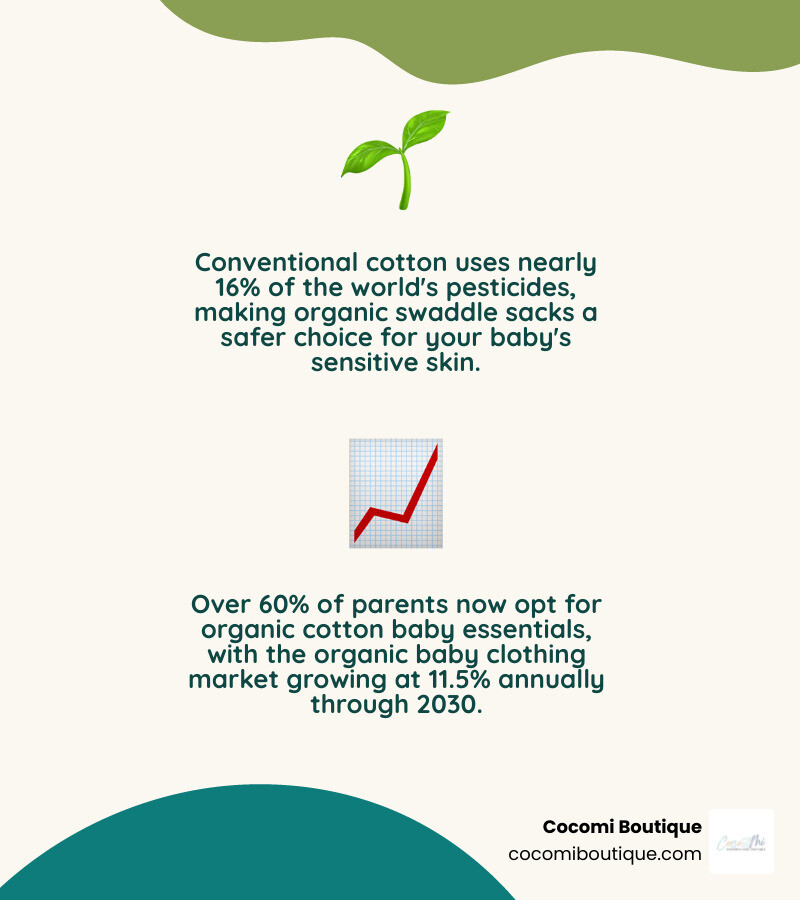
Most parents don't realize how many chemicals can hide in a standard baby sleep product. Conventional cotton is one of the most pesticide-heavy crops in the world — and newborn skin absorbs far more than adult skin does. That's a problem when your baby is spending 16+ hours a day wrapped in fabric.
The good news? Over 60% of parents are now choosing organic cotton for their baby's essentials, and the organic baby clothing market is growing fast — projected to expand at 11.5% annually through 2030. The demand is there because the need is real.
I'm Monika Jarog, and through Cocomi Boutique I've spent years handcrafting and curating natural, chemical-free baby essentials — including organic swaddle sack options made from the purest materials available. In the sections below, I'll walk you through everything you need to choose the right one with confidence.
Organic swaddle sack terms to know:
Why Choose an Organic Swaddle Sack for Your Baby's Sleep?
When we bring a new baby home, our nesting instincts kick into overdrive. We scrub the nursery, wash every tiny outfit in gentle detergent, and carefully select the safest crib. Yet, the very fabric wrapping our babies for up to 18 hours a day is often overlooked. Choosing an organic swaddle sack ensures that your baby’s sleeping environment is as pure and natural as possible.
Newborn skin is incredibly delicate. It is up to five times thinner than adult skin, making it highly permeable to environmental toxins, pesticide residues, and harsh chemical dyes used in conventional textile manufacturing. By choosing organic, you are curating a safe, non-toxic environment that protects your baby's developing immune system. Our collection of organic baby essentials is built around this exact philosophy—giving parents peace of mind during those precious, quiet hours of sleep.

Organic Swaddle Sack vs. Traditional Swaddle Blankets
While we adore the artistry of a beautifully wrapped newborn, there is an ongoing debate in the parenting community: should you use a swaddle sack or a traditional blanket?
A traditional swaddle blanket is a large, square piece of fabric that you fold manually around your baby. If you want to learn the classic wrapping techniques, we have a complete breakdown in our organic swaddle blankets complete guide and our organic cotton swaddle blanket guide.
An organic swaddle sack, on the other hand, is a modern, wearable sleep solution. Here is how they compare:
- Ease of Use: Traditional blankets require a bit of origami skill, which can be incredibly challenging at 3:00 AM. Swaddle sacks feature intuitive zipper or velcro closures that let you secure your baby in seconds.
- Safety: A loose blanket can unwrap if your baby wiggles, presenting a potential suffocation hazard in the crib. A swaddle sack stays securely zipped, keeping the fabric away from your baby’s face.
- Midnight Diaper Changes: Many organic swaddle sacks feature two-way zippers, allowing you to unzip the bottom half for a quick diaper change without fully waking or unswaddling your little one's arms.
The Benefits of Chemical-Free, Undyed Fabrics
Have you ever wondered why conventional baby sleepwear comes in such bright, saturated colors? Those vibrant hues are often achieved using synthetic dyes, heavy metals, and chemical fixatives.
Undyed or naturally pigmented organic fabrics are the gold standard for sensitive newborn skin. When you choose an organic swaddle sack made with zero harsh dyes, you are choosing:
- Hypoallergenic Comfort: No chemical residues mean a significantly lower risk of contact dermatitis, eczema flare-ups, and skin irritation.
- Pesticide-Free Sleep: Organic cotton is grown without synthetic fertilizers or toxic pesticides, protecting both your baby and the agricultural workers who harvest the crops.
- Pure Breathability: Natural fibers that haven't been coated in chemical flame retardants or synthetic softeners maintain their natural structure, allowing air to circulate freely.
To dive deeper into how natural fibers protect your baby, check out our guide on the benefits of using an organic cotton baby wrap for your little one.
Key Safety Standards and Certifications to Look For
Not all products labeled "organic" are created equal. In the textile industry, "organic" can sometimes be a marketing buzzword rather than a certified promise. To ensure your organic swaddle sack is truly safe, you must look for independent, third-party certifications.
GOTS and OEKO-TEX Certifications
When browsing premium baby boutiques, two certifications stand out as the gold standard for safety:
- GOTS (Global Organic Textile Standard): This is the world's leading processing standard for organic fibers. It ensures that at least 95% of the fabric is certified organic and monitors the entire supply chain—from harvesting to manufacturing—to ensure no toxic chemicals, heavy metals, or endocrine disruptors are used. Read more about this in our article on gots certified goodness finding the perfect organic muslin blanket.
- OEKO-TEX Standard 100: While GOTS focuses on the organic origin of the fibers, OEKO-TEX tests the finished product for harmful substances. If a swaddle sack has an OEKO-TEX Standard 100 certification, every component—including the zipper, threads, and snaps—has been rigorously tested and proven safe from toxic chemicals. This is a core standard we hold for our handcrafted pieces, as detailed in our european organic muslin swaddles guide 2026.
Safe Sleep Practices and Reducing SIDS Risks
Swaddling is a time-tested technique that mimics the snug comfort of the womb, helping to soothe the startle reflex (Moro reflex) and promote longer, deeper sleep cycles. However, safe sleep practices must always be followed to minimize the risk of Sudden Infant Death Syndrome (SIDS).
According to Scientific research on swaddling and SIDS, swaddling can be a highly effective sleep aid when combined with safe sleep positioning. Always place your baby to sleep on their back on a firm, flat mattress free of loose bedding, pillows, or bumper pads. An organic swaddle sack is an excellent tool for safe sleep because it provides the soothing pressure of a swaddle without the risk of loose fabric unraveling in the crib.
Selecting the Perfect Organic Swaddle Sack: Sizes, TOG Ratings, and Materials
Finding the right swaddle sack involves balancing the climate of your home with the unique needs of your baby's skin.
| Fabric Material | Best For | Key Properties |
|---|---|---|
| Organic Cotton | All-season wear, durability, structured snugness | Highly breathable, easy to wash, structurally supportive |
| Organic Bamboo | Warm climates, babies prone to overheating | Silky soft, moisture-wicking, thermal-regulating |
To compare these materials further, you can read our detailed guide on bamboo or cotton your guide to the best organic muslin swaddles.
Understanding TOG Ratings for Temperature Regulation
A TOG (Thermal Overall Grade) rating measures the thermal insulation of a textile. In simple terms, it tells you how warm the swaddle sack will keep your baby. Because infants cannot regulate their own body temperature as effectively as adults, choosing the right TOG rating is essential to prevent overheating—a known risk factor for SIDS.
- 0.5 TOG: Ultra-lightweight and breathable. Ideal for warm summer months or nurseries kept between 74°F and 78°F (23°C to 26°C). Often paired with a light organic cotton baby wrap for extra comfort, as explored in breathable bliss discovering the perfect organic baby wrap.
- 1.0 TOG: The perfect all-season weight. Best for standard room temperatures ranging from 68°F to 73°F (20°C to 22°C).
- 2.5 TOG: Padded and cozy. Designed for cooler winter nights or nurseries below 68°F (20°C).
Always monitor your baby's chest or the back of their neck to ensure they aren't sweaty or clammy.
Choosing the Right Size and Age Range for an Organic Swaddle Sack
Never buy a swaddle sack that is "roomy" for your baby to grow into. A swaddle sack must fit snugly around the chest and neck to prevent the fabric from sliding up over your baby’s nose or mouth.
When choosing, refer to the manufacturer’s sizing chart, which is typically based on weight and length rather than age:
- Preemie/Newborn: Typically fits 5 to 9 lbs.
- Small (0-3 Months): Fits approximately 9 to 14 lbs.
- Medium (3-6 Months): Fits approximately 14 to 19 lbs.
For a comprehensive look at choosing the perfect fit, refer to the ultimate guide to choosing the best organic cotton swaddle blanket for your baby.
How to Safely Use, Wash, and Transition From a Swaddle Sack
Investing in high-quality, handcrafted sleepwear means you'll want to maintain its softness and structural integrity for as long as possible. Proper usage and care ensure safety and comfort sleep after sleep.
Step-by-Step Guide to Safe Swaddling
Using an organic swaddle sack is straightforward, but keeping these safety points in mind is crucial:
- Check the Neckline: Once zipped, ensure the collar sits comfortably below your baby’s chin. You should easily be able to slip two fingers between the fabric and your baby's neck.
- Ensure Hip-Healthy Space: The International Hip Dysplasia Institute recommends that swaddles allow room for the baby's hips to bend up and out. The bottom of the swaddle sack should be wide and loose enough for your baby to flex their legs naturally.
- Position the Arms: Depending on the design, secure your baby's arms snuggly across their chest or at their sides, ensuring the velcro or zipper panels are fully fastened.
When to Transition Out of a Swaddle Sack
The swaddle window is relatively short but incredibly sweet. You must stop swaddling your baby’s arms as soon as they show any signs of attempting to roll over. This milestone typically occurs between 2 and 4 months of age.
If a swaddled baby rolls onto their stomach, they will not have their arms free to push themselves up, which poses an immediate safety hazard. When this transition begins, you can switch to an arms-free sleep sack or a heavier blanket option like our best organic cotton muslin blanket thicker than swaddle, which provides cozy comfort without restricting arm movement.
To care for your organic fabrics during this busy phase, always wash them in cold water on a gentle cycle using a mild, plant-based detergent. Air drying or tumble drying on low heat will preserve the delicate fibers of your organic cotton baby blankets and swaddles.
Frequently Asked Questions About Organic Swaddle Sacks
How many organic swaddle sacks do I need?
We generally recommend having at least three swaddle sacks on hand: one in use, one in the laundry, and one clean backup ready in the nursery drawer for those inevitable midnight diaper leaks and spit-ups.
Can a baby wear an organic swaddle sack overnight?
Yes, absolutely. Organic swaddle sacks are designed specifically for overnight sleep. Because they are highly breathable, they help maintain a safe, comfortable body temperature throughout the night.
How do I wash organic cotton to keep it soft?
To keep your organic cotton incredibly soft, wash it in cold water with like colors on a gentle cycle. Use an eco-friendly, fragrance-free detergent, and tumble dry on low heat or hang dry to protect the natural fibers.
Conclusion
Your baby's sleep is sacred—not just for their growth and development, but for your peace of mind as a parent. Choosing an organic swaddle sack made with undyed, chemical-free fabrics is one of the simplest, most impactful steps you can take to create a pure, non-toxic sleeping environment.
At CocoMi Baby Boutique, we believe that you shouldn't have to choose between beautiful, elegant design and the highest safety standards. Every piece we create is handcrafted with love, using only the finest natural materials certified to strict European standards.
Ready to discover more beautiful, safe, and premium essentials for your nursery? Explore our collection and read more expert tips on the CocoMi Boutique Blog.