

Why European Organic Muslin Swaddles Are Worth Every Parent's Attention

European organic muslin swaddles combine the gentlest natural fabrics with rigorous safety standards — making them one of the most trusted choices for newborn care today.
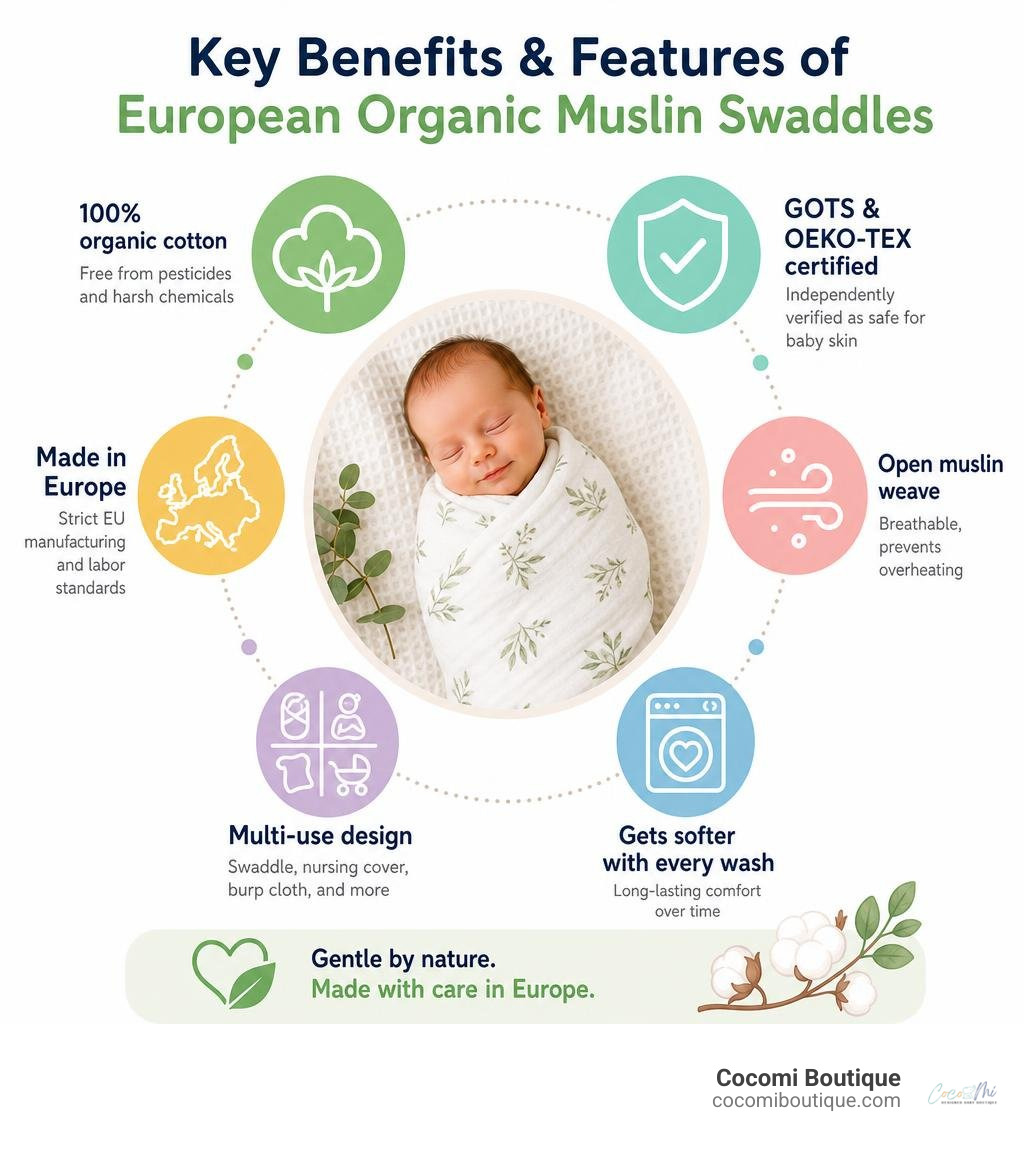
Here's a quick overview of what makes them stand out:
| Feature | Why It Matters |
|---|---|
| 100% organic cotton | Free from pesticides and harsh chemicals |
| GOTS & OEKO-TEX certified | Independently verified as safe for baby skin |
| Made in Europe | Strict EU manufacturing and labor standards |
| Open muslin weave | Breathable, prevents overheating |
| Multi-use design | Swaddle, nursing cover, burp cloth, and more |
| Gets softer with every wash | Long-lasting comfort over time |
Swaddling is one of the oldest parenting practices in the world. Parents have wrapped their newborns snugly for thousands of years — and for good reason. That gentle, womb-like pressure helps babies feel calm, sleep more soundly, and adjust to life outside the womb.
But what you wrap your baby in matters just as much as the act of swaddling itself.
Conventional cotton and synthetic fabrics can carry residual pesticides, chemical dyes, and irritants that are harsh on a newborn's delicate skin. Over 65% of European parents now prefer organic or certified materials for baby products — and that number keeps growing.
European organic muslin swaddles are at the center of that shift.
The European baby textiles market was valued at approximately €3.2 billion in 2023, with organic baby textiles among the fastest-growing segments. Sales of organic cotton muslin swaddles alone rose 22% year-over-year between 2022 and 2023 — a clear sign that more parents are choosing quality and safety over convenience.
I'm Monika Jarog, and at Cocomi Boutique I've spent years handcrafting and curating natural baby essentials — including European organic muslin swaddles made from chemical-free materials that meet the highest European safety standards. In this guide, I'll walk you through everything you need to know to choose the right swaddle for your little one.
European organic muslin swaddles terms to remember:
The Premium Standards of European Organic Muslin Swaddles

When we talk about European craftsmanship in baby textiles, we are referring to a long-standing tradition of quality, precision, and care. Unlike mass-produced items that prioritize volume over safety, European Handcrafted Muslin Swaddles are designed with a deep respect for both the child and the environment.
In Europe, textile manufacturing is subject to some of the strictest chemical safety regulations in the world. This means that from the moment the organic cotton is harvested to the final stitch on the hem, every step is carefully monitored. The emphasis is on traceability, ensuring that parents know exactly what is touching their newborn's skin.
By choosing European-made swaddles, you are investing in a product that is crafted in small, dedicated studios rather than giant, unregulated factories. This hands-on approach results in superior stitching, durable double-layered weaves, and a finished product that easily outlasts conventional alternatives.
Understanding the Certifications of European Organic Muslin Swaddles
The term "organic" is often used loosely in marketing, but in Europe, it is backed by rigorous, legally binding certifications. When shopping for European organic muslin swaddles, two main certifications stand out as the gold standard for safety:
- GOTS (Global Organic Textile Standard): This is the leading international standard for organic fibers. It ensures that at least 95% of the fabric consists of certified organic fibers. GOTS monitors the entire supply chain, prohibiting the use of toxic heavy metals, formaldehyde, and aromatic solvents. It also enforces strict social criteria, ensuring fair wages and safe working conditions for laborers. You can learn more about finding these high-quality blankets in our guide on GOTS Certified Goodness Finding the Perfect Organic Muslin Blanket (or read the Polish version: GOTS Certified Goodness Finding the Perfect Organic Muslin Blanket).
- OEKO-TEX® Standard 100: While GOTS focuses on the organic origin of the fiber, OEKO-TEX focuses on the safety of the finished product. If a swaddle carries this label, every thread, button, and dye has been tested for over 100 harmful substances, including pesticides, carcinogenic colorants, and allergenic dyes.
These certifications guarantee that the beautiful pastel shades and delicate prints on your baby's swaddle are created using non-toxic, water-based dyes that won't irritate sensitive skin or release harmful gases into your nursery.
Ethical and Sustainable Production in Europe
We believe that what is good for our babies should also be good for the planet they will inherit. European brands are at the forefront of ethical and sustainable textile production.
By keeping manufacturing local—often in traditional textile regions in Poland, Lithuania, and Portugal—European brands significantly reduce their carbon footprint. Instead of shipping materials back and forth across multiple continents, production happens in tight, traceable loops.
Furthermore, these local European studios prioritize fair labor practices. Workers operate in safe, clean environments, receive fair wages, and work regulated hours. When you wrap your baby in a European-made swaddle, you can rest assured that it was made with love and respect for the people who crafted it. Many of these brands also use eco-friendly, plastic-free packaging, such as recycled paper hang tags and matching organic cotton drawstring bags, ensuring a zero-waste approach. You can explore some of our favorite sustainable options in our article, Wrap Your Baby in Nature Our Favorite Organic Muslin Swaddles.
Why Organic Cotton Muslin is Essential for Baby Skin
A newborn's skin is incredibly thin, delicate, and highly permeable. It absorbs substances much more easily than adult skin, making babies highly vulnerable to chemical residues found in conventional fabrics. This is why choosing the right material for close-contact items like swaddles is so critical.
To help you understand the differences between your fabric choices, we have compiled a comparison of the most common textile options:
| Fabric Type | Breathability | Chemical Exposure Risk | Softness Over Time | Environmental Impact |
|---|---|---|---|---|
| Organic Cotton Muslin | Extremely High | None (Strictly regulated) | Becomes softer with every wash | Low (Biodegradable, sustainable farming) |
| Conventional Cotton | High | Medium to High (Pesticide residues) | Standard | High (Water-intensive, chemical heavy) |
| Synthetic Fabrics (Polyester/Acrylic) | Low (Traps heat) | High (Petroleum-based, microplastics) | Prone to pilling and stiffness | Very High (Non-biodegradable) |
By selecting organic cotton muslin, you are actively protecting your baby from the skin irritation, eczema flare-ups, and allergic reactions often triggered by harsh agricultural chemicals and synthetic processing agents. For a deeper look into selecting the best material for your family, check out The Ultimate Guide to Choosing the Best Organic Cotton Swaddle Blanket for Your Baby (Polish version: The Ultimate Guide to Choosing the Best Organic Cotton Swaddle Blanket for Your Baby).
Organic Cotton vs. Synthetic Alternatives
Synthetic fabrics like polyester, nylon, and acrylic are petroleum-based materials. While they are cheap to produce, they lack the natural breathability required for infant bedding. Synthetics trap moisture and heat against the skin, creating a warm, damp environment that is a breeding ground for bacteria and skin rashes.
Additionally, synthetic blankets shed microplastics during use and washing. These microscopic plastic fibers can be inhaled or ingested by your baby, and they contribute to global water pollution.
Choosing 100% organic cotton muslin over synthetic blends ensures that your baby is wrapped in pure, plant-based fibers. It is naturally hypoallergenic, static-free, and completely free from the chemical flame retardants and wrinkle-resistant finishes commonly applied to synthetic textiles. If you are comparing different natural options, you can read our comparison guide: Bamboo or Cotton Your Guide to the Best Organic Muslin Swaddles (Polish version: Bamboo or Cotton Your Guide to the Best Organic Muslin Swaddles).
Preventing Overheating with Breathable Weaves
One of the greatest safety concerns for sleeping newborns is overheating, which is a known risk factor for Sudden Infant Death Syndrome (SIDS). Unlike tightly woven fabrics, muslin features an open, plain weave structure. This loose grid-like pattern allows air to flow freely through the fabric, helping to regulate your baby’s body temperature naturally.
Most premium European swaddles utilize a "double gauze" construction. This technique joins two ultra-thin layers of muslin together at regular intervals. The result is a fabric that remains incredibly lightweight and breathable, yet possesses enough substance to keep your baby comfortably warm without trapping excess heat.
This breathable elasticity is perfect for settling the Moro (startle) reflex. It allows just enough natural movement so your baby doesn't feel rigidly pinned down, while still providing the secure, snug pressure they need to sleep peacefully. To understand more about how this unique weave is constructed, dive into our fabric deep dive: Muslin Explained From Weave to Wonder A Fabric Deep Dive (Polish version: Muslin Explained From Weave to Wonder A Fabric Deep Dive).
Sizing, Weight, and Fabric Density Specifications

When selecting European organic muslin swaddles, understanding technical specifications like fabric density and dimensions will help you choose a blanket that fits your daily routine perfectly.
Fabric density is measured in GSM (Grams per Square Meter). For high-quality double gauze muslin, the ideal range is typically between 130g/m² and 170g/m².
- A lower GSM (around 130g/m²) indicates an airy, feather-light blanket that is perfect for hot summer days or as a quick stroller shield.
- A higher GSM (around 150g/m² to 170g/m²) offers a plush, cozy thickness that provides excellent durability and warmth for cooler seasons, without sacrificing breathability.
It is also normal for 100% organic cotton muslin to have a shrinkage rate of about 5% after the first wash. High-quality European brands pre-wash their fabrics to minimize this, but that slight shrinkage actually works to your advantage—it tightens the weave slightly, making the fabric feel even loftier, puckered, and softer than before. For a comprehensive look at these specifications, read our Organic Cotton Swaddle Ultimate Guide (Polish version: Organic Cotton Swaddle Ultimate Guide).
Finding the Perfect Size: 70x70 cm vs. 120x120 cm
Muslin swaddles generally come in two classic European sizes, each serving a unique set of purposes in your parenting journey:
- 70x70 cm (approx. 27x27 inches): This compact size is an absolute nursery workhorse. While too small for swaddling a growing newborn, it is the perfect size to use as a lightweight burp cloth, a protective layer under your baby's head in the crib or stroller, a makeshift bib, or a comforting security blankie. They are incredibly easy to pack into a diaper bag for quick outings.
- 120x120 cm (approx. 47x47 inches): This is the classic, generous swaddle size. It provides ample fabric to securely wrap newborns of all sizes, with plenty of room to accommodate their growth. Because of its large dimensions, this size easily transitions into a toddler nap blanket, a play mat for tummy time, or a privacy shield.
Choosing a mix of both sizes ensures you are prepared for any situation, whether you are at home in Chicago or traveling across the country. You can read more about selecting the right size in our guide, Organic Cotton Swaddle Blankets A Guide to the Softest Snuggles (Polish version: Organic Cotton Swaddle Blankets A Guide to the Softest Snuggles).
Versatility and Care of Premium Muslin
One of the reasons parents fall in love with premium muslin is its incredible versatility. A single high-quality swaddle can replace half a dozen single-use baby products, keeping your nursery minimal, elegant, and clutter-free.
Here are some of the most common ways parents use their swaddle blankets every day:
- Nursing Cover: Drape the breathable fabric over your shoulder to create a private, calm space for breastfeeding while on the go. The open weave ensures your baby gets plenty of fresh air.
- Stroller Shade: Drape the swaddle over your stroller canopy to protect your little one from bright sunlight and wind during afternoon walks.
- Tummy Time Mat: Lay the clean, double-layered blanket on the grass or floor to create a soft, clean surface for daily developmental play.
- Emergency Changing Pad: Provide a clean, soft barrier between your baby and public changing tables when you're out and about.
- Crib Sheet Protector: Lay a smaller 70x70 cm swaddle under your baby's head to catch drool or spit-up, saving you from having to wash the entire crib sheet every day.
For a look at how different regions style and use these versatile blankets, check out our guide on Organic Swaddle Blankets Made in USA Animal Prints and French Flair (or the Polish version: Organic Swaddle Blankets Made in USA Animal Prints and French Flair).
How to Care for European Organic Muslin Swaddles
To maintain the cloud-like softness and structural integrity of your premium swaddles, proper care is essential. Organic cotton is highly durable, but because it lacks synthetic chemical coatings, it prefers gentle treatment:
- Wash Before First Use: Always wash your swaddles before wrapping your baby to remove any dust accumulated during transit and to fully bloom the cotton fibers.
- Keep it Cool: Machine wash on a gentle cycle at 30°C or 40°C (86°F to 104°F). High heat can damage the natural cotton fibers and cause excessive shrinkage.
- Use Mild Detergent: Choose a gentle, baby-safe, eco-friendly detergent. Avoid fabric softeners, as they leave a chemical coating on the fibers that reduces the fabric's natural absorbency and breathability.
- Skip the Bleach: Never use chlorine bleach on organic cotton, as it breaks down the natural fibers and ruins delicate prints.
- Air Dry or Low Tumble: Air drying naturally is the most eco-friendly option and keeps the fabric in pristine condition. If you use a dryer, select a low-heat, delicate setting.
- No Need to Iron: The beautiful, natural puckering of double gauze muslin is part of its charm! Ironing will flatten the weave and reduce the blanket's signature loftiness.
Frequently Asked Questions about Swaddling
Why should I swaddle my newborn baby?
Swaddling recreates the cozy, restricted feeling of the womb, which helps soothe your baby's nervous system. It reduces the impact of the Moro (startle) reflex—which often causes newborns to suddenly jerk their arms and wake themselves up—leading to longer, more restorative sleep cycles.
How long can I safely swaddle my baby?
Swaddling is highly beneficial for newborns from birth up to about 3 months of age. However, the gold rule of safe sleep is to stop swaddling as soon as your baby shows any signs of attempting to roll over on their own. At that point, their arms must be free so they can position themselves safely if they roll onto their tummy.
What should I look for when buying a premium swaddle?
Look for 100% GOTS-certified organic cotton to ensure chemical safety, OEKO-TEX Standard 100 certification to guarantee the absence of harmful residues, and reinforced stitched seams for longevity. We also recommend choosing timeless, gender-neutral patterns and natural earth tones (like soft sage, warm creams, and delicate floral prints) that blend beautifully with your home decor and can be passed down to future siblings. For a complete buying overview, read our Organic Swaddle Blankets Complete Guide (Polish version: Organic Swaddle Blankets Complete Guide).
Conclusion
Choosing the right essentials for your newborn is one of the most personal journeys of early parenthood. By selecting European organic muslin swaddles, you are choosing a standard of care that prioritizes your baby's skin health, supports ethical European craftsmanship, and protects the environment.
At Cocomi Boutique, we are passionate about bringing these beautiful, handcrafted, and natural baby essentials directly to your home. Whether you are preparing your own nursery or searching for a thoughtful, premium baby shower gift that will be cherished for years, we invite you to explore our curated collections.
Visit our online store to discover our full range of elegant nursery accessories, organic clothing, and premium baby blankets at Cocomi Boutique News. Wrap your little one in the pure, natural comfort they deserve.
External Resources for Further Reading:
- Explore collegiate-themed designs: Illinois Fighting Illini Swaddle Blanket - Three Little Anchors
- Check out organic multi-packs: organic cotton muslin swaddle blanket 4 pack - Halo Sleep
- Discover minimalist gender-neutral patterns: Storq Baby Organic Cotton Muslin Swaddle Blanket \| Sage Stripe