

Why Every Newborn Deserves the Best Organic Swaddle Muslin

Finding the best organic swaddle muslin for your newborn matters more than most parents realize at first. A swaddle isn't just a blanket — it's the first thing touching your baby's skin for hours every day.
Quick Answer: Top Organic Muslin Swaddles at a Glance
| Pick | Why It Stands Out |
|---|---|
| GOTS-certified organic muslin, 47"x47" | Safest for sensitive skin, ideal size for newborns |
| Pre-washed organic cotton muslin | Soft from day one, gets softer with every wash |
| 4-pack organic muslin set | Enough for laundry rotation without running short |
| Multi-use organic muslin swaddle | Works as nursing cover, stroller shade, and play mat |
Newborns spend most of their time sleeping, and their skin is far more absorbent and sensitive than adult skin. That means the fabric they're wrapped in — and any chemicals in it — goes directly into contact with their most delicate tissue.
Organic muslin stands apart because of its open-weave construction. This loose, layered weave allows air to circulate freely, which helps prevent overheating — one of the key safety concerns for newborn sleep. It also softens beautifully with every wash, unlike synthetic alternatives that can pill or stiffen over time.
The Moro reflex (that sudden startle that wakes sleeping babies) is another reason swaddling matters so much in those early weeks. A well-chosen organic muslin swaddle wraps snugly enough to calm that reflex, while still being breathable enough to keep your baby comfortable through the night.
According to a 2023 baby product survey, 78% of parents prefer muslin swaddles made from 100% organic cotton for their breathability and softness. And with the global organic baby products market on track to reach $4.2 billion by 2025, it's clear that parents everywhere are making the switch to safer, cleaner materials.
I'm Monika Jarog, and through years of handcrafting natural baby essentials — from muslin swaddles to baby nests — I've tested and curated what truly qualifies as the best organic swaddle muslin for newborns with sensitive skin. In this guide, I'll walk you through everything you need to make a confident, informed choice.
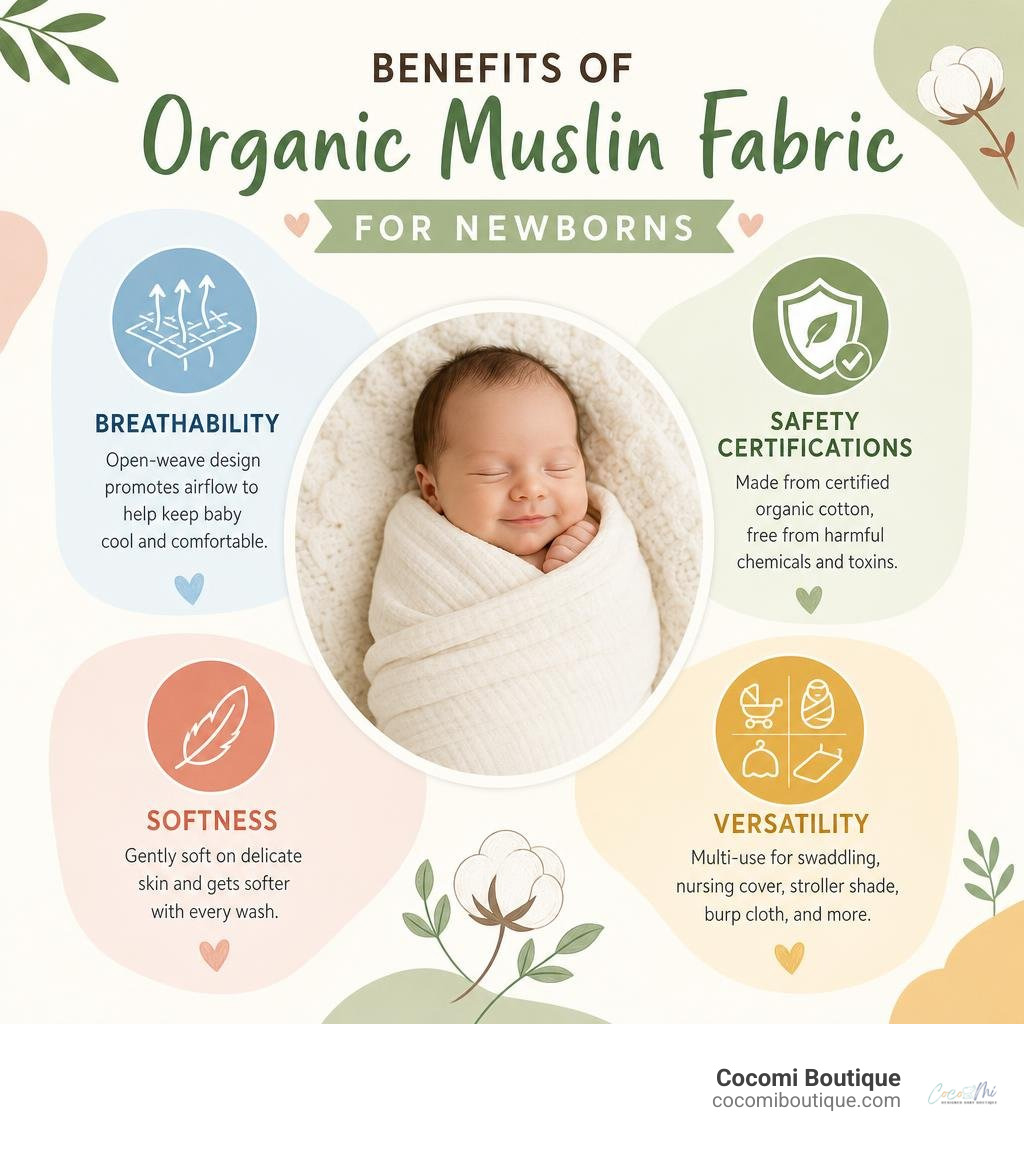
Quick look at best organic swaddle muslin:
Why Choose the Best Organic Swaddle Muslin for Your Baby?
When you bring your newborn home, their immune system and skin barrier are still developing. Conventional cotton is often grown using synthetic pesticides and processed with harsh chemical dyes or flame retardants. Because baby skin is incredibly thin and highly permeable, these chemical residues can cause irritation, trigger eczema, or disrupt delicate respiratory systems.
Choosing the best organic swaddle muslin means opting for agricultural purity. Organic cotton is grown from non-GMO seeds without toxic synthetic pesticides or fertilizers. This clean cultivation method helps ensure that the final fabric wrapped around your baby's face and body is gentle and suitable for sensitive newborn skin. For a deeper look into why this material is a must-have for your nursery, check out our Organic Cotton Swaddle Ultimate Guide.
The Science of Breathability in the Best Organic Swaddle Muslin
Overheating is a significant risk factor associated with sleep-related infant issues. This is where the engineering of muslin fabric truly shines. Muslin features a lightweight, open-weave design. Instead of trapping hot air against your baby's skin, the grid-like structure of the weave allows body heat to escape while letting fresh air circulate freely.
This natural thermal regulation keeps your baby cozy in the winter and cool during humid summer months. Many parents look for certified safety standards to guarantee this breathability. For instance, choosing options that are OEKO-TEX certified ensures the fabric has been rigorously tested for harmful substances and meets strict safety standards for skin-to-skin contact.
GOTS Certification and Safety Standards
To ensure your baby blanket is genuinely organic, look for the Global Organic Textile Standard (GOTS) seal. GOTS is the gold standard for organic fibers, tracking the material from the farm to the final product. You can learn more about the certification directly from the Global Organic Textile Standard.
This certification guarantees:
- At least 95% certified organic chemical-free fibers.
- The complete absence of toxic heavy metals, formaldehyde, and aromatic solvents.
- Strict environmental protections, including a 91% reduction in water use and 62% reduction in energy consumption compared to conventional cotton.
- Fair labor practices and social responsibility throughout the entire manufacturing supply chain.
When you choose GOTS-certified options, you gain complete peace of mind. Learn more about why this standard is so crucial for your peace of mind in our guide on GOTS Certified Goodness Finding the Perfect Organic Muslin Blanket.
Comparing Muslin to Bamboo, Conventional Cotton, and Synthetics
Not all swaddle fabrics are created equal. While bamboo, conventional cotton, and polyester synthetics are widely available, they perform very differently in terms of safety, durability, and ease of use.
- Bamboo (Rayon/Viscose): While bamboo is often marketed as soft and eco-friendly, the chemical process required to turn woody bamboo into soft fabric is highly intensive. Furthermore, bamboo swaddles are notoriously slippery. They lack the natural "grip" of organic cotton muslin, making it difficult to achieve a secure, escape-proof wrap.
- Conventional Cotton: This fabric is highly treated with pesticides during growth and chemical softeners during production. It lacks the long-term durability of organic cotton and can become stiff and rough after a few trips through the washing machine.
- Polyester/Synthetics: Synthetic fleece or polyester blankets do not breathe. They trap moisture and heat, significantly increasing the risk of overheating and skin rashes.
| Fabric Material | Breathability | Grip & Swaddle Security | Durability | Environmental Impact |
|---|---|---|---|---|
| Organic Cotton Muslin | Exceptional (Open Weave) | High (Natural texture prevents slipping) | High (Softens with every wash) | Very Low (91% less water, GOTS certified) |
| Bamboo Viscose | High | Low (Slippery, easily unravels) | Moderate | High chemical processing |
| Conventional Cotton | Moderate | Moderate | Moderate (Stiffens over time) | High pesticide and water use |
| Polyester Synthetics | Poor (Traps heat) | Moderate | High | High (Petroleum-based, non-biodegradable) |
For a comprehensive comparison of how these textiles stack up in real-world nursery environments, explore The Ultimate Guide to Choosing the Best Organic Cotton Swaddle Blanket for Your Baby.
How to Select and Use Your Organic Muslin Swaddles

Selecting the right swaddle involves looking at size, pattern, and versatility. Premium organic muslin swaddles are available in beautiful, safe styles that complement your nursery's aesthetic. From classic solids to whimsical prints, choosing high-quality designs elevates your daily routine. Discover our favorite curated designs in Organic Swaddle Blankets Made in USA Animal Prints and French Flair.
Finding the Best Organic Swaddle Muslin Size and Quantity
The ideal size for a muslin swaddle is 47" x 47" (approximately 120cm x 120cm). While smaller blankets might seem easier to handle for a tiny newborn, babies grow incredibly fast. A generous 47" x 47" dimensions canvas ensures you can continue to wrap your baby securely even as they grow.
As for quantity, we recommend having 4 to 6 high-quality organic swaddles on hand. This allows you to easily manage a daily rotation:
- One in use.
- One in the diaper bag for on-the-go needs.
- One in the laundry basket.
- A couple of clean backups ready for unexpected diaper leaks or spit-up emergencies.
If you are building your registry or preparing your nursery checklist, look for premium multi-pack options, and read our detailed advice in Organic Cotton Swaddle Blankets A Guide to the Softest Snuggles.
Creative Ways to Repurpose Your Muslin Swaddle
One of the reasons parents love the best organic swaddle muslin is its incredible versatility. Long after your baby has transitioned out of swaddling (which occurs as soon as they show signs of rolling over), these blankets remain hard-working essentials in your daily routine.

Here are just a few ways to extend the life of your organic muslin:
- Stroller or Car Seat Shade: Drape it over the canopy to protect your baby from the sun while maintaining airflow.
- Nursing Cover: Tie two corners together around your neck for a lightweight, breathable cover.
- Tummy Time Mat: Lay it down on the grass or carpet for a clean, chemical-free play surface.
- Burp Cloth: Fold it up to protect your clothes from unexpected spit-ups.
- Lightweight Toddler Blanket: The breathable layers make it a comforting security blanket for naptime as they grow.
Caring for Your Premium Muslin Swaddles
One of the magic properties of high-quality organic cotton muslin is that it actually gets softer and loftier with every single wash. However, to maintain the structural integrity and softness of the fibers, you should follow proper care practices:
- Machine Wash Cold or Warm: Wash on a gentle cycle with like colors to prevent friction damage.
- Use Mild, Clean-Rinsing Detergent: Avoid heavy detergents with synthetic fragrances or optical brighteners that can coat the organic fibers.
- Skip the Fabric Softeners and Dryer Sheets: These chemical softeners leave a synthetic film over the cotton, which drastically reduces its natural breathability and moisture absorption.
- Tumble Dry Low or Hang Dry: Muslin dries incredibly fast. A quick tumble on low heat or hanging it up to air dry will keep the weave fluffy and intact.
- Do Not Iron: The natural, slightly crinkled texture of muslin is part of its charm and adds to its cozy loft. Ironing will flatten the weave and reduce its signature softness.
For more detailed tips on keeping your nursery fabrics in pristine condition, visit Eco-Friendly Comfort Explore Our Organic Muslin Swaddle Collection.
Frequently Asked Questions About Organic Muslin Swaddles
How many organic muslin swaddles do I need for a newborn?
We recommend having between 4 to 6 swaddles. This quantity ensures you always have a clean, fresh wrap available during busy laundry cycles, unexpected diaper leaks, and daily spit-ups without feeling rushed to run a wash.
Why is organic cotton better than bamboo for swaddling?
While bamboo is incredibly soft, it is also very slippery and stretchy. This lack of structural grip makes it easy for active babies to wiggle their arms free, which can lead to loose fabric in the crib. Organic cotton muslin has a natural, subtle grid texture that provides the perfect grip strength to hold a secure wrap safely all night.
Can organic muslin swaddles be used in both summer and winter?
Yes! Organic muslin is a fantastic all-season fabric. Its open-weave design provides natural thermal regulation. In the summer, it prevents heat from being trapped, while in the winter, it can be layered to trap warm air close to the baby's body without adding heavy, suffocating bulk.
Conclusion
When it comes to your baby’s comfort and safety, every detail matters. Investing in the best organic swaddle muslin ensures that your little one is wrapped in a fabric that is chemically pure, exceptionally breathable, and designed to support healthy, peaceful sleep.
At Cocomi Boutique, we are committed to helping families find beautiful, safe, and premium baby essentials. From our handcrafted Moses baskets to our carefully curated nursery collections, we focus on European-quality craftsmanship and organic materials that stand the test of time.
Ready to discover the softest, safest essentials for your nursery? Explore our curated collection of premium baby essentials and welcome your little one home with the quality they deserve.