

The Best Way to Swaddle a Newborn Safely

The best way to swaddle a newborn is to use a light, breathable blanket that stays snug around the arms and chest but leaves room for the hips and knees to bend. Keep your baby's face uncovered, check that two fingers fit between the wrap and their chest, and always place them on their back to sleep. Stop swaddling as soon as they show signs of trying to roll.
Swaddling may help calm your baby and soften the startle reflex that can wake them. It is optional, though: a safe fit and sleep space matter more than a perfect wrap.
Here are five simple techniques to try, starting with the safety checks that apply to every one.
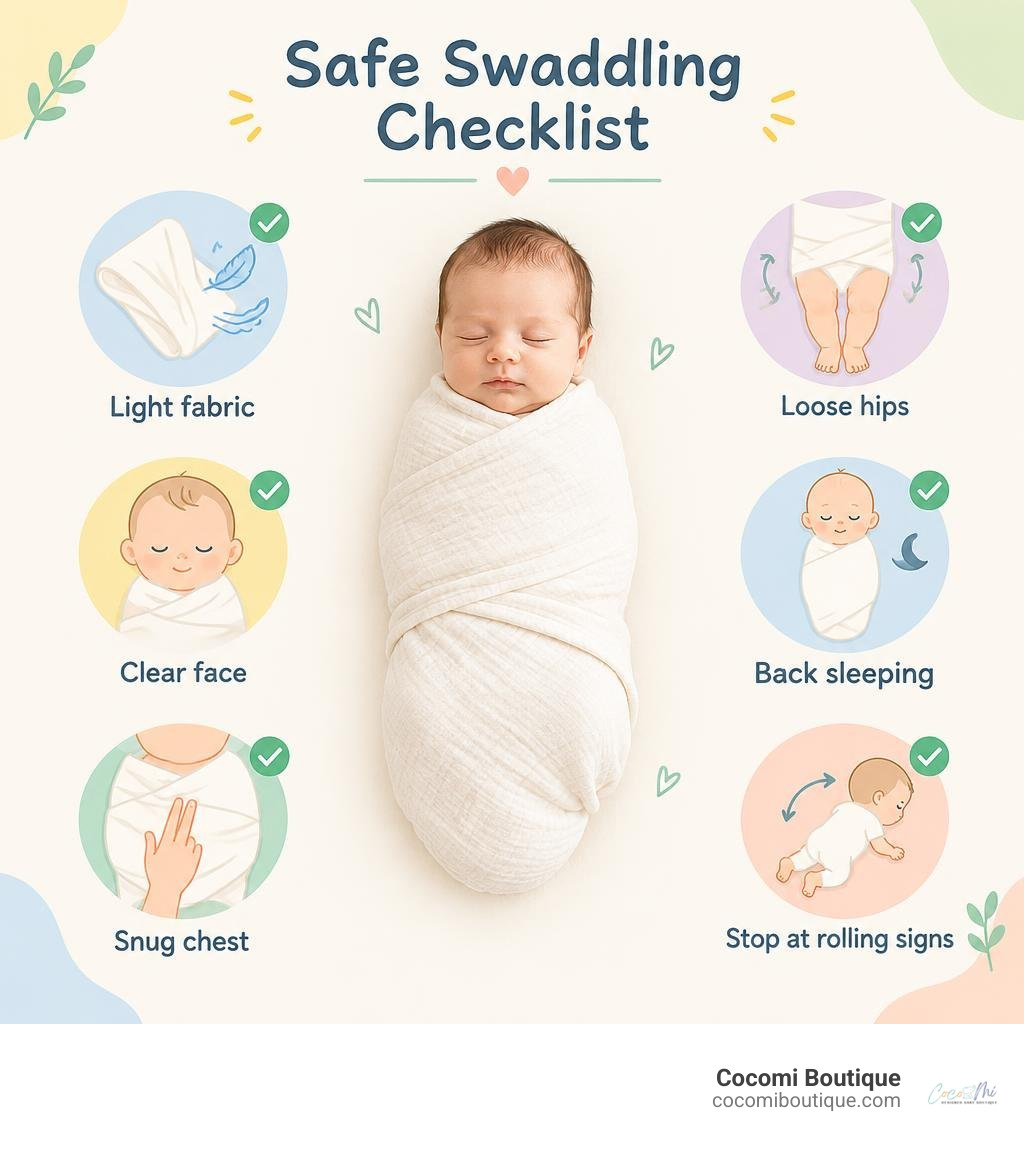
Simple best way to swaddle newborn glossary:
Why Swaddling Works: The Science Behind Calming Your Newborn
During those precious first few months, your newborn is navigating a massive transition from the snug warmth of the womb to a wide-open world full of bright lights, new sounds, and limitless space. Swaddling recreates that familiar, comforting boundary. By providing gentle, continuous pressure around the torso, a secure wrap activates your baby's natural calming reflex—helping their immature nervous system settle into restorative rest.
One of the most noticeable benefits of swaddling is mitigating the Moro reflex, commonly known as the startle reflex. When a newborn feels a sudden shift in position or hears an unexpected sound, their arms involuntarily fling outward. This sudden jerk often wakes them abruptly from light sleep cycles. A proper swaddle keeps their little limbs secure, allowing them to cycle smoothly through sleep stages without startling themselves awake.
Beyond calming active reflexes, swaddling supports neuromuscular soothing and maintains optimal temperature regulation when done with lightweight, natural fibers. According to HealthyChildren guidance on safe sleep and swaddling, wrapping a baby helps them sleep more soundly on their back when paired with safe crib practices. For exhausted parents, understanding how gentle wraps soothe babies provides peace of mind and builds daily soothing confidence.
The Best Way to Swaddle Newborn: 5 Step-by-Step Methods

Finding the right wrap method often comes down to your baby's individual personality and sleep style. Some little ones crave complete snugness with arms pinned securely to their sides, while others protest unless their hands rest near their cheeks. The foundation of any great technique begins with fabric selection: choose a lightweight, generously sized (approximately 47 by 47 inches), breathable cotton muslin square. Using natural, breathable fabrics ensures your baby stays cozy without the risk of overheating.
Before diving into the individual styles, review our essential guide to safe swaddling for newborns to understand general safe-sleep principles.
Here is a quick look at how the five methods compare:
| Method | Difficulty Level | Best Use Case | Arm Positioning |
|---|---|---|---|
| Classic Diamond Wrap | Beginner | General daytime & nighttime sleep | Arms straight down along sides |
| DUDU Method | Intermediate | Strong babies who break out easily | Secure downward lock across chest |
| Arms-Up Swaddle | Easy | Active sleepers & self-soothers | Hands positioned upward near face |
| Hands-to-Heart Swaddle | Intermediate | Colicky, fussy, or unsettled infants | Hands resting flat across midline chest |
| Secure Sleep Sack Wrap | Very Easy | Quick nighttime diaper changes | Pouch fold with secure wrap wings |
1. The Classic Diamond Wrap (The Best Way to Swaddle Newborn Babies for Beginners)
The classic diamond wrap is the gold standard taught in maternity wards for good reason: it is intuitive, reliable, and easily mastered with a little practice.
- Set the Diamond Layout: Spread your swaddle blanket flat on a firm surface in a diamond orientation. Fold the top corner down about 6 inches toward the center.
- Position Your Baby: Lay your baby on their back so the fold line aligns directly with the nape of their neck, keeping their face and ears completely clear.
- Secure the Right Arm: Hold your baby's right arm gently down by their side. Pull the left corner of the blanket snugly across their chest and tuck it under their left side and lower back.
- Fold the Bottom Corner: Bring the bottom corner straight up over your baby's feet and chest. Ensure the pouch remains loose around their legs so their hips can rest in a natural frog-leg position.
- Wrap the Left Arm: Hold the left arm securely at the side, pull the remaining right corner across the body, and wrap it completely around their back to lock the fold in place.
- Perform the Fit Check: Slip your hand over your baby's chest; you should easily fit two to three fingers between the fabric and their torso.
For visual learners needing extra detail, our illustrated guide to baby swaddling steps breaks down every tuck with clear diagrams.
2. The DUDU Method (Down-Up-Down-Up)
If you have a little Houdini who consistently wriggles their arms free within minutes, the DUDU technique (Down-Up-Down-Up) provides exceptional containment without compromising lower-body freedom.
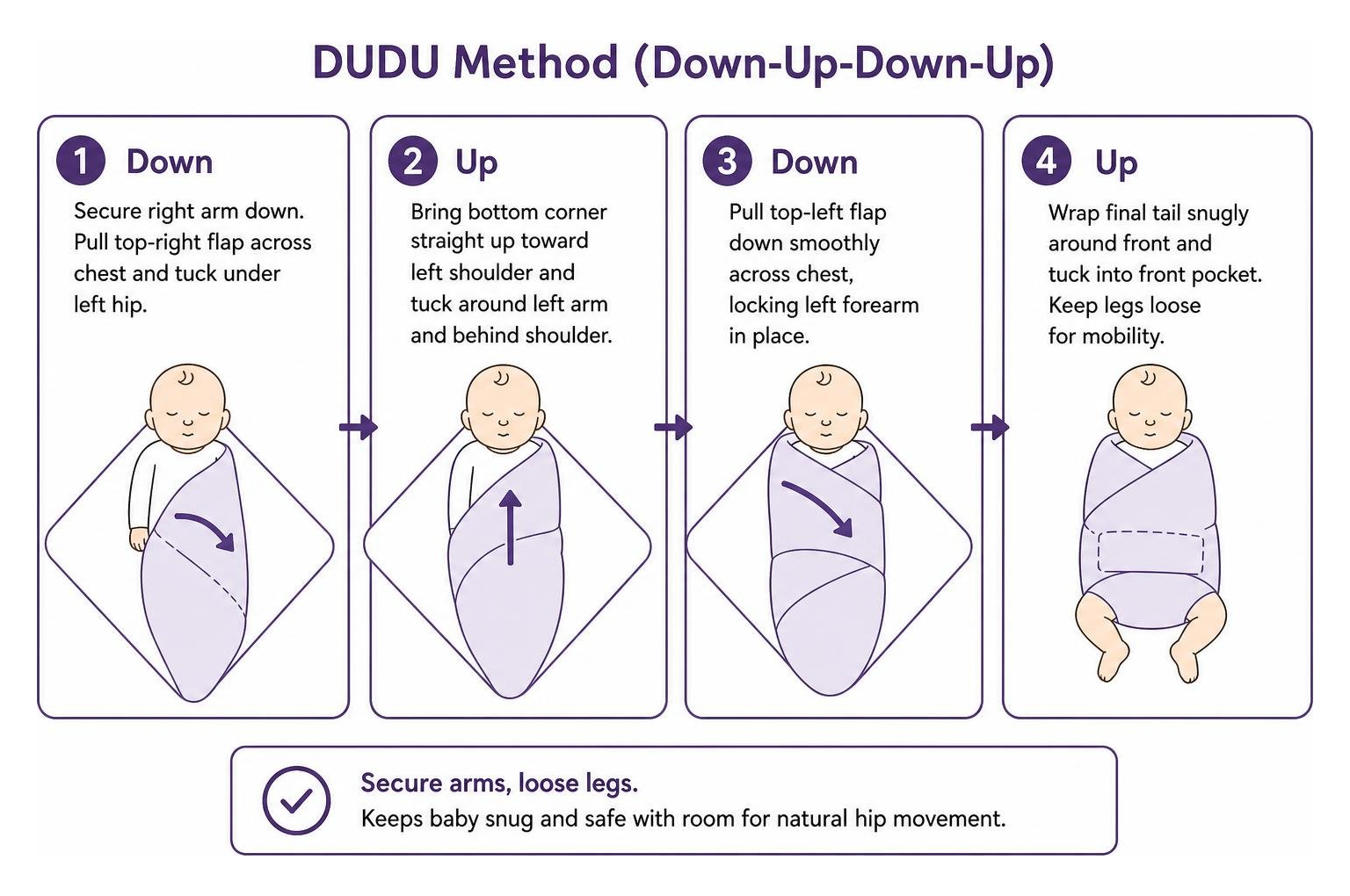
- Down: Lay your baby on a diamond-folded blanket. Gently secure their right arm straight down, pull the blanket's top-right flap tightly across their torso, and tuck it deep under their left hip.
- Up: Take the bottom corner of the blanket, bring it straight up toward the left shoulder, and tuck it firmly around the left arm and behind the shoulder.
- Down: Pull the remaining top-left flap smoothly downward across your baby's chest, locking their left forearm in place.
- Up: Wrap that final tail snugly around the front and tuck it into the front pocket of the wrap, making sure the lower half maintains loose leg mobility.
Following this structured sequence prevents the blanket from unraveling while preserving hip mobility. As detailed in the St. Louis Children's Hospital guide on wrapping technique, keeping the wrap snug on top while leaving the lower body free protects developing joints.
3. The Arms-Up Swaddle: Best Way to Swaddle a Newborn Who Resists Tight Wraps
Not all infants enjoy having their arms pinned firmly to their sides. Some babies naturally soothe themselves by sucking on their fingers, touching their cheeks, or rubbing their faces. For these active sleepers, forcing their arms down leads to fussiness and broken sleep.
The arms-up swaddle maintains a snug, reassuring torso wrap while allowing your baby's elbows to bend naturally with their hands resting near their chin. Fold the blanket into a diamond, but rather than pressing the arms down against the torso, position your baby's hands upward alongside their cheeks. Wrap the side wings across the chest just beneath the hands, securing the torso while leaving their fingers accessible for natural self-soothing.
Pairing this technique with our breathable muslin baby wraps ensures the fabric stretches gently with their subtle arm movements without binding their chest.
4. The Hands-to-Heart Swaddle
The hands-to-heart swaddle mimics the exact posture your baby maintained in the womb during the third trimester. Rather than pressing arms straight downward or holding them fully up, this technique places both tiny hands flat across the center of the chest.
This position is particularly effective for soothing colicky or overtired newborns. Having their hands against their chest creates a comforting tactile connection, helping them regulate their breathing and settle during fussy evening hours.
To create this wrap, gently fold your baby's forearms inward across their heart before pulling the side flaps across the body. The wrap holds their hands securely on their chest while maintaining plenty of room below for their legs to flex. Exploring our collection of organic baby wraps allows you to choose buttery-soft, chemical-free textiles that feel gentle against delicate hands and faces.
5. The Secure Sleep Sack Wrap
For parents navigating middle-of-the-night wakeups on minimal sleep, simplified wrap techniques offer an effortless, comforting alternative.
A sleep sack-style blanket wrap uses a breathable muslin square to create an enclosed lower pouch for the legs paired with snug upper wings wrapped around the chest. This style allows you to easily loosen the bottom fold for rapid nighttime diaper changes without disturbing your baby's upper-body wrap. For an in-depth breakdown of different wrap styles, read our comprehensive baby swaddle blanket guide.

Essential Swaddle Safety Rules: Hip Health, SIDS Prevention, and Fit
Swaddling provides wonderful sleep benefits, but safe-sleep practices must always take priority over comfort. Improper wrapping techniques can introduce serious risks, including developmental hip issues, accidental overheating, and suffocation hazards.
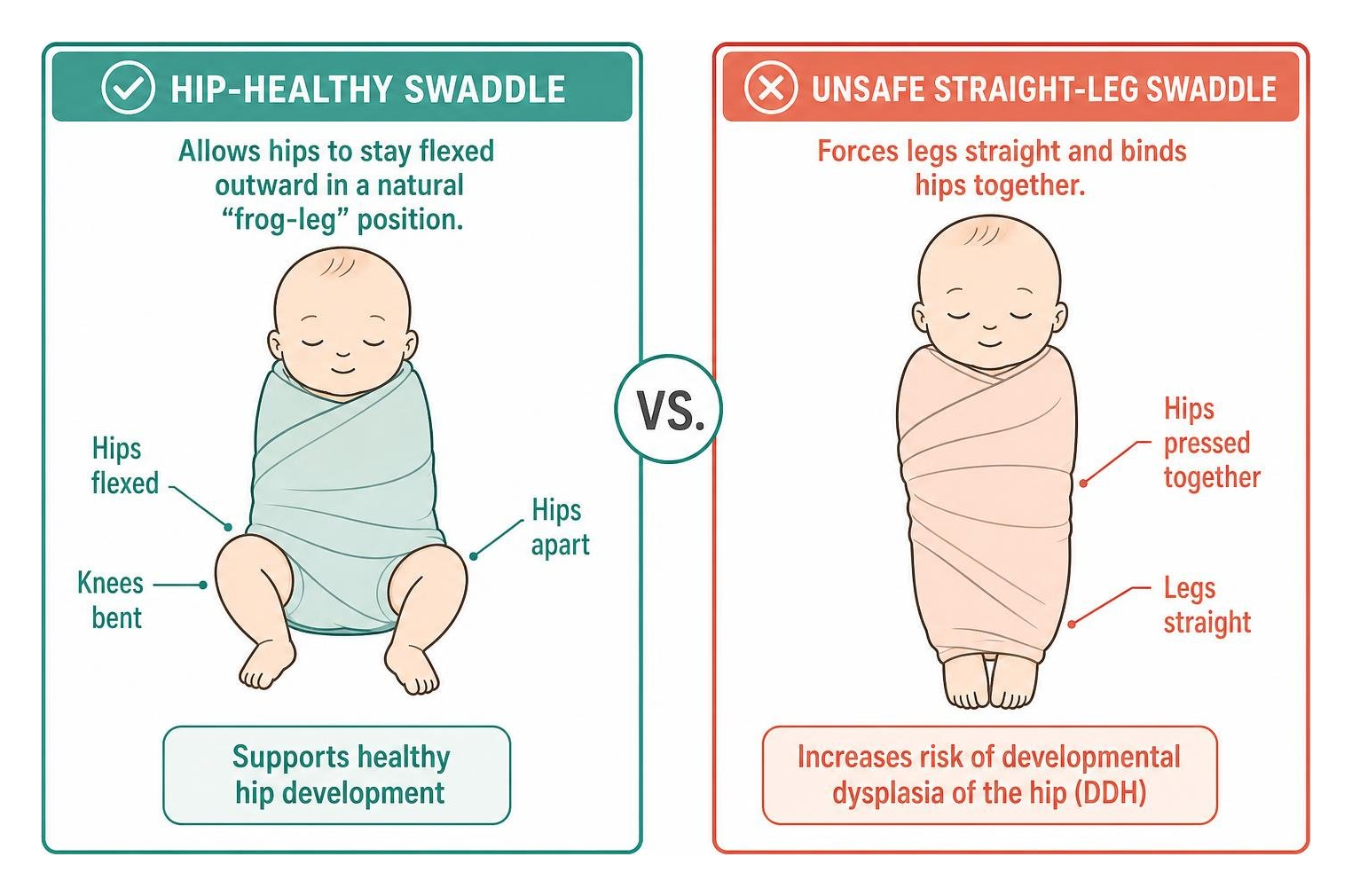
Hip Health and Developmental Dysplasia
When babies are in the womb, their legs are tucked up in a natural fetal position with knees bent and hips apart. Forcing an infant's legs straight down and binding their hips together puts immense pressure on soft cartilage. According to the POSNA position statement on hip-healthy swaddling, tight leg swaddling significantly increases the risk of developmental dysplasia of the hip (DDH) and adult osteoarthritis. A hip-healthy swaddle must always allow your baby's hips to remain flexed outward in a relaxed "frog-leg" posture.
Essential Safety Guidelines
- Always Back-to-Sleep: Never place a swaddled infant on their stomach or side. A swaddled baby on their tummy cannot push themselves up or turn their head, dramatically increasing the risk of suffocation.
- The Two-Finger Tightness Check: Check the fit of your wrap around the chest. You should comfortably slide two to three fingers between your baby's chest and the blanket. It should feel like a gentle hug, never a tight corset that restricts breathing.
- Avoid Weighted Swaddles: The American Academy of Pediatrics strongly advises against weighted blankets, weighted swaddles, or heavy weighted sleep wear for infants due to the risk of chest compression and reduced arousal.
- Prevent Overheating: Dress your baby in light layers beneath the wrap and maintain a nursery temperature between 68°F and 72°F. Check the back of their neck or chest for sweat or flushed skin.
- Choose Certified Natural Fabrics: Because baby skin is exceptionally delicate and permeable, always opt for natural, chemical-free textiles certified to OEKO-TEX safety standards. Discover our handcrafted swaddles collection designed specifically with pure, breathable materials.
When to Stop Swaddling and How to Transition
Swaddling is designed exclusively for early infancy. As your baby develops motor skills, swaddling must end to protect their safety during sleep.
When to Discontinue Swaddling
You should stop swaddling as soon as your baby shows the first signs of trying to roll over, which typically occurs between 2 and 4 months of age (and sometimes earlier). Once an infant can roll onto their stomach, they require full mobility in their arms to lift their head, reposition their face, and breathe safely.
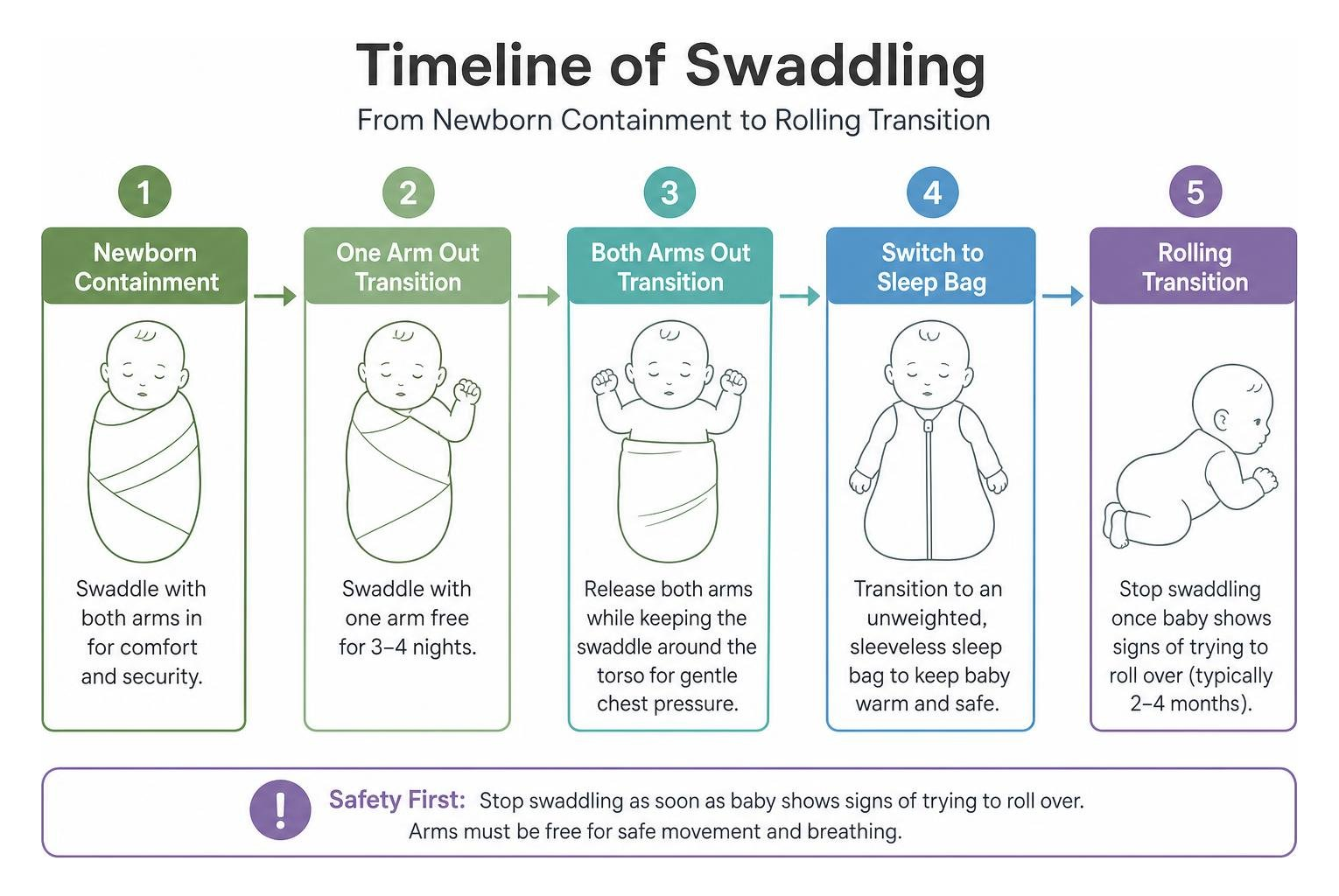
Transitioning Smoothly
Moving away from a swaddle does not have to mean sleepless nights. Try these gentle transition steps:
- One Arm Out: Swaddle your baby with one arm free for three to four nights, allowing them to adjust to partial movement while maintaining torso compression.
- Both Arms Out: Release both arms while keeping the swaddle blanket wrapped around their torso and under their armpits for gentle chest pressure.
- Switch to Arms-Free Sleepwear: Transition fully to unweighted, sleeveless baby sleepwear that leaves arms completely free while keeping your baby comfortable and safe.
For additional tips on selecting transition-friendly sleep products, refer to our practical guidance for choosing safe baby swaddle wraps.
Frequently Asked Questions About Swaddling a Newborn
Does swaddling increase or reduce the risk of SIDS?
Swaddling does not prevent Sudden Infant Death Syndrome (SIDS)—no single product or technique can. However, when practiced correctly, swaddling promotes back-sleeping, which is the single most effective way to reduce SIDS risk. Improper swaddling—such as wrapping too loosely (creating suffocation hazards from loose bedding), wrapping too tightly around the chest, swaddling a baby on their stomach, or continuing to swaddle after a baby rolls—substantially increases safety risks. Always place your swaddled baby on a firm, flat mattress in a bare crib free of loose blankets, pillows, or plush toys.
What should I do if my baby hates being swaddled?
If your baby fusses whenever you swaddle them, they may simply dislike having their arms pinned down. Try the arms-up or hands-to-heart techniques to provide containment while honoring their desire for hand mobility. Additionally, check the timing of your wrap; swaddling an overtired or starving baby often triggers tears. Swaddle your little one right after a feeding and burping session when they are calm and drowsy. You can also explore different techniques for wrapping with a muslin blanket to adjust tension and breathability.
How tight should a swaddle blanket be around baby's chest and hips?
The ideal swaddle features two distinct zones of tension: snug around the upper torso and loose around the lower body. Around the chest, the blanket should feel secure enough that the baby cannot wriggle their hands out, yet loose enough for you to slide two to three fingers flat against their sternum. Around the hips and legs, the wrap should be completely loose, forming a roomy pouch where your baby can freely bend, kick, and spread their knees in a natural frog-leg position.
Conclusion
Mastering the best way to swaddle your newborn is one of the most rewarding skills you can develop during early parenthood. By choosing breathable, natural fabrics, respecting your baby's individual arm preferences, and prioritizing safe-sleep guidelines—including loose hip positioning and back-sleeping—you create a safe, soothing sleep environment that helps the entire household rest more peacefully.
At CocoMi Baby Boutique, we craft our nursery essentials with the belief that safety and timeless elegance should always go hand in hand. Handcrafted from natural, chemical-free materials meeting the highest European OEKO-TEX safety standards, our swaddles and wraps are designed to bring gentle luxury and peace of mind to your newborn's daily routine. To discover more expert sleep advice, nursery styling tips, and newborn care insights, explore our latest baby care and sleep guides today.