

Why Every Parent Is Choosing Organic Cotton Baby Blankets

Organic cotton baby blankets are made from cotton grown without synthetic pesticides, chemical fertilizers, or harmful processing agents — making them one of the safest and most natural choices for your newborn's delicate skin.
Here's a quick overview of what sets them apart:
| Feature | Organic Cotton Baby Blankets |
|---|---|
| Certifications | GOTS, OEKO-TEX STANDARD 100 |
| Skin safety | Hypoallergenic, chemical-free, non-toxic |
| Breathability | High — helps regulate baby's temperature |
| Common types | Swaddles, muslin quilts, waffle weaves, dream blankets |
| Typical sizes | 30×40 in (crib), 47×47 in (swaddle/dream blanket) |
| Price range | $25–$100+ depending on type and brand |
| Environmental impact | Uses 91% less water than conventional cotton farming |
Babies spend most of their early days wrapped in blankets. What those blankets are made of matters more than most parents realize.
Conventional cotton is one of the most heavily treated crops in the world — often processed with pesticides, synthetic dyes, and chemical finishes that can linger in the fabric. For a newborn whose skin is thinner, more absorbent, and far more sensitive than an adult's, that's a real concern.
Organic cotton changes that equation entirely. It's grown and processed to strict standards, so what touches your baby's skin is as close to nature as possible.
I'm Monika Jarog, a designer of handcrafted baby essentials crafted from 100% natural, chemical-free materials — including organic cotton baby blankets — built to meet the highest European safety standards. Having worked closely with natural nursery textiles, I'll walk you through everything you need to know to make a confident, informed choice.
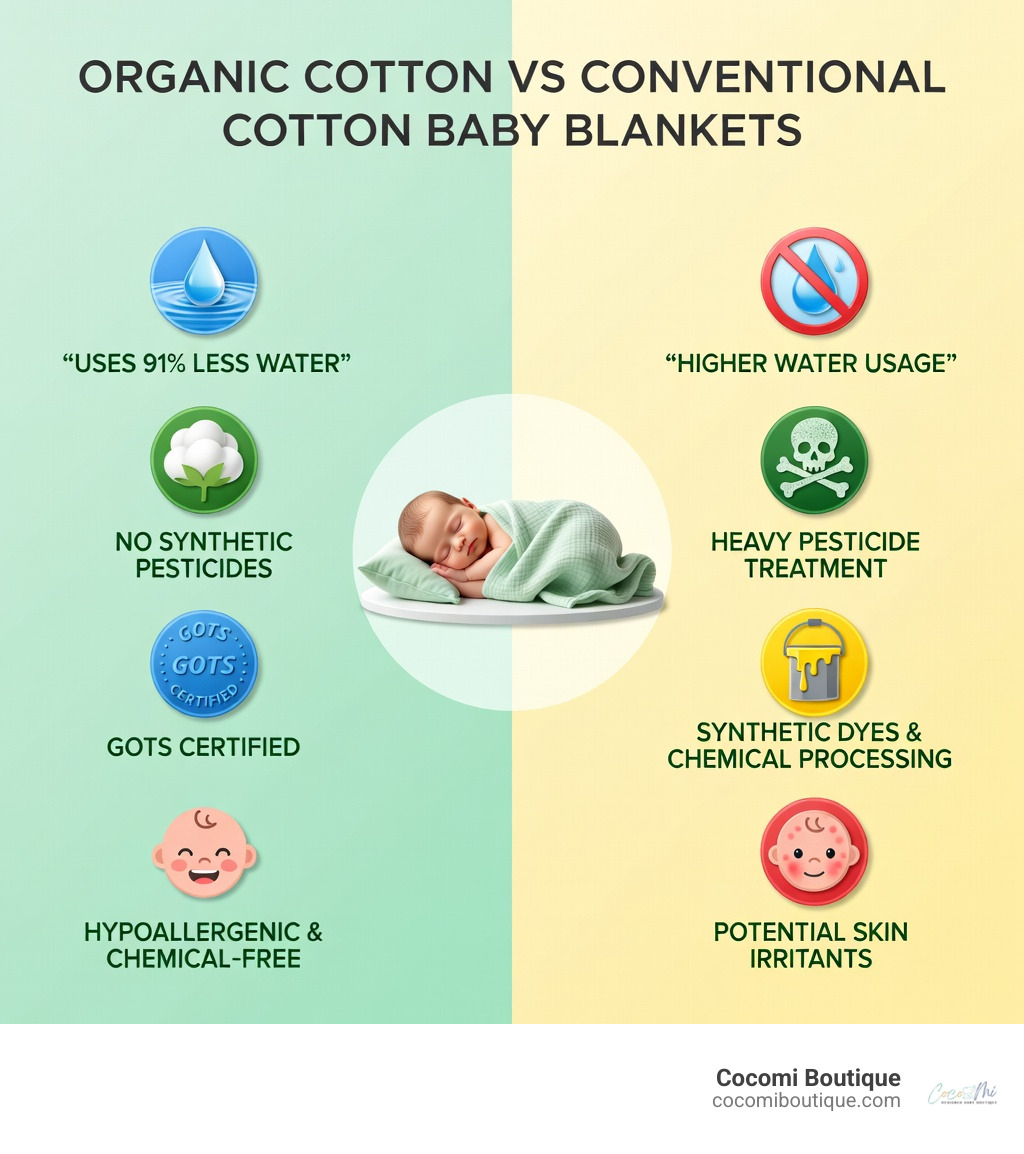
The Health Benefits of organic cotton baby blankets
When we talk about organic cotton baby blankets, we aren't just talking about a "trend." We are talking about the health and safety of the most vulnerable member of your family. At Cocomi Boutique, we believe that quality and care go hand-in-hand, and nothing says "care" quite like a textile that is as pure as the day it was picked.
Organic cotton fibers are naturally superior because they are not weakened by harsh chemical treatments. This results in a blanket that is not only softer but also significantly more durable. Research shows that organic cotton farming uses 91% less water compared to conventional cotton, which is a staggering statistic that highlights how much better these blankets are for the planet your child will inherit.
Furthermore, because organic cotton is grown without synthetic pesticides or fertilizers, the final product is free from toxic residues. This is crucial for newborns, as their skin is incredibly absorbent. Any chemical present in their bedding can potentially be absorbed into their system. By choosing organic cotton baby blankets, you are creating a chemical-free sanctuary for your little one.
Hypoallergenic Properties for Sensitive Skin
If you’ve ever noticed a red patch or a small rash on your baby’s skin after a nap, the culprit might be the chemicals in their bedding. Conventional cotton blankets often contain traces of formaldehyde, heavy metals, and synthetic dyes that can trigger eczema or contact dermatitis.
Organic cotton baby blankets are inherently hypoallergenic. The natural fibers are smooth and non-irritating, providing a soothing environment for babies with sensitive skin. Because organic cotton is processed using natural methods, it retains its natural wax, which adds to that "velvety" feel parents love. For more on finding the right certified options, you can check out our guide on gots-certified-goodness-finding-the-perfect-organic-muslin-blanket.
We often hear from parents in the Chicago and Northbrook areas who struggle with infant eczema. Switching to organic textiles is usually the first recommendation we make. It’s a simple change that can lead to fewer skin flare-ups and much better sleep for everyone involved.
Breathability and Temperature Regulation
One of the most dangerous risks for newborns is overheating. Babies cannot regulate their body temperature as efficiently as adults do, and they lose heat much faster. This makes the breathability of their blanket a life-saving feature.
Organic cotton baby blankets, particularly those with a waffle weave or multi-layered muslin construction, allow for maximum airflow. The unique structure of these weaves creates small air pockets that trap just enough heat to keep the baby warm while allowing excess moisture and heat to escape. This "moisture-wicking" property ensures your baby stays dry and comfortable, whether it’s a humid summer day in Glenview or a chilly winter night in Buffalo Grove.
To understand why muslin is such a powerhouse in this category, take a look at the-ultimate-guide-to-cotton-muslin-baby-blankets-softness-safety. It explains how the open weave provides that essential year-round comfort.
Understanding Organic Certifications: GOTS and OEKO-TEX
When you are shopping for organic cotton baby blankets, you will see a lot of labels. It can get confusing! However, two certifications stand out as the "gold standards" you should always look for: GOTS and OEKO-TEX.
- GOTS (Global Organic Textile Standard): This is the most rigorous certification. It doesn't just look at the final product; it audits the entire supply chain. From the harvesting of the cotton to the ethical treatment of workers and the exclusion of toxic dyes, GOTS ensures that the blanket is truly organic and socially responsible.
- OEKO-TEX STANDARD 100: While GOTS focuses on the organic nature of the fiber, OEKO-TEX focuses on safety. It tests the finished product for over 100 harmful substances, including formaldehyde, pentachlorophenol, and nickel. If a blanket is OEKO-TEX certified, you can rest assured it is safe for your baby’s skin.
At Cocomi Boutique, we prioritize these certifications because we know that "natural" is a vague marketing term, but "GOTS-certified" is a promise of quality. These standards also ensure that no chemical flame retardants are used, which is a common concern in conventional nursery bedding.
Comparing Organic Cotton to Other Materials
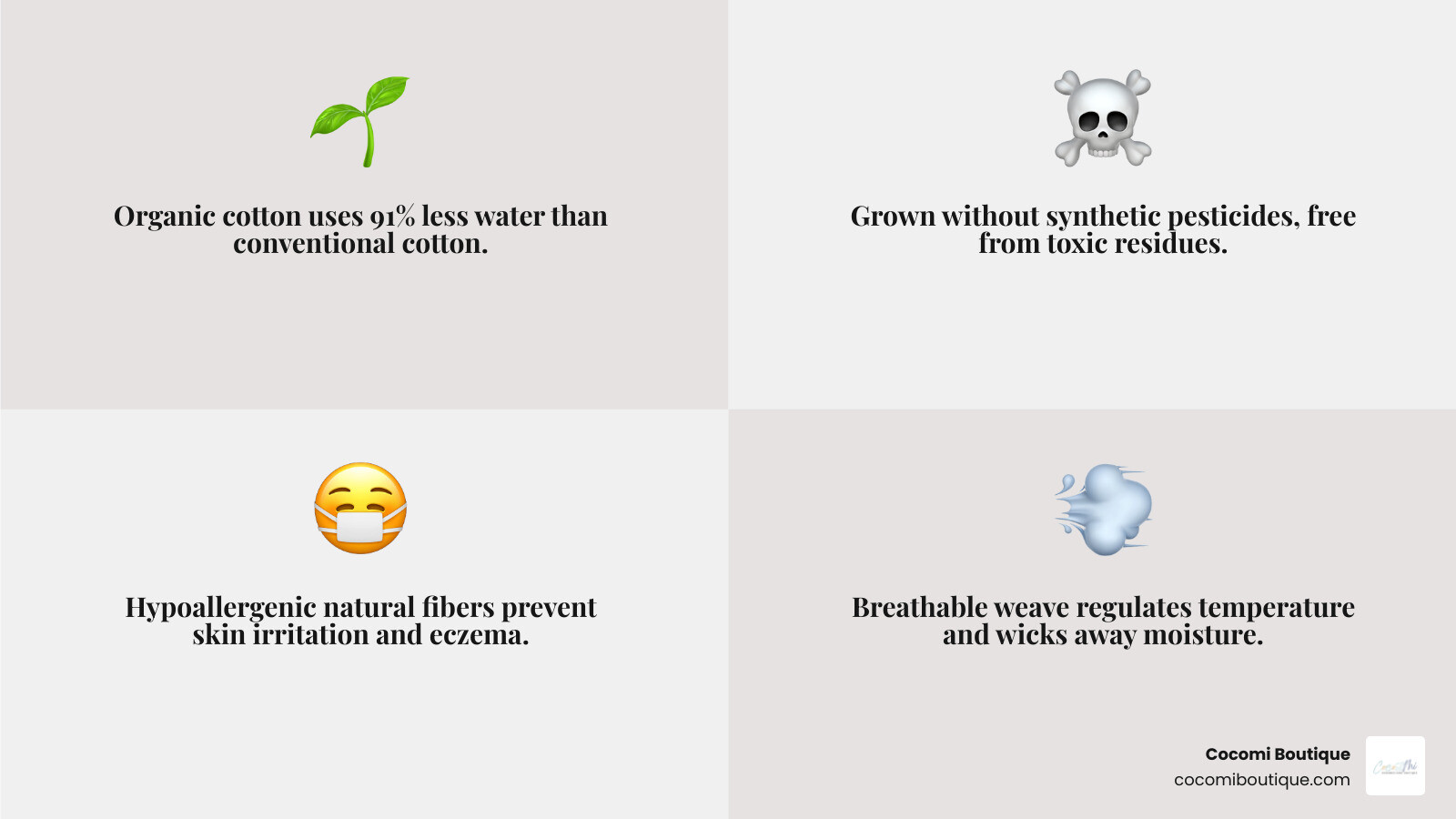
When choosing the best for your baby, it’s helpful to see how organic cotton baby blankets stack up against the competition:
- Vs. Conventional Cotton: Conventional cotton is cheaper but comes at a high environmental and health cost. It uses more water and heavy pesticides. Organic cotton uses long-staple fibers that are handpicked, making them stronger and softer over time, whereas conventional cotton fibers are often broken by machine harvesting.
- Vs. Bamboo: Bamboo is often marketed as "eco-friendly," but most bamboo fabric is actually "bamboo rayon." The process of turning hard bamboo into soft fabric involves harsh chemicals like carbon disulfide. Organic cotton is processed mechanically or with mild, biodegradable agents.
- Vs. Synthetic Fabrics (Polyester/Fleece): Synthetics are made from petroleum and can shed microplastics in the wash. They are also not breathable, which increases the risk of overheating and skin irritation.
If you want to dive deeper into how to choose the softest swaddle, our organic-cotton-swaddle-blanket-guide is a fantastic resource.
Types of organic cotton baby blankets and Their Uses
Not all blankets are created equal. Depending on your needs—whether you're at home in Highland Park or on a stroller walk in Winnetka—different styles serve different purposes.
- Swaddle Blankets: These are typically large (around 47x47 inches) and made of lightweight muslin. They are designed to wrap snugly around a newborn to mimic the security of the womb.
- Waffle Weave Blankets: These have a textured, honeycomb-like surface. They are incredibly breathable and make excellent "go-anywhere" blankets for car seats or strollers.
- Quilts and "Dream Blankets": Usually made of four or more layers of organic muslin, these are thicker and provide more warmth. They are perfect for tummy time or as a toddler’s first bed blanket (after age one).
- Receiving Blankets: These are smaller and often made of organic flannel or jersey. They are great for "receiving" the baby, burping, or providing a clean surface for a quick diaper change.
Versatile organic cotton baby blankets for Every Occasion
The beauty of a high-quality organic blanket is its versatility. We’ve seen our customers use them as nursing covers, makeshift changing mats, and even sunshades for strollers (though always ensure there is plenty of airflow!).
Because organic cotton is so durable, these blankets can withstand the frequent washing that comes with spills and spit-ups. In fact, many parents find that their organic cotton baby blankets actually get softer with every wash. For those who love a bit of style with their sustainability, check out our insights on organic-swaddle-blankets-made-in-usa-animal-prints-and-french-flair.
Choosing the Right Size for organic cotton baby blankets
Size matters! A blanket that is too small won't stay tucked, and one that is too large can be cumbersome.
- 30x40 inches: The standard size for crib blankets and stroller covers.
- 47x47 inches: The ideal size for swaddling, as it provides enough fabric to tuck securely.
For a complete breakdown of sizes and their specific benefits, read the muslin-baby-blanket-complete-guide.
Care and Maintenance for Long-Lasting Softness
To keep your organic cotton baby blankets in top shape, you don't need fancy chemicals. In fact, the simpler the better!
- Wash Cold: Use cold or lukewarm water on a gentle cycle. This preserves the integrity of the organic fibers.
- Mild Detergent: Use a plant-based, scent-free detergent. Avoid bleach and fabric softeners, as these can coat the fibers and reduce the blanket’s natural breathability.
- Tumble Dry Low: Or better yet, air dry! If you use a dryer, keep it on a low heat setting to prevent shrinkage.
- Stain Removal: For those inevitable "blowouts," dab the stain immediately with a damp cloth and a tiny bit of mild soap before throwing it in the wash.
Following these steps ensures your blanket remains a cherished heirloom. You can find more eco-friendly care tips in our eco-friendly-comfort-explore-our-organic-muslin-swaddle-collection.
Frequently Asked Questions about Organic Baby Bedding
Are organic cotton blankets worth the higher price?
Yes! While the initial cost might be higher—ranging from $25 for a basic swaddle to over $100 for a luxury quilt—the "cost-per-use" is actually quite low. These blankets don't pill or fall apart after three washes. They are built to last through multiple children. Plus, the peace of mind knowing your baby isn't breathing in pesticide residues is priceless.
What is the safest way to use a blanket with a newborn?
Safety is our number one priority. According to SIDS guidelines from the American Academy of Pediatrics, you should not leave a loose blanket in a crib with a sleeping infant under the age of 12 months. However, organic cotton baby blankets are perfectly safe for:
- Supervised napping.
- Swaddling (until the baby shows signs of rolling over).
- Tummy time.
- Stroller walks. Once your child reaches their first birthday, these blankets can transition into their permanent crib bedding.
How does organic cotton help the environment?
Beyond saving water, organic farming promotes soil health and biodiversity. It keeps harmful chemicals out of our waterways. Some companies even focus on sustainable packaging—for instance, one organic brand reports keeping 55,000 pounds of single-use plastic out of landfills annually! By choosing organic, you are supporting a system that values the earth. Learn more about these essentials at organic-baby-essentials.
Conclusion
Choosing organic cotton baby blankets is a small decision that makes a big impact. It’s about more than just a soft fabric; it’s about choosing health, safety, and sustainability for your little one. At Cocomi Boutique, we are proud to serve families from Chicago to Deerfield and beyond, providing stylish, high-quality organic options that parents can trust.
Whether you’re preparing your own nursery or looking for the perfect baby shower gift, organic cotton is the natural choice that truly keeps on giving.
Explore our full collection of organic nursery news and updates