

Why Baby Nests Have Become a Modern Parenting Essential
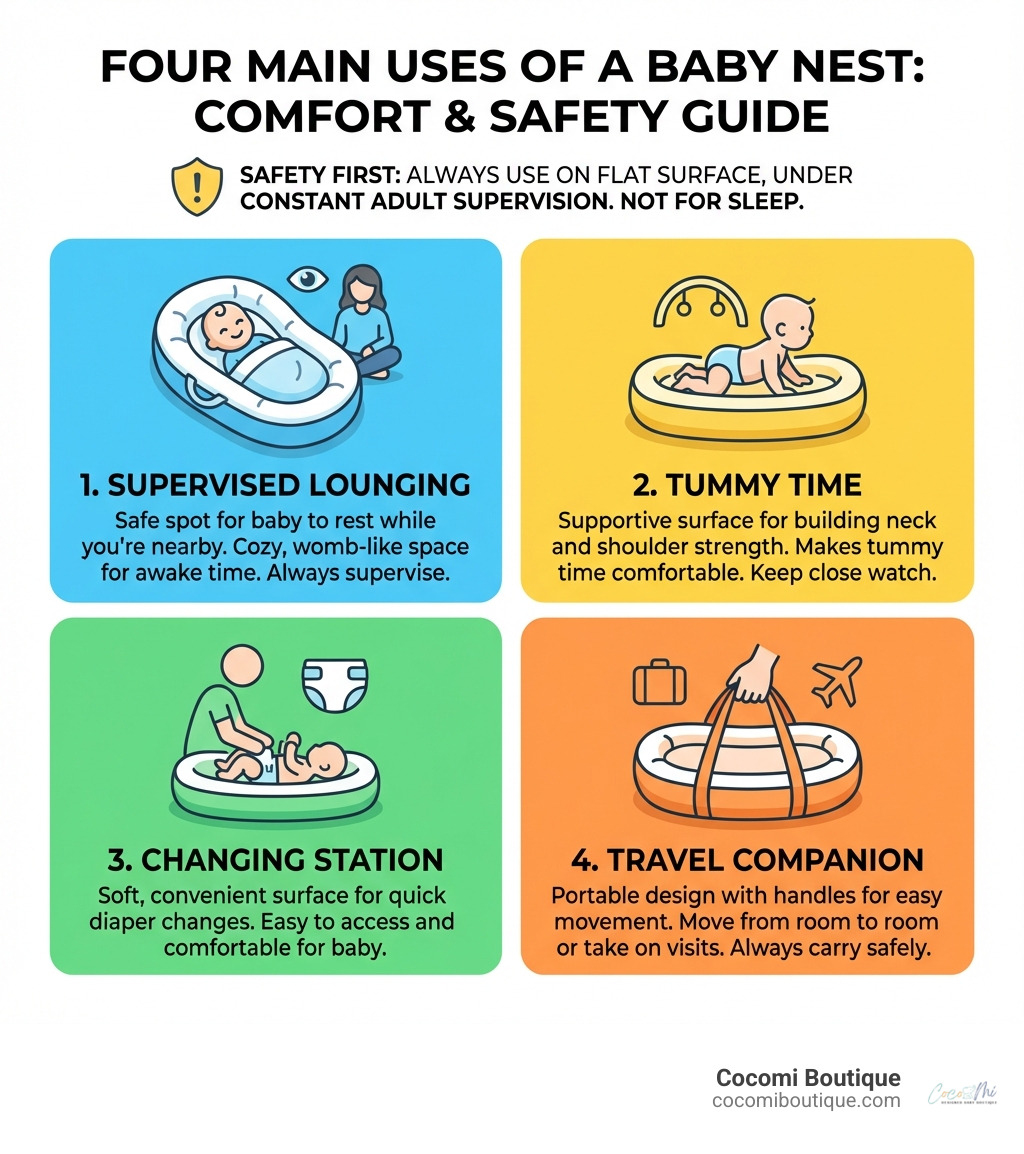
A Baby Nest is a portable, cushioned lounger designed to create a cozy, womb-like space for your newborn during supervised awake time. Here's what you need to know:
Key Uses for Baby Nests:
- Supervised lounging – A safe spot for your baby to rest while you're nearby
- Tummy time – Supportive surface for strengthening neck and shoulder muscles
- Bonding and play – Comfortable space for interaction and early communication
- Portable comfort – Easy to move from room to room or take on visits
- Changing station – Soft surface for quick diaper changes
Critical Safety Note: Baby nests are not suitable for unsupervised sleep due to suffocation risks. They should only be used on flat surfaces under constant adult supervision.
Every new parent quickly learns that babies need more than just a crib. They need a safe, comfortable spot for those awake hours—somewhere to lounge during tummy time, rest after feeding, or simply be close while you catch your breath. That's where baby nests shine. These portable, cushioned loungers mimic the snug feeling of a parent's accept, keeping your baby in a semi-hugged position that feels familiar and soothing.
Many parents describe their baby nest as their favorite newborn essential, and it's easy to see why. The raised edges create a secure boundary that helps babies feel protected, while the portable design means you can keep your little one nearby whether you're in the living room, bedroom, or visiting family. It's a simple tool that makes those early months just a bit easier—offering hands-free moments when you need them most, facilitating bonding time, and creating a designated space for supervised play and rest.
However, with great convenience comes great responsibility. While baby nests offer genuine benefits for daytime use, they're not designed for sleep. Recent safety regulations and health guidelines have made this crystal clear: baby nests pose suffocation risks when used for unsupervised sleep or placed in cribs. Understanding when, where, and how to use these products safely is essential for every parent.
I'm Monika Jarog, and I've spent years crafting handmade baby essentials from 100% natural, chemical-free materials that meet European safety standards. Through designing and creating Baby Nests for countless families, I've learned what makes these products both beautiful and safe—and what every parent should know before bringing one home.
Simple guide to Baby Nest:
What is a Baby Nest and Why Do Parents Love Them?
At its heart, a Baby Nest is a soft, portable sleeping pod or infant lounger designed to cradle a newborn. Often described as a "baby pod" or "infant lounger," its primary characteristic is a cushioned base surrounded by soft, raised edges. This design mimics the snug, enclosed feeling of the womb, providing a comforting and secure space for babies during their awake moments. The cocoon-like shape helps babies feel safe and settled, making the transition from the womb to the wide world a little gentler.
Benefits for Baby
For newborns, the world can feel vast and overwhelming. A Baby Nest offers a sense of comfort and security that can be incredibly soothing. The semi-hugged position helps to calm babies, making them feel held and protected. This close, familiar environment can contribute to a baby's sensory experience, providing gentle boundaries that reduce startling reflexes and promote a feeling of peace. When traveling or visiting new places, a familiar baby nest can provide a consistent and comforting environment, helping your little one adapt more easily to new surroundings. It's like a little piece of home they can take with them, ensuring their comfort wherever they go.
Benefits for Parents
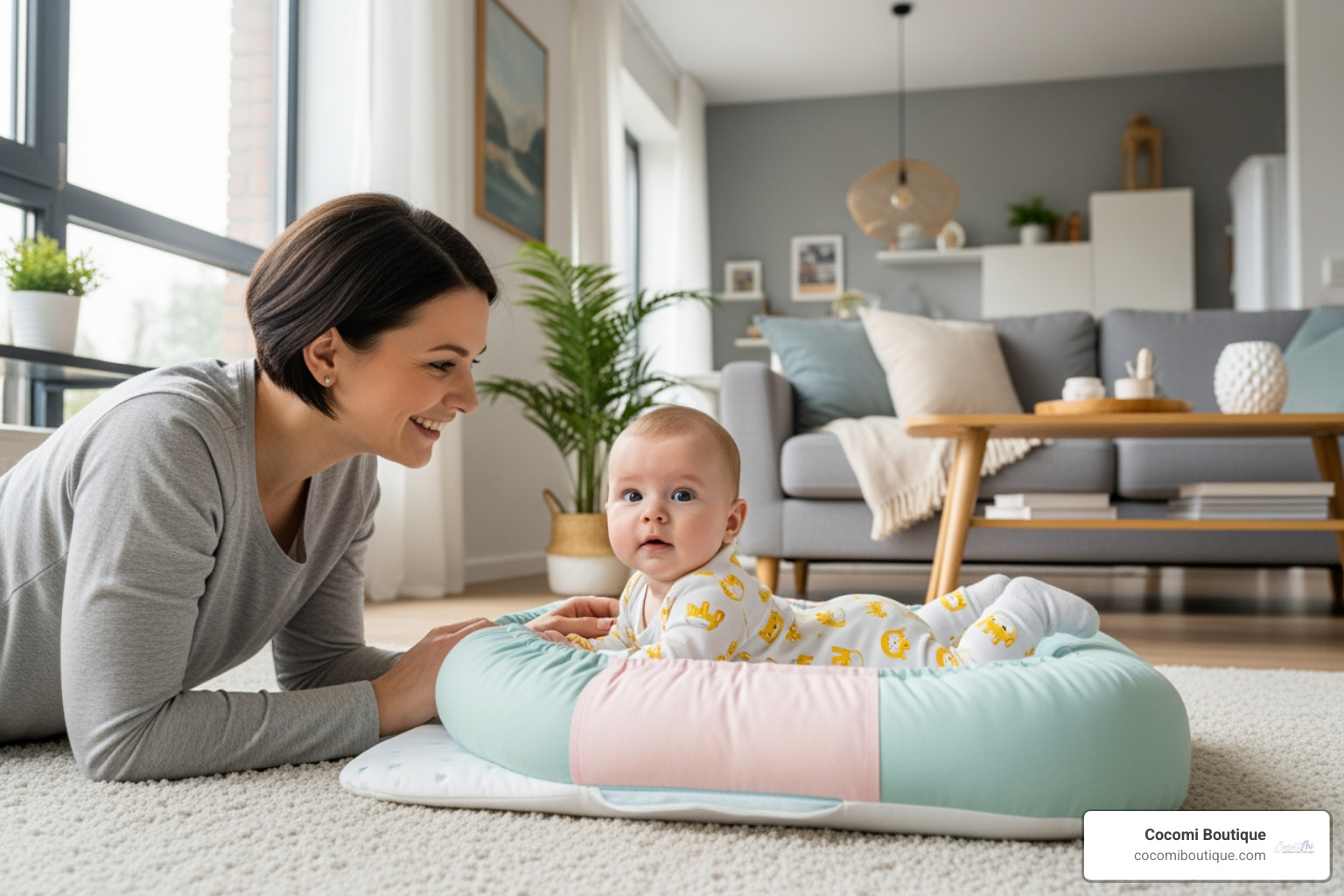
Parents in Illinois and across the U.S. often find Baby Nests to be indispensable for several reasons. Primarily, they offer those precious hands-free moments that every new parent craves. Whether you need to prepare a meal, answer an email, or simply enjoy a cup of coffee, a baby nest allows your baby to rest safely nearby, under your watchful eye. This portability is a huge advantage; you can easily move the nest from the living room to the kitchen, or even out to the patio, keeping your baby close without being constantly held.
Beyond convenience, baby nests facilitate bonding time. They provide a comfortable space for you to interact with your baby, engaging in playtime or early communication. This close proximity, even when your hands are busy, contributes to a sense of connection and peace of mind, knowing your little one is safe and content in their designated spot.
A Tool for Development
While their primary role is comfort and supervised lounging, Baby Nests can also play a supportive role in a baby's development. They offer an ideal, soft surface for supervised tummy time, which is crucial for strengthening neck and shoulder muscles. By providing a slightly liftd and contained space, some babies find tummy time more manageable and enjoyable in a nest. This engagement during waking hours also supports early communication as you interact with your baby, encouraging them to lift their head, track objects, and respond to your voice.
For a deeper dive into the advantages and proper use of these helpful loungers, we encourage you to read The Truth About Newborn Snuggle Nests: Safety, Benefits, and What to Consider.
Choosing the Right Nest: Materials, Features, and Certifications
When it comes to selecting a Baby Nest for your little one, making informed choices is paramount. It’s not just about aesthetics; it’s about ensuring quality, safety, and suitability for your family’s needs. While the market offers a wide range of options, we always emphasize that quality should never be sacrificed for price, especially when it concerns your baby's comfort and well-being. Understanding the materials, key features, and certifications will help you steer the choices with confidence.

To help you make the best decision for your family, explore our guide: Is a Baby Nest Worth It? Unpacking the What, Why, and How-To.
Common Materials and Their Properties
The materials used in a Baby Nest significantly impact its comfort, safety, and durability. We look for materials that are breathable, hypoallergenic, and easy to maintain:
- Breathable Fabrics: Essential for preventing overheating, especially in the warmer months. Many nests feature organic cotton or specialized 3D mesh fabrics designed to promote airflow. For example, some products offer 3D mesh for hot and humid weather, providing higher airflow and a cooler sleeping environment, while cotton is suggested for air-conditioned rooms. The versatility of 3D mesh can make it a preferred choice for many parents in Illinois, where temperatures can fluctuate.
- Organic Cotton: A popular choice for its softness, breathability, and hypoallergenic qualities. Organic cotton is gentle on delicate baby skin and free from harsh chemicals. Some products, like the Newborn Nest sets, are made with organic cotton, ensuring a soft and safe touch.
- Wool: For those seeking natural and temperature-regulating options, wool is an excellent choice. Our own handmade Baby Nests often feature 100% wool fill and organic cotton covers. Wool naturally regulates temperature, wicks away moisture, and is inherently flame-resistant, as well as dust mite and mildew resistant. It's also anti-microbial and anti-bacterial, providing a chemical-free, non-toxic, and synthetic-free environment. The filling can even be adjusted for optimal comfort.
- Hypoallergenic Qualities: Regardless of the primary material, ensuring the entire nest is hypoallergenic is crucial to prevent skin irritations and allergies in sensitive newborns.
- Oeko-Tex Certified Materials: A common certification we look for is Oeko-Tex Standard 100. This certification guarantees that textiles have been tested for harmful substances and are safe for human ecological terms, ensuring they won't irritate your baby's skin or cause allergies.
Key Features to Look for in a Quality Baby Nest
Beyond materials, several features contribute to a Baby Nest's functionality and safety:
- Firm Mattress: A firm, flat mattress is crucial for proper spinal development and to reduce the risk of suffocation. While baby nests are not for unsupervised sleep, a firm base is still important for support during supervised lounging and tummy time.
- Snug Fit: The raised edges should provide a snug, cocoon-like feeling without being overly restrictive. Some nests are designed to be extendable in length, accommodating your growing baby from newborn to around 12 months.
- Portability Features: Look for lightweight designs (some weighing as little as 2.2kg) and convenient handles or storage bags. This makes it easy to move the nest around your home in areas like Northbrook, Deerfield, or Glencoe, or take it with you when visiting friends and family.
- Removable and Washable Covers: Babies are messy! Easy-to-clean features are a lifesaver. Most quality nests come with removable covers that can be machine washed, often on a gentle cycle with cold water, and then air-dried. This ensures hygiene and longevity.
- Adjustable Sizing: Some Baby Nests offer adjustable elements, such as ties at the bottom or adjustable filling, allowing you to customize the size and firmness as your baby grows.
Understanding Costs and Safety Certifications
The price of a Baby Nest can vary significantly, typically ranging from around $100 to over $300. Factors influencing the cost include the quality of materials (e.g., organic, wool), craftsmanship (handmade versus mass-produced), brand reputation, and additional features like adjustable components or included accessories.
When considering safety, certifications are key. While specific U.S. regulations for baby nests (particularly for sleep) have led to some products being retired, reputable manufacturers prioritize safety standards for awake-time use. We always recommend looking for products with:
- Oeko-Tex Standard 100 Certification: As mentioned, this ensures the fabric is free from harmful substances.
- European Safety Standards: While we focus on U.S. safety, some manufacturers adhere to international standards like EN-16890, which covers mattress air permeability, thickness, and firmness. This indicates a commitment to rigorous testing and safety.
Even with certifications, a Baby Nest is designed for supervised use only. For comprehensive information on what you'll need for your baby, including crucial safety advice, you can always refer to resources like What you'll need for your baby.
The Ultimate Safety Checklist for Using Your Baby Nest
When it comes to our babies, safety is always our top priority. While Baby Nests offer wonderful benefits for supervised awake time, it is crucial to understand and adhere to strict safety guidelines to mitigate any potential risks. We cannot stress this enough: "Baby nests are not suitable for your baby to sleep in because of the danger of suffocation." This is a critical piece of information that every parent must internalize.
Safe Usage Guidelines
To ensure your baby’s safety while using a Baby Nest, please follow these essential guidelines:
- Always Supervised: A Baby Nest is strictly for supervised, awake time. Never leave your baby unattended in a nest, even for a moment. This means an adult should always be within arm's reach and able to see the baby.
- Awake Time Only: These products are designed for active engagement, playing, bonding, and supervised lounging with an awake little one. They are not intended for overnight sleep or unsupervised naps.
- Flat, Firm Surface: Always place the Baby Nest on a flat, firm, and stable surface. This could be the floor, a carpet, or a sturdy playmat. Never place a baby nest on a soft surface like a bed, sofa, or armchair, as this can create an unstable environment and increase suffocation risks.
- Away from Edges: Ensure the nest is placed well away from the edges of any liftd surface to prevent accidental falls.
- Back for Lounging, Tummy for Play: For supervised lounging, place your baby on their back. For supervised tummy time, place them on their tummy, ensuring their airway is clear and you are actively engaging with them.
- No Loose Bedding: Keep the Baby Nest free from pillows, loose blankets, quilts, or stuffed animals. These items can pose a suffocation hazard.
- Avoiding Overheating: Dress your baby appropriately for the room temperature and avoid over-layering. Regularly check your baby's temperature to ensure they are not too warm.
The Truth About Your Baby Nest and Sleep
The most important safety message regarding Baby Nests is that they are not safe for unsupervised sleep, overnight sleep, or placement inside a crib or bassinet. Health authorities in the U.S. and globally are very clear on this point. The soft, padded sides of a baby nest, while comforting for awake time, can pose a suffocation risk if a baby rolls or shifts their position during unsupervised sleep, or if their face becomes pressed against the side.
New U.S. regulations have even led to the retirement of some popular infant loungers, underscoring the serious nature of these safety concerns. While some products were previously marketed for co-sleeping, we strongly advise against using any Baby Nest for co-sleeping within an adult bed. Bed-sharing with a baby carries significant risks, including accidental suffocation, overheating, and entrapment.
For parents seeking safe sleep solutions, a firm, flat mattress in a crib or bassinet, free from loose bedding, remains the safest option. For comprehensive information on safe sleeping practices and reducing the risk of sudden infant death syndrome (SIDS), we highly recommend consulting trusted resources such like Nest or No Nest: Decoding Safe Sleep for Your Newborn and For more information on safe sleeping, visit the Lullaby Trust website.
Recommended Age and Transitioning
Most Baby Nests are designed for newborns and can typically be used up to an age range of 8 to 12 months, depending on the specific product and your baby's developmental milestones. For example, some brands specify suitability from 0 to 8 months. However, it’s crucial to discontinue use of a Baby Nest as soon as your baby shows signs of being able to roll over, push up on their hands and knees, or reaches the manufacturer's specified age or weight limit, whichever comes first.
These milestones indicate increased mobility, at which point the contained environment of a baby nest can become a safety hazard rather than a comfort. Once your baby outgrows their Baby Nest for supervised lounging, it's time to transition them to other safe spaces for awake play, such as a play mat on the floor, or to a crib or playpen for supervised rest.
Baby Nests vs. Other Infant Lounging Solutions
Navigating baby products can feel overwhelming, with countless options designed to make parenting easier. Understanding how a Baby Nest compares to other common infant lounging and care solutions can help you make the right choice for your family's specific needs in Illinois. Each product serves a distinct purpose, and knowing these differences is key to using them safely and effectively.
Here’s how a Baby Nest stacks up against some other common baby products:
| Product Type | Primary Use | Portability | Key Safety Feature |
|---|---|---|---|
| Baby Nest / Lounger | Supervised lounging, tummy time, changing station, travel | High (lightweight, often with handles) | Raised, soft sides for containment, womb-like feel; Strictly for supervised awake time. |
| Play Mat | Floor-based play, tummy time | Medium (foldable, but often larger) | Soft, padded surface for comfort; Encourages free movement and exploration. |
| Changing Pad | Diaper changes | Medium (can be moved, but often stationary) | Waterproof surface, sometimes with contoured sides to prevent rolling. |
| Bassinet / Crib | Unsupervised sleep, overnight sleep | Low (bassinets are somewhat portable, cribs are stationary) | Firm, flat mattress; Breathable mesh sides; Designed to meet strict sleep safety standards. |
A Baby Nest excels in providing a portable, womb-like, contained space for supervised awake time. Its soft, raised edges offer comfort and a sense of security that a flat play mat doesn't, and it's much more versatile than a dedicated changing pad. However, it's critical to remember its limitation: it is not a safe sleep solution like a bassinet or crib, which are specifically designed and regulated for unsupervised sleep.
When exploring solutions, we want to ensure you're making choices that align with your family's lifestyle, whether you're in the busy city of Chicago, the suburban calm of Glenview, or the quiet neighborhoods of Riverwoods. Understanding that different tools are designed for different jobs helps us create the safest and most supportive environment for our little ones.
How to Clean and Maintain Your Baby Nest
Keeping your Baby Nest clean is essential for your baby's health and the longevity of the product. Babies are prone to spills, spit-ups, and diaper leaks, so easy maintenance is a key feature we look for in quality baby essentials. With proper care, your baby nest can remain a fresh, comfortable, and hygienic space for your little one.
Step-by-Step Cleaning Guide
Most quality Baby Nests are designed with ease of cleaning in mind. Here's a general guide:
- Read the Label First: Always check the manufacturer's care instructions located on the product label. This will provide specific guidance for your particular nest's materials.
- Disassemble (if applicable): Many nests have removable covers and sometimes separate mattress pads or bumper fillings. Carefully unzip or unfasten these components.
- Spot Cleaning: For small spills or stains, spot clean immediately using a mild, baby-safe detergent and a damp cloth. Gently blot the area until clean, then air dry thoroughly.
-
Machine Washing Covers: Most fabric covers (like organic cotton or 3D mesh) are machine washable.
- Use a gentle cycle with cold water to prevent shrinking or damage to the fabric.
- Use a mild, baby-friendly detergent that is free from harsh chemicals, dyes, and perfumes.
- Avoid bleach.
- If there are any delicate components, consider placing them in a mesh laundry bag.
- Hand Washing Delicate Parts: Some components, like mosquito nets or certain wool-filled parts, may require hand washing. Use cold water and a gentle detergent, then rinse thoroughly.
- Air Drying is Best: Always air dry all components flat or hang them to dry. Avoid tumble drying, as high heat can damage fabrics, cause shrinkage, or degrade the integrity of the materials. Ensure everything is completely dry before reassembling to prevent mildew. For muslin sheets, hanging them to dry can minimize shrinkage.
Long-Term Care and Storage
To ensure your Baby Nest remains in excellent condition for as long as you need it, consider these long-term care tips:
- Regular Inspection: Periodically inspect the nest for any signs of wear and tear, such as loose stitching, tears in the fabric, or changes in the firmness of the mattress or bumper.
- Maintain Mattress Firmness: If your nest has an adjustable filling (like some wool nests), ensure the mattress remains firm and supportive.
- Proper Storage: When not in use or when storing for a future baby, ensure the nest is clean and completely dry. Store it in a breathable bag or container in a cool, dry place to protect it from dust, moisture, and pests. Some nests even come with a transparent storage bag for easy transportation and storage.
Frequently Asked Questions About Baby Nests
We understand that parents in Highland Park, Buffalo Grove, and across Chicagoland have many questions when considering a Baby Nest. Here, we address some of the most common inquiries to help you make informed and safe decisions.
Can a baby sleep in a baby nest overnight?
No, a Baby Nest is not safe for unsupervised sleep, including overnight sleep or unsupervised naps. This is a critical safety guideline. The soft, raised sides, while comforting during awake time, can pose a suffocation risk if a baby's face becomes pressed against them, or if they roll over. Baby nests do not meet the safety standards required for safe infant sleep environments, such as those of cribs or bassinets, which feature firm, flat mattresses and breathable, rigid sides. Always use a safe sleep space that meets current safety standards for any unsupervised sleep.
What is the difference between a baby nest and other Cocomi Boutique baby products?
At Cocomi Boutique, we are committed to providing soft, stylish, and comfortable baby essentials. A Baby Nest is specifically designed as a portable, cushioned lounger for supervised awake time, tummy time, and bonding. It provides a unique womb-like, contained space. Other baby products, such as play mats, are primarily designed for floor-based play and exploration, offering a padded surface but without the raised, comforting sides of a nest. Changing pads are specialized for diaper changes, featuring waterproof surfaces and sometimes contoured sides. Each product has distinct features and uses, catering to different aspects of your baby's care and development during their waking hours.
When should I stop using a baby nest?
You should stop using a Baby Nest as soon as your baby begins to show signs of increased mobility, or when they reach the manufacturer's specified age or weight limit. This typically occurs around 6 to 8 months of age. Key developmental milestones that indicate it's time to stop using the nest include:
- When your baby can roll over independently.
- When your baby can push up on their hands and knees.
- When your baby is too long or heavy for the nest, and their head or feet are touching the ends.
Once your baby reaches these milestones, the nest can become a safety hazard. At this point, transition them to a larger, unrestricted play space like a play mat on the floor for awake time, or a crib for supervised rest, ensuring they have ample room to move safely.
Conclusion: A Cozy Spot for Your Baby's Waking Hours
The Baby Nest has undoubtedly carved out a special place in modern parenting, offering a comforting and portable solution for your baby's many waking hours. From providing a snug spot for supervised lounging and engaging tummy time to serving as a convenient changing station or a familiar comfort during travel, these ingenious loungers offer genuine benefits for both baby and parent. They create a secure, womb-like environment that soothes newborns, while granting parents those much-needed hands-free moments and facilitating precious bonding opportunities.
However, as we've emphasized throughout this guide, the key to using these benefits lies in unwavering commitment to safety. Always remember that a Baby Nest is strictly for supervised, awake time. It is not a substitute for a safe sleep space like a crib or bassinet, and it should never be used for unsupervised naps or overnight sleep due to the risk of suffocation. By adhering to safe usage guidelines, choosing high-quality, certified materials, and maintaining your nest properly, you can confidently integrate this valuable tool into your daily routine.
At Cocomi Boutique, we are dedicated to ensuring a delightful shopping experience, grounded in our commitment to quality, care, and customer satisfaction. We believe in empowering parents in Illinois and beyond with the knowledge to make informed decisions that prioritize their baby's well-being. Explore our full collection of baby essentials and read more tips for new parents on our blog.