

Why Safe Sleep for Your Newborn Matters More Than Ever
A newborn sleep nest is a portable, cushioned baby lounger with raised sides designed to provide a cozy, womb-like space for infants. However, baby nests are not recommended for unsupervised sleep due to safety concerns including SIDS risk, suffocation hazards from soft surfaces and padded bumpers, and potential overheating. They should only be used for supervised awake time on the floor.
Key Safety Facts:
- For unsupervised sleep: Use a firm, flat surface in a crib or bassinet
- For supervised lounging: Baby nests can be used on the floor while awake
- Stop using: Around 3-4 months or when baby shows signs of rolling
- Never use for: Overnight sleep, co-sleeping in adult beds, or inside cribs
I don't know about you, but a baby nest was at the top of my baby shower registry. The Instagram photos looked perfect—a snug, portable haven where my newborn could sleep anywhere. But when I started researching safety, the picture got complicated fast.
The promise is simple: Baby sleep nests offer portability, a sense of security for your newborn, and the convenience of having your baby close by during the day. They're designed with soft, cushioned sides that cradle your baby in what manufacturers describe as a womb-like environment.
The problem is equally clear: Safety organizations like The Lullaby Trust warn that baby nests don't meet safe sleep guidelines. In 2018, there were 198 cases of SIDS in England and Wales—a statistically rare but devastating reality that drives these recommendations. The concerns center on three main risks: soft sleep surfaces that increase SIDS risk by up to 5 times, padded bumpers that pose suffocation hazards, and overheating from enclosed sides.
The disconnect between what we see marketed and what safety experts recommend leaves many parents confused and anxious. You want convenience and comfort for your baby, but not at the expense of safety.
I'm Monika Jarog, and through Cocomi Boutique, I've helped hundreds of parents steer newborn sleep nests and baby essentials, always prioritizing safety alongside comfort. This guide will help you understand the real risks, the appropriate uses, and how to make informed decisions about sleep nests for your family.
Know your newborn sleep nest terms:
The Great Debate: Are Baby Nests Safe?
If newborn sleep nests are sold in major stores, why are safety experts sounding the alarm? The truth is that while these products promise convenience, they don't align with proven safe sleep principles.
Thanks to the landmark "Back to Sleep" campaign, SIDS rates in the UK have fallen by 81% since 1991. This proves that when parents follow evidence-based guidelines, lives are saved. While SIDS is now statistically rare (0.03% of live births in England and Wales in 2018), each case is a tragedy that drives safety recommendations. The progress we've made is because parents acceptd firm, flat sleep surfaces.
Baby nests challenge these principles due to three main risk factors:
Soft Sleep Surfaces: Research shows a soft mattress can increase SIDS risk by up to 5 times. When a baby's head sinks into soft padding, their airway can be blocked (positional asphyxiation), or they can rebreathe their own exhaled air, leading to a dangerous buildup of carbon dioxide.
Padded Bumpers: The cozy, cushioned sides can become a suffocation hazard if a baby's face presses against them, obstructing airflow.
Overheating: The enclosed design can trap heat, and overheating is a known risk factor for SIDS.
Safety organizations apply decades of established sleep research to these products. While there aren't specific studies directly linking nests to SIDS (as the products are relatively new), experts aren't waiting for tragedy to issue warnings. They are proactively applying what they already know about the dangers of soft surfaces and bumpers.
The Lullaby Trust's Official Stance
The Lullaby Trust, a leading UK authority on infant sleep safety, is clear: newborn sleep nests do not meet safer sleep guidelines and should not be used for unsupervised sleep. In an official warning, they highlight that products like nests and pods are not firm and flat.
Their recommendations are based on fundamental principles proven by decades of research, detailed in their evidence-based report. The firm and flat surface rule isn't arbitrary; it prevents an infant from rolling into a position where their breathing is compromised. The Trust's focus is on eliminating known hazards, which is why their warnings also cover cot bumpers, pillows, and duvets. They believe in being proactive, not reactive, and as parents, we should too.
SIDS and Suffocation: Understanding the Risks
Let's get specific about what happens when a baby sleeps on a soft surface. Understanding these mechanisms helps explain why safety organizations are so adamant about firm, flat sleep spaces.
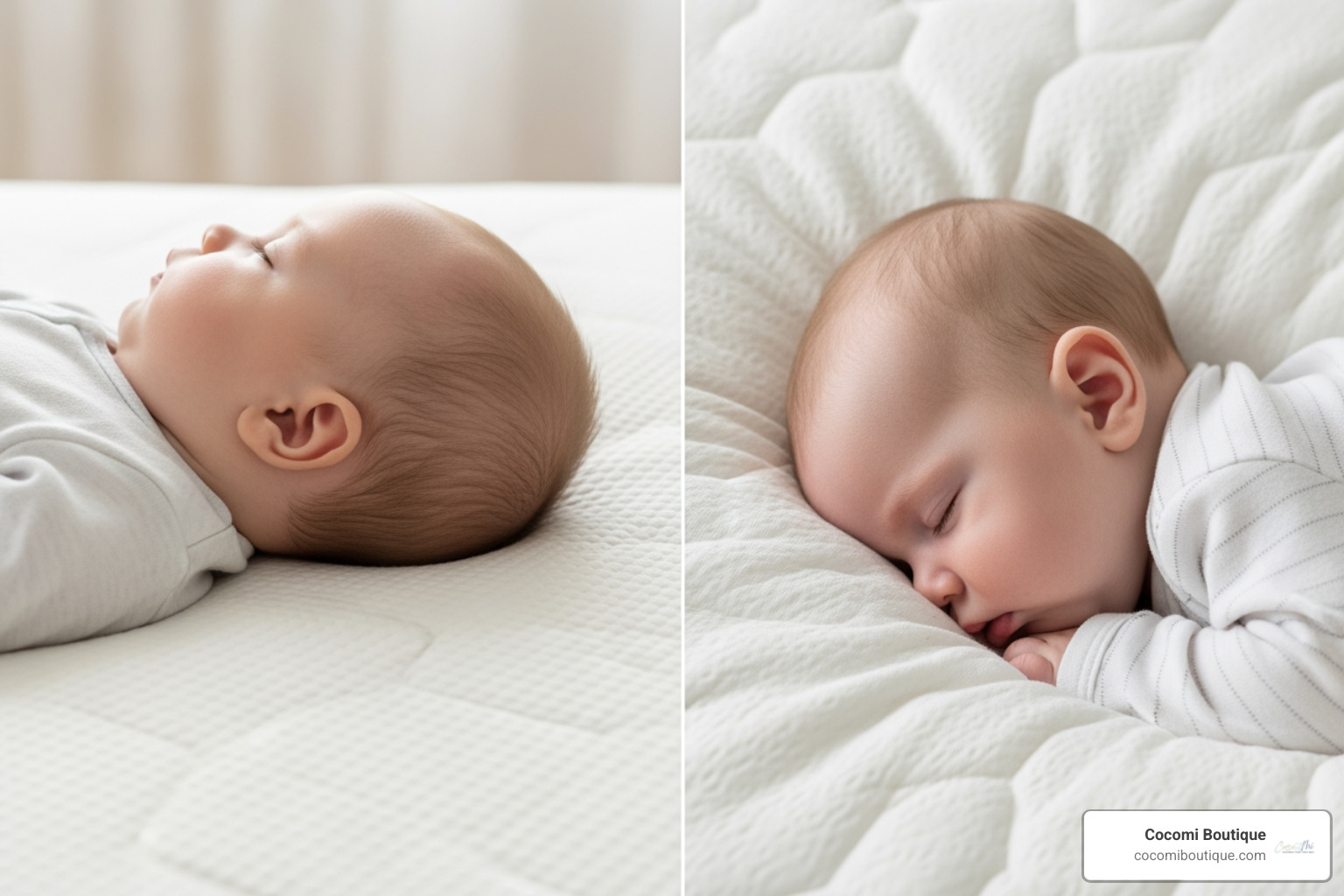
The soft mattress risk is the most critical. A newborn has limited head control. When their head sinks into padding, their airway can become blocked. This is known as positional asphyxiation, and for a sleeping baby, it can be deadly.
Rebreathing carbon dioxide is another serious threat. In an enclosed space like a nest, exhaled air can get trapped near the baby's face. Instead of breathing fresh oxygen, they rebreathe stale air, which their developing respiratory system can't handle.
Rolling risks add another layer of danger. Some newborns can spontaneously roll much earlier than expected. If a baby rolls onto their stomach in a soft nest, they may not have the strength to roll back, putting them at severe risk of suffocation if their face is pressed into the padding.
This combination of factors creates a perfect storm of risk. This is why experts are so insistent about firm, flat sleep surfaces. It's not about fear-mongering; it's about applying proven principles that have already saved thousands of lives.
Understanding the Newborn Sleep Nest: Design, Features, and Benefits
I'll be honest—I completely understand the appeal of a newborn sleep nest. These cozy loungers look like the perfect solution for keeping your baby comfortable and close. And when used correctly, they can be helpful.
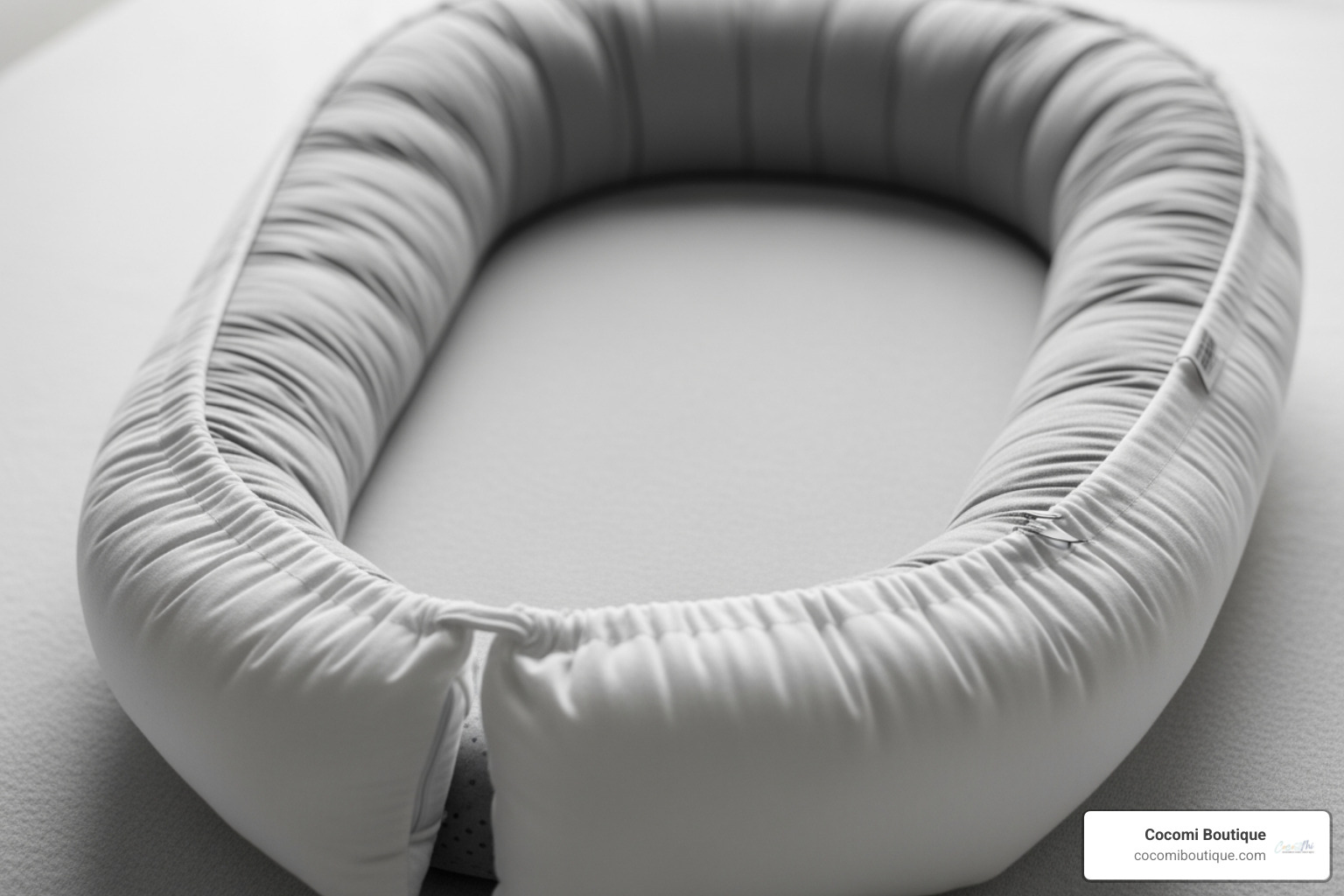
The key is supervised awake time only. Think of a nest as a comfy spot for your baby to lounge while you're right there watching them. You can easily move it from room to room, keeping them in sight. Many babies find the snug, womb-like environment soothing, and the portability is a real advantage for visits or moving around the house.
Some parents also find them helpful for supervised tummy time, as the cushioned sides provide a gentle boundary. Just remember that "supervised" is the non-negotiable part of the equation. If you're weighing the pros and cons, our post Is a Baby Nest Worth It? Unpacking the What, Why, and How-To offers more perspective.
What to Look for in a Newborn Sleep Nest
If you decide a nest fits your supervised routine, choosing the right one matters. Even for lounging, quality and design make a difference.
- Firm Mattress: A relatively firm base provides better support for your baby's developing spine and reduces the chance of their head sinking into the material.
- Breathable Materials: Look for fabrics like cotton (ideally OEKO TEX 100 certified) that allow air to circulate, helping with temperature regulation.
- Waterproofing: A waterproof mattress or cover prevents moisture from seeping into the core, which stops mold and bacteria growth and makes cleanup easier.
- Washable Covers: Removable, machine-washable covers are a must-have for dealing with inevitable messes.
- Sturdy Side Walls: The sides should be sturdy enough to maintain their shape and not collapse inward.
- Appropriate Size: Ensure the nest is the right size for your baby's current stage to ensure comfort and safety.
The Truth About "Breathable" Materials
You'll see "breathable materials" marketed everywhere. While fabrics like cotton or mesh do help with air circulation and temperature regulation, the term "breathable" does not eliminate suffocation risks on a padded surface.
There is no conclusive research proving that "breathable" bumpers or padded sides significantly reduce suffocation risk. The problem isn't just the material's permeability; it's the product's structure. A thick barrier can still obstruct a baby's airway if their face presses against it, or it can create a pocket where air circulation is restricted.
Marketing claims don't replace rigorous safety standards. That's why safety organizations consistently state that for any unsupervised sleep, your baby needs a clear, firm, and flat sleep space—period. For supervised awake time in a nest, breathable materials are a plus for comfort, but they don't change the fundamental rule: never use a newborn sleep nest for unsupervised sleep. For more on this, see The Truth About Newborn Snuggle Nests: Safety, Benefits, and What to Consider.
The Golden Rules: How to Use a Baby Nest Safely
Based on all expert advice, newborn sleep nests should never be used for unsupervised sleep. However, if you choose to use one for its intended purpose—supervised awake time—you must follow non-negotiable safety rules.
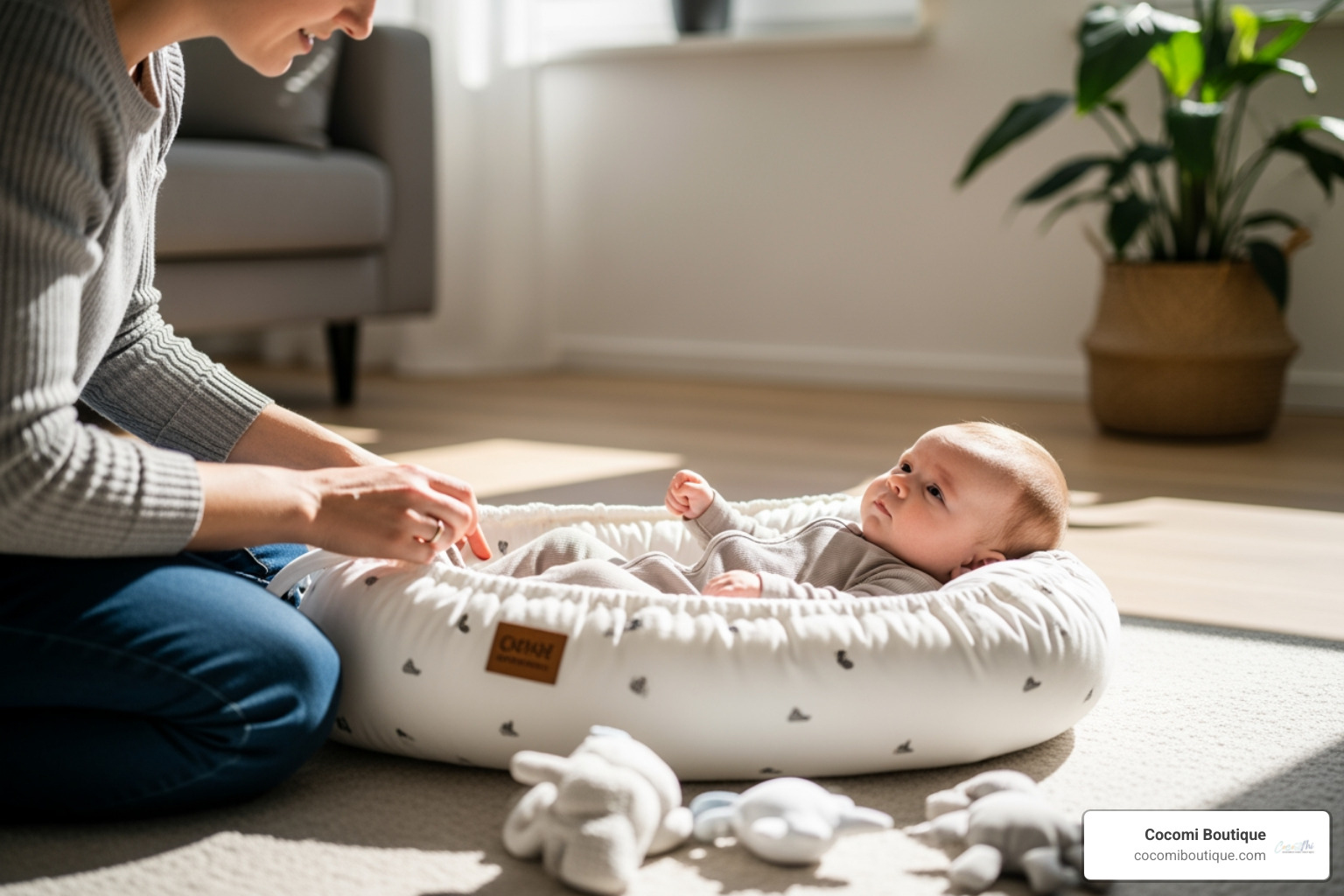
Here are the do's and don'ts for safe nest usage:
DO:
- Use for supervised, awake time ONLY. Your eyes must be on your baby at all times.
- Place the nest on a firm, flat surface like the floor, away from edges.
- Always place your baby on their back.
- Keep the nest completely clear of loose blankets, toys, or pillows.
- Use it for tummy time practice under close supervision.
DON'T:
- Never use it for unsupervised sleep (naps or overnight).
- Never place the nest inside a crib, bassinet, or playpen due to entrapment risks.
- Never put it on a raised or soft surface like a bed, sofa, or counter.
- Never use it for co-sleeping in an adult bed.
- Never leave your baby unattended, even for a moment.
Balancing convenience with these strict guidelines is how we protect our babies. For more on safe sleep practices, check out The Ultimate Guide to Safe Swaddling for Newborns.
Nest vs. Crib vs. Bassinet: A Safety Comparison
Understanding the difference between a newborn sleep nest and traditional sleep options is key to making safe choices.
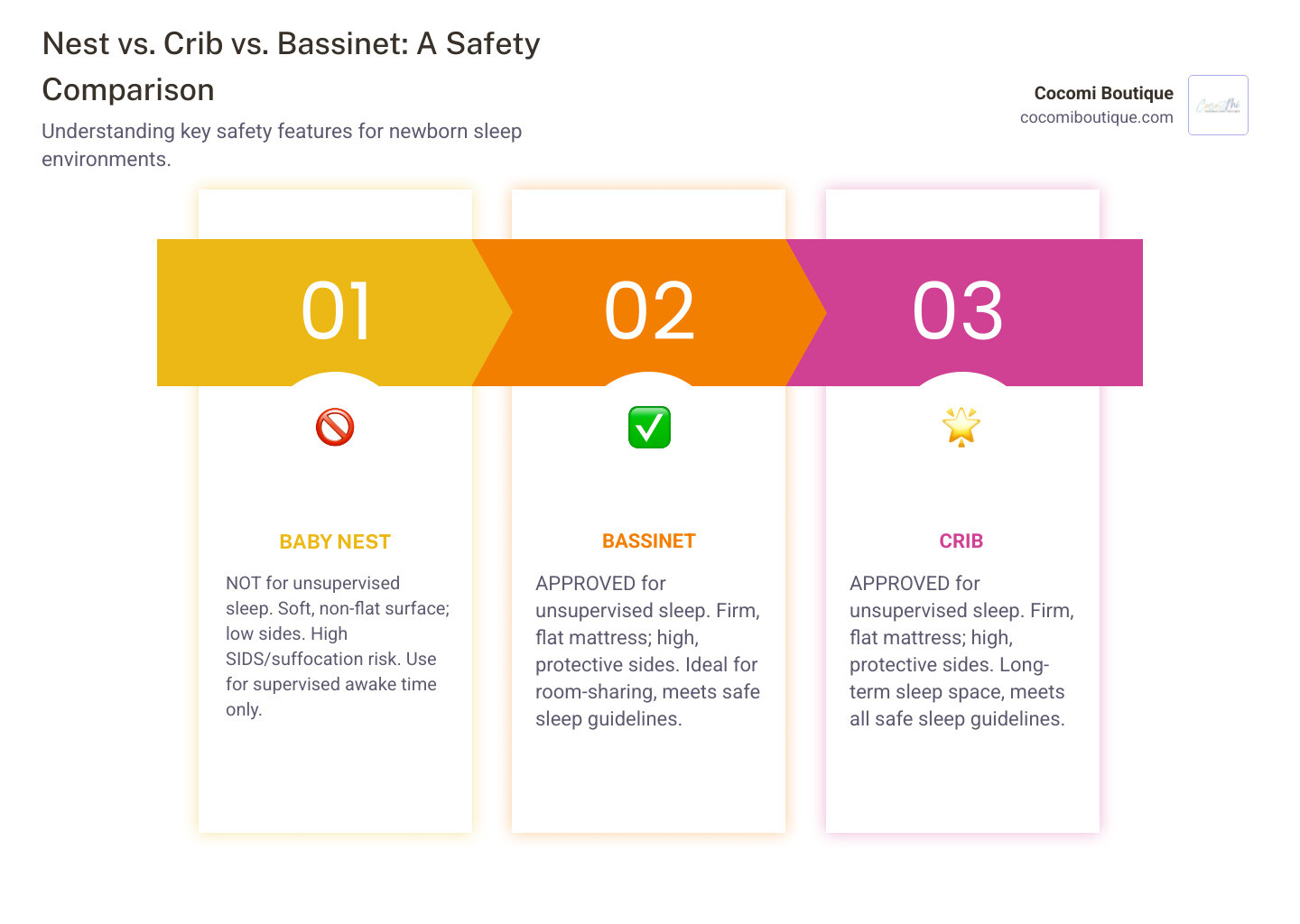
- Baby Nests: Have soft, cushioned surfaces and padded bumpers. They are not approved for unsupervised sleep.
- Bassinets & Cribs: Feature firm, flat mattresses and sturdy sides that meet federal safety standards. They are approved for unsupervised sleep.
The takeaway is simple: while a nest might look inviting, it lacks the safety features required for sleep. When your baby is sleeping, a bassinet or crib is the only appropriate choice. For more on this, read Crib or Nest? Navigating Safe Sleep for Your Baby.
When to Stop Using a Baby Nest
Knowing when to retire the baby nest is as important as knowing how to use it. Continued use after your baby becomes mobile is dangerous.
Stop using the nest around 3 to 4 months of age, or as soon as your baby shows any of these developmental signs:
- Attempting to roll over.
- Pushing up on their hands and knees.
- Has physically outgrown the nest (head or feet touch the ends).
Even newborns can spontaneously roll. When your baby's mobility increases, the nest becomes a suffocation and falling hazard. There is no negotiating with these milestones—when they arrive, the nest must go.
Potential Long-Term Effects of a Newborn Sleep Nest
Over-relying on a newborn sleep nest can create challenging sleep associations. If your baby only rests in a nest, they may become dependent on that specific snug, cushioned feeling to fall asleep.
This dependency can make the eventual transition to a crib—with its firm, flat, open space—much more difficult. To foster independent sleep skills, it's wise to rotate between different safe environments for supervised rest. This helps your baby become a more flexible sleeper, which is a valuable skill for the long term.
Frequently Asked Questions about Baby Nests
We understand the confusion around newborn sleep nests. Let's address the most common questions with answers grounded in expert recommendations.
Can a baby sleep in a nest overnight?
No. Newborn sleep nests are not safe for any unsupervised sleep, including overnight. The risks of SIDS, suffocation, and overheating are all heightened during unsupervised periods when you can't monitor your baby's breathing or position.
For nighttime, your baby must be on their back in a crib or bassinet with a firm, flat mattress and nothing else. There is no compromise on safety when it comes to overnight sleep.
Can a baby nest be used for co-sleeping in an adult bed?
No, this is strongly discouraged. Using a nest in an adult bed combines multiple risk factors: the nest's padded sides plus the adult bed's soft mattress, pillows, and duvets. This creates a serious suffocation and entrapment hazard. Sleeping with a baby on a sofa or chair, with or without a nest, increases the risk of SIDS by up to 50 times.
A much safer alternative is a bedside bassinet, which keeps your baby close but in their own safety-approved sleep space.
Can I place a baby nest inside a crib or bassinet?
No. This creates a dangerous entrapment risk, as your baby could get wedged between the nest and the crib's sides. It also introduces a soft, padded surface into a sleep environment that is legally required to be firm and flat.
Adding a nest to a crib or bassinet negates the product's safety testing. A crib is designed to be used with only a firm mattress and a fitted sheet. For more guidance, see Crib or Nest? Navigating Safe Sleep for Your Baby.
Conclusion: Making the Safest Choice for Your Family
I remember realizing that loving my baby meant making decisions based on safety, not just convenience. Through my journey with Cocomi Boutique, helping families across Illinois in Northbrook, Chicago, Deerfield, Riverwoods, Northfield, Wheeling, Prospect Heights, Glenview, Glencoe, Winnetka, Highland Park, and Buffalo Grove, I've learned this: the most loving choice is always the safest one.
The evidence is clear: newborn sleep nests are not for unsupervised sleep. This is about understanding that when our babies are sleeping, they need the safest environment possible.
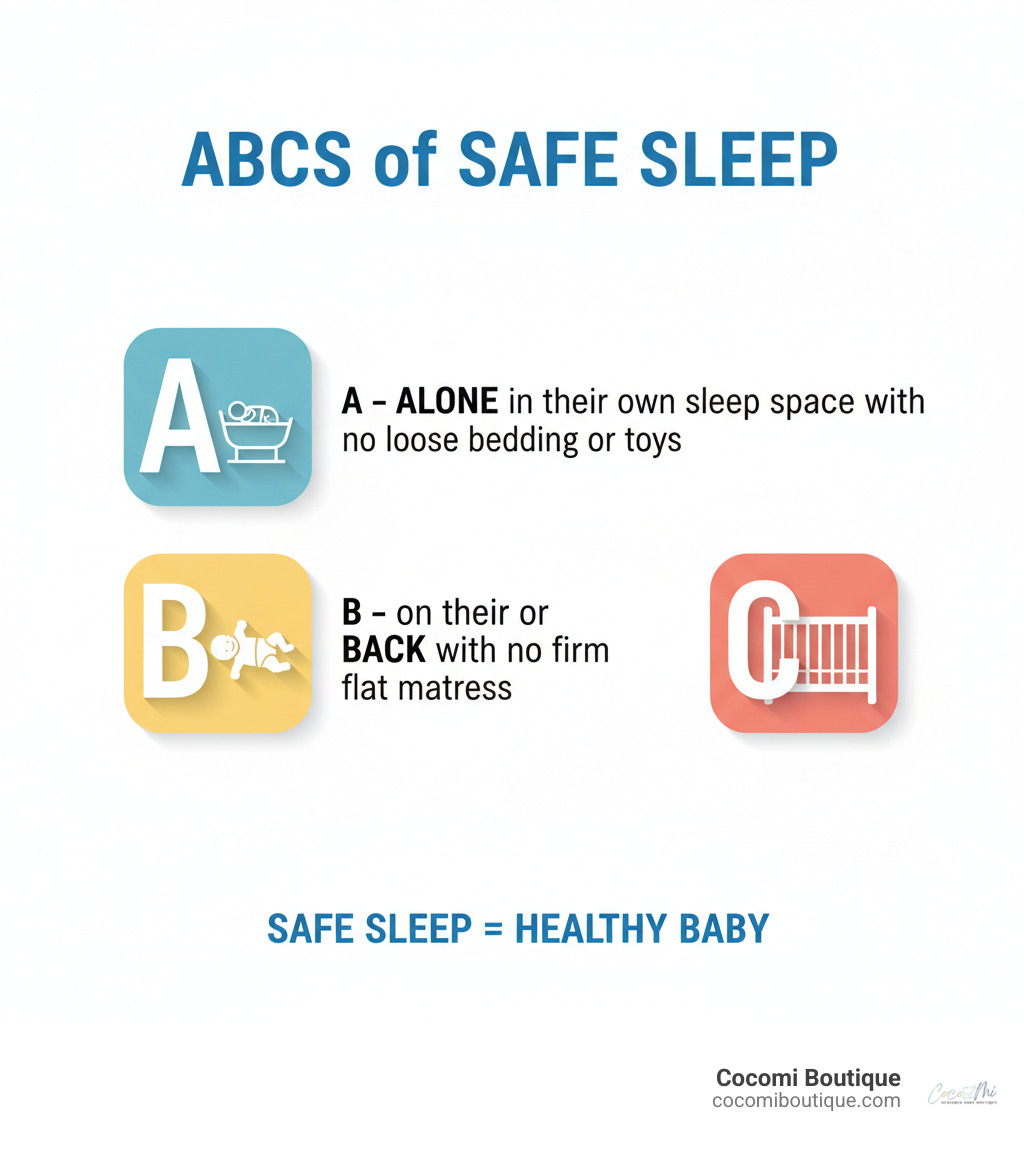
Remember the ABCs of safe sleep:
- A is for Alone: Your baby sleeps in their own clear space.
- B is for Back: Place your baby on their back for every sleep.
- C is for Crib: Use a safety-approved crib or bassinet with a firm, flat mattress.
These rules are your baby's best protection against SIDS and suffocation. If you use a newborn sleep nest, treat it as a supervised lounging spot for awake time only. Place it on the floor, stay with your baby, and enjoy those moments of closeness. But never use it for sleep.
Informed parents are empowered parents. Trust the evidence, and know that prioritizing safety is a profound act of love. Your peace of mind matters, and when you know your baby is sleeping safely, you can rest too.