

Why Choosing the Right Newborn Baby Sleeper Matters
Newborn baby sleeper options can feel overwhelming for new parents, but making the right choice is crucial for your little one's safety and comfort. Here's what you need to know:
Quick Guide to Newborn Baby Sleepers:
- Footed Pajamas - All-in-one sleepers with built-in feet, perfect for day and night
- Sleep Sacks - Wearable blankets that reduce SIDS risk by eliminating loose bedding
- Sleeper Gowns - Open-bottom gowns that make nighttime diaper changes quick and easy
- Key Safety Features - Snug fit, flame-retardant fabric, no loose parts, appropriate for room temperature
Your newborn will sleep about 16 hours each day in those first precious months. That's a lot of time spent in sleepwear, which makes choosing safe, comfortable options essential. The right sleeper keeps your baby at the perfect temperature, allows for healthy hip movement, and makes those middle-of-the-night diaper changes much easier.
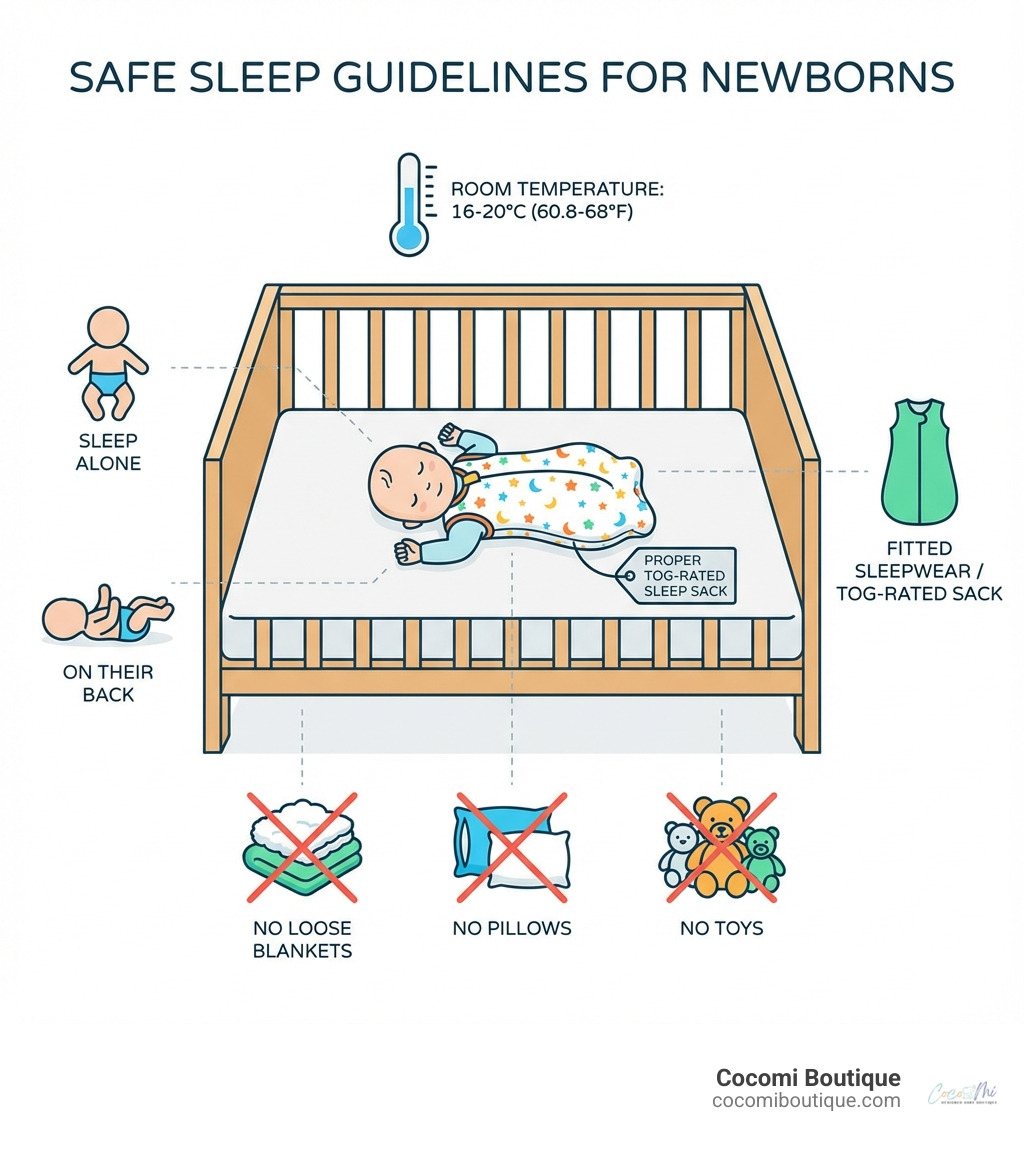
Safe sleep is non-negotiable. Overheating is a risk factor for sudden infant death syndrome (SIDS), and sleepwear that's too big can ride up and cover your baby's nose and mouth. The safest place for your baby to sleep is on their back in a cot in the same room as you for the first six months, wearing properly fitted sleepwear.
This guide walks you through everything you need to know about newborn sleepers. We'll break down the different types, explain safety features, help you choose the right materials and sizes, and share care tips to keep those sleepers soft and safe.
I'm Monika Jarog, and I've spent years helping parents find thoughtfully designed newborn baby sleeper options crafted from 100% natural, chemical-free materials that meet the highest European safety standards. At Cocomi Boutique, we understand that safe sleep starts with the right sleepwear.
Relevant articles related to Newborn baby sleeper:
Decoding the World of Newborn Sleepers
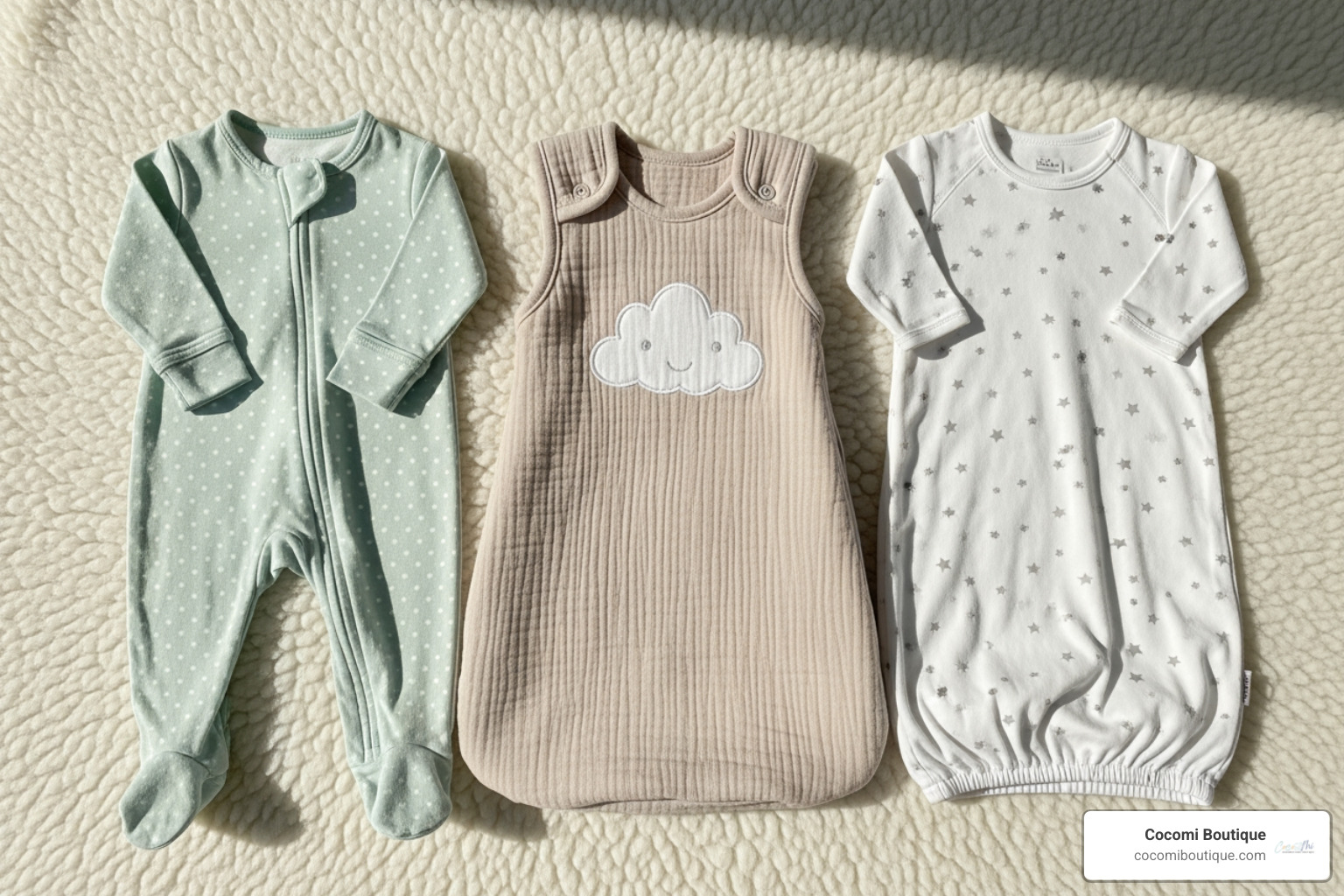
When it comes to outfitting your little one for sleep, the options can seem endless. However, understanding the basic types of newborn baby sleeper garments will help you make informed choices that prioritize safety and comfort. Each type offers unique benefits for different situations and stages of your baby's development.
The Classic Newborn Baby Sleeper: Footed Pajamas
Footed pajamas, often called "sleep and plays" or "coveralls," are a timeless choice for newborns. They are essentially a one-piece garment that covers your baby from neck to toe, including built-in footies. This design means no wrestling with socks that inevitably go missing, and no cold little feet! We love them for their sheer versatility, acting as a comfortable outfit for both day and night. Your baby can effortlessly transition from playtime to naptime without needing a full wardrobe change.
Many parents consider footed pajamas a staple for the first few months. They keep your baby cozy and warm, and the snug fit (which we'll discuss more later) is crucial for safety. For those looking for extra softness and durability, our collection of Gentle Touches: Our Favorite Soft Baby Essentials offers premium options designed with your baby's delicate skin in mind.
The Safe & Snug Sleep Sack
A sleep sack, also known as a wearable blanket, is a game-changer for safe sleep. Unlike loose blankets, which pose a significant risk of suffocation and overheating, a sleep sack is worn over your baby's pajamas. It keeps them warm and cozy without the danger of covering their face. This is particularly important because, as we know, loose items around a baby's head can increase the risk of sudden infant death syndrome (SIDS). The Lullaby Trust emphasizes that baby sleeping bags help reduce the risk of SIDS by preventing babies from wriggling underneath their bedding.
Sleep sacks are designed to be hip-healthy, allowing your baby's legs and hips to move freely, which is essential for proper development. They come in various sizes and thicknesses (TOG ratings) to suit different room temperatures. If you're transitioning from swaddling, a sleep sack is the next logical step, offering a secure feeling without restricting movement once your baby starts showing signs of rolling. For more on ensuring your baby's comfort and safety during sleep, explore our guide on The Ultimate Guide to Safe Swaddling for Newborns.
The Convenient Sleeper Gown
Sleeper gowns are a beloved essential, especially for those early newborn weeks when frequent diaper changes are the norm. These garments feature an open, often elasticized or knotted, bottom instead of legs. This design allows for incredibly quick and easy diaper changes in the middle of the night—no wrestling with snaps or zippers! You simply lift the gown, change the diaper, and pull the gown back down, minimizing disturbance to your sleepy baby (and you!).
Many sleeper gowns are designed without snaps, buttons, or interior tags for maximum comfort, ensuring nothing chafes your baby's delicate skin. Some even feature fold-over mittens to prevent accidental scratches. We find that the simplicity of a sleeper gown makes it a practical choice for parents who value efficiency and gentle care during those precious, sleep-deprived early days.
A Guide to Closures: Zippers vs. Snaps
The type of closure on a newborn baby sleeper might seem like a minor detail, but it can significantly impact convenience, especially during those bleary-eyed nighttime changes. The main contenders are zippers and snaps, each with its own set of pros and cons.
| Feature | Zippers | Snaps |
|---|---|---|
| Pros | Speed: Quicker for full changes. Security: Less likely to accidentally come undone. Two-way options: Many offer inverted or two-way zippers for easy bottom-up access during diaper changes, keeping baby mostly covered and warm. | Accessibility: Good for specific access points (e.g., side snaps for umbilical cord care or tummy time). Adjustability: Can leave some snaps undone for ventilation. Quiet: Generally quieter than zippers, which can sometimes be noisy and startling for a sleeping baby. |
Two-Way Zippers
These are a godsend for midnight diaper changes. An inverted zipper allows you to unzip from the bottom up, giving you access to the diaper area without fully uncovering your baby. This helps keep them cozy and minimizes disruption. Many of our Cocomi Boutique sleepers feature this convenient design. We ensure our zippers also have protective tabs at the top to prevent chafing on your baby's delicate skin.
Inverted Zippers
As mentioned, inverted zippers are often synonymous with two-way zippers. They are designed to zip from the bottom up, making diaper changes quicker and easier. This means less exposure to cold air and fewer chances of a full wardrobe change in the middle of the night.
Nickel-Free Snaps
For snap closures, nickel-free snaps are a must. They are durable for frequent wear and washing and, more importantly, prevent allergic reactions on sensitive baby skin. We prioritize these details in our designs to ensure maximum comfort and safety for your little one.
Protective Zipper Tabs
Any zipper on a newborn baby sleeper should have a fabric tab or cover at the top. This simple feature protects your baby's chin and neck from getting pinched or irritated by the zipper pull, especially during restless sleep or when they're stretching.
The Blueprint for a Safe and Comfy Newborn Baby Sleeper
The safety and comfort of your baby's sleepwear go hand-in-hand with the materials used and the design features incorporated. At Cocomi Boutique, we understand that every detail counts when it comes to your little one's well-being.
Choosing the Best Materials
The fabric of your baby's sleeper is paramount for comfort, breathability, and overall safety. We always recommend natural fibers for their inherent benefits.
- Organic Cotton: This is a top choice for a newborn baby sleeper. Organic cotton is ultra-fine, super soft, and naturally breathable. It's gentle on sensitive skin, reducing the risk of irritation. GOTS-certified organic cotton, which we use in many of our products, ensures that the fabric is processed without harmful chemicals, from harvesting to manufacturing. This means no harsh pesticides or synthetic fertilizers, and often, AZO-free dyes are used, making it safer for your baby and the environment.
- Bamboo (Rayon from Bamboo): This fabric is a dream for baby sleepwear. It's incredibly soft, stretchy, and boasts excellent breathability. Bamboo is also naturally hypoallergenic and moisture-wicking, helping to regulate your baby's body temperature. It keeps them cool in summer and cozy in winter, making it a seasonless fabric.
- Fleece (or Viscose): While not ideal for all temperatures, soft, stretchy viscose can offer a comfortable option. If opting for fleece, ensure it's lightweight and breathable to prevent overheating, especially in warmer climates or indoor temperatures.
Regardless of the material, breathability is key. Babies regulate their temperature less efficiently than adults, so fabrics that allow air circulation help prevent overheating, a significant risk factor for SIDS. Hypoallergenic properties are also important, especially for newborns with delicate or eczema-prone skin.
For more insights into natural fabrics, check out our guide: Bamboo or Cotton: Your Guide to the Best Organic Muslin Swaddles.
Dressing for the Temperature: TOG Ratings
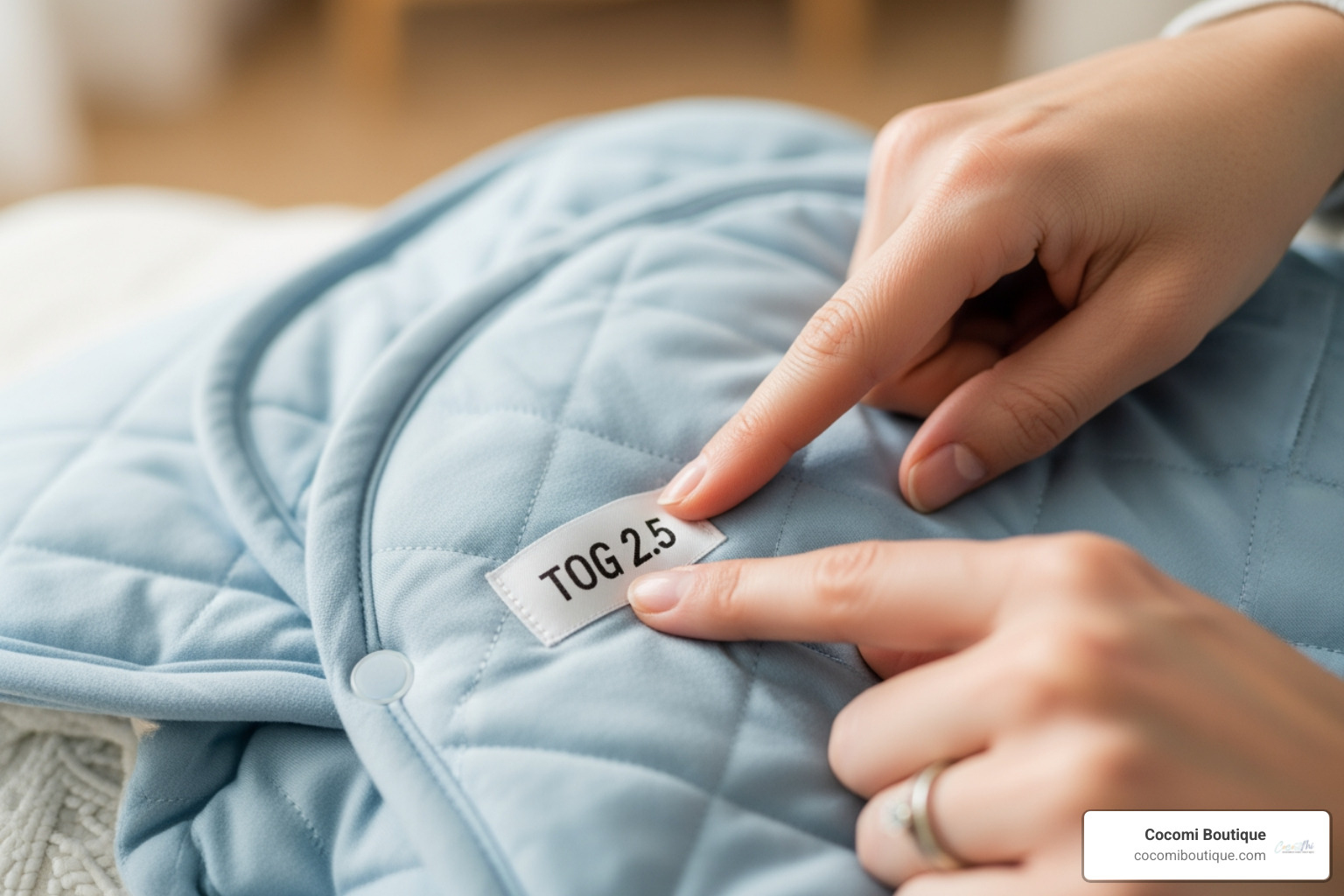
One of the most common questions we hear is, "How should I dress my baby for sleep?" The answer largely depends on the room temperature and the TOG (Thermal Overall Grade) rating of their sleepwear. TOG ratings measure the thermal insulation of a fabric, helping you choose the right warmth for your baby.
- 0.5 TOG: Ideal for very warm rooms (24-27°C or 75-81°F). This is typically a single layer of lightweight fabric.
- 1.0 TOG: Suitable for warmer rooms (20-24°C or 68-75°F). This might be a single layer of cotton or bamboo sleep sack.
- 2.5 TOG: Best for standard room temperatures (16-20°C or 61-68°F). This often involves a padded sleep sack.
The general rule is to dress your baby in one more layer than you would comfortably wear. However, it's crucial to avoid overheating. If the room temperature is comfortable for you, it will likely be comfortable for your baby. We recommend keeping babies warm, not hot. Always remove outerwear, such as snowsuits or jackets, when indoors, and avoid putting hats on babies when they're inside, as this can cause them to become too hot.
For comprehensive advice on dressing your baby for various conditions, refer to this external resource: Dressing your baby for sleep.
Essential Safety Features to Look For
Beyond materials and TOG ratings, several design features contribute to a safe newborn baby sleeper.
- Snug Fit Requirement: This is perhaps the most critical safety feature. Sleepwear must fit snugly to meet safety standards. Sleepwear that's too big can ride up and cover your baby's nose and mouth, posing a suffocation risk. Conversely, sleepwear that's too small can restrict movement, especially of the hips and legs, which is dangerous if they roll onto their tummy.
- No Loose Threads or Buttons: Regularly inspect your baby's sleepers for any loose buttons, snaps, zipper pulls, or threads. These can become choking hazards or cause strangulation. If you find any, repair them immediately or discard the garment.
- Flame-Retardant Fabrics: Health Canada has flammability requirements for children's sleepwear. While some sleepers are treated with flame retardants, many brands, including ours, opt for naturally flame-resistant fibers or designs that rely on a snug fit to reduce flammability risks, avoiding chemical treatments. Always check product labels for compliance.
- Avoiding Hoods or Drawstrings: Daywear often includes hoods, drawstrings, or other embellishments that are not safe for sleep. These can pose strangulation or suffocation risks. A newborn baby sleeper should be simple and streamlined.
- Plain vs. Themed Sleepers: Whether a sleeper is plain or themed (with characters or designs) typically doesn't affect safety or comfort, as long as it adheres to the fit and material guidelines mentioned above. The focus should always be on the construction and fabric, not just the aesthetic.
- AZO-Free Dyes: We ensure our colored sleepers use AZO-free dyes. These dyes are free from certain chemical compounds that can be harmful, making them a safer choice for your baby's delicate skin and overall health.
Getting the Perfect Fit for Safety and Growth
Achieving the perfect fit for your newborn baby sleeper isn't just about comfort; it's a critical safety measure. Babies are not mini-adults, and their sleepwear needs are specific to their developmental stage.
Why a Proper Fit is Non-Negotiable
A properly fitting sleeper is paramount for your baby's safety.
- Suffocation Risk: As highlighted in our introduction, sleepwear that is too large can ride up and cover your baby's nose and mouth, posing a serious suffocation hazard. This is a primary concern for parents, and why we emphasize a snug fit.
- Overheating: If a sleeper is too baggy, it can trap too much air, leading to overheating, which is a known risk factor for SIDS. Conversely, if it's too tight, it can restrict air circulation.
- Restricted Movement: Sleepwear that's too small can restrict your baby's natural movements, particularly their hips and legs. This can be uncomfortable and potentially interfere with healthy hip development. It can also make it difficult for them to move safely if they roll onto their tummy.
For more detailed guidance on safe sleep practices, we encourage you to visit Read more safer sleep advice.
How to Choose the Right Size Newborn Baby Sleeper
Babies grow at an astonishing rate, so choosing the right size can feel like a moving target. Here’s how we recommend approaching it:
- Reading Size Charts: Always consult the brand's specific size chart. These charts typically provide weight and height ranges for each size (e.g., Newborn, 0-3 months, 3-6 months). For example, a Newborn size might fit babies from 17" to 21" and up to 9 lbs, while a 0-3 month size might be for 22" to 23" and 9 to 14 lbs.
- Weight and Height Guides: Prioritize your baby's current weight and height over their age. Babies vary greatly in size at birth and as they grow. If your baby is on the cusp between two sizes, it's often best to size up, but always ensure the fit is still snug in the torso.
- Sizing Up for Growth: While a snug fit is essential, it's also practical to account for rapid growth. Many parents purchase a few sleepers in the current size and one or two in the next size up. Babies grow very quickly; all you need for the first few weeks are enough clothes to ensure your baby is warm and clean.
- Brand Variations: Be aware that sizing can vary between brands. A "3-6 month" sleeper from one brand might fit differently than from another. If possible, compare measurements or read reviews for specific brand guidance.
Checking the Fit at Home
Once you have a sleeper, perform these quick checks to ensure a safe and comfortable fit:
- Neck Opening Check: You should be able to comfortably slip two fingers between the sleeper's neckline and your baby's neck. If it's too loose, it could ride up. If it's too tight, it's uncomfortable and restrictive.
- Armhole Fit: The armholes should be snug but not tight, allowing for free arm movement without chafing.
- Length and Leg Room: For footed sleepers, your baby's toes should have a little wiggle room at the end, but not so much that their feet are swimming. For sleep sacks and gowns, ensure there's ample room for their legs and hips to move freely, especially important for healthy hip development. The bottom of a sleep sack should extend comfortably past their feet without being excessively long, which could trip an older, mobile baby.
Care and Maintenance for Your Baby's Sleepers
Keeping your baby's sleepers clean, soft, and in good condition is essential for their comfort and longevity. Proper care also helps maintain the integrity of safety features.
- Washing Instructions: Always follow the care label on the garment. Most baby sleepers, especially those made from organic cotton or bamboo, recommend machine washing cold on a gentle cycle. This helps preserve the fabric's softness and prevents shrinkage or damage.
- Gentle Detergents: Use a mild, baby-friendly, and fragrance-free detergent. Harsh chemicals and strong fragrances can irritate your baby's sensitive skin.
- Cold Water Wash: Washing in cold water is generally recommended. It's more energy-efficient and helps prevent colors from fading and fabrics from breaking down prematurely.
- Washing Inside Out: Turning sleepers inside out before washing can help protect the outer fabric, prints, and any delicate embellishments from excessive friction during the wash cycle.
- Drying Tips: Tumble dry low is often the recommended setting for baby sleepers. High heat can cause shrinkage and damage delicate fibers. For best results and to extend garment life, you can air dry or tumble dry on a very low setting. Avoid using fabric softeners, as they can reduce the absorbency of natural fibers and may contain chemicals that irritate sensitive skin.
- Checking for Wear and Tear: Before and after each wash, take a moment to inspect the sleeper. Look for any loose snaps, fraying threads, or signs of damage to zippers. Address these issues immediately. A loose snap could detach and become a choking hazard, and loose threads could wrap around tiny fingers or toes.
Frequently Asked Questions about Newborn Sleepers
As parents ourselves, we know questions often pop up! Here are some common queries about newborn baby sleeper options:
How many sleepers does a newborn need?
Newborns are masters of messes, and between spit-up and diaper blowouts, you'll be doing a lot of laundry. While babies grow quickly, it's practical to have enough sleepers for a few days between washes. We generally recommend having 6-8 sleepers on hand for the first few weeks. This allows for changes due to messes and ensures you always have a clean, comfortable option available. The NHS advises having "enough clothes to make sure your baby will be warm and clean" for the first few weeks, and a good rotation helps achieve this.
Can a baby wear a sleeper in a car seat?
Yes, a baby can wear a sleeper in a car seat, but with an important caveat: avoid bulky sleepers or outerwear. The key is to ensure the car seat harness fits snugly and correctly against your baby's body. Bulky clothing, like thick snowsuits or padded sleepers, can compress in a crash, creating slack in the harness and potentially allowing your baby to move too much.
Instead, dress your baby in a thin, fitted sleeper, and then use car seat-safe accessories like a car seat cover (placed over the harness) or blankets tucked over the strapped-in baby for warmth. Never place blankets or padding under the harness straps. For more on keeping your little one safe and warm in their car seat, explore our guide on Top Picks: Infant Car Seat Covers for Every Season. And always remember, it's illegal and very dangerous to carry your baby in your arms in a vehicle.
When should we stop swaddling and move to a sleep sack?
The transition from swaddling to a sleep sack is an important safety milestone. You should stop swaddling your baby as soon as they show any signs of trying to roll over, or by around 2 months of age, whichever comes first. The reason is simple: if a swaddled baby rolls onto their tummy, they may not be able to roll back, increasing the risk of suffocation.
Other signs it might be time to transition include the fading of the Moro reflex (startle reflex), which swaddling helps to soothe. Once your baby can control their movements more, a sleep sack provides the warmth and comfort of a blanket without the restriction, allowing their arms to be free. Some sleep sacks are designed for this transition, with removable swaddle wings, allowing you to transition seamlessly when your baby is ready.
Conclusion: Sweet Dreams in the Perfect Sleeper
Navigating newborn baby sleeper options can feel like a lot, but by focusing on safety, comfort, and practicality, you can make choices that support your baby's peaceful sleep and your peace of mind. We've covered the different types of sleepers, the importance of materials like organic cotton and bamboo, how to use TOG ratings for temperature regulation, and essential safety features like a snug fit and secure closures.
The safest place for your baby to sleep is on their back, in a clear sleep space, and dressed appropriately for the room temperature in a well-fitting sleeper. At Cocomi Boutique, we are committed to providing soft, stylish, and comfortable baby clothing designed with quality, care, and customer satisfaction in mind. We believe that every baby deserves the sweetest dreams in the safest duds.
Ready to find the perfect sleepwear for your little one? Explore our collection of baby essentials and find the difference thoughtful design makes.