

Why Every Parent Should Understand the Infant Nest
An infant nest—also known as a baby lounger or pod—is a portable, cushioned lounger with raised edges. It's designed to create a cozy, womb-like space for your baby to rest and play under your supervision during the day.
Quick Guide to Infant Nests:
- What it is: A portable cushioned lounger with raised sides that cradles your baby
- Primary use: Supervised lounging, tummy time, bonding, and diaper changes
- Age range: Typically newborn to 4-12 months (varies by model)
- Where to use: Floor, carpet, or other flat surfaces—never for unsupervised or overnight sleep
- Key benefit: Creates a cozy and portable space that gives parents hands-free moments while keeping baby comfortable
- Safety note: Always supervise—infant nests are not safe sleep solutions
These versatile products are popular for providing a comfortable spot for babies during waking hours. Research shows that nesting, a practice used in many hospitals, helps babies feel more contained, similar to the womb. Its portability means you can move this familiar space from room to room, giving your baby a consistent spot anywhere.
Infant nests are designed for supervised lounging only. They do not meet AAP safe sleep guidelines for overnight or unsupervised sleep. Think of them as a daytime tool—a comfortable spot for your baby to rest while you're right there, not a replacement for a crib or bassinet.
I'm Monika Jarog, and I specialize in handcrafted baby essentials made from 100% natural, chemical-free materials that meet European safety standards, including thoughtfully designed infant nests for supervised comfort. My focus is helping parents use products like the infant nest safely, providing babies with cozy spaces for bonding and rest.
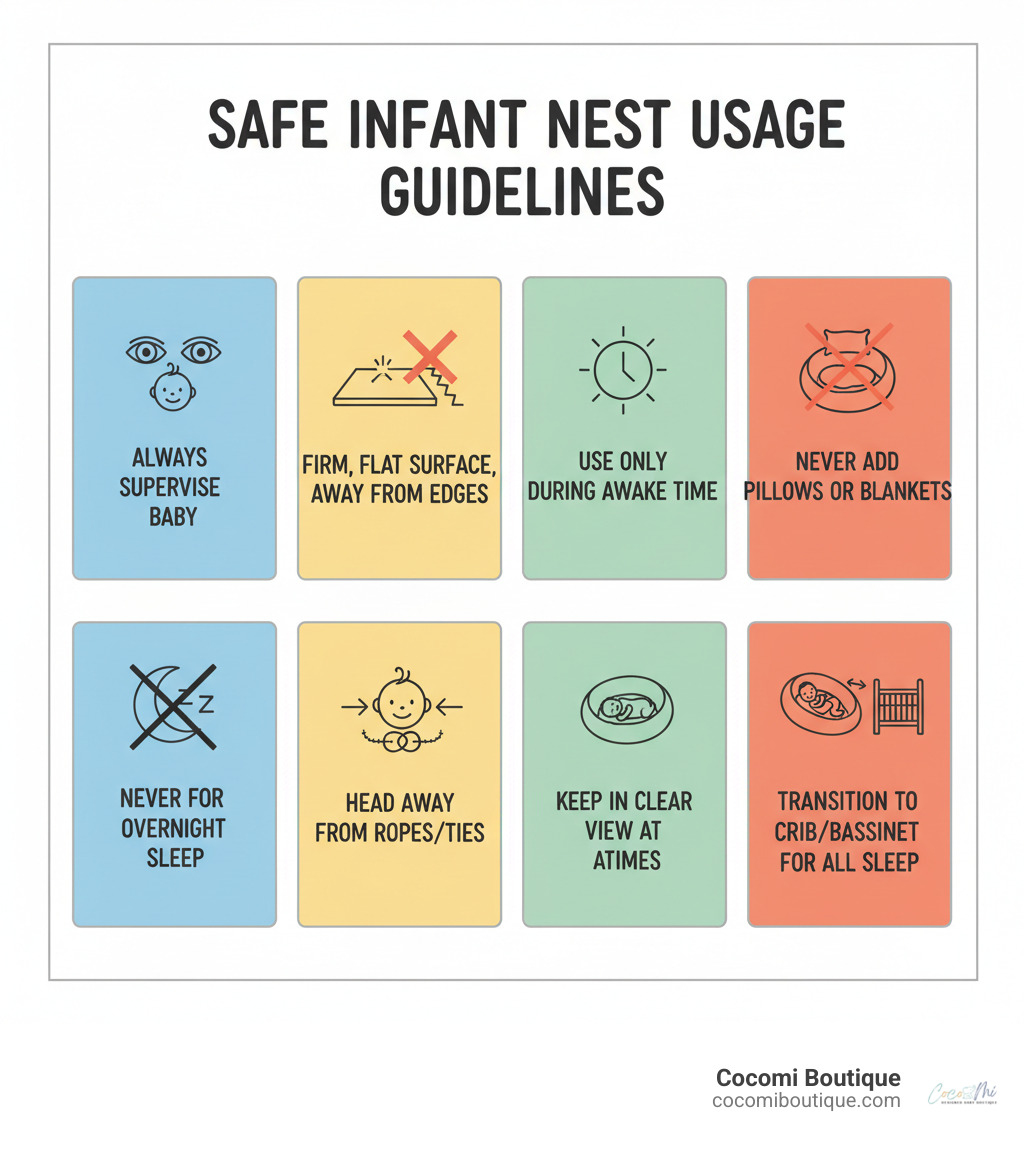
Basic infant nest terms:
Understanding the Infant Nest: Functions and Benefits
An infant nest does more than just look adorable. At its heart, this cozy lounger recreates the snug, secure feeling of the womb. The gently raised edges create a contained space that can help ease your newborn's transition into the world, offering a sense of security.
For parents, these nests provide invaluable hands-free moments. With your baby resting comfortably and safely in view, you can enjoy a cup of coffee or answer emails. It's about keeping them close and content while you manage other tasks.
These versatile pods are perfect for supervised lounging, providing a comfortable spot for tummy time to support motor development. Many parents also use them as a convenient diaper changing station. The portability is a game-changer—you can easily move your baby's familiar spot from the living room to the kitchen, creating consistency wherever you go.
Beyond practicality, an infant nest promotes bonding. Keeping your little one close during supervised play and quiet moments creates opportunities for connection. Whether you're reading, singing, or simply being present, the nest keeps your baby comfortable and engaged.
Want to dive deeper into whether this versatile product fits your family's needs? Check out our comprehensive guide: Is a Baby Nest Worth It? Unpacking the What, Why, and How-To.
Benefits for Baby's Comfort and Development
The snug design of an infant nest offers real benefits for your baby's comfort and development during supervised awake time. The contained feeling helps reduce the sudden startle (Moro) reflex, as the gentle boundaries provide a secure feeling that prevents jerky movements from disrupting their rest.
This cozy environment also encourages self-soothing behaviors. The flexed posture an infant nest naturally supports—with arms and legs tucked in—mirrors their position in the womb and helps support healthy muscle development.
This concept is rooted in therapeutic practices like "nesting" in NICUs. Research on nesting in the NICU shows that containment supports muscle development, promotes easier breathing, and helps babies conserve energy. While home-use nests differ from medical devices, the principle of providing a secure space is similar.
By offering sensory input through its soft, raised edges, an infant nest contributes to your baby's sense of well-being, giving them a calm space to observe the world and interact with you.
Convenience for Modern Parents

The convenience of an infant nest is a major benefit for busy families. These lightweight loungers are easy to move around the house, turning any room into a comfortable space for your baby while keeping them safely in view.
This portability is especially valuable when traveling. An infant nest creates a familiar, cozy spot your baby recognizes, even in new surroundings. It's a travel-friendly solution that helps maintain your baby's sense of security away from home.
The multipurpose nature of these nests maximizes their value. Beyond supervised lounging, they provide a contained space for tummy time, which builds neck and shoulder strength. They also work well for quick diaper changes when you're not near the changing table.
This versatility makes an infant nest a practical addition to your parenting toolkit. It adapts to your family's rhythm, whether at home or on the go. The key is always supervision—these nests are for awake, interactive moments when you're right there, not for sleep.
Safety First: The Golden Rules of Using a Baby Nest
When using an infant nest, your baby's safety is the top priority. While these loungers offer wonderful benefits, they come with critical safety rules that every parent must follow.
The golden rule is that infant nests are for supervised use only. This is a non-negotiable requirement. "Supervised" means you are actively watching your baby the entire time they are in the nest, not just in the same room. Your eyes should stay on your baby.
Infant nests are not designed for unsupervised or overnight sleep. This is a crucial distinction. The American Academy of Pediatrics (AAP) safe sleep guidelines state that babies should sleep alone, on their back, on a firm, flat surface, with no soft bedding. An infant nest, with its soft, cushioned sides, does not meet these criteria for a safe sleep environment.
When using a nest during supervised awake time, always place your baby on their back. The nest should be on a firm, flat surface like the floor, never on liftd surfaces like beds, sofas, or tables. Keep the nest's interior clear—no extra blankets, pillows, or toys. For a comprehensive look at balancing comfort with safety, check out our guide: The Truth About Newborn Snuggle Nests: Safety, Benefits, and What to Consider.
Understanding the Risks and How to Mitigate Them
Knowing the risks is the first step to preventing them. Here are the primary hazards and how to avoid them.
Suffocation: The primary risk is suffocation. A baby's airway can be blocked if their face presses against the soft, cushioned sides. To prevent this, always place your baby on their back in a clear nest, free of any blankets or toys. Most importantly, maintain constant, active supervision. If you must step away, move your baby to a safe sleep space like a crib or bassinet.
Overheating: Babies can't regulate their temperature well, and the enclosed design of a nest can trap heat. Overheating is a known SIDS risk. To prevent this, choose a nest made from breathable materials like organic cotton or 3D mesh. Dress your baby lightly and check the back of their neck for sweat to ensure they are not too warm.
Positional Asphyxiation: This can occur if a baby's head slumps forward (chin to chest), restricting their airway. Ensure the nest has a firm base and your baby is positioned correctly with their chin up. If they slump, gently reposition them.
Improper Placement: Never use an infant nest for co-sleeping in an adult bed. The AAP advises against bed-sharing due to extreme risks. Always place the nest on a firm, flat, stable surface—ideally the floor—away from any edges, furniture, or other hazards.
The bottom line is that your constant supervision and ensuring a clear airway are the ultimate safety strategies. An infant nest is a wonderful tool for supervised daytime use, but when it's time for sleep, your baby belongs in a crib or bassinet that meets AAP safe sleep guidelines.
How to Choose the Right Infant Nest for Your Family

Choosing the right infant nest means focusing on safety, comfort, and how it fits your family's routine. When comparing options, look for key features that ensure the nest is safe, comfortable, and practical.
Key Features to Look for in an Infant Nest
Breathable Materials: Proper airflow is crucial to prevent overheating. Look for natural, breathable fabrics like GOTS Certified Organic Cotton, which are free from harsh chemicals. Some nests offer 3D Mesh for better airflow in warmer climates. At Cocomiboutique, we prioritize natural, chemical-free materials that are gentle on your baby's skin.
Firm Mattress: A firm, flat base is essential for supporting your baby's spine during supervised rest. The mattress should be firm (around 3cm thick) and not sink under your baby's weight.
Removable and Washable Covers: Ease of cleaning is a practical necessity. Look for nests with removable, machine-washable covers. This feature is a lifesaver for inevitable spills and messes. Check if internal components are also washable for thorough cleaning.
Age and Size Suitability: Check the manufacturer's recommended age and size. Some nests are for newborns, while others are adjustable and last up to 12 months. An adjustable design can extend the product's useful life, offering better value.
Portability Features: If you plan to move the nest around, look for lightweight designs with integrated handles. This makes it easy to create a familiar space for your baby anywhere in the house or when traveling.
Safety Certifications: While infant nests are not regulated as sleep devices, some manufacturers pursue certifications for their materials and construction, such as European Safety Standards (EN-16890). These show a manufacturer's commitment to quality and give you extra peace of mind.
By focusing on these essential features, you can choose an infant nest that provides a genuinely safe and comfortable environment for your baby's supervised rest and play.
Nests vs. Cribs vs. Bassinets: A Comparative Guide
Understanding the difference between an infant nest, a bassinet, and a crib is key to making safe choices for your baby. Each product serves a distinct purpose and cannot be used interchangeably.
- An infant nest is a daytime lounger for supervised use only. It's perfect for awake time, tummy time, and play when you are actively watching your baby. Its soft sides make it unsafe for unsupervised or overnight sleep.
- A bassinet is a safe sleep space for newborns. Designed for unsupervised and overnight sleep, it has a firm, flat mattress and breathable sides. Its smaller size is ideal for keeping your baby close in your room for the first few months.
- A crib is the long-term safe sleep solution, lasting from birth until your child is ready for a toddler bed. Like a bassinet, it meets strict safety standards for unsupervised sleep.
Here's how these three options compare side by side:
| Feature | Infant Nest (Baby Lounger) | Bassinet | Crib |
|---|---|---|---|
| Primary Use | Supervised lounging, tummy time, play, diaper changes | Unsupervised/overnight sleep (newborns) | Unsupervised/overnight sleep (newborns to toddlers) |
| Portability | Highly portable, lightweight, easy to move | Portable (often with wheels), smaller footprint | Less portable, larger, more permanent |
| Lifespan/Age | Newborn to 4-12 months (supervised use only) | Newborn until rolling over or ~5 months | Newborn until climbing out (~2-3 years) |
| Safety | Supervised use ONLY. Not for unsupervised/overnight sleep due to soft sides. | Designed for safe sleep; firm, flat mattress; breathable sides. | Designed for safe sleep; firm, flat mattress; sturdy construction. |
| Cost | Generally lower than bassinets/cribs | Mid-range | Higher range, longer-term investment |
| Placement | Floor, carpet, flat stable surfaces (supervised) | Beside parent's bed, in nursery | In nursery or child's room |
Comparing an Infant Nest to Traditional Sleepers
The most important distinction is purpose. An infant nest is for supervised lounging, while bassinets and cribs are for unsupervised sleep. You cannot swap one for the other.
The infant nest's main advantage is its portability. These lightweight designs make it easy to create a familiar spot for your baby anywhere in your home, from the living room to the bedroom. Planning a visit to family in Deerfield, IL? An infant nest is easy to bring along. Bassinets offer some mobility, but cribs are stationary.
In terms of space, the compact size of an infant nest is perfect for smaller homes or apartments in Chicago, IL. Bassinets are also space-efficient, while cribs require a dedicated area.
While an infant nest offers flexibility for supervised moments, you will still need a bassinet or crib for all unsupervised naps and overnight sleep. To explore this topic further, check out our guide: Crib or Nest? Navigating Safe Sleep for Your Baby.
Frequently Asked Questions about Infant Nests
Choosing and using an infant nest comes with questions. Here are clear, straightforward answers to some common concerns.
What age is an infant nest suitable for?
The suitable age for an infant nest varies by model, so always check the manufacturer's recommendation. Most are designed for the newborn stage to provide a snug, womb-like environment.
Some nests are designed for babies from birth to around 4 months, while others may extend to 6 months. Adjustable models can sometimes accommodate babies up to 12 months.
Crucially, an infant nest is always for supervised use only, regardless of the age range. Be extra vigilant as your baby starts to roll over. Transition away from the nest once they become mobile enough to potentially move into an unsafe position, and always follow the manufacturer's guidelines.
How do I clean and maintain a baby nest?
Babies are messy, but most infant nests are designed for simple cleaning. The majority of quality nests feature removable covers that you can put in the washing machine. We recommend using a gentle cycle with cold water and a mild, baby-safe detergent.
For drying, air drying is often the best option, though some allow for tumble drying on low heat. For small spills on the internal mattress, a quick wipe with a damp cloth and mild soap should work. Ensure all parts are completely dry before reassembling.
Always check the care label on your specific infant nest. Following the provided instructions is the best way to keep it clean and hygienic for your little one.
Can I use a baby nest for travel?
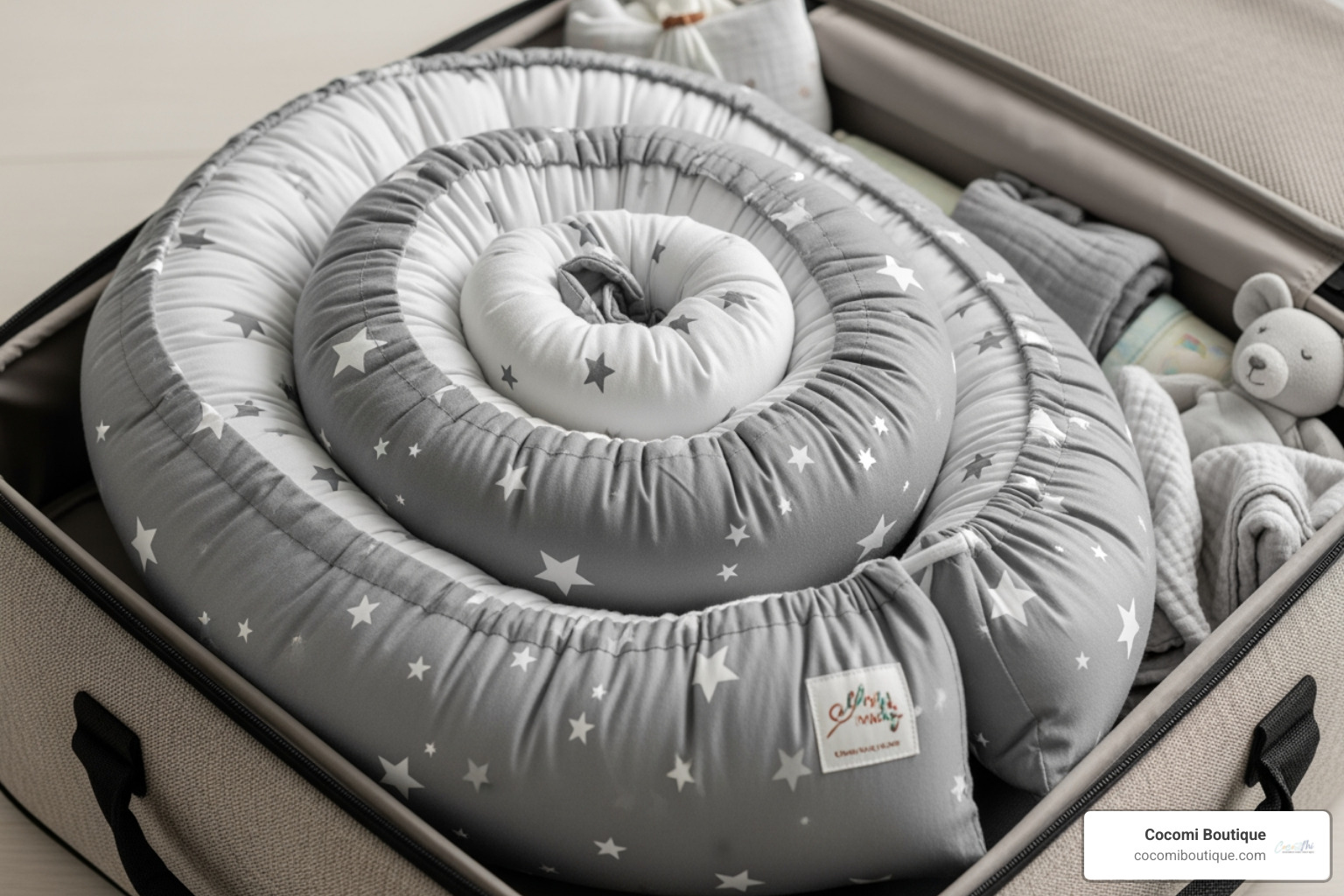
Yes, portability is a key benefit of an infant nest! Maintaining a routine while traveling with a baby can be a challenge, and a nest can help significantly.
Most nests are lightweight and travel-friendly. For example, some weigh as little as 2.2kg and come with a storage bag, making them easy to pack. You can roll it up and take it wherever you're headed, whether that's a hotel or your parents' house in Glenview, IL.
The real benefit of traveling with your baby's infant nest is the sense of familiarity it provides. A recognizable spot can help your baby feel secure in a new environment.
All safety rules still apply when traveling. The nest is for supervised lounging only, not a substitute for a travel crib for sleep. Always use it on a firm, flat surface under your direct supervision. Used correctly, an infant nest can be an invaluable travel companion.
Conclusion
Understanding the infant nest shows why these cozy loungers are so appealing to parents across Chicago, IL, Northbrook, IL, and beyond. These portable spaces offer real comfort for your baby while giving you precious hands-free moments during the day.
The infant nest shines in its versatility. You can use it for supervised tummy time, create a familiar spot for your baby at a relative's house, or simply keep your little one close while you work from home. Features like breathable materials and easy-to-clean designs make parenting a bit easier.
Above all, remember your baby's safety. An infant nest is for supervised lounging only and is not a safe solution for overnight or unsupervised sleep. By following AAP safe sleep guidelines, using the nest on a firm, flat surface, and maintaining constant supervision, you can create a secure environment for your baby.
When choosing an infant nest, consider your baby's age, look for breathable and washable materials, and prioritize safety. The right nest becomes a helpful companion in your daily routine.
At Cocomiboutique, we believe in creating a complete nurturing environment. Pair a thoughtfully designed infant nest with our soft, quality baby apparel made from natural materials for the ultimate in comfort and style. Our commitment to quality and care is here to support your parenting journey.
Ready to find more ways to care for your little one? Explore More Baby Care Tips and Guides and find the insights that will help you steer parenthood with confidence.