

Why Parents Are Searching for a Nest for Newborn
A nest for newborn babies is a portable, cushioned lounger designed for supervised daytime rest and bonding. Here's what you need to know before purchasing:
Key Points About Newborn Nests:
- Purpose: Supervised lounging, tummy time, and creating a cozy spot for awake time
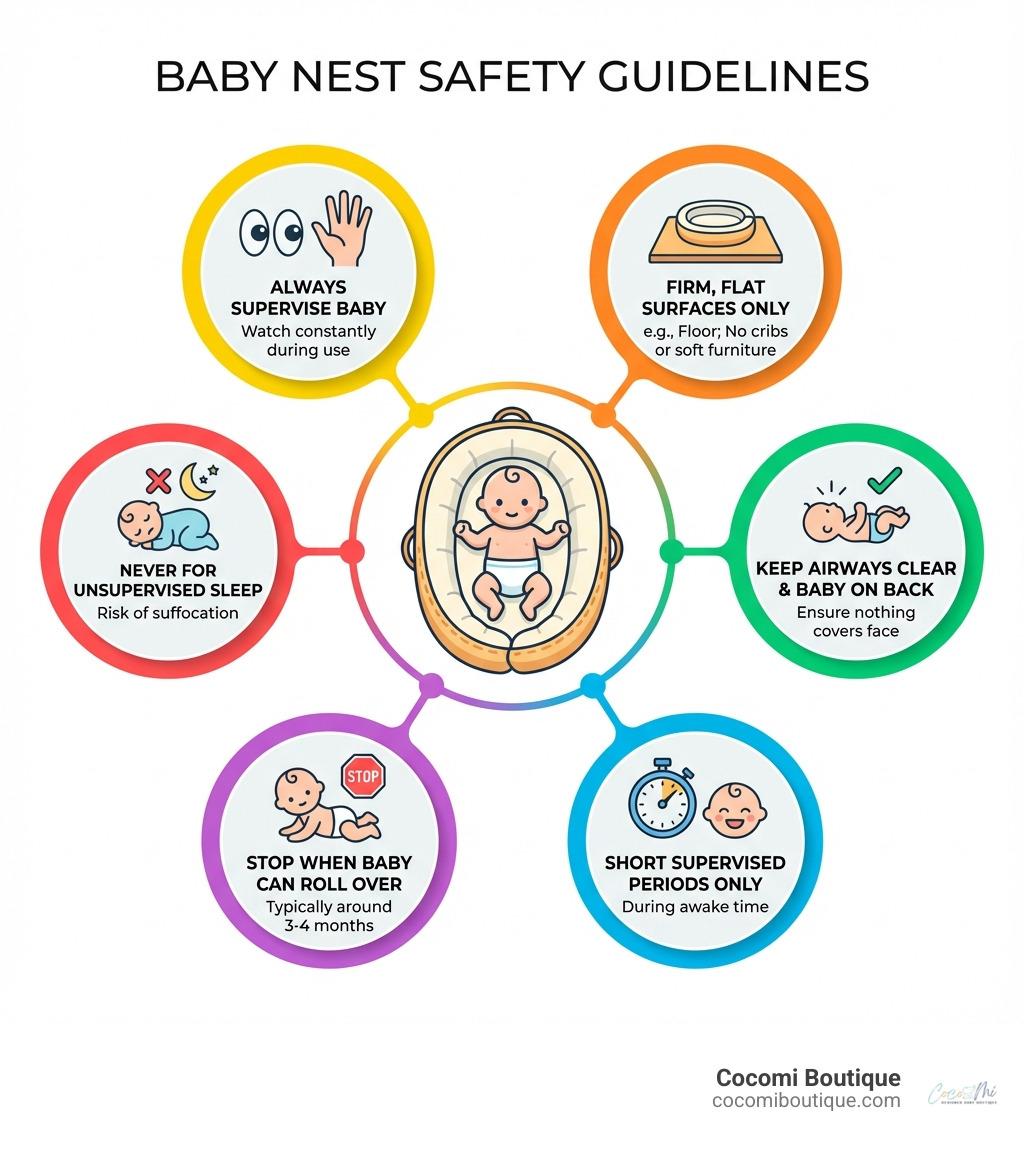
- NOT for sleep: Never use for unsupervised or overnight sleep due to suffocation risk
- Always supervise: Baby must be watched at all times when in a nest
- Safe placement: Only on firm, flat surfaces like the floor—never in cribs or on soft furniture
- Age limit: Stop using when baby can roll over (typically 3-4 months)
The first weeks with a newborn are exhausting. You want to keep your baby close, but you also need your hands free to eat, shower, or just breathe for a moment. That's where newborn nests come in—they offer a portable, womb-like space where your baby can rest under your watchful eye while you tackle the basics of daily life.
But here's the critical part: nests are not safe sleep spaces. Research shows that baby nests pose a suffocation risk when used for unsupervised sleep. The same NHS guidance that warns against baby nests for sleeping also recommends that babies sleep on their backs in a cot in the same room as parents for at least the first six months to reduce SIDS risk.
The good news? When used correctly—for supervised lounging on firm, flat surfaces—a quality nest can be a helpful tool for new parents. The key is understanding the difference between a cozy spot for awake time and a safe sleep environment.
I'm Monika Jarog, and I've spent years crafting handmade baby essentials from 100% natural, chemical-free materials that meet the highest European safety standards. My experience designing safe, comfortable products has taught me exactly what to look for in a nest for newborn babies—and what to avoid.
Glossary for nest for newborn:
What is a Newborn Nest and Why Use One?
A nest for newborn babies, often referred to as a baby lounger or portable infant nest, is essentially a portable, cushioned docking station designed to provide a snug, secure, and familiar space for your little one during their awake time. Imagine a soft, cozy haven that mimics the feeling of being held or nestled in the womb—that's the primary sensation a newborn nest aims to create.
Our goal with these loungers is to offer a soft landing spot for supervised moments. They are not meant to be a primary sleep solution, but rather a convenient accessory for parents seeking a hands-free moment while keeping their baby close and content. Whether you're folding laundry, enjoying a cup of coffee, or just need a moment to yourself, a nest for newborn provides a safe, comfortable spot for your baby to observe the world around them, all under your watchful eye.
The primary functions of a newborn nest revolve around providing a womb-like environment that can help soothe your baby. This can be particularly useful for supervised tummy time, short periods of awake lounging, or simply a familiar place for your baby to relax while you are nearby. The portability of these nests means you can easily move your baby from room to room, ensuring they are always within sight and close to you, fostering a sense of security and connection.
We understand the allure of a product that promises comfort and convenience in those whirlwind first months. As new parents ourselves, we know how valuable those few hands-free moments can be. That's why we emphasize the importance of understanding exactly what a nest for newborn is for – supervised use, creating a cozy spot, and offering a portable solution for your daily routine. For more in-depth information on the what, why, and how-to of baby nests, we encourage you to read our guide: More info about What, Why, and How-To.
The Benefits for Baby and Parent
When used correctly and with constant supervision, a nest for newborn can offer several advantages for both baby and parent during those precious early months.
For your baby, the snug, cozy feeling of a nest can be incredibly comforting. Newborns are accustomed to the confined, warm space of the womb, and a nest can help recreate that sense of security. This can often reduce the startle reflex, also known as the Moro reflex, which can sometimes disrupt a baby's peace. By providing a familiar and contained space, a nest can ease transitions, whether it's moving from your arms to a flat surface or simply adjusting to different environments around the house. It's a little piece of home that goes wherever you go, offering a consistent sense of comfort.
For parents, the benefits often revolve around convenience and fostering connection. A nest for newborn allows for those much-needed hands-free moments. Imagine being able to prepare a meal, answer an email, or simply take a moment to breathe, all while your baby is safely and comfortably nestled nearby, within your line of sight. This portability means you can have a familiar spot for your baby in the living room, kitchen, or even outside on a porch, keeping them engaged with family activities. This closeness, even when you're not physically holding them, can facilitate bonding and make daily life a little smoother. It’s about creating a harmonious environment where your baby feels secure and you feel supported, even during the busiest parts of your day.
Nests vs. Safe Sleep Spaces
It's crucial to understand the fundamental difference between a nest for newborn and a safe sleep space like a bassinet or crib. This distinction is not just about semantics; it’s about your baby’s safety. As we've emphasized, baby nests are designed for supervised lounging, not for unsupervised or overnight sleep.
Let's clarify this with a comparison:
| Feature | Newborn Nest (Lounger) | Bassinet / Crib |
|---|---|---|
| Purpose | Supervised lounging, awake time, tummy time | Unsupervised sleep, overnight sleep |
| Supervision | Always required – baby must be watched at all times | Designed for unsupervised sleep |
| Safety Cert. | Generally no specific sleep safety certifications | Must meet strict safety standards for infant sleep |
| Portability | High – lightweight, easy to move from room to room | Low to moderate – typically stationary or on wheels |
| Firm Surface | Must be placed on a firm, flat surface (e.g., floor) | Provides its own firm, flat sleep surface |
| Loose Items | No loose blankets, pillows, or toys | No loose blankets, pillows, bumpers, or toys |
| SIDS Risk | Increased risk if used for unsupervised sleep | Designed to reduce SIDS risk when used correctly |
The most important takeaway here is that a nest for newborn is not an alternative to a bassinet or crib for sleep. The NHS guidance is clear: "Baby nests are not suitable for your baby to sleep in because of the danger of suffocation." This warning is echoed by safe sleep organizations globally. While a nest can be a wonderful tool for supervised awake time, your baby needs a dedicated, certified safe sleep space for all unsupervised sleep, day or night.
For parents in Illinois and beyond, understanding these distinctions is paramount. We want you to feel confident and informed when making choices for your baby. To dig deeper into the safety aspects and benefits of various infant sleep solutions, we invite you to explore our article: The Truth About Newborn Snuggle Nests.
Safety First: The Golden Rules of Using a Newborn Nest
When it comes to using a nest for newborn, safety isn't just a recommendation—it's the absolute golden rule. We cannot stress this enough: nests are fundamentally not designed for unsupervised sleep. The danger of suffocation is real, and it’s a risk we must all take seriously.
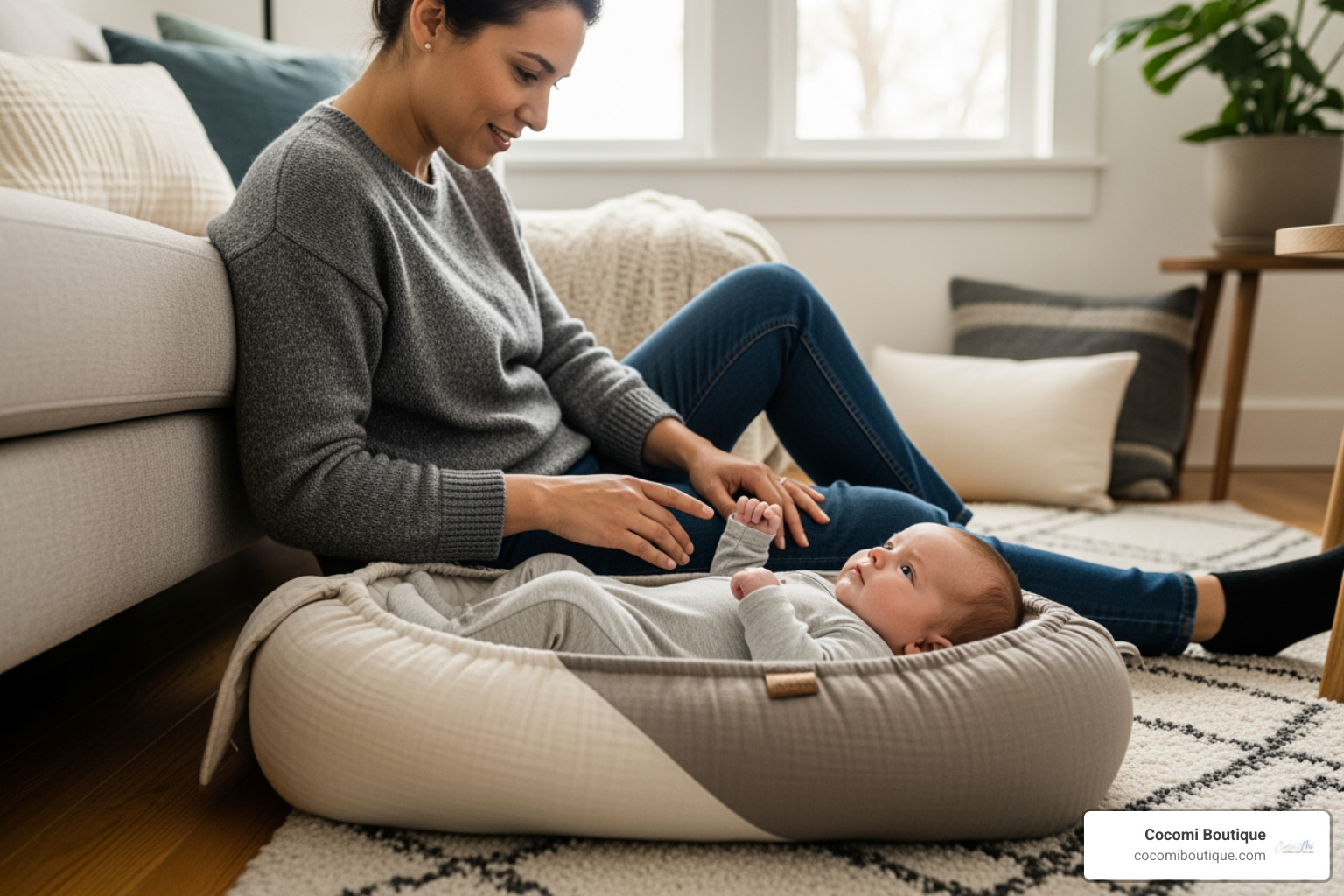
Here are the essential safety considerations and recommendations for using a newborn nest:
- Always Supervise: This is the most critical rule. Your baby must be under constant, direct supervision when in a nest for newborn. If you need to leave the room, even for a moment, take your baby with you or place them in a safe sleep space like a crib or bassinet.
- Firm, Flat Surface Only: A newborn nest must always be placed on a firm, flat, and stable surface. The floor is the ideal location. Never place a nest on soft surfaces like adult beds, sofas, cushions, or changing tables. These surfaces can conform to the nest, creating unsafe angles or trapping your baby. Crucially, never place a nest inside a crib, bassinet, or playpen, as this introduces soft sides and potential entrapment hazards that defeat the purpose of those certified safe sleep environments.
- Back to Sleep: Always place your baby on their back in the nest. This position is recommended for all babies to reduce the risk of SIDS (Sudden Infant Death Syndrome).
- Clear Airways: Ensure nothing obstructs your baby’s face or head. This means no loose blankets, pillows, stuffed animals, or toys inside or near the nest. The nest itself should have firm, breathable sides that maintain their shape.
- Room Sharing, Not Bed Sharing (for sleep): For at least the first six months, your baby should be in the same room as you when they're asleep, both day and night. This significantly reduces the risk of SIDS. While a nest for newborn can be placed on the floor in your room during supervised awake time, for actual sleep, your baby needs their own safe sleep space, like a bassinet next to your bed. The Lullaby Trust provides comprehensive information on safe sleep practices, including advice on swaddling and slings, which can be useful for keeping your baby snug and secure when awake. You can find more information here: The Lullaby Trust has information about swaddling your baby and using slingssafely.
- Temperature Regulation: Ensure your baby isn't too hot or too cold, as this can disturb their comfort. Dress them in appropriate layers, and check their temperature regularly. The NHS offers excellent guidance on helping your baby to sleep, which includes advice on optimal room temperature and dressing: Helping your baby to sleep .
A nest for newborn is a tool for supervised comfort and connection, providing a temporary, cozy spot when you need your hands free. It’s not a substitute for a crib or bassinet for unsupervised sleep. By adhering to these golden rules, you can maximize the benefits of a nest while prioritizing your baby's safety above all else.
A Feature Roundup: Choosing the Perfect Nest for Your Newborn
Once you understand the safety guidelines and the role of a nest for newborn as a supervised lounging tool, the next step is choosing one that meets your family's needs. With so many options on the market, it can feel overwhelming. We believe in providing you with the knowledge to make informed decisions, focusing on quality, comfort, and peace of mind. This section serves as a guide to help you select the best features for your baby's comfort and your peace of mind, without focusing on specific brands.
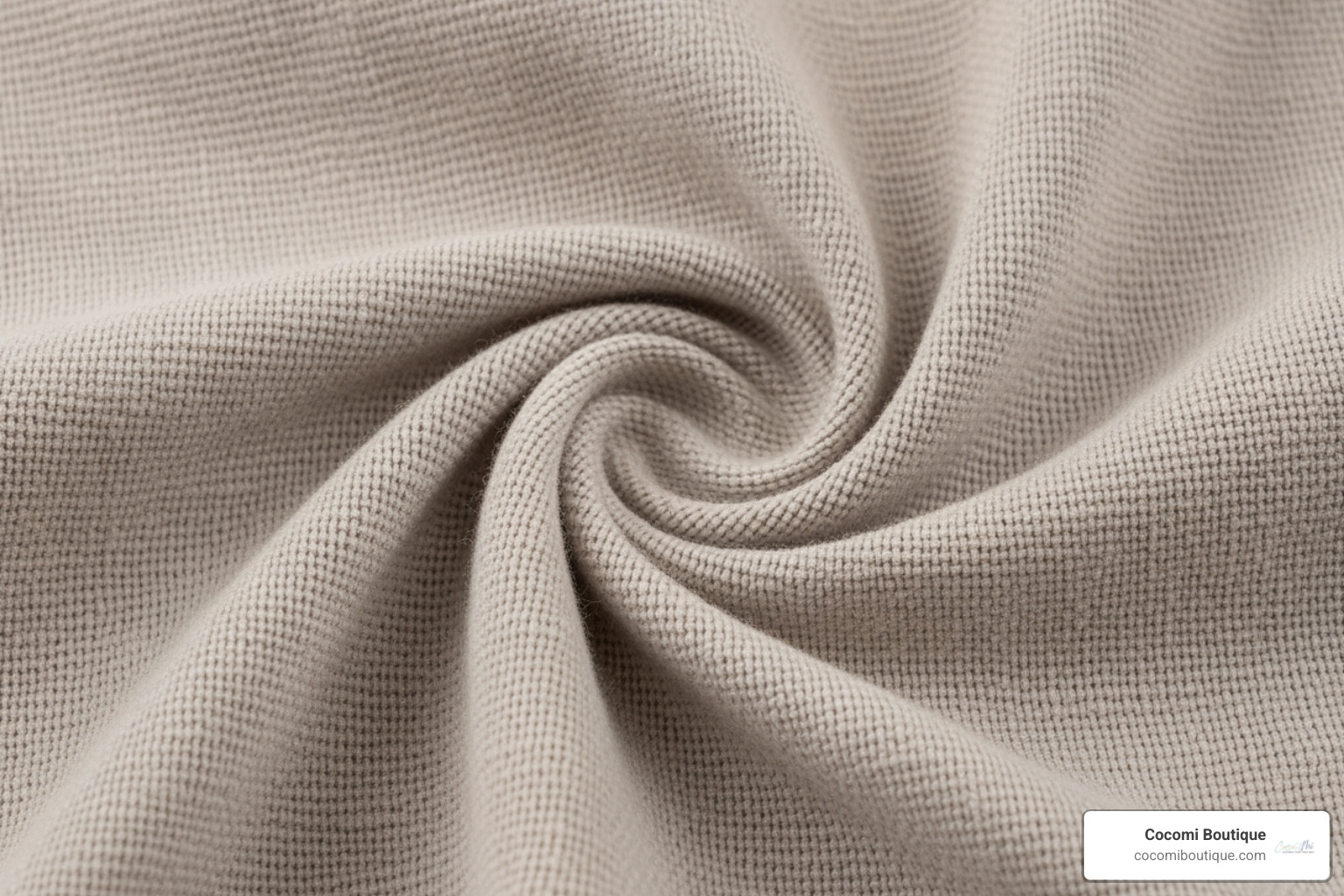
Material and Construction of a great nest for your newborn
The materials and construction of a nest for newborn are paramount, not just for comfort, but also for durability and hygiene. When we craft our baby essentials, we prioritize these aspects, and we recommend you do too.
Here's a list of key material features to look for:
- Organic Cotton: Opt for nests made with organic cotton. It's soft, breathable, and free from harsh chemicals and pesticides, making it ideal for a newborn's delicate skin. This aligns with our commitment to natural, chemical-free materials.
- Hypoallergenic Fabrics: Babies can have sensitive skin or allergies. Hypoallergenic materials minimize the risk of irritation, ensuring a comfortable experience for your little one. Look for certifications that confirm the fabric is suitable for sensitive skin.
- Breathable Mesh Panels: While the core of the nest is plush, some designs incorporate breathable mesh panels on the sides. These can help promote airflow, especially important for preventing overheating.
- Non-Toxic Dyes: Ensure any colored fabrics or prints on the nest use non-toxic, baby-safe dyes. This is a subtle but crucial detail for your baby's health.
- Firm Mattress: The base of the nest for newborn should have a firm, flat mattress. This provides proper support for your baby's back and helps prevent them from sinking into a soft surface, which could pose a suffocation risk. Avoid overly plush or squishy bases.
- Sturdy, Raised Bumpers: The defining feature of a nest is its raised, cushioned sides. These bumpers should be firm enough to maintain their shape, providing that cozy, womb-like enclosure. They help create a sense of security and prevent your baby from rolling out when supervised.
- Removable and Machine-Washable Covers: Let's be real—babies are messy! Spills, spit-up, and diaper leaks are part of the journey. A nest for newborn with a removable, machine-washable cover is an absolute game-changer for hygiene and ease of maintenance. This ensures you can keep your baby's space fresh and clean with minimal effort.
When considering these features, products using natural materials like wool and organic cotton are often highlighted for their benefits. Wool, for instance, is naturally flame-resistant, dust mite and mildew resistant, anti-microbial, anti-bacterial, and excellent at regulating temperature—keeping your baby cool in summer and warm in winter. These properties contribute to an optimal microclimate for your baby's comfort. We believe in the power of such materials to provide a safe and healthy environment.
Essential Features for a nest for your newborn
Beyond materials, certain design features improve the practicality and longevity of a nest for newborn. These are the details that make daily life a little easier for you.
- Portability: One of the main appeals of a newborn nest is its portability. Look for lightweight designs that are easy to pick up and move around the house. Some nests even come with integrated carry handles, making it simple to transport your baby (while not in the nest, of course) or move the nest itself from the living room to the kitchen.
- Size and Adjustability: Babies grow incredibly fast! A nest that offers some form of adjustability can extend its usability. Features like ties at the bottom allow you to cinch or loosen the nest, adjusting its length to accommodate your growing baby. Some even have zippers to adjust the filling, allowing you to customize the firmness or height of the bumpers.
- Recommended Dimensions: While dimensions vary, a common size for a newborn nest might be around 20.5 x 32.5 x 5 inches (52 x 82 x 13 cm) with board diameters of about 5 inches (12 cm). The inner sleeping area (for supervised lounging) would be smaller, accommodating a newborn comfortably. Always check the manufacturer's specified dimensions to ensure it suits your space and your baby.
- Age and Weight Limits: Every nest for newborn will have a recommended age or weight limit. It's crucial to adhere to these guidelines. Typically, nests are suitable for newborns up to 3-4 months, or until they can roll over independently, whichever comes first. This brings us to our next important point: when to transition away from the nest.
By prioritizing these material and design features, you're investing in a nest for newborn that is not only comfortable and safe for supervised use but also practical for your busy life as a new parent.
Care, Maintenance, and When to Transition
Caring for your nest for newborn properly ensures its longevity and maintains a hygienic environment for your baby. Just like with any baby product, a little routine maintenance goes a long way.
Cleaning Instructions: Most high-quality newborn nests are designed with busy parents in mind, featuring easy-to-clean components:
- Washing Covers: The removable outer cover is usually the part that needs the most frequent cleaning. Always check the care label, but typically, these can be machine washed on a cold cycle with like colors and a gentle, baby-friendly detergent.
- Spot Cleaning the Base: The inner mattress or base of the nest might not be fully machine washable, especially if it contains specialized fillings like wool. For these components, spot cleaning with a mild soap and water solution is often recommended. Ensure it's thoroughly air-dried before reassembling.
- Air Drying: While some covers might be tumble-dry friendly on low heat, air drying is often preferred, especially for muslin or organic cotton fabrics, to minimize shrinkage and preserve the fabric's integrity. Hang drying also helps maintain the shape and softness of the nest.
When to Transition Away from the Nest: Understanding when your baby has outgrown their nest for newborn is just as important as knowing how to use it safely. There are clear age limitations and developmental milestones that signal it's time to stop using the nest for lounging.
- Developmental Milestones: The most critical sign is when your baby can roll over independently. This typically happens around 3 to 4 months of age, but some babies develop this skill earlier. Once your baby can roll, the risk of them rolling within the nest and getting into an unsafe position, even during supervised awake time, significantly increases.
- Age or Weight Limits: Always follow the manufacturer's recommended age and weight limits for your specific nest for newborn. These limits are set for safety and optimal use.
- Loss of Snugness: If your baby starts to look too snug or cramped, or if their head or feet are consistently touching the ends of the nest, it's a good indication they're ready for more space.
Transitioning your baby away from the nest means finding other safe spaces for their awake time, such as a play mat on the floor, a bouncer (used according to its safety guidelines), or simply more time in your arms. For further guidance on ensuring safe sleep practices as your baby grows and develops, we recommend reading our article: Decoding Safe Sleep for Your Newborn. Our priority is always your baby's safety and comfort through every stage of their development.
Frequently Asked Questions about Newborn Nests
We often hear similar questions from parents navigating newborn essentials. Here, we address some of the most common queries regarding the nest for newborn to help you feel more informed and confident.
Can my baby sleep overnight in a newborn nest?
No, absolutely not. We cannot emphasize this enough. A nest for newborn is not designed for unsupervised or overnight sleep due to the significant risk of suffocation. The soft, raised sides, while cozy, can obstruct a baby's airway if they roll or shift. For all unsupervised sleep, day or night, your baby must be placed in a certified safe sleep space such as a crib, bassinet, or playpen, on their back, with nothing else in the sleep space. This aligns with all major safe sleep guidelines, including those aimed at reducing the risk of SIDS.
What's the best surface to place a baby nest on?
The best and safest surface to place a nest for newborn on is a firm, flat, and stable surface, such as the floor. This prevents the nest from tipping, falling, or creating unsafe angles. Never place a nest on soft surfaces like an adult bed, sofa, armchair, or counter-top. These surfaces can be unstable, or their softness can cause the nest to tilt or sink, posing a suffocation or fall risk. Furthermore, never place a newborn nest inside a crib, bassinet, or playpen, as this introduces soft bedding and potential entrapment hazards into an otherwise safe sleep environment.
When should my baby stop using a nest?
You should stop using a nest for newborn as soon as your baby reaches specific developmental milestones or exceeds the manufacturer's limits, whichever comes first. The most crucial milestone is when your baby can roll over independently. This typically occurs around 3 to 4 months of age. Once your baby can roll, they might turn face down into the sides of the nest, increasing the risk of suffocation. Additionally, always adhere to the specific age or weight limits provided by the nest's manufacturer. If your baby looks too snug or is pushing against the sides, it's a good sign they need more space and have outgrown the nest.
Conclusion
Navigating newborn products can be exciting yet daunting, with so many choices and considerations. Our journey through the nest for newborn has hopefully provided you with clarity and confidence. We've seen that while these cushioned loungers offer incredible benefits for supervised comfort, hands-free moments, and creating a cozy, familiar spot for your baby, their use comes with a critical caveat: they are strictly for supervised lounging, not for unsupervised or overnight sleep.
We've explored the primary functions and benefits, from providing a womb-like environment that soothes your baby to offering parents much-needed convenience. We've also drawn a clear distinction between a nest for newborn and certified safe sleep spaces like bassinets and cribs, emphasizing that safety must always be your top priority. Remember the golden rules: constant supervision, placement on a firm and flat surface, and adherence to age and developmental limits are non-negotiable.
Here at Cocomi Boutique, we are deeply committed to quality, care, and customer satisfaction. We understand the love and attention that goes into preparing for your little one, and we strive to ensure a delightful shopping experience as you choose essentials that bring comfort and joy to your family. We believe that informed parents are empowered parents, and our goal is to provide you with the knowledge to make the best choices for your baby's well-being.
For more expert tips and insights on creating the perfect, safe space for your baby, we invite you to explore our blog: Find more tips on creating the perfect, safe space for your baby on our blog. Your baby's comfort and safety are our highest priorities, and we're here to support you every step of the way.