

How to Choose a Breathable Infant Nest Liner Safely

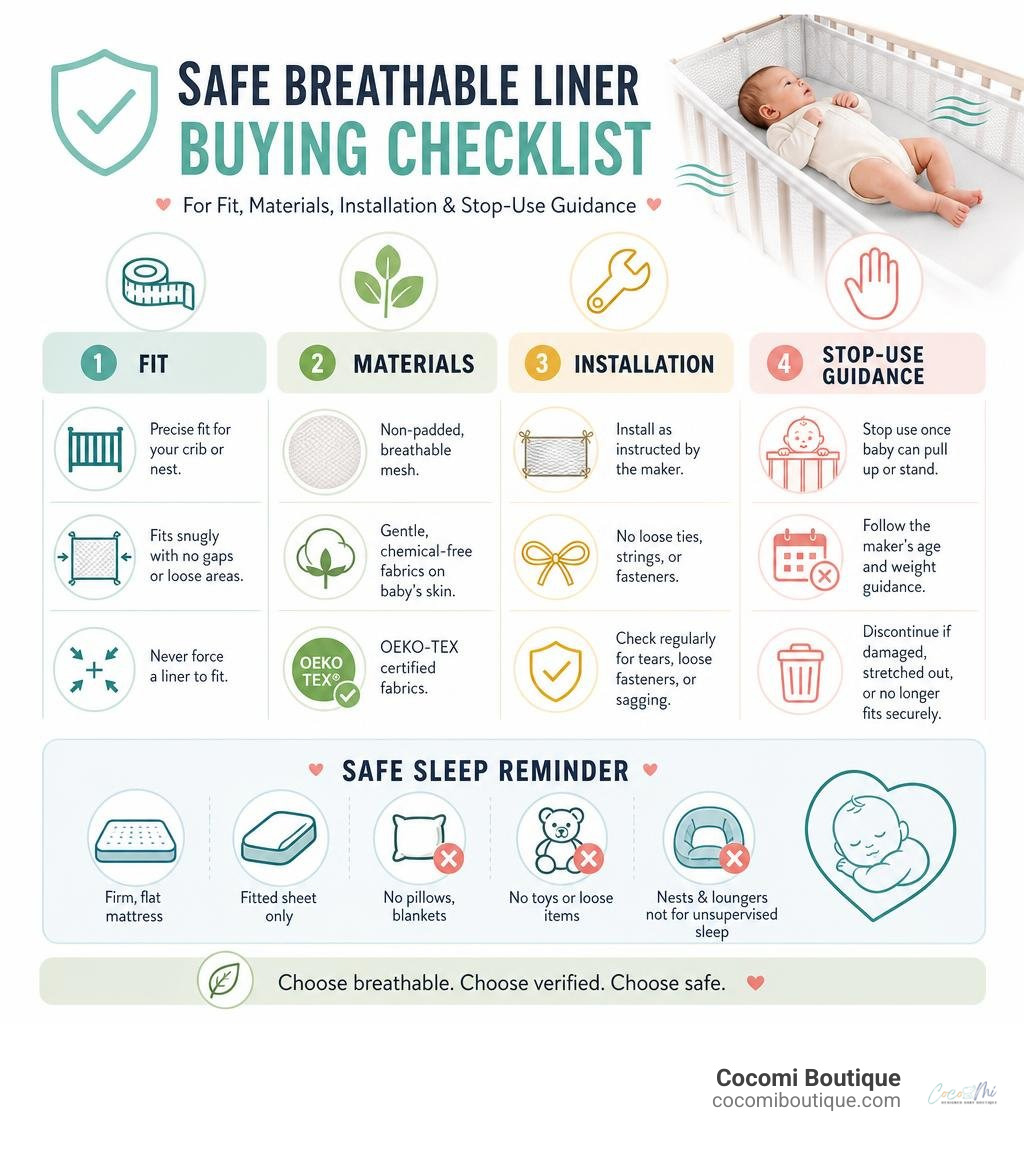
A breathable infant nest liner should be non-padded, fitted to the product or crib it is made for, and made from materials you can verify. For crib use, choose a purpose-made mesh liner that fits tightly, has no loose ties or gaps, and follows the maker's age and installation guidance. A mesh liner may help keep small arms, legs, and pacifiers from slipping through crib slats, but it is not a substitute for a bare, safe sleep space.
When comparing options, look for:
- Non-padded breathable mesh rather than traditional cushioned bumpers
- A precise fit for a full-size, mini, or portable crib - never force a liner to fit
- Clear care instructions and regular checks for tears, loose fasteners, or sagging
- OEKO-TEX certified, chemical-free fabrics where the liner touches newborn skin
- A clear stop-use point, especially once a baby can pull up or stand
It is important to separate breathable from officially approved. The CPSC does not broadly "approve" individual crib liners. Certain non-padded mesh liners may fall outside the federal ban on padded crib bumpers, but parents should still follow safe-sleep guidance: use a firm, flat mattress with a fitted sheet only, and keep pillows, blankets, toys, and loose nest inserts out of an unattended sleep space. Baby nests and loungers are not designed for routine unsupervised sleep.
At CocoMi Boutique, we value elegant, handcrafted newborn essentials made with natural, eco-conscious, and chemical-free materials chosen for delicate skin. Our experience designing thoughtful baby nests, bedding, swaddles, and OEKO-TEX focused essentials helps families assess each breathable infant nest liner with comfort, fit, and safety in mind.
Breathable infant nest liner word roundup:
Understanding Infant Nest and Crib Liners vs. Traditional Padded Bumpers
Traditional Bumpers vs Modern Airflow Solutions
For generations, nurseries featured thick, pillowy bumpers designed to cushion babies from hard wooden bars. However, modern pediatric research and federal safety legislation have fundamentally changed nursery standards. Under the Safe Sleep for Babies Act, traditional padded crib bumpers were banned due to significant suffocation and entrapment hazards. When an infant rolls against a thick, cushioned bumper, carbon dioxide can become trapped, severely restricting fresh airflow.
Modern airflow solutions address these concerns through single- or dual-layer mesh textiles and engineered air channel fabrics. Unlike thick batting, modern mesh allows unrestricted air circulation across the sleep perimeter while maintaining a physical barrier.
| Feature | Traditional Padded Bumpers | Breathable Mesh Liners |
|---|---|---|
| Airflow Permeability | Restricted; dense foam/batting blocks fresh air | High; porous mesh allows continuous airflow |
| Suffocation Risk | High; soft padding can mold against infant airways | Low; non-padded structure prevents obstruction |
| CPSC Regulatory Status | Federally banned under Safe Sleep for Babies Act | Excluded from the ban if non-padded and compliant |
| Primary Function | Decorative impact cushioning | Prevents limb entrapment and pacifier drops |
| Climbing Hazard | Can serve as an unintended foothold | Collapses under weight to prevent climbing |
Material Matters: Natural Fibers vs Engineered Mesh
When curating your nursery, the textiles surrounding your little one should be gentle on sensitive newborn skin and free from harsh chemicals. Babies have thinner, more permeable skin barriers than adults, making them vulnerable to synthetic dyes, off-gassing finishes, and chemical flame retardants.
Investing in an organic certified newborn nest or pairing breathable accessories with a hypoallergenic infant nest cover ensures your baby's environment is crafted from pure, certified fabrics. European OEKO-TEX Standard 100 certification guarantees every yarn, zipper, and seam has been tested against hundreds of harmful substances. Natural 100% organic cotton, natural linen, and airy muslin naturally wick away moisture, regulate body temperature, and prevent overheating during supervised lounging or restful tummy time.
Key Benefits of a Breathable Infant Nest Liner for Modern Nurseries
Preventing Entrapment and Keeping Essentials in Reach
As infants develop motor control, they wiggle, kick, and explore their environment. Without a protective barrier, tiny arms and legs can easily slip between standard crib slats, causing discomfort, startled awakenings, and parental distress.
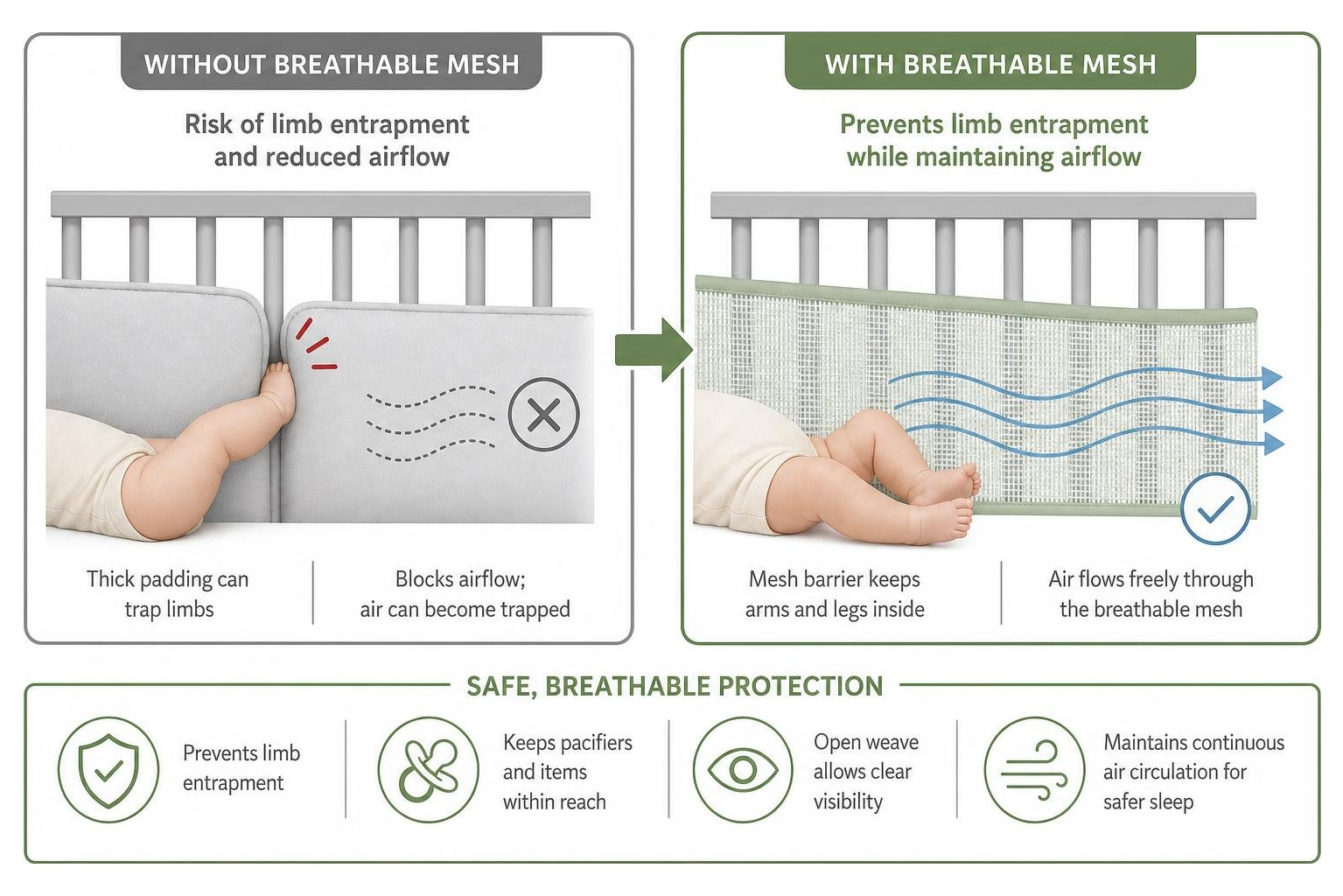
A lightweight breathable mesh baby nest or taut crib liner provides tangible day-to-day advantages:
- Limb Entrapment Defense: Keeps active arms and legs comfortably inside the crib enclosure.
- Pacifier Retention: Prevents dropped pacifiers, teethers, and favorite soothing items from tumbling onto dusty nursery floors.
- Visual Reassurance: The open-weave mesh preserves clear lines of sight, allowing parents to check on baby effortlessly from across the room.
- Visual Calming: Certain dense weave meshes diffuse ambient nursery light (offering up to an 85% light-blocking effect) to reduce visual stimulation without trapping stagnant air.
How to Properly Install a Breathable Infant Nest Liner for Maximum Security
Correct installation is essential for maintaining safety. A loose, sagging, or incorrectly sized liner introduces entanglement risks.
- Verify Dimensions: Ensure the liner matches your specific frame. Standard full-size cribs require panels matching 52" x 28" mattress boundaries, whereas mini cribs need custom sizing (typically 11" x 127" single-strip lengths).
- Weave Along Slats: Position the long panel along the front and back slats, weaving around corner posts as instructed by the manufacturer.
- Secure Hook-and-Loop Closures: Fasten all hook-and-loop straps firmly to the outside of the crib slats. The liner must sit taut against the wood without loose slack or drooping sections.
- Tuck Below the Mattress Edge: Compress the bottom edge of the liner below the top rim of the firm mattress to create a seamless, gap-free seal.
- Routine Tension Audits: Check fastener grip and fabric tension weekly, especially after laundering or sheet changes.
Safety Standards, CPSC Compliance, and When to Transition
Regulatory Safety and ASTM F1917 Compliance
The regulatory landscape regarding infant sleep spaces is precise. While the U.S. Consumer Product Safety Commission (CPSC) enforces strict prohibitions on thick, cushioned bumpers, non-padded breathable mesh liners that comply with ASTM F1917 standards are explicitly excluded from this ban.
ASTM F1917 is the benchmark safety standard for infant bedding in North America, testing structural integrity, tensile strength, secure attachment methods, and airflow permeability. When choosing a safe sleep lounger or nest for daytime resting, ensure all fabrics comply with rigorous international testing standards to give your family complete peace of mind.
Top-Rated Breathable Infant Nest Liner Options for Newborn Comfort

When selecting high-quality nursery accessories, discerning parents look for thoughtful European craftsmanship, natural fibers, and functional maintenance features:
- Dual-Panel Classic Mesh Liners: Engineered from polyester micro-mesh with specialized air-channel technology. Features high light-diffusion ratings and reinforced hook-and-loop fasteners designed for standard full-size nursery cribs.
- Mini and Portable Crib Liners: Tailored single-panel lengths designed specifically for compact nursery footprints and travel bassinets, preventing bunched or overlapping fabric.
- Natural Organic Nest Liners: Handcrafted from pure organic cotton and breathable linen, perfect for lining daytime loungers, Moses baskets, and changing stations. Explore our comprehensive breakdown in the complete guide to baby nests.
Recognizing developmental transition cues is vital. Remove crib liners immediately when your baby reaches the milestone of pulling up, kneeling, or standing independently (typically around 6 to 9 months). Once babies can pull themselves upward, any fabric attachment can inadvertently be used as a step or foothold to climb over the crib rail.
Frequently Asked Questions About Breathable Liners and Sleep Safety
Are breathable mesh liners approved by safety authorities?
The CPSC does not issue individual product endorsements or approvals; however, non-padded breathable mesh liners are explicitly exempt from the federal crib bumper ban under the Safe Sleep for Babies Act. Products that meet ASTM F1917 infant bedding standards are recognized as compliant airflow-friendly nursery accessories.
How do you properly wash and maintain a breathable liner?
To preserve fabric elasticity and fastener strength:
- Secure all hook-and-loop closures before washing to prevent snagging delicate mesh threads.
- Machine wash on a gentle, cold water cycle using mild, chemical-free baby detergent.
- Line dry or tumble dry on low heat. Avoid high heat to keep fasteners flat and secure.
When should you stop using a liner in an infant sleep space?
Discontinue use the moment your baby begins attempting to stand, pull up onto their knees, or leverage objects to climb. At this developmental stage, the primary safety priority shifts toward preventing crib falls.
Conclusion
Creating a serene, secure nursery begins with choosing items crafted with uncompromising care and verified materials. At CocoMi Baby Boutique, we design timeless, handcrafted nursery essentials born from our own journey as parents seeking pure, elegant essentials for delicate newborn skin. Every baby nest, swaddle, and heirloom textile in our collection features natural, chemical-free fabrics certified to the highest European OEKO-TEX safety standards.
Whether you visit our welcoming showroom in Northbrook, IL—serving Chicago, Glenview, Highland Park, Winnetka, and the surrounding North Shore communities—or shop online across the United States, we are honored to help you prepare a beautiful sanctuary for your growing family. To discover more expert guidance on infant care, nursery styling, and safe sleep habits, explore expert nursery guides and sleep tips across our boutique journal today.