

Easy-Clean Newborn Nests: What to Check Before You Buy

A washable newborn nest is not necessarily waterproof or stain resistant. For easier cleanup, look for a removable cover with clear machine-wash instructions, then check whether the mattress has a wipe-clean liner. A soft cotton cover may wash well, but it can still absorb a diaper leak or spit-up. Check the care label for each part before buying; never assume the cover, bumper, and mattress can all go in the machine.
A baby nest is a padded space for supervised awake time, not a safe sleep space. If your baby falls asleep, move them to a firm, flat sleep surface designed for infants. The American Academy of Pediatrics offers helpful guidance on safe infant sleep environments.
At CocoMi Boutique, we look closely at both fabric and everyday care. In this guide, we'll help you choose an easy clean newborn nest without mistaking "washable" for "waterproof."
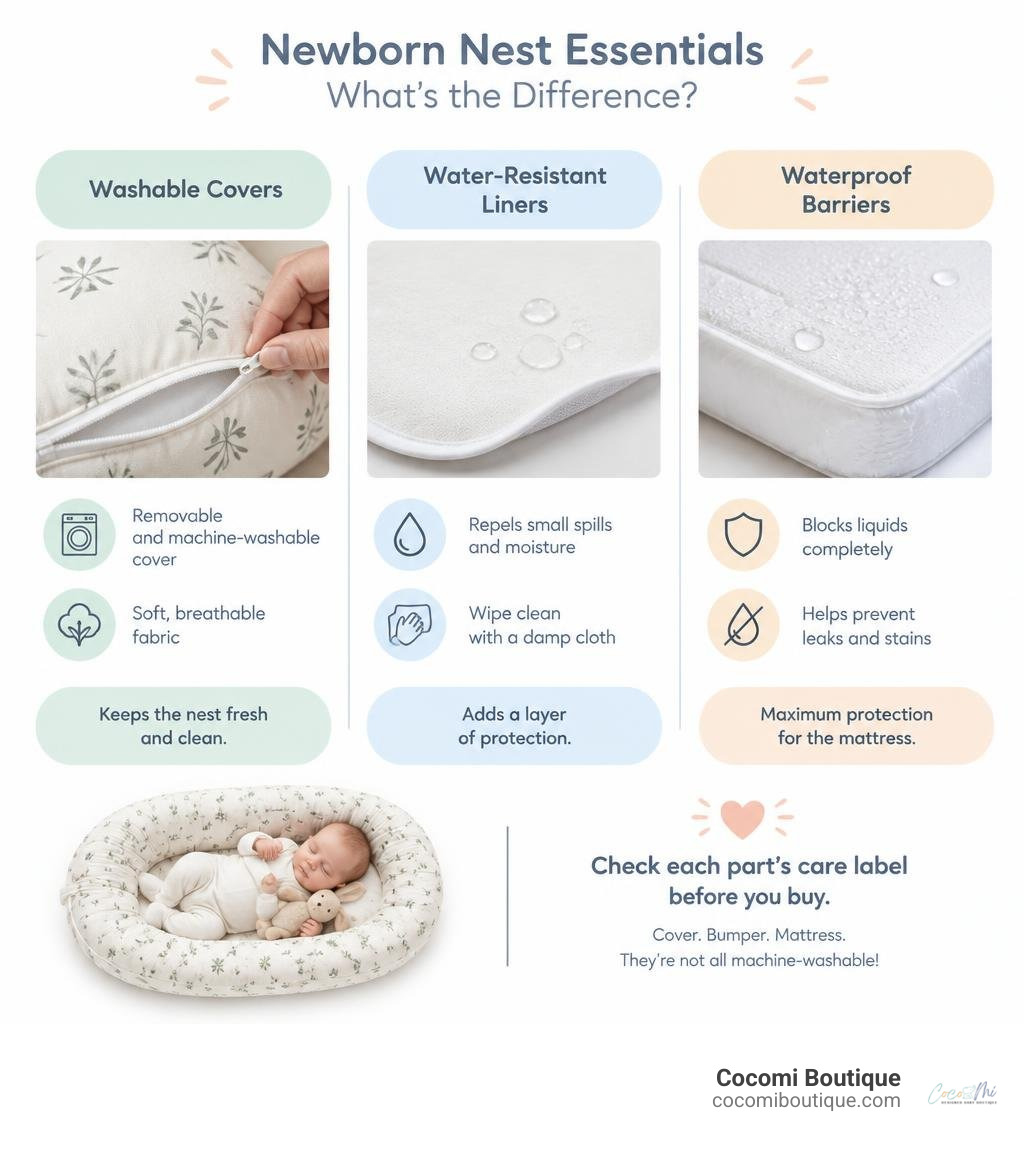
Simple guide to easy clean newborn nest terms:
What Makes an Easy Clean Newborn Nest Truly Stain Resistant and Waterproof?
When preparing for a new arrival, many parents search for nursery gear that promises quick cleanup. Newborns bring endless joy, but they also bring frequent diaper blowouts, spilled milk, and unexpected spit-up. Marketing terms like "stain resistant" and "100% waterproof" can sound like a dream, but understanding the difference between genuine waterproof barriers and breathable fabrics is essential for your baby's comfort and safety.
| Feature Type | Primary Material | Stain Resistance Level | Breathability & Airflow | Recommended Care Method |
|---|---|---|---|---|
| Waterproof Coating | Polyurethane (PU) / Synthetic Laminates | Very High (Liquid Beads on Surface) | Low to None (Can Trap Heat) | Wipe clean; avoid high heat drying |
| Water-Resistant Liner | Thermoplastic Polyurethane (TPU) Membrane | High (Shields Inner Padding) | Moderate (Micro-porous Airflow) | Machine wash gentle or wipe clean |
| Natural Fiber Cover | 100% Organic Cotton / Linen | Moderate (Absorbs Liquids Over Time) | Maximum (Naturally Regulates Temp) | Machine wash gentle with baby-safe soap |
True waterproofing requires an impenetrable barrier, such as a Thermoplastic Polyurethane (TPU) membrane or traditional polyurethane coating. While standard synthetic coatings keep fluids from soaking through, they often rely on chemical water-repellent treatments (like PFAS or harsh fluorocarbons) that we believe have no place near delicate newborn skin.
At CocoMi Boutique, we prioritize natural, non-toxic textiles certified to the highest European OEKO-TEX standards. Protecting your baby from harmful chemicals is just as important as protecting the lounger from daily messes. By pairing a machine-washable cotton exterior with a breathable infant nest liner, you get reliable stain protection without exposing your infant to synthetic off-gassing or plastic heat traps.
Materials That Define a Low-Maintenance Easy Clean Newborn Nest
A low-maintenance lounger is designed with smart, modular components that take the stress out of laundry day. The best easy clean designs feature:
- 100% Organic Cotton or Pure Linen Outer Covers: Natural fibers are gentle on delicate newborn skin, highly breathable, and naturally soften with every wash.
- Robust, Enclosed Zippers: Heavy-duty, baby-safe zippers allow you to strip off the outer fabric in seconds without snagging the inner batting.
- Hypoallergenic Fiber Fillings: Premium polyester or organic wool bumpers resist moisture absorption, preventing mildew and maintaining their plush structure.
- Wipeable Mattress Cores: A water-resistant protective sheath over the bottom pad ensures that unexpected leaks can be sanitized with a quick wipe, keeping fluids from penetrating the foam.
Investing in a hypoallergenic infant nest cover ensures that sensitive skin remains free from irritation while giving you a removable layer that handles regular machine washing with ease.
The Truth About Waterproof Claims vs Breathability
There is an inherent trade-off between absolute waterproofing and optimal fabric breathability. When a product is completely sealed with heavy plastics or rubberized backings, air cannot circulate freely. For an infant, this lack of airflow can create an uncomfortable microclimate, causing overheating, excessive sweating, and heat rash during daytime lounging.
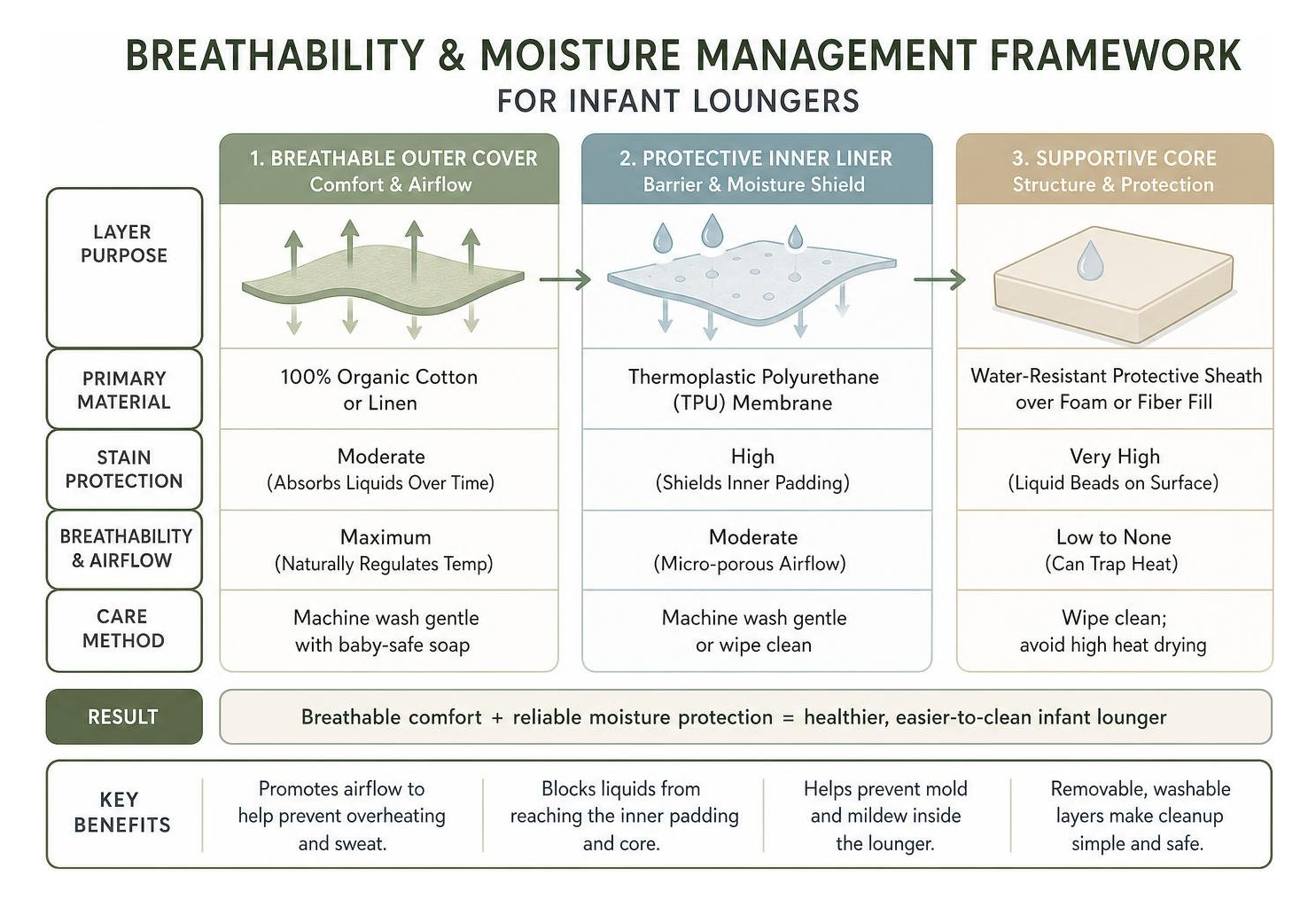
Furthermore, moisture trapped inside an airtight, non-breathable nest can foster mold and mildew colonies deep within the padding. The safest and most practical design combines an ultra-breathable outer shell with a removable, water-resistant internal lining around the mattress pad. To learn more about selecting the right construction, take a look at our premium baby nest ultimate guide.
How to Wash and Maintain Your Infant Nest Safely
Keeping your nursery pristine does not require harsh industrial chemicals or complicated laundering routines. Maintaining your baby gear is simple when you follow thoughtful, fabric-preserving methods.
For regular maintenance, wash your baby nest cover once a week, or immediately following any significant diaper leak or spit-up incident. Always choose a cold water cycle (30°C or 85°F) and a mild, plant-based, baby-safe detergent. For broader tips on keeping your nursery organized and fresh, explore the secret to a spotless home: designing for easy cleaning.
Step-by-Step Washing Guide for an Easy Clean Newborn Nest
Follow this step-by-step process to wash your nest thoroughly without compromising its shape or safety:
- Unzip and Disassemble: Carefully unzip the outer cover and slide out the firm mattress base. If your model features a separate bumper roll, remove it according to the manufacturer's care instructions.
- Pre-Treat Stubborn Spots: Dab milk or diaper stains with a gentle mixture of cool water and baby detergent or oxygen-based powder. Avoid vigorous rubbing, which can weaken natural woven fibers.
- Neutralize Odors Naturally: Sprinkle baking soda over damp spots and let it sit for 15 minutes before laundering to lift sour milk smells without synthetic fragrances.
- Machine Wash on Gentle: Place the cover (and washable bumper, if approved) inside a mesh laundry bag. Wash on a delicate cycle with cold water and an extra rinse cycle to eliminate all soap residue.
- Sanitize the Base: Wipe down the water-resistant mattress pad with a warm, damp cloth and a drop of gentle soap, then let it dry completely.
Taking a methodical approach to washing nursery gear protects your baby's delicate environment, just as careful hygiene routines support daily newborn care more broadly.
Safe Drying and Reassembly Without Damaging Structural Integrity
Drying your infant lounger correctly is just as crucial as washing it. High heat from standard tumble dryers can shrink natural cotton, warp internal foam pads, and melt water-resistant TPU layers.
- Lay Flat to Air Dry: Place the outer cover and bumper flat on a clean drying rack in a well-ventilated room or in gentle, indirect sunlight.
- Fluff and Reshape the Bumper: While the bumper cushion is still slightly damp, gently knead and distribute the fiber filling with your hands to prevent clumping.
- Inspect for Complete Dryness: Never reassemble a damp nest. Trapped internal moisture can lead to hidden mold growth within the batting.
- Realign and Zip: Slide the firm mattress base back into its pocket, ensuring it sits completely flat without curling at the corners, then close all zippers securely.
Best Practices for Daily Hygiene and Newborn Safety
A clean baby nest provides a cozy, dedicated space for your infant during awake, supervised family moments. Whether you are resting in your living room in Northbrook or enjoying quiet time in nearby Glenview or Highland Park, keeping your lounger fresh ensures a welcoming haven for tummy time and visual exploration.

To maintain safety and hygiene:
- Always Supervise: Baby nests are designed exclusively for awake, supervised moments. Never use a nest in a crib, bassinet, or for unsupervised sleep.
- Place on Flat, Stable Surfaces: Always place the lounger on the floor or a firm, level surface—never on high furniture, soft beds, or uneven cushions.
- Use Spot Protectors: Lay a breathable, organic cotton muslin square or one of our handcrafted baby blankets and muslin swaddles beneath your baby's head to catch minor dribbles before they soak through to the cover.
For more inspiration on incorporating loungers into your daily nursery setup, read our guides on discovering the perfect nest for your newborn and the complete guide to baby nests. If you adore classic nursery aesthetics, our handcrafted Moses baskets collection pairs beautifully alongside an organic lounger.
Frequently Asked Questions About Washable Baby Nests
Can you wash both the nest bumper and the mattress base in the washing machine?
In most high-quality baby nests, the outer cover is fully machine washable, while the firm mattress base is designed for surface wipe-downs only. Putting dense foam mattress bases into a washing machine can cause the foam to lose its supportive firmness. If your nest has a removable polyester fiber bumper, check the tag: many can be machine washed on a gentle cycle, provided they are dried completely and reshaped by hand.
How do you eliminate stubborn milk stains and odors from baby nest fabric?
To remove sour milk odors and yellow protein stains, treat the area promptly with cold water and an enzyme-based, baby-safe laundry soap. For persistent discoloration on light-colored natural cotton, soak the cover in a solution of warm water and sodium percarbonate (oxygen bleach), or let the damp fabric dry naturally in the sun. Natural sunlight acts as a gentle, chemical-free bleaching agent and natural deodorizer.
How often should a newborn nest cover be washed?
We recommend washing the cover once a week as part of your standard nursery cleaning routine. However, if your baby experiences a spit-up incident or diaper leak, strip and wash the cover right away to prevent stains from setting into the fabric fibers. Having a spare cover on hand makes these sudden changes effortless. If you are deciding whether a lounger fits your family's routine, read our article on whether a baby nest is worth the investment.
Conclusion
Finding an easy clean newborn nest that balances effortless maintenance with healthy, non-toxic materials does not have to be a compromise. While 100% synthetic waterproof coatings offer heavy liquid protection, they often sacrifice the natural breathability and gentle softness that newborn skin needs.
At CocoMi Boutique, we design every piece from our Northbrook, IL studio with love, European craftsmanship, and OEKO-TEX certified natural fabrics. When you choose thoughtfully designed, handcrafted loungers with removable covers and water-resistant protective liners, managing daily spills becomes simple and stress-free.
Discover our collection of handcrafted, chemical-free baby nests, or explore our supportive nursing pillows collection to bring timeless comfort and elegant practicality into your nursery. For more helpful nursery care advice, explore the CocoMi Boutique baby care blog.