

Best Newborn Swaddles for Different Sleep Styles

The best newborn swaddles depend on how your baby likes to sleep. Our seven picks cover breathable muslin blankets, adjustable wraps for wigglers, arms-up sacks for hands-to-face sleepers, zipper styles for quick diaper changes, arm-pocket wraps for escape artists, wool sacks for changing seasons, and lightweight 0.5 TOG options for warm rooms.
Whatever style you choose, look for a secure fit around the chest, room for the hips and legs to move, and fabric suited to the room temperature. Always place a swaddled baby on their back, and stop swaddling as soon as they show signs of rolling.
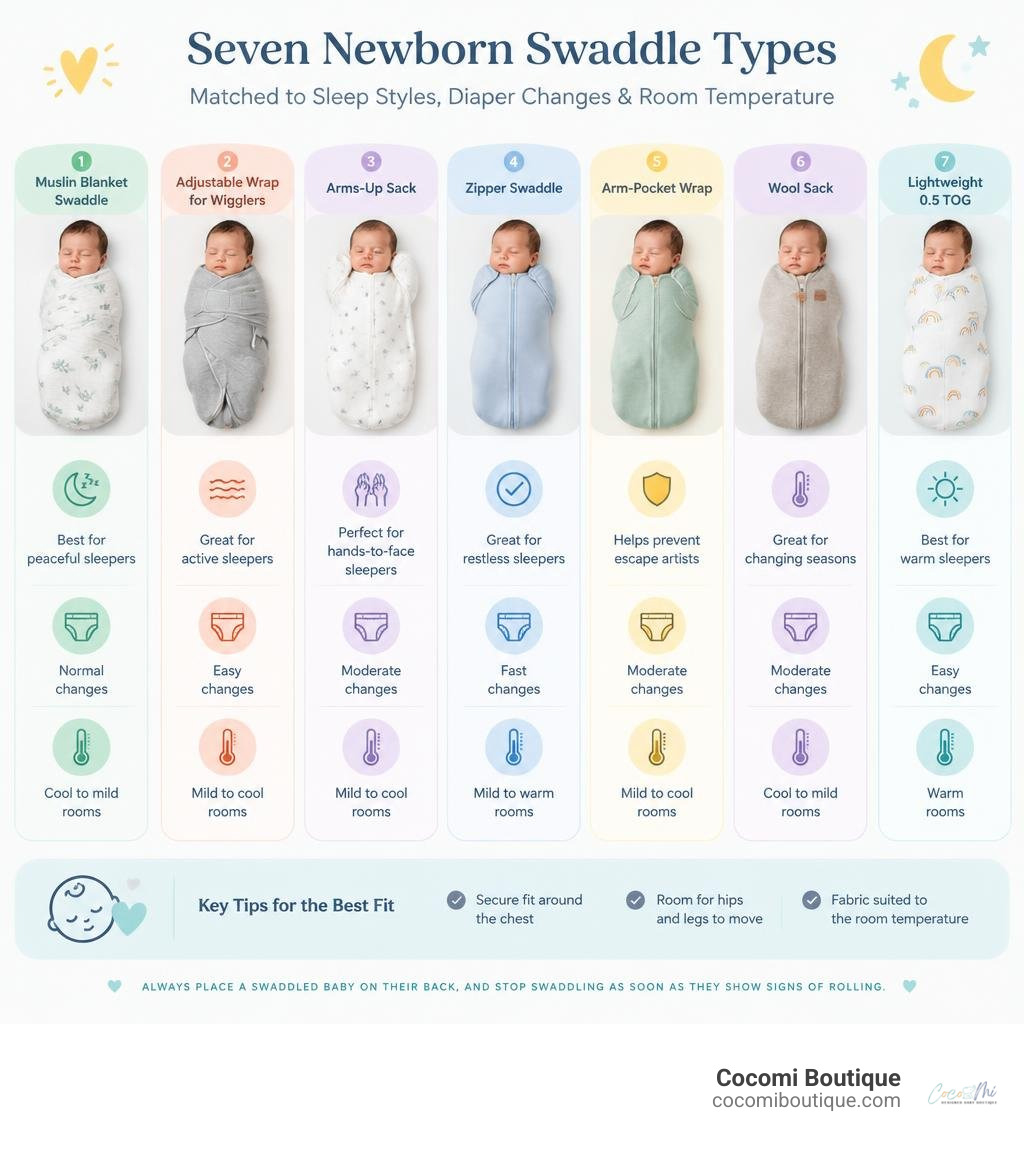
Best newborn swaddles word list:
Swaddle Blankets vs. Purpose-Built Swaddle Wraps: What Every Parent Should Know
When preparing your nursery, choosing between a traditional swaddling cloth and an engineered wrap can feel surprisingly complicated. Both styles aim to recreate the secure comfort of the womb and tame the Moro reflex (the sudden startle that wakes sleeping infants), but they achieve this through different designs.
A traditional square blanket offers unmatched versatility. Crafted from lightweight, breathable weaves, it allows you to customize the fold to your baby's exact body shape. Learning the precise tucks takes a little practice, but mastering the technique gives you complete control over fabric tension. For step-by-step wrapping techniques, exploring how to swaddle with muslin blanket makes the learning process simple and rewarding.
In contrast, purpose-built swaddle wraps use structured wings, quiet hook-and-loop fasteners, or specialized zippers. These engineered sleep aids eliminate loose fabric concerns and streamline midnight changes. However, active babies can sometimes push against fixed seams if the wrap isn't sized properly.
| Feature | Traditional Swaddle Blankets | Adjustable Wing Wraps | Zipper Swaddle Sacks |
|---|---|---|---|
| Closure Mechanism | Fold and tuck (no hardware) | Soft-touch hook-and-loop | One-way or two-way inverted zippers |
| Ease of Learning | Moderate (requires folding practice) | Quick and intuitive | Instant (zip and go) |
| Diaper Change Speed | Requires full unwrap | Fast (open leg pouch) | Fastest (unzip from bottom up) |
| Fit Customization | Completely adjustable to any size | Highly adjustable across torso | Fixed sizing based on weight/length |
| Product Longevity | Repurposes as nursing cover, stroller drape | Outgrown once rolling begins | Outgrown once rolling begins |
Understanding your daily priorities—whether you value long-term fabric versatility or fast midnight changes—will guide you toward the right tool for your bedtime routine.
The 7 Best Newborn Swaddles of 2026 for Every Sleep Style

Every newborn arrives with distinct sleep preferences. Some settle instantly when their arms are tucked firmly across their chest, while others prefer sleeping with their hands resting near their face. Here are our top seven recommended swaddle styles evaluated for comfort, safety, and fabric quality.
1. Handcrafted Organic Cotton Muslin: The Best Newborn Swaddles for Breathability and Versatility
For parents who appreciate pure, natural textiles, handcrafted organic cotton muslin remains the gold standard. Our design philosophy centers on using 100% GOTS-certified organic cotton verified under OEKO-TEX Standard 100 guidelines. This ensures every fiber resting against your newborn’s delicate skin is completely free from harsh chemicals and synthetic irritants.
The open weave of an organic cotton swaddle blanket naturally regulates airflow, allowing excess body heat to escape while maintaining a cozy core temperature. Beyond bedtime, a generous 47x47-inch muslin wrap functions seamlessly as a nursing cover, stroller sunshade, or soft tummy-time mat. Its natural fibers soften with every wash, delivering dependable durability and classic nursery elegance.
2. Adjustable Hook-and-Loop Swaddle Wrap: Best for Secure Snugness
If your little one easily wiggles out of standard folds, an adjustable wing wrap provides structured security. These designs feature ergonomic torso wings that wrap snugly around the baby’s upper body, securing firmly with gentle micro-hook fasteners that won't scratch tender skin.
Using an adjustable wrap like a baby natural swaddle wrap allows parents to tailor torso compression to their infant's exact comfort level. The dedicated leg pouch keeps hips loose and relaxed while preventing arms from breaking free during active REM sleep cycles.
3. Arms-Up Self-Soothing Swaddle Sack: Best for Hands-to-Face Sleepers
Not every baby enjoys having their arms pinned down at their sides. Ultrasound imaging shows that fetuses frequently rest with their hands near their face in the womb. An arms-up swaddle sack embraces this natural posture by encasing the hands in upward-angled wing pockets.
This configuration dampens the startle reflex while allowing your baby to gently rub their cheeks and suck on their hands for comfort. Many arms-up models feature zip-off wings, creating an easy transition path when your baby starts showing early signs of rolling.
4. Two-Way Inverted Zipper Swaddle: Best for Quick Midnight Diaper Changes
Exhausted parents know that midnight diaper changes require speed and stealth. A two-way inverted zipper swaddle allows you to unzip the bottom of the sack to access the diaper without disturbing your baby's swaddled arms or waking them with bright lights.
Selecting well-constructed baby swaddle blankets or zipper pods equipped with protective fabric chin guards prevents metal tabs from scratching sensitive skin. This design keeps the nursery quiet and lets everyone return to sleep faster.
5. Escape-Proof Arm Pocket Swaddle: Best for Houdini Babies
Some infants possess an uncanny ability to wiggle an arm out of almost any wrap within minutes. An escape-proof swaddle solves this challenge using an internal flap system that gently holds the arms close to the torso without requiring noisy hook-and-loop tabs or rigid zippers.
By securing the arms beneath a soft inner band before wrapping the outer layers, this style distributes gentle pressure evenly across the upper body. It keeps persistent little hands contained safely throughout the night without placing strain on the chest.
6. All-Season Natural Wool Swaddle Sack: Best for Year-Round Climate Control
Natural Merino wool fibers offer remarkable temperature-regulating properties. A wool-lined swaddle sack creates a breathable microclimate around your baby, insulating them against winter drafts while wicking away moisture during warmer months.
Natural wool is inherently flame-retardant without the addition of chemical treatments, making it an excellent choice for safety-conscious parents. While high-quality wool wraps require gentle laundering, their seasonal versatility makes them a durable, long-term nursery investment.
7. Ergonomic 0.5 TOG Lightweight Swaddler: The Best Newborn Swaddles for Warm Climates
Swaddling in warm climates or summer months requires an ultra-lightweight, highly breathable fabric to prevent dangerous overheating. A 0.5 TOG lightweight wrap provides gentle containment while keeping thermal resistance to an absolute minimum.
Pairing an airy weave with safe wrapping techniques keeps your infant comfortable through hot summer nights. You can explore our dedicated advice on summer swaddling secrets to maintain safe nursery temperatures and ensure restful sleep all season long.
Key Safety Guidelines: Safe Sleep, Hip Health, and When to Stop Swaddling
Safe sleep practices are essential whenever you wrap your baby for naps or nighttime rest. Following established guidelines from the American Academy of Pediatrics protects your newborn's airway and supports healthy physical development.
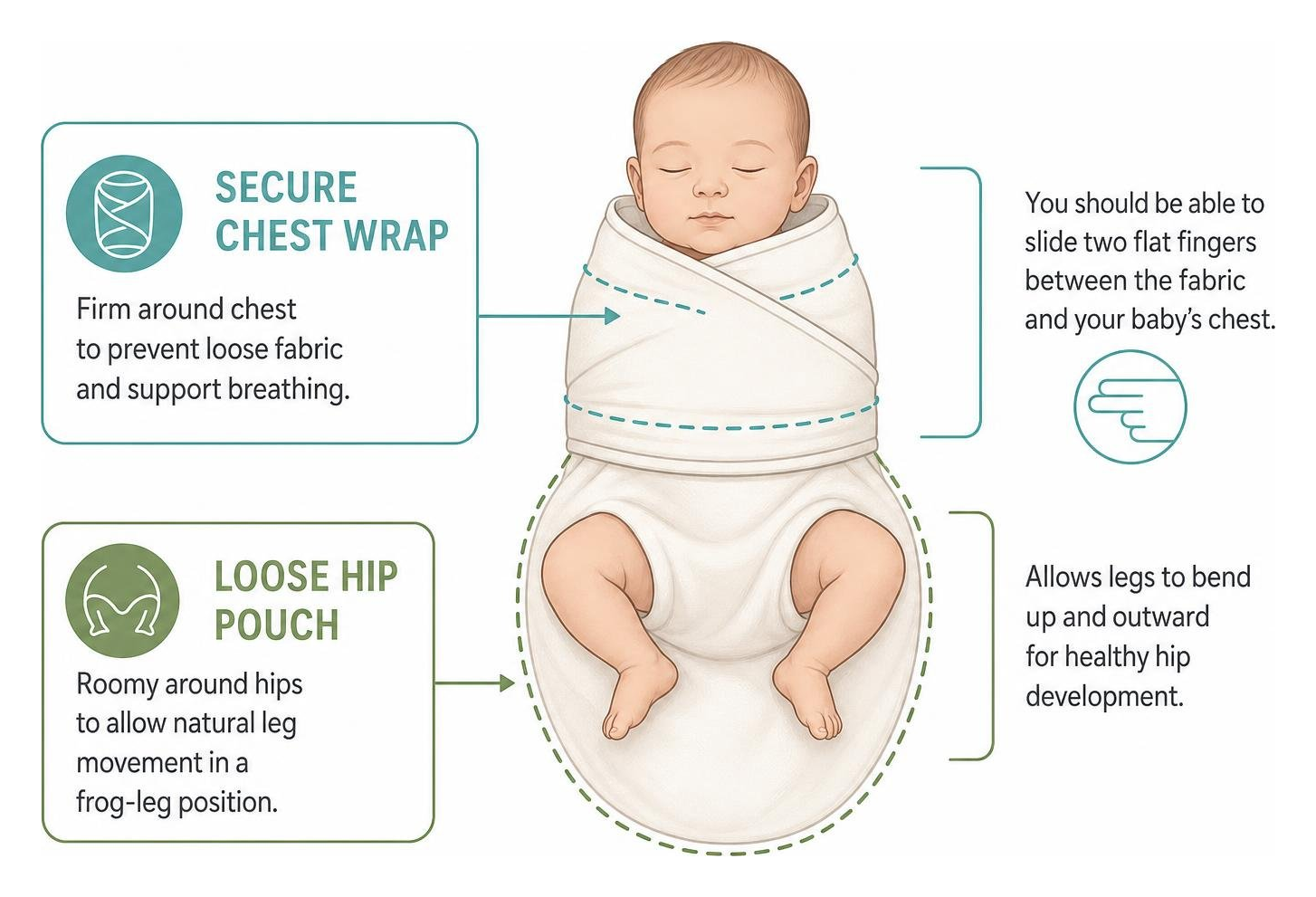
- Always Place Baby on Their Back: Never place a swaddled infant to sleep on their stomach or side. Back sleeping significantly lowers the risk of SIDS and keeps the airway clear.
- Maintain Room for Hip Movement: Wrapping the legs too tightly can cause hip subluxation or developmental dysplasia. Ensure the swaddle is secure around the chest while leaving the leg pouch roomy enough for your baby to bend their legs up and outward in a natural frog-leg position. For comprehensive safety steps, review our guide to safe swaddling for newborns.
- Check Torso Snugness: You should be able to slide two flat fingers between the swaddle fabric and your baby's chest. This confirms the wrap is secure enough to prevent loose fabric while leaving ample room for unhindered breathing.
- Stop at First Signs of Rolling: As soon as your baby shows signs of rolling over—often between 8 to 12 weeks—you must discontinue arm-containment swaddling immediately to ensure their hands are free to push up if they turn.
How to Choose: TOG Ratings, Fabrics, and Easy Diaper Changes
Selecting the ideal wrap requires balancing thermal insulation, pure materials, and functional everyday convenience.
Understanding TOG Ratings and Fabrics
A product's TOG (Thermal Overall Grade) measures how effectively a garment retains heat:
- 0.2 to 0.5 TOG: Ideal for warm rooms (74°F to 78°F / 23°C to 26°C) or layered summer dressing.
- 1.0 TOG: The most versatile standard rating, suitable for moderate room temperatures (68°F to 72°F / 20°C to 22°C).
- 2.5 TOG: Designed for cooler nurseries (61°F to 67°F / 16°C to 19°C) during winter months.
Selecting certified natural fibers—such as GOTS organic cotton, bamboo rayon, or OEKO-TEX Standard 100 textiles—ensures your baby remains comfortable without exposure to synthetic finishes. To dive deeper into textile selection, read our guide on the best material for swaddle blanket.
Everyday Practical Features
Look for thoughtful construction details that simplify your night:
- Inverted Two-Way Zippers: Allow effortless lower-body access for swift diaper checks.
- Zipper Guards: Fabric covers at the collar prevent metal components from rubbing against the neck and chin.
- Quiet Fasteners: High-grade micro-fasteners secure firmly without the loud ripping noise that can wake a sleeping baby.
Frequently Asked Questions About Swaddling Newborns
What is the difference between a swaddle and a sleep sack?
A swaddle securely wraps an infant's arms against their torso (or within upward wings) to dampen the startle reflex during the first few months of life. A sleep sack is a sleeveless, wearable blanket that leaves both arms completely free while enclosing the torso and legs. To learn more about transitioning between these garments, consult our organic swaddle sack guide 2026.
How many swaddles does a newborn need in their nursery?
Most families find that having three to four swaddles provides an ideal rotation. This allows you to have one swaddle in use, one clean backup ready for unexpected spit-up or diaper leaks, and one in the wash. Stocking your nursery with versatile gender neutral baby swaddles ensures you are always prepared while creating a cohesive, elegant nursery space.
When should parents officially stop swaddling their baby?
Parents should stop swaddling as soon as their baby attempts to roll over, which typically occurs between 2 and 4 months of age. If your baby's arms are enclosed when they roll onto their stomach, they will not be able to adjust their posture or lift their head to maintain an open airway. When rolling begins, transition to an arms-free wearable sleep sack.
Finding the Perfect Swaddle for Peaceful Nights
The early weeks of parenthood are filled with unforgettable moments and sleepless nights. Finding a swaddle that provides breathable comfort, gentle security, and effortless utility makes a meaningful difference in helping your newborn settle peacefully.
By selecting natural, handcrafted textiles certified to rigorous safety standards, you give your baby a pure and restful sleep environment. To discover more safe sleep tips and nursery inspiration, explore our baby journal for expert nursery and sleep guides and build a calm, beautiful beginning for your little one.