

Safe Sleep Newborn Nest: What Parents Need to Know

For every unsupervised nap or overnight sleep, a newborn needs a safety-approved bassinet, crib, cradle, or play yard with a firm, flat mattress and fitted sheet only. A padded baby nest or lounger is not a safe sleep space for unattended sleep, even if it feels soft, snug, or is made with premium natural fabrics.
Baby nests are popular because they are portable, cozy-looking, and useful for brief awake, directly supervised time on the floor. But padded sides, soft surfaces, and the risk of rolling can block a baby's airway. Since babies may begin rolling around 10 to 12 weeks - and some can roll unexpectedly sooner - move baby to a firm, flat sleep surface whenever they fall asleep.
When shopping for beautiful newborn essentials, treat material quality and sleep safety as two separate checks. CocoMi Baby Boutique favors handcrafted, natural, chemical-free fabrics and OEKO-TEX certified materials that are gentle on newborn skin, while safe sleep still means following the product's intended use and current safe-sleep guidance.
At CocoMi Baby Boutique, we create thoughtfully designed baby essentials, including natural baby nests, Moses baskets, swaddles, and nursery pieces. In this safe sleep newborn nest guide, we will help you choose elegant, premium essentials while keeping safe sleep standards at the center of every decision.
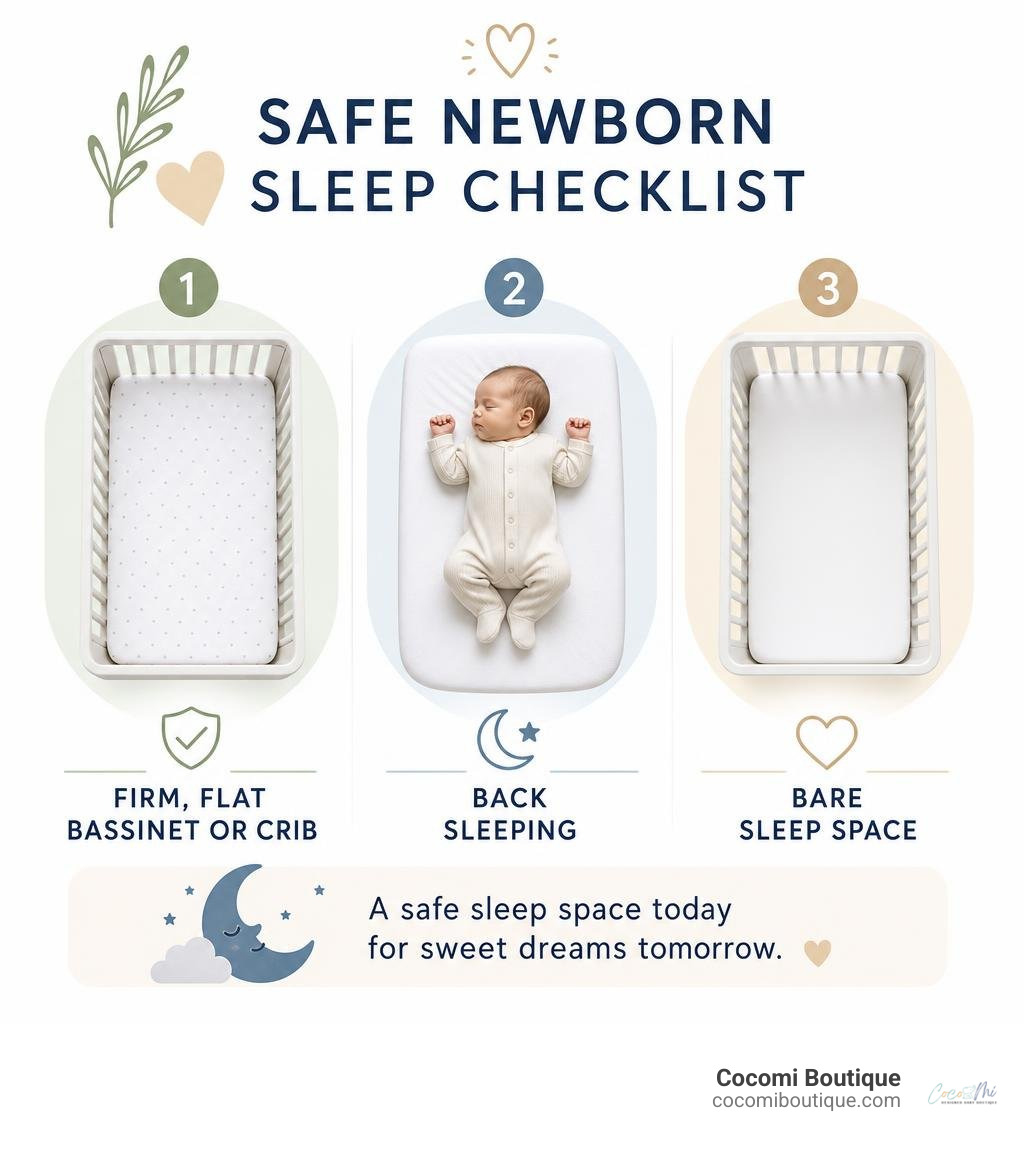
Safe sleep newborn nest basics:
Understanding Safe Sleep Newborn Nest Guidelines and Evidence-Based Safety
Welcoming a newborn into your home brings immense joy, soft cuddles, and plenty of quiet nursery moments. Alongside those sweet memories, parents and gift shoppers naturally want clear, reliable guidance on infant safety. Understanding evidence-based sleep recommendations ensures that every restful moment is as secure as it is comfortable.
Research shows that 77% of sleep-related infant deaths occur before 5 months of age, with 83% of sudden unexpected infant deaths (SUID) taking place within the home setting. Families navigating early parenthood deserve transparent, compassionate facts so they can set up restful spaces with complete confidence. Reviewing trusted resources like Safe Sleep Guidelines helps parents navigate the early postpartum months safely. Understanding the distinction between awake lounging tools and dedicated sleep environments—a topic we explore further in Nest or No Nest: Decoding Safe Sleep for Your Newborn—empowers families to make informed choices.
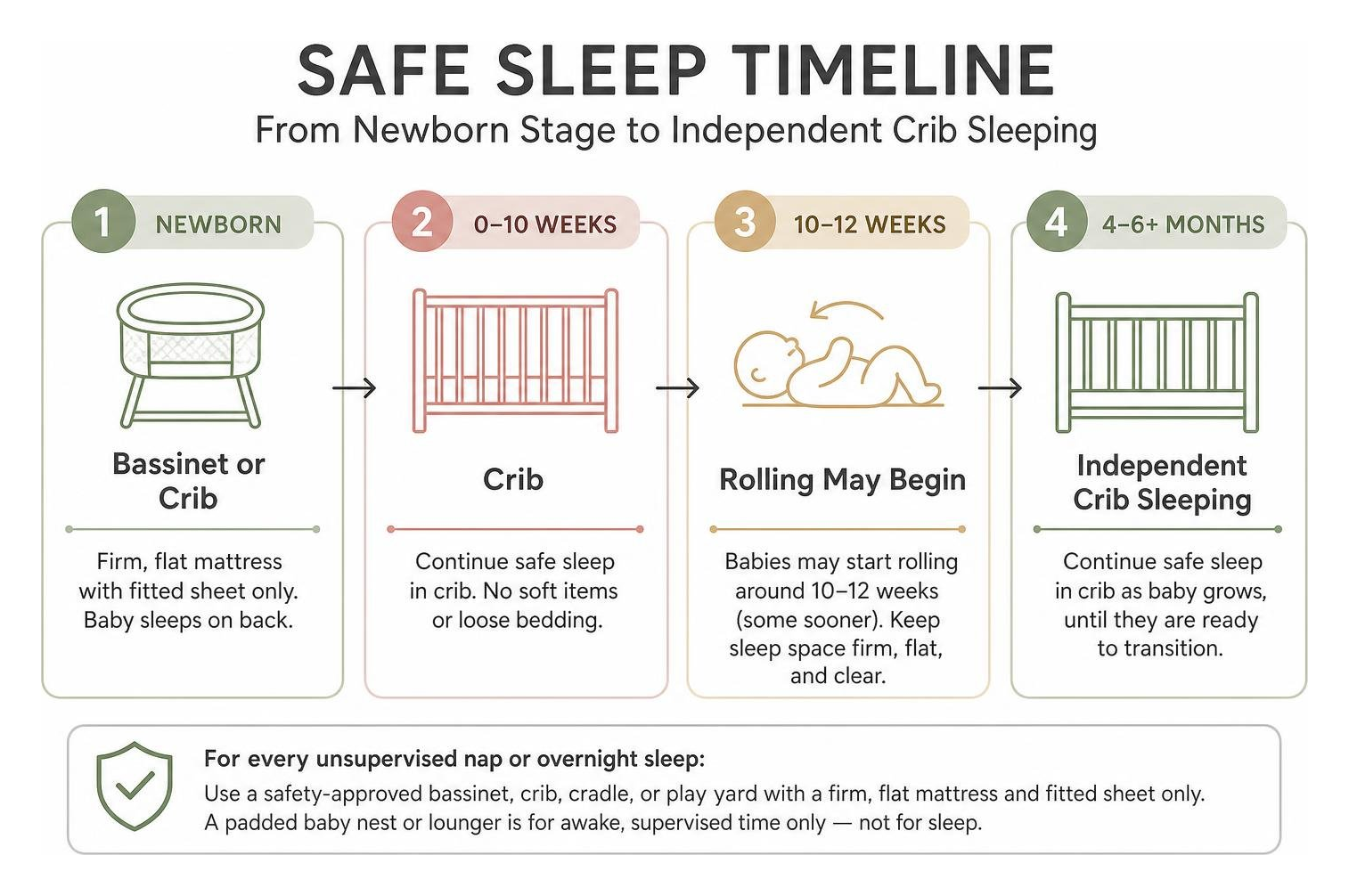
AAP Standards vs Safe Sleep Newborn Nest Usage
The American Academy of Pediatrics (AAP) sets the gold standard for newborn sleep environments. Their core recommendation is simple: infants must always be placed on their backs to sleep on a firm, flat surface free of soft bedding, plush bumpers, pillows, or loose blankets. Following local health guidance, such as Infant Sleep Safety standards in Chicago, reinforces these clear boundaries.
Padded baby nests and infant loungers feature cushioned borders designed to create a cozy, defined resting spot. However, because a newborn’s head accounts for a large portion of their total body weight, babies can spontaneously roll or shift their position. If an infant presses their nose or mouth against a plush sidewall, their breathing airway can become obstructed. For this reason, padded nests are not intended for unsupervised naps or overnight sleep. Instead, dedicated sleep spaces should always feature a bare, firm mattress fitted with a tight, breathable sheet.
Clinical Hospital Programs: The NEST Safe Sleep Initiative
Healthcare providers have made significant strides in standardizing how safe infant sleep is taught and modeled. Hospital-based initiatives, such as the NEST (Newborn Evidence-based Sleep Teaching) Safe Sleep program, bridge the vital gap between clinical maternity wards and everyday routines at home.
Under these programs, birthing hospitals model best practices directly in newborn care units. Through routine crib audits, participating hospitals target over 85% compliance with AAP safe sleep recommendations. Clinical teams provide interactive caregiver education and conduct pre-discharge screenings to verify that families have safe, flat sleep spaces ready at home. By modeling the exact sleep setup parents should replicate, healthcare systems help prevent accidents and protect vulnerable infants across every community.
Safe Supervised Usage: Daytime Lounging, Tummy Time, and Travel
While padded baby nests should never replace a certified crib or bassinet for unsupervised sleep, they serve as practical, elegant daytime tools for awake, hands-free parenting. We designed our boutique collection understanding that parents need safe, cozy spots to lay their baby down while staying actively engaged in the same room.

Whether you need a clean, cushioned surface to place your little one while folding laundry or an inviting space for daily milestone exercises, a premium lounger offers versatile utility. For a deeper look at balancing nursery styling with functional care, see The Truth About Newborn Snuggle Nests: Safety, Benefits, and What to Consider.
Practical Rules for Safe Sleep Newborn Nest Lounging
To enjoy the convenience of a baby nest while preserving safety, we encourage families to follow clear daily guidelines. Learn more about versatile uses in The Complete Guide to Baby Nests, and stay informed with public health advice from IDHS: Infant Safe Sleep.
- Keep It Low on the Floor: Always place the baby nest on a wide, flat, non-elevated floor surface. Never position a lounger on a sofa, countertop, dining table, or bed where an unexpected movement could cause a fall.
- Maintain Active Supervision: Keep your baby within direct eyesight and arm's reach at all times while they are resting or playing in a lounger.
- Use for Awake Tummy Time: The cushioned raised border makes an excellent gentle prop under your baby's chest during supervised tummy time, encouraging upper body strength and neck control.
- Respect Age and Rolling Limits: Discontinue using a baby nest as soon as your baby reaches 10 to 12 weeks of age, or sooner if they show signs of attempting to roll.
- Transfer When Drowsy: If your newborn drifts off to sleep during daytime lounging, gently lift and transfer them to their firm bassinet or crib.
Preventing Sleep Associations and Habit Formation
Newborns rapidly develop sleep associations based on their environment. When a baby consistently falls asleep exclusively in a snug, enclosed lounger, transitioning them to a flat, open crib mattress later can become challenging.
To support healthy, long-term sleep habits, we recommend rotating soothing tools during the early weeks. Use a baby nest for engaging awake play, visual tracking, and gentle tummy time. For scheduled naps and nighttime rest, place your baby directly in their bassinet or crib swaddled in a breathable organic cotton wrap. Practicing naps on an open, firm surface builds self-settling confidence and ensures a seamless transition as your baby grows.
Evaluating Newborn Sleep Surfaces and Loungers
Choosing the right nursery furnishings requires balancing daytime versatility with certified nighttime safety. Every piece in your baby’s space should reflect uncompromising quality, natural craftsmanship, and adherence to established sleep standards. To compare options for your home, consult The Ultimate Guide to Choosing the Perfect Baby Nest.
| Rest Surface | Primary Purpose | Firmness & Airflow | Recommended Duration | Portability Level |
|---|---|---|---|---|
| Padded Baby Nest | Supervised awake play, lounging & tummy time | Soft, cushioned base with padded borders | Birth to 10–12 weeks (or until rolling) | Ultra-portable across rooms |
| Natural Moses Basket | Bedside sleeping & portable newborn rest | Firm, flat mattress with breathable woven sides | Birth to ~4–5 months (or pushing up) | Highly portable with sturdy handles |
| Standard Crib / Bassinet | Overnight sleep & unsupervised naps | Rigid, firm, flat surface with taut fitted sheet | Birth through toddler years | Fixed nursery piece |
Essential Safety Standards and Non-Toxic Materials
Newborn skin is delicate, porous, and highly sensitive to synthetic finishes and chemical treatments. When evaluating loungers and bedding, looking beyond basic aesthetics to inspect material certifications is essential. We invite you to explore our Organic Certified Newborn Nest collection to see how premium textiles elevate infant comfort.
Our handcrafted pieces are made with 100% natural, chemical-free textiles certified under strict European OEKO-TEX Standard 100 criteria. This testing ensures that our organic cottons, linen covers, and inner fibers are completely free from harmful substances, heavy metals, formaldehyde, and toxic dyes. Selecting certified hypoallergenic materials protects your newborn's skin, supports natural temperature regulation, and provides complete peace of mind.
Handcrafted Natural Cotton Loungers
At CocoMi Baby Boutique, we believe practical nursery essentials should embody timeless beauty. Handcrafted with European-quality craftsmanship, our loungers feature minimalist aesthetics inspired by understated Nordic design. Explore our Scandinavian Style Newborn Nest range to discover how clean lines and neutral tones integrate effortlessly into modern nurseries.
Every lounger is crafted using sustainably sourced natural cottons, soft neutral palettes (such as warm cream, delicate oatmeal, and gentle sage), and removable, machine-washable covers for effortless daily care.
Natural Moses Baskets and Portable Rest Spaces
For parents seeking an elegant, portable newborn sleeping space that complies fully with flat-surface safe sleep standards, a handcrafted natural Moses basket is an exquisite choice.

Woven from natural palm leaves or organic cotton cords, our Moses baskets feature a rigid, flat, breathable mattress pad designed specifically for bedside sleeping during the fourth trimester. The breathable woven walls promote natural airflow while keeping your baby snug and close to your bedside for soothing nighttime nursing sessions.
Safe Sleep Environments: Setting Up Your Nursery and Room-Sharing
Creating a calm, uncluttered sleep environment is one of the most rewarding parts of nesting. The AAP strongly recommends room-sharing—keeping your baby's sleep space in your bedroom within arm's reach—for at least the first six months. Room-sharing provides the comforting proximity of bed-sharing while eliminating the suffocation and entrapment risks associated with adult mattresses, heavy duvets, and pillows.
Nursery Sleep Space Compliance Standards
When setting up your bedside bassinet, Moses basket stand, or standard crib, ensure the setup meets rigorous structural and design requirements:
- Snug Mattress Fit: The mattress must fit tightly against the frame with no gaps wider than two fingers along the perimeter.
- Firm, Flat Plane: The sleep surface must not tilt, incline, or sag under your baby's weight.
- Bare Sleeping Area: Keep the sleep space completely clear. Avoid loose blankets, quilts, plush toys, positioning wedges, or pillow-like bumpers.
- Fitted Sheets Only: Dress the mattress exclusively in a tightly fitted sheet crafted from natural, breathable fibers like organic cotton or linen.
- Optimal Nursery Climate: Keep the room temperature comfortable (between 68°F and 72°F) and dress your baby in a lightweight swaddle or sleep sack to prevent overheating.
Step-by-Step Nursery Transition Plan
As your little one grows and outgrows their bedside sleeper, a gradual transition ensures uninterrupted rest for the entire family:
- Introduce Crib Naps Early: Around 3 to 4 months of age, begin placing your baby in their nursery crib for their first morning nap so they become familiar with the open space.
- Maintain Consistent Bedtime Rituals: Keep your soothing cues—such as a warm bath, gentle feeding, soft lullaby, and cozy swaddle—identical across both sleep spaces.
- Track Key Developmental Milestones: Prepare to transition your baby from a bedside bassinet to a full-sized crib when they reach 20 lbs, turn 5 months old, or begin pushing up on their hands and knees.
- Preserve the Bare Sleep Environment: Maintain the same firm, flat, uncluttered setup in the crib that protected them in their bassinet.
Frequently Asked Questions About Newborn Sleep Spaces
At what age should parents stop using a baby nest?
Parents should stop using a padded baby nest for lounging when their infant reaches 10 to 12 weeks of age, or as soon as the baby shows early signs of rolling over. Because infants hold significant weight in their heads, spontaneous rolling can happen quickly, requiring an open, flat floor mat for continuing milestone play.
Are baby nests safe for overnight unsupervised sleep?
No. Padded baby nests and infant loungers are not safe for overnight or unsupervised sleep. The cushioned perimeter and plush base pose suffocation risks if an unattended baby shifts or turns their face into the padding. Unsupervised rest should always take place on a firm, flat, certified sleep surface like a crib, cradle, or safety-approved bassinet.
What is the safest sleep surface for a newborn?
The safest sleep surface for a newborn is a firm, flat mattress inside a certified bassinet, crib, or Moses basket, dressed only in a tight fitted sheet. Following the "Back to Sleep" approach in a bare sleep environment remains the gold standard for reducing infant sleep hazards.
Conclusion
Creating a secure, tranquil nursery involves balancing the evidence-based principles of infant safe sleep with the practical, tactile comforts of modern family living. Dedicated sleep should always occur on a firm, flat, bare surface, while handcrafted baby loungers offer a cozy, elegant solution for supervised awake play, bonding, and daily multitasking.
At CocoMi Baby Boutique, we craft heirloom-quality essentials using OEKO-TEX certified fabrics, pure organic cotton, and timeless European design. We invite you to explore our online boutique to discover our full range of handcrafted Moses baskets, baby loungers, swaddles, and nursery decor, or continue exploring expert newborn guides and nursery essentials to design a nursery that is as safe as it is beautiful.