

Why Every Parent Is Talking About the Breathable Mesh Baby Nest

A breathable mesh baby nest is a soft, cocoon-shaped infant lounger with open-weave mesh panels designed to maximize airflow around your sleeping or resting baby. Here is a quick overview to answer the most common questions:
What is a breathable mesh baby nest? A compact, womb-like lounger for newborns with mesh side panels that allow air to circulate freely, reducing the risk of overheating and carbon dioxide buildup.
Key facts at a glance:
- Best for: Supervised lounging, tummy time, and daytime naps
- Typical size: Around 20.5 x 32.5 x 5 inches
- Use until: Baby reaches 20 lbs, 5 months old, or begins rolling over — whichever comes first
- Not safe for: Unsupervised or overnight sleep (NHS and AAP guidelines)
- Top features to look for: Removable washable cover, OEKO-TEX certified materials, firm flat base, no loose padding
Newborns spend the first weeks of life adjusting to a world that feels nothing like the womb. That transition can be hard — for babies and for parents. A baby nest offers that familiar, snug, contained feeling that helps newborns settle. But not all nests are created equal. The material your baby rests against and breathes through matters enormously, especially when tiny lungs and sensitive skin are involved.
The appeal is real. The concern is real too. Health organizations including the NHS are clear that soft, cushioned sleeping pods carry risks when used without supervision. That is exactly why the design of the nest — particularly how well it breathes — has become one of the most important buying decisions new parents make.
I'm Monika Jarog, founder of CocoMi Boutique and a specialist in handcrafted, natural baby essentials — including carefully designed breathable mesh baby nests built from chemical-free, OEKO-TEX certified materials. In this guide, I'll walk you through everything you need to know to choose confidently and keep your baby safe and comfortable.
Similar topics to breathable mesh baby nest:
What is a Breathable Mesh Baby Nest?
A breathable mesh baby nest is a specialized version of the classic infant lounger. It features an oval-shaped, cushioned perimeter designed to gently cradle a newborn, mimicking the secure environment of the womb. What sets it apart is the integration of high-performance mesh panels—often along the inner and outer side walls—which allow air to pass directly through the fabric.
To understand the value of this design, it is helpful to look at how these products evolved. For an in-depth breakdown of the basics, you can read The Complete Guide To Baby Nests. Generally, a standard baby nest measures around 20.5 x 32.5 x 5 inches, making it a highly portable and convenient spot to place your baby during active hours.

How Mesh Nests Differ from Traditional Fabric Nests
Traditional baby nests are typically constructed from solid woven fabrics like standard cotton, filled with dense polyester fiberfill. While incredibly cozy, these plush, solid borders can pose a challenge:
- Airflow Obstruction: If a baby rolls or turns their face against a traditional plush border, the dense fabric can block fresh air.
- Heat Retention: Solid fabrics and synthetic polyester fills naturally trap body heat, which can lead to rapid overheating.
- Structural Firmness: Traditional nests can sometimes compress unevenly, whereas mesh-constructed nests are engineered to maintain a firm, flat, and supportive base while remaining fully porous.
By substituting solid fabric walls with open-weave mesh panels, a breathable mesh baby nest ensures that even if a baby's face comes into contact with the side bumpers, air can still flow freely.
The Science of 3D Mesh Fabrics
The magic behind these modern nests lies in "3D mesh" or spacer fabric technology. Unlike traditional flat-woven textiles, 3D mesh is a three-dimensional knit structure:
- Top and Bottom Layers: Highly porous, durable knit fabric that feels soft against sensitive newborn skin.
- The Middle Spacer Layer: A microscopic forest of vertical polyester fibers that keeps the two outer layers separated.
- The Result: A resilient, springy material that is mostly empty space. It acts as a continuous airway, allowing moisture to wick away instantly and heat to escape, while remaining completely hypoallergenic and highly resistant to dust mites.
Key Safety Benefits and Airflow Science
When we design products for our littlest ones, safety is always our starting point. The primary safety benefit of incorporating breathable mesh into an infant lounger is the mitigation of "carbon dioxide rebreathing."
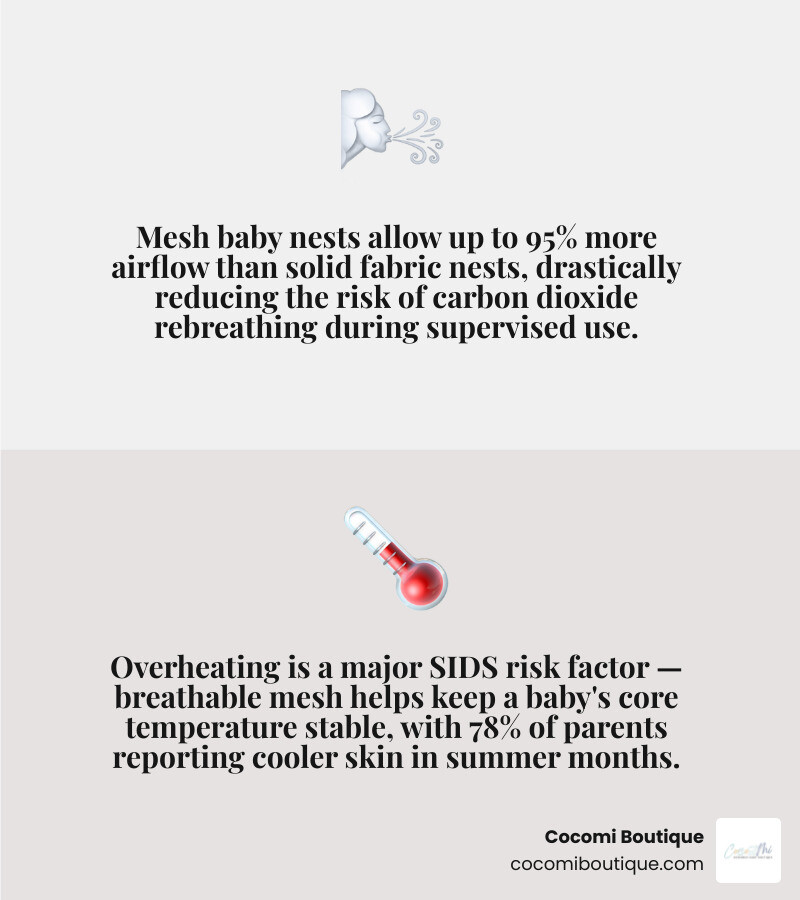
When an infant is surrounded by soft, non-breathable surfaces, exhaled air (carbon dioxide) can become trapped in pockets around their face. If the baby breathes this stale air back in, it can lead to hypoxia. Open-weave mesh panels dramatically reduce this risk by ensuring that exhaled air is immediately dispersed and replaced with fresh, oxygen-rich air.
For a deeper dive into how these design elements impact infant safety, consult our guide on The Truth About Newborn Snuggle Nests Safety Benefits And What To Consider.
Furthermore, independent medical studies emphasize the critical importance of firm, breathable sleep surfaces. You can explore clinical perspectives in this NCBI research on infant sleep positioning.
How a Breathable Mesh Baby Nest Prevents Overheating
Overheating is a well-documented risk factor for Sudden Infant Death Syndrome (SIDS). Newborns have an underdeveloped thermoregulation system; they do not sweat or cool down as efficiently as adults.
- Passive Cooling: 3D mesh allows body heat to radiate away from the baby rather than bouncing back off synthetic fabrics.
- Sweat Reduction: By keeping air moving under and around the infant, mesh prevents moisture buildup, keeping your baby dry and comfortable.
- Ambient Regulation: It helps the baby's micro-environment match the room's ambient temperature, eliminating dangerous hot spots within the nest.
Clinical Insights: Nesting in NICU Environments
Interestingly, the concept of "nesting" has strong roots in clinical medicine. In Neonatal Intensive Care Units (NICUs) across the globe, medical professionals use soft, supportive positioning nests to care for preterm infants.
Clinical research shows that physical containment—feeling a supportive boundary—improves sleep quality, lowers stress levels, and supports healthy motor development in fragile newborns. However, there is a vital distinction to keep in mind: NICU nests are used under constant, 24/7 electronic and medical supervision. At home, parents must replicate this safety-first approach by using baby nests strictly for supervised activities.
Essential Features and Safe Use Guidelines
While a breathable mesh baby nest is an incredibly helpful tool for keeping your baby comfortable, it must be used responsibly. To protect your little one, always adhere to safe-use guidelines. For a comprehensive overview of how to balance comfort with safety, read our resource on Crib Or Nest Navigating Safe Sleep For Your Baby.
Additionally, always keep these fundamental rules in mind:
- Supervised Use Only: Never leave your baby unattended in a baby nest. It should only be used in the same room where you are actively watching them.
- Flat, Firm Surfaces: Always place the nest on a flat, stable, and firm surface on the floor. Never place it on a bed, sofa, table, or inside a crib or bassinet.
- Clear of Accessories: Keep the nest completely free of loose blankets, pillows, stuffed animals, or toys.
For official safe sleep recommendations, you can review the NHS Safe Sleep Guidelines.
Essential Features to Look For When Buying
When shopping for the perfect breathable mesh baby nest, keep an eye out for these premium design features:
- Removable, Washable Covers: Life with a newborn is messy. Look for nests with durable, zippered covers that can be easily tossed in the washing machine.
- OEKO-TEX Standard 100 Certification: This certifies that every component of the nest—from the fabric to the thread and zippers—is entirely free from harmful chemicals, heavy metals, and toxic flame retardants.
- Firm, Non-Sagging Mattress: The bottom pad should be firm enough that your baby does not sink into it, which supports healthy spinal alignment.
To learn more about selecting the safest materials, see The Ultimate Guide To Choosing The Perfect Baby Nest.

When to Transition Away From Your Breathable Mesh Baby Nest
Like all baby gear, nests have a limited window of use. You must discontinue using your baby nest as soon as your baby reaches any of the following milestones:
- Rolling Over: Once your baby can roll onto their side or stomach independently.
- Pushing Up: Once they begin to push up on their hands and knees.
- Weight Limit: When they reach 20 lbs (typically around 5 months of age).
Portability and Practicality for Parents
One of the greatest benefits of a high-quality mesh nest is its lightweight, travel-friendly design. Many models include built-in carry handles, allowing you to easily move the nest from the living room to the kitchen, keeping your baby close and visible while you fold laundry or prepare dinner.
In broad consumer surveys of parents using mesh-walled infant sleep and lounge systems, up to 82% reported that these breathable, portable designs significantly improved their peace of mind and daily routine.
Comparing Mesh, Organic Cotton, and Wool
As you search for the perfect nest, you will likely encounter several material options. Here is a direct comparison to help you understand how mesh stacks up against premium natural fibers:
| Feature | 3D Breathable Mesh | 100% Organic Cotton | Premium Virgin Wool |
|---|---|---|---|
| Primary Benefit | Maximum active airflow | Softness & skin-friendliness | Natural temperature regulation |
| Breathability | Outstanding (engineered pore structure) | Good (natural weave) | Excellent (hollow fibers) |
| Chemical Safety | Varies (look for OEKO-TEX synthetics) | Superior (chemical-free) | Superior (naturally flame-resistant) |
| Best For | Hot climates & active lounging | Sensitive skin & daily comfort | Year-round thermal comfort |
| Washability | Easy machine wash & quick dry | Easy machine wash | Spot clean or gentle hand wash |
For a deeper exploration of how these materials perform, check out our guide: Nest Or No Nest Decoding Safe Sleep For Your Newborn.
The Case for Natural and Organic Materials
While synthetic 3D mesh is unparalleled for active airflow, many parents prefer natural materials for surfaces that directly touch their baby's skin.
- Organic Cotton: Grown without toxic pesticides, organic cotton is incredibly soft, breathable, and hypoallergenic, making it ideal for babies with eczema or sensitive skin.
- Virgin Wool Batting: Wool is nature's finest insulator. A premium wool filling (such as a structured layout of three layers of 400 gsm and one layer of 300 gsm batting) naturally regulates temperature, keeping your baby cool in the summer and warm in the winter. It is also naturally flame-resistant without the use of chemical additives.
Balancing Breathability and Chemical Safety
At CocoMi Boutique, we believe parents shouldn't have to choose between airflow and chemical safety. Many mass-market synthetic nests are treated with chemical flame retardants or contain cheap glues that can off-gas harmful VOCs (volatile organic compounds) directly into your baby's breathing zone.
By choosing products certified to strict European safety standards (like OEKO-TEX Standard 100), you ensure that your baby's snuggle space is as pure as it is breathable.
Frequently Asked Questions about Baby Nests
Can my baby sleep in a breathable mesh baby nest overnight?
No. Under no circumstances should a baby nest be used for overnight or unsupervised sleep. According to the American Academy of Pediatrics (AAP) and the NHS, the safest place for a baby to sleep overnight is on their back, on a flat, firm mattress in a crib or bassinet, free of any soft bedding, bumpers, or loungers. Baby nests are designed strictly for supervised awake time, tummy time, and supervised daytime lounging.
How do I clean and maintain a mesh baby nest?
To ensure the longevity of your nest, always follow the manufacturer's care label. Generally:
- Covers: Zip off the outer cover, machine wash in cold water on a gentle cycle, and air dry thoroughly to prevent shrinkage.
- Mesh Inserts: Most synthetic mesh inserts can be gently hand-washed or machine-washed on a delicate cycle in a mesh laundry bag, then air-dried.
- Natural Wool Fillings: If your nest features a premium wool core, spot clean only with a damp cloth and mild wool detergent. Never machine wash or tumble dry wool batting, as this will cause felting and ruin the nest's shape.
What is the typical price range for a quality baby nest?
Mass-market, synthetic baby loungers typically retail between $30 and $80. While budget-friendly, these products often lack rigorous chemical safety certifications and may use cheaper polyester fills that sag quickly.
Premium, handcrafted nests made from organic cotton, virgin wool, and certified breathable materials generally range from $100 to $250+. Investing in a premium nest ensures superior craftsmanship, long-lasting structural support, and the peace of mind that comes with certified non-toxic materials.
Conclusion
A breathable mesh baby nest is an exceptional tool for easing your newborn's transition into the world, offering a cozy, womb-like sanctuary for supervised lounging and play. By prioritizing advanced airflow technology alongside non-toxic, certified materials, you can keep your baby cool, comfortable, and safe.
At CocoMi Boutique, proudly serving our local Chicago-area communities—from Northbrook and Glenview to Highland Park, Winnetka, and beyond—we are passionate about crafting baby essentials that blend safety, style, and natural purity.
Ready to discover more ways to support your little one's comfort? Explore our blog for more newborn tips and find the perfect, handcrafted additions for your modern nursery.