

Choose a Baby Lounger for Tummy Time With Safety First
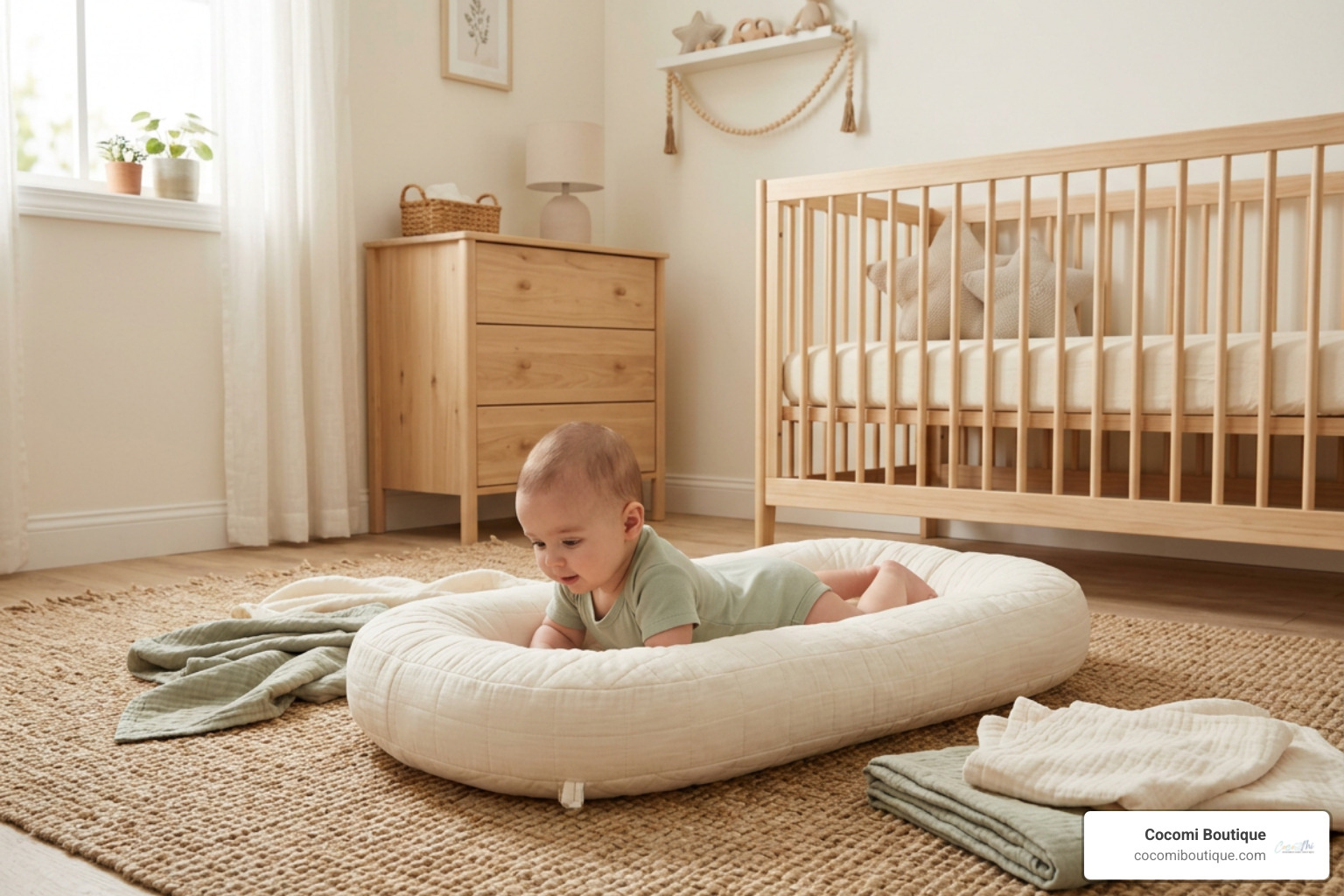
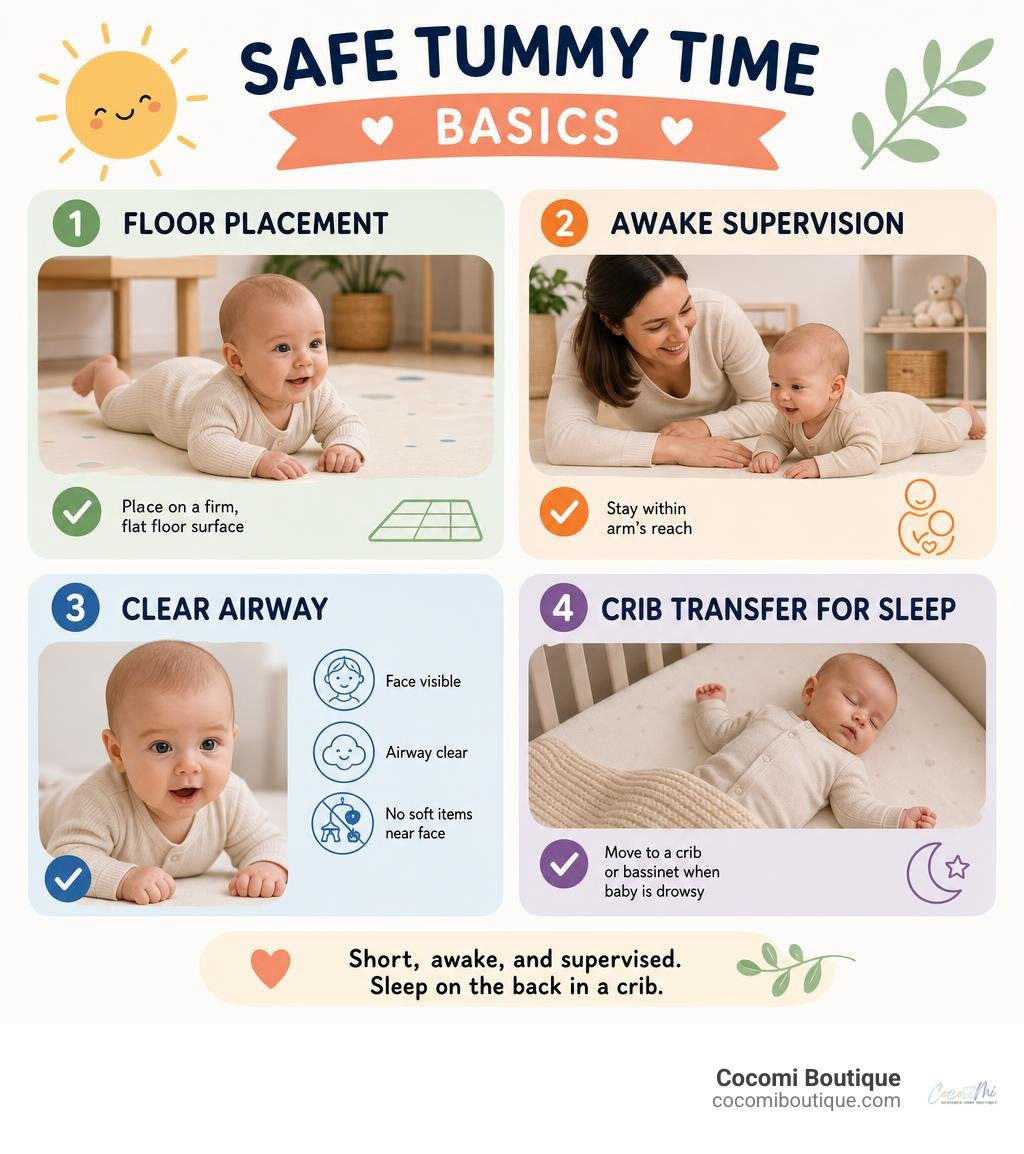
A baby lounger for tummy time can offer gentle chest support during short, fully supervised awake play, but it should never replace tummy time on a firm, flat floor surface. Place the lounger directly on the floor, stay within arm's reach, keep baby's face and airway clear, and move them to a crib or bassinet right away if they become drowsy.
For everyday practice, a flat playmat or blanket is often the best choice because it gives babies room to move, push up, and build neck and core strength. If you choose a lounger-style support, look for a stable design, breathable natural fabrics, and clear non-sleep labeling. CocoMi Boutique focuses on elegant, handcrafted essentials made with natural, chemical-free materials and OEKO-TEX certified fabrics that are gentle on newborn skin.
In this guide, we explore how to thoughtfully compare a baby lounger for tummy time with safer floor-based options, so you can choose with confidence and support your little one's motor development.
Related content about baby lounger for tummy time:
Understanding the Role of Infant Loungers in Tummy Time Development
During the first few months of life, infants work through rapid motor skill progression. From the moment they arrive home, building upper body strength in the neck, shoulders, and back is critical for reaching major milestones such as rolling over, pushing up, and eventually sitting unassisted. While tummy time is an essential daily exercise, many infants find lying flat on their stomachs challenging at first.
A cushioned newborn lounger can serve as an auxiliary prop during supervised awake play. By slightly elevating the baby's chest, a lounger reduces the effort needed to lift the head, offering a helpful transition for infants who get frustrated on flat surfaces. However, pediatric physical therapists and safety experts emphasize that loungers must be used thoughtfully.
The American Academy of Pediatrics (AAP) notes that spending too much time in restricted sitting or reclining devices—often called "containers"—places babies at higher risk for positional plagiocephaly (flat head syndrome), decreased muscle strength, and delayed motor milestones. To prevent "container baby syndrome," an infant lounger should be a temporary aid rather than a full-time station.
Federal safety regulations established by the Consumer Product Safety Commission (CPSC) in 2025 require infant support cushions to feature firmer resting surfaces, lower side walls, and explicit non-sleep warning labels. Whenever you introduce a lounger into your nursery routine, it must always be placed directly on the floor to eliminate any risk of falls.
Step-by-Step: Using a Baby Lounger for Tummy Time Safely
Using a lounger for chest support during awake floor sessions requires careful positioning:
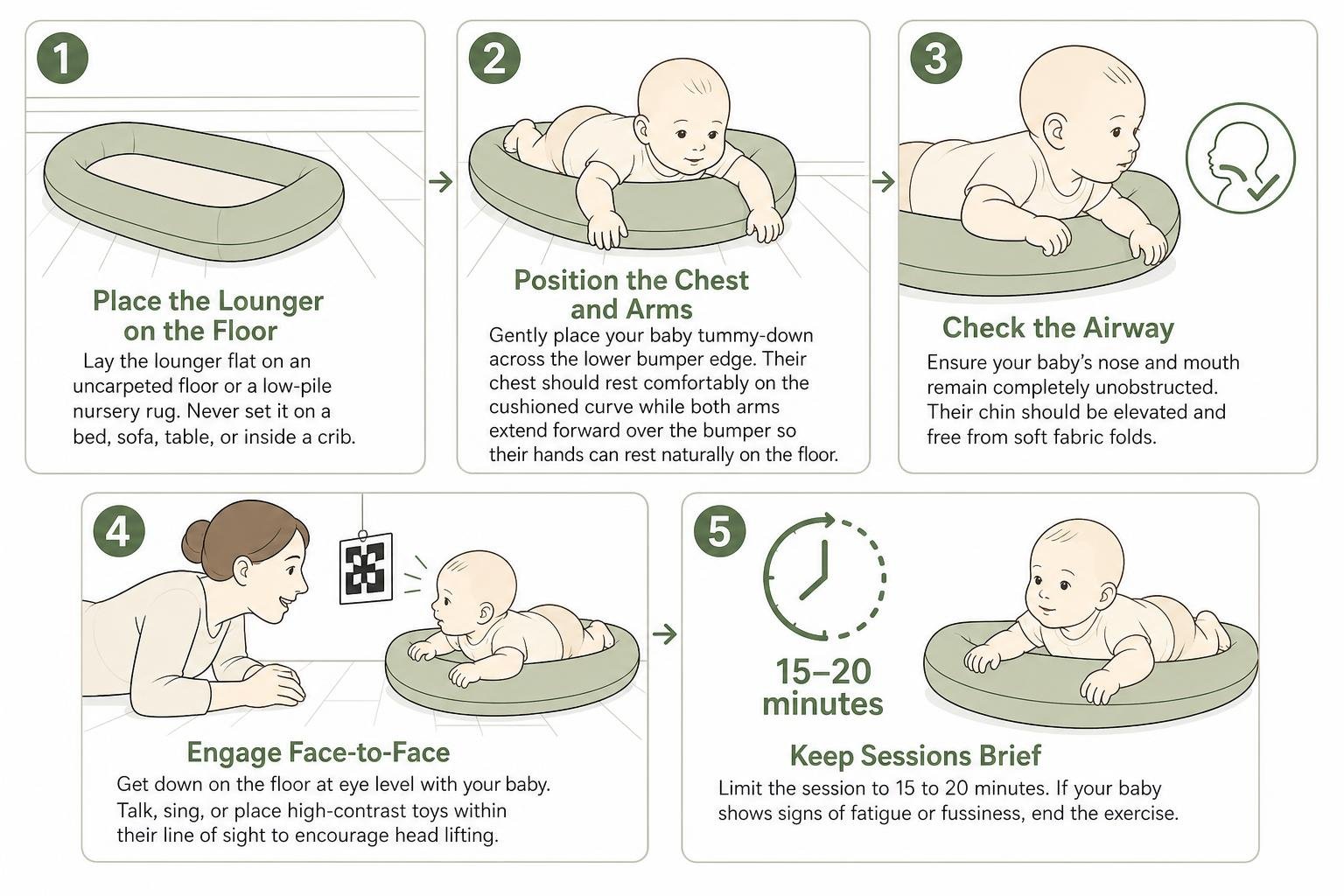
- Place the Lounger on the Floor: Lay the lounger flat on an uncarpeted floor or a low-pile nursery rug. Never set it on a bed, sofa, table, or inside a crib.
- Position the Chest and Arms: Gently place your baby tummy-down across the lower bumper edge. Their chest should rest comfortably on the cushioned curve while both arms extend forward over the bumper so their hands can rest naturally against the floor.
- Check the Airway: Ensure your baby's nose and mouth remain completely unobstructed. Their chin should be elevated and free from soft fabric folds.
- Engage Face-to-Face: Get down on the floor at eye level with your baby. Talk, sing, or place high-contrast toys within their line of sight to encourage head lifting.
- Keep Sessions Brief: Limit the session to 15 to 20 minutes. If your baby shows signs of fatigue or fussiness, end the exercise.
Investing in the safest infant lounger crafted with structured, firm support ensures your baby enjoys tummy time without compromising safety.
Safe Sleep Protocols and Common Lounger Hazards
While infant loungers are practical tools for awake play, they must never be used for unattended rest or infant sleep. The primary safety hazards associated with soft loungers include:
- Positional Asphyxiation: Soft padding and angled inclines can allow an infant's heavy head to tilt forward, compressing their narrow airway.
- Roll-Over and Entrapment: Even before babies can roll deliberately, reflexive kicks or shifts can wedge their face against raised side bumpers.
- Fall Hazards: Loungers set on elevated surfaces such as sofas, countertops, or beds create immediate fall risks.
Always follow the safe sleep ABCs: infants must sleep Alone, on their Back, in a bare Crib or bassinet on a firm, flat mattress with a fitted sheet. If your baby drifts off during a tummy time session, gently lift them and transfer them immediately to a safe sleep space. For an in-depth review of safe lounging practices, explore our guide on the safe sleep lounger.
How to Choose the Best Baby Lounger for Tummy Time
Selecting the right support cushion for your nursery requires looking past aesthetics to evaluate safety engineering, ergonomic support, and material purity.

When shopping for an awake-time support cushion, consider these key criteria:
- Firmness and Structural Integrity: The resting base should not sink deeply under your baby's weight. Firm support helps babies push against the surface rather than sinking into it.
- Non-Toxic and Breathable Fabrics: Newborn skin is delicate and highly permeable. Prioritize fabrics certified by OEKO-TEX Standard 100, which guarantees textiles are free from harmful chemical residues, heavy metals, and irritating dyes.
- Low-Profile Contours: Lower side bumpers facilitate airflow and prevent accidental facial obstruction while baby practices lifting their head.
For a comprehensive evaluation of current market designs and safety features, read our baby lounger complete guide.
Key Features of an Eco-Friendly Baby Lounger for Tummy Time
At CocoMi Baby Boutique, we believe baby essentials should be handcrafted with uncompromising attention to purity and craftsmanship. Choosing an organic infant lounger provides significant benefits for your home and your baby:
- 100% Certified Organic Cotton: Soft, breathable weaves that protect sensitive skin from synthetic friction and irritation.
- Hypoallergenic Fillings: Safe, resilient fiber cores that maintain firmness without off-gassing synthetic chemicals or volatile organic compounds (VOCs).
- Removable, Machine-Washable Covers: Easy-to-clean covers that withstand daily laundry cycles while keeping their shape and soft texture.
- European Artisan Craftsmanship: Each piece is thoughtfully handcrafted to meet the highest safety and durability standards.
Comparing Support Options: Baby Nests vs. Flat Playmats
Understanding how different tummy time surfaces compare helps you create a balanced motor development station in your nursery:
| Product Type | Best For | Firmness Level | Portability | Key Consideration |
|---|---|---|---|---|
| Organic Baby Nest | Supervised awake rest & gentle chest support | Medium-Firm structured cushion | High (room-to-room) | Requires 100% active supervision; floor use only |
| Padded Flat Playmat | Unrestricted motor movement & rolling | Firm, low-profile padding | Moderate (folds flat) | Great for full range of motion; less angled support |
| Firm Tummy Time Wedge | Targeted upper body strengthening | High density foam | High (compact) | Single-purpose design; limited use as baby grows |
To explore our full collection of versatile loungers and developmental nests, take a look at our best infant loungers ultimate guide.
Safe Lounger Alternatives and Tummy Time Variations
A baby lounger is just one of many ways to support your infant's physical development. To encourage varied motor skills and prevent overuse of container-style products, incorporate these safe alternatives into your daily schedule:
- Chest-to-Chest Tummy Time: Recline back at a 45-degree angle on your sofa or glider and place your baby tummy-down on your chest. This variation encourages neck extension while providing soothing skin-to-skin contact and direct eye contact.
- Flat Floor Blanket Play: Lay down a pure muslin or linen blanket on the floor. Flat play allows babies to push with their hands, pivot, and kick freely, which builds the core muscles needed for crawling.
- Over-the-Lap Soothing: Lay your baby across your knees on their stomach while gently supporting their back. This position can also help soothe babies experiencing mild gas or digestive discomfort.
For a deeper dive into modern developmental play essentials, review our baby lounger ultimate guide 2026.
Frequently Asked Questions About Tummy Time Loungers
How long should a baby spend in an infant lounger during tummy time?
Pediatric physical therapists recommend keeping infant lounger sessions to 15 to 20 minutes at a time, up to twice per day. Capping container usage ensures your baby gets plenty of flat floor time to stretch, roll, and build foundational core strength naturally.
What should parents do if a baby falls asleep during lounger tummy time?
If your baby falls asleep in a lounger, immediately pick them up and transfer them to a firm, flat crib, bassinet, or playard. Loungers are designed exclusively for supervised awake time and do not meet safe sleep criteria.
What are the CPSC safety standards for infant support cushions?
The CPSC safety standards require infant loungers and support cushions to feature firmer surfaces that resist body impressions, lower side bumpers to prevent entrapment, strict stability requirements to prevent flipping, and permanent warning labels stating the product is not safe for sleep.
Conclusion
Creating a safe, calming nursery environment is all about balancing thoughtful convenience with protective safety standards. While an infant lounger can offer helpful chest support during supervised play, it works best alongside regular, unrestricted flat floor time.
At CocoMi Baby Boutique, we handcraft our collections—from organic baby nests and Moses baskets to breathable muslin swaddles—using pure, OEKO-TEX certified fabrics that honor your baby's health and your home's aesthetic. To discover more expert guidance on nursery styling, infant motor development, and baby gear safety, explore the latest developmental and nursery safety guides on our boutique journal.