

What Is a Baby Lounger — and Is It Sample?

A baby lounger is a small, portable cushioned seat designed to cradle and support infants during supervised awake time. Here's what every parent should know at a glance:
| Question | Quick Answer |
|---|---|
| What is a baby lounger for? | Supervised awake time — play, bonding, and tummy time |
| Is it safe for sleep? | No. Not approved for sleep by the AAP or CPSC |
| Who regulates them? | CPSC (US), Health Canada, AAP guidelines |
| What is the safest sleep space? | A firm, flat crib, bassinet, or play yard |
| Key safety rule | Never leave baby unattended in a lounger |
Baby loungers have become a staple in modern nurseries — and it's easy to see why. They're cozy, portable, and babies love them. But there's a critical safety line that every parent needs to understand: a baby lounger is not a sleep product.
Between 2021 and 2023, the U.S. Consumer Product Safety Commission received 45 incident reports involving baby nests and loungers — 29 of which were fatalities. That's not a number to gloss over.
This guide covers everything: what loungers actually are, the real risks, official safety guidelines, recalled products, and how to build a safe sleep routine your baby will thrive in.
I'm Monika Jarog, and at Cocomi Boutique I've spent years handcrafting and curating natural, chemical-free baby essentials — including baby nests and loungers — to the highest European safety standards. That hands-on experience with materials, design, and real parent needs shapes everything you'll read in this guide.
Understanding the Purpose of a Baby Lounger
At Cocomi Boutique, we believe that every moment with your newborn is precious. A baby lounger, often referred to as a baby nest or portable infant bed, is designed to facilitate those beautiful bonding moments. Imagine a soft, handcrafted nest made from premium organic cotton that gently cradles your little one while you sit nearby, perhaps reading a book or folding laundry.
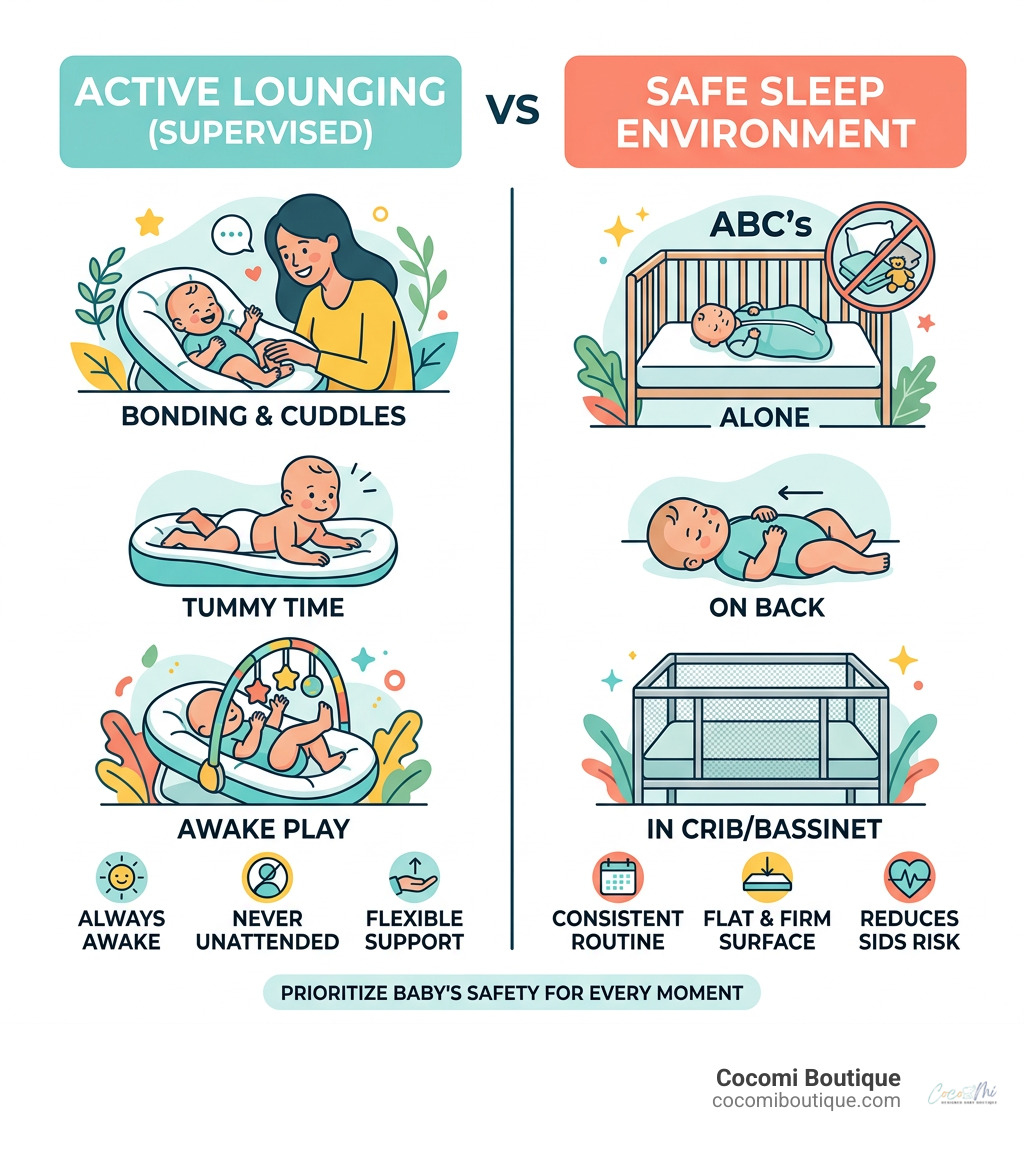
The primary purpose of a baby lounger is to provide a comfortable, contained space for your baby to hang out while they are wide awake and under your direct supervision. These products are exceptional for:
- Tummy Time Support: The cushioned sides can provide a gentle prop for babies as they work on strengthening their neck and shoulder muscles.
- Tactile Development: High-quality loungers made from natural textiles offer a variety of safe textures for babies to explore.
- Portability: They allow you to move your baby from room to room easily, ensuring they are always within your sight.
In our complete guide to baby nests, we emphasize that these items are luxury lifestyle accessories. When crafted with European quality standards and OEKO-TEX certified materials, they become a stylish and functional part of your home. However, as we explore in the truth about newborn snuggle nests, their benefits are strictly tied to "awake time" activities.
Are Baby Loungers Safe for Sleep?
The short answer is no. Major health authorities, including the American Academy of Pediatrics (AAP), the Consumer Product Safety Commission (CPSC), and Health Canada, are unanimous: a baby lounger is not a safe environment for infant sleep.
The AAP's Sleep-Related Infant Deaths: Updated 2022 Recommendations state that babies should always sleep on their backs on a firm, flat, non-inclined surface. Because loungers have soft, plush sides and a cushioned bottom, they do not meet these rigorous safety requirements.
Health Canada has also issued advisories warning that baby nests and loungers can pose significant risks if used for sleep. In fact, Canadian regulations are quite strict; any product intended for sleep must comply with the Cribs, Cradles and Bassinets Regulations. Most loungers on the market do not meet these structural standards for unsupervised rest.
When navigating the choice between a crib or nest, it is vital to remember the statistics. The 29 reported fatalities between 2021 and 2023 were largely linked to infants falling asleep in these products and experiencing breathing difficulties.
Understanding the Risks of a Baby Lounger
Why exactly is sleep in a baby lounger dangerous? It comes down to infant anatomy and the physics of the product:
- Suffocation and Positional Asphyxia: If a baby’s head turns into the soft side of a lounger, their nose and mouth can be blocked. Additionally, if the lounger causes the baby’s chin to drop toward their chest, it can compress their narrow airway, making it impossible to breathe.
- Carbon Dioxide Rebreathing: The plush sides can create a "pocket" of stale air around the baby's face, leading them to breathe in CO2 they just exhaled rather than fresh oxygen.
- Entrapment: A baby might roll or wedge themselves between the bottom cushion and the side bumper.
- Fall Hazards: Many parents mistakenly place loungers on elevated surfaces like sofas or beds. If a baby moves or rolls, the lounger can slide off, leading to serious injury.
Official Guidelines for Using a Baby Lounger Safely
Safe usage is all about setting boundaries. We want you to enjoy your premium baby essentials without worry, which is why following manufacturer and government guidelines is non-negotiable.
| Activity | Safe in a Lounger? | Recommended Action |
|---|---|---|
| Supervised Play | Yes | Stay within arm's reach at all times. |
| Tummy Time | Yes | Ensure baby is awake and active. |
| Napping | No | Move baby to a crib or bassinet immediately. |
| Overnight Sleep | No | Use an approved firm, flat mattress. |
| Co-sleeping | No | Never place a lounger in an adult bed. |
According to the CPSC Safe Sleep guidelines, "Bare is Best." This means the sleep environment should have nothing but a fitted sheet. Since loungers are essentially a large pillow, they violate this rule.
Best Practices for Our Local Families (IL):
- Firm Floor Placement: Always use the baby lounger on a flat, firm floor. Never place it on a couch, table, or bed.
- Direct Supervision: You must be an "alert adult" in the same room. This isn't the time for a nap of your own!
- Age and Weight Limits: Most loungers are designed for babies from 0 to 6 or 9 months. Once your baby starts to roll or push up on their hands and knees, it is time to discontinue use.
- Reporting Safety Concerns: If you encounter a product defect, Health Canada warns and the CPSC encourage parents to report incidents directly to help protect other families.
Frequently Asked Questions about Lounger Safety
What should I do if my baby falls asleep in a lounger? It happens to the best of us—your baby looks so peaceful! However, you must gently pick them up and move them to their crib or bassinet immediately. It is better to risk waking them than to leave them in an unsafe sleep position.
How can I identify a recalled product? Check the CPSC or Health Canada recall databases regularly. Several well-known infant lounger models have faced recalls in recent years due to safety concerns. If you own a product that has been flagged, stop using it immediately and follow the manufacturer's instructions for a refund or disposal.
Are there specific safety standards for baby nests? In the United States, there is no specific "lounger" safety standard that makes them safe for sleep. They are regulated as general infant products. In Canada, they fall under the CCPSA and must meet specific airflow and structural requirements if marketed for sleep.
Transitioning to a Safe Sleep Environment
If your baby has become accustomed to the "hugged" feeling of a baby lounger, transitioning to the wide-open space of a crib can be a challenge. But don't worry—there are safe ways to replicate that comfort.
The goal is to move "beyond the bassinet" and unlock sleep comfort secrets that align with safety standards. One of the most effective tools is swaddling.
According to research on the effect of swaddling on infant sleep, swaddling can help newborns settle by preventing the startle reflex and providing a sense of security similar to the womb (or a lounger). At Cocomi Boutique, we recommend using OEKO-TEX certified muslin swaddles. These natural, breathable fabrics help with temperature regulation, ensuring your baby doesn't overheat while sleeping.
Tips for a Successful Baby Lounger Transition
- Watch Wake Windows: Ensure your baby isn't overtired. Follow age-appropriate wake windows so they are ready to sleep when placed in the crib.
- Recognize Sleepy Cues: Look for rubbing eyes, yawning, or turning away from stimulation. Place them in the crib while they are "drowsy but awake."
- Use White Noise: A sound machine can mask household noises and provide a consistent "sleep cue" that works anywhere.
- Gradual Introduction: Start by doing the first nap of the day in the crib. Once they master that, move on to the other naps and finally nighttime.
- Create a Dark Space: A dark room helps stimulate melatonin production, making it easier for the baby to stay asleep in their safe environment.
Conclusion
At Cocomi Boutique, our mission is to support parents in creating a nursery that is as safe as it is beautiful. We take pride in offering premium handcrafted essentials, from our elegant baby nests to our organic cotton clothing. Every item we curate is selected with European quality standards and chemical-free fabrics in mind, ensuring your baby is surrounded by only the best.
Whether you are looking for a boutique baby gift or setting up your own nursery in Chicago, Deerfield, or Highland Park, we are here to help. A baby lounger is a wonderful tool for bonding and awake-time play, but the safest place for your little one to dream is always on a firm, flat surface in their crib.
Discover our collection of elegant baby essentials and experience the quality and care that Cocomi Boutique brings to every family.