

Is a Portable Baby Nest a Safe Sleep Space?

A portable baby nest is a lightweight infant lounger designed to keep a newborn close during supervised relaxation. Your snuggle nest delight can bring comfort to your newborn during daytime lounging, but its raised sides do not make sleeping in an adult bed safe. For sleep, place your baby on their back in a separate, firm, flat crib or bassinet. Avoid sleep wedges, even if one came with an older lounger model.
At CocoMi Baby Boutique, we work with handcrafted baby nests and natural-fiber newborn essentials. That experience shapes this guide, starting with the difference between a handy portable lounger and a safe sleep space.
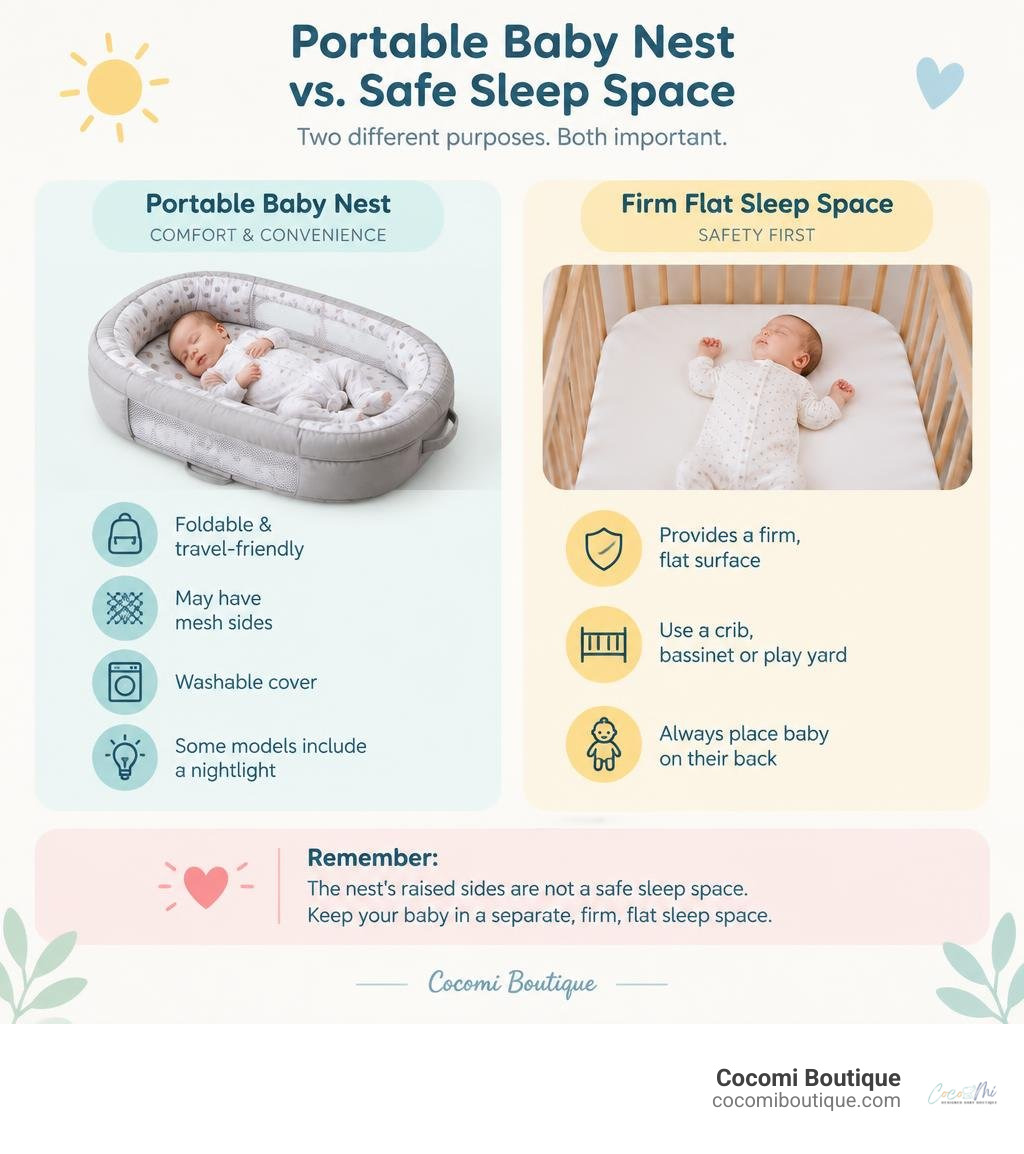
Whether you are evaluating a comfort infant sleeper, exploring a classic portable infant nest, or choosing a charming pink baby nest, prioritizing certified safety ensures your little one rests securely.
Evaluating the Portable Baby Nest Concept: Design, Portability, and Bedside Use
When welcoming a newborn home, every parent looks for practical ways to keep their baby soothingly close while managing recovery, frequent feedings, and around-the-clock comfort. The concept of an infant nest was born from this exact instinct: to create a cozy, defined boundary that cradles a little one during supervised lounging and family connection.

At CocoMi Baby Boutique, we understand this journey intimately. Our brand was founded by parents who experienced the search for nursery essentials that balance uncompromising safety with timeless aesthetics. As we examine the functionality of portable loungers and infant sleepers, we look closely at how structural design, fabric choices, and overall utility serve growing families.
Safety Features and Portable Baby Nest Construction
The core appeal of a portable infant sleeper lies in its protective boundary. Mainstream models typically feature a combination of structural framework, breathable mesh panels, and a firm base mattress.
When evaluating construction, several key components stand out:
- Protective Perimeter: Sturdy, semi-rigid barriers help maintain an open, protected personal zone for your baby during awake resting or supervised soothing.
- Airflow-Rich Mesh: Side panels built with mesh fabrics promote continuous ventilation and allow parents to glance at their infant from across a room.
- Firm Base Support: A thin, supportive mattress pad (often 1/4 to 3/8 inch thick) provides the necessary flat resistance, ensuring your baby does not sink into soft padding.
- Natural, Chemical-Free Materials: High-quality loungers prioritize European OEKO-TEX certified textiles and organic cotton to safeguard delicate, eczema-prone newborn skin against harsh synthetics.
While earlier product versions occasionally integrated sleep incline wedges, pediatric sleep safety research strongly advises maintaining a completely flat, horizontal surface to protect open infant airways. The American Academy of Pediatrics provides safe sleep recommendations that reinforce this guidance.
Portability, Travel Readiness, and Ease of Cleaning
One of the strongest arguments for an infant nest is travel readiness. Unlike bulky furniture or heavy standalone bassinets, compact folding loungers fold in half with a secure latch or hook-and-loop strap, slipping effortlessly into a closet, suitcase, or car trunk.
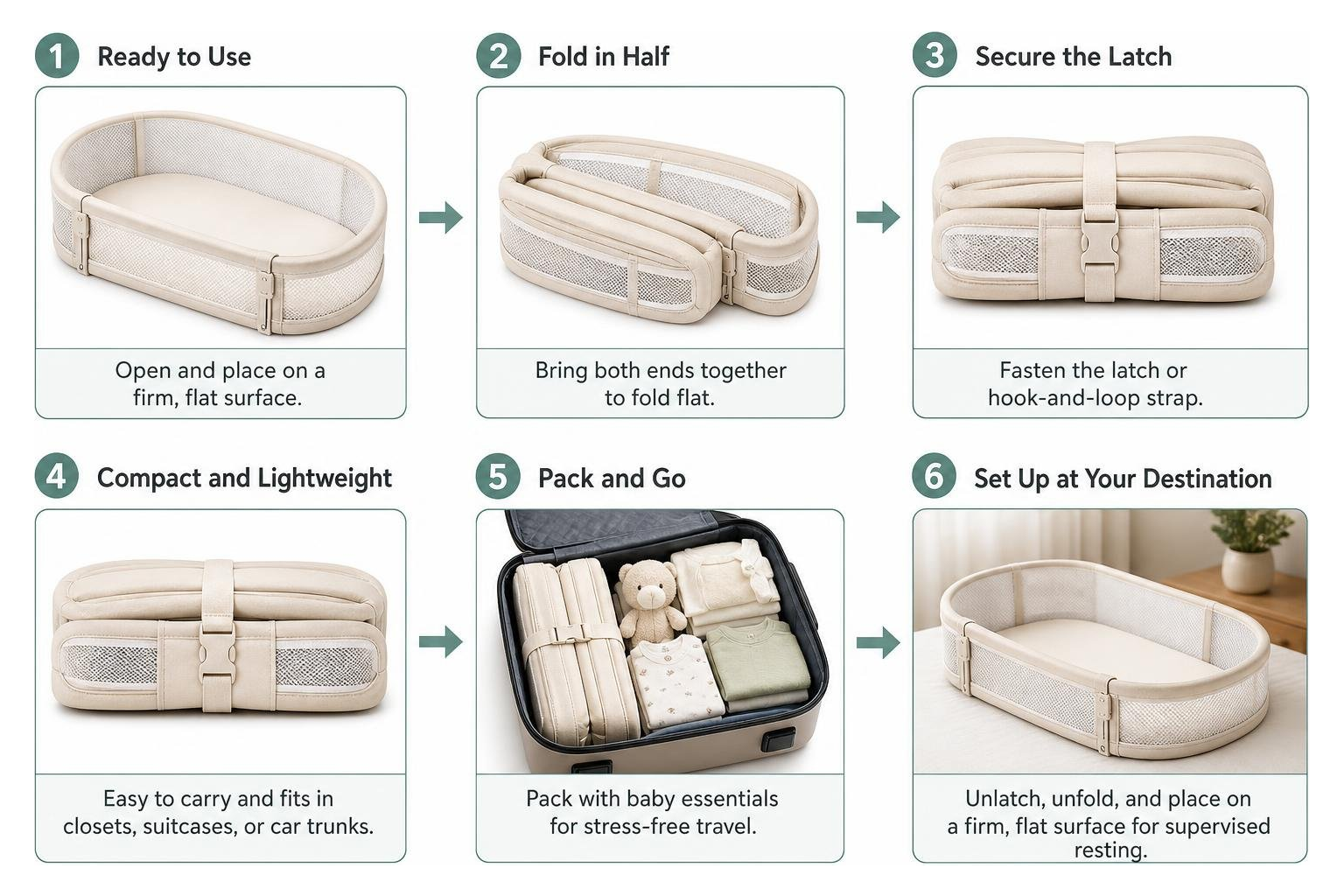
For families on the go, navigating hotel rooms, or visiting relatives across the Chicago area—from Northbrook and Glenview to Lake Geneva and the North Shore—having a familiar, lightweight spot for supervised daytime resting is invaluable.
Hygiene is equally critical. Newborns are messy by nature. Look for models featuring removable slipcovers that can be machine washed in cold water, while the underlying inner foam and plastic structural elements can be quickly wiped clean. If you are exploring various on-the-go resting solutions, our portable infant lounger complete guide breaks down the essential features to look for when selecting lightweight gear.
Practical Newborn Sleep Space or Temporary Fix? In-Depth Performance Analysis
Is an infant nest a timeless essential or a fleeting trend? The answer depends heavily on how realistic your expectations are regarding room setup, developmental milestones, and everyday versatility.
Bed Size Compatibility and Co-Sleeping Practicality
Many parents explore portable nests hoping to place them directly between two adults in a shared bed. However, physical dimensions play a major role in whether this setup is comfortable or safe:
- King-Size Beds: Provide sufficient clearance for two adults and an infant nest, leaving ample breathing room on either side without crowding.
- Queen and Full-Size Beds: Often create a tight squeeze. Adult pillows, heavy duvets, and shifting blankets can easily encroach upon the nest's perimeter, creating safety hazards.
To learn more about creating a safe, serene resting environment that balances proximity with peace of mind, review our detailed guide on the safe sleep newborn nest.
Age Milestones, Weight Limits, and Usability Window
Portable nests are engineered specifically for the earliest fourth-trimester window:
- Age Range: Newborn up to approximately 4 to 5 months.
- Physical Size: Designed for infants under 15 to 17 pounds and measuring between 17 and 26.5 inches in length.
- Mobility Milestones: The usability window strictly concludes the moment your baby demonstrates signs of rolling over, pushing up on hands and knees, or wriggling against the side walls.
For a comprehensive breakdown of developmental timelines, see our resource on the complete guide to baby nests.
Comparing Portable Baby Nests: Features, Value, and Materials
When shopping for infant loungers, parents will notice two distinct design approaches: mass-market plastic-framed sleepers and handcrafted, natural-fiber luxury baby nests.

| Feature | Mass-Market Plastic-Framed Sleepers | Handcrafted Organic Baby Nests |
|---|---|---|
| Primary Materials | Molded plastic, synthetic polyester, nylon mesh | 100% organic cotton, linen, natural OEKO-TEX fibers |
| Structural Frame | Rigid internal plastic shell | Soft, supportive natural fiber bolsters |
| Aesthetics & Styling | Functional, utilitarian, mass-produced | Elegant European craftsmanship, refined neutral tones |
| Skin Friendliness | Synthetic finishes, prone to heat retention | Breathable, hypoallergenic, gentle on sensitive skin |
| Portability | Hard clamshell fold with built-in handle | Lightweight, rollable or tote-ready natural design |
| Primary Use Case | Bedside partition and travel bassinet | Supervised lounging, tummy time, bonding, sensory play |
Parents who value sustainable textiles and heirloom nursery decor often prefer an organic certified newborn nest, which offers breathable comfort without synthetic coatings.
Who Benefits Most from a Portable Baby Nest?
A portable nest is an exceptional asset for specific family scenarios:
- Cesarean Recovery: Mothers recovering from surgical births find having a raised, nearby resting station minimizes painful bending and twisting during daytime feeds.
- Frequent Travelers: Lightweight nests offer a consistent resting surface for babies during visits to grandparents or weekend getaways.
- Curated Baby Registries: An elegant, handcrafted lounger makes a stunning, practical centerpiece gift. Discover inspiration in our guide to choosing a baby shower gift nest.
Frequently Asked Questions About Portable Baby Nests
How long can a baby safely use a portable baby nest?
Most babies can comfortably use a portable nest from birth until roughly 4 to 5 months of age. However, chronological age is secondary to developmental physical milestones. The moment your baby begins showing signs of rolling over, kicking vigorously against the bottom bumper, or reaching beyond the side barriers, it is time to transition them into a full-sized crib. For an in-depth look at developmental boundaries, read our analysis on nest or no nest decoding safe sleep for your newborn.
Does a portable baby nest fit comfortably on a queen-size mattress?
While an infant nest can physically fit on a queen-size mattress, it frequently creates a cramped environment for two adults. The lack of space increases the likelihood that loose adult bedding, quilts, or pillows will drape over the nest's outer walls. For bedside proximity on a queen bed, placing the nest in an adjacent standalone bassinet or opting for a king-size mattress is recommended.
How should you clean and maintain a newborn travel nest?
Maintaining a fresh and hygienic resting space is straightforward when you follow these care practices:
- Unzip and Remove the Outer Cover: Machine wash the slipcover on a gentle cycle using cold water and a mild, fragrance-free detergent.
- Protect the Mattress Core: Wipe down waterproof mattress pads and plastic frames with a damp cloth and mild soap; never submerge structural foam in water.
- Air Dry: Line dry or tumble dry on low heat to prevent fabric shrinkage.
- Use Protective Liners: Investing in a hypoallergenic infant nest cover makes swapping out laundry after spit-ups effortless.
Choosing the Best Sleep Space for Your Newborn
Selecting the right essentials for your baby's first months comes down to balancing safety, daily convenience, and fabric purity. While portable sleepers offer lightweight utility for traveling and keeping your newborn within arm's reach during awake hours, your baby's dedicated sleep space should always be a separate, firm, and flat surface free of loose bedding.
At CocoMi Baby Boutique, we believe parents should never have to compromise between certified safety and beautiful craftsmanship. Handcrafted from natural, OEKO-TEX certified organic materials, our collection of Moses baskets, baby nests, and heirloom-quality nursery essentials brings warmth, gentle luxury, and complete peace of mind to your home.
Explore our complete collection of handcrafted nursery pieces and read more expert parenting guides at the CocoMi Baby Boutique Journal.