

Is a Portable Comfort Infant Sleeper the Right Choice?
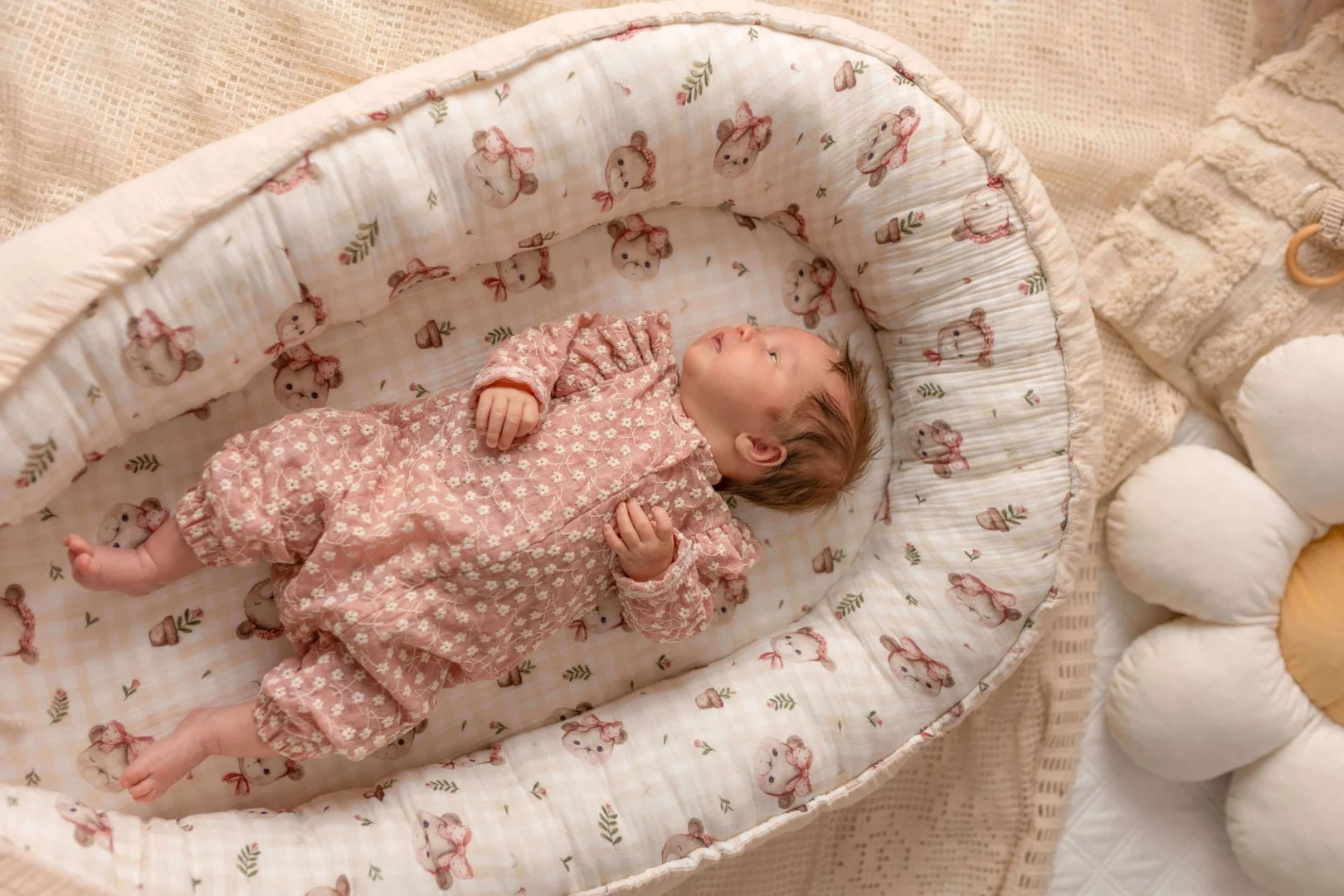
A portable comfort infant sleeper is a compact, foldable infant sleep space with rigid, vented mesh sides and a removable washable cover. Sometimes described as a snuggle nest comfort infant sleeper, it can be useful for parents who need a lightweight, travel-ready bassinet-style option, but it is not the same as a chemical-free baby lounger - and neither product should replace a crib or bassinet approved and used for unsupervised overnight sleep.
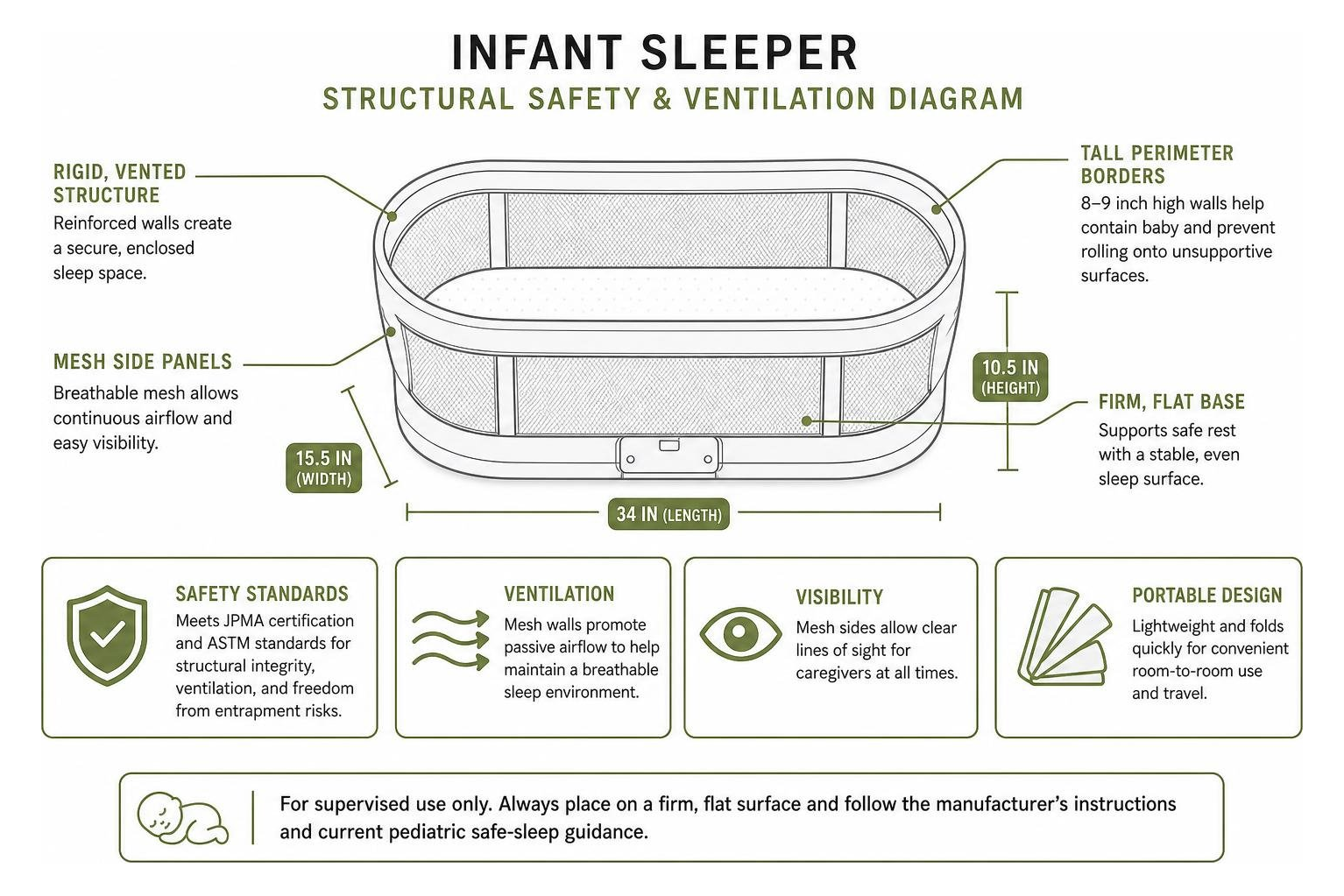
When comparing portable infant sleepers with natural baby nests, focus on the details that matter most:
- Sleep safety: Use only on a flat, stable surface, with the original firm pad and fitted sheet. Keep pillows, blankets, positioners, and loose items out.
- Materials: Mesh improves airflow and visibility, while natural, OEKO-TEX certified fabrics can reduce exposure to unwanted textile substances against baby's delicate skin.
- Everyday care: A removable, machine-washable cover is practical for spit-up and diaper leaks.
- Portability: Foldable designs can be easy to carry and may hold small essentials, such as diapers or a spare outfit, when packed.
- Time to transition: Stop using any infant sleep product when your baby reaches its stated limit or begins rolling, pushing up, or becoming more mobile.
The portable model reviewed here is designed for babies from birth to about five months, measures 34 by 15.5 by 10.5 inches, and weighs about 6.5 pounds. Its mesh walls and safety testing are meaningful features, but certifications do not remove the need to follow the manufacturer's manual and current pediatric safe-sleep guidance. For more on safe sleep practices, see the American Academy of Pediatrics safe sleep recommendations.
At CocoMi Baby Boutique, we create handcrafted baby essentials using natural, chemical-free materials and European-quality workmanship. In this review of portable infant sleep spaces, we will help you weigh portable structure and convenience against the fabric quality, comfort, and thoughtful design many families want for baby's daily rest.
Terms related to portable infant sleeper:
Understanding the Portable Infant Sleeper Design and Key Features
When welcoming a newborn, figuring out the right resting spots for your home and travel schedule can feel overwhelming. A standard portable bassinet sleeper combines a rigid framework with flexible fabric sides, creating a defined perimeter intended for room-to-room convenience.
These units are built around baseline safety standards, including Juvenile Products Manufacturers Association (JPMA) certification and rigorous testing against ASTM standards. These benchmarks verify structural stability, ventilation, and absence of physical entrapment risks. Understanding how these features interact with safe sleep newborn nest recommendations allows parents to make informed choices for daytime napping, supervised resting, and family getaways.
Dimensions, Weight, and Portability of the Portable Infant Sleeper
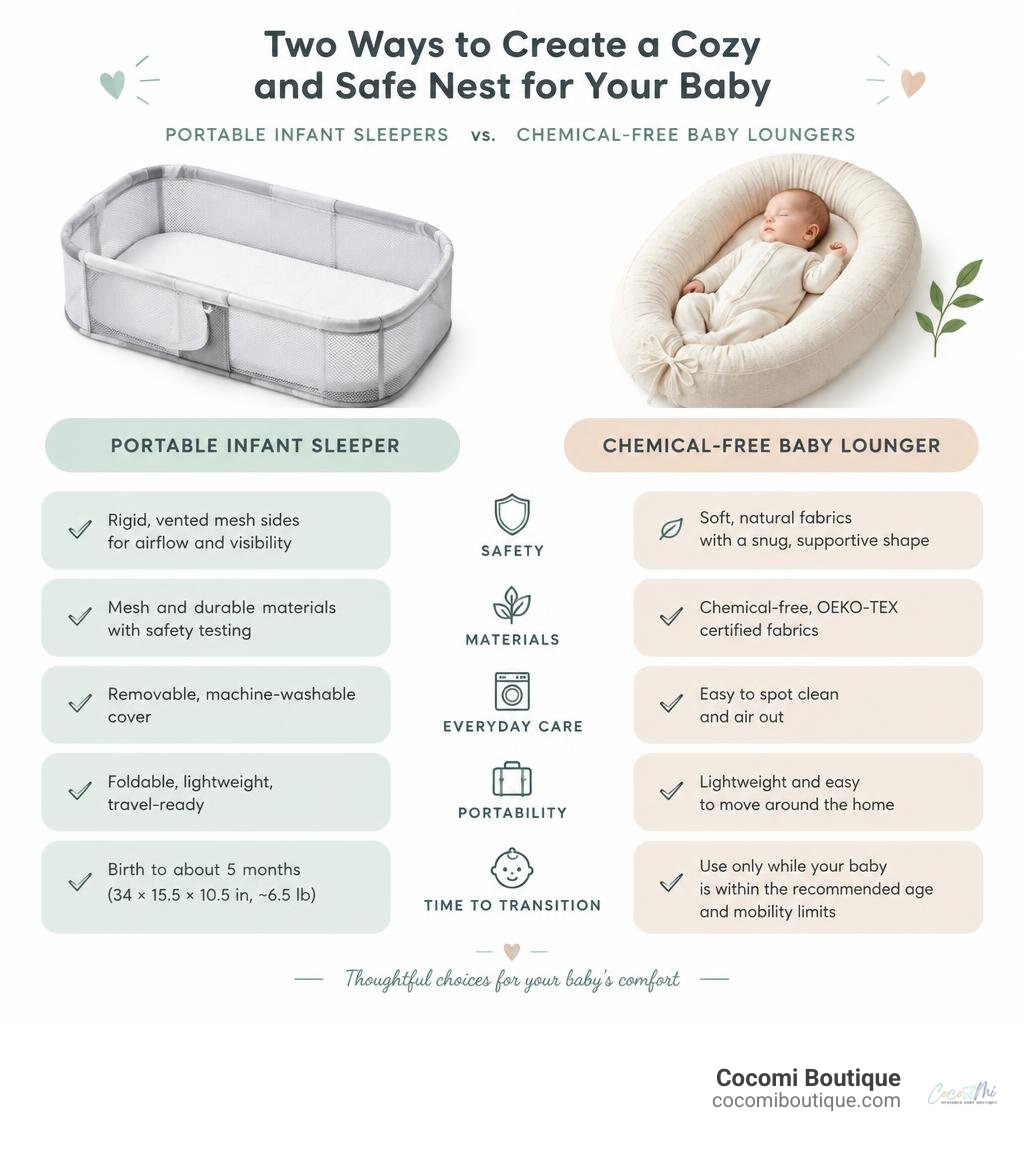
Portability is one of the biggest reasons families consider a compact sleeper. The unit features an open footprint of 34 inches in length, 15.5 inches in width, and 10.5 inches in height, making it narrow enough to fit comfortably on flat surfaces, nearby furniture during supervised awake time, or within adult travel spaces.
Weighing in at approximately 6.5 pounds, this style of sleeper is remarkably lightweight. A central folding mechanism allows caregivers to collapse the sleeper in mere seconds—faster than a tired baby can protest naptime. When folded, it forms a streamlined profile that fits into luggage compartments or car trunks. If you are comparing silhouettes, exploring the nuances of portable infant sleeper design shows how travel-friendly engineering stacks up against softer, home-focused nursery essentials.
Structural Safety and Standards for the Portable Infant Sleeper
Structural integrity in conventional sleepers relies on rigid, vented plastic or reinforced internal walls. These upright borders, measuring around 8 to 9 inches tall, create an enclosed space that helps prevent an infant from rolling onto an unsupportive surface while resting under direct supervision.
The vented mesh fabric spanning the side panels ensures continuous visibility and passive airflow. When examining baby gear, understanding the truth about newborn sleeper safety benefits and what to consider means recognizing that while rigid perimeters offer containment, they must always be paired with a firm, flat base and active parental oversight.
Comparing Conventional Synthetic Sleepers with Eco-Friendly Baby Loungers
While mass-market infant sleepers emphasize lightweight plastics and synthetic polyester blends, many modern parents seek out natural alternatives that prioritize skin wellness, tactile comfort, and sustainable craftsmanship.
To help clarify how conventional portable sleepers compare to handcrafted, chemical-free baby nests, let us look at their primary differences:
| Feature Category | Conventional Portable Infant Sleeper | Handcrafted Eco-Friendly Baby Lounger |
|---|---|---|
| Core Materials | Molded plastic framing, polyester mesh, synthetic foam | 100% natural organic cotton, linen, hypoallergenic fill |
| Chemical Safety | Standard commercial compliance (ASTM/JPMA) | Certified OEKO-TEX Standard 100, free from harmful toxins |
| Weight & Structure | Approx. 6.5 lbs; rigid upright walls with folding joints | Lightweight, soft-cushioned surround; flexible and plush |
| Primary Use Case | On-the-go travel rest, temporary mobile bassinet | Daytime lounging, bonding, tummy time, elegant nursery decor |
| Tactile Comfort | Functional synthetic fabric; thin mattress pad | Ultra-soft, breathable, natural temperature-regulating fibers |
| Aesthetic Appeal | Utilitarian, mass-produced styling | Artisanal, heirloom craftsmanship, soft neutral palette |
Choosing between these styles often comes down to your lifestyle needs and material values. To learn more about high-quality textiles and construction, read our premium baby nest ultimate guide.
Breathability, Airflow, and Mesh Construction
Airflow is a central design consideration for any infant resting space. A conventional sleeper addresses this using open polyester mesh along its walls. These mesh panels allow air to circulate freely around the perimeter, preventing stagnant air pockets even if your little one turns toward the side.
However, synthetic mesh can sometimes feel abrasive against delicate newborn skin. In contrast, an eco-friendly lounger or portable infant sleeper alternative made with natural woven cotton provides passive airflow through the natural porous structure of the weave itself, ensuring comfort without harsh synthetic textures.
Organic Fabrics versus Synthetic Materials and Chemical Treatments
Newborn skin is remarkably delicate, absorbing substances far more easily than adult skin. Conventional sleepers typically utilize treated polyester fabrics designed for stain resistance and commercial durability. While functional, synthetic textiles can trigger sensitivities in infants prone to eczema or irritation.
Opting for OEKO-TEX Standard 100 certified textiles ensures that fabrics have been rigorously tested and found free from harmful levels of toxic substances, pesticides, heavy metals, and formaldehyde. Handcrafted loungers made with pure organic cotton or washed linen offer superior hypoallergenic properties, natural thermal regulation, and unmatched softness. For an in-depth breakdown of fabric safety, consult our baby lounger complete guide.

Practical Usability, Cleaning, and Everyday Travel Considerations
Daily life with an infant involves unexpected messes, frequent spit-ups, and spontaneous trips to visit grandparents. The ease with which a sleeper can be cleaned and transported plays a massive role in whether it remains a helpful tool or becomes a nursery headache.

When selecting resting solutions, reviewing the ultimate guide to choosing the perfect baby nest will help you balance physical durability with daily maintenance demands.
Machine-Washable Covers and Daily Maintenance
Babies are masters of minor chaos. Between midnight spit-ups and diaper leaks, a resting surface must be simple to strip and wash. Most portable sleepers feature a removable outer fabric cover and a fitted sheet that can be tossed into a washing machine on a gentle cycle.
However, parents frequently note that reattaching snug synthetic covers over rigid plastic frames can require patience and finger strength. Softer baby loungers and every washable baby cushion made with high-grade organic fibers generally offer smoother zippered removals and retain their shape wash after wash without shrinking or fabric pilling.
Foldable Travel Storage and Essential Packing
A clever aspect of the portable sleeper's design is its hollow internal volume when folded in half. Secured with a latch or strap, the folded unit creates a protective cavity where parents can tuck lightweight baby essentials such as:
- A few spare diapers and travel wipes
- A rolled swaddle blanket or change of clothes
- Small pacifiers or soothing accessories
This space-saving feature simplifies packing for weekend trips or hotel stays. Visual learners can benefit from watching a practical walkthrough or video demonstration of portable sleeper features to see how quickly these units fold and pack into everyday luggage.
Safe Infant Rest Guidelines and Developmental Milestones
Whether using a rigid bassinet or a cushioned lounger, safe rest practices must guide every decision you make in the nursery.
While resting accessories and loungers are wonderful for soothing, supervised lounging, awake interaction, and tummy time, a dedicated infant lounger pillow or soft nest is never a replacement for a standalone, flat, bare crib surface during unsupervised overnight sleep.
Pediatric Safe Sleep Guidance and Bedside Use
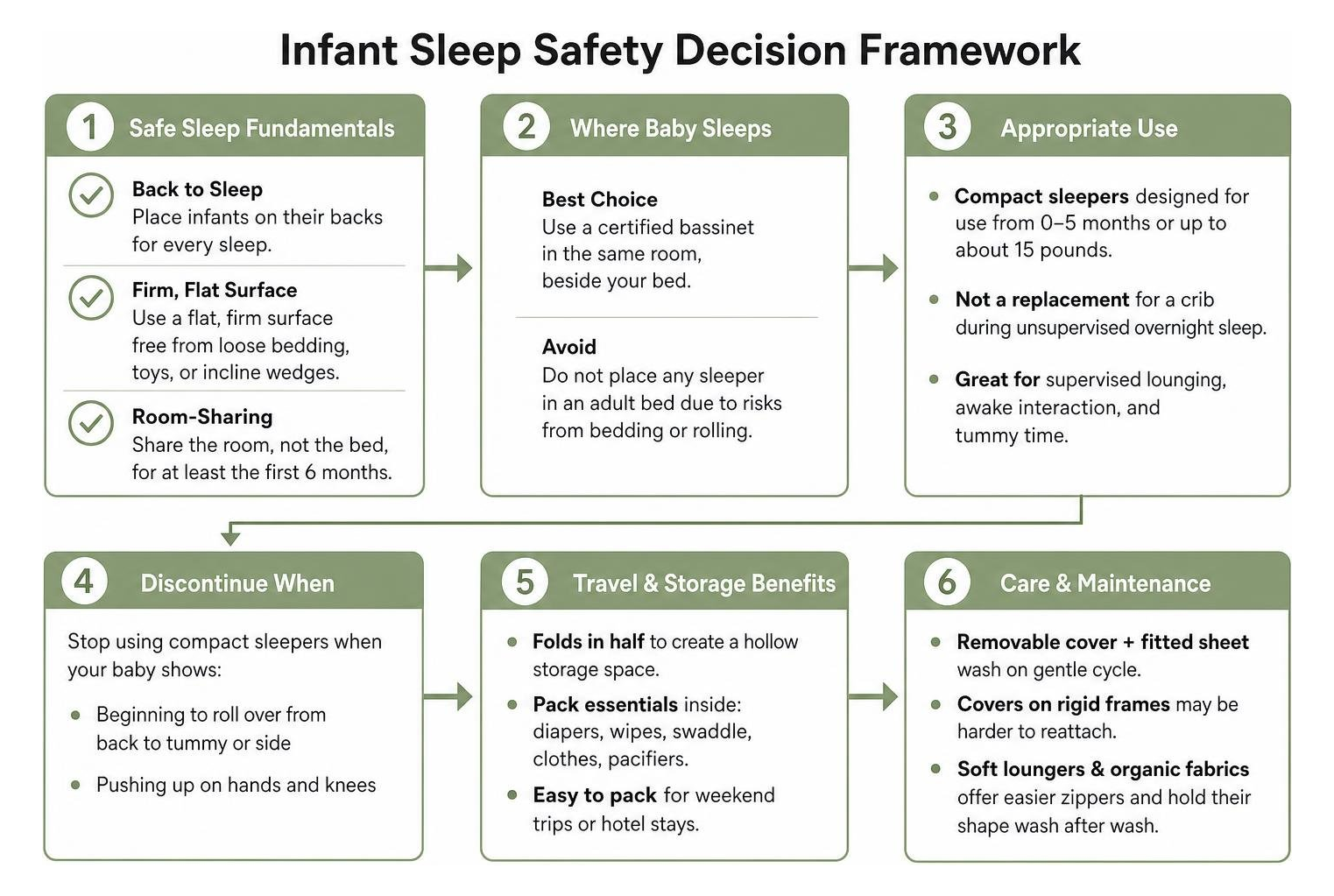
The American Academy of Pediatrics (AAP) safe sleep guidelines highlight three non-negotiable fundamentals:
- Back to Sleep: Infants should always be placed on their backs for every sleep.
- Firm, Flat Surface: The resting mattress must remain flat, firm, and free from loose bedding, plush toys, or incline wedges.
- Room-Sharing Without Bed-Sharing: The AAP recommends room-sharing (sleeping in the same room as parents on a separate sleep surface) for at least the first six months.
Many parents consider using compact sleepers inside their own adult beds for nighttime nursing. However, placing any sleeper in an adult bed carries inherent risks of shifting adult bedding or unintended rolling. True bedside safety is best achieved by placing a certified bassinet right beside the bed. For detailed comparisons on room-sharing setups, review our bassinet ultimate guide.
Age Limits, Weight Capacities, and Transitioning to a Crib
Most compact infant sleepers are engineered for babies aged 0 to 5 months, or up to approximately 15 pounds. However, developmental milestones are far more important than chronological age. You must discontinue using compact sleepers as soon as your infant shows any of the following signs:
- Beginning to roll over from back to tummy or side
- Pushing up on hands and knees
- Reaching the length of the interior mattress pad (where head or feet touch the borders)
Once your baby begins displaying mobile curiosity, transitioning them to a full-sized, bare crib ensures they have the unrestricted space required for safe motor development.
Frequently Asked Questions About Infant Sleepers and Loungers
How long can an infant safely use a portable sleeper or lounger?
Most infants can use a portable sleeper from newborn stage up until 4 to 5 months of age, or until they reach 15 pounds. However, if your baby begins attempting to roll over, push up, or wiggle against the side walls earlier than 5 months, you should immediately transition them to a standard crib.
Can folded portable infant loungers hold baby essentials for travel?
Yes. When rigid-frame portable sleepers are folded in half, the interior cavity creates a convenient compartment. Parents can easily pack clean diapers, wipes, a change of clothes, or a lightweight swaddle inside the unit before securing the outer travel latch.
What certifications should parents look for in non-toxic baby nests?
Look for OEKO-TEX Standard 100 certification, which confirms textiles are free from harmful chemicals, allergens, and irritants. For rigid bassinets and structured sleepers, verify JPMA (Juvenile Products Manufacturers Association) certification and compliance with standard ASTM safety requirements.
Conclusion
Choosing the right resting products for your baby is a deeply personal journey that balances practicality, safety, and pure comfort. While rigid portable sleepers offer lightweight convenience for families on the go, handcrafted baby loungers made from certified organic, chemical-free materials bring an unmatched level of warmth, luxury, and peace of mind to daily nursery life.
At CocoMi Baby Boutique, we believe your baby deserves gentle, non-toxic surroundings crafted with care and intention. Born from our own journey as parents searching for safe, beautiful essentials, our collection pairs timeless European-quality craftsmanship with OEKO-TEX certified natural fabrics. We invite you to explore handcrafted nursery essentials and safe sleep guides and discover the perfect heirloom pieces for your little one today.