

Understanding Portable Infant Loungers: A Parent's Starting Point
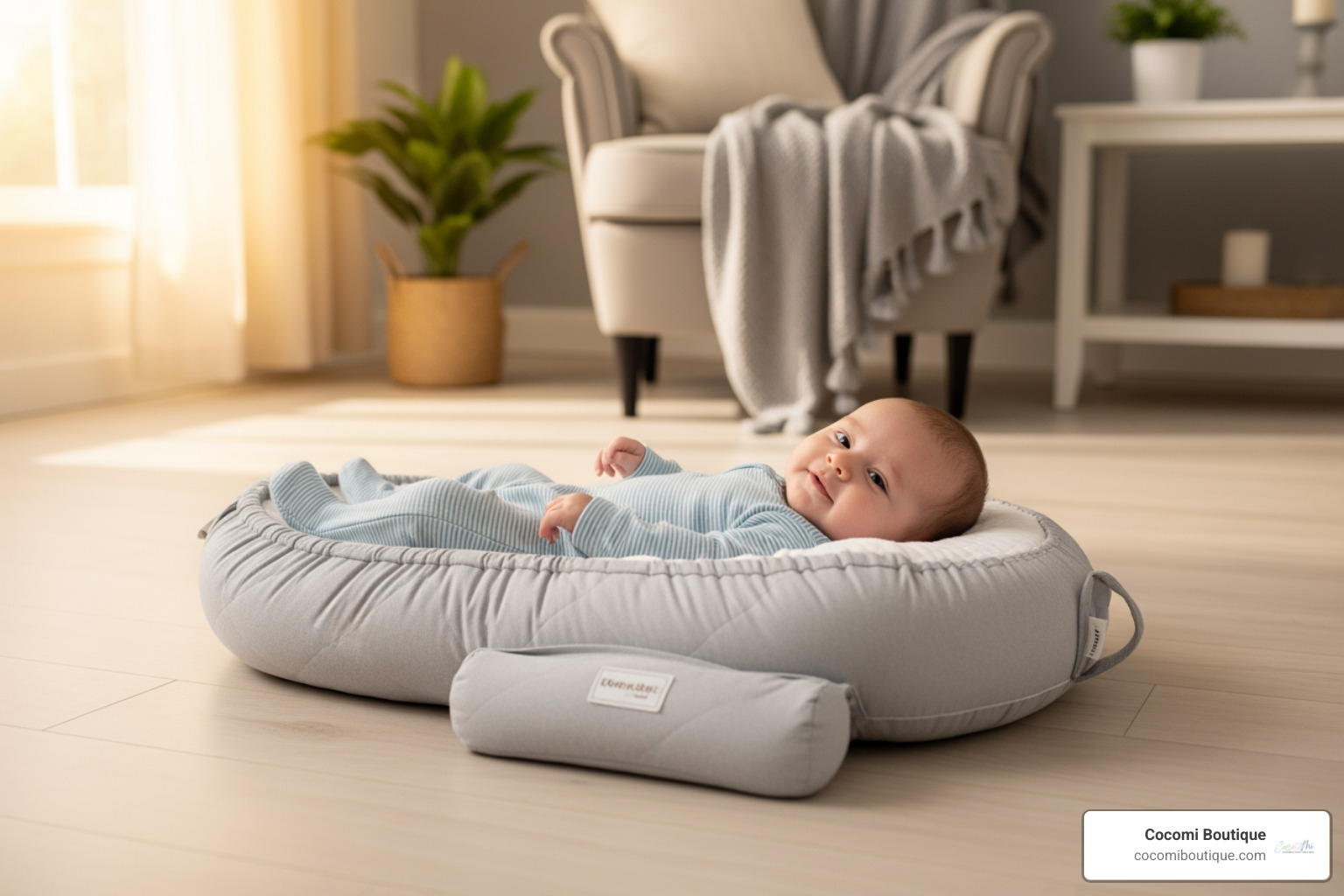
A portable infant lounger is a soft, cushioned baby product designed to provide a cozy, contained space for your newborn or infant during supervised awake time. It's a padded, nest-like surface with raised sides that hugs your baby's body, creating a snug environment that many babies find soothing.
Parents often look for a portable infant lounger to have a comfortable spot for their baby while they fold laundry, prepare a meal, or simply sit nearby. Their popularity comes from their convenience—they're lightweight and easy to move from room to room. These loungers are typically suitable for babies from 0-9 months, but you should always check the specific product's weight and length limits.
However, it's crucial to understand that infant loungers are not sleep devices. The most important safety rule is to never use them for unsupervised sleep. If your baby dozes off, they must be transferred to a crib or bassinet. The best and only safe placement for a lounger is on the floor, on a firm, flat surface, with constant adult supervision.
I'm Monika Jarog, and through my work with baby essentials, I've learned that parents searching for a portable infant lounger prioritize comfort, safety, and peace of mind.

Quick portable infant lounger terms:
What is a portable infant lounger and what are its primary uses?
A portable infant lounger is a soft, supportive "docking station" for your baby, providing a secure spot for them to rest, play, or observe their surroundings while awake and supervised. Think of it as a cozy space with soft bumpers that cradle your little one.
Our goal is to offer a convenient solution for parents in areas like Northbrook, IL, and Glenview, IL, who need a safe, temporary spot for their baby. The main uses include:
- Supervised Rest: A comfortable place for your baby to chill out while you're nearby.
- Playtime: A defined space for toys that encourages focused play.
- Tummy Time: The supportive edges can make tummy time more comfortable, helping strengthen neck and core muscles.
- Changing Spot: A clean lounger can double as a convenient surface for diaper changes on the go.
- Designated Spot: It offers a consistent, familiar place for your baby, which is helpful in open-plan homes or when visiting family in places like Glencoe, IL, or Highland Park, IL.
While they offer comfort, these loungers are strictly for supervised, awake use. For a deeper dive into baby nests, you might find our guide on The Complete Guide to Baby Nests helpful.
Choosing the Right One: Key Features of a Portable Infant Lounger
When navigating the options for baby products, selecting the right portable infant lounger can feel overwhelming. We're here to guide you through the features that make a real difference for your baby and your peace of mind.
Essential Features to Look For
To pick a lounger that's both safe and practical, focus on these key aspects:
- Material: Prioritize soft, breathable, and hypoallergenic materials like 100% cotton or organic cotton. These are gentle on sensitive skin and promote good air circulation to prevent overheating. The fill should also be hypoallergenic.
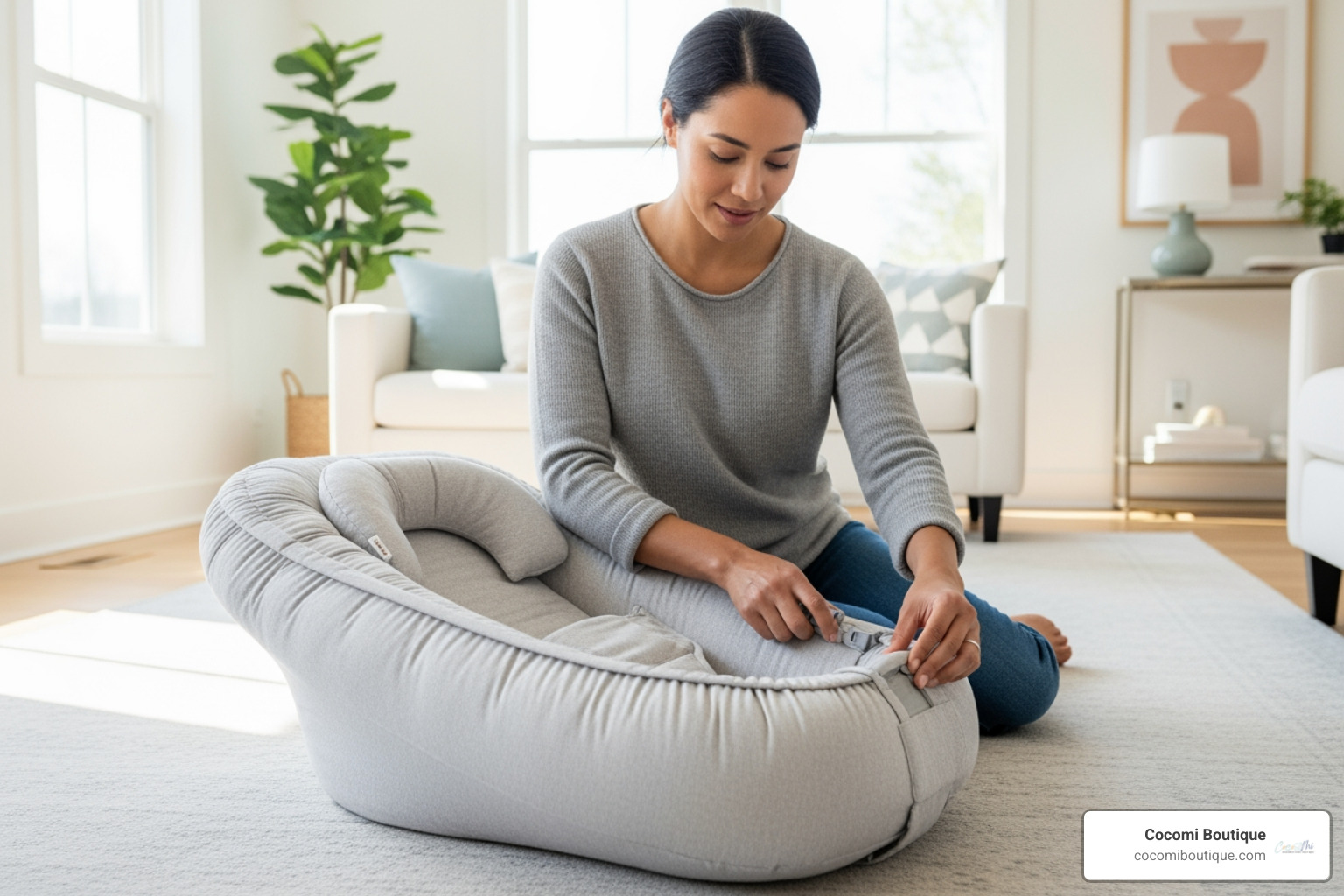
- Portability: A core function is portability. Look for lightweight designs with carrying handles, making it easy to move from room to room or take when visiting family in areas like Buffalo Grove, IL, or Deerfield, IL.
- Ease of Cleaning: Since messes are inevitable, removable and machine-washable covers are a must-have. This feature simplifies maintenance and ensures a hygienic environment for your baby.
- Adjustability: Babies grow fast, so a lounger that adapts is a plus. Some designs feature adjustable bumpers or straps that expand to accommodate your growing infant for a longer period.
- Safety Features: A good lounger should have a firm, stable base to prevent tipping and soft, yet sufficiently high, bumpers to create a snug feel without posing a suffocation risk. Some designs incorporate vented walls for improved airflow.
Understanding Materials and Maintenance
The materials used in a portable infant lounger directly impact comfort and safety. Natural fibers are often preferred:
- Cotton and Organic Cotton: These materials are soft, breathable, and less likely to cause skin irritation. Organic cotton is free from harsh chemicals, making it ideal for newborns.
- Breathability Benefits: Good airflow is crucial to prevent overheating. Materials like cotton naturally allow air to circulate, creating a comfortable microclimate.
- Hypoallergenic Fillers: The inner filling is typically a hypoallergenic polyester fiber to protect against common allergens.
For maintenance, simplicity is key. Most loungers with removable covers are machine washable. Our best advice is to:
- Machine wash on a cold, gentle cycle with a gentle, dye-free detergent.
- Wash the cover by itself to prevent damage.
- Air dry on a flat surface, then tumble dry on low heat. Avoid high heat to preserve the materials.
For more insights into gentle materials for your baby, check out our guide on Gentle Touches: Our Favorite Soft Baby Essentials.
Comparing Different Types of Loungers
The market offers various infant loungers. Understanding the differences can help you choose the right fit for your family in Chicago, IL, or Riverwoods, IL.
- Baby Nests/Nest-like Loungers: The most common type, these feature soft, padded sides that create a snug, womb-like environment. This design can be very soothing for newborns and provides a ready-to-use, cushioned space.
- Floor Seats/Sit-Me-Up Seats: Some loungers are designed as floor seats with a more structured base to help older infants (3+ months) sit upright. They often include developmental toys and are excellent for supervised sitting and playtime.
-
Inflatable vs. Non-Inflatable Loungers:
- Non-Inflatable (e.g., Nests): Pros include being ready-to-use, soft, and offering consistent support. Cons are that they can be bulkier for travel and storage.
- Inflatable Loungers: Pros are that they are extremely lightweight and compact for travel. Cons include requiring inflation and potentially feeling less plush.
Each type serves a slightly different purpose. The choice often comes down to your primary use case and lifestyle. You can explore more about these comfort options in Baby Loungers: Newborn to Infant Comfort.
Safety First: The Golden Rules of Using an Infant Lounger
When it comes to baby products, safety is the paramount concern. While a portable infant lounger is a fantastic tool for supervised comfort, it's critical to adhere to strict safety guidelines. Think of it this way: a comfy couch is great for lounging, but you wouldn't use it as a bed for a newborn.
The "Always Awake" Rule: Why Loungers Are Not for Sleep
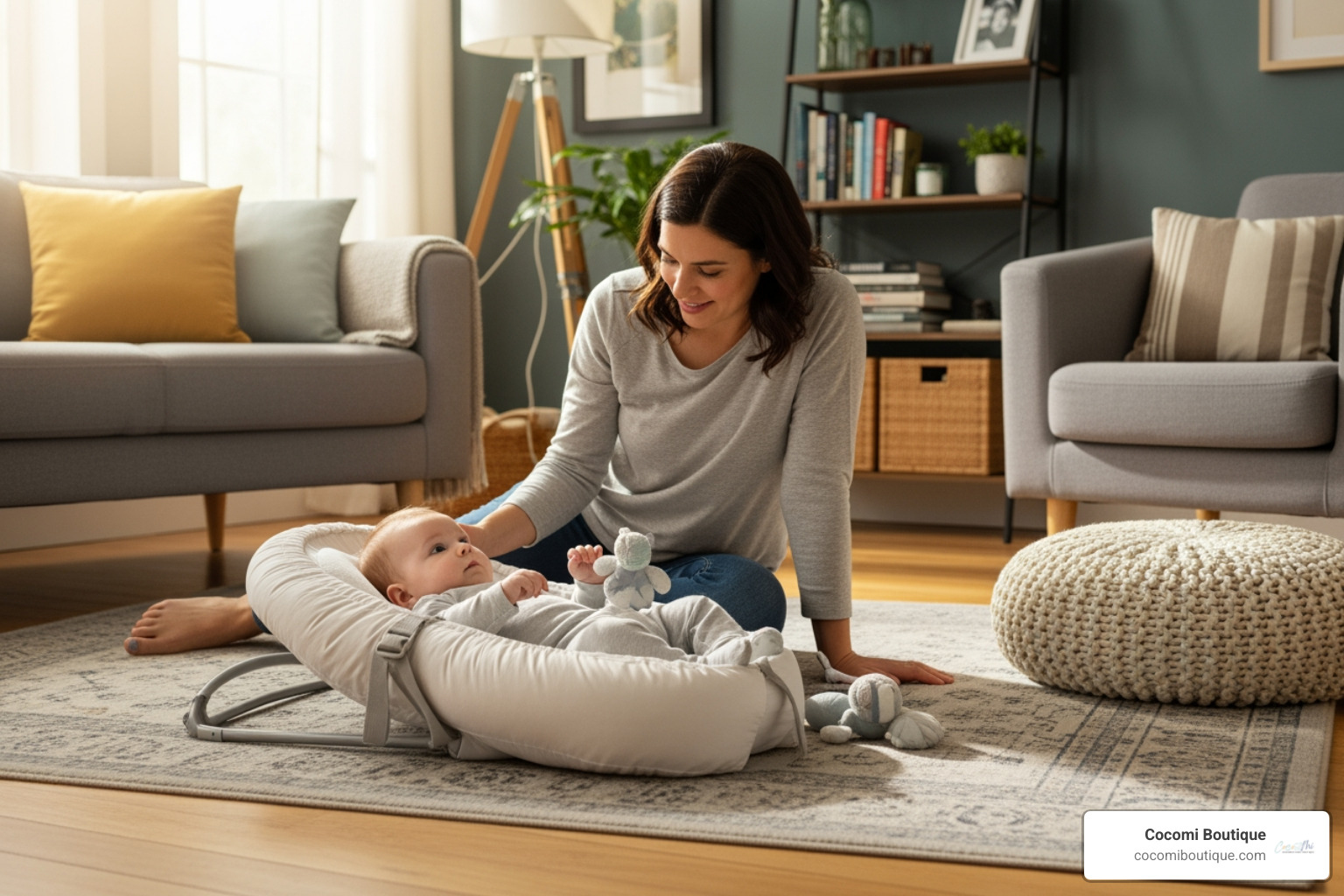
This is the single most important rule: Infant loungers are NOT for sleep. Any time your baby is in the lounger, they must be awake and under direct, active supervision. If your baby falls asleep, you must immediately transfer them to a safe sleep surface, such as a crib or bassinet.
Why is this rule so vital?
- Sudden Infant Death Syndrome (SIDS) Risk: The American Academy of Pediatrics (AAP) and other safety organizations strongly advise against using soft, padded loungers for sleep, as they do not meet safe sleep recommendations.
- Positional Asphyxiation: The soft, contoured sides can pose a risk if an infant's head rolls into a position that obstructs their breathing. Newborns lack the muscle control to reposition themselves if their airway is compromised.
- Suffocation Hazard: The plush materials and raised edges can create areas where airflow is restricted if a baby rolls or shifts, leading to potential suffocation.
While a baby sleeping peacefully in a lounger is an alluring image, the risks are too high. Always remember to enjoy awake time in the lounger and then transfer your baby to their crib or bassinet for sleep. For more on safe sleep practices, consult our article Crib or Nest? Navigating Safe Sleep for Your Baby.
Safe Placement and Supervision
Where and how you use your portable infant lounger is equally important. These guidelines are non-negotiable:
- Floor Use Only: Always place the lounger on a firm, flat, and stable ground surface to prevent falls. Never place it on liftd surfaces like tables, counters, beds, or sofas.
- Never in a Crib or Bassinet: Placing a lounger inside a crib is extremely dangerous. The soft sides increase the risk of suffocation and violate safe sleep guidelines. Many manufacturers explicitly warn against this.
- Never Carry Baby in the Lounger: A lounger is not a carrier. Always take your baby out before moving it.
- Constant Adult Supervision: An alert adult must be in the same room and able to see and respond to the baby at all times. This ensures you can intervene if your baby shifts into an unsafe position or falls asleep.
Following these protocols ensures your portable infant lounger remains a helpful tool, not a hazard. For more safety considerations, refer to The Truth About Newborn Snuggle Nests: Safety, Benefits, and What to Consider.
Beyond the Lounge: Practical Uses and Benefits
Once the safety rules are established, it's time to explore how a portable infant lounger can improve your daily life and your baby's development. These are versatile tools for modern parents in places like Wheeling, IL, and Prospect Heights, IL.
Advantages of a portable infant lounger design
The essence of a portable infant lounger is its mobility and convenience, which makes a significant difference for busy parents:
- Travel-Friendly: Whether heading to Grandma's house in Winnetka, IL, or taking a weekend trip, a lightweight lounger is a game-changer. Many designs are engineered for compact folding, making them simple to pack. This means your baby always has a familiar and comfortable space, no matter the destination.
- Room-to-Room Convenience: The ability to move your baby's safe spot from the nursery to the kitchen is effortless with a lightweight design and carrying handles. It allows you to keep your baby close while keeping your hands free.
- Lightweight Design: The average portable infant lounger is designed to be easily carried with one hand, a huge benefit when you're juggling a baby and a diaper bag.
- Compact Folding: Models that fold compactly are invaluable for parents with limited space or those who travel frequently.
- Visiting Friends and Family: A lounger provides a familiar, hygienic spot for your baby when visiting others, giving you one less thing to stress about.
The flexibility of a portable design helps maintain your routine while keeping your baby comfortable. For more travel-friendly baby essentials, explore options for Travel.
Aiding Development with Tummy Time and Play
A portable infant lounger can be an excellent aid in your baby's developmental journey:
- Strengthens Neck Muscles: Tummy time is crucial for developing strong neck and upper body muscles. The supportive edges of some loungers can make tummy time more comfortable, encouraging babies to lift their heads for longer periods.
- Prevents Flat Head Syndrome: By providing varied positions for your baby during awake time, loungers help alleviate pressure on the back of the head, which can contribute to preventing plagiocephaly (flat head syndrome).
- Seated Support: As your baby grows (around 3-6 months), some loungers offer gentle seated support. This helps them practice sitting independently, improving balance and core strength in a supervised environment.
- Engaging with Toys: The defined space of a lounger encourages babies to reach for and interact with toys, stimulating cognitive and motor skills.
- Sensory Development: A lounger allows your baby to observe their environment from a new perspective, engaging their senses. You can introduce various textures and sounds to enrich their experience.
By incorporating a lounger into your baby's routine for supervised play and tummy time, you are actively supporting their growth. For more on the benefits of baby nests, see Is a Baby Nest Worth It? Unpacking the What, Why, and How-To.
Loungers, Bassinets, and Cribs: Knowing the Difference
Navigating baby sleep and rest solutions can be confusing, with terms like loungers, bassinets, and cribs often used interchangeably or without clear distinctions. It's crucial for parents in Chicago, IL, and the surrounding areas to understand the specific purpose and safety guidelines for each. We've put together a handy comparison to clarify when and why each is appropriate.
| Feature | Lounger (Portable Infant Lounger) | Bassinet | Crib |
|---|---|---|---|
| Primary Use | Supervised awake time, play, tummy time, temporary rest | Supervised sleep, typically bedside, short-term sleep solution | Unsupervised sleep, long-term sleep solution |
| Sleep Safety | NOT safe for sleep; high risk of SIDS/suffocation | YES, designed for safe sleep (must meet safety standards) | YES, designed for safe sleep (must meet safety standards) |
| Portability | High (lightweight, often foldable, easy to move room-to-room) | Medium (some are portable, often lighter than cribs, can be moved more easily) | Low (stationary, heavy, typically stays in one room) |
| Typical Age Range | 0-9 months or until baby shows signs of rolling/reaching weight limit | 0-6 months or until baby pushes up on hands/knees, rolls, or reaches weight limit | 0-2+ years, or until child can climb out |
As you can see, while a portable infant lounger excels in convenience for supervised awake moments, it's fundamentally different from a bassinet or crib, which are specifically engineered for safe sleep. Always prioritize a firm, flat sleep surface in a crib or bassinet for any sleep, day or night. For more guidance on choosing the right sleep solution, check out The Nesting Place: Finding the Right Crib or Sleep Solution for Your Baby.
Frequently Asked Questions about Infant Loungers
We know you've got questions, and we're here to answer them! Here are some of the most common inquiries we hear from parents in Northfield, IL, and throughout our community regarding portable infant loungers.
What age range are infant loungers suitable for?
Most portable infant loungers are designed for newborns and infants, typically from 0 to 9 months of age. However, this is a general guideline. It's crucial to always check the specific age, weight, and length limits provided by the manufacturer of your chosen lounger.
The moment your baby shows signs of rolling over independently, or if they reach the weight or length limits, it's time to transition them out of the lounger. Safety first, always! Some brands even offer larger "toddler" versions for older babies who can reposition themselves and still enjoy the comfort of a lounger.
How do I clean a portable infant lounger?
Keeping your baby's space clean is a top priority. Most portable infant loungers are designed for easy maintenance:
- Removable Covers: The vast majority of loungers feature covers that can be easily unzipped and removed. This is a key feature to look for.
- Machine Washable: Covers are typically machine washable. We recommend a cold, gentle cycle with a mild, dye-free detergent. Wash the cover by itself to prevent damage. Some manufacturers advise using a mesh laundry bag in top-loading machines with an agitator.
- Drying: Air drying on a flat surface is often recommended. Once mostly dry, a low tumble dry can help fluff it up. Avoid high heat.
- Inner Cushion Care: The inner cushion might need occasional spot cleaning. Always check the manufacturer's instructions, as some cushions are machine washable while others are spot-clean only.
Can I use a lounger for co-sleeping?
Absolutely not. We cannot stress this enough: a portable infant lounger is never, under any circumstances, safe for co-sleeping.
Co-sleeping with an infant in an adult bed, even with a lounger, significantly increases the risk of suffocation, entrapment, and SIDS. The soft surfaces of adult beds and bedding all pose serious hazards to an infant.
The American Academy of Pediatrics (AAP) and other health organizations recommend that infants sleep separately from parents on their own safe sleep surface (a crib or bassinet) in the parents' room for at least the first six months. While having your baby beside you is tempting, their safety must come first. For more information on safe sleep practices, please refer to our article Beyond the Bassinet: Unlocking Your Newborn's Sleep Comfort Secrets.
Conclusion: Creating a Cozy and Safe Space for Your Baby
As parents, we're constantly striving to create the safest, most nurturing, and comfortable environment for our little ones. A portable infant lounger can be an incredibly helpful tool in achieving this, offering a convenient and cozy spot for your baby during their supervised awake time. From providing a secure space for playtime and tummy time to offering you those precious hands-free moments, the benefits are clear.
However, the power of knowledge is your greatest asset. We've walked through the essential features to look for, the best materials for comfort and hygiene, and how different types of loungers cater to various needs. Most importantly, we've emphasized the golden rules of safety: always use a lounger for supervised awake time only, place it on a firm, flat surface on the floor, and ensure constant adult supervision. Never, ever use it for sleep or place it in a crib, bassinet, or on liftd surfaces.
By understanding these distinctions and adhering to safety guidelines, you can confidently integrate a portable infant lounger into your daily routine, making life a little easier and a lot cozier for both you and your baby in Chicago, IL, and beyond. Empowering ourselves with accurate information allows us to make the best choices for our children's well-being.
At Cocomi Boutique, we are committed to providing soft, stylish, and comfortable baby essentials that prioritize quality and care. While we focus on beautiful baby clothing, our dedication to your baby's comfort and safety extends to every aspect of their world.
Explore our collection of baby essentials and find more ways to create a delightful and safe environment for your little one.