

Why Parents Are Turning to Little Nest Sleep Solutions
Little nest sleep refers to both a holistic sleep philosophy and the practical creation of safe, cozy sleep environments for babies and young children. It's an evidence-based approach that avoids cry-it-out methods and rigid schedules, focusing instead on responsive parenting and biological sleep needs.
The sleep-deprivation journey is real for many parents. The search for a better way often begins after trying conventional methods and strict schedules that simply don't work for their family. This frustration with standard advice that can feel wrong and ineffective has led many to seek out gentler, more intuitive approaches.
The little nest sleep concept combines two essential elements: a responsive parenting philosophy that respects your baby's biological needs, and the physical creation of safe, comfortable sleep spaces. Using breathable materials like bamboo and organic cotton, this approach helps you build a secure foundation for rest. Unlike traditional sleep training, this philosophy grows with your family from the newborn days through the preschool years, supporting both your child's development and your parental intuition.
As Monika Jarog, I specialize in creating handcrafted baby sleep essentials using 100% natural materials that meet high safety standards, helping families establish the physical foundation for these principles. My focus on breathable baby nests, sleep sacks, and Moses baskets ensures your baby has a secure, comfortable space that supports gentle sleep practices.
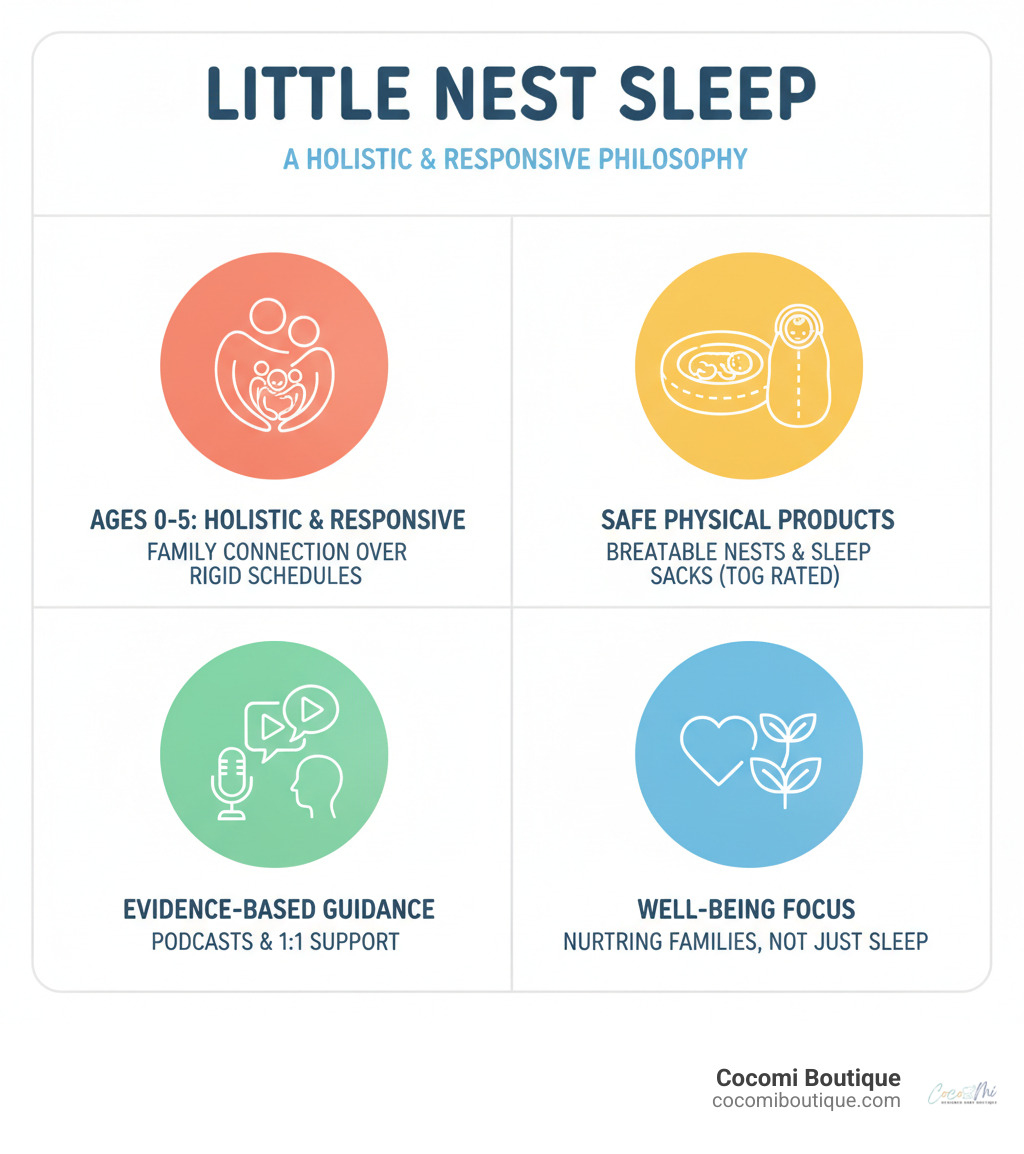
Little nest sleep word roundup:
What is the "Little Nest" Sleep Philosophy?
Picture this: It's 3 AM, and you're pacing the hallway with your crying baby for the fourth time tonight. You've tried the strict schedule. You've read the books that promise "sleep in seven days." But something feels deeply wrong about leaving your baby to cry alone, and nothing seems to be working anyway.
This is a common reality for new parents. The conventional wisdom around baby sleeprigid schedules, "cry-it-out" methods, and the idea that babies should sleep through the night by a certain ageoften doesn't align with what a baby needs or what a parent's heart is telling them. That exhausting, isolating experience can be the spark for seeking something better.
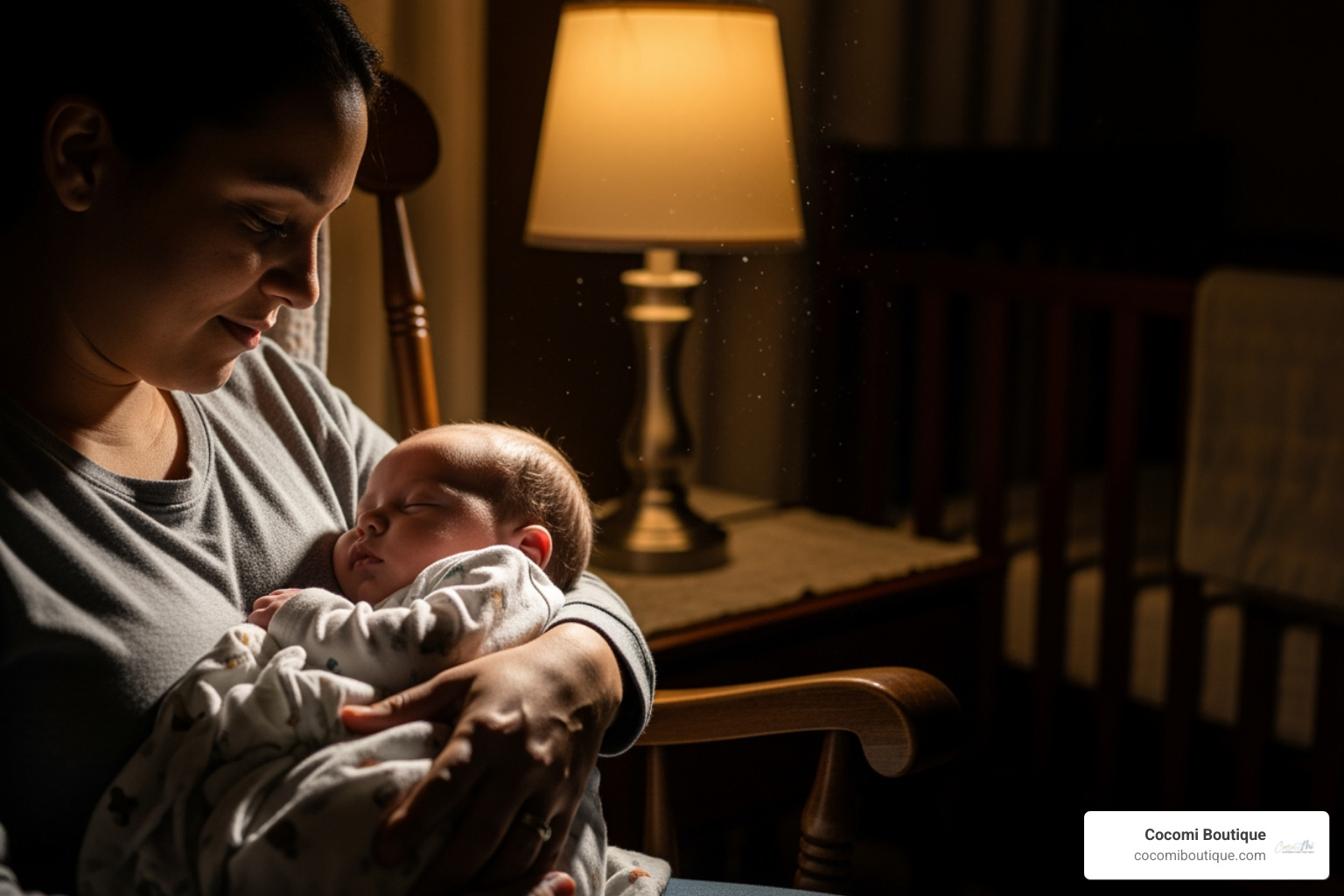
The little nest sleep philosophy is fundamentally different from traditional sleep training. It's built on responsive parenting, not rigid rules. It honors your baby's biological sleep needs rather than trying to force them into an adult-centric schedule. Most importantly, it recognizes that sleep isn't a behavior problem to fixit's a developmental process that unfolds naturally when babies feel safe, connected, and understood.
This approach centers on building trust and connection. Instead of viewing nighttime parenting as a problem, it sees it as an opportunity to strengthen your bond. Yes, you're exhausted and need more sleep. But the path to better rest doesn't have to involve methods that feel wrong or damage the secure attachment you're working so hard to build.
The truth is that much of what we're told about baby sleep isn't supported by evidence. Babies wake frequently because they're biologically designed to. They need connection and comfort, not independence training. This philosophy aims to debunk the myths that leave parents feeling like failures when their babies don't sleep like the books promise.
For additional expert perspectives and interviews with clinicians and researchers, explore expert interviews on baby sleep.
The Core Principles
The foundation of little nest sleep rests on four interconnected principles.
First is empathy for sleep-deprived parents. This philosophy comes from a place of understanding those dark 3 AM hours when you'd try almost anything for just two consecutive hours of sleep. It validates the parental experience of exhaustion.
Second is empowering families with evidence. You deserve accurate, research-based information about how baby sleep actually works, not outdated myths. Understanding the biological reality of infant sleep helps you set realistic expectations.
Third is supporting parental intuition. You are the expert on your child. The little nest sleep approach gives you permission to trust your instincts rather than forcing yourself to follow rigid methods that don't feel right.
Finally, the philosophy accepts a holistic, family-centered approach. Sleep is connected to feeding, development, temperament, and family dynamics. Solutions that work for your family might look different from what works for your neighbor, and that's perfectly okay.
Who Can Benefit from This Approach?
The beauty of little nest sleep is that it grows with your family. Whether you're holding a newborn or navigating the bedtime battles of a preschooler, this responsive philosophy adapts to meet your child where they are developmentally (from ages 0-5).
For newborns, the approach helps establish patterns that honor their need for frequent feeding and close contact. Toddlers benefit from strategies that respect their growing independence while providing security. And preschoolers can be supported with age-appropriate methods that prioritize the parent-child relationship.
This philosophy particularly resonates with families who have tried conventional sleep training and found it distressing. If strict schedules create more stress than rest, or if "cry-it-out" methods felt wrong, you're not alone. Many parents find that what their family truly needed was permission to respond to their child.
At Cocomi Boutique, we understand that creating a safe, comfortable sleep environment is part of this holistic approach. The soft, breathable materials in our baby clothing and sleep products support the physical comfort that helps little ones rest peacefully, complementing the responsive parenting philosophy that helps them feel emotionally secure.
Creating the Perfect Nest: Safe Sleep Products
The little nest sleep philosophy isn't just about how you approach bedtime—it's also about creating a physical environment where your baby feels secure and comfortable. At Cocomi Boutique, we focus on soft, stylish baby essentials made with materials that support your little one's needs.

When we talk about a safe sleep space, we mean simplicity. The safest environment is free of loose blankets, pillows, or stuffed animals. This is where wearable blankets excel, keeping your baby warm without the risks of traditional bedding.
Not all fabrics are created equal. Breathable materials like bamboo and GOTS-certified organic cotton make a genuine difference. These natural fibers are soft on sensitive skin and help regulate temperature, preventing your baby from getting too hot or too cold. Some modern baby nests even incorporate 3D mesh technology for 360-degree ventilation. Whether you're dealing with humid Chicago summers or a heated home in Northbrook, these materials adapt.
TOG ratings are a simple way to measure a fabric's warmth. A lower TOG rating (like 0.6) is for warmer rooms, while higher ratings are for cooler environments. This takes the guesswork out of dressing your baby for bed. You can layer a onesie under a sleep sack and adjust based on the season, ensuring your baby is always comfortable.
The Truth About Baby Nests and Loungers
Baby nests can recreate a snug, womb-like feeling that soothes newborns. The raised sides provide a comforting boundary, and their portability is convenient for supervised naps. However, safety is paramount. While nests are great for supervised daytime rest, the rules for overnight sleep are more stringent. Some nests earn certifications for unsupervised overnight sleeping due to features like a firm base and breathable sides, but their specific usage instructions must be followed precisely.
For supervised use, always place your baby on their back in the center of the nest, on a firm, flat, stable surface—never a soft couch or bed. Keep the area clear of loose items. Most importantly, your baby should always be within your sight and hearing.
The conversation around cribs versus nests can be overwhelming. For a detailed guide, check out Crib or Nest? Navigating Safe Sleep for Your Baby and The Truth About Newborn Snuggle Nests: Safety, Benefits, and What to Consider. These resources help you make confident decisions for your family, from Deerfield to Highland Park.
The Role of Sleep Sacks and Wearable Blankets
Sleep sacks are a gold standard for safe infant sleep. They eliminate the risk of loose blankets while keeping your baby cozy. Many are made from eco-friendly materials like bamboo and GOTS-certified organic cotton, which are hypoallergenic and breathable. For instance, a lightweight sleep sack with a 0.6 TOG rating is perfect for warmer nights or air-conditioned rooms.
Getting the right fit is crucial. A sleep sack should be snug around the chest but have plenty of room for legs to move, promoting healthy hip development. Sizes are available from newborn up to 36 months, so you can use them as your child grows.
Layering is straightforward: the sleep sack goes over pajamas or a onesie. On a mild night in Glencoe, a short-sleeved onesie under a lightweight sack might be perfect. During a cold Winnetka winter, you might opt for long-sleeved pajamas under a warmer sack. This flexibility keeps you prepared for any temperature.
For more guidance, take a look at The Nesting Place: Finding the Right Crib or Sleep Solution for Your Baby. It walks you through creating the safest, most comfortable sleeping environment where the little nest sleep philosophy can thrive.
Navigating Common Problems with the Little Nest Sleep Approach
Let's be honest—even with the gentlest philosophy and the safest sleep products, raising a young child comes with sleepless nights. The little nest sleep approach doesn't pretend otherwise. Instead, it offers realistic support and evidence-based guidance to help you steer the bumpy patches with confidence.
One of the hardest parts isn't always the sleep deprivation itself—it's the loneliness and pressure that comes with it. We hear this from parents throughout our Illinois communities, from Wheeling to Northfield. You're exhausted at 3 a.m., comparing your wakeful baby to a friend's "perfect sleeper." Well-meaning relatives suggest letting your baby "cry it out," and you start questioning everything. That isolation can feel crushing.
The little nest sleep approach was developed to combat these feelings by debunking sleep myths and encouraging parents to think critically about common narratives that may lack scientific backing. The message is clear: you're not failing if your baby wakes frequently, and you don't have to follow methods that feel fundamentally wrong.
Finding reliable, evidence-based information from trusted sources like your pediatrician or child development experts becomes your lifeline during these challenging times. This knowledge helps you feel confident in your choices and provides reassurance when you feel alone in your approach.
Understanding the 4-Month Sleep Regression
If your baby who was sleeping reasonably well is now waking every hour, you've likely hit the infamous 4-month sleep regression. This isn't a backward step—it's a significant developmental leap. Your baby's sleep cycles are maturing to become more like an adult's, with more distinct sleep stages. This maturation can make it harder for them to connect sleep cycles smoothly, leading to frequent waking and short naps.
The little nest sleep approach emphasizes responding gently during this period. This means continuing to meet your baby's needs for comfort, feeding, and reassurance, even when you're exhausted. You might offer more frequent feeds, give extra cuddles, or temporarily adjust sleep arrangements. This phase is about supporting them through a major developmental shift. By responding to their needs, you reinforce secure attachment and teach them their needs matter, even at 2 a.m.
Is Your Baby Highly Sensitive?
Not all babies have the same temperament. Some are like "dandelions"—resilient and adaptable. Others are like "orchids"—more sensitive to their environment and reactive to stimuli.
If your baby seems easily overstimulated, reacts strongly to changes in routine, is particular about textures or sounds, or struggles with transitions, you might have a highly sensitive little one. Recognizing this isn't about labeling; it's about understanding why certain approaches work better than others.
For highly sensitive babies, tailoring your approach is key. You may need to create an exceptionally calming environment with dimmer lighting, consistent routines, and minimal sensory input before sleep. What works for a neighbor's baby in Buffalo Grove might be wrong for your orchid child in Chicago, and that's okay. Understanding that your baby isn't being "difficult"—they're simply wired differently—can change everything about how you approach sleep.
At Cocomi Boutique, we know the right physical environment matters. Our soft, comfortable sleepwear made from gentle, breathable materials can make a real difference for sensitive babies. Sometimes the smallest adjustments in their sleep nest create the biggest improvements in rest.
Frequently Asked Questions about Little Nest Sleep
As parents steer the overwhelming world of baby sleep advice, many questions arise. Understanding the little nest sleep approach can bring clarity and relief to your family's journey.
What age group is the 'little nest sleep' approach for?
The little nest sleep philosophy is designed to grow with your family, supporting children from newborn through the preschool years, specifically ages 0-5. It's a comprehensive framework that adapts to your child's changing developmental needs.
For newborns in Northbrook, IL, or Chicago, the focus is on gentle, responsive patterns that honor biological rhythms. For toddlers and preschoolers, the approach shifts to address challenges like boundary setting and developmental leaps while maintaining connection. This long-term perspective means families in communities like Glenview, IL, and Glencoe, IL, can rely on these principles for years.
How does this approach differ from traditional sleep training?
The little nest sleep approach is fundamentally different from rigid schedules and "cry-it-out" techniques. Traditional sleep training often treats sleep as a behavior to be fixed, sometimes requiring parents to ignore their baby's cries.
In contrast, this philosophy is built on responsive, holistic methods that prioritize connection. There is no "cry-it-out" or pressure to follow strict schedules. Instead, this approach recognizes crying as communication and encourages you to respond with empathy. It views sleep as a developmental process that unfolds naturally when a child's biological needs are met and they feel secure. For many parents in Highland Park, IL, and Winnetka, IL, this feels like permission to trust their instincts.
What are the key components of a safe 'sleep nest'?
Creating a physically safe sleep environment is as important as the philosophy itself. A safe 'sleep nest' focuses on evidence-based practices to minimize risk.
The foundation is a firm, flat surface, like a crib or bassinet mattress. Your baby should always be placed on a stable surface. Breathable materials like organic cotton and bamboo are essential for temperature regulation, which is why we prioritize them at Cocomi Boutique.
The golden rule is baby on their back for every sleep. This simple position dramatically reduces the risk of SIDS and is recommended by pediatricians from Buffalo Grove, IL, to Riverwoods, IL.
Most critically, the sleep space must be free from loose bedding, pillows, or toys. Nothing should be in the crib or sleep area that could obstruct breathing. This means no loose blankets, bumpers, or stuffed animals. A sleep sack is the perfect solution, providing warmth without the hazards of loose covers.
For families in Northbrook, IL, and Chicago who want to dive deeper, we recommend reading:
This resource helps you create a sleep environment that's both snug and safe.
Conclusion
The journey through little nest sleep brings us full circle—from understanding a gentle philosophy to creating the physical sanctuary where your baby can truly rest. This isn't just about getting more sleep (though that's a welcome benefit). It's about embracing a way of thinking about your child's sleep that honors their developmental needs while respecting your parental instincts.
What makes little nest sleep so special is how it weaves together two important threads: a responsive, evidence-based philosophy and the thoughtful selection of safe sleep products. You don't have to choose between sleep and connection. With breathable baby nests and perfectly fitted sleep sacks, you create the cozy, secure environment where a gentle approach can flourish.
We've acknowledged the challenges—the 4-month sleep regression, the pressure to try methods that don't feel right, and the loneliness of night wakings. But there is another path, one that trusts in your child's biological rhythms and your own wisdom as a parent.
At Cocomi Boutique, we're honored to support families in Northbrook, IL, Chicago, and beyond as they create their own version of the perfect nest. Our soft, stylish baby clothing and sleep essentials are crafted with care. We know that quality matters, materials need to be gentle on sensitive skin, and every product should contribute to your baby's comfort and safety.
Peaceful sleep doesn't require harsh methods. It grows from a foundation of trust, responsive care, and a safe, comfortable environment. Whether you're starting with a newborn or navigating the preschool years, the principles of little nest sleep can guide you toward more restful nights.
Ready to learn more? Explore our blog for more tips on creating the perfect sleep environment for your baby, where we share insights and practical advice to support you on this journey.