

How to Choose an Adjustable Size Newborn Nest

An adjustable size newborn nest is a cushioned lounger whose fit can change as your baby grows. When shopping, check how it adjusts, whether the cover is easy to clean, and when the maker says to stop using it. Choose breathable, well-made fabrics, but remember: a baby nest is not a bassinet or crib. Use it only for supervised lounging, not sleep. For sleep, place your baby on their back in a crib or bassinet with a firm, flat mattress and no loose bedding.
As a parent-founded brand, CocoMi Baby Boutique understands how much the details of fit and finish matter when choosing handcrafted baby nests and natural-fabric nursery essentials. The guidance below will help you compare adjustable size newborn nest styles without losing sight of safe use.
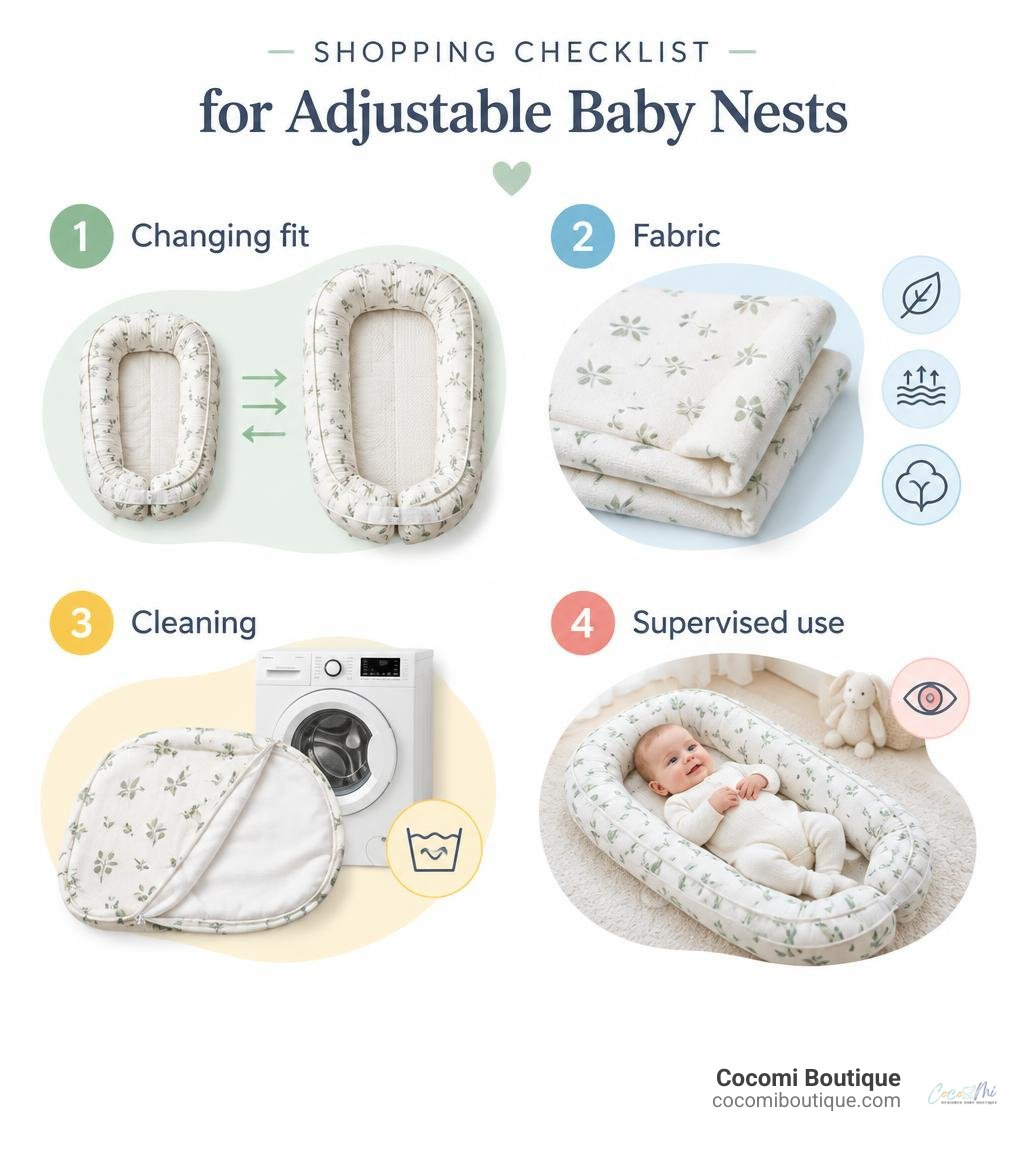
Adjustable size newborn nest glossary:
Why Choose an Adjustable Size Newborn Nest for Your Growing Baby?
Welcoming a newborn means adapting to rapid changes. In the first few months, babies grow at an astonishing rate, outgrowing clothing and nursery gear before you have even had time to wash them twice. An adjustable size newborn nest offers an adaptable space for awake lounging, bonding, and tummy time, flexing to fit your infant as they transition through developmental stages.
Parents often ask whether investing in an infant nest makes sense for everyday family life. The primary advantage of an adjustable design is longevity and versatile daily use. Rather than purchasing fixed-size gear that lasts only a few short weeks, an adjustable nest accommodates changing length and shoulder width. Beyond durability, these lightweight resting spaces provide seamless room-to-room portability, allowing you to keep your little one nearby while you fold laundry, work at your desk, or relax in the living room.
From a structural perspective, ergonomic support matters. Emerging scientific research on posture and adjustable supports demonstrates that customizable resting contours help maintain balanced physical alignment without placing excess pressure on developing frames. When crafted from organic textiles and high-grade fibers, an adjustable nest optimizes nursery space while maintaining exceptional quality.
Key Features of a Premium Adjustable Size Newborn Nest
When selecting nursery essentials, focusing on materials and structural integrity ensures both safety and comfort. Here is what to prioritize, as outlined in the complete guide to baby nests:
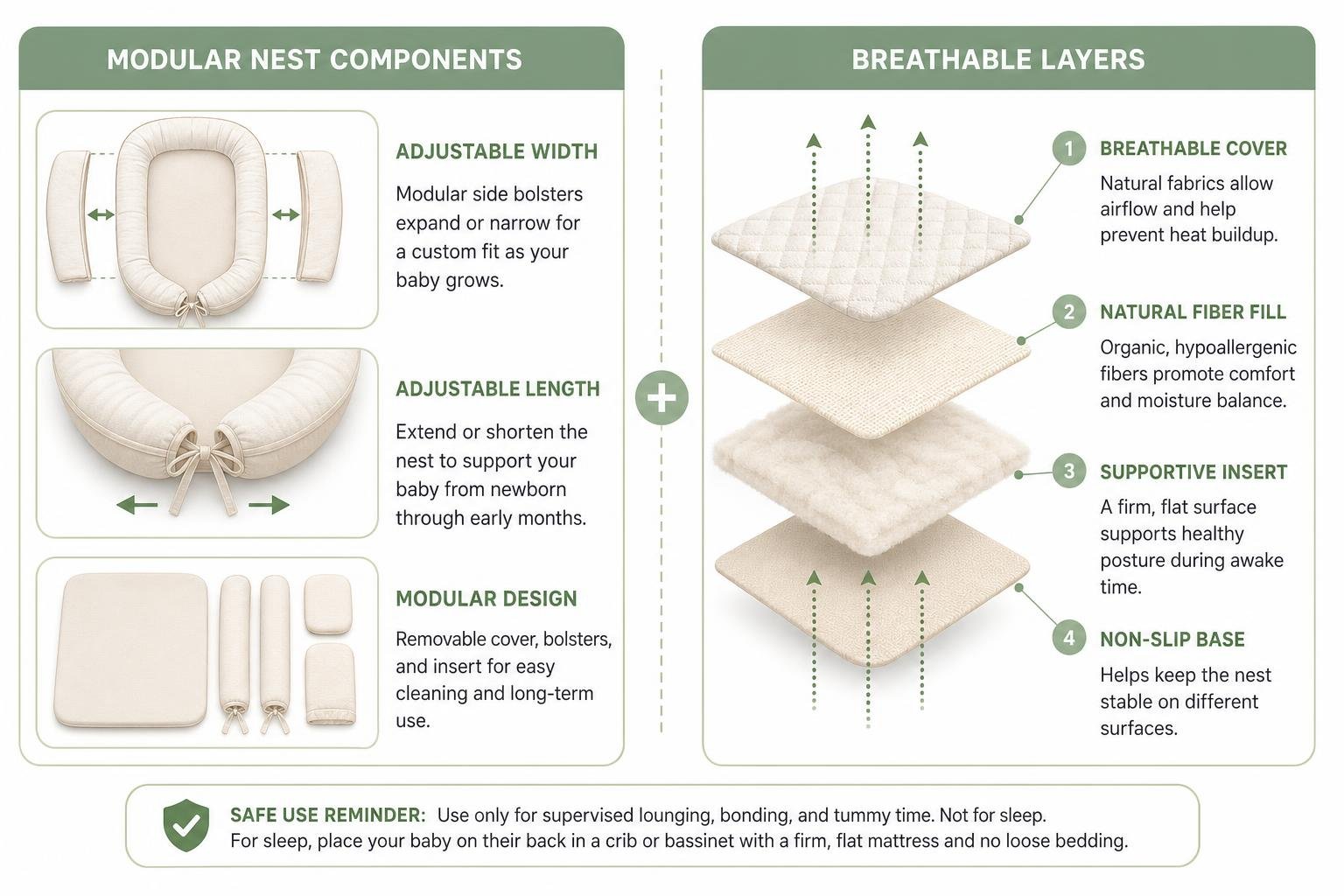
- Breathable, Non-Toxic Materials: Look for natural, chemical-free textiles that facilitate airflow and prevent heat retention around your baby.
- Hypoallergenic Fillings: Organic cotton knits and pure wool fibers naturally deter dust mites, mold, and common household allergens.
- Firm, Supportive Base: A flat, supportive cushion provides optimal alignment for your baby's head, neck, and spine during supervised awake time.
- Thoughtful Adjustment Mechanisms: Premium models utilize gentle ties, soft-touch snap extensions, or modular bolsters rather than harsh plastic clips or loose drawstrings.
How Modular Rest Spaces Support Natural Infant Posture
Infants spend their earliest months adjusting to life outside the womb. A modular, scandinavian design infant nest creates a cozy, contained environment that offers tactile and proprioceptive comfort. By gently supporting the baby's perimeter, a well-structured nest mimics the familiar security of being held, helping calm an overstimulated nervous system.
Proper thermal regulation is equally critical. Natural fibers like pure merino wool and woven cotton breathe dynamically, absorbing and releasing moisture to prevent overheating in summer and chills in winter. Furthermore, clinical study on adjustable pediatric sleep interventions highlights the positive influence of properly fitted micro-environments on infant resting comfort. A medium-firm, balanced lounging surface provides comforting support during supervised awake relaxation and guided tummy time.
Top Styles of Adjustable Newborn Nest Designs
Understanding the different designs on the market allows you to select the style that aligns with your home layout and daily routine. To explore the broader collection of styles, explore our guide on choosing the best baby nest.
Adjustable Size and Fit Features

Adjustable nests typically expand via modular bumpers, extendable foot ends, or dual-stage covers. During the first zero to four months, the nest remains fully fastened to provide a snug embrace. As your baby's legs lengthen and their motor skills develop, opening the bottom ties or transitioning to a wider U-shaped setup extends the usable area. This flexibility delivers enduring value across multiple stages of early infancy without sacrificing aesthetic appeal.
Portable Natural-Fabric Baby Nests
For families on the move, lightweight portable nests offer unmatched practicality. Equipped with integrated soft handles and protective travel bags, these loungers move effortlessly from the bedroom to the living area or patio. Natural linen and cotton covers ensure optimal breathability, keeping awake interaction, daytime soothing, and post-feeding rest gentle and comfortable.
Natural-Fabric Nesting Pods and Loungers
Modular nesting pods crafted from wool and organic knit fabrics deliver incredible versatility. A premium baby nest can often be unzipped to allow its tubular border to serve as a supportive tummy time prop under watchful parental supervision. These multifunctional features provide meaningful sensory engagement while keeping your baby comfortable across their daily routine.
Compact Baby Nests for Small Spaces

For modern nurseries or cozy city apartments, compact nesting solutions deliver generous support without overwhelming your space. Their slender profiles fit neatly on daybeds or nursery rugs, offering convenient storage and quick care thanks to removable, machine-washable covers.
Comparing Adjustable Baby Nest Options
| Nest Style | Age / Developmental Range | Footprint & Portability | Key Materials | Primary Benefit |
|---|---|---|---|---|
| Modular Tie-End Nest | Newborn to ~8+ months (supervised) | Compact; lightweight with handles | Organic Cotton, OEKO-TEX fillings | Expands at base as baby grows; classic aesthetic |
| Modular Wool Pod | Newborn to Toddler (multi-use) | Medium; includes canvas carry bag | Pure Merino Wool, Cotton Knit | Natural thermoregulation; repurposes into play support |
| Compact Travel Nest | Newborn to ~6 months (supervised) | Ultra-compact; foldable structure | Linen-Cotton blends, firm foam base | Ideal for small living spaces and room-to-room transit |
When shopping, review trial periods, return terms, and the availability of spare fitted covers so you always have a clean layer ready for unexpected messes.
Safety Standards, Maintenance, and Use Guidelines
Nothing is more important than your baby's wellbeing. Understanding safe sleep practices for newborns ensures you enjoy all the benefits of a newborn lounger while protecting your child. The American Academy of Pediatrics (AAP) and the U.S. Consumer Product Safety Commission (CPSC) establish clear parameters: loungers and cushioned nests are strictly for supervised awake time, lounging, and interaction—never for unsupervised sleep or use inside a crib, bassinet, or adult bed.
For first-time parents navigating early routines, our guide for first-time parents choosing a newborn nest offers practical setup tips.
How to Adjust a Newborn Nest as Your Baby Grows
Always observe your infant's developmental cues alongside manufacturer guidelines:
- Newborn Stage (0–3 Months): Keep base ties fastened to maintain a snug, secure perimeter for gentle awake lounging.
- Infant Transition (4–6 Months): Unfasten the lower ribbon or zip extension to allow extra room for growing legs and natural movement.
- Milestone Readiness: Discontinue lounger use immediately once your baby shows signs of rolling over, pushing up onto hands and knees, or attempting to crawl out.
Cleaning, Airflow, and Non-Toxic Certifications
Choose baby essentials certified to OEKO-TEX Standard 100, confirming fabrics are free from harmful chemicals, heavy metals, and toxic flame retardants.
To maintain your nest:
- Machine wash removable covers inside out on a gentle, cold cycle with mild detergent.
- Air dry flat to protect fiber elasticity and shape.
- Spot-clean inner cushions promptly and let them dry thoroughly before reassembly.
Frequently Asked Questions About Adjustable Baby Nests
What age and weight limits apply to adjustable nests?
Most adjustable nests accommodate infants from birth up to approximately six to nine months for supervised lounging. However, developmental milestones take precedence over chronological age: discontinue lounger use the moment your baby begins rolling or pushing up.
Can a baby nest be used during room-sharing?
Yes, for supervised daytime awake lounging while you are present in the room. For nighttime sleep and unsupervised naps, your baby should always be placed on their back on a separate, firm, flat mattress in a safety-certified bassinet or crib.
How do you wash and maintain adjustable nesting cushions and covers?
Regularly wash removable outer covers on a gentle cycle, using mild, baby-safe detergents. For wool or delicate natural components, follow manufacturer care labels closely—spot clean or use wool-safe cycles, avoiding high tumble heat.
Conclusion
Finding the ideal nest brings calm, elegance, and practical comfort to your family's daily routine. At CocoMi Baby Boutique, we craft heirloom-quality essentials from certified organic, chemical-free materials designed to support your baby through every early milestone. Explore our online boutique or visit our nursery design and infant care blog to discover beautifully designed baby essentials created by parents, for parents.