

Why Parents Are Turning to Infant Portable Loungers
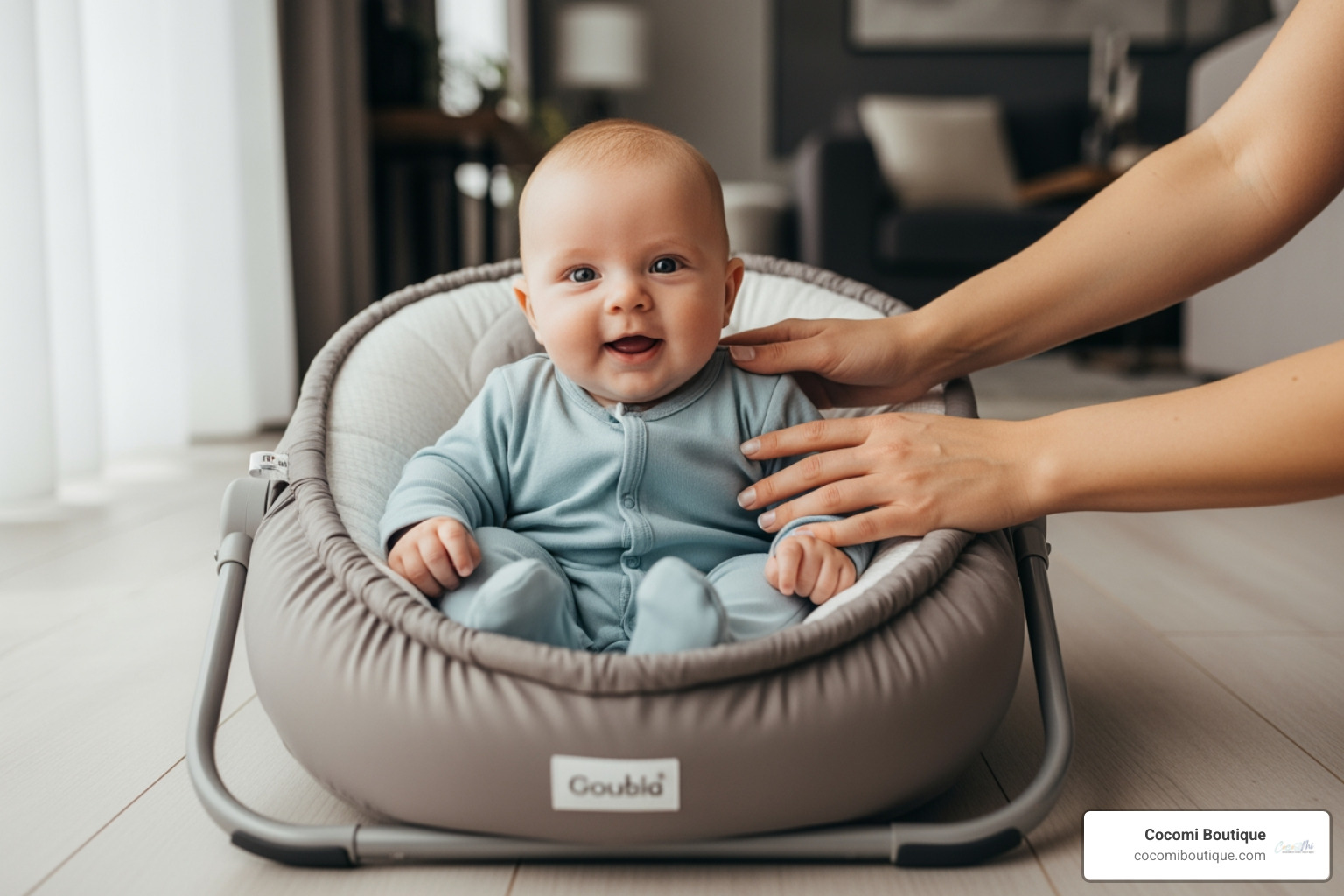
An infant portable lounger is a cushioned, nest-like product providing a cozy space for your awake baby to rest and play under constant supervision. The most critical safety points are:
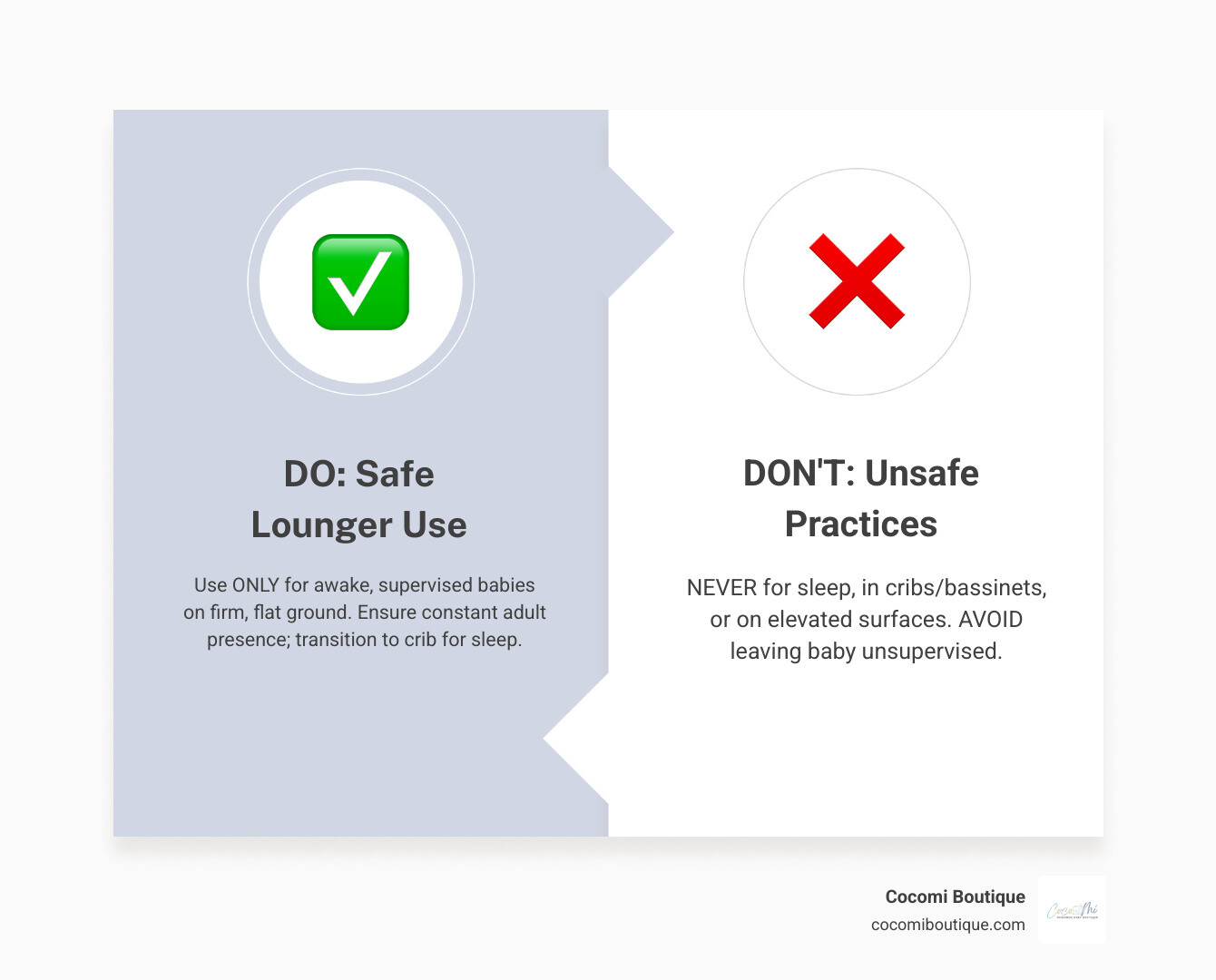
Safe Use Guidelines:
- Only for awake, supervised babies - never for sleep
- Must be on firm, flat ground - never in cribs, bassinets, or on liftd surfaces
- Requires constant adult supervision - always stay in the same room
- Not a sleep device - transition baby to a crib or bassinet for sleep
- Age range - typically for babies 0-9 months, before they can roll or crawl
The idea is simple: when you need your hands free but want your baby close, a lounger creates a secure spot. Many loungers measure around 29 x 17 x 4.5 inches and are designed to "hug" your baby for active engagement.
But here's the critical part: these are not sleeping devices. The American Academy of Pediatrics (AAP) is clear that loungers should never be used for sleep, placed in cribs, or left unsupervised. Understanding these safety boundaries is essential.
I'm Monika Jarog, founder of Cocomi Boutique. I've spent years designing baby essentials from natural, chemical-free materials that meet top safety standards. I've helped countless parents balance comfort and safety when choosing an infant portable lounger.
Simple guide to infant portable lounger terms:
The Golden Rule: Safety Above All Else
When it comes to our little ones, safety is our number one priority, especially with products like an infant portable lounger. While useful for supervised awake time, you must adhere to strict safety guidelines. The American Academy of Pediatrics (AAP) provides clear recommendations that heavily influence how we should use loungers.
The most important rule is that an infant portable lounger is not a sleeping device. This distinction is paramount. Loungers are for active engagement with an awake infant. Their soft, contoured shape can pose a risk of positional asphyxiation if a baby's head slumps and obstructs their airway. This is why constant adult supervision is mandatory.
Always place your infant portable lounger on a firm, flat ground surface. Never put it on soft surfaces like beds or sofas, or in a crib or bassinet. Placing a lounger on an liftd surface presents a significant fall hazard. For a deeper dive into safe sleep environments, read our guide: Nest or No Nest? Decoding Safe Sleep for Your Newborn. Our goal is to provide you with the knowledge to make safe choices.
Can infant loungers be used for feeding or sleeping?
To reiterate, the answer is a resounding no for sleeping. An infant portable lounger is explicitly not designed for sleep. The soft materials create an unsafe sleep environment. If a baby falls asleep in a lounger, immediately move them to a safe sleep space, like a crib or bassinet with a firm, flat mattress and no loose bedding. This rule is critical for preventing Sudden Infant Death Syndrome (SIDS) and accidental suffocation.
Regarding feeding, we advise caution. For babies with reflux, a reclined position in a soft lounger could increase choking risk. It's best to hold your baby upright for feeding or use a dedicated feeding chair. Keep them upright for a short period after feeding to help with digestion. For more insights, check out our article: Crib or Nest? Navigating Safe Sleep for Your Baby.
What are the official recommendations for infant loungers?
Organizations like the American Academy of Pediatrics (AAP) and the Consumer Product Safety Commission (CPSC) are very clear on the safe use of infant portable loungers. Their guidelines consistently emphasize that these products are for supervised awake time only. They should never be used for sleep or napping.
The AAP's "bare is best" approach means cribs and bassinets should be free of anything that could pose a suffocation risk, including loungers. When your baby is in an infant portable lounger, ensure there are no extra blankets or toys around them. The lounger itself should be placed directly on the floor. Our priority is helping you create the safest environment for your little one.
Key Features to Look for in an Infant Portable Lounger
Choosing the right infant portable lounger is about finding a product that meets your family's needs for safety, practicality, and comfort. Key features to consider are materials, portability, ease of cleaning, size, and price. Each aspect affects how well the lounger integrates into your daily life.
What materials are best?
The materials of an infant portable lounger are crucial for your baby's delicate skin and health. We advocate for natural, non-toxic options.
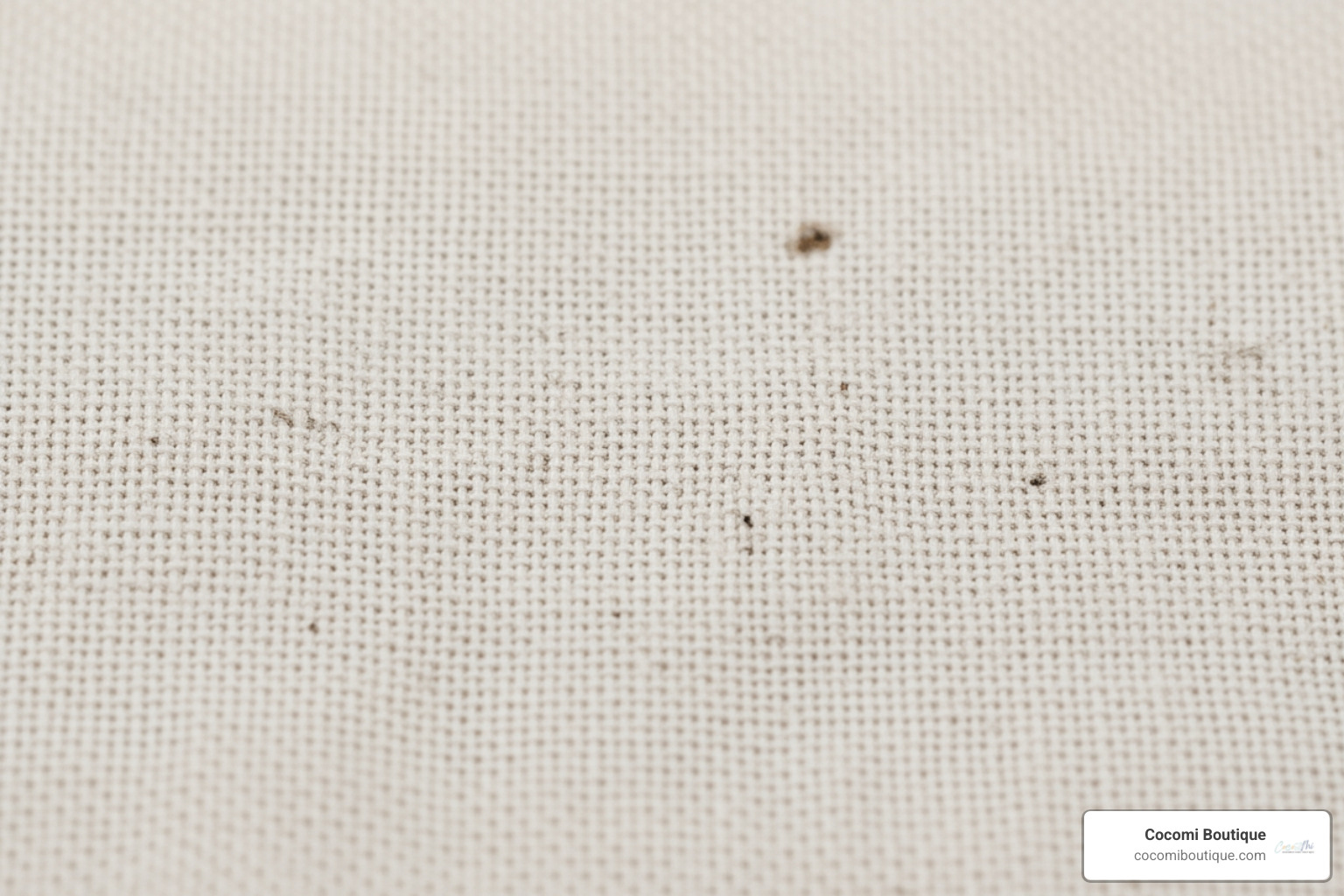
Here is what we consider best:
- Organic Cotton: A top choice for the outer shell, it's soft, breathable, and less likely to contain harsh chemicals.
- Polyester Fiber Fill: A high-quality fill provides support and softness. Ensure it's free from flame retardants and other chemicals.
- Breathable Fabrics: Breathability is crucial to prevent overheating, especially in warmer months in places like Northbrook, IL, or Chicago.
- Hypoallergenic Materials: Choosing hypoallergenic materials helps prevent allergic reactions or skin irritations.
- Chemical-Free and Flame Retardants-Free: This is non-negotiable. Always check product descriptions for these assurances.
Portability and Your Infant Portable Lounger
The "portable" in infant portable lounger is a key benefit. It allows you to easily move it from room to room, keeping your baby close while you go about your day.
When considering portability, look at:
- Dimensions: A typical infant portable lounger is around 29 x 17 x 4.5 inches, compact enough for various spaces.
- Weight: A lightweight design is easy to carry.
- Travel Bags: Some loungers include travel bags, which are great for visits to grandma's house in Deerfield, IL, or for a weekend getaway.
- Ease of Transport: Small details like handles or the ability to be folded make a big difference in daily use.
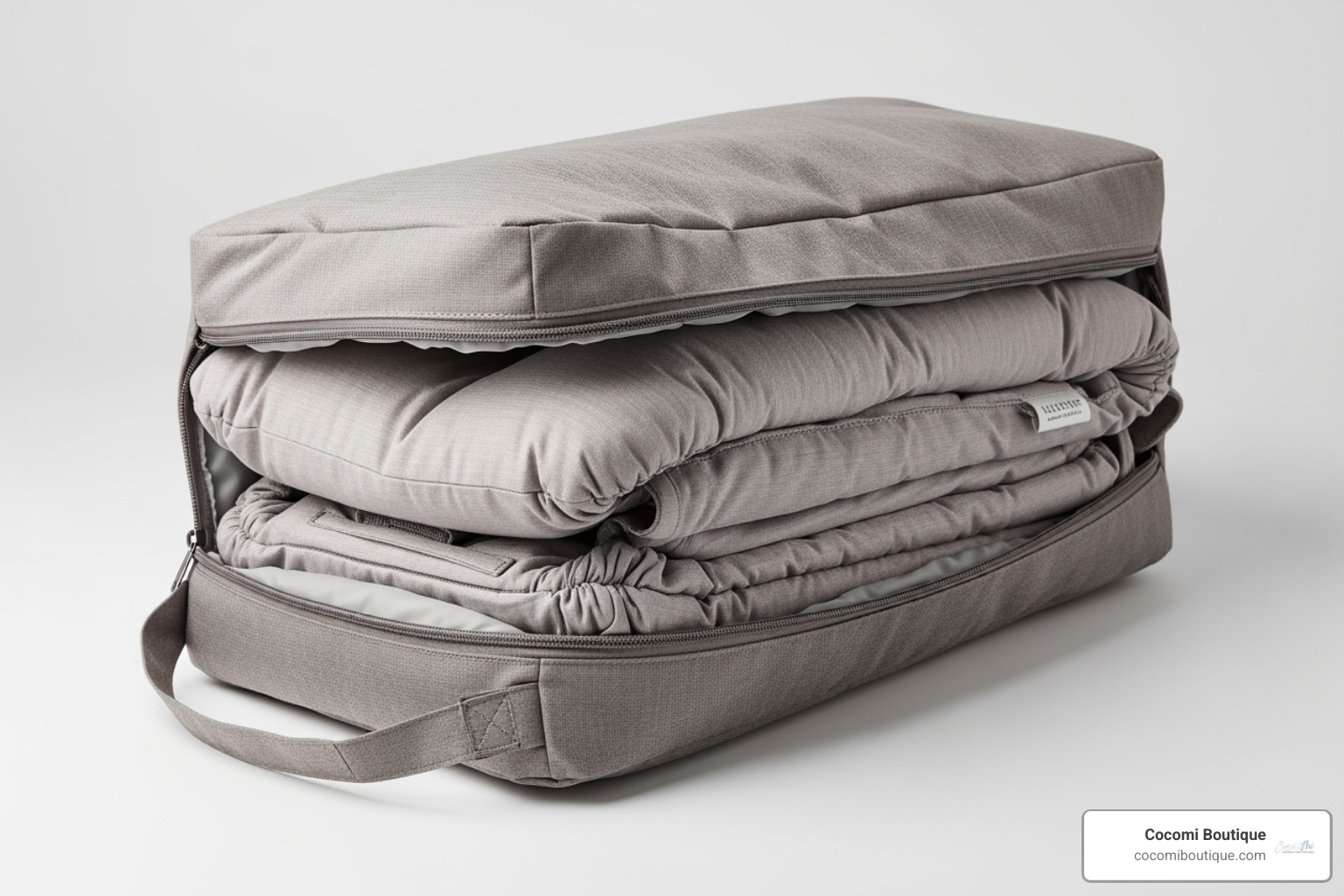
The ability to move your baby's safe space effortlessly is a huge plus for busy parents.
Where can parents purchase infant loungers?
You can find an infant portable lounger at major online retailers, specialty baby stores, and department stores. For those in our local area, like Glenview, IL, or Highland Park, IL, you might find options at local baby boutiques.
Of course, we encourage you to explore the curated selection at the Cocomi Boutique online shop. We focus on quality, care, and customer satisfaction.
Prices for an infant portable lounger can range significantly. While some brands are premium, many budget-friendly options meet safety requirements. It is always wise to read reviews and compare features to find the best fit for your budget. Investing in quality materials is often a wise choice.
Lounger vs. The Rest: Understanding Your Baby Gear Options
The world of baby gear can be overwhelming. It's easy to confuse an infant portable lounger with items like bouncers, swings, and floor seats. While all provide a spot for your baby, their uses, features, and safety guidelines differ. Understanding these distinctions is key to making the right choice.
Here's a quick comparison:
| Feature | Infant Portable Lounger | Bouncer | Swing | Floor Seat |
|---|---|---|---|---|
| Primary Use | Supervised awake lounging, play, tummy time, bonding | Soothing, gentle bouncing motion, entertainment | Soothing, rhythmic swinging motion, entertainment | Supported upright sitting, playtime, feeding |
| Portability | High (lightweight, often compact) | Moderate (can be moved easily) | Low (larger, less mobile) | High (lightweight, compact) |
| Power Source | None | None (manual bounce) or batteries (vibration) | Batteries or plug-in | None |
| Typical Age Range | 0-9 months (pre-rolling/crawling) | Newborn to 6-9 months (or weight limit) | Newborn to 6-9 months (or weight limit) | 3-12 months (once baby has head control) |
| Safety Note | NEVER for sleep; constant supervision on flat ground | Supervised awake time; not for sleep; always on flat ground | Supervised awake time; not for sleep; always on flat ground | Supervised awake time; not for sleep; always on flat ground |
Infant Loungers vs. Bouncers
The main difference between infant portable loungers and bouncers is their function. A lounger is a soft, stationary nest for passive, supervised awake time. It provides a cozy spot for your baby to lie comfortably, observe, or engage in tummy time.
Bouncers are for more active engagement and soothing. They offer a gentle, springy motion, either from the baby's movements or battery power. Many also have toy bars. While both are for supervised awake time and never for sleep, a bouncer soothes with motion, whereas a lounger offers a stationary, "hugged" feeling.
Infant Loungers vs. Swings
The distinction between an infant portable lounger and a swing is clear. A lounger is a stationary item for the floor, valued for its simplicity and portability.
Swings are all about motion. They provide rhythmic, often motorized, swinging to soothe a fussy baby. Swings are generally larger, heavier, and less portable, often requiring power. Like loungers, swings are strictly for supervised awake time and never for sleep. Their larger footprint makes them less ideal for room-to-room transitions compared to a lightweight infant portable lounger.
A Practical Guide to Using and Caring for Your Lounger
Now that we've covered safety and compared loungers to other gear, let's discuss the practicalities of owning one. Proper use and maintenance are key to its longevity and safety. For more comprehensive insights, see The Complete Guide to Baby Nests.
How should an infant lounger be cleaned and maintained?
Babies are messy, so loungers will inevitably need cleaning. Fortunately, many infant portable loungers, like the Snuggle Me, are designed for easy care.
Our best tips for cleaning and maintenance:
- Machine Washable: Always check the care label, but most loungers can be machine washed. Follow the manufacturer's instructions, which often recommend a cold gentle cycle with gentle, dye-free detergents.
- Removable Covers: These make cleaning even easier, as you can wash the cover separately.
- Gentle Detergents: Use baby-friendly, dye-free, and fragrance-free detergents.
- Washing Alone: Wash the lounger by itself to prevent damage and ensure a thorough clean.
- Disable Agitators: If using a top-loader, disable the agitator if possible to protect delicate fabrics.
- Drying Instructions: Air drying on a flat surface, followed by a low tumble dry, is often recommended to maintain the lounger's shape. Avoid high heat.
- Spot Cleaning: For minor spills, spot cleaning with a gentle cleaner can save you from a full wash.
Regular cleaning ensures a hygienic environment for your baby.
What are the signs that a baby has outgrown an infant lounger?
An infant portable lounger is for the early months, but your little one will outgrow it. Knowing when to transition away is crucial for safety.
Most infant portable loungers are suitable for babies 0-9 months. However, watch for these developmental milestones:
- Rolling Over: This is a major sign. Once your baby can roll consistently, the lounger becomes unsafe as they could obstruct their breathing.
- Increased Mobility: If your baby is scooting or showing signs of crawling, the lounger is less secure.
- Pushing Up: If they can push themselves up, they might push themselves out of the lounger.
- Manufacturer Weight Limits: Always adhere to the specified weight limit.
- Strong Crawler: For toddler loungers, the transition is typically around 12 months+ for strong crawlers who can correct their own position. This emphasizes that even toddler versions are for active, mobile children.
Frequently Asked Questions about Infant Loungers
Parents have many questions about new baby products, especially regarding safety and comfort. Here, we address common inquiries about infant portable loungers.
What is the correct age range for an infant lounger?
Generally, an infant portable lounger is for newborns up to about 9 months. The Snuggle Me Infant Lounger, for example, is for babies 0-9 months. This range is based on developmental milestones.
The critical cutoff is when your baby starts to roll over. Once a baby can roll, the risk of them getting into an unsafe position increases. Therefore, even if your baby is under 9 months, if they are an active roller, it's time to discontinue using the infant portable lounger. Always refer to the manufacturer's specific age and weight recommendations.
Can I put the lounger inside a crib or bassinet?
Absolutely not. This is a critical safety rule. Never place an infant portable lounger inside a crib, bassinet, or playard. It introduces a suffocation risk by creating soft spots and restricting airflow.
The AAP's safe sleep guidelines are clear: keep the sleep environment bare. This means no pillows, blankets, bumpers, or loungers in the crib. For more on this, review The truth about newborn snuggle nests: safety, benefits, and what to consider. Your baby should always sleep on a firm, flat surface.
How do I ensure my baby is safe while using the lounger?
To ensure your baby's safety in an infant portable lounger, consistently follow these key rules:
- Constant Adult Supervision: This is the golden rule. A lounger is only for supervised awake time. Never leave your baby unattended, even for a moment.
- Use Only on the Floor: Always place the lounger on a firm, flat ground surface. Never use it on liftd or soft surfaces like beds or sofas.
- Baby Must Be Awake: The lounger is for play, not sleep. If your baby falls asleep, immediately move them to a safe sleep space like a crib.
- Place Baby on Their Back: Always place your baby on their back in the lounger to reduce the risk of positional asphyxiation.
- Keep Lounger Free of Extras: Do not add blankets, pillows, or toys to the lounger, as they are suffocation hazards.
Following these guidelines rigorously allows you to safely enjoy the benefits of an infant portable lounger.
Conclusion: A Cozy and Safe Spot for Your Little One
Choosing baby gear can be exciting and a bit anxious. For an infant portable lounger, the key takeaway is that it's a wonderful tool for supervised, awake-time interaction and comfort. It offers a cozy, contained space for your baby to relax or engage in tummy time while you manage other tasks. Its portability, from your living room in Riverwoods, IL, to your kitchen in Northfield, IL, makes it a valuable addition to your daily routine.
However, safety is paramount. An infant portable lounger is never a sleep device, and constant adult supervision is required. By prioritizing safety and following our recommendations, you can confidently use a lounger to provide a comfortable spot for your little one's awake moments.
Just as you choose the safest gear, we at Cocomi Boutique believe in wrapping your baby in comfort with high-quality, chemical-free apparel. Our commitment to quality and care supports your journey through parenthood.
We hope this guide has helped you make an informed decision. For more tips on creating a safe and comfortable world for your baby, we invite you to explore our blog: Find more tips and insights on our blog. We're here to help you snuggle up, safely and stylishly.