

Why Soft Muslin Baby Blankets are the Gold Standard for Newborns
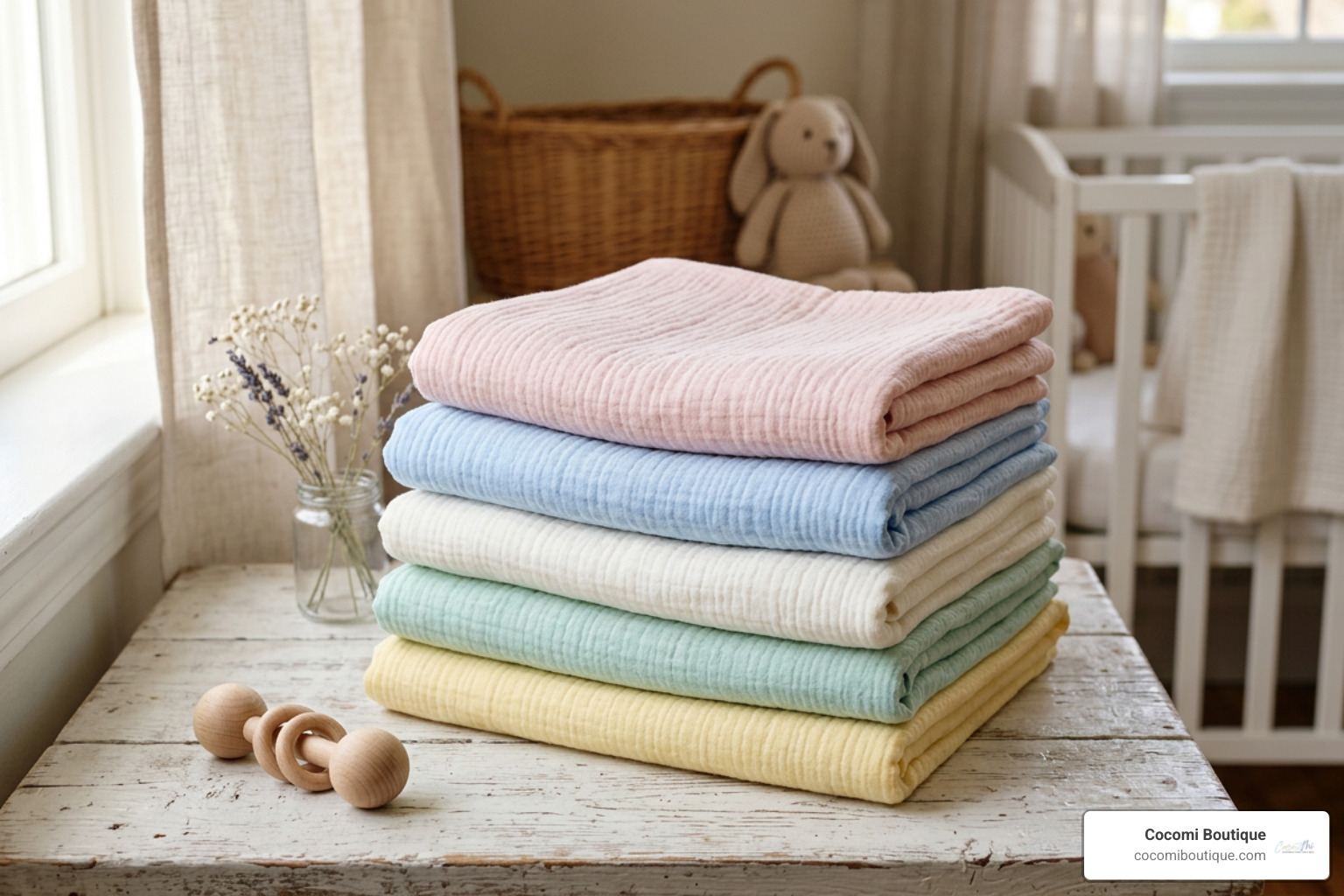
Soft muslin baby blankets are among the most practical and gentle essentials you can buy for a newborn. Here's a quick overview of what makes them worth choosing:
What makes soft muslin baby blankets a top pick:
- Breathable - the open weave allows airflow, reducing overheating risk
- Hypoallergenic - gentle on sensitive newborn skin
- Gets softer with every wash - unlike many fabrics that wear down
- Versatile - works as a swaddle, nursing cover, burp cloth, stroller shade, and more
- Lightweight - easy to layer without bulk
- Available in organic options - GOTS-certified cotton for eco-conscious parents
Standard sizes range from 44" x 44" to 47" x 47", giving you enough fabric to swaddle comfortably.
Choosing the right baby blanket feels like a big decision — and it should. Your newborn's skin is delicate, their temperature regulation is still developing, and the blanket you pick will be with them through countless naps, feeds, and quiet moments. Getting it right matters.
Muslin has been trusted by parents for generations, and for good reason. Its unique loosely woven structure makes it naturally breathable, soft, and safe — everything a baby blanket needs to be. Whether you're building a registry, shopping for a gift, or simply stocking up before your due date, this guide walks you through everything you need to know.
I'm Monika Jarog, a baby essentials designer with hands-on experience crafting and curating soft muslin baby blankets and other natural-material nursery products built to meet the highest safety standards. Read on for an in-depth look at fabrics, sizing, care, and the best options available today.
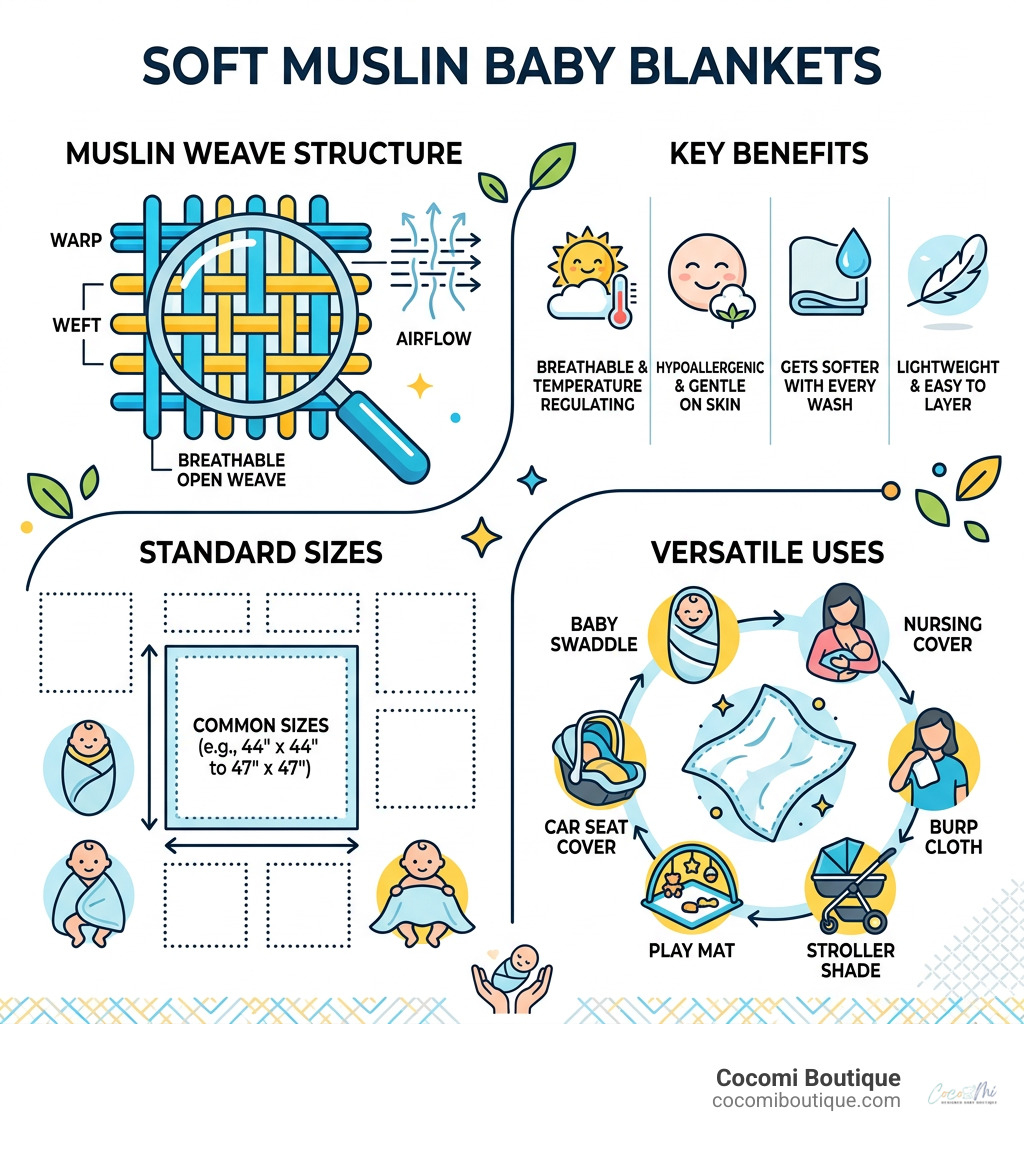
When we talk about the "gold standard" for newborns, we aren't just talking about aesthetics. There is a deep-rooted technical reason why muslin has remained the favorite of parents from Chicago to the North Shore for decades. At its core, muslin is a loose, plain-weave cotton material. However, the high-quality soft muslin baby blankets we use today often utilize a specific technique known as a Leno weave or "pocket weave."
In a Leno weave, two layers of thin fabric are woven together in a large grid pattern. This creates tiny "pockets" of air between the layers. These pockets are the secret to the fabric's incredible temperature regulation. They trap just enough heat to keep a newborn cozy during a breezy walk in Glenview but allow excess heat to escape so the baby doesn't sweat or overheat.
Beyond temperature control, these blankets are highly absorbent and moisture-wicking. If your little one has a bit of "spit-up" or if the humidity hits in Buffalo Grove, the cotton yarns pull moisture away from the skin, keeping the baby dry and comfortable. Furthermore, because high-quality muslin is made from natural fibers and often uses AZO-free dyes or European inks, it is naturally hypoallergenic. This makes it the safest choice for a baby’s sensitive skin, which is much thinner and more prone to irritation than adult skin.
For parents interested in the broader impact of their purchases, scientific research on textile sustainability highlights how natural fibers like cotton are often more biodegradable and environmentally friendly than synthetic alternatives. When you choose a 100% cotton muslin blanket, you are choosing a product that is as kind to the planet as it is to your baby. To understand more about how this fabric is constructed, you can explore our muslin explained: from weave to wonder deep dive.
The Science of Breathability in Soft Muslin Baby Blankets
The term "breathable" gets thrown around a lot in baby gear, but in the context of soft muslin baby blankets, it has a very specific meaning. Because of the open weave structure, air can flow freely through the fibers. This is a critical safety feature. Newborns cannot regulate their body temperature as efficiently as adults, and overheating is a known risk factor during sleep.
By using a lightweight, open-weave blanket, you ensure constant airflow. This prevents the "hot house" effect that can happen with heavy fleece or synthetic blankets. This breathability is why muslin is often featured in any complete guide to muslin blankets. It provides that "weightless" comfort that mimics the security of the womb without the danger of trapped heat. For parents in our local Illinois communities—from the windy streets of Chicago to the quiet nurseries of Riverwoods—having a blanket that adapts to both indoor heating and outdoor strolls is an absolute must.
Comparing Fabric Types: Cotton vs. Bamboo vs. Organic Muslin
Not all muslin is created equal. Depending on your baby’s needs and your personal preferences, you might find yourself choosing between three main categories.
| Fabric Type | Key Features | Best For |
|---|---|---|
| Classic Cotton Muslin | Durable, gets softer with age, highly breathable. | Everyday use, heavy rotation, long-lasting durability. |
| Bamboo-Infused Muslin | Silky texture, moisture-wicking, temperature regulating. | Sensitive skin, warmer climates, parents who want "extra soft" feel. |
| Organic Cotton Muslin | GOTS-certified, pesticide-free, eco-friendly. | Eco-conscious parents, babies with extreme skin sensitivities. |
Classic Cotton Muslin is the workhorse of the nursery. It’s a 100% cotton weave that is incredibly resilient. One of the "magic" properties of cotton muslin is that the fibers actually relax and bloom with every wash, meaning the blanket gets softer the more you use it.
Bamboo-Infused Muslin (often a blend of cotton and rayon from bamboo) offers a "heavenly" feel. Research shows that 100% rayon made from bamboo is exceptionally gentle on sensitive skin and provides a silky-soft texture right out of the box. If you are looking for that "premium" drape and a cooling effect, check out our benefits of bamboo muslin.
Organic Muslin is the gold standard for purity. These blankets are made from cotton grown without the use of toxic pesticides or synthetic fertilizers. Look for the GOTS (Global Organic Textile Standard) certification, which ensures the product meets high ecological and social standards from farm to factory. You can read more in our guide to organic muslin goodness.
Choosing the Best Soft Muslin Baby Blankets for Your Nursery
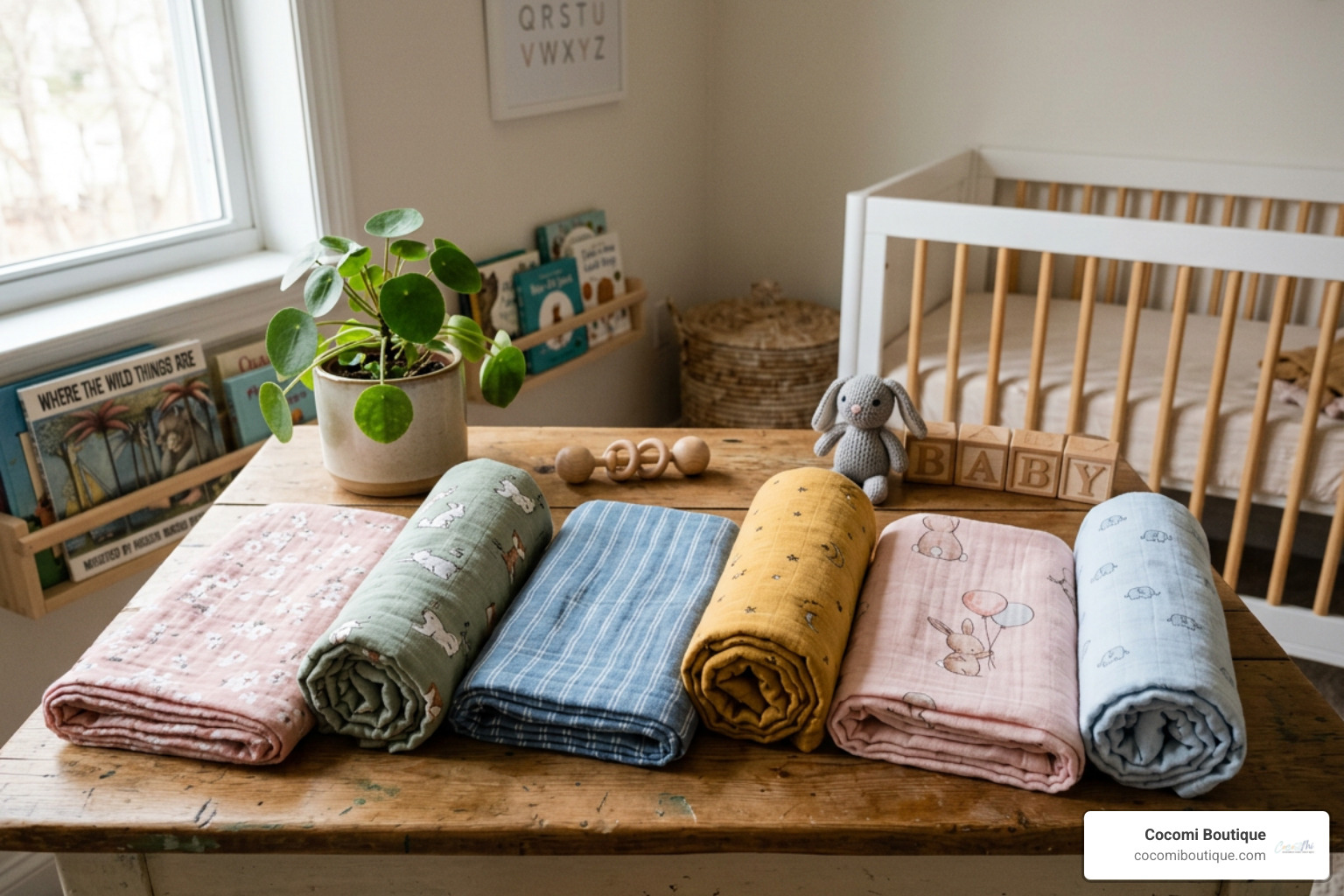
At Cocomi Boutique, we believe that a baby blanket should be as beautiful as it is functional. Our collection features artisanal, hand-drawn designs that turn a simple swaddle into a cherished keepsake. Whether you are looking for the prettiest floral muslin patterns for a classic nursery or modern watercolor prints featuring animals and planets, there is a style for every family.
For those planning a gender-specific nursery, we offer a range of pink muslin options and blue themes, alongside a wide variety of gender-neutral styles like sage stripes, mustard yellows, and earthy rust tones. We even offer personalized baby blankets which make for the perfect "welcome home" gift for new parents in Northbrook or Highland Park.
Versatile Uses and Sizing for Modern Parents
One of the most common questions we hear is: "What size should I get?" While sizes vary by brand, the industry standard for a high-quality swaddle is approximately 47" x 47" (120cm x 120cm). This "extra-large" size is intentional. It provides enough fabric to securely wrap a newborn of any size, ensuring the swaddle doesn't come undone during the night.
However, the beauty of soft muslin baby blankets is that they are never "just" a swaddle. Their versatility is legendary among experienced parents. Here are just a few ways you can unlock the magic of muslin uses:
- Stroller Sun Shield: Drape it over the stroller to protect your baby from the sun while allowing air to circulate.
- Nursing Cover: The breathable fabric provides privacy without making the baby (or you!) too hot during feedings.
- Burp Cloth: Because it's so absorbent, it’s perfect for throwing over your shoulder during post-meal burpings.
- Tummy Time Mat: Lay it down on the grass at a park in Winnetka or on your living room floor for a clean, soft surface.
- Changing Pad Cover: In a pinch, a folded muslin blanket makes a great makeshift changing station.
As your baby grows, these blankets transition into toddler blanket favorites. Many children become attached to the soft texture of their muslin swaddles, using them as "lovies" or lightweight security blankets well into their preschool years. Because of this multi-purpose nature, we always recommend buying in multi-packs to ensure you always have a clean one ready in your diaper bag.
Care and Safety Tips for Longevity
To keep your soft muslin baby blankets in top condition for years (and perhaps even for future siblings), proper care is essential. Most muslin blankets are pre-washed for softness, but they will continue to improve with age if handled correctly.
Washing Instructions:
- Machine Wash Cold: Keep the temperature at or below 30°C (80°F) to protect the cotton fibers.
- Use Gentle Detergent: Avoid harsh chemicals or bleaches that can break down the natural yarns.
- Tumble Dry Low or Air Dry: While many muslin blankets can be tumbled dried on a low setting, laying them flat to dry helps maintain the integrity of the weave.
- Do Not Iron: The characteristic "crinkle" of muslin is part of its charm and actually increases its surface area for better absorbency.
Safety Considerations: Safety is our number one priority. When selecting a blanket, ensure there are no loose yarns, tassels, or small attachments that could become a choking hazard. Check for secure stitching along the edges. For sleep safety, always follow the "Back to Sleep" guidelines and ensure that once a baby can roll over, you transition from a snug swaddle to a wearable blanket or sleep bag. For more details, consult our cotton muslin safety guide.
Innovation in textiles continues to improve these products. If you're interested in how materials are tested for safety and durability, research on material science and innovation shows the rigorous standards modern manufacturers use to ensure consumer products are safe for the most vulnerable users.
Frequently Asked Questions about Muslin Swaddles
How many muslin swaddles does a new parent typically need?
While there is no "magic number," most parents find that having 4 to 6 high-quality muslin swaddles is the sweet spot. This allows for one in use, one in the diaper bag, one in the wash, and a few spares for those inevitable "messy" days. If you're interested in learning more about building your nursery kit, check out our article all about muslin baby blankets.
Does muslin fabric get softer after washing?
Yes! This is one of the most unique properties of cotton muslin. The loose weave allows the cotton fibers to "relax" and expand slightly with each wash, resulting in a fabric that feels increasingly plush and soft against the skin. This is why a well-loved muslin blanket often becomes a child's favorite comfort object. For more on seasonal comfort, see our summer comfort guide.
Is organic cotton muslin better for sensitive skin?
Absolutely. Organic cotton is grown without synthetic pesticides or fertilizers, which means the final fabric is free from residual chemicals that could irritate a newborn's skin. Its natural hypoallergenic properties make it the ideal choice for babies with eczema or general skin sensitivity. Learn more about the organic cotton benefits for your little one.
Conclusion
Investing in high-quality soft muslin baby blankets is one of the smartest moves a new parent can make. Not only do they provide the essential breathability and comfort your newborn needs for a good night's sleep, but their incredible versatility ensures they will remain a staple in your home for years to come. From those first hazy days of swaddling to toddler picnics and beyond, a good muslin blanket is more than just a piece of fabric—it's a milestone companion.
At Cocomi Boutique, we are proud to serve families across the Illinois area—from Northbrook and Deerfield to Glencoe and beyond—with the softest, safest, and most stylish baby essentials. Ready to find the perfect blanket for your little one? Explore our full collection of soft muslin baby blankets and discover the difference that quality makes.