

Swaddle With Muslin for a Safer, Calmer Newborn Sleep

To swaddle with muslin, lay a large, lightweight muslin square in a diamond shape, fold down the top corner, and place your baby on their back with shoulders just below the fold. Wrap the arms and chest snugly, keep the face clear, and leave the legs loose enough to bend and move. You should be able to slide a hand between the wrap and your baby's chest.
Muslin is a soft, open-weave cotton fabric that allows air to circulate. This makes it a thoughtful choice for newborn skin and for parents who want gentle comfort without a heavy layer. A secure swaddle can also reduce sudden arm movements that wake some newborns, helping recreate the close, settled feeling of the womb.
At CocoMi Boutique, we value premium, natural, chemical-free fabrics and OEKO-TEX certified materials chosen with delicate newborn skin in mind. Whether you are preparing for your own baby or choosing an elegant gift, a well-made muslin swaddle is a beautiful essential with a practical purpose.
Our handcrafted baby essentials are designed around comfort, safety, and everyday practicality. In this guide, you will discover how to swaddle with muslin while keeping your baby's breathing, temperature, and hip movement front of mind.
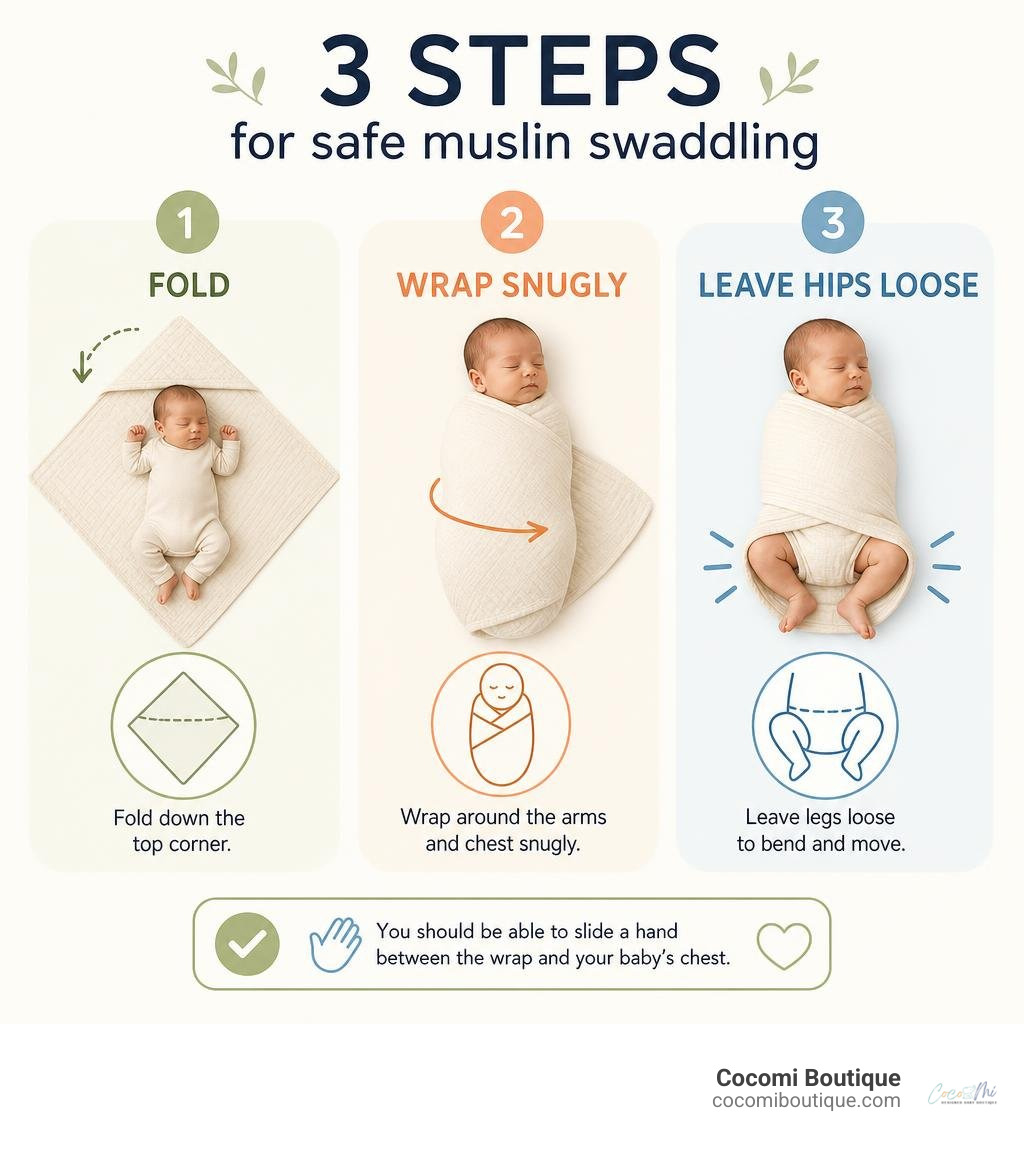
Simple guide to swaddle with muslin:
Why Muslin Fabric Is the Gold Standard for Swaddling
Why Parents Choose to Swaddle with Muslin
Welcoming a newborn into the world means adapting to a delicate transition from the security of the womb to an open, sensory-filled environment. During these early months, the Moro reflex (the natural startle reflex where a baby's arms suddenly extend) can startle an infant awake mid-slumber. Swaddling recreates that gentle containment, yet the choice of fabric makes all the difference in ensuring both peace of mind and pure comfort.
Muslin stands apart as the premier fabric for infant wrapping. Woven from finely spun natural cotton threads using an open, plain weave, muslin facilitates continuous airflow. This natural breathability helps regulate a baby’s body temperature, significantly reducing the risk of overheating—a critical safety priority for pediatric sleep guidelines.
Furthermore, we believe that everything touching a newborn’s skin should be pure and gentle. Selecting natural, chemical-free textiles certified to European OEKO-TEX standards guarantees that the fabric is free from harmful dyes, heavy metals, and irritating treatments. When you wrap up in comfort with muslin swaddles, you provide an ultra-soft layer that grows even softer with every single wash, aging gracefully while maintaining structural integrity.
| Fabric Type | Breathability & Airflow | Skin Sensitivity & Purity | Thermal Regulation | Longevity After Repeated Washes |
|---|---|---|---|---|
| 100% Pure Muslin Cotton | Exceptional (open-weave prevents heat buildup) | Gentle, chemical-free, hypoallergenic | Self-regulating across seasons | Becomes softer over time |
| Standard Jersey Cotton | Moderate (tighter knit structure) | Soft, but can trap body warmth | Moderate warmth retention | Prone to pilling and stretching |
| Synthetic Fleece / Polyester | Low (dense fibers trap heat and sweat) | Can trigger skin irritation and rashes | High heat retention (risk of overheating) | Retains static and synthetic odors |
Multi-Use Versatility of Muslin Blankets
Beyond sleep time, a generously sized muslin wrap serves as a versatile essential across your entire daily routine. Thanks to its lightweight nature and quick-drying weave, a premium muslin piece transitions seamlessly throughout the nursery and on the go:
- Elegant Nursing Cover: Drape the airy fabric over your shoulder for privacy and breathability during feeding sessions.
- Ultra-Absorbent Burp Cloth: Fold the wrap into layers to catch spills and protect delicate clothing.
- Stroller Sun Shade: Shield your resting baby from gentle breezes and bright natural light while maintaining complete airflow.
- Purity Tummy Time Mat: Lay the clean textile over nursery rugs or wooden floors for a clean, natural play space.
For grandparents and friends seeking the ideal baby shower present, a curated muslin swaddle gift set combines European craftsmanship with timeless practicality, ensuring the textile remains an indispensable part of early childhood long past the newborn stage.
How to Swaddle with Muslin in 3 Simple Steps
Wrapping your baby safely does not require complicated maneuvers. By following these three clear, repeatable steps, you can create a secure, soothing swaddle every single time.
Step 1: Lay the Muslin Diamond and Fold the Top Corner
Begin by preparing a clean, flat surface, such as the center of a wide changing table, nursery dresser, or a firm mattress.
- Spread your square muslin blanket out flat so it forms a diamond shape, with one pointed corner pointing straight up away from you.
- Take the top corner and fold it down toward the center by about 6 to 8 inches, creating a straight horizontal edge along the top.
- Gently place your baby on their back in the center of the blanket, positioning their neck and shoulders along the newly folded edge. Ensure the baby's ears and face are clear above the fabric line.
For visual learners, watching a trusted pediatric nurse swaddling tutorial demonstrates just how straightforward diamond positioning can be.
Step 2: Secure Your Baby’s Right Arm and Torso
Once your baby is settled, gently hold their right arm naturally down alongside their torso or resting softly across their chest.
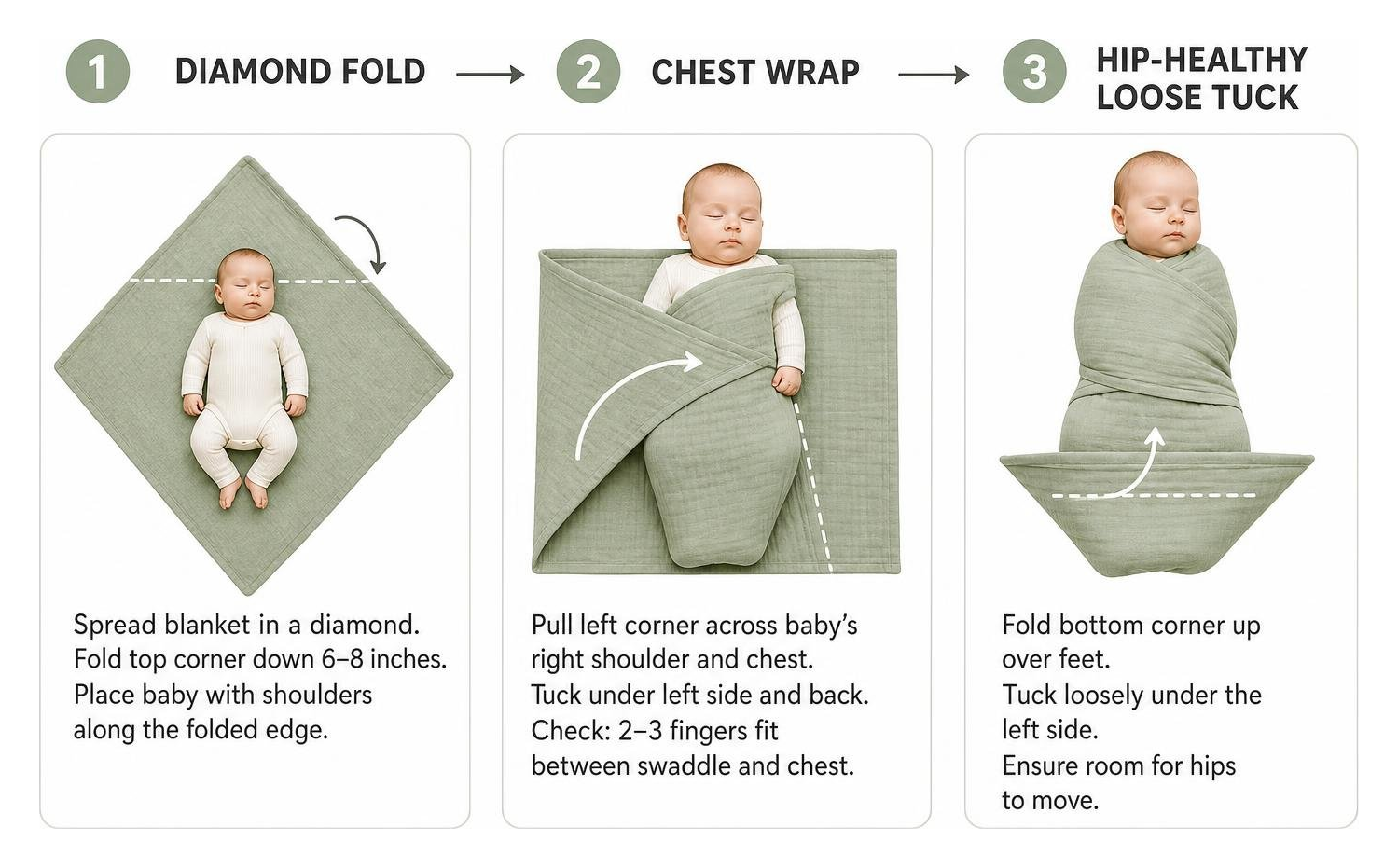
- Take the blanket’s left corner (from your perspective) and pull it snugly across your baby’s right shoulder and chest.
- Smooth the fabric neatly across their body and tuck the end securely under their left side and back, using their own body weight to keep the fold in place.
- Perform a quick chest check: reference our swaddling blanket complete guide to ensure you can easily slide two to three fingers—or your flat hand—between the swaddle and your infant's chest to confirm unrestricted breathing.
Step 3: Fold the Bottom and Tuck the Left Side
The final step completes the wrap while preserving essential space for developing joints.
- Gather the bottom corner of the diamond at your baby's feet and fold it upward over their legs, bringing the tip toward their chest. Crucial: Keep this bottom pouch loose and roomy. Your baby's legs must remain free to bend at the knees and flex outward in a natural "frog-leg" position to support healthy hip development and prevent hip dysplasia.
- Secure your baby’s left arm by holding it comfortably at their side.
- Take the remaining right corner of the wrap, pull it smoothly across their chest, and wrap it around their back, tucking any excess fabric neatly under their body.
Review our step-by-step principles for mastering the muslin swaddle to ensure the wrap remains snug around the torso while staying completely flexible at the base.
Crucial Safety Guidelines and Stage Transitions

Essential Safety Rules to Swaddle with Muslin
Safety must always guide sleep practices. While natural muslin enhances comfort, adhering to established safe sleep standards provides vital protection:
- Always Place Baby on the Back: Swaddled infants must strictly be placed on their back to sleep. Never place a swaddled newborn on their side or tummy.
- Avoid Overheating: Dress your newborn in a light, single-layer onesie beneath the muslin wrap. Maintain a nursery room temperature between 68°F and 72°F (20°C to 22°C). Periodically check your baby's chest or the back of their neck to ensure their skin is warm and dry, not sweaty.
- Maintain Hip-Healthy Freedom: Never pull blankets tight around the knees or force the legs straight down. The International Hip Dysplasia Institute emphasizes that hips must be allowed to flex up and spread apart naturally.
- Clear the Sleep Space: Ensure no loose blankets, pillows, bumpers, or soft toys enter the bassinet or crib. For complete best practices, review the ultimate guide to safe swaddling for newborns.
When and How to Transition Away from the Swaddle
Swaddling is a temporary technique tailored specifically to the first few months of life. As babies build muscle strength, their sleep needs evolve.
- Watch for Rolling Milestones: The moment your baby shows early signs of attempting to roll over—typically between 2 and 3 months of age—it is time to stop swaddling their arms. A swaddled baby who rolls onto their stomach cannot use their arms to reposition their head, presenting a safety hazard.
- The One-Arm Transition: Begin by wrapping your baby with one arm released outside the muslin fold for several nights, allowing them to adjust to motor freedom while retaining core security.
- The Two-Arm Milestone: Release both arms, wrapping only the torso, before moving entirely to open-arm sleeping sacks.
Consult our detailed swaddle savvy handbook for smooth milestone transitions that protect your family's restful sleep routines.
Frequently Asked Questions About Muslin Swaddling
How tight should a muslin swaddle be?
A proper swaddle should feel like a gentle, reassuring embrace—snug around the shoulders and torso to suppress the startle reflex, yet never constricting. Always verify using the "hand-slide test": you should comfortably fit your flat hand between the fabric and your baby's ribcage. If the wrap restricts chest expansion during breathing, loosen the fold immediately.
What size muslin blanket is best for swaddling?
Generously sized square blankets measuring between 43 × 43 inches (110 × 110 cm) and 47 × 47 inches (120 × 120 cm) offer the ideal balance. Smaller receiving blankets often come untucked as babies move, creating loose fabric in the crib. A full-sized square provides ample material for secure tucking while accommodating your baby's rapid growth throughout their first twelve weeks. Explore our perfect muslin swaddle blanket guide to choose dimensions tailored to your nursery needs.
What should I do if my baby resists being swaddled?
Every infant possesses a distinct personality. If your little one fusses or fights having their arms tucked straight down, try the hands-up swaddle technique, tucking their hands close to their chin or cheeks so they can self-soothe. Alternatively, leave both arms completely free while wrapping the torso snugly. If your baby consistently resists wrapping, respect their cues and transition directly to an open sleeping sack.
Conclusion
Swaddling is an art rooted in nurturing touch and thoughtful care. By choosing natural, chemical-free fabrics crafted to strict OEKO-TEX safety standards, you give your baby a safe, pure foundation for restful sleep. At CocoMi Baby Boutique, our collection of handcrafted baby nests, Moses baskets, and luxury muslin textiles is designed by parents who believe that timeless elegance and infant safety should always go hand in hand.
Take a moment to discover handcrafted nursery essentials and guides in our boutique collection, and create a calm, beautiful sleep space tailored to your newborn’s first treasured months.