

What Is a Sleep Sack for Babies and Why Is It Safer Than Loose Blankets?
A sleep sack for babies is a sleeveless, zipped wearable blanket engineered to keep infants warm and snug without the hazards associated with traditional bedding. Major health and safety organizations, including the American Academy of Pediatrics (AAP) and the IDHS Infant Safe Sleep Guidelines, recommend a clear crib environment free of loose blankets, pillows, and soft toys. Loose blankets pose significant risks of accidental suffocation, entrapment, and sudden infant death syndrome (SIDS), as an infant can easily pull a blanket over their face or become entangled during sleep.
By securely enclosing the chest and feet while leaving the arms free (or convertible), a wearable blanket maintains an even thermal environment and stays in place all night long. Beyond preventing suffocation hazards, wearable blankets help prevent accidental overheating—a known risk factor for SIDS—by ensuring air circulation around the arms and shoulders. To learn more about creating an optimal sleep sanctuary, read our guide on Crib or Nest: Navigating Safe Sleep.
Key Safety Features to Look for in a Sleep Sack for Babies
When choosing a sleep sack for babies, evaluating specific construction details ensures maximum security and comfort throughout the night:
- Snug Neckline and Tailored Armholes: The neck opening should fit comfortably against your baby’s neck without gaping. Proper armhole sizing prevents an infant’s arms and head from slipping inside the garment.
- Bell-Shaped Bottom for Hip Health: Medical experts emphasize the importance of hip-healthy design. The lower bag must feature a wide, bell-shaped bottom that allows your baby to bend their legs freely into a natural "frog-leg" position.
- Two-Way Zippers and Protective Zipper Guards: Double-ended zippers simplify late-night diaper changes by allowing you to unzip from the bottom without opening the entire chest area. Internal zipper covers and soft neck guards prevent metal or plastic edges from scratching tender newborn skin.
- Unweighted Design: Medical consensus and pediatric guidelines explicitly warn against weighted wearable blankets or weighted swaddles. Added weights can compress an infant’s chest, restrict diaphragm movement, raise body heat dangerously, and hinder natural self-soothing or rolling reflexes.
Transitioning from Swaddles to Wearable Blankets
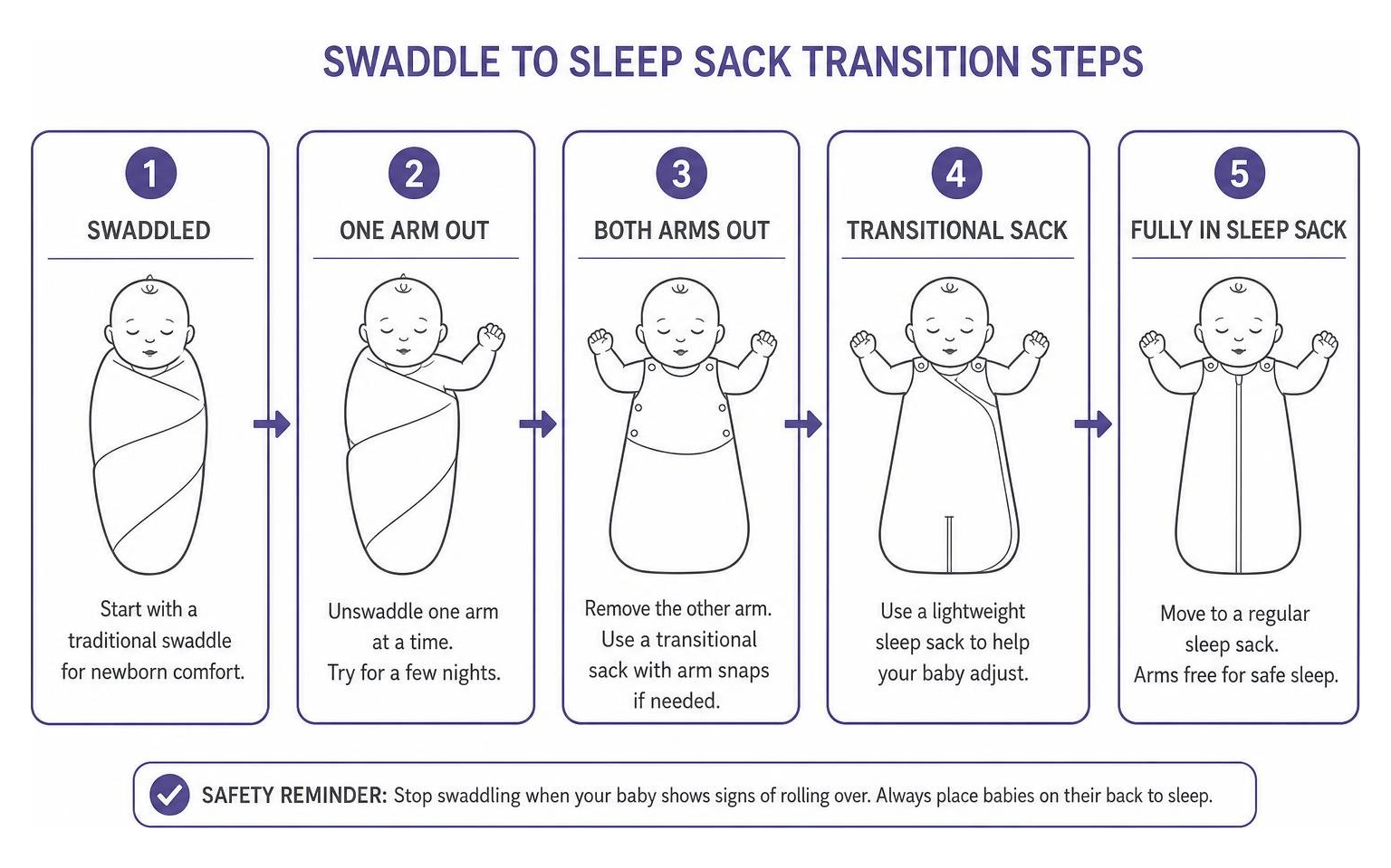
Swaddling is wonderful for soothing newborns, but as soon as your baby shows early signs of trying to roll over—typically around 3 to 4 months of age—it is vital to discontinue arm restraint immediately. A rolling baby needs their arms fully free to push up off the mattress if they turn onto their belly.
Transitioning to an arms-out sleep sack for babies allows your infant to maintain the cozy torso feeling they love while keeping their arms free for safe mobility. Convertible 3-in-1 swaddle sacks with arm snaps offer an ideal bridge during this milestone, allowing you to transition one arm out at a time over a few nights before moving completely to arms-out sleepwear. For deeper guidance on early sleep stages, explore The Ultimate Guide to Safe Swaddling.
Master TOG Ratings: Choosing the Right Warmth for Nursery Temperatures
TOG stands for Thermal Overall Grade, an international standard unit of measurement used to calculate the thermal insulation and warmth of baby sleepwear and textiles. Unlike adult bedding, wearable blankets are graded by precise TOG ratings so parents can choose the right warmth level without adding unsafe loose blankets.
Matching the correct TOG rating to your nursery temperature eliminates guesswork and protects your baby from both chilling drafts and dangerous overheating. Ambient room temperature, rather than outdoor weather, should always dictate your choice of sleepwear.
| TOG Rating | Nursery Temperature Range | Ideal Fabric & Layering |
|---|---|---|
| 0.2 TOG | 75°F to 81°F (24°C to 27°C) | Ultra-thin, unlined bamboo or light muslin; layer with a short-sleeve bodysuit |
| 0.5 TOG | 72°F to 75°F (22°C to 24°C) | Lightweight single-layer cotton or bamboo; layer with a short or long-sleeve bodysuit |
| 1.0 TOG | 68°F to 73°F (20°C to 22°C) | Medium-weight, breathable, year-round organic cotton or bamboo; layer with footed pajamas |
| 2.5 TOG | 61°F to 68°F (16°C to 20°C) | Quilted organic cotton or plush thermal knit; layer with a bodysuit and footed sleeper |
TOG Rating Temperature Guide and Underwear Layering
To ensure your baby remains comfortably sleeping throughout the night, layer their underlying clothing according to the TOG value and nursery climate:
- 0.2 TOG to 0.5 TOG (Warm Summer Rooms): Designed for hot climates or warm summer nights. Pair a lightweight 0.2 TOG swaddle or wearable blanket with a light sleeveless bodysuit.
- 1.0 TOG (All-Season Comfort): Ideal for standard controlled nursery temperatures (68°F to 73°F). A versatile 1.0 TOG organic cotton or bamboo sleep sack works beautifully over standard long-sleeve footed pajamas.
- 2.5 TOG (Cooler Seasons & Winter): Best suited for cooler rooms during late autumn and winter. Combine a padded 2.5 TOG garment over a long-sleeve bodysuit paired with cotton sleepers.
To further refine your baby's sleep atmosphere, consult our detailed resource on Beyond the Bassinet: Unlocking Your Newborn's Sleep Comfort Secrets.
Sizing Guide: Why You Should Never Size Up a Sleep Sack for Babies
While it is tempting to buy a larger size to allow room for growth, sizing up a sleep sack for babies poses severe safety risks. An oversized neck opening can slip up over a baby's mouth and nose during sleep, causing airway obstruction. Similarly, large armholes allow an infant to pull their arms inside the bag, creating loose fabric folds around their face.
Always purchase wearable sleepwear based on your baby's current length and weight rather than their age alone:
- Small (0–6 Months): Generally suitable for 7–18 lbs and 21–26 inches.
- Medium (6–12 Months): Designed for 16–24 lbs and 26–30 inches.
- Large (12–18 Months): Designed for 22–28 lbs and 30–35 inches.
- Extra Large (18–36 Months): Fits toddlers from 26–36 lbs and up to 40 inches.
Ensure the neckline lies flat against the collarbone without pulling tight, and verify that your baby cannot pull their shoulders down into the bag. Extra length at the feet is perfectly acceptable as long as the neck and shoulders fit securely.
Fabric Breakdown: Comparing Bamboo, Organic Cotton, and Fleece
Selecting the right natural fabric impacts thermal balance, breathability, and skin health.
- Viscose from Bamboo: Highly celebrated for its silky softness, bamboo-derived fabric provides exceptional moisture-wicking and thermal regulation. It is naturally cool to the touch, highly elastic, and soothing for babies prone to eczema or sensitive skin reactions.
- 100% Organic Cotton and Muslin: Highly breathable, durable, and naturally soft, organic cotton allows air to circulate freely. Lightweight muslin weaves are perfect for warm weather sleep, while structured cotton jerseys provide cozy all-season wear without synthetic insulation.
- Microfleece and Velboa: Synthetic fabrics offer high insulation for chilly spaces but lack natural breathability. Parents must monitor babies carefully in fleece to prevent overheating, as synthetic fibers trap moisture against the skin.
When evaluating textile choices, natural plant-based fibers like organic cotton and bamboo provide superior temperature regulation and skin comfort compared to synthetic fleece alternatives.
OEKO-TEX Certification and Chemical-Free Materials
Infants absorb substances through their delicate skin far more rapidly than adults. That is why choosing OEKO-TEX Standard 100 certified materials is paramount. This rigorous independent European certification guarantees that every component of the garment—from outer fabric to lining threads, dyes, and snaps—has been tested and certified free from toxic chemicals, heavy metals, flame retardants, and harmful pesticides.
At CocoMi Boutique, our founding philosophy relies on these strict standards. Handcrafted with European precision, our chemical-free, natural essentials prioritize pure gentle comfort for sensitive skin. Discover our dedicated article on the benefits of a Muslin Sleep Sack.
Proper Care, Washing, and Drying to Maintain Fabric Quality
To maintain the delicate texture, elasticity, and safety features of premium natural wearable blankets:
- Prep before washing: Zip up all zippers completely and close any snaps to prevent snagging delicate fibers.
- Wash gently: Wash on a gentle, cool or warm cycle with mild, chemical-free detergent.
- Drying: While air-drying away from direct sunlight preserves fiber strength best, tumble drying on low heat preserves softness when time is tight.
- Avoid chemicals: Skip fabric softeners and bleach, which coat natural fibers and reduce breathability.
Types of Wearable Blankets for Different Developmental Stages
As babies grow into active toddlers, their sleepwear needs evolve alongside their movement milestones.

- Sleeveless Arms-Out Sacks: The quintessential design for babies aged 3 to 18 months, providing optimal temperature regulation while allowing free arm movement.
- Adjustable Underarm Snap Bags: Designed with underarm snaps to narrow the armhole for smaller infants, allowing the garment to adapt safely as your baby grows.
- Sleep Sacks with Foot Openings: Perfect for walking toddlers (12 to 36+ months). These active wearable blankets feature leg cuffs so toddlers can stand up safely in their crib or walk around during morning routines without tripping.
For more guidance on early wardrobe essentials, read Dreamy Duds: Top Newborn Sleepers, Sacks, and Suits.
Frequently Asked Questions About Infant Wearable Blankets
When should a baby switch from a swaddle to a sleep sack?
A baby should switch from a swaddle to an arms-free wearable blanket as soon as they show initial signs of trying to roll over, or by 3 to 4 months of age. Promptly freeing their arms ensures they can use their upper body strength to shift their head and push up if they turn over during sleep.
Why are weighted sleep sacks not recommended for infants?
Weighted wearable blankets are not recommended by pediatricians or safe sleep experts because the added pressure can restrict an infant's chest expansion, making breathing difficult. Furthermore, weights can suppress heart rate responses, trap excess heat, and prevent a baby from rolling or turning freely if they roll into an unsafe position.
What should my baby wear under a 1.0 TOG sleep sack?
In a standard room kept between 68°F and 72°F, a baby wearing a 1.0 TOG wearable blanket typically dresses comfortably in a long-sleeve cotton bodysuit or a soft footed sleeper. Always feel your baby's chest or back of the neck—it should feel warm and dry, never hot or sweaty.
Conclusion
Choosing the perfect sleep sack for babies combines practical sleep safety with everyday physical comfort. By prioritizing proper fit around the neck and armholes, selecting an appropriate TOG thermal rating for your nursery, and avoiding dangerous weighted designs, you create a calm, cozy environment where your baby can rest safely.
At CocoMi Boutique, our passion stems from our own journey as parents seeking beautifully designed, chemical-free essentials. Every handcrafted piece in our collection—from our cozy sleepwear to our organic nests and Moses baskets—reflects European craftsmanship and OEKO-TEX certified safety standards. Explore our full range of nursery products and discover timeless quality crafted for your baby's gentlest dreams.
Ready to curate your baby's nursery with pure, chemical-free comfort? Discover Premium Sleep Wear at CocoMi Boutique today.