

What to Look for in Organic Receiving Blankets

Organic receiving blankets are multi-use, square baby blankets crafted from certified chemical-free natural fibers like organic cotton flannel or muslin. They protect newborn skin—which is 30% thinner than adult skin—from harsh pesticides, toxic dyes, and synthetic chemicals.
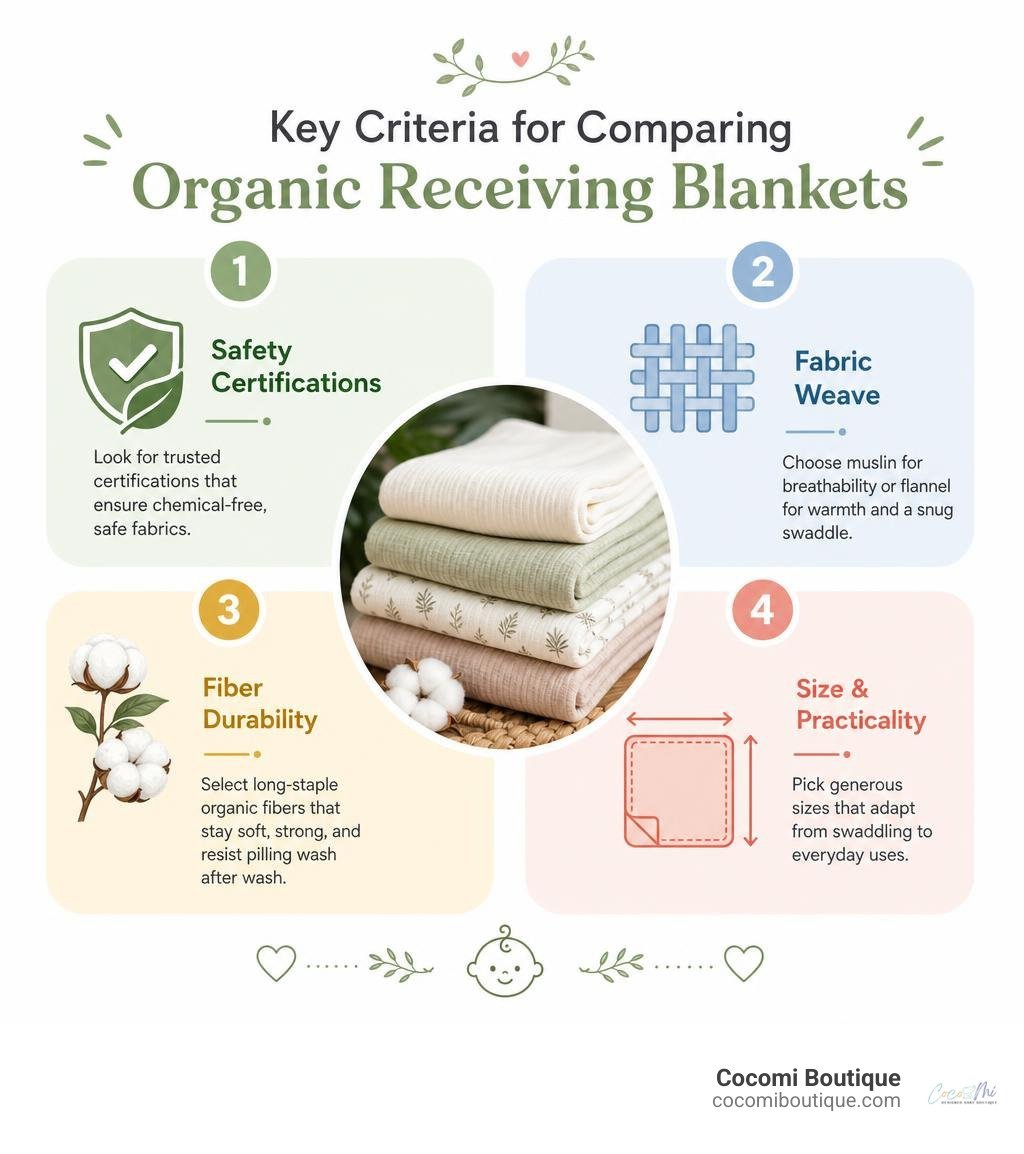
When comparing your options, focus on four essential details:
- Safety Certifications: Verify third-party labels like OEKO-TEX Standard 100 or GOTS to guarantee the fabric is free from harmful residues.
- Fabric Weave: Pick lightweight muslin for warm-weather breathability or tightly woven flannel for snug swaddling and cooler days.
- Fiber Durability: Choose long-staple organic fibers that resist pilling, maintain shape, and naturally soften after repeated machine washes.
- Size & Practicality: Select standard dimensions (30×30 inches or larger) that easily transition from a swaddle to a nursing cover, burp cloth, or tummy time mat.
At CocoMi Boutique, we design handcrafted, chemical-free nursery essentials that meet strict European safety standards. Through years of working with natural textiles, our team has helped thousands of parents choose the safest, most durable organic receiving blankets for their little ones.
Organic receiving blankets word roundup:
Why Parents Choose Organic Receiving Blankets for Newborns
Welcoming a newborn into the world means making countless decisions about their comfort, health, and daily care. Over 70% of parents actively seek organic cotton fabrics for their baby essentials. The main motivation comes down to the unique nature of infant skin.
A newborn’s delicate skin barrier is up to 30% thinner than that of an adult. Because this outer barrier is still developing, infant skin absorbs topical substances and chemical residues much more readily. Conventional textiles often undergo processing with chemical bleaches, synthetic sizing agents, formaldehyde finishes, and heavy-metal dyes. When wrapped closely around a newborn for hours at a time, synthetic or treated fabrics can trigger contact dermatitis, dryness, and allergic flare-ups.
Choosing pure organic cotton baby blankets provides a naturally hypoallergenic environment for your little one. Grown without chemical fertilizers, synthetic insecticides, or defoliants, organic cotton fibers retain their natural purity from seed to stitch.
Beyond infant wellness, organic textile production supports environmental health. Organic cotton farming utilizes sustainable crop rotation and non-GMO seeds, requiring 91% less water than conventional cotton farming methods. By investing in sustainably grown materials, families reduce chemical runoff into shared waterways and protect soil vitality for future generations.
Nontoxic Safety Certifications: GOTS and OEKO-TEX
When selecting newborn textiles, independent certifications offer peace of mind that a product meets rigorous chemical safety standards.
Two gold-standard certifications lead the baby textile industry:
- GOTS (Global Organic Textile Standard): This standard traces the entire supply chain from raw agricultural harvesting through ethical manufacturing and non-toxic finishing. To earn a GOTS organic label, a product must contain at least 95% certified organic fibers processed without chlorine bleach, toxic heavy metals, or harmful aromatic solvents.
- OEKO-TEX Standard 100: This testing framework focuses on the finished product. To achieve OEKO-TEX certification, every single component—including the weave, sewing threads, dyes, and labels—is tested against a rigorous list of more than 350 toxic chemicals, pesticides, phthalates, and allergenic colorants.
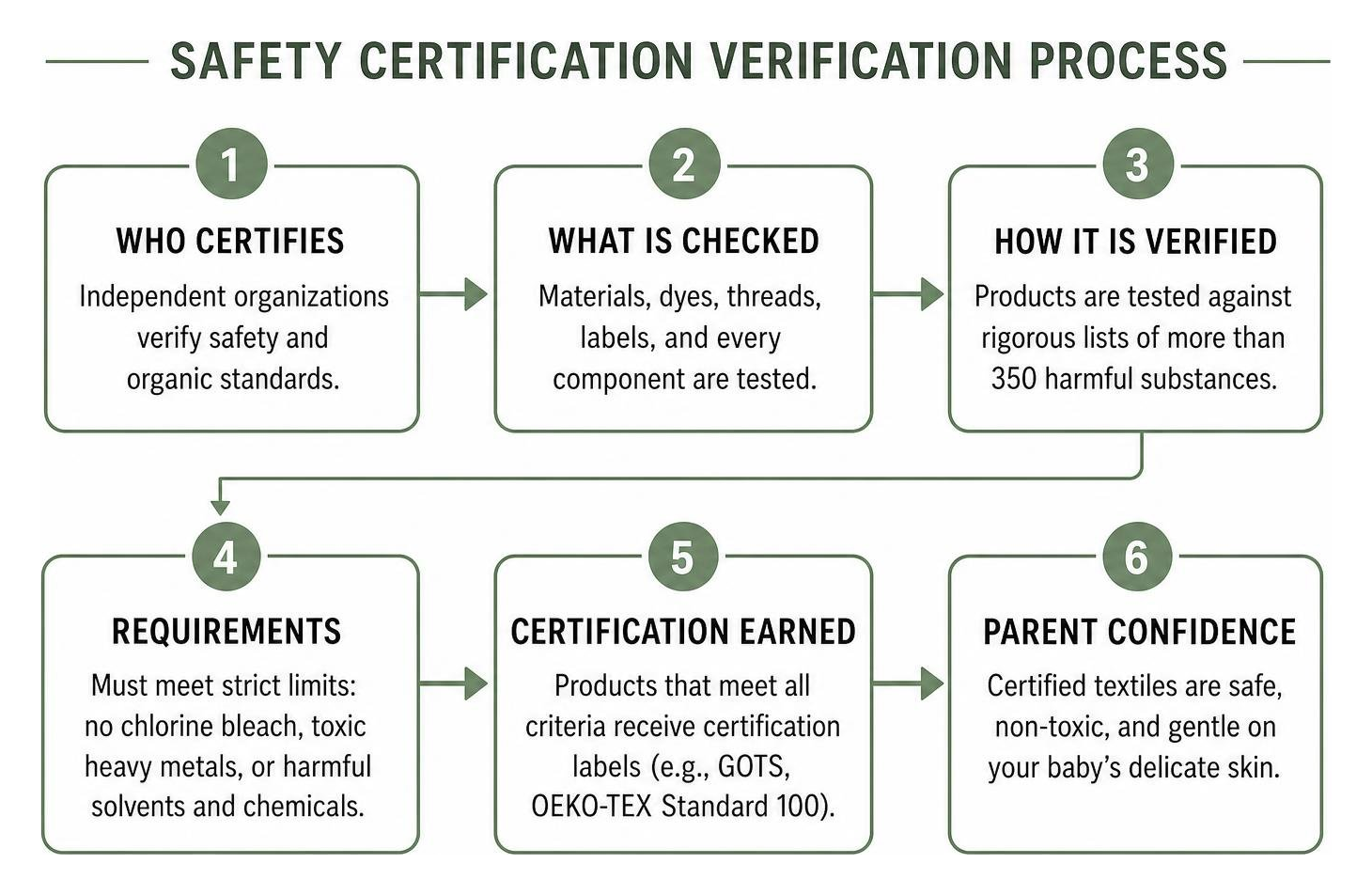
When shopping for heirloom-quality pieces, look for complementary safety ratings such as GREENGUARD Gold and MADE SAFE seals. These comprehensive verification standards ensure that the fabrics touching your baby's delicate skin remain completely non-toxic and pure.
Comparing Materials and Weaves in Baby Blankets
The way a textile is woven directly influences its warmth, breathability, and feel against your baby's skin. Comparing different weaves helps you select the right piece for every nursery need.
| Blanket Fabric & Weave | Breathability | Warmth Level | Texture & Hand Feel | Best Suited For |
|---|---|---|---|---|
| Organic Cotton Flannel | Moderate | High (Cozy) | Brushed, velvety soft, structured | Snug newborn swaddling, winter strolls, plush tummy time |
| Organic Cotton Muslin | Maximum (Airflow) | Light to Moderate | Open-weave, airy, crinkled softness | Warm weather, layering, breathable nursing and stroller draping |
| Bamboo-Cotton Blend | High | Moderate (Thermal regulating) | Silky, fluid drape, cool to the touch | Year-round swaddling, sensitive skin soothing |
While comparing bamboo or cotton muslin swaddles, parents often appreciate the natural structure of organic cotton. Tightly brushed cotton flannel provides a calming cocoon during a baby's first few weeks. Meanwhile, open-weave muslin allows steady airflow to prevent overheating during warmer afternoons.
Sizing and Multi-Use Versatility of Organic Receiving Blankets
A traditional receiving blanket measures between 30×30 inches and 36×36 inches. This square proportion was originally designed for nurses to "receive" a newborn in the delivery room, creating a secure, manageable wrap for tiny bodies.

While larger 47×47 inch swaddle blankets excel at full-body wrapping as babies grow, standard receiving blankets remain the most adaptable multi-use tools in your diaper bag:
- Newborn Swaddling: The compact square shape prevents excess fabric bulk around tiny limbs, making it simple to master a secure wrap.
- Tummy Time Mat: Spreading a soft blanket over the floor provides a clean, chemical-free foundation for early neck-strengthening exercises.
- On-the-Go Privacy Draping: The lightweight fabric drapes comfortably over your shoulder during nursing or across a stroller canopy for gentle sun protection.
- Burp & Spill Catching: High natural absorbency makes organic cotton ideal for catching daily dribbles and milk spills.
- Layered Crib & Lounger Accents: For parents who appreciate thicker layering options, exploring thick organic cotton muslin blankets offers added warmth for cozy nursery rocking chairs.
Durability, Longevity, and Value: What to Look For
Newborn essentials undergo frequent laundering. Choosing premium handcrafted textiles ensures your nursery pieces remain soft and intact through daily use.
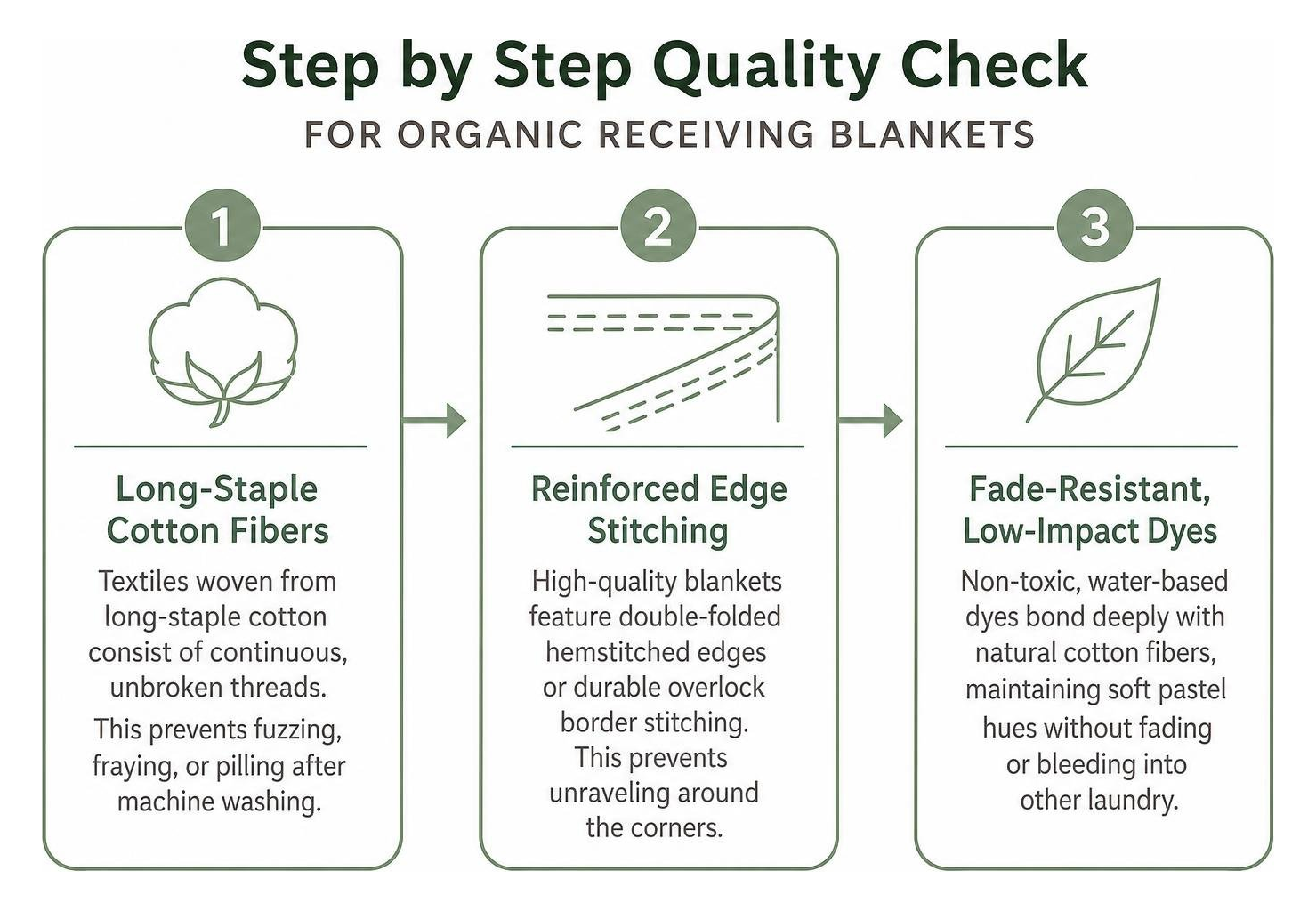
When evaluating fabric quality, look for these craftsmanship hallmarks:
- Long-Staple Cotton Fibers: Textiles woven from long-staple cotton consist of continuous, unbroken threads. This prevents the fabric from fuzzing, fraying, or creating rough pills after machine washing.
- Reinforced Edge Stitching: High-quality blankets feature double-folded hemstitched edges or durable overlock border stitching that prevents unraveling around the corners.
- Fade-Resistant, Low-Impact Dyes: Non-toxic, water-based dyes bond deeply with natural cotton fibers, maintaining soft pastel hues without fading or bleeding into other laundry.
Investing in multi-pack sets made from durable fibers delivers lasting value. For step-by-step swaddling techniques and nursery styling ideas, explore our organic cotton swaddle guide to make the most of every piece.
How to Wash and Care for Organic Receiving Blankets
High-grade organic cotton naturally softens as it is laundered. Proper textile care relaxes the organic fibers without breaking down the natural yarns.
To preserve the softness and structural beauty of your blankets, follow these gentle laundering steps:
- Pre-Treat Spills Gently: Dab milk or spit-up stains with cool water and a drop of natural plant-based detergent before washing.
- Machine Wash on Gentle: Wash with like colors using a cold or warm water gentle cycle. Avoid chlorine bleach, harsh chemical stain removers, and synthetic fabric softeners, which coat natural cotton fibers with chemical residues.
- Tumble Dry Low or Line Dry: Dry on a low-heat tumble cycle or hang the blanket in a naturally ventilated space. Low-heat drying prevents shrinkage and lets the cotton weave relax into its signature cloud-like texture.
Frequently Asked Questions About Organic Baby Blankets
What is the difference between an organic receiving blanket and a swaddle blanket?
A receiving blanket is typically a slightly smaller, more compact square (often 30×30 to 36×36 inches) made from brushed flannel, waffle weave, or interlock knit cotton. It serves as a versatile cloth for swaddling newborns, burping, nursing, and daily nursery tasks. A swaddle blanket is generally larger (usually 44×44 to 47×47 inches), crafted from lightweight, airy open-weave muslin designed specifically for wrapping older or larger infants.
Are organic receiving blankets worth the higher price point?
Yes. Organic blankets are crafted from pure, unadulterated cotton free from toxic pesticides, heavy-metal dyes, and synthetic resins. Because organic farming uses long-staple natural fibers, these blankets resist pilling and withstand hundreds of wash cycles without deteriorating, providing superior safety and durability.
How many organic receiving blankets do new parents need?
Most parents find that having 4 to 6 high-quality receiving blankets provides an ideal rotation. This allows you to keep one in the diaper bag, one in the stroller, one in the nursery, and a couple in the wash rotation for daily messes.
Conclusion
Every piece that touches your newborn's skin should bring comfort, safety, and peace of mind. At CocoMi Baby Boutique, we handcraft our nursery essentials from 100% natural, chemical-free materials certified to the highest European OEKO-TEX safety standards. Founded by parents who understand the importance of safe, thoughtfully designed baby essentials, our collections blend timeless elegance with everyday practicality.
Whether you are preparing your own nursery or selecting a heartfelt gift, explore our nursery guides and baby collections to discover beautifully crafted blankets, nests, and accessories designed for your little one's sweetest beginnings.