

Why Natural Baby Care Matters for Your Newborn

Natural baby care is the practice of using organic, chemical-free products and gentle methods to protect your newborn's delicate skin barrier while supporting their overall health and development. Here's what you need to know:
Core principles of natural baby care:
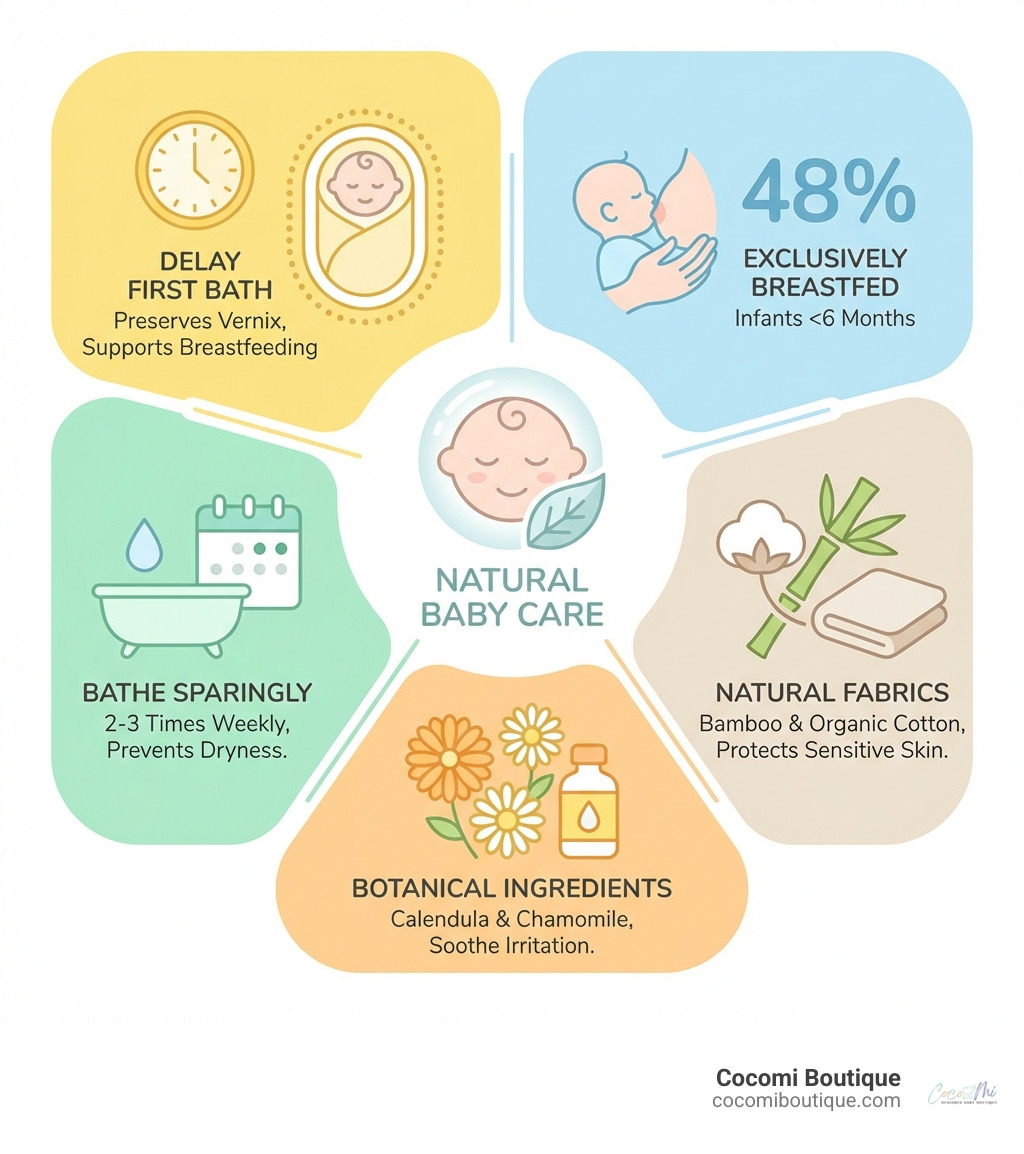
- Delay the first bath for at least 24 hours to preserve protective vernix
- Use organic products free from parabens, phthalates, and synthetic fragrances
- Bathe sparingly – just 2-3 times weekly to prevent skin dryness
- Choose natural fabrics like organic cotton and bamboo for clothing
- Apply botanical ingredients such as calendula, chamomile, and coconut oil
Your newborn enters the world with skin that's remarkably sensitive. Their skin barrier won't fully develop until around age two, making it highly absorbent and prone to irritation from harsh chemicals and synthetic ingredients. One study showed a 166% increase in hospital breastfeeding success after implementing a 12-hour delay in baby's first bath compared to those bathed within the first couple hours. This simple choice preserves the natural vernix coating while preventing hypothermia and supporting bonding.
Natural baby care isn't just about what you use – it's about what you avoid. Conventional baby products often contain artificial fragrances, parabens, and harsh sulfates that can disrupt your baby's developing immune system and cause skin reactions like eczema or diaper rash.
I'm Monika Jarog, and through years of creating handcrafted baby essentials from 100% natural, chemical-free materials, I've seen how natural baby care transforms the comfort and safety of newborns. My work with European safety standards has taught me that the gentlest approach is often the most effective.
Basic natural baby care glossary:
Why Choose Natural Baby Care for Your Little One?

When we bring a new baby home to the Chicago suburbs, from Northbrook to Glenview, our first instinct is to protect them from every possible harm. We often focus on car seats and sleep safety, but the products we apply to their skin are just as vital. Choosing natural baby care is about respecting the biological fact that newborn skin is up to 30% thinner than adult skin.
Conventional baby products are frequently loaded with synthetic ingredients and fragrances that serve no purpose other than making a product smell "baby-fresh." Unfortunately, these fragrances are often a cocktail of undisclosed chemicals that can trigger respiratory issues or skin allergies. By opting for organic alternatives, we avoid harsh chemicals like phthalates (often used to make fragrances last longer) and parabens (preservatives that can mimic hormones).
The beauty of organic products lies in their simplicity. Ingredients like shea butter, aloe vera, and beeswax provide a breathable barrier that protects without suffocating the skin. These Gentle Touches: Our Favorite Soft Baby Essentials prioritize hypoallergenic benefits, ensuring that even the most sensitive infants—those prone to redness or dryness—remain comfortable.
Gentle Bathing and Skin Protection Strategies
Bathing a newborn can be a nerve-wracking experience for new parents. We want them clean, but we don't want to strip away their natural defenses. The modern consensus on Bathing Your Baby - HealthyChildren.org suggests a "less is more" approach. For the first few weeks, sponge baths are the gold standard.
Until the umbilical cord stump falls off—typically between one and three weeks—it is best to keep the area dry to prevent infection. When you do transition to tub baths, ensure the water temperature is lukewarm, ideally between 100°F and 104°F. Always check the water with your wrist or elbow first; babies can be scalded easily by water that feels "just right" to an adult.
Post-bath care is just as important as the bath itself. Using Soft, Sustainable, and Super Absorbent: Discover Bamboo Baby Hooded Towels helps to gently pat the skin dry rather than rubbing it, which can cause irritation. To understand the different materials available, check out The Ultimate Guide to Choosing Baby and Toddler Bath Towels to find the best fit for your routine.
The Benefits of Delaying the First Bath
One of the most significant shifts in natural baby care is the recommendation to delay the first bath for at least 24 hours. When babies are born, they are covered in vernix caseosa, a waxy white substance. Far from being "messy," this coating is a biological miracle. It acts as a natural moisturizer, an anti-bacterial shield, and even helps the baby regulate their body temperature outside the womb.
By delaying that first scrub, you allow the vernix to be absorbed, providing the best possible start for their skin health. Furthermore, babies who aren't immediately whisked away for a bath have higher rates of breastfeeding success and better blood sugar regulation. When it is finally time for that first wash, wrapping them in Bamboo Baby Hooded Towels: The Softest Hug After Bath Time ensures they stay warm and secure.
Managing Common Skin Issues with Natural Baby Care
Even with the best care, newborns often face minor skin hurdles. Here is how to handle them naturally:
- Diaper Rash: As a parent, you may change as many as 3,000 diapers in the first year. To prevent rash, change diapers immediately when soiled and allow for "air time" whenever possible. If a rash occurs, use a thick layer of zinc oxide or a natural balm containing calendula.
- Eczema: Characterized by dry, itchy patches, eczema requires intense hydration. Look for fragrance-free lotions in tubs (which are thicker than pumps) and stick to natural fabrics that breathe.
- Cradle Cap: This yellowish, crusty scaling on the scalp is common and harmless. Gently massage organic baby oil or coconut oil onto the scalp, let it sit for an hour, and then use a soft brush to loosen the flakes before a mild shampoo.
For those looking to gift high-quality solutions for these issues, Eco-Chic Gifting: Organic Baby Sets They'll Adore offers curated options that prioritize skin health.
Essential Ingredients and DIY Recipes
When we look at the back of a natural baby care product, we should recognize the ingredients. Nature provides an incredible pharmacy for our little ones. Shea butter offers deep moisture, while aloe vera provides cooling relief for irritation. Coconut oil is a versatile powerhouse, acting as both a moisturizer and a mild antimicrobial agent.
| Ingredient | Primary Benefit | Best Use Case |
|---|---|---|
| Calendula | Anti-inflammatory & Healing | Diaper rash and minor scrapes |
| Chamomile | Calming & Soothing | Bedtime massage and sensitive skin |
| Coconut Oil | Antimicrobial & Hydrating | Cradle cap and general moisturizing |
| Marshmallow Root | Demulcent (Soothing film) | Severely dry skin or eczema |
Choosing products made with these ingredients, such as Organic Cotton Swaddle Blankets: A Guide to the Softest Snuggles, ensures that your baby is surrounded by purity from head to toe.
Soothing Botanicals for Sensitive Skin
In natural baby care, calendula is the undisputed hero. Often referred to as "pot marigold," this flower has been used for centuries to heal skin. It’s particularly effective because it’s gentle enough for a newborn but powerful enough to calm significant redness. Chamomile is another favorite, known for its ability to soothe both the skin and the baby's spirit before sleep.
Modern science has also introduced us to sugarcane-derived squalane. This ingredient mimics the vernix babies are born with, making it an excellent hydrator for babies whose skin barrier is still finding its footing. Using a Wrap Your Baby in Nature: Our Favorite Organic Muslin Swaddles helps maintain this skin health by preventing overheating and allowing the skin to breathe.
Simple DIY Solutions for Natural Baby Care
If you enjoy a bit of "granola" living, making your own products is a cost-effective way to ensure 100% purity. Here are three simple recipes:
- Herbal Baby Oil: Infuse 8 oz of organic olive or apricot oil with 1/2 cup of dried calendula and chamomile flowers. Let it sit in a cool, dark place for 4 weeks (or use a double boiler on low for 3 hours), then strain through cheesecloth.
- Cloth-Safe Diaper Balm: Melt 1/4 cup coconut oil and 1/4 cup shea butter with 1 tbsp beeswax. Stir in a few drops of vitamin E oil. Pour into a jar and let it set. This is safe for cloth diapers because it lacks the petroleum that causes "repelling."
- Homemade Wipes Solution: Mix 2 cups of distilled water, 1 tbsp of liquid castile soap (unscented), and 1 tbsp of coconut oil. Pour over cloth wipes or heavy-duty paper towels in a reusable container.
While DIY is great, having professional-grade essentials on hand is a must for busy Chicago parents. Check out Beyond Soft: A Roundup of the Best Organic Bamboo Swaddle Blankets for items that are hard to replicate at home.
Beyond Skincare: Clothing and Environment
Natural baby care doesn't stop at lotions and soaps; it extends to everything that touches your baby's skin. Synthetic fabrics like polyester can trap heat and sweat, leading to heat rash and discomfort. Natural fibers like organic cotton and bamboo are breathable, moisture-wicking, and incredibly soft.
When choosing blankets, look for GOTS Certified Goodness: Finding the Perfect Organic Muslin Blanket. The Global Organic Textile Standard ensures that the fabric is free from toxic dyes and harvested sustainably.
Environment care tips:
- Wash Before Wear: Always wash new clothes in a fragrance-free, dye-free detergent to remove any dust or residue from manufacturing.
- Inside Out: Wash layette items inside out and zipped up to protect the delicate fibers.
- Air Dry: Whenever possible, hang bamboo clothing to dry. If you must use a dryer, use a low-heat setting.
- Avoid Softeners: Traditional fabric softeners coat fibers in chemicals; use wool dryer balls instead.
For more on choosing the right fabrics, see The Ultimate Guide to Cotton Muslin Baby Blankets: Softness & Safety and explore our Eco-Friendly Comfort: Explore Our Organic Muslin Swaddle Collection.
Frequently Asked Questions about Newborn Care
How often should I bathe my newborn?
You should bathe your newborn no more than three times per week during their first year. Over-bathing can strip the skin of natural oils, leading to dryness and eczema. On "off" days, use the "top-and-tail" method: use a warm, damp cloth to clean the face, neck, and diaper area only.
When can I start using sun protection?
The general rule is to avoid direct sun exposure for babies under six months old. Their skin is too thin to handle the chemicals in most sunscreens and is highly susceptible to burns. Use physical barriers like wide-brimmed hats, strollers with large canopies, and lightweight long sleeves. After six months, you can apply a mineral-based (zinc oxide or titanium dioxide) SPF 15+ sunscreen to exposed areas.
How does skin-to-skin contact help?
Skin-to-skin contact, or "Kangaroo Care," is a cornerstone of natural baby care. It helps regulate the baby's heart rate and breathing, stabilizes their temperature, and boosts their immune system. For parents, it triggers the release of oxytocin, which reduces stress and aids in bonding. It’s a powerful, free tool for newborn wellness.
Conclusion
At Cocomi Boutique, we believe that the best care is the most natural care. Whether you are in Northbrook, Buffalo Grove, or anywhere in the greater Chicago area, our commitment is to provide you with the highest quality organic essentials that support your baby's health. By choosing natural baby care, you aren't just buying products—you're investing in a gentle, chemical-free foundation for your child's future.
Explore our latest organic baby essentials and discover the difference that quality and care can make in your daily routine.