

Why Every Parent Needs a Reliable Travel Sleep Solution
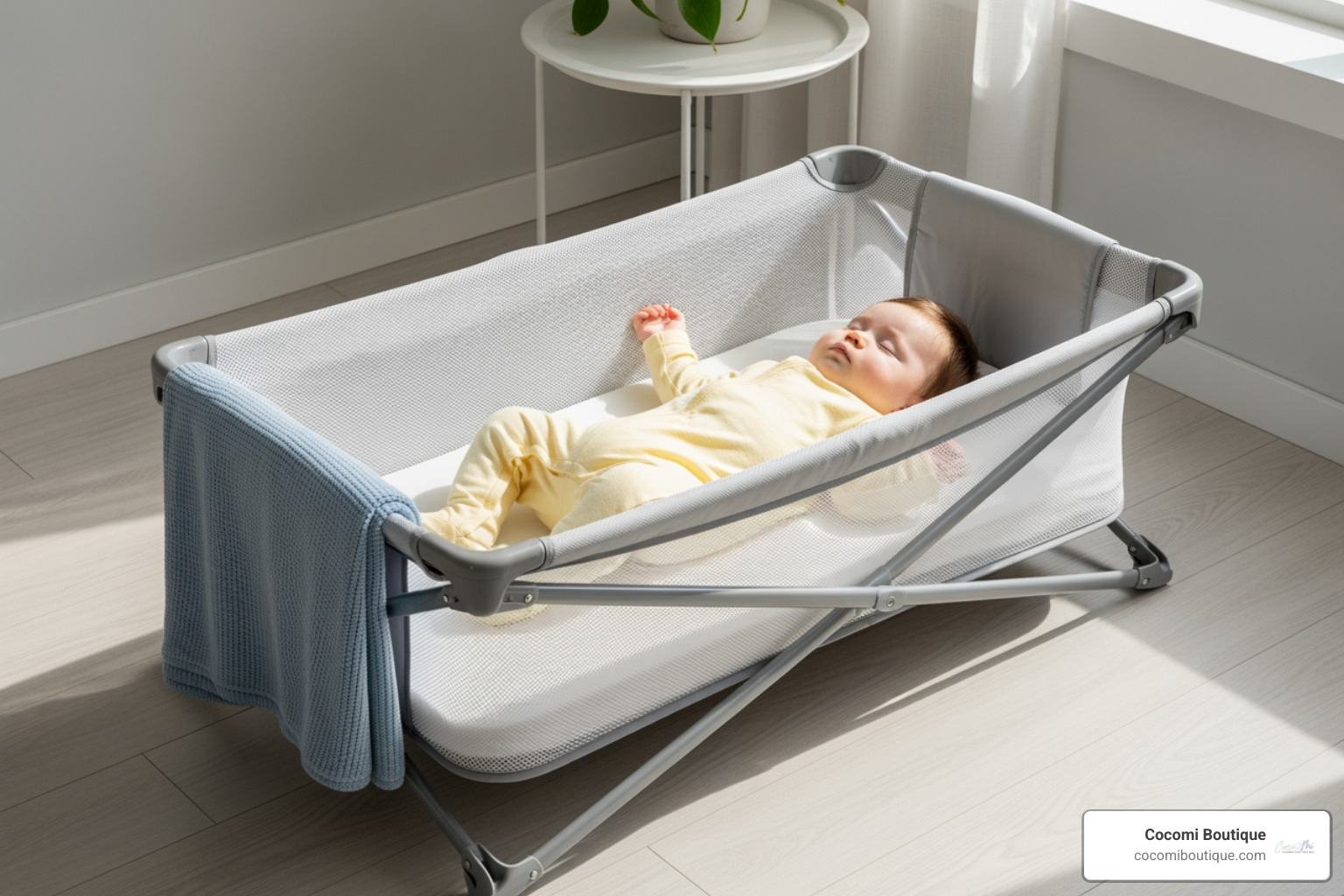
A Portable infant bed is a compact, foldable sleeping solution designed for babies and toddlers that combines safety, convenience, and mobility. Here's what you need to know:
Top Portable Infant Bed Options:
| Type | Best For | Typical Weight | Age Range |
|---|---|---|---|
| Travel Crib | Frequent travelers, overnight stays | 13-17 lbs | Birth to 3 years |
| Travel Bassinet | Newborns, quick trips | 6-15 lbs | Birth to 6 months |
| Bedside Sleeper | Room-sharing, nighttime feeding | 12-20 lbs | Birth to 6 months |
| In-Bed Co-sleeper | Close sleep without bed-sharing | 6-8 lbs | Birth to 20 lbs |
Imagine this: You're headed to your parents' house for the weekend, or planning your first family vacation. Your baby needs a safe, comfortable place to sleep—but traditional cribs are bulky and impossible to transport. This is where portable infant beds become essential.
Whether you're navigating airport terminals, packing the car for a road trip, or simply moving between rooms at home, the right portable infant bed offers peace of mind without sacrificing your baby's safety or comfort. Modern options fold down to backpack size, set up in under two minutes, and provide the same firm, breathable sleep surface pediatricians recommend.
If you want to read more about the broader concept of portable cribs and travel cots, the overview at Portable crib can be a useful general reference.
The benefits extend beyond travel. Many parents use these versatile beds as a safe play space during the day, a familiar sleep environment that reduces bedtime stress, and a practical solution for small living spaces. With options ranging from ultra-lightweight bassinets at 6.6 lbs to full-featured travel cribs with mesh walls and removable mattresses, there's a solution for every family's needs.
I'm Monika Jarog, and through years of crafting handmade baby essentials that meet European safety standards, I've learned what truly matters when it comes to Portable infant bed solutions—quality materials, thoughtful design, and genuine comfort for your little one. This guide will help you steer the options and find the perfect fit for your family.
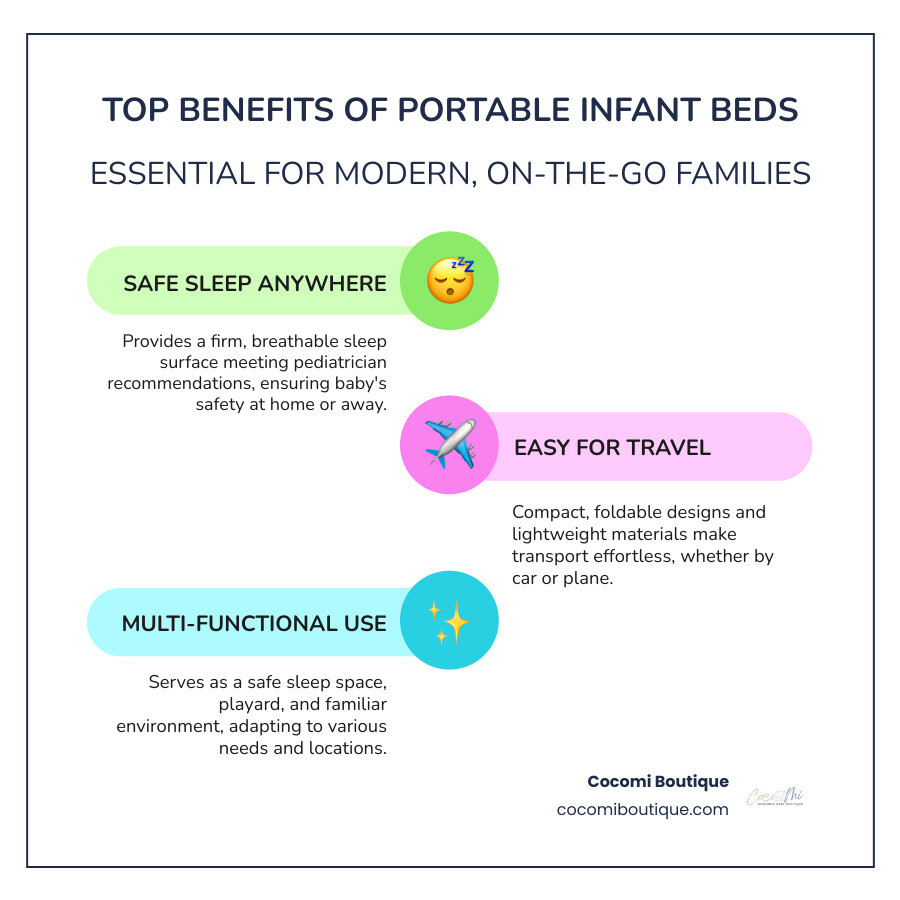
Glossary for Portable infant bed:
Understanding the Different Types of Portable Infant Beds
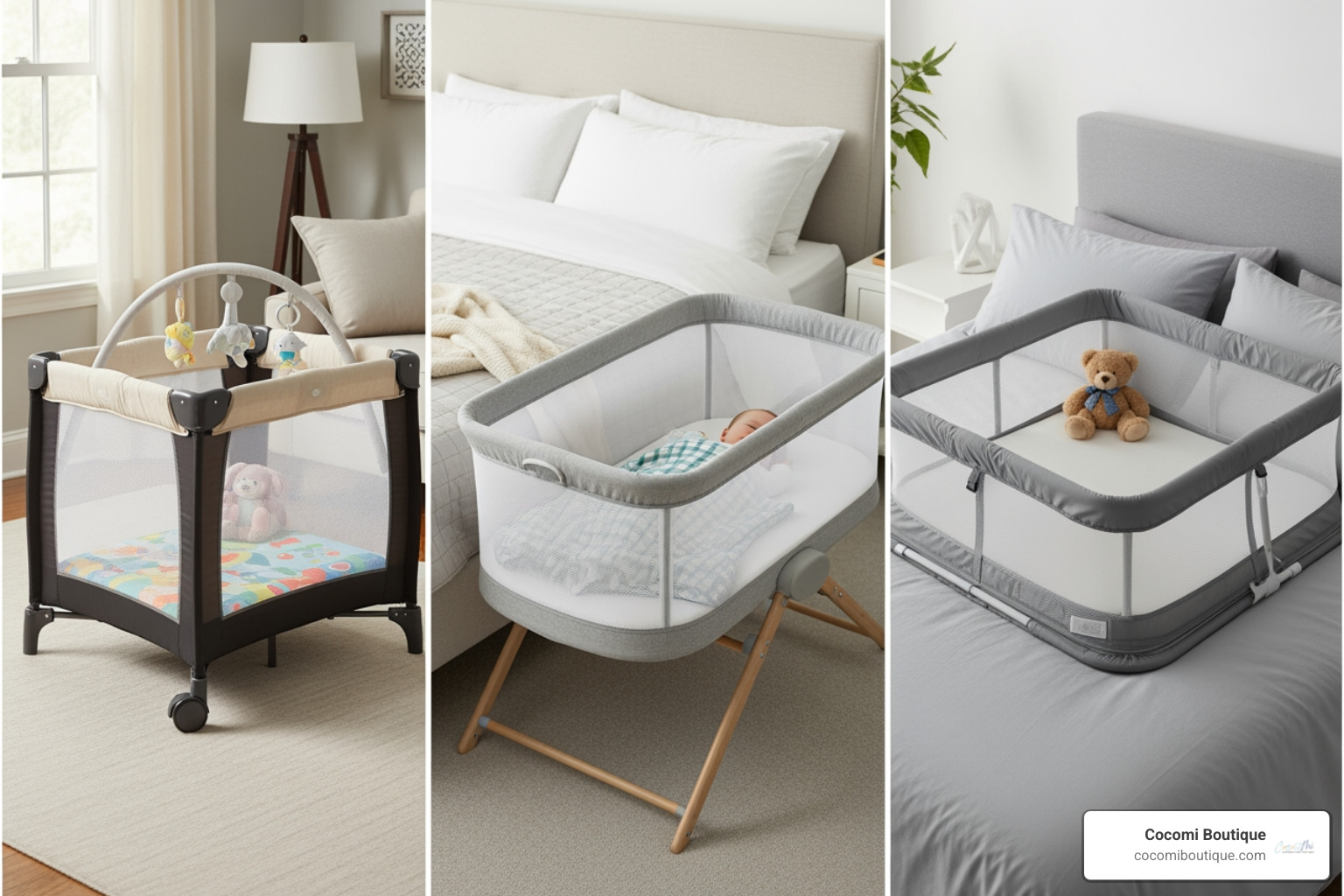
When we talk about a Portable infant bed, we’re actually referring to a diverse category of sleep solutions, each designed with different needs in mind. From quick trips to extended stays, there's a portable bed that fits the bill. Let's explore the main types:
Travel Cribs
Travel cribs are typically larger and designed for infants and toddlers. They offer a secure, enclosed space for sleeping and often serve as a playard when needed. Well-designed travel cribs are known for their lightweight and compact construction. Many popular models in this category weigh between 13 and 17 lbs, making them robust enough for repeated use and designed to last through the toddler years.
Playards
Often generically referred to as "Pack 'n Plays" (which is actually a trademarked Graco product), playards are designed primarily as sturdy, portable play spaces that can also be used for sleep. Standard pack-n-plays sold in the USA are typically 40L X 28.5W inches and can weigh between 18-30 pounds. While some models offer bassinet attachments for newborns, their larger size and weight often make them less ideal for frequent travel compared to dedicated travel cribs.
Travel Bassinets
These are smaller, lighter, and specifically designed for newborns and young infants, usually up to 6 months or until they can push up on their hands and knees. Many travel bassinets fall in the 6-15 lb range. They are perfect for keeping your newborn close by, whether in your bedroom, a hotel room, or at a relative's house, and are particularly useful for those first few months. Quality options offer a firm, flat sleeping surface essential for safe infant sleep.
In-bed Co-sleepers
These compact beds are designed to sit directly within the adult bed, providing a separate, safe sleep space for a newborn right next to the parents. Some in-bed co-sleepers weigh as little as 6-8 lbs and fold to a very compact size. They allow for close proximity without the risks associated with bed-sharing. However, it's crucial to ensure they meet safety standards and are used correctly, as some in-bed sleepers or "baby nests" have faced safety concerns if not used according to strict guidelines. For more on this, you might find our guide, Beyond the Crib: Discovering the Perfect Nest for Your Newborn, insightful.
Choosing the Right Type of Portable Infant Bed for Your Needs
Selecting the ideal Portable infant bed depends heavily on your specific circumstances:
- Suitability for newborns: For the tiniest travelers, a travel bassinet or an in-bed co-sleeper is often the best choice. These options keep your newborn snug and close, simplifying nighttime feedings and comforting.
- Options for toddlers: As your baby grows into a toddler, their needs change. They become taller and more active. For these older children, a travel crib is generally more appropriate. Many have no upper weight limit, accommodating children as long as they can't climb out. For particularly tall toddlers, there are even "extended length travel cots" that measure around 47.3L x 23W inches, offering crucial extra legroom.
- Home use vs. travel focus: If you primarily need a portable bed for occasional use at home – moving between rooms or for a safe play space – a more robust playard might suffice. However, for frequent travel, especially by air, lightweight and ultra-compact travel cribs are invaluable.
- Space considerations: Always consider the folded dimensions. Some travel cribs fold down to around 19" (L) x 23.5" (W) x 5.5" (H), making them easy to tuck away or fit into tight luggage spaces.
How They Differ from Standard Pack-n-Plays
While the terms are often used interchangeably, there are distinct differences between dedicated Portable infant bed travel cribs and standard pack-n-plays:
- Primary function: Standard pack-n-plays are primarily designed as versatile play spaces, offering a safe enclosure for babies and toddlers. While they can be used for sleep, their design often prioritizes durability for play over extreme portability. Travel cribs, conversely, are built with safe sleep as their core purpose, optimizing for portability and quick setup.
- Weight differences: This is a major differentiator. Standard pack-n-plays typically weigh between 18-30 pounds, making them cumbersome for frequent travel. In contrast, many travel cribs fall into the 13-17 lb range, making them much easier to carry through airports or load into a car.
- Portability focus: Travel cribs are engineered for maximum portability. This means they often feature quicker setup/takedown mechanisms, more compact folded sizes, and integrated carry bags (sometimes with backpack straps for hands-free transport). Standard pack-n-plays, while foldable, might not be as streamlined for travel.
- Material differences: While both types use durable materials, travel cribs often emphasize lightweight, breathable fabrics and sometimes incorporate advanced certifications for eco-health, like Greenguard Gold or Oeko-Tex Standard 100, ensuring materials are free from harmful substances.
Key Features to Consider When Choosing a Portable Infant Bed
Choosing the right Portable infant bed involves more than just picking a pretty design. We need to look at the practicalities that make a real difference in your family's travel and daily life.
Weight, Size, and Portability
These factors are paramount, especially if you plan to travel frequently outside of the Illinois area.
- Impact on travel type: For air travel, every pound and inch matters. Lightweight options (under 15 lbs) are ideal. Some travel cribs are even marketed as "carry-on sized," though it's wise to double-check specific airline carry-on dimensions, as one source notes that certain models "don't qualify as a carry-on" for some standard bins. For road trips, while weight is less critical, folded dimensions that fit neatly into a car trunk are key. Some compact playards in the 16-17 lb range are praised for their space-saving, trunk-friendly shapes.
- Typical weights: As we've seen, options range from ultra-light, in-bed sleepers around 6.6 lbs to travel cribs around 13-17 lbs. Even a few pounds can make a big difference when you're also juggling luggage, a diaper bag, and a baby!
- Folded dimensions: The more compact, the better. Some leading travel cribs fold to around 19" (L) x 23.5" (W) x 5.5" (H), while others fold to approximately 30" (L) x 10" (W) x 10" (H), both still very manageable.
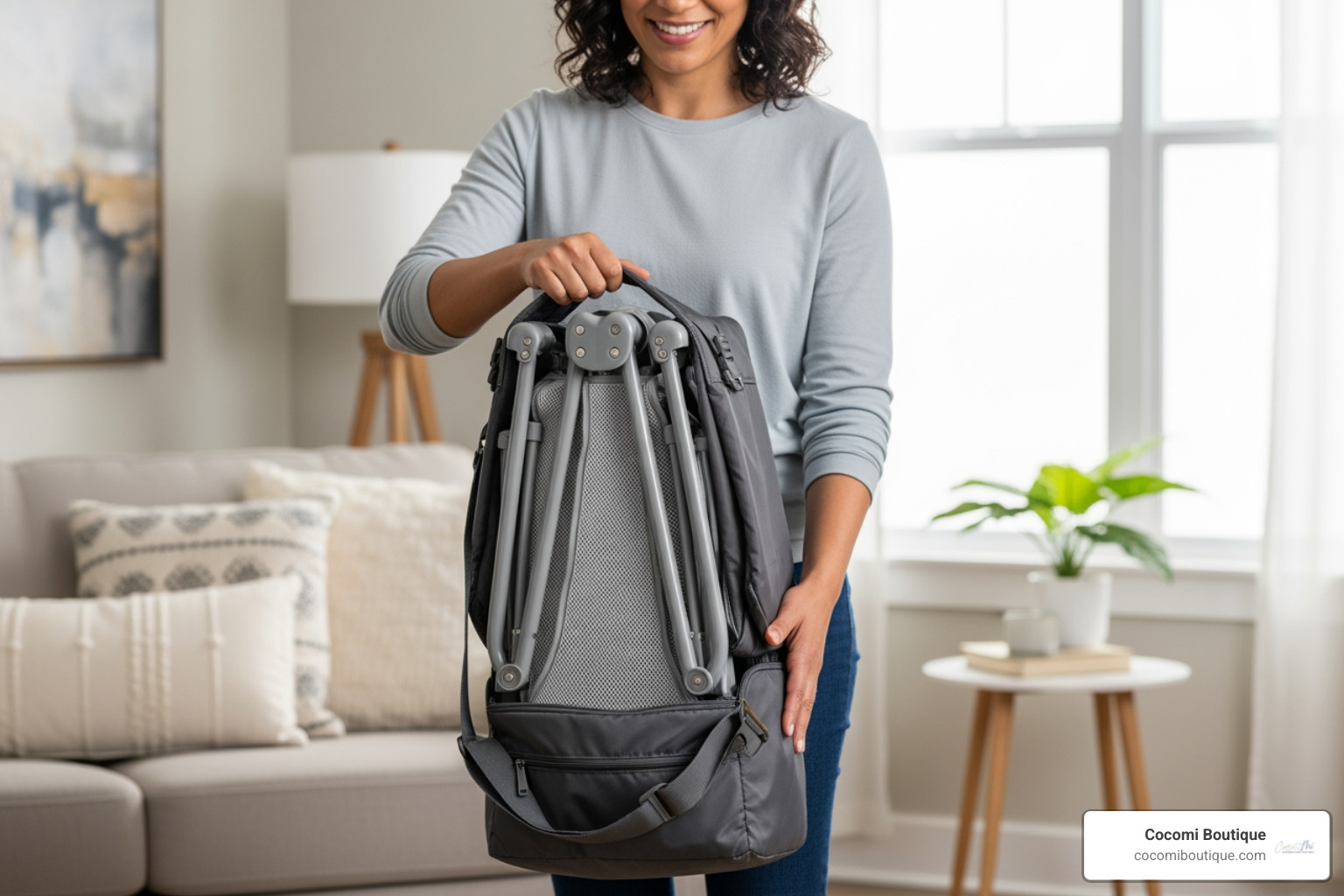
- Carry bag design: A robust carry bag, especially one with backpack straps, can be a game-changer for hands-free transport. Backpack-style designs make it much easier to steer airports or train stations.
Ease of Setup and Use
When you have a tired baby (or tired parents!), the last thing you want is a complicated setup.
- Average setup times: Our research shows a wide range. Some beds can be set up in as little as about 1 minute. Others average around 1-2 minutes, while some ultralight designs can take up to about 8 minutes, which feels like an eternity with a fussy infant.
- One-person assembly: Most quality portable beds are designed for quick, one-person assembly. Look for intuitive mechanisms that snap into place easily.
- Intuitive locking mechanisms: Ensure the locking mechanisms are secure but also easy to engage and disengage.
- Side-zipper access: A side zipper, available on many modern travel cribs, can be incredibly convenient. It allows you to comfort your baby without fully lifting them out, and it can be a lifesaver for parents who want to lie down next to their child for a moment.
Materials, Comfort, and Breathability
Your baby's comfort and safety are paramount, and the materials used play a huge role.
- Firm mattress importance: The American Academy of Pediatrics (AAP) and the Consumer Product Safety Commission (CPSC) consistently emphasize the need for a firm, flat sleep surface to reduce the risk of SIDS and suffocation. Ensure the mattress provided with your Portable infant bed is firm and does not sag or conform to your baby's head shape.
- Breathable mesh walls: Mesh side panels are crucial for healthy airflow and to minimize suffocation risk. Certified pediatric sleep consultants often highlight this as an important safety feature. Many travel cribs now offer 360-degree mesh for optimal ventilation.
- Material certifications: Look for certifications like Oeko-Tex Standard 100 or Greenguard Gold. These certifications indicate that the materials are tested and free from harmful substances, which is especially important for baby products.
- Avoiding harmful chemicals: Many parents are concerned about flame retardant chemicals. We recommend looking for products that explicitly state they are free from PVC, fire retardants, lead, phthalates, formaldehyde, arsenic, mercury, or cadmium. The Center for Environmental Health (CEH) actively surveys manufacturers on this very topic.
Here's a quick comparison of key features across different types:
| Feature | Travel Crib | Travel Bassinet | In-Bed Sleeper |
|---|---|---|---|
| Typical Weight Range | 13-17 lbs | 6-15 lbs | 6-8 lbs |
| Age Suitability | Birth to 3 years+ | Birth to 6 months | Birth to 20 lbs |
| Primary Use Case | Portable sleep & play, travel | Newborn sleep, short trips | Co-sleeping, bedside |
| Setup Time (Avg) | 1-2 minutes | < 1 minute | < 1 minute |
| Folded Size | Compact (e.g., backpack) | Very compact | Ultra-compact |
| Mattress Firmness | Firm, integrated | Firm | Firm |
| Breathability | Mesh sides (often 360°) | Mesh sides | Mesh sides |
| Material Certs | Often Oeko-Tex, Greenguard | Varies | Varies |
Safety First: Standards and Certifications for Your Peace of Mind
When it comes to our little ones, safety isn't just a feature – it's the foundation upon which every decision is made. A Portable infant bed is no exception. We must ensure that any product we choose provides a secure and healthy environment for sleep.
In the United States, all portable cribs sold today must meet federal safety standards. These standards were updated in 2022 by the CPSC (Consumer Product Safety Commission) to improve the safety of infant sleep products. If you're considering using an older model, we strongly advise checking that it meets these updated CPSC safety standards. The CPSC website can also inform you if a travel crib has been recalled.
The American Academy of Pediatrics (AAP) also provides comprehensive guidance on safe sleep practices. Their recommendations are crucial for decreasing the risk of SIDS (Sudden Infant Death Syndrome) and other sleep-related deaths. Key principles include:
- Importance of a firm, flat surface: Always place your baby on their back on a firm, flat, and level sleep surface. This means no soft mattresses, pillows, or fluffy bedding that could conform to their head or create an unsafe space.
- No gaps between mattress and sides: Ensure the mattress fits snugly within the portable bed, with no gaps where a baby could become entrapped.
- Avoiding soft bedding: The sleep space should be free of loose blankets, pillows, bumpers, soft toys, and any other items. Use a sleep sack or swaddle to keep your baby warm instead of blankets.
For a deeper dive into safe sleep for newborns, explore our article: Nest or No Nest? Decoding Safe Sleep for Your Newborn. You can also find detailed information directly from the AAP: AAP safe sleep guidelines.
If you would like an additional neutral overview of infant sleep safety, the entry on Sudden infant death syndrome also summarizes widely accepted medical guidance.
Understanding Certifications
Certifications offer an extra layer of assurance that a Portable infant bed meets stringent safety and health criteria:
- Greenguard Gold certification: This certification, used on many baby products, means the product has been tested for low chemical emissions. It signifies that the product contributes to healthier indoor air quality, which is vital for your baby's developing respiratory system.
- Oeko-Tex Standard 100: When a product is approved according to Oeko-Tex Standard 100, Class 1 for baby products, it guarantees that the materials do not contain any harmful or allergenic substances. This is a comprehensive testing system for textiles, ensuring they are safe for skin contact, especially for infants.
- JPMA certification: The Juvenile Products Manufacturers Association (JPMA) certification program signifies that a product has been tested by an independent laboratory and meets the highest applicable safety standards.
Accessories and Safe Usage
While some accessories can improve the functionality of your Portable infant bed, others can pose significant safety risks.
- Using only manufacturer-provided mattresses: This is a non-negotiable safety rule. The mattress that comes with your portable bed is specifically designed to fit perfectly and provide the correct firmness. Using a different mattress, or adding an aftermarket one, can create dangerous gaps or an overly soft sleeping surface.
- Dangers of adding extra padding: Never add extra padding, pillows, or soft layers beneath or on top of the provided mattress. This can lead to suffocation risks, as a baby's head can sink into soft materials.
- Safe accessories vs. unsafe additions: Safe accessories might include a custom-fitted sheet specifically designed for the bed's mattress. Unsafe additions include anything that alters the bed's structural integrity or creates a soft, unsecured sleep surface.
Here is a list of essential safe sleep practices for portable beds:
- Always place your baby on their back to sleep. This is the single most important rule to prevent SIDS.
- Use a firm, flat sleep surface. The mattress should be firm and level, without any incline unless medically directed.
- Ensure the sleep space is clear. No loose blankets, pillows, bumper pads, stuffed animals, or other soft objects.
- Keep the portable bed in a safe location. Place it away from windows with cords, heaters, electrical outlets, or anything that could pose a strangulation or burn risk.
- Ensure good ventilation. Mesh sides promote airflow, but also ensure the surrounding environment isn't overly hot or stuffy.
- Regularly check for wear and tear. Inspect all locks, hinges, and fabric for any damage or loose parts that could compromise safety.
- Follow all manufacturer instructions. Read the manual carefully for proper assembly, use, and weight/age limits. Never modify the bed.
- Use only the mattress provided by the manufacturer. This ensures a snug fit and appropriate firmness.
Frequently Asked Questions about Portable Infant Beds
We often hear similar questions from parents in Illinois and beyond as they steer portable infant beds. Let's address some of the most common ones.
Can a portable infant bed be used for everyday sleep?
This is a nuanced question. While a Portable infant bed offers a safe sleep space, most models, especially travel cribs and bassinets, are designed for temporary or occasional use. As a government safety guide notes, "Portable folding cots are not as sturdy as household cots and should only be used when a household cot is not an option."
However, the definition of "temporary" can vary. Many high-quality travel cribs are built with durability in mind and feature robust construction. These models often have no upper weight limit and a floor-level mattress, making them suitable for use until a child outgrows a traditional crib (typically around age 3). Some families have even used a single travel crib across multiple international trips in their baby's first year, demonstrating its suitability for extended, frequent use.
If you plan to use a portable bed for everyday sleep, we recommend:
- Prioritizing durability: Choose models known for their quality construction and sturdy materials.
- Ensuring consistent safe sleep practices: The same CPSC and AAP guidelines apply whether it's a travel bed or a full-sized crib.
- Regular inspections: Frequently check for wear and tear, especially on locking mechanisms and fabric, to ensure ongoing safety.
While a portable bed can serve as a primary sleep solution, understand its design limitations compared to a full-sized crib and always prioritize a safe sleep environment.
What should I look for in a portable infant bed for air travel?
Air travel with a baby can be an adventure, and the right Portable infant bed can make all the difference. Here’s what we consider essential for flying:
- Carry-on size compatibility: This is often the holy grail for flying parents. Some travel cribs are described as "carry-on sized" (for example, around 30" L x 10" W x 10" H when folded). However, airline regulations vary, and some standard overhead bins might still find this a snug fit, or it might not technically "qualify" as a carry-on for some carriers. A common workaround, as some travel blogs suggest, is to pack the portable bed inside a car seat travel bag that you plan to check in. Always check your airline's specific dimensions for carry-on and checked luggage to avoid surprises.
- Lightweight design: Every ounce counts when you're navigating an airport. Look for beds under 15 lbs. Many dedicated travel cribs and portable bassinets fall comfortably beneath this threshold.
- Backpack-style carry bags for hands-free transport: Being able to wear your baby's bed as a backpack frees up your hands for tickets, passports, and, most importantly, your little one.
- Quick setup for airport delays or layovers: Imagine a long layover or a flight delay. A bed that sets up in under 2 minutes can provide an instant, safe space for your baby to rest, making those stressful moments a little easier.
For airline-specific rules on traveling with baby gear, you can also consult your carrier’s policy pages or general resources such as the U.S. Department of Transportation site at https://www.transportation.gov.
How do I clean and maintain a portable infant bed?
Keeping your Portable infant bed clean and hygienic is crucial for your baby's health. Fortunately, many modern designs prioritize easy maintenance:
- Removable, machine-washable fabrics: Look for beds with fabric components that can be easily removed and machine washed. Many bassinets and travel cribs specify that covers can be washed on a gentle cycle and air dried.
- Spot cleaning the frame and mattress: For the frame and non-removable fabric sections, spot cleaning with a soft, clean cloth and mild soap is usually recommended. Always ensure all cleaning solutions are baby-safe and non-toxic.
- Air drying components: After washing, always air dry all components thoroughly before reassembling. This prevents mildew and ensures the fabric maintains its shape and integrity.
- Regular safety checks on locks and seams: Beyond cleaning, routine maintenance involves checking the bed's structural integrity. Regularly inspect all locking mechanisms to ensure they engage properly, look for any fraying or tears in mesh or fabric, and check for loose seams or broken parts. This proactive approach helps maintain the bed's safety over time.
Conclusion
Choosing the perfect Portable infant bed is a significant decision for any parent. It's about finding that delicate balance between safety, portability, and comfort, all while fitting seamlessly into your family's unique lifestyle. Whether you're planning a cross-country adventure, a weekend getaway to the North Shore, or simply need a versatile sleep solution for your home in Deerfield, IL, the market offers an array of thoughtful options.
We've explored the different types available, from ultra-light travel bassinets perfect for newborns to robust travel cribs that grow with your toddler. We've highlighted key features like weight, size, ease of setup, and crucial material considerations like breathability and the absence of harmful chemicals. Most importantly, we've underscored the non-negotiable importance of safety, aligning with CPSC standards and AAP guidelines, and understanding what certifications like Greenguard Gold and Oeko-Tex Standard 100 mean for your baby's well-being.
The "perfect" Portable infant bed is the one that best suits your family's needs, offers peace of mind through certified safety, and makes your life a little easier. At Cocomi Boutique, we believe in providing parents with the best information for their little ones, empowering you to make informed choices that bring comfort, style, and safety into your home.