

Choosing a Plush Padded Infant Nest Safely

A plush padded infant nest is a portable, cocoon-shaped lounger with a cushioned base and raised sides. It can offer a soft, familiar place for fully supervised, awake bonding, floor-level lounging, and tummy-time breaks. Choose one with natural, chemical-free fabrics, breathable construction, a removable washable cover, and infant-safe textile certification such as OEKO-TEX Standard 100.
The most important rule is simple: a padded nest is not a safe sleep space. Health authorities recommend that babies sleep alone, on their backs, on a firm and flat crib, bassinet, or play yard mattress with no padding, pillows, toys, or loose bedding. Never leave a baby unattended in a nest, and never place one inside a crib, bassinet, adult bed, sofa, or other elevated surface.
At CocoMi Boutique, our handcrafted baby essentials pair elegant European-quality design with natural materials selected for delicate newborn skin. From breathable linen and cotton blends to OEKO-TEX certified textiles, the focus is comfort and quality for calm, supervised moments at home or away.
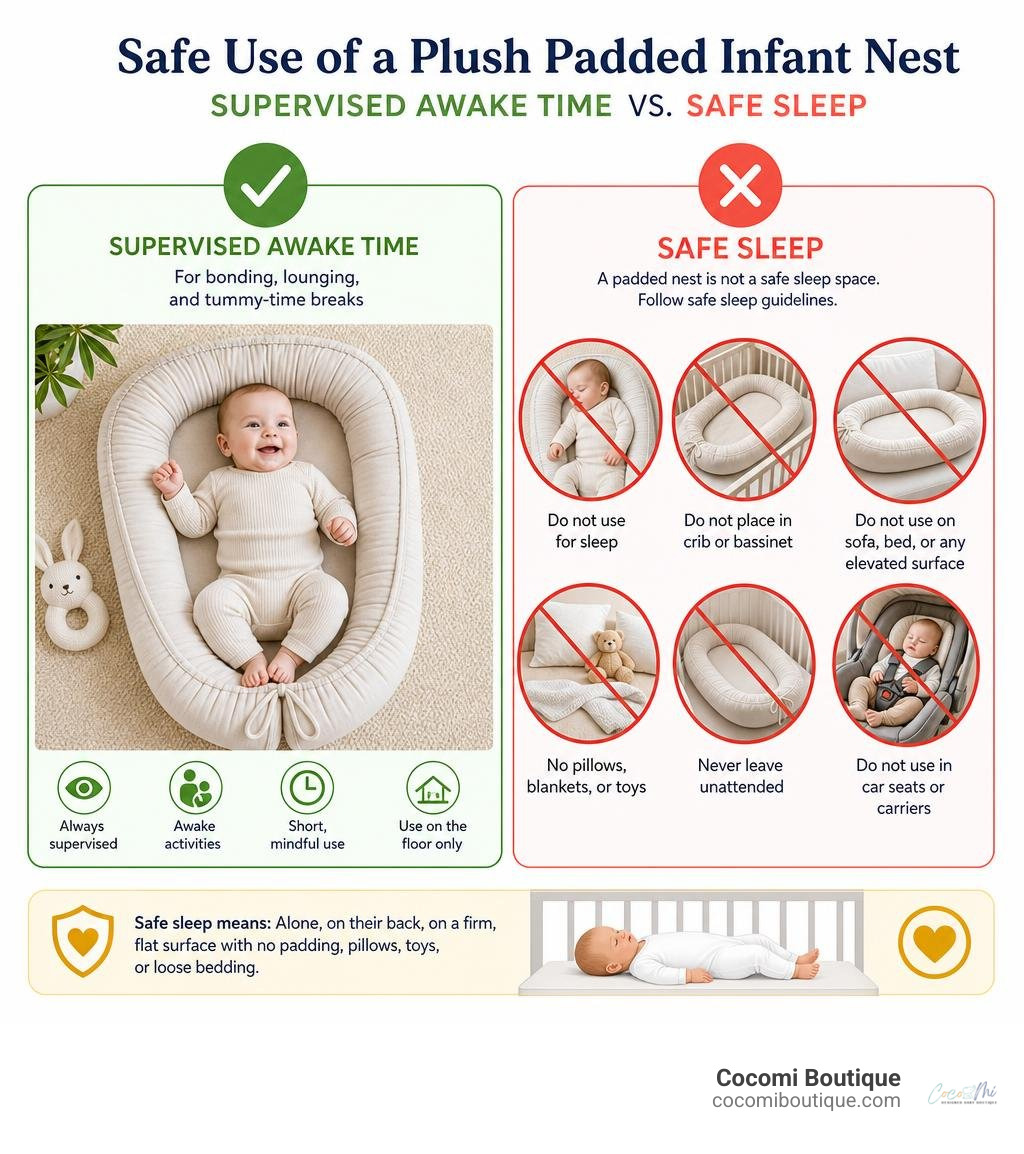
Simple guide to plush padded infant nest terms:
Understanding the Newborn Pod: Purpose, Benefits, and Design
Welcoming a newborn into the world is one of life’s most breathtaking chapters, but it also brings a steep learning curve. After nine months inside a snug, warm womb, the vast, open nursery can feel overwhelming to a delicate infant. This is where an intentionally designed cocoon brings tremendous comfort. By offering a designated, familiar spot for supervised daytime relaxation, a baby pod bridges the sensory gap between prenatal security and life in the outside world.
During those early months, parents often look for safe ways to engage with their little ones during awake windows. A handcrafted nest provides a dedicated station for interactive play, visual tracking, and gentle bonding. To explore the foundational aspects of these nursery staples, explore The Complete Guide To Baby Nests. Engaging with your baby in these supportive daytime setups also aligns with early enrichment concepts, such as those shared by early childhood development resources.
What Distinguishes a Plush Padded Infant Nest from Standard Pods?
While standard pods on the market often rely on rigid polyester frames or thin nylon fabrics, a luxury plush padded model elevates the experience through premium craftsmanship. The primary distinction lies in the harmonious balance of plush, tactile outer textiles with a stable, supportive base.
The outer bumper walls gently cocoon the infant, creating a defined boundary that prevents them from rolling onto hard flooring during supervised awake sessions. Within our handcrafted Baby Nests collection, the exterior dimensions (typically around 35.5 inches by 23.6 inches) ensure your baby has ample room to lounge comfortably without feeling lost in expansive empty space.
Calming Reflexes and Womb-Like Ergonomics
Newborns possess an involuntary primitive reaction known as the Moro (startle) reflex. Sudden shifts in sound or open expanses can cause an infant to throw their arms outward, often startling themselves awake or causing distress. Pediatric osteopaths note that the contoured, cushioned boundaries of a nest softly buffer these sudden arm movements, offering reassuring tactile feedback.
Furthermore, during supervised tummy-time exercises, the raised perimeter serves as an ergonomic prop. Placing a baby’s chest gently over the lower bumper cushions their torso, making it easier for them to lift their head, build neck strength, and engage with caregivers while reducing pressure on the back of the skull.

Key Features to Look For in a Plush Padded Infant Nest
Selecting the right essentials for your nursery requires a discerning eye for quality, safety, and everyday practicality. Because newborn skin is exceptionally delicate and permeable, the materials touching your baby should be completely free of toxic treatments, chemical flame retardants, and harsh synthetic dyes.
| Feature / Metric | Plush Padded Infant Nest | Traditional Bassinet | Standard Wooden Crib |
|---|---|---|---|
| Primary Function | Supervised daytime lounging & tummy time | Unsupervised overnight & nap sleep | Long-term independent sleep |
| Portability | High (lightweight, easily moved room-to-room) | Moderate (room-specific or stand-mounted) | Stationary (fixed nursery furniture) |
| Base Surface | Firm, high-density foam (approx. 29.5" x 13.5") | Firm, flat mattress meeting sleep safety rules | Rigid, standard-dimension firm mattress |
| Side Construction | Raised, plush cushioned perimeter bumper | Rigid mesh or breathable textile walls | Fixed wooden vertical slats |
| Ideal Placement | Level, non-elevated hardwood or carpet floor | Free-standing next to adult bed | Free-standing dedicated nursery space |
Premium Natural Fabrics and OEKO-TEX Certification
When evaluating textiles, prioritize natural weaves such as heirloom linen and organic cotton. These fibers allow for natural thermoregulation, preventing the overheating that synthetic materials often cause.
Choosing a certified textile like our Hypoallergenic Infant Nest Cover guarantees that every thread, zipper, and seam has been tested against hundreds of harmful substances under OEKO-TEX Standard 100 Class 1 parameters—the strictest standard in European textile manufacturing.
Breathability, Foam Firmness, and Easy Maintenance
A common misconception is that infant gear should be as soft and pillowy as possible. In reality, the inner mattress must maintain structural firmness. A supportive foam pad ensures proper spine alignment and prevents the baby from sinking into the base.
Life with a newborn inevitably involves milk dribbles, spit-ups, and sudden diaper leaks. Practical baby essentials must accommodate daily cleaning without losing their shape. Look for designs featuring:
- Hidden, high-grade safety zippers that do not scratch sensitive skin
- Detachable, machine-washable outer covers and fitted sheets
- Water-resistant protective interior mattress barriers
- Durable construction that withstands repeated laundering on gentle cycles
Best Styles and Curated Designs for Modern Nurseries
Creating a serene, aesthetic sanctuary for your baby doesn’t mean sacrificing practical function. Today's nursery styling leans toward calming, organic tones—creams, warm oats, muted sages, and soft dusky roses. Handcrafted baby nests blend effortlessly into modern Scandinavian and minimalist interiors while offering a dedicated sanctuary for your little one.

Handcrafted Herringbone Linen and Cotton Blends
There is a timeless luxury in traditional woven patterns. The Premium Baby Nest Herringbone Pattern is crafted from an exquisite blend of 55% softened natural linen and 45% premium cotton. This specialized weave provides exceptional breathability and structural elegance. Linen naturally wicks moisture away during warm summer afternoons, while cotton imparts a gentle, soothing touch against delicate cheeks.
Ultra-Soft Velvet and Faux Lambskin Textures
For cooler seasons or parents seeking rich, tactile depth, plush fabrics deliver unmatched comfort. Our Velvet Baby Nest features an ultra-soft, tailored cotton-velvet exterior that brings gentle sophistication to the nursery.
Alternatively, the Lamb Baby Nest wraps your infant in a faux-lambskin texture, offering a comforting environment that makes supervised lounging, family stories, and sibling bonding feel like an absolute dream.
Infant Nest Safety Standards: Safe Sleep vs. Supervised Lounging
At CocoMi Boutique, we place infant safety at the forefront of everything we craft. While plush loungers are incredible lifestyle aids for modern families, parents must understand the critical boundary between awake, supervised daytime lounging and unsupervised sleep.
Between 2021 and 2023, the U.S. Consumer Product Safety Commission (CPSC) received 45 incident reports involving baby loungers and nests across the broader market, 29 of which resulted in infant fatalities. These tragic events occurred almost exclusively when products were used unsafely—such as placing a lounger inside an adult bed for co-sleeping, leaving a baby unattended overnight, or setting a nest on an elevated, soft couch where an infant could shift or roll into a hazardous position.
To delve deeper into the science of newborn slumber, we encourage parents to read Nest Or No Nest Decoding Safe Sleep For Your Newborn.
Health Authority Recommendations on Infant Sleep
Leading pediatric health authorities, including the American Academy of Pediatrics (AAP) and Health Canada, emphasize the foundational rules of infant sleep safety. Every caregiver should follow the core Safe to Sleep principles:
- Alone, On the Back, on a Firm Surface: Infants must always be placed on their back to sleep on a firm, flat, standalone mattress certified for cribs, bassinets, or play yards.
- Bare Sleep Environments: The sleeping space must be free of soft bedding, loose blankets, quilts, plush toys, and padded bumpers.
- No Secondary Bedding Inserts: To learn how sleep setups differ, consult Crib Or Nest Navigating Safe Sleep For Your Baby. A padded nest should never be placed inside a crib, bassinet, cradle, or playpen.
Safe Usage Guidelines for Your Plush Padded Infant Nest
To ensure a safe and joyful experience with your baby nest, follow these practical best practices:
- Keep It on the Floor: Always place the infant nest on a flat, firm, and level floor. Never place it on adult mattresses, sofas, tables, countertops, or chairs where it could tip or fall.
- Ensure Active, Continuous Supervision: Baby nests are designed for awake bonding, interactive play, and tummy time. Keep your baby within clear sight and arm's reach at all times.
- Keep the Nest Free of Loose Items: Do not drape heavy blankets or place loose pillows over your baby while they are resting in the lounger.
- Transition Upon Sleep: If your little one drifts off to sleep while relaxing in their nest, gently scoop them up and transfer them to their firm, flat crib or certified bassinet.
- Watch for Rolling Milestones: Once your infant demonstrates the ability to roll over independently, discontinue using the nest for unrestricted lounging to prevent accidental entrapment against the raised borders.
Frequently Asked Questions About Infant Loungers
How long can a baby use a padded nest before outgrowing it?
Most standard newborn pods and baby nests are tailored for use from birth up to approximately 8 to 9 months of age. The interior mattress length (around 29.5 inches) comfortably accommodates your baby through rapid early growth spurts.
However, developmental readiness is just as important as physical size. The moment your baby learns to roll over from back to tummy or begins pushing up on their hands and knees, open lounging should be modified. At this stage, nests can transition into supported floor cushions for parent-assisted storytime or stationary seating support under direct adult supervision.
Can an infant nest be placed inside a crib or bassinet for sleep?
No. You should never place an infant nest, pod, or lounger inside a crib, cradle, bassinet, or playpen.
Cribs and bassinets are engineered to provide a completely flat, bare surface with rigid, breathable perimeters. Adding a plush nest inside a crib creates narrow gaps between the raised bumper and the crib walls, introducing a serious risk of suffocation or physical entrapment. Keep cribs completely bare for nighttime and unassisted naps, reserving your nest for floor-level daytime moments in your living areas.
What is the best way to clean and wash a newborn nest?
Maintaining hygiene should be straightforward and stress-free. For our handcrafted designs:
- Unzip and remove the outer textile cover along with the fitted sheet.
- Machine wash the natural linen, cotton, or velvet cover on a gentle cycle using cold water and a mild, baby-safe detergent free of optical brighteners.
- Line dry or tumble dry on an ultra-low, delicate heat setting to preserve the integrity of natural fibers.
- For the high-density inner foam mattress, spot clean with a damp cloth and mild soapy water, allowing it to air dry thoroughly before reassembling.
Conclusion
Every quiet cuddle, shared smile, and interactive milestone in those first few months becomes a cherished memory. Handcrafted with uncompromising care, our natural baby loungers offer a dedicated space for daytime bonding, tummy time, and restful awake moments. By pairing European-certified OEKO-TEX safety with pure, breathable textiles, you can surround your little one in comfort while maintaining complete peace of mind.
Explore our curated baby collections, nursery decor, and thoughtful essentials by visiting the CocoMi Baby Boutique journal to discover beautifully made pieces crafted for your family's journey.