

Is the Daydreamer Infant Sleeper Safe for Your Baby?

The daydreamer infant sleeper is a popular inclined baby lounger — but its safety record raises serious concerns every parent should know before use.
Quick answer:
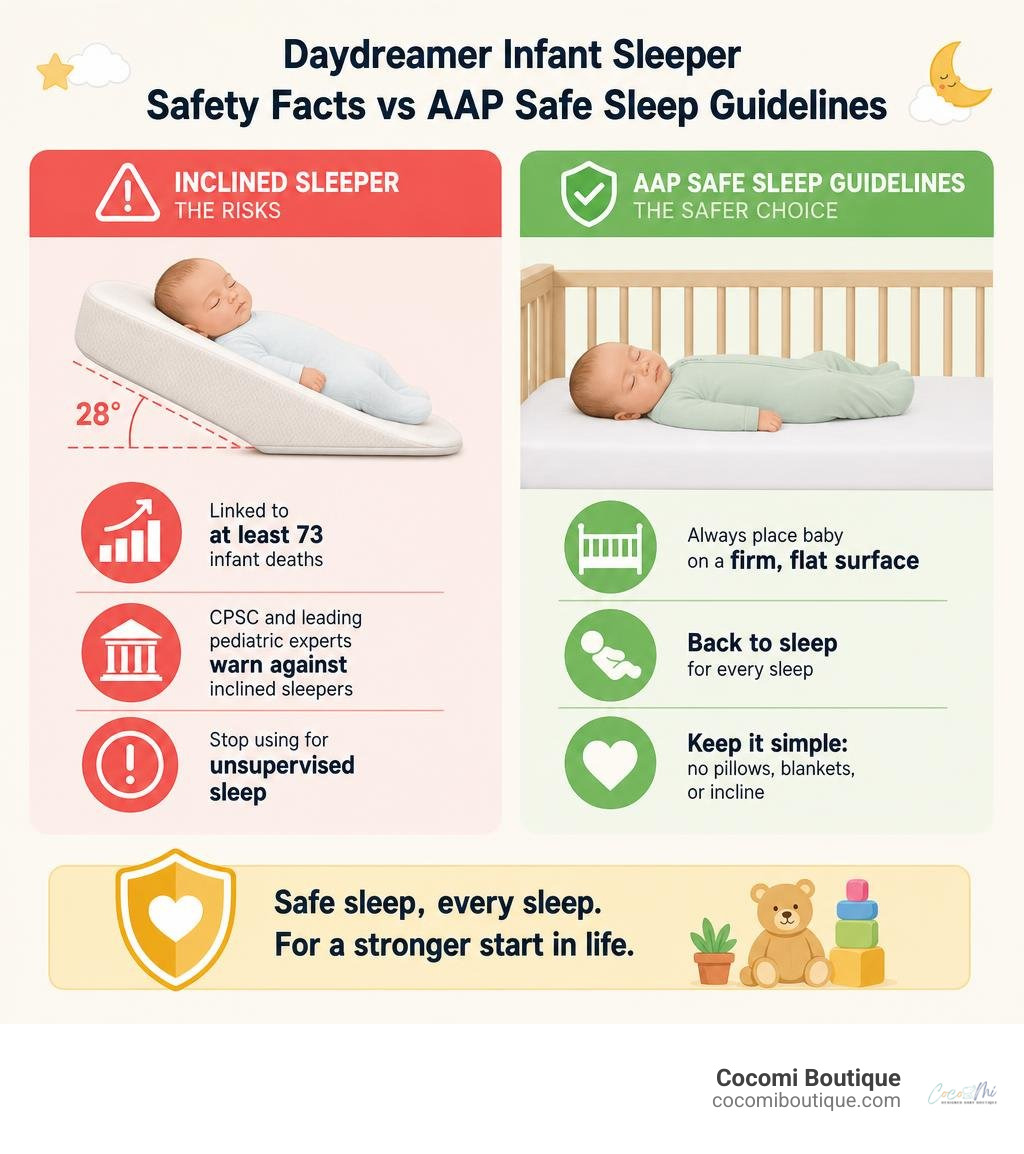
- This product is an inclined sleeper positioned at a 28-degree angle, marketed for reflux relief and longer sleep
- The CPSC and leading pediatric experts have linked inclined sleepers to at least 73 infant deaths
- The American Academy of Pediatrics (AAP) recommends babies sleep only on a firm, flat surface — no incline
- If you own this or any similar inclined sleeper, stop using it for unsupervised sleep immediately
Many parents first turn to inclined sleepers out of desperation — a colicky baby, painful reflux, sleepless nights. The appeal is real. But the risks are, too.
In 2019, a CPSC-commissioned study found inclined sleep products unsafe for infant sleep. That same year, more than 165,000 inclined sleepers were recalled across multiple major brands. Despite this, many of these products remain in homes and on resale markets today.
This guide explains exactly what this sleeper is, why safety advocates are alarmed, and what safer options exist for your baby.
I'm Monika Jarog, founder of Cocomi Boutique, where I specialise in handcrafted, natural baby essentials designed to meet the highest European safety standards. My work sourcing safe, chemical-free sleep products for newborns has given me a close understanding of the risks associated with products like the daydreamer infant sleeper — and the safer alternatives parents can trust.
Daydreamer infant sleeper terms explained:
Understanding the Inclined Infant Sleeper Design
To understand why the daydreamer infant sleeper became a household name—and why it eventually drew intense scrutiny—we must first look at its design. Built to mimic a semi-upright resting position, the product was engineered with several specific physical features intended to maximize infant comfort.
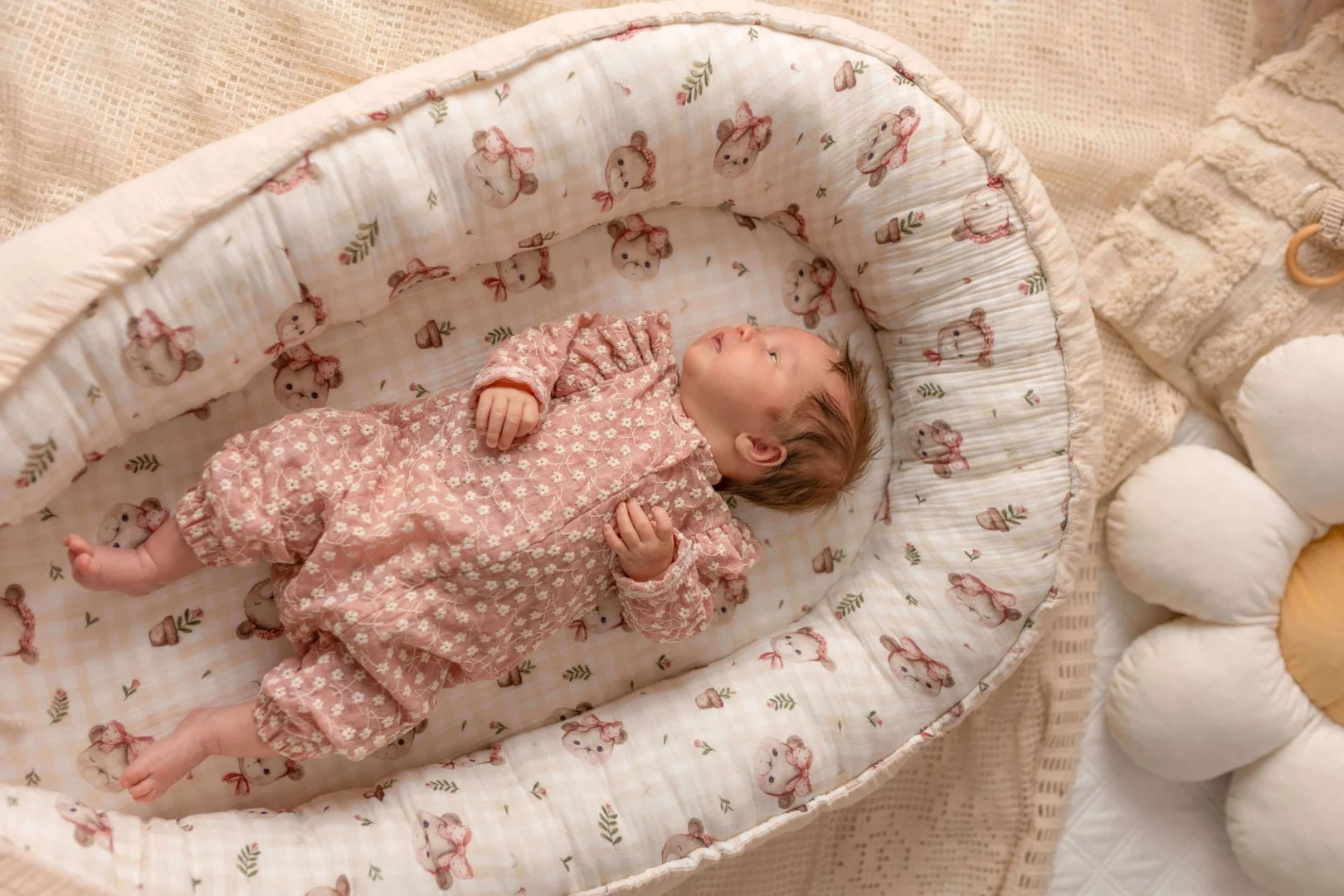
The core design of this inclined sleeper consists of a molded foam interior that positions a baby at a 28-degree angle. It features a soft, plush fabric cover designed to cradle the infant, high 9-inch sidewalls, a waterproof seating area, and a built-in safety harness. The entire outer cover is zippered and machine-washable, making it highly practical for dealing with the inevitable spills, spit-ups, and diaper leaks of early parenthood.
How the Inclined Infant Sleeper Works
The primary selling point of the daydreamer infant sleeper was its ability to alleviate the symptoms of infant acid reflux and colic. When a newborn lies completely flat, gravity can cause stomach acid to travel back up the esophagus, causing pain and frequent waking. By elevating the baby's head and torso to a 28-degree angle, the sleeper uses gravity to keep stomach contents down, promoting better digestion and fewer spit-up episodes.
To keep the baby securely positioned on this slope, the design relies on a built-in seat belt or harness secured directly to the solid core of the sleeper rather than just the fabric cover. The high 9-inch sidewalls—which are significantly taller than those found on older, recalled models of other brands—were designed to prevent the infant from rolling out.
For many exhausted parents, this combination of a secure harness, high walls, and an elevated angle seemed like the ultimate remedy for sleepless nights. However, what was marketed as a comfort feature turned out to be the product's greatest safety hazard.
Safety Concerns and Recalls of Inclined Sleepers
Over the last several years, federal regulators and pediatric health organizations have taken a firm stand against inclined infant sleepers. The U.S. Consumer Product Safety Commission (CPSC) has issued sweeping warnings and recalls, fundamentally changing how we approach newborn sleep safety.
Historically, the CPSC, in coordination with several major manufacturers, announced the recall of more than 165,000 infant inclined sleep products. These sweeping actions came after a mounting body of evidence linked inclined sleep environments to at least 73 tragic infant deaths.
In October 2019, a landmark CPSC-commissioned expert study concluded that inclined sleep products with an angle greater than 10 degrees are inherently unsafe for unsupervised infant sleep. This study confirmed what safety advocates had long feared: the very design that parents relied on for reflux relief was putting babies at risk of suffocation.
To help you evaluate different products, we can look at how standard flat sleep surfaces compare directly to inclined options:
| Feature | Flat Sleep Surface (Crib, Bassinet) | Inclined Infant Sleeper |
|---|---|---|
| Incline Angle | 0 to 10 degrees (Flat) | 10 to 30 degrees (Typically 28 degrees) |
| Airway Security | Keeps neck straight and airway fully open | High risk of chin-to-chest positional asphyxiation |
| AAP Compliance | Fully compliant with Safe Sleep guidelines | Non-compliant; strongly discouraged for sleep |
| Supervision Required | Safe for unsupervised overnight sleep | Requires constant, active supervision at all times |
| Suffocation Risk | Extremely low when kept free of loose bedding | High risk from soft fabric walls and rolling |
For a deeper dive into how different lounging products impact baby safety, you can read our detailed analysis on The Truth About Newborn Loungers Safety Benefits And What To Consider. You can also explore industry-wide product evaluations in the comprehensive guide on the Best Day Sleepers for Babies - Sleepopolis.
Risks Associated with Inclined Infant Sleepers
The primary medical hazard associated with the daydreamer infant sleeper is positional asphyxiation. Newborns have heavy heads, weak neck muscles, and soft, pliable airways. When an infant is placed on a 28-degree incline, their head naturally tends to slump forward onto their chest. This "chin-to-chest" position can easily compress the trachea, cutting off the baby's oxygen supply silently and quickly, without the baby waking or making a sound.
Beyond positional asphyxiation, several other critical physical risks exist:
- Suffocation against Sidewalls: If a baby manages to roll over or turn their face into the plush, soft fabric of the high sidewalls, they can suffocate.
- Harness Strangulation: If the safety buckle is not fastened correctly, or if the baby slips down, they can become entangled in the straps.
- Restricted Physical Development: Spending prolonged periods buckled into a semi-upright seat prevents infants from stretching, rolling, and building the essential neck, shoulder, and core muscles they need for healthy physical milestones.
Pediatric Guidelines and Safe Sleep Alternatives
As a premium brand serving families across the Chicago North Shore—from Northbrook and Deerfield to Highland Park, Glencoe, and Winnetka—we believe that physical safety is the absolute foundation of luxury. True comfort for your baby cannot exist without total peace of mind for you.

According to the American Academy of Pediatrics (AAP), the gold standard for safe infant sleep is simple: babies should always sleep alone, on their back, on a firm, flat surface with no extra bedding, pillows, soft toys, or bumper pads.
If you are looking to establish a secure, healthy sleep routine for your little one, we recommend reviewing our expert resource on the Best Infant Sleep habits, as well as our guide on Crib Or Nest Navigating Safe Sleep For Your Baby.
Fortunately, parents do not have to choose between a good night's sleep and their baby's safety. There are several safe, pediatric-approved alternatives that can soothe your baby without the risks of an inclined sleeper:
- Premium Flat Baby Nests (for Supervised Lounging): Handcrafted, flat baby nests made from organic, OEKO-TEX certified cotton are wonderful for keeping your baby cozy while awake and fully supervised.
- High-Quality Sleep Sacks: Replacing loose blankets with a snug, breathable Muslin Sleep Sack keeps your baby warm and secure while complying perfectly with flat-sleep guidelines.
- Frequency-Tuned Sound Therapy: Sound machines can soothe a restless or colicky baby naturally. Devices like the Dreamer™ | Frequency-Tuned Baby Sound Machine — 432Hz use science-backed frequencies to calm the infant nervous system without relying on hazardous physical inclines.
- Under-Layer Sleepers: Dressing your baby in temperature-regulating, organic fibers like bamboo viscose or TENCEL™ ensures they stay comfortable on a firm mattress. For our top curated picks, explore Dreamy Duds Top Newborn Sleepers Sacks And Suits For Your Little One.
What Parents Should Do with an Inclined Sleeper
If you currently own a daydreamer infant sleeper or any similar inclined sleep product, the most important step you can take is to stop using it for sleep immediately. Even if your baby has slept in it safely in the past, the hidden risks of positional asphyxiation are simply too high to ignore.
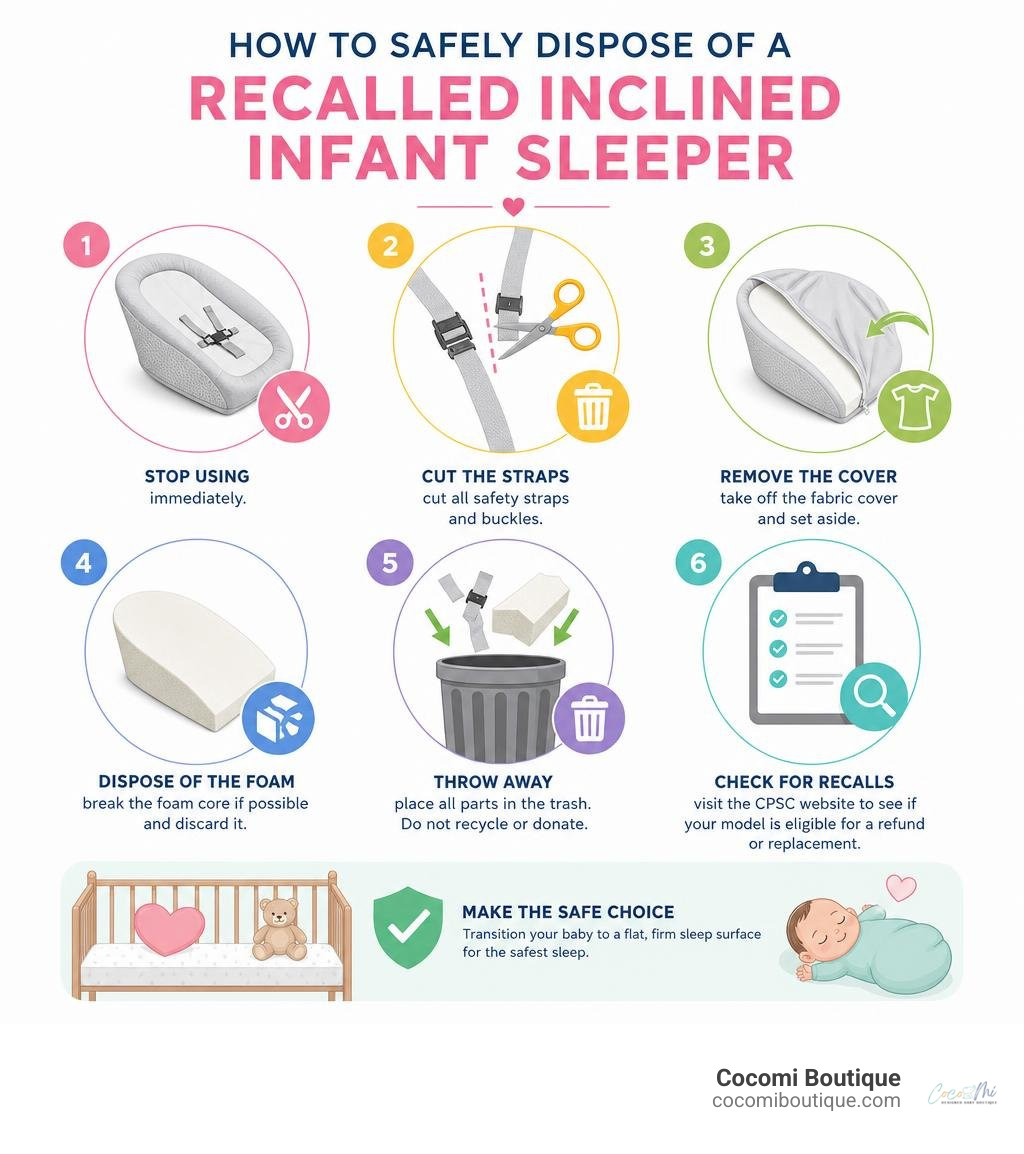
Here is a step-by-step action plan for parents:
- Immediate Discarding: Do not sell, donate, or pass the sleeper along to another family. To prevent anyone else from using a recalled or unsafe product, cut the safety straps, remove the cover, and dispose of the foam core safely.
- Check for Active Recalls: Visit the CPSC website or the manufacturer's portal to see if your specific model qualifies for a refund, store credit, or replacement voucher.
- Transition to a Safe Surface: Move your baby to a flat crib, bassinet, or playard. If your baby is used to sleeping at an incline, the transition may take a few days of adjustment. Focus on creating a dark, cool room, using a flat firm mattress, and layering comfortable, organic sleepwear.
- Invest in Long-Term Sleep Solutions: If you are searching for the perfect safe setup for your nursery, we invite you to read our guide on The Nesting Place Finding The Right Crib Or Sleep Solution For Your Baby to find beautiful, compliant options. You can also explore our tips on how to Sleep Like A Baby Again Exploring Little Nest Sleep Solutions and uncover comforting secrets in Beyond The Bassinet Unlocking Your Newborns Sleep Comfort Secrets.
Frequently Asked Questions About Infant Sleep Safety
Is the daydreamer infant sleeper safe for unsupervised overnight sleep?
No, the daydreamer infant sleeper is not safe for unsupervised or overnight sleep. Because it positions babies at a 28-degree angle, it carries a high risk of positional asphyxiation if the baby’s head slumps forward. The CPSC and the AAP state that babies must only sleep on a flat, firm surface without any incline or plush padding.
What makes a flat surface safer than an inclined sleeper?
A flat, firm surface keeps the baby's spine aligned and their airway completely open. On a flat surface, even if a baby has weak neck muscles, their head rests in a neutral position that prevents the chin from pressing against the chest. This eliminates the risk of silent airway obstruction.
How can I help a baby with reflux sleep safely without an incline?
If your baby suffers from severe reflux, consult your pediatrician first. Safe, non-inclined strategies include keeping the baby upright for 20 to 30 minutes after feeding before laying them flat, ensuring they are burped thoroughly, and using a firm, flat mattress. Never use towels or wedges to elevate a crib mattress unless specifically directed and supervised by your pediatrician.
Conclusion
At Cocomi Boutique, we understand that navigating newborn sleep is both beautiful and overwhelming. As a family-focused boutique serving Chicago, Illinois, and our local communities from Wheeling and Prospect Heights to Glenview and Buffalo Grove, we believe that every baby deserves the absolute safest start in life.
While products like the daydreamer infant sleeper were designed with the best intentions for comfort, modern pediatric safety guidelines have made it clear that flat, firm surfaces are the only safe choice for your sleeping baby.
We are proud to offer a curated selection of premium, handcrafted, and OEKO-TEX certified baby nests, elegant Moses baskets, and organic cotton essentials that prioritize both exquisite European craftsmanship and uncompromising safety.
We invite you to Explore Cocomi Boutique's Safe Sleep Collection to find beautiful, secure, and natural products designed to give your family the peaceful, restorative sleep you all deserve.