

Choose a Breathable Swaddle Muslin for Safer, Softer Newborn Comfort

A quality swaddle muslin is a large, lightweight blanket made with a breathable open weave, usually cotton or another soft natural fiber. Choose a generously sized, single-layer swaddle with smooth edges, gentle stretch, and certified non-toxic materials. It should wrap snugly across your newborn's chest while leaving their hips and legs free to bend and move.
Muslin is a favorite for newborn swaddling because it feels soft against delicate skin and helps air circulate. Its light weave can make temperature management easier than with heavy blankets, while the flexible fabric makes a secure wrap simpler to achieve. Swaddling may also help settle the Moro, or startle, reflex; research suggests it can reduce spontaneous arousals and increase quiet sleep in young infants.
For safe sleep, always place a swaddled baby on their back in an empty, firm sleep space. Stop swaddling as soon as your baby shows any signs of trying to roll, which often happens between 2 and 4 months.
CocoMi Baby Boutique creates thoughtfully designed, natural baby essentials with comfort, safety, and elegant everyday use in mind. Our experience with soft, chemical-free nursery fabrics helps guide this selection of swaddle muslin blankets for new parents and thoughtful gift shoppers.
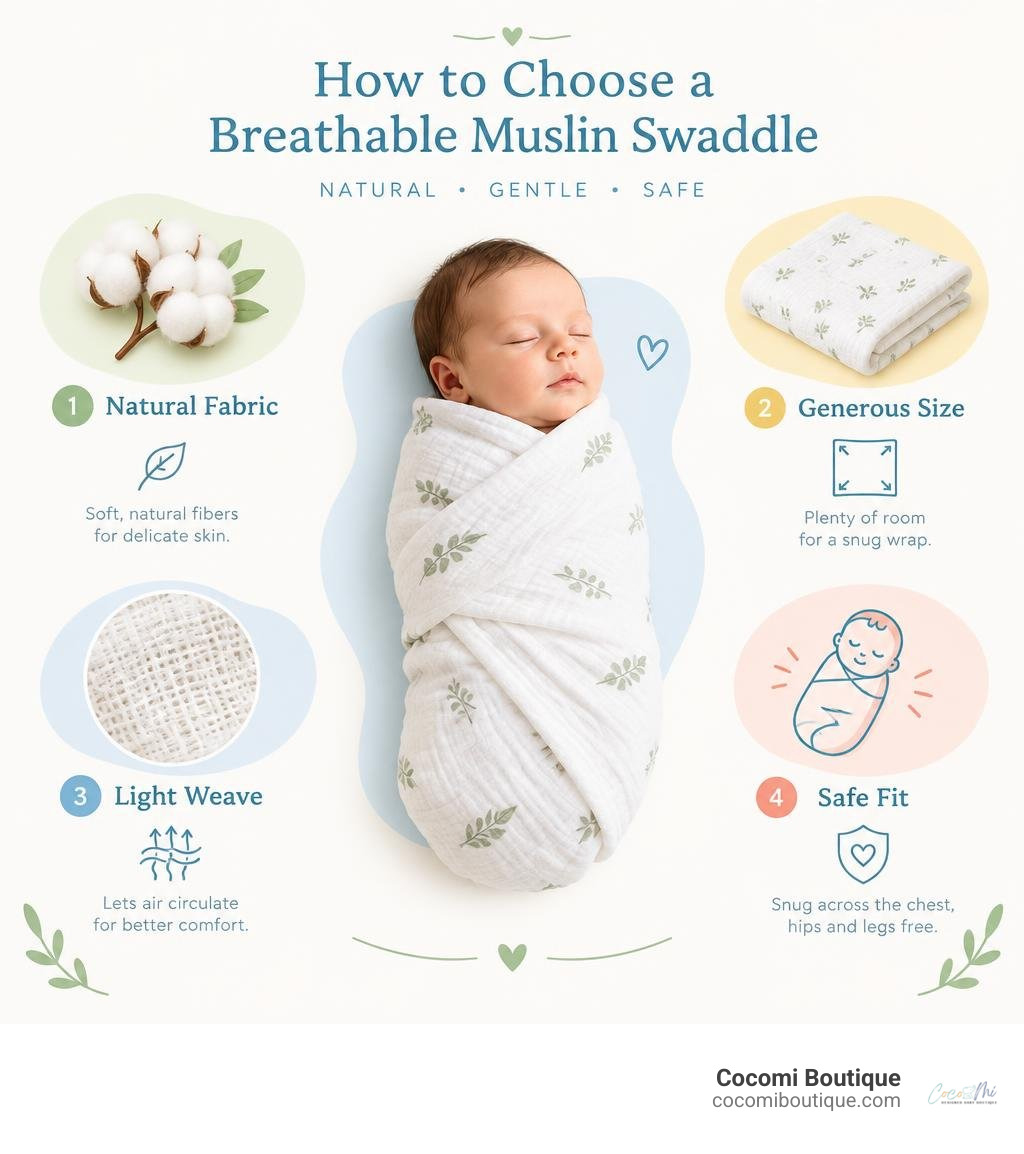
Handy swaddle muslin terms:
Why Swaddle Muslin Is the Gold Standard for Newborn Sleep
Bringing a newborn home introduces a world of tender moments alongside a steep learning curve around infant sleep. In the first few months of life, babies navigate the profound transition from the cozy, secure environment of the womb to the open world. Nearly 60% of parents in the United States use swaddling blankets during these early months to help soothe their infants and encourage restful sleep.
The secret behind why muslin stands out among fabric choices lies in its open weave fabric structure. This unique, lattice-like weave allows continuous airflow, providing superior thermal regulation compared to dense synthetic knits or heavy woven textiles. When an infant is comfortably wrapped without overheating, their sleep cycles stabilize. In fact, clinical research demonstrates that swaddling reduces spontaneous arousals and increases quiet (NREM) sleep duration in infants by approximately 10% to 15%.
The global baby swaddle wrap and blanket market was valued at USD 1.8 billion in 2022 and is projected to expand at a CAGR of 4.8% through 2030, driven largely by modern parents prioritizing breathable, organic nursery essentials. When comparing materials for infant care, the distinction between specialized nursery textiles and general-purpose fabrics becomes clear.
| Feature | Nursery Swaddle Muslin | Regular Craft Muslin |
|---|---|---|
| Yarn Quality | Fine-combed, long-staple natural fibers | Coarser, uncombed utility yarns |
| Weave Density | Open, breathable, single-layer weave | Dense, stiff, tightly woven grid |
| Natural Elasticity | Gentle diagonal give (bias stretch) | Rigid with zero natural give |
| Skin Feel | Cloud-soft, pre-washed, gentle on newborn skin | Stiff, scratchy, contains sizing starches |
| Safety Certifications | OEKO-TEX Standard 100 / GOTS certified | Uncertified, industrial textile grade |
| Washing Durability | Becomes softer with every wash cycle | Tends to shrink, warp, or remain stiff |
Understanding Swaddle Muslin vs Regular Muslin
Not all muslin is created equal. Traditional utility or craft muslin is a stiff plain-weave textile often used by tailors for test garments or by stage crews for theatrical backdrops. It is woven with tightly twisted yarns and treated with chemical sizing agents that make the fabric rigid and scratchy to the touch.
In contrast, premium baby swaddle blankets use pre-washed, loosely spun natural cotton or bamboo yarns. This specific plain-weave technique introduces natural mechanical elasticity along the fabric's diagonal bias. Because it has no added synthetic elastics or harsh sizing chemicals, genuine swaddle muslin molds gently around an infant's contours, holding snug without pinching delicate limbs or feeling restrictive.
Key Newborn Sleep Benefits
During the fourth trimester, babies frequently wake themselves due to the Moro reflex—an involuntary startle response where their arms flail outward. A well-constructed wrap provides gentle, womb-like tactile pressure that keeps startle movements from interrupting essential sleep cycles.
Beyond soothing reflexes, muslin's open weave prevents trapped body heat, reducing the risk of overheating—a critical factor in safe infant sleep environments. Whether you choose timeless soft neutrals or licensed nursery swaddle designs, selecting natural, breathable fibers ensures your newborn enjoys restorative sleep while maintaining healthy hip mobility and total physical comfort.

Key Features to Look for in a Quality Muslin Blanket
When choosing newborn textiles, high quality ensures both peace of mind and long-term durability. Because newborn skin is up to 30% thinner than adult skin, it absorbs environmental substances more readily and is easily irritated by friction or synthetic dyes. A thoughtfully crafted blanket should combine certified purity, optimal dimensions, and a gentle weave.
Selecting the Best Certified Swaddle Muslin Materials
Muslin cotton and bamboo fabrics account for over 45% of the material share in the global baby swaddle wrap market, primarily due to their natural breathability and moisture-wicking capabilities. When curating pieces for your nursery, prioritize certified organic muslin and fabrics tested under strict OEKO-TEX Standard 100 criteria. These certifications verify that every thread, dye, and finishing agent is free from harmful chemicals, heavy metals, pesticides, and allergenic substances.
Our passion at CocoMi Baby Boutique began from our own journey as new parents seeking essentials that balanced refined European aesthetics with uncompromising safety standards. Exploring organic cotton swaddle blanket options allows you to embrace fabrics that are naturally hypoallergenic, durable, and exceptionally soft against sensitive skin.
Size, Weight, and Weave Density
Dimensions matter significantly when wrapping an infant securely. Standard blankets measuring 30x30 inches quickly become too small after the first two weeks, leading to loose ends that easily unravel in the crib.
- Ideal Dimensions: Look for generous square cuts, ideally 47x47 inches (120x120 cm). This size provides ample fabric to create neat, secure tucks around your newborn while accommodating your baby's rapid growth throughout their first several months.
- Fabric Weight: Choose lightweight fabric densities around 100 to 120 GSM (grams per square meter). This ensures maximum airflow and prevents bulk around the baby's chest and neck.
- Everyday Versatility: A large, premium muslin wrap extends far beyond swaddling. It easily serves as a lightweight nursing cover, a stroller sunshade, a clean playmat surface, or a breathable burp cloth during daily outings.
Step-by-Step Guide: How to Safely Swaddle Your Baby
Swaddling requires a technique that balances snugness around the upper torso with freedom of movement for the lower body. The International Hip Dysplasia Institute emphasizes that an infant's hips must never be bound tightly together or forced into straight-leg extension.
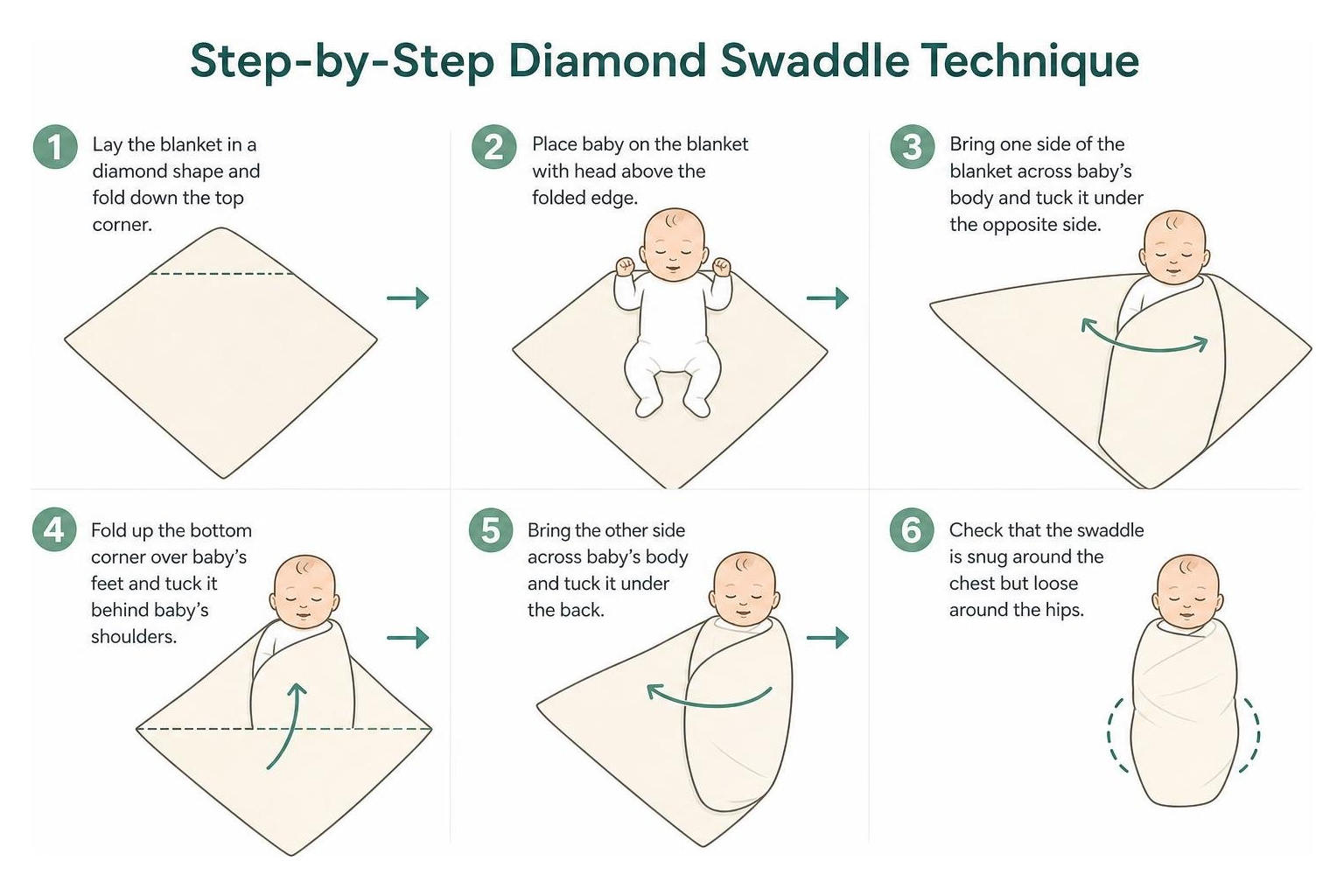
Step-by-Step Guide to Swaddle Muslin Blankets for Sweet Dreams
To achieve a secure, calming wrap that supports natural development, follow these foundational steps for mastering the muslin swaddle wrap:
- The Diamond Placement: Lay your 47x47 inch muslin flat on a secure, flat surface in a diamond orientation. Fold down the top corner about 6 inches toward the center.
- Positioning Baby: Gently place your baby on their back with their neck resting along the top folded edge, ensuring the fabric remains clear of their mouth, chin, and ears.
- First Arm Wrap: Hold your baby's right arm gently along their side or across their chest in a natural, slightly bent position. Bring the left corner of the blanket across their chest and tuck it snugly beneath their left side and back.
- Bottom Fold with Hip Room: Bring the bottom corner up over your baby's feet and legs. Keep this section loose around the hips and knees, allowing the legs to fall naturally into a "frog-like" flexed position with ample room to kick.
- Final Secure Wrap: Hold your baby's left arm gently at their side, bring the remaining right corner of the fabric across their body, and wrap it smoothly around the torso, tucking the end securely into the fold across the chest. Always confirm you can slide two fingers comfortably between the blanket and your baby's chest.
For more comprehensive guidance on safe nursery sleep practices, read through safe swaddling techniques.
Age Guidelines: When to Start and Stop Swaddling
Swaddling is safest and most effective from birth up to approximately 2 to 3 months of age. As soon as your baby exhibits early signs of attempting to roll onto their tummy—such as rolling onto their shoulders or actively twisting their hips—swaddling must be discontinued immediately. A swaddled baby who rolls onto their stomach faces airway restriction if their arms cannot push against the mattress.
When rolling milestones begin, smoothly transition your little one to an arms-free transitional muslin sleep sack. Wearable sleep sacks maintain the familiar warmth and cozy comfort of breathable muslin while leaving arms completely unconstrained for safe, unassisted movement.

Common Swaddling Mistakes and How to Avoid Them
Even seasoned caregivers can encounter common swaddling pitfalls. Being mindful of the following safety considerations ensures your baby stays peaceful and secure:
- Wrapping the Hips Too Tightly: Restricting leg movement or forcing hips straight increases the risk of developmental hip dysplasia. Always verify that your baby can freely bend their legs up and outward inside the bottom pouch.
- Placing Baby on Their Side or Tummy: Swaddled infants must always be placed to sleep on their back. Never position a swaddled infant on their side or stomach.
- Loose, Unsecured Fabric: If a blanket is wrapped too loosely, restless kicks can unravel the folds, creating loose bedding near the face. Use a large square muslin that allows clean, secure tucking beneath the baby's body weight.
- Overdressing and Overheating: Because muslin is naturally lightweight, parents sometimes overcompensate by layering multiple heavy garments underneath. Check your baby's chest or the back of their neck: skin should feel comfortably warm and dry, never clammy, damp, or hot.
- Covering the Face or Neck: Keep the upper edge of the blanket safely positioned at shoulder level, well below the chin, to keep breathing pathways open.
Frequently Asked Questions About Muslin Swaddling
Can muslin swaddles cause overheating in summer?
Because muslin features a loose, open plain weave, it is one of the most breathable fabrics available for warm weather. However, thermal comfort depends on the room environment and the layers worn underneath. In summer months (room temperatures of 68°F to 72°F), a single-layer muslin swaddle paired with a light short-sleeve organic cotton bodysuit is generally ideal.
How many muslin swaddles does a newborn need?
For most families, having 4 to 6 premium muslin swaddles provides a comfortable rotation. Newborns go through frequent diaper leaks, spit-up events, and daily laundering cycles. Having extra blankets on hand ensures you always have a fresh, clean wrap ready for naptime, feedings, and stroller outings.
How do I wash and soften muslin swaddle blankets?
Muslin softens naturally over time. Machine wash your swaddles on a gentle cycle using cold or warm water and a mild, fragrance-free baby detergent. Tumble dry on low heat or hang dry naturally in the breeze. Avoid fabric softeners and harsh bleach, as these can coat the natural fibers and diminish their natural breathability.
Conclusion
Creating a calm, restorative nursery environment begins with gentle essentials crafted to protect your baby's comfort. Breathable, natural swaddle muslin continues to be the preferred choice for parents and gift-givers worldwide, blending timeless simplicity with proven sleep benefits.
At CocoMi Baby Boutique, we design each piece with deep care, utilizing certified OEKO-TEX natural fabrics, elegant neutral palettes, and European-inspired craftsmanship. Whether you are welcoming your own little one or searching for the perfect newborn gift, explore our nursery guides and boutique collection to discover beautifully crafted blankets, nests, and baby essentials designed for everyday family life.