

A Safe Infant Lounger Is for Awake, Supervised Time Only

A safe infant lounger is never a sleep space. Use one only for brief, fully supervised awake time, placed directly on a clear, flat floor. If your baby becomes drowsy or falls asleep, move them right away to a crib, bassinet, or play yard with a firm, flat mattress and fitted sheet only.
When shopping, look beyond soft fabrics and beautiful styling. Choose a post-2025 model designed for awake use, with a firm, low-profile surface, clear non-sleep warnings, and no deep padding, incline, or high cushioned sides. Avoid secondhand or marketplace listings unless you can confirm the exact model is not recalled and meets current CPSC requirements.
At CocoMi Boutique, we believe safety and softness should work together. Our handcrafted baby essentials use natural, chemical-free, OEKO-TEX certified fabrics selected to be gentle on newborn skin, while helping parents create a calm, thoughtfully designed nursery.
As handcrafted baby essentials makers focusing on natural materials, comfort, and practical safety for new families, we designed this guide to help you evaluate a safe infant lounger without confusing marketing claims or compromising on the premium fabrics you want near your baby.
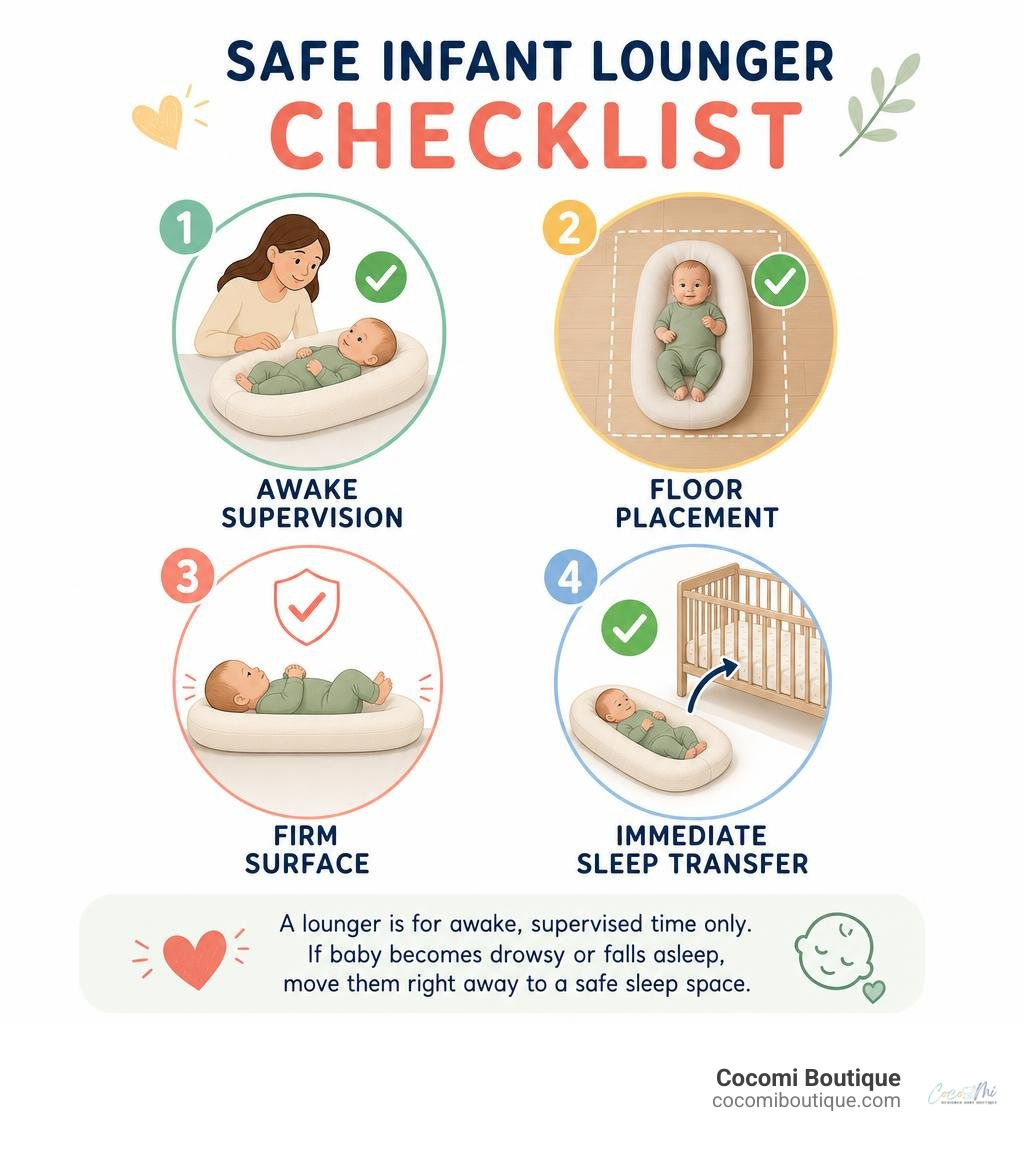
Simple guide to safe infant lounger terms:
Understanding What Makes a Safe Infant Lounger in 2026
Welcoming a newborn home brings immense joy, alongside the practical challenge of needing a safe, clean place to rest your little one while you fold laundry, read a story to an older sibling, or prepare a bottle. Infant loungers are intended to serve as supportive, comfortable stations for these brief, supervised awake moments. However, understanding what truly constitutes a safe design has evolved significantly.
Modern safety standards require infant loungers to feature flat, firm mattress bases that support a newborn's spine without allowing their body to sink into plush materials. A properly designed lounger incorporates low, breathable borders that prevent entrapment while keeping your baby visible and comfortable during interactive awake play.
As detailed in recent Consumer Reports analysis on infant lounger safety rules, the market has shifted away from puffy, pillow-like constructions toward structurally supportive accessories tailored exclusively for alert, supervised interaction.
Key CPSC Regulations and Design Standards for a Safe Infant Lounger
In response to serious safety concerns surrounding traditional infant support cushions, the U.S. Consumer Product Safety Commission (CPSC) enacted mandatory federal rules in 2025. These guidelines mandate rigorous testing and strict structural parameters for any newborn support cushion:
- Strict Firmness Standards: The resting surface must meet firm compression thresholds similar to standard crib mattresses, preventing soft padding from forming around an infant's nose or mouth.
- Maximum Incline Limits: Steep angles are prohibited. Loungers must maintain a flat or extremely low-incline orientation to eliminate the risk of the baby's heavy head slumping forward and obstructing their airway.
- Low, Angled Side Walls: Cushioned borders must be shallow and angled outward to ensure unobstructed airflow.
- Prominent Safety Warnings: Permanent, unmissable labels must clearly state that the product is never intended for sleep.
Federal agencies continue to issue explicit CPSC safety regulation warnings against non-compliant cushions, underscoring that loungers must never be used as improvised sleep environments or placed inside cribs and bassinets.
Critical Hazards: Suffocation Risks, Incline Dangers, and Fall Hazards
Understanding why certain lounger designs pose hazards helps parents make empowered, safety-first choices. According to the CPSC, at least 79 infant fatalities were associated with infant loungers between 2010 and 2022. Tragically, three deaths were reported to the CPSC in 2025, and another infant passed away in February 2026 due to unsafe sleep positioning in lounger products.
The primary physical risks include:
- Positional Asphyxiation: Newborns lack the neck strength to lift their heavy heads if placed at an incline. When their chin drops toward their chest, their delicate airway compresses silently.
- Suffocation & Rebreathing: Overly plush, pillow-soft borders can envelop an infant's face if they roll or turn sideways, trapping exhaled carbon dioxide.
- Fall Hazards: Placing any lightweight lounger on elevated surfaces—such as sofas, beds, or countertops—poses an immediate tipping and falling hazard if the baby wriggles or shifts their weight.
To keep your nursery safe, avoid loungers featuring deep sinking centers, loose unquilted fabrics, high pillow bolsters, or steep inclined wedges.
The Step-by-Step Checklist to Choose and Vet a Newborn Lounger
When selecting nursery essentials for your baby, balancing verified structural safety with premium, pure materials is essential. Newborn skin is three to five times thinner than adult skin, making it highly permeable to harsh finishing chemicals, synthetic dyes, and volatile organic compounds (VOCs).

Evaluating a lounger involves checking structural integrity alongside the purity of every textile layer.
How to Choose and Vet a Truly Safe Infant Lounger
Use this practical checklist when reviewing any newborn nest or lounger:
- Verify Post-2025 Compliance: Confirm the manufacturer adheres to current safety guidelines, featuring firm construction, shallow side walls, and permanent non-sleep warning labels.
- Perform the Firmness Test: Press your palm firmly into the center base. It should immediately spring back without leaving a deep hand depression or creating soft surrounding pockets.
- Inspect Fabric Certifications: Ensure every surface touching your infant is certified under OEKO-TEX Standard 100 Class 1 (the strictest standard for baby skin) or crafted from 100% certified organic cotton, free from toxic flame retardants, phthalates, and heavy metals.
- Evaluate Low-Profile Dimensions: Opt for low side borders made with breathable natural fills, such as high-grade natural cotton batting, rather than bulky synthetic foam rolls.
Our handcrafted baby nests collection is created around these exacting standards, pairing firm, ergonomic support with the finest European OEKO-TEX certified natural fabrics.
Avoiding Online Marketplace Scams, Recalled Inventory, and Secondhand Risks
While hand-me-downs and secondhand marketplaces can be tempting for nursery styling, infant loungers require strict scrutiny. Online platforms have faced substantial challenges with non-compliant and recalled inventory. In 2025, the CPSC facilitated the removal of a record 67,647 dangerous product listings from online marketplaces; in 2026, that number has already surpassed 106,000 listings.
Beware of deceptive marketing phrases such as "co-sleeping nest," "soothing sleep pod," or "womb-like sleeper." Under federal safety guidelines, no lounger or nest is approved for infant sleep. When considering baby essentials, always buy directly from trusted boutique makers with transparent manufacturing standards, and cross-reference legacy baby gear with the CPSC recall database.
Safe Lounger Practices: Supervision, Time Limits, and Sleep Rules
A compliant lounger is an exceptional aid for awake interaction when used with strict everyday safety practices.
- Place Exclusively on the Floor: Always set the lounger on a flat, firm, unobstructed floor area, well away from stairs, pets, cords, and furniture edges.
- Maintain Active Visual Supervision: Keep your eyes on your baby at all times. Loungers are meant for moments when you are in the same room interacting, singing, or resting nearby—never while leaving the room unattended.
- Transition to Tummy Time: Use awake time on the floor to alternate between resting in a natural lounger and practicing tummy time on a flat play mat to build neck and core strength.
The ABCs of Safe Sleep and Handling a Drowsy Baby
Every parent knows how easily a soothed baby can drift off during awake time. However, a lounger should never be used as a sleep environment. If your baby's eyelids flutter and they begin to fall asleep, immediately transfer them to a safe sleep surface following the American Academy of Pediatrics (AAP) ABC guidelines:
- A - Alone: The sleep space must be clear of all pillows, plush toys, blankets, and positioners. Dress your baby in a breathable, fitted sleep sack for babies instead of using loose coverings.
- B - on their Back: Always place your infant flat on their back for every nap and nighttime sleep.
- C - in a Crib, Bassinet, or Play Yard: Use a certified, firm mattress covered with a tightly fitted sheet.
| Feature / Practice | Supervised Lounger (Awake Time) | Crib / Bassinet (Sleep Time) |
|---|---|---|
| Primary Purpose | Interactive play, awake resting, bonding | Unattended naps and nighttime sleep |
| Supervision Level | Continuous, active adult supervision | Audio/video monitor or periodic checks |
| Placement Location | Flat, level floor only | Standalone frame, away from hazards |
| Mattress Surface | Firm, supportive, low-profile cushion | Ultra-firm, flat certified infant mattress |
| Bedding Items | No loose blankets; baby dressed in clothing | Fitted sheet only; wearable sleep sack |
Preventing Container Baby Syndrome and Promoting Motor Skills
Modern baby gear offers tremendous everyday convenience, but infants need ample freedom of movement to reach key physical milestones. Pediatric occupational therapists warn against "container baby syndrome"—a condition where spending prolonged periods in restrictive positioning devices (such as loungers, car seats, swings, and bouncers) contributes to flat head syndrome (plagiocephaly) or neck tightness (torticollis).
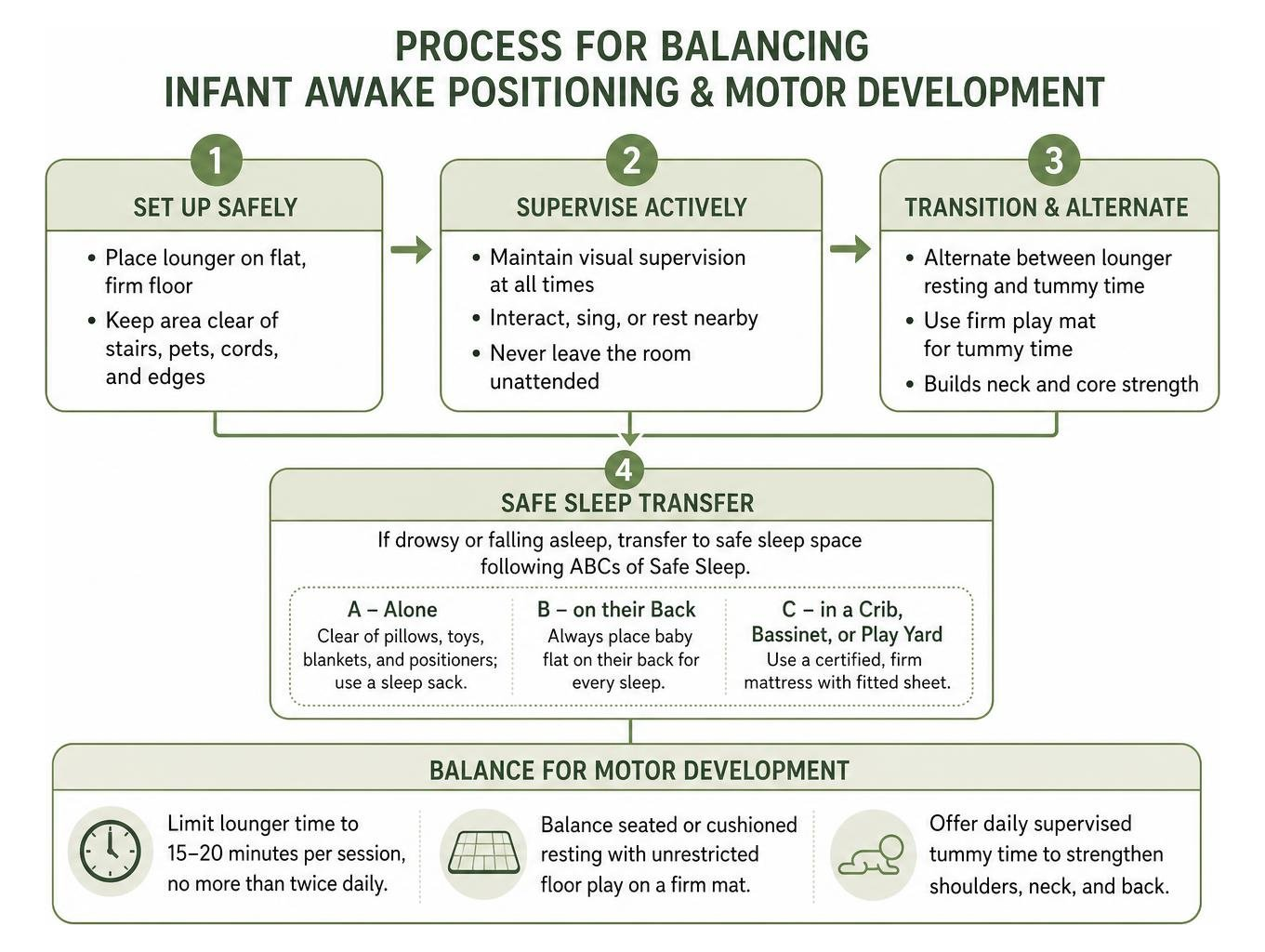
To support healthy motor development, pediatric experts recommend:
- Limiting continuous lounger time to 15–20 minutes per session, no more than twice daily.
- Balancing seated or cushioned resting with unrestricted floor play on a firm play mat.
- Offering daily supervised tummy time to strengthen the shoulders, neck, and back.
Safe and Natural Alternatives for Resting and Supervised Awake Play
If you are creating a serene, natural nursery environment, several safe alternatives complement your daily routine alongside a baby nest:
- Handcrafted Moses Baskets: For resting in your living space or nursery, a certified best organic moses basket lined with chemical-free natural textiles provides a firm, breathable resting area.
- Organic Muslin Floor Quilts: A plush, multi-layered organic cotton quilt spread across the floor offers ample space for free-form kicking, rolling, and tummy time.
- Ergonomic Babywearing Wraps: Natural linen or cotton wraps keep your newborn close to your chest while keeping your hands free, supporting bonding and upright digestion.
- Standard Mesh Play Yards: A certified travel crib or play yard placed on your main living floor provides a dedicated, enclosed safe zone for independent play.
Frequently Asked Questions About Infant Lounger Safety
What should I do immediately if my baby falls asleep in a lounger?
Gently lift your baby and move them directly to their crib, bassinet, or play yard. Place them flat on their back on a firm mattress with a fitted sheet. This quick transfer keeps their airway straight and maintains safe sleep standards.
How long can a baby stay in an infant lounger each day?
Developmental experts recommend keeping lounger sessions to 15–20 minutes at a time, up to twice a day. This ensures your baby enjoys comfortable awake time while spending plenty of time moving freely on flat play mats to develop their motor skills.
What materials should I look for to protect sensitive newborn skin?
Choose items made from 100% natural, breathable fibers like organic cotton, pure linen, and certified non-toxic batting. Look for OEKO-TEX Standard 100 Class 1 certification, which confirms every thread, zipper, and fiber is free from harmful chemicals, heavy metals, and synthetic fragrances.
Conclusion
Creating a peaceful, safe nursery is all about thoughtful choices. While infant loungers provide a gentle, comfortable spot for supervised awake play and family bonding, strict adherence to safe sleep guidelines ensures your baby remains protected at every stage.
At CocoMi Baby Boutique, our family creates heirloom-quality essentials with uncompromising safety standards, European craftsmanship, and the purest OEKO-TEX certified textiles. To learn more about setting up your nursery with natural, safe essentials, explore our comprehensive baby care guides for expert tips on newborn comfort and styling.