

How to Choose a Premium Baby Lounger Insert for Sensitive Skin

Start with fit and fabric. Choose a premium baby lounger insert made for your specific lounger or stroller, with a soft, breathable cover and care instructions you can follow. Natural fibers such as cotton, hemp blends, and lyocell may feel gentle against sensitive skin; a verified OEKO-TEX label can help you check textile testing claims.
A newborn insert adds support to compatible gear. A lounger is a separate place for supervised, awake use. Neither is a safe space for unsupervised sleep; move a sleeping baby to a firm, flat sleep surface. The American Academy of Pediatrics provides safe sleep guidance for parents evaluating nursery products.
CocoMi Baby Boutique was created by parents who wanted beautiful, safe, and thoughtfully designed baby products that combine style, comfort, and practicality. That founding perspective shapes how we assess a premium baby lounger insert, from handcrafted natural textiles to everyday fit and care. Next, we'll compare the options by comfort, care, fit, and safety.
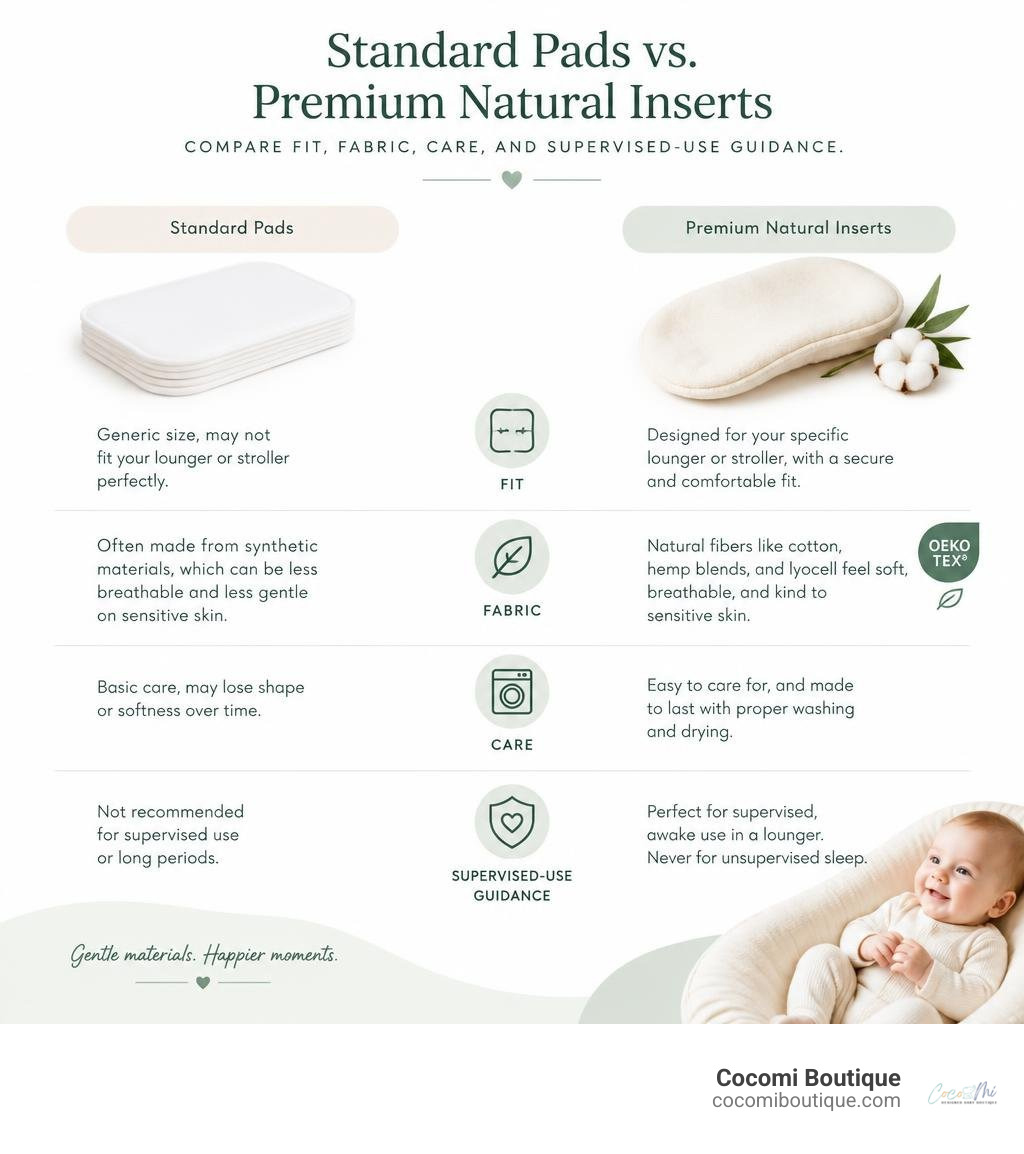
Premium baby lounger insert terminology:
Newborn Cushions vs. Infant Loungers: Understanding the Differences
When setting up your nursery, it is easy to confuse a standalone lounger with a dedicated insert cushion. While both offer supportive comfort, they serve distinct purposes in a baby's daily routine.
An insert cushion is primarily an adaptive accessory designed to provide head, neck, and lumbar alignment inside another primary piece of baby gear, such as a stroller seat or a broader infant pod. In contrast, an organic infant lounger is a self-contained resting station engineered for hands-free, awake moments at home or during family outings.
| Feature | Newborn Insert Cushion | Dedicated Infant Lounger |
|---|---|---|
| Primary Purpose | Adapts larger seats or nests for tiny newborns | Standalone resting and bonding station |
| Portability | Highly compact; fits into diaper bags easily | Lightweight with carry handles for room-to-room use |
| Age Range | Typically 0 to 6 months | 0 to 9+ months (until baby rolls) |
| Placement | Inside strollers, baby nests, or car seats | Flat, firm surfaces on the floor |
| Supervision | Direct, active supervision required | Direct, active supervision required |
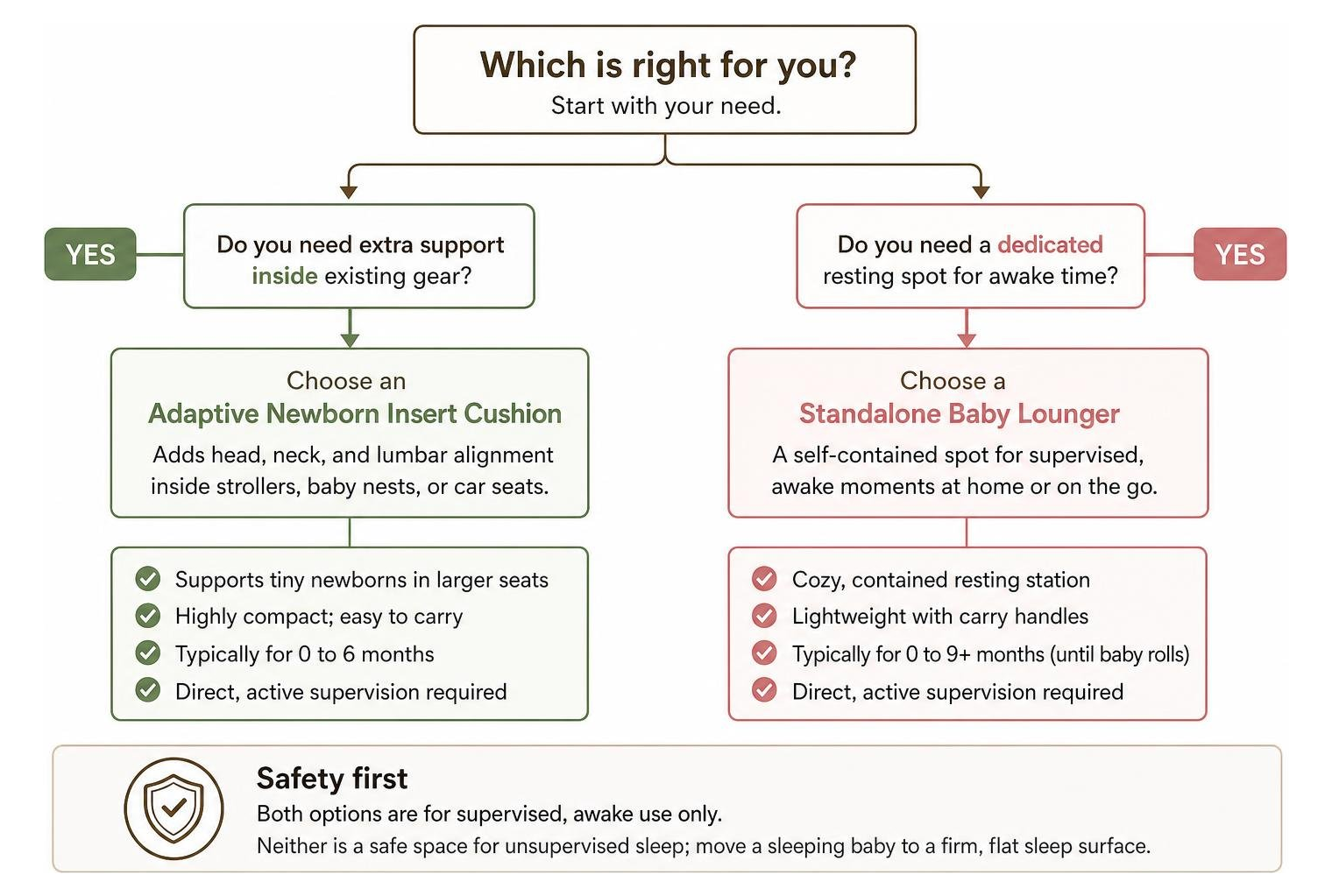
When to Choose an Infant Insert Cushion vs. a Dedicated Lounger
If you find that your newborn looks dwarfed inside a full-sized stroller or an expansive nursery resting station, an insert cushion bridges that gap. It gently hugs the baby's body to prevent unnecessary slumping, creating a custom fit. This is especially helpful during the earliest weeks, when newborns need extra support to maintain a comfortable, aligned position in larger seats.
On the other hand, a dedicated premium baby nest provides a cozy, contained sanctuary specifically made for floor-level interaction, tummy time support, and awake soothing. Many parents keep both options on hand: a compact insert for travel and stroller use, and a larger lounger or nest for relaxed moments at home.
Supporting Healthy Posture and Gentle Incline for Reflux Relief
Many newborn cushions incorporate removable ergonomic wedges. These slight, intentional inclines can offer soothing comfort for babies experiencing mild reflux by elevating the head and torso slightly after feeding. The gentle angle helps reduce pressure on the stomach while keeping the baby's head and neck in a supported, neutral position.
As discussed in our baby lounger ultimate guide 2026, correct physical alignment is essential. Premium inserts combine gentle contouring with firm base support to protect spinal development without restricting airways. Look for designs that distribute weight evenly across the back and hips rather than concentrating pressure on one area.
Comparing Top Materials for a Premium Baby Lounger Insert
A newborn's skin is up to 30% thinner than adult skin, making it particularly vulnerable to harsh chemicals, synthetic dyes, and heat buildup. Selecting the right textile composition ensures your little one stays comfortable and irritation-free.
Breathable Botanical Fibers and Chemical-Free Hemp Blends
Natural hemp-cotton blends and unbleached organic cotton offer exceptional airflow. Because natural fibers do not trap trapped heat like synthetic polyester, they minimize friction and sweat rashes. These plant-based textiles also tend to soften with washing while retaining their shape, which makes them a practical choice for daily nursery use.
Pairing these botanical fabrics with an infant lounger pillow provides a pure, chemical-free environment certified to strict European safety criteria like OEKO-TEX Standard 100. For parents who prioritize transparency, certification offers an extra layer of confidence that the fabric has been tested for substances that could irritate delicate newborn skin.
Natural Temperature-Regulating Fibers
Certain natural materials act as biological thermostats. For instance, sustainably harvested TENCEL™ lyocell fibers absorb 50% more moisture than standard cotton, releasing it efficiently back into the air. This moisture management helps keep a baby's skin dry during longer lounging sessions, reducing the dampness that can lead to chafing or heat rash.
Similarly, natural sheepskin offers year-round thermoregulation—retaining warmth in the winter and circulating cooling air in warmer months—while naturally resisting bacteria and dust mites. Because sheepskin fibers create a breathable cushion of air, they can help maintain a more consistent surface temperature than dense synthetic padding.
Top Styles Reviewed: Finding Your Ideal Newborn Lounging Solution

Why Invest in a Premium Baby Lounger Insert Over Standard Cushions?
Mass-market cushions frequently cut corners by utilizing synthetic foam cores and chemical finishes. A luxury insert prioritizes plant-derived fills, durable organic weave covers, and artisan stitching designed to withstand daily use. The result is a piece that holds its shape through repeated washing and everyday handling, rather than flattening or pilling after a few weeks.
For more design insights, our premium baby nest ultimate guide breaks down the lasting value of investing in high-caliber craftsmanship over disposable alternatives. When you choose a well-made insert, you are also choosing materials that feel softer against sensitive skin and maintain their supportive structure over time.
Botanical Lyocell and Plant-Based Fill Loungers
Loungers crafted from certified TENCEL™ fibers combined with bio-based polymer cores (such as Sorona®) provide plush yet firm responsiveness. These materials offer parents a lightweight, travel-friendly solution that excels at active moisture control. The combination of a breathable outer layer and a resilient plant-based core helps prevent the sagging that can occur with lower-density synthetic fills.
To explore how these botanical fibers feel in everyday use, explore our curated selection of newborn lounger designs built for modern homes. A thoughtfully designed lounger should feel supportive without being overly rigid, allowing your baby to settle comfortably while still maintaining proper alignment.
Ergonomic Hemp-Cotton Lounger Inserts
Hemp-cotton inserts combine natural strength with cloud-like softness. These units often feature multi-piece designs, including:
- A contouring head hugger to support delicate neck muscles
- Removable lumbar wedges for customized torso support
- Padded harness covers that eliminate strap rubbing
Because hemp is naturally durable, these inserts tend to resist wear even with frequent use. The removable components also make it easier to adjust the fit as your baby grows, so the insert can continue providing targeted support through the early months.
Safety Guidelines, Lifespan, and Maintenance Best Practices
Safety is the absolute cornerstone of newborn care. Always adhere to best practices when using resting cushions and loungers:
- Active Supervision: Keep your baby in clear, direct view at all times.
- Flat Surfaces: Always place the lounger on a firm, flat, low surface—never on elevated beds, tables, or sofas.
- Awake Time Only: Infant loungers and inserts are strictly intended for supervised awake time, soothing, and tummy time, not unsupervised sleep.
These guidelines help protect your baby's airway and reduce the risk of positional breathing issues. Even a premium insert should never be used as a substitute for a crib, bassinet, or other approved sleep surface.
Recognizing When Your Baby Has Outgrown the Insert
Most inserts are engineered for the 0 to 6 month window. Key signs that it is time to transition away from an insert cushion include:
- Baby reaches the upper weight or length boundary (often around 15–20 lbs).
- Baby begins attempting to roll over or push up onto hands and knees.
- The baby's shoulders and head extend beyond the upper borders of the padded cushion.
Once your baby shows any of these signs, it is time to move to a larger lounger or a flat play surface. Continuing to use an insert that is too small can create awkward positioning and reduce the support it was designed to provide.
How to Clean and Maintain Your Premium Baby Lounger Insert
Maintaining hygiene should never compromise fabric longevity:
- Washing: Use a cold, gentle machine cycle with mild, plant-based detergent.
- Drying: Air-dry flat or line-dry in the shade. Avoid high-heat tumble drying to preserve natural elasticity.
- Specialty Fibers: Spot clean natural wool or sheepskin with specialized wool-safe cleansers to protect natural lanolin oils.
Regular cleaning also helps remove the dust, drool, and milk residue that can accumulate during daily use. For best results, follow the care label on your specific insert, since natural fibers may have slightly different washing requirements than synthetic blends.
Frequently Asked Questions About Infant Inserts and Loungers
Is a baby lounger insert safe for overnight unsupervised sleep?
No. Following pediatric safe-sleep guidance, babies must always be placed on their back on a firm, flat mattress in an empty crib or bassinet for overnight and unsupervised naps. Loungers and inserts are designed exclusively for supervised, awake rest and bonding. If your baby falls asleep in a lounger, gently move them to a safe sleep surface as soon as possible.
How do botanical lyocell and natural hemp compare to standard polyester padding?
Botanical lyocell and unbleached hemp provide superior breathability, moisture absorption, and thermal regulation. Unlike standard polyester, which tends to trap humidity against sensitive newborn skin, these natural fibers allow continuous airflow and are processed without harsh chemical treatments. This can make a noticeable difference for babies who tend to overheat or develop heat rash easily.
How do I check that a newborn lounger insert fits its intended lounger?
Always check product dimensions and harness compatibility. A proper insert should lie completely flat without bunching at the edges or creating loose fabric folds around your baby. If the insert shifts during use or leaves gaps near the sides, it may not be the right match for your lounger model.
Conclusion
Every detail in your nursery should bring peace of mind, uncompromising safety, and gentle luxury to your baby's earliest days. At CocoMi Baby Boutique, we believe in honoring these precious beginnings through thoughtful design, handcrafted European-quality textiles, and all-natural, OEKO-TEX certified fabrics. Our collection is created by parents who understand the desire for baby essentials that are both beautiful and safe, without compromise.
Whether you are designing a peaceful nursery corner or selecting a boutique baby shower gift, explore our full range of nursery guides on the CocoMi Baby Boutique journal. From premium lounger inserts to organic newborn clothing, each piece is chosen to support comfort, style, and everyday practicality for growing families.