

What Is a Newborn Baby Lounger and Is It Safe?

A newborn baby lounger is a soft, cushioned seat designed to cradle your baby during supervised awake time — think tummy time, playtime, and those hands-free moments while you make your morning coffee.
Quick answers:
- What it is: A padded, nest-like product that supports a newborn in a reclined or flat position during awake time
- Is it safe for sleep? No — loungers are for supervised awake time only; always move a sleeping baby to a firm, flat crib or bassinet
- Age range: Most loungers are suitable from birth to around 6 months, or until baby starts rolling over
- Key safety standard: Look for CPSC compliance (16 CFR Part 1243) when buying
- What to look for: Breathable materials, OEKO-TEX certified fabrics, machine-washable covers, and a low-profile flat design
Baby loungers have become one of the most popular newborn essentials — with over 1,000 products listed on Amazon alone and tens of thousands of parents buying them every month. But not all loungers are created equal. Some fail to meet federal safety standards, and even safe ones come with important rules that every parent needs to know before placing their baby inside.
This guide walks you through everything: how to choose a safe, high-quality lounger, which materials matter most, and how to use one with confidence.
I'm Monika Jarog, founder of Cocomi Boutique and a specialist in handcrafted, natural baby essentials — including baby nests, Moses baskets, and newborn baby loungers made from chemical-free, OEKO-TEX certified materials. Having helped thousands of parents find safe and beautiful products for their little ones, I'll share what truly matters when choosing a lounger you can trust.
Know your Newborn baby lounger terms:
What is a Newborn Baby Lounger?
When you bring your sweet bundle of joy home to your nursery in Chicago, IL, or Highland Park, IL, you quickly realize one universal truth: as much as you love holding your baby, your arms will eventually need a break. This is where a Newborn lounger comes into play.
A newborn baby lounger is a specialized infant seating and resting surface designed to mimic the feeling of being cradled in a parent's arms. Unlike rigid plastic infant seats or swings, a lounger is soft, plush, and low-profile. It provides a cozy, supervised lounging space where your little one can relax, play, and actively engage with the world around them while you fold laundry, read a book, or enjoy a hot meal nearby.
How Loungers Differ from Other Baby Gear
It is easy to get overwhelmed by the sheer volume of baby products available today. Let’s break down how a lounger differs from other common nursery essentials:
- Baby Loungers vs. Baby Nests: While very similar in shape, traditional baby nests often feature higher, more padded side bumpers and are sometimes used for co-sleeping in certain international markets (though not recommended under U.S. safety guidelines). A modern, compliant newborn lounger focuses heavily on a flat, firm center surface with low-profile sides to ensure maximum airflow and safety.
- Baby Loungers vs. Floor Seats: Floor seats (like plastic upright chairs) are designed for older babies who have developed some head control and are learning to sit up. A lounger is designed for newborns from day one, supporting them in a reclined or fully flat supine position.
- Baby Loungers vs. Swings and Bouncers: Swings and bouncers use motion, batteries, or manual bouncing to soothe a baby. Loungers are completely stationary, relying on their ergonomic shape and premium fabrics to provide comfort.
For parents looking to understand the full spectrum of options, our Baby lounger complete guide and Best infant loungers ultimate guide offer deep dives into how these products fit into your daily routine.
Essential Safety Guidelines for Your Infant Lounger
Safety is our absolute highest priority when it comes to newborn care. While a newborn baby lounger is an incredibly helpful tool for parents, it must be used correctly to prevent accidents.
Understanding the CPSC Safety Standards
In recent years, the U.S. Consumer Product Safety Commission (CPSC) has tightened regulations on infant products to support safer environments for babies. Under federal regulation 16 CFR Part 1243, infant products intended for sleep must meet strict safety requirements. For loungers, parents should look for clear safety information and designs that support supervised awake time only, including:
- A maximum incline of 10 degrees to help prevent the baby's head from falling forward and blocking their airway.
- A low-profile design to minimize fall risks.
- Firm, supportive foam or fiber construction that helps prevent the baby's face from sinking into the padding.
- Clear tracking labels showing the date and location of manufacture.
When shopping online, look for high-quality loungers that are specifically designed to align with modern safety expectations and are clearly labeled for supervised awake use.
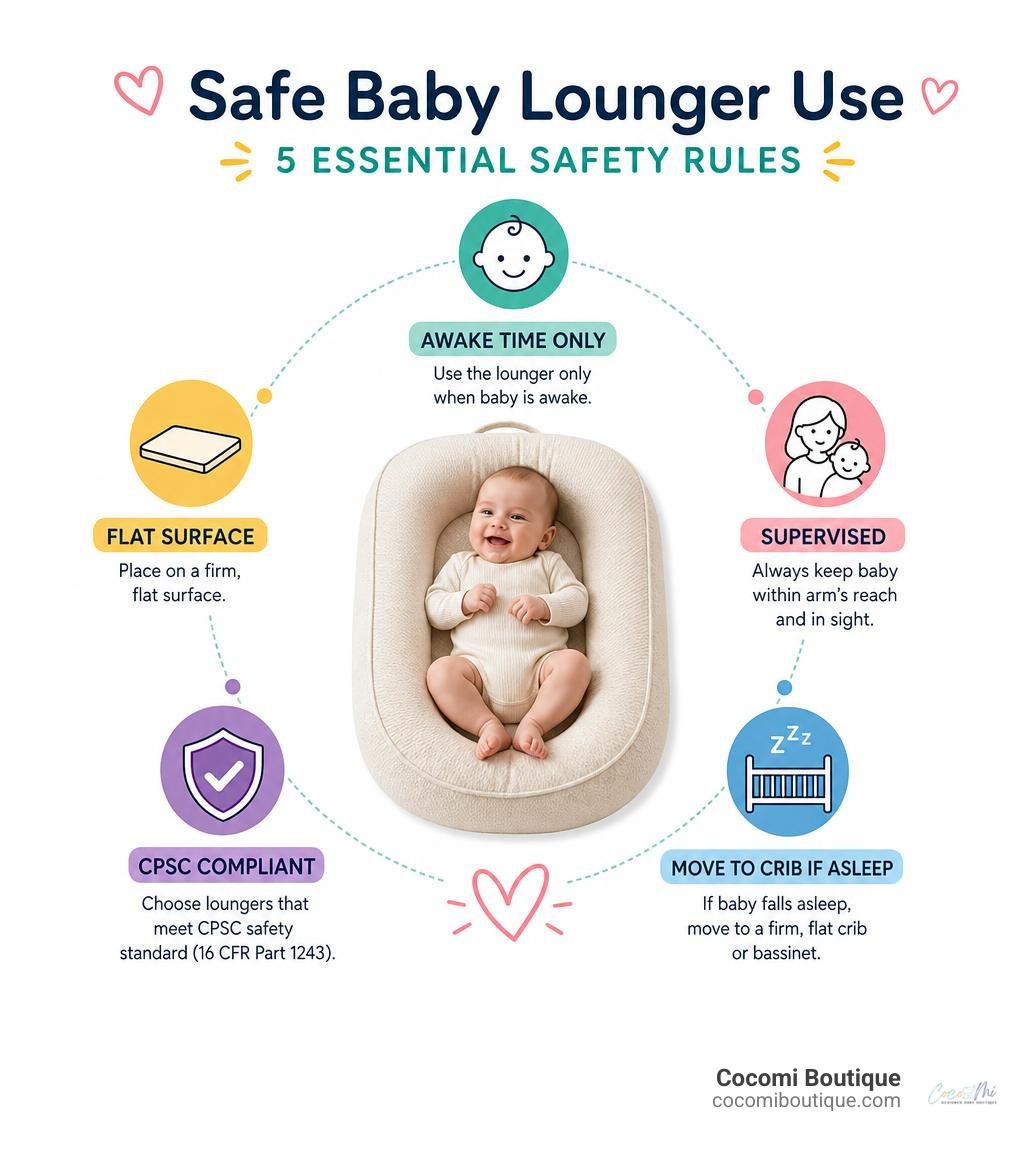
Golden Rules of Safe Lounger Use
To keep your little one completely safe, memorize and practice these essential rules every single day:
- Awake Time Only: Never let your baby sleep in a lounger. If your baby falls asleep, immediately transfer them to a firm, flat, uncluttered sleep surface such as a crib, bassinet, or play yard.
- Continuous Supervision: Always keep your baby in your direct line of sight. Never leave the room or fall asleep while your baby is in the lounger.
- Floor Placement Only: Always place the lounger on a flat, stable, and even floor surface. Never place it on a bed, sofa, table, countertop, or any elevated surface where it could fall.
- No Loose Bedding: Do not add loose blankets, pillows, toys, or stuffed animals to the lounger, as these pose a serious suffocation hazard.
- Stop Use When Baby Rolls: As soon as your baby shows signs of rolling over, scooting, or pulling themselves up, discontinue use of the lounger immediately.
For a comprehensive safety overview, read our Baby lounger complete guide to see how thoughtful design, premium materials, and safe-use habits work together.
Key Features to Look For in a Premium Lounger
When selecting the Best baby lounger for your family, you want to focus on high-quality craftsmanship, ease of cleaning, and premium materials that are gentle on delicate newborn skin.
Here are the essential features to keep in mind:
- OEKO-TEX Certification: This certification guarantees that the fabrics used are completely free from harmful chemicals, toxins, and flame retardants.
- Ergonomic Center Sling: A high-quality lounger should feature a recessed or unpadded center sling. This design allows the baby to sink slightly, absorbing the firm surface below while keeping them securely on their back.
- Breathability: Look for fabrics that promote active airflow to prevent your baby from overheating.
Choosing the Best Newborn Baby Lounger Materials
The fabric of your lounger directly impacts your baby's comfort, temperature regulation, and skin health. Here is a comparison of the most common materials used in premium baby loungers:
| Material Type | Pros | Cons | Best For |
|---|---|---|---|
| Organic Cotton | Extremely soft, hypoallergenic, natural, highly breathable | Can shrink if washed in hot water | Sensitive newborn skin, daily use |
| French Flax Linen | Naturally antibacterial, thermo-regulating, gets softer with every wash | Tends to wrinkle easily | Warm climates, luxury aesthetic |
| Tencel & 3D Mesh | Maximum airflow, moisture-wicking, highly hygienic | Synthetic feel if not blended with natural fibers | Babies who run warm, humid summer days |
Many premium baby loungers utilize these high-end materials. For instance, a newborn baby lounger with a natural linen cover showcases how gorgeous, natural French flax linen can elevate a simple nursery item.
For parents who love classic patterns, options like marine striped linen or rich earthy tones like chestnut provide both style and substance. If you prefer a classic, snuggly option, an organic cotton construction is celebrated for its softness and breathability.

Portability and Maintenance of Your Newborn Baby Lounger
Let’s face it: babies are wonderfully messy. Between spit-up, diaper blowouts, and drool, your lounger is going to need regular cleaning.
When choosing a lounger, make sure it features a removable, machine-washable cover.
Cleaning and Maintenance Best Practices:
- Washing: Zip off the cover and wash it in lukewarm water (below 40°C or 104°F) using a mild, fragrance-free baby detergent.
- Drying: To keep natural fibers like linen or organic cotton in perfect shape, lay the cover flat to air dry. Avoid tumble drying on high heat, which can shrink the fabric or warp the zippers.
- Inner Cushion Care: If the inner cushion gets soiled, spot clean it with a damp cloth or hand wash it in cold water. Lay it completely flat to air dry. To restore its plush shape, gently massage and redistribute the filling once dry.
Portability is another huge factor for busy parents in our local Chicago suburbs, from Deerfield, IL to Glencoe, IL. A lightweight design (around 1.5 kg or 3 lbs) paired with a travel bag makes it easy to pack up the lounger for visits to grandparents in Winnetka, IL or playdates in Glenview, IL. For more details on traveling with your gear, check out our Portable infant lounger complete guide and Infant portable lounger.
Frequently Asked Questions About Baby Loungers
Can a baby sleep in a lounger?
No, a baby should never sleep in a lounger. This is the most crucial safety guideline to remember. Pediatric organizations, including the American Academy of Pediatrics (AAP), state that the safest sleep environment for an infant is on their back on a firm, flat, and uncluttered surface (like a crib or bassinet mattress) with a tight fitted sheet.
Because loungers have soft, padded sides, a sleeping baby who rolls or turns their head could experience airway obstruction or suffocation. If your little one drifts off while relaxing in their lounger, gently scoop them up and transition them to their crib or bassinet immediately.
How do loungers help babies with reflux?
Many parents searching for a Lounger for baby with reflux find that a slight, safe incline can help soothe a fussy baby after feeding. A gentle, CPSC-compliant incline of under 10 degrees helps keep the baby's head slightly elevated above their stomach, which can natural assist digestion and reduce spit-up.
However, this must always be done under direct, awake supervision. Never leave a baby with reflux unattended in a lounger, and do not use propping pillows or non-compliant inclined wedges.
When should a baby transition out of a lounger?
Babies grow incredibly fast! Most loungers are designed for infants from 0 to 6 months of age. However, milestones are far more important than age limits. You must stop using the lounger as soon as your baby can:
- Roll over from back to tummy (or even show signs of attempting to roll)
- Scoot or wiggle out of the center sling
- Pull themselves up using the outer bumpers
Once your baby outgrows their lounger, you can transition them to floor play mats, play yards, or a beautifully crafted baby nest designed for older, supervised play. If you are preparing your nursery on a budget, take a look at our guide on Nesting on a budget finding the perfect affordable baby lounger for tips on making smart, long-lasting investments.
Conclusion
A newborn baby lounger is an invaluable addition to your daily parenting routine, offering a cozy, hands-free spot to bond with your baby during their earliest months. By choosing a lounger crafted from premium, natural, and OEKO-TEX certified fabrics, and adhering strictly to safe-use guidelines, you can enjoy peace of mind while keeping your little one close and comfortable.
At Cocomi Boutique, we believe in supporting your parenting journey with beautifully handcrafted, European-quality baby essentials that prioritize safety, comfort, and elegant design. From our home in the Chicago suburbs—including Northbrook, Deerfield, and Highland Park—we curate only the finest organic and chemical-free products for your modern nursery.
Explore our collection of premium baby nests, organic blankets, and beautiful nursery essentials at the Cocomi Boutique Blog and discover the perfect touch of luxury for your newborn today.