

How to Choose a Lightweight Swaddle Sack for Summer

For a warm nursery, start with a lightweight swaddle sack rated 0.2 or 0.5 TOG. Check the maker's temperature guide, then choose a breathable fabric, a size that fits your baby's weight and height, and a neckline that cannot slip over their face. A two-way zipper makes nighttime changes easier. Stop swaddling with arms contained at the first sign of rolling.
Unlike a loose swaddle blanket, a sack fastens in place and may offer different arm positions. Both can help calm a newborn's startle reflex, but neither replaces a firm, flat sleep surface. The American Academy of Pediatrics recommends a bare sleep space and a room temperature that feels comfortable for a lightly clothed adult to reduce overheating risks.
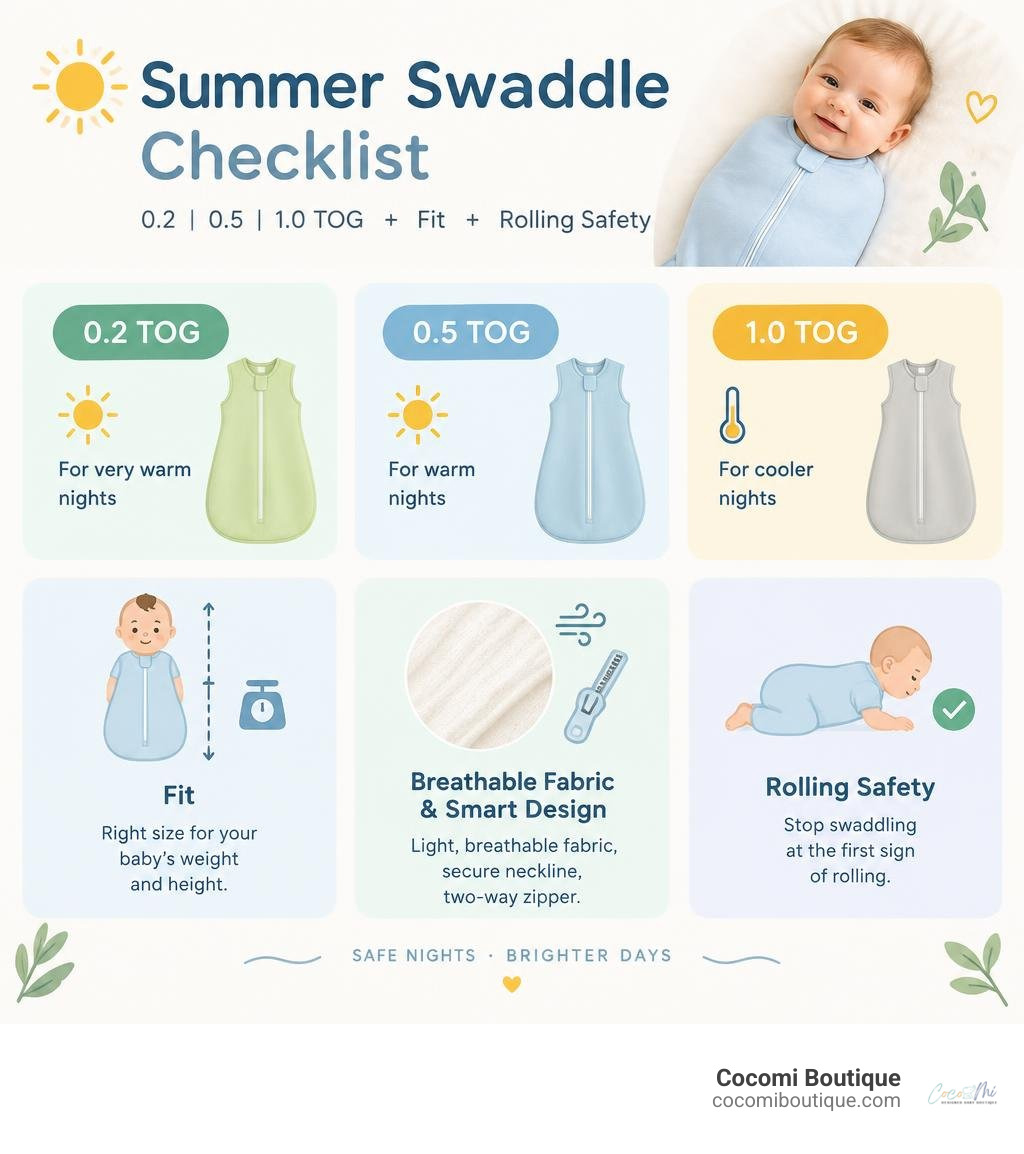
Simple lightweight swaddle sack glossary:
Understanding TOG Ratings and Nursery Temperature
Navigating baby sleepwear during warmer months can feel daunting. As temperatures climb, parents often worry about their little one becoming too warm overnight. Understanding thermal ratings is essential for maintaining a safe, comfortable sleep environment.
A TOG (Thermal Overall Grade) rating measures the thermal insulation of baby bedding and garments. The higher the number, the more warmth the fabric retains. In warm climates or during hot summer nights, choosing a lower TOG rating helps maintain proper air circulation around your baby's delicate body. The American Academy of Pediatrics notes that overheating during sleep is a risk factor for sudden infant death syndrome, making breathable, low-TOG sleepwear especially important in warm nurseries.
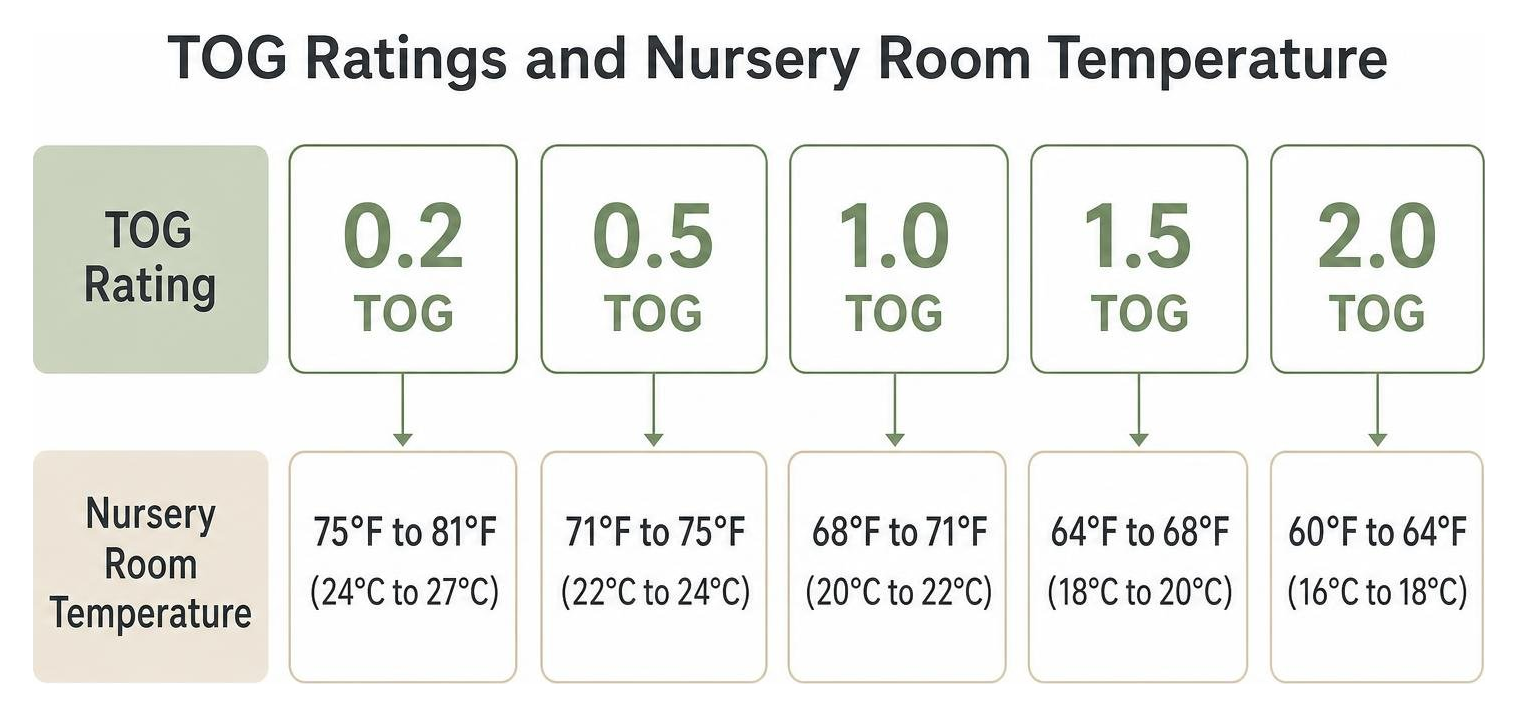
When selecting baby sleepwear, matching the garment to your nursery's ambient temperature prevents overheating while soothing the startle reflex. Our detailed guide to newborn sleep sacks outlines how nursery climates dictate layering.
| TOG Rating | Nursery Room Temperature | Recommended Base Layering | Best Season / Use Case |
|---|---|---|---|
| 0.2 TOG | 75°F to 81°F (24°C to 27°C) | Diaper only or ultra-thin short-sleeve bodysuit | Peak summer heatwaves, un-airconditioned rooms |
| 0.5 TOG | 75°F to 77°F (24°C to 25°C) | Short-sleeve cotton bodysuit | Warm summer nights, mild climate nurseries |
| 1.0 TOG | 68°F to 74°F (20°C to 23°C) | Long-sleeve cotton sleeper or light onesie | Year-round moderate climate, spring & autumn |
| 2.0+ TOG | 61°F to 67°F (16°C to 19°C) | Long-sleeve footed sleeper plus warm base | Chilly winter nights, cool conditioned rooms |
Using a low TOG garment ensures that your baby benefits from the gentle, womb-like security of swaddling without trapping unnecessary body heat.
Key Features of the Best Lightweight Swaddle Sack
When evaluating summer sleepwear for newborns, thoughtful design details make midnight parenting significantly smoother. A premium swaddle sack balances security, breathability, and ease of use.

Look for these essential features when choosing summer sleepwear:
- Two-Way Zipper Construction: Midnight diaper changes should be gentle and quiet. A double zipper allows you to open the bottom of the sack to change a diaper while keeping your baby’s chest and arms securely wrapped.
- Hip-Healthy Ergonomics: The International Hip Dysplasia Institute emphasizes that swaddles must allow ample room for legs to bend up and out at the hips. Bell-shaped bottoms give tiny legs freedom to kick naturally.
- Safe Necklines: The neckline should rest securely below the chin without excess fabric bunching up toward the mouth or nose.
- Pure, Certified Materials: Fabrics tested against strict European safety standards ensure that delicate skin is protected from harsh residues. Explore our comprehensive organic swaddle sack guide for more on safe material choices.
Choosing an Ultra-Breathable Lightweight Swaddle Sack
Newborns cannot regulate their body temperature as effectively as older children. Choosing open-weave, air-permeable materials helps keep their sleep space cool and comfortable.
Natural cotton, especially light muslin, is exceptional for hot weather. The gentle open weave permits constant airflow, naturally wicking moisture away from sensitive skin. If you are comparing traditional swaddling fabrics, our breathable muslin swaddle guide details why pure open-weave weaves excel in hot weather.
Multi-Way Arm Positioning for Newborn Comfort
Every baby has distinct sleep preferences. While some newborns prefer being wrapped with arms across the chest, others sleep better with hands resting near their face for self-soothing.
A versatile swaddle sack adapts to these developmental stages:
- Arms-In: Keeps hands snugly contained against the torso, ideal for newborns with a strong Moro reflex.
- Hands-to-Face / Hands-Up: Accommodates babies who prefer resting their hands near their cheeks to suck on their fingers.
- Arms-Out: Enables one or both arms to be freed using shoulder snaps, facilitating a smooth transition toward arms-free sleeping.
Evaluating Top Lightweight Swaddle Types for Summer
Not all swaddle sacks are constructed the same way. Understanding the design variations helps you select the best fit for your baby's habits.
| Swaddle Sack Type | Breathability Level | Arm Freedom | Diaper Change Ease | Best Suited For |
|---|---|---|---|---|
| Pod / Cocoon Zipper Pouches | High (in 0.2–0.5 TOG single-layer knits) | Adaptable (often features snap armholes) | Fast (two-way zipper access) | Quick dressing, snug womb-like compression |
| Winged Wrap Sacks | Moderate (overlapping fabric adds layers) | Adjustable (tightness customizable via wings) | Moderate (must unwrap wings to fully open) | Babies who need a firm wrap over the torso |
| Stretch Knit Sleep Pods | High (breathable, elastic cotton blends) | Flexible (allows natural stretching) | Excellent (zipper or open-bottom designs) | Active sleepers who like to move while soothed |
A well-crafted swaddle eliminates loose fabric in the crib while keeping your baby cool and settled through warm nights.
Safety, Sizing, and Safe Sleep Guidelines
Proper fit is paramount when using any wearable blanket. Sizing should always be determined primarily by your baby's current weight and height rather than age alone.
Follow these fundamental safety practices:
- Check the Neckline: Apply the two-finger rule. You should comfortably fit two fingers between your baby’s neck and the sack opening. The garment must never pull up over the chin.
- Do Not Size Up Early: A swaddle that is too large presents a hazard if excess fabric shifts near the face. Always wait until your infant meets the minimum weight threshold before moving to a larger size.
- Maintain a Firm Sleep Surface: Place your baby on their back on a firm, flat mattress free of loose blankets, pillows, or plush toys.
- Monitor Nursery Temperature: Use a nursery thermometer to track ambient room temperature and adjust base layers accordingly.
Transitioning Out of a Lightweight Swaddle Sack
Swaddling with arms contained must end as soon as your baby shows initial signs of attempting to roll over—typically between 2 and 4 months of age.
When rolling begins, free both arms immediately to allow your baby to push up safely if they shift positions. Transitioning can be done gradually by freeing one arm for several nights before releasing both. Once arms are free, shift to a loose-fitting handcrafted muslin baby sleeping bag from our baby sleeping bags collection for safe, year-round comfort.
Washing and Fabric Care Instructions
To preserve the softness and breathability of lightweight natural fabrics:
- Machine wash on a gentle cycle using cold water with like colors.
- Use mild, baby-safe detergents free of artificial fragrances and bleach.
- Tumble dry on low heat or line dry in the shade to maintain shape and elasticity.
- Fasten all zippers and snaps before washing to prevent snagging on delicate knits.
Frequently Asked Questions About Summer Swaddling
What TOG rating is best for warm summer rooms?
A TOG rating between 0.2 and 0.5 is ideal for summer rooms averaging 75°F to 77°F (or higher). Pair a low TOG sack with a simple short-sleeve bodysuit or diaper to prevent overheating.
How do I know if the swaddle sack neck is too loose or tight?
Perform the two-finger test: you should be able to slide two fingers flat between your baby’s collarbone and the neckline. The neck opening should rest comfortably without gaping wide or pressing tightly against the throat.
When should baby switch from a swaddle sack to an arms-free sleep bag?
Transition your baby as soon as they show signs of attempting to roll over, or when they reach 2 to 4 months of age. An arms-free wearable blanket allows full arm mobility so your baby can adjust safely during sleep.
Conclusion
Creating a restful, safe sleep environment during warm summer nights starts with mindful choices. By selecting breathable, natural fibers, maintaining an appropriate TOG rating, and ensuring a secure fit, you help your newborn rest peacefully through the hottest months.
At CocoMi Baby Boutique, we believe every baby deserves sleepwear crafted with care, elegance, and pure materials. Explore our curated selection of nursery sleep essentials to discover beautifully designed, natural pieces tailored for your baby's comfort and safe summer nights.