

Best Swaddles for 3-6 Months: Start With Rolling Safety

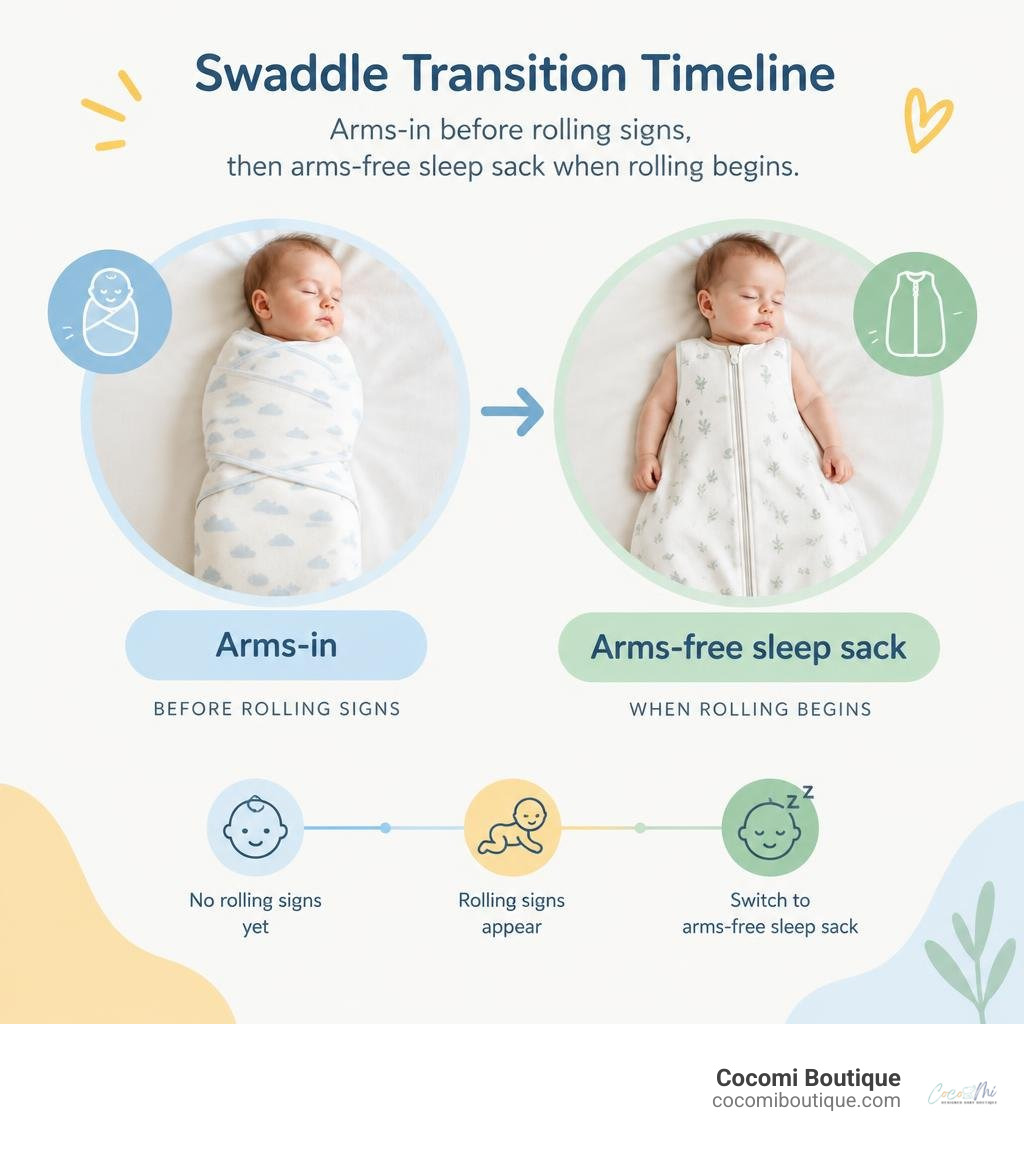
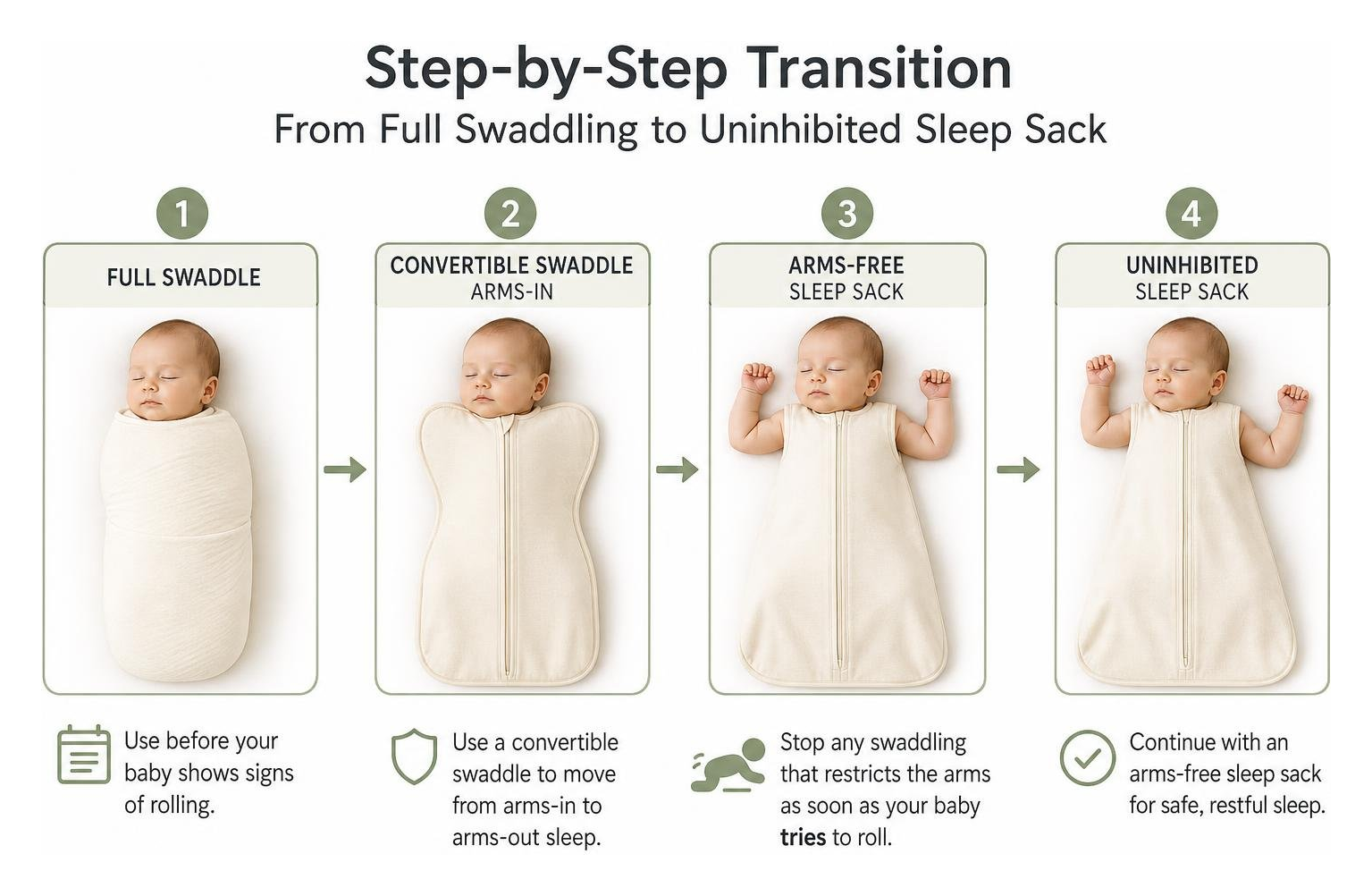
For most babies aged 3 to 6 months, the best choice is a well-fitting, arms-free sleep sack. If your baby is not yet showing signs of rolling, a convertible swaddle can help you move from arms-in to arms-out sleep. Stop any swaddling that restricts the arms as soon as your baby tries to roll, even if they have not rolled over yet.
Look for room at the hips, a secure neck opening, and a two-way zipper for diaper changes. For a warm nursery, a lightweight 0.5 TOG cotton option is a useful starting point; check the room temperature and your baby's clothing, too. Skip weighted designs for infant sleep.
Best swaddles for 3-6 months vocabulary:
Why Older Infants Need to Transition Away from Traditional Swaddles
Between three and four months of age, your baby undergoes a profound developmental shift. While a snug, arms-down wrap felt like a comforting embrace during the newborn weeks, your growing baby is now discovering their hands, wiggling their legs, and working hard on motor milestones.
The primary catalyst for changing your sleep routine is physical safety. The American Academy of Pediatrics recommends that parents stop restricting an infant's arms as soon as the baby shows the first signs of attempting to roll over. For many infants, this motor development begins around two to three months, while others start closer to four. If a baby rolls onto their tummy while their arms are pinned inside a traditional blanket, they cannot use their hands to push their face away from the mattress, significantly increasing the risk of suffocation. Following recognized safe swaddling guidelines ensures your child stays secure while developing strength.
At the same time, the involuntary startle reflex (Moro reflex) that caused sudden arm jerks in the early weeks begins to fade. As this reflex dampens, older infants learn self-soothing techniques—like sucking on their fingers or touching their cheeks. When selecting modern sleep garments, parents frequently rely on resources like testing and ranking safe sleepwear to identify garments that offer gentle torso security while keeping the arms unencumbered.
Choosing the Best Swaddles for 3-6 Months by Style and Sleep Preference
Every baby enters the 3 to 6 month stage with distinct sleeping quirks. Some infants love resting with their hands raised high by their ears, while others prefer having total freedom to stretch. Navigating the classic four-month sleep regression requires paying close attention to these cues so you can select the most supportive sleepwear style.

When selecting sleepwear, many families turn to versatile swaddle wraps designed specifically to adapt alongside an infant's changing sleep posture.
Evaluating Arms-Up vs Arms-Out Designs: Best Swaddles for 3-6 Months
An arms-up garment is designed with specialized, upward-angled sleeves or wings that allow a baby to rest in their natural sleep posture. If your infant always fought having their arms pinned to their chest as a newborn, an arms-up design is often an ideal bridge.
- Self-Soothing Access: Upward sleeves position fabric-covered hands right near the mouth, allowing the baby to soothe themselves back to sleep without fully waking.
- Scratch Protection: Many arms-up models feature integrated fold-over mitten cuffs, which keep sharp little fingernails away from delicate facial skin.
- Reflex Dampening: The snug fabric around the shoulders provides subtle resistance against residual startle twitches while still permitting free elbow and shoulder movement.
Convertible and Wearable Blankets: Best Swaddles for 3-6 Months with Active Rollers
For active babies who are showing clear signs of turning onto their sides or bellies, convertible wraps and sleeveless wearable blankets are the gold standard.
Convertible designs typically feature removable wings or modular armholes. This allows parents to practice the "one-arm-out" technique—freeing one arm for several nights so the baby adapts to the sensation of an open limb before releasing the second arm. Once both arms are out, the garment functions as a safe wearable blanket, maintaining gentle torso compression to preserve that cozy, secure feeling while leaving the arms entirely unrestricted for safe rolling.
Essential Safety and Comfort Features in 3 to 6 Month Sleepwear
When shopping for older babies, convenience and physiological safety must go hand in hand.
First and foremost is hip health. The International Hip Dysplasia Institute emphasizes that infant sleepwear must allow ample space for the hips and knees to bend upward and outward in a natural "frog-leg" position. Swaddles that tightly bind the legs straight together can lead to hip subluxation or developmental dysplasia. Independent reviews, such as this independent evaluation of infant swaddling, consistently highlight the necessity of an ergonomic, bell-shaped bottom pouch.

Other practical elements make midnight parenting substantially easier:
- Two-Way Zippers: A double or inverted zipper lets you unzip from the bottom up for fast diaper changes while keeping your baby's chest warm and undisturbed.
- Quiet Closures: Traditional, loud hook-and-loop closures can startle a drowsy baby awake during late-night checks. Look for silent fastening tabs or smooth zipper designs.
- Zipper Guards: A soft fabric tab at the neckline protects your baby’s delicate chin and neck from accidental pinching or chafing.
Fabric Breathability and TOG Ratings for Warm and Cool Climates
Thermal Overall Grade (TOG) measures how effectively a garment retains heat. Choosing the proper TOG rating prevents dangerous overheating, which is a recognized risk factor for infant sleep safety.
- 0.5 TOG: Ultra-lightweight and single-layered. Ideal for warm nurseries (74°F–78°F / 23°C–26°C) or hot summer months.
- 1.0 TOG: Standard all-season weight. Suited for moderate nursery temperatures (68°F–73°F / 20°C–22°C) when paired with a light cotton onesie.
- 2.5 to 3.0 TOG: Quilted or plush warmth designed for cold winter nurseries (61°F–67°F / 16°C–19°C).
Choosing breathable materials is essential for temperature regulation. Natural fibers like organic cotton, bamboo viscose, and airy muslin swaddles wick away moisture and allow continuous airflow far better than synthetic polyester or heavy fleece. When shopping, prioritizing OEKO-TEX certified textiles ensures that no harmful chemicals or irritants touch your little one's sensitive skin.
Considerations Regarding Weighted Swaddles and Sleep Sacks
Weighted transition garments have sparked significant discussion among parents seeking deeper sleep stretches. While the gentle, distributed pressure aims to mimic a calming hand on the chest, leading pediatric organizations—including the AAP—advise against weighted sleep products for infants.
Excess weight on an infant's chest can potentially impede healthy chest-wall expansion and breathing, particularly when a baby begins attempting to roll. For the 3 to 6 month age bracket, lightweight, unweighted wearable blankets crafted from premium natural fibers provide all the comfort an infant needs without introducing safety risks.
Comparing the Top Types of 3-6 Month Transition Swaddles
| Swaddle / Sack Style | Primary Benefit | Arm Freedom Level | Ideal Room Climate (TOG) | Best For |
|---|---|---|---|---|
| Arms-Up Transition Sack | Hand-to-face soothing | Partial (hands raised) | 0.5 – 1.0 TOG | Babies with lingering startle reflex who resist arms-down wraps |
| Convertible 3-in-1 Wrap | Gradual one-arm-out weaning | Adjustable (in, out, hands-to-face) | 1.0 – 2.0 TOG | Transitioning non-rollers toward complete arm freedom |
| Sleeveless Wearable Blanket | Maximum rolling safety | Full arm freedom | 0.5 – 2.5 TOG | Active rollers aged 3–6+ months needing safe nighttime warmth |
| Pure Organic Muslin Sack | Exceptional breathability | Full arm freedom | 0.5 – 1.0 TOG | Sensitive skin and warm summer nursery temperatures |
Frequently Asked Questions About Transition Swaddling
When should I stop swaddling my baby with arms restricted?
You should stop wrapping your baby with their arms inside the garment as soon as they show any signs of rolling over, which commonly occurs between 8 and 12 weeks of age. If your baby attempts to push onto their side, break free from their swaddle, or rock their hips, immediately transition to an arms-free wearable blanket.
What TOG rating is best for a 3-6 month old during summer?
For summer months or nurseries kept between 68°F and 72°F, a 0.5 TOG or lightweight 1.0 TOG wearable blanket made from breathable organic cotton or bamboo is recommended. Layer it over a simple short-sleeve bodysuit to prevent overheating.
How do I help an infant sleep when transitioning out of a swaddle?
Start by freeing one arm while keeping the swaddle wrap snugly secured around the torso for two to four nights. Once your baby adjusts to having one hand free to self-soothe, release the second arm. Maintaining a consistent bedtime routine—such as a warm bath, dim lighting, and soothing white noise—helps ease the transition smoothly.
Conclusion
Guiding your baby through the developmental leaps of the 3-to-6-month window is an exciting milestone. By prioritizing rolling safety, hip-healthy designs, and breathable fabrics, you set the foundation for restful, restorative nights.
At CocoMi Baby Boutique, we believe your baby deserves sleep essentials crafted with uncompromising care. Created by parents who sought the perfect harmony of safety, beauty, and practicality, our collection features handcrafted items made from 100% natural, chemical-free materials certified to the highest European OEKO-TEX safety standards. Whether you are looking for luxurious nursery accessories, thoughtful baby shower gifts, or breathable essentials, we invite you to explore our natural baby care and sleep guide collection and discover the difference of thoughtful, handcrafted design.