

Why Cotton Baby Blankets Are Essential for Your Little One

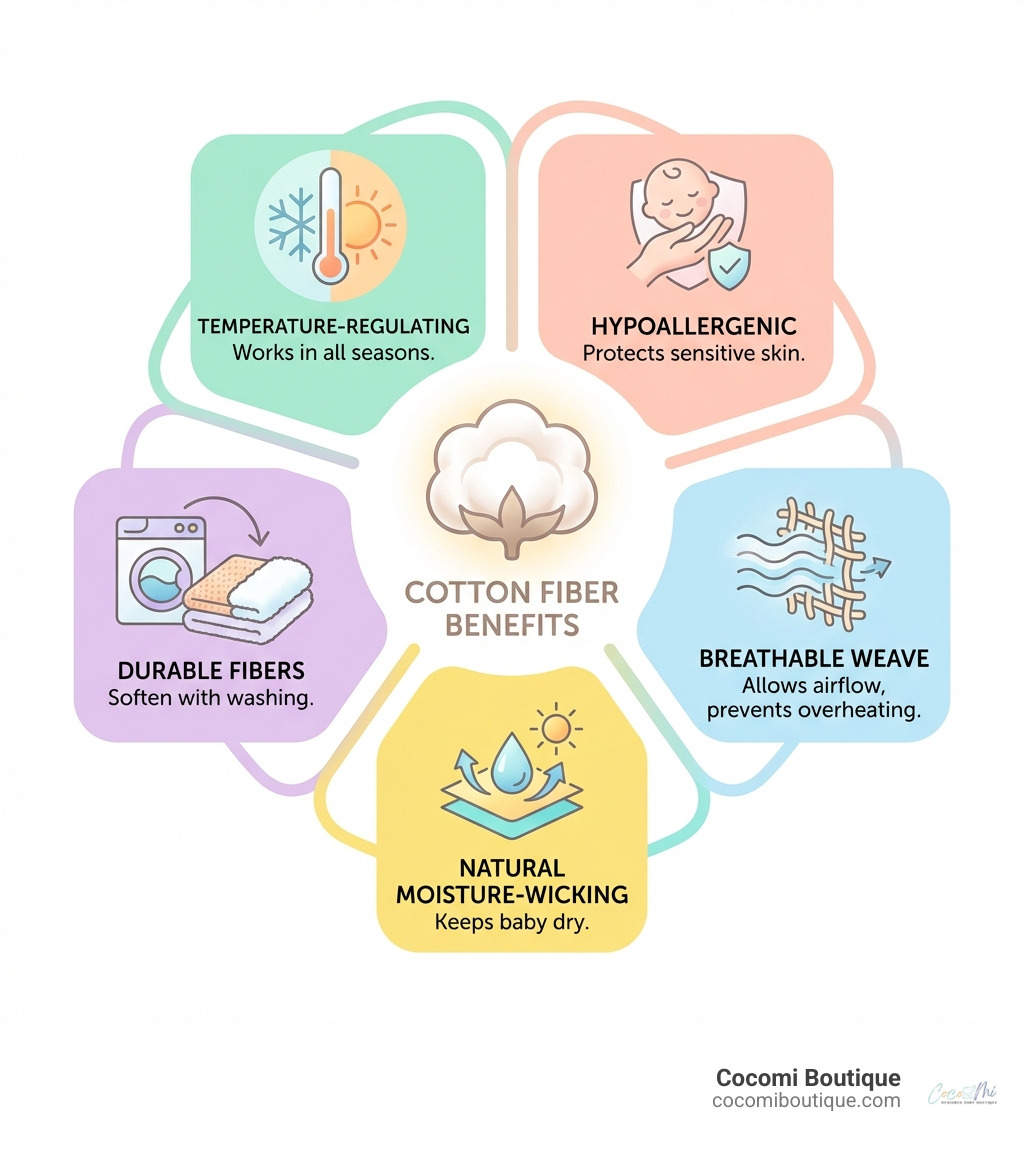
Cotton baby blankets are the most trusted choice for parents seeking soft, breathable, and hypoallergenic comfort for their infants. Here's what makes them the gold standard:
Top Benefits of Cotton Baby Blankets:
| Feature | Why It Matters |
|---|---|
| Hypoallergenic | Gentle on sensitive baby skin, reduces irritation |
| Breathable | Natural airflow prevents overheating during sleep |
| Soft & Durable | Gets softer with each wash, lasts for years |
| Versatile | Perfect for swaddling, strollers, tummy time, and cribs |
| Easy Care | Machine washable and maintains quality over time |
When you're searching for the perfect blanket for your newborn, cotton offers unmatched breathability and moisture-wicking properties that synthetic materials simply can't match. Research shows that 100% cotton fabric is warm yet breathable, making it ideal for year-round comfort without the risk of overheating.
The beauty of cotton lies in its simplicity. Unlike synthetic fabrics that can trap heat or irritate delicate skin, natural cotton fibers allow air to circulate freely while wicking away moisture. This creates a comfortable microclimate that keeps babies cozy without getting too warm—a crucial safety consideration for infant sleep.
Cotton baby blankets come in various styles to meet different needs. Receiving blankets (typically 30x40 inches) work perfectly for swaddling newborns and quick diaper changes. Crib blankets (around 40x40 to 44x44 inches) provide generous coverage for naptime and bedtime. Stroller blankets offer lightweight warmth for outings. Many parents find that muslin cotton—a loosely woven, lightweight fabric—becomes softer with each wash, making it a favorite for daily use.
Quality matters when it comes to baby essentials. Premium cotton blankets from trusted sources maintain their softness and durability through countless washes, often becoming cherished items that last for generations. Look for GOTS-certified organic cotton options when you want the highest standards for chemical-free, eco-conscious baby products.
I'm Monika Jarog, and I've spent years crafting handmade baby essentials from 100% natural, chemical-free materials that meet European safety standards. My experience designing cotton baby blankets has taught me that parents value both luxury and practicality—soft textures that comfort babies and durable construction that withstands daily life.
Discover more about cotton baby blankets:
Why Natural Cotton is the Gold Standard for Infants
For families in Northbrook, IL and the surrounding Chicago suburbs, we know that the weather can be unpredictable. One day it's a brisk breeze off Lake Michigan, and the next it's a humid Midwestern afternoon. This is exactly why we advocate for natural cotton. It is the undisputed heavyweight champion of baby fabrics—mostly because it’s so lightweight!
When we talk about the "gold standard," we are referring to how the fiber interacts with a baby's biology. Newborns have skin that is up to five times thinner than adult skin. This makes them incredibly susceptible to irritants and chemicals found in synthetic "fleece" or "minky" fabrics, which are often derived from petroleum products. Natural cotton is inherently hypoallergenic. It doesn't just sit on the skin; it respects it. According to the NHS guidelines on what you'll need for your baby, choosing the right materials is a fundamental part of newborn care.
Cotton is also a moisture-wicking powerhouse. If your little one breaks a slight sweat during a nap, cotton fibers pull that moisture away from the body and allow it to evaporate. This prevents the "clammy" feeling that leads to wakefulness and skin rashes. We've explored this in depth in the ultimate guide to cotton muslin baby blankets softness safety, emphasizing that safety and comfort are two sides of the same coin.
Breathability and Softness in Cotton Baby Blankets
The term "breathability" is thrown around a lot in the baby industry, but what does it actually mean? In the context of cotton baby blankets, it refers to the weave's ability to allow air to circulate. Think of it like a natural air conditioning system. When a fabric is breathable, it helps regulate the baby's core temperature. This is vital because infants cannot regulate their own body temperature as efficiently as adults do.
Our neighbors in Glencoe and Winnetka often ask us which blankets are best for those humid July days. We always point them toward lightweight cotton blankets the ultimate summer comfort. A single-layer muslin or a lightweight knit provides just enough security to trigger the "calm" reflex without trapping heat.
As for softness, cotton has a unique property: it actually improves with age. While synthetic blankets can become "pilled" or scratchy after ten rounds in the washing machine, cotton fibers relax and soften. It’s like a fine wine, but instead of getting better in a cellar, it gets better in your laundry room in Buffalo Grove.
Choosing the Right Size and Style for Every Stage
Navigating baby blanket sizes can feel like trying to solve a geometry proof. Do you need a 30x40 or a 47x47? The answer depends entirely on what you’re doing at that moment. At Cocomi Boutique, we see these blankets as tools in a parent's "survival kit."
- Receiving Blankets (30" x 40"): These are the "Swiss Army Knives" of the nursery. They are generally smaller and thinner. Use them for a quick swaddle, a burp cloth in a pinch, or a clean surface for a diaper change at a park in Deerfield.
- Crib Blankets/Quilts (40" x 40" to 44" x 44"): These are larger and often multi-layered. While they shouldn't be used in a crib for unsupervised sleep until the baby is older (usually over 12 months), they are perfect for floor play and "tummy time."
- Stroller Blankets (30" x 35"): These are designed to be compact enough that they won't get caught in the wheels of your stroller while you're walking through downtown Highland Park, but large enough to keep little legs warm.
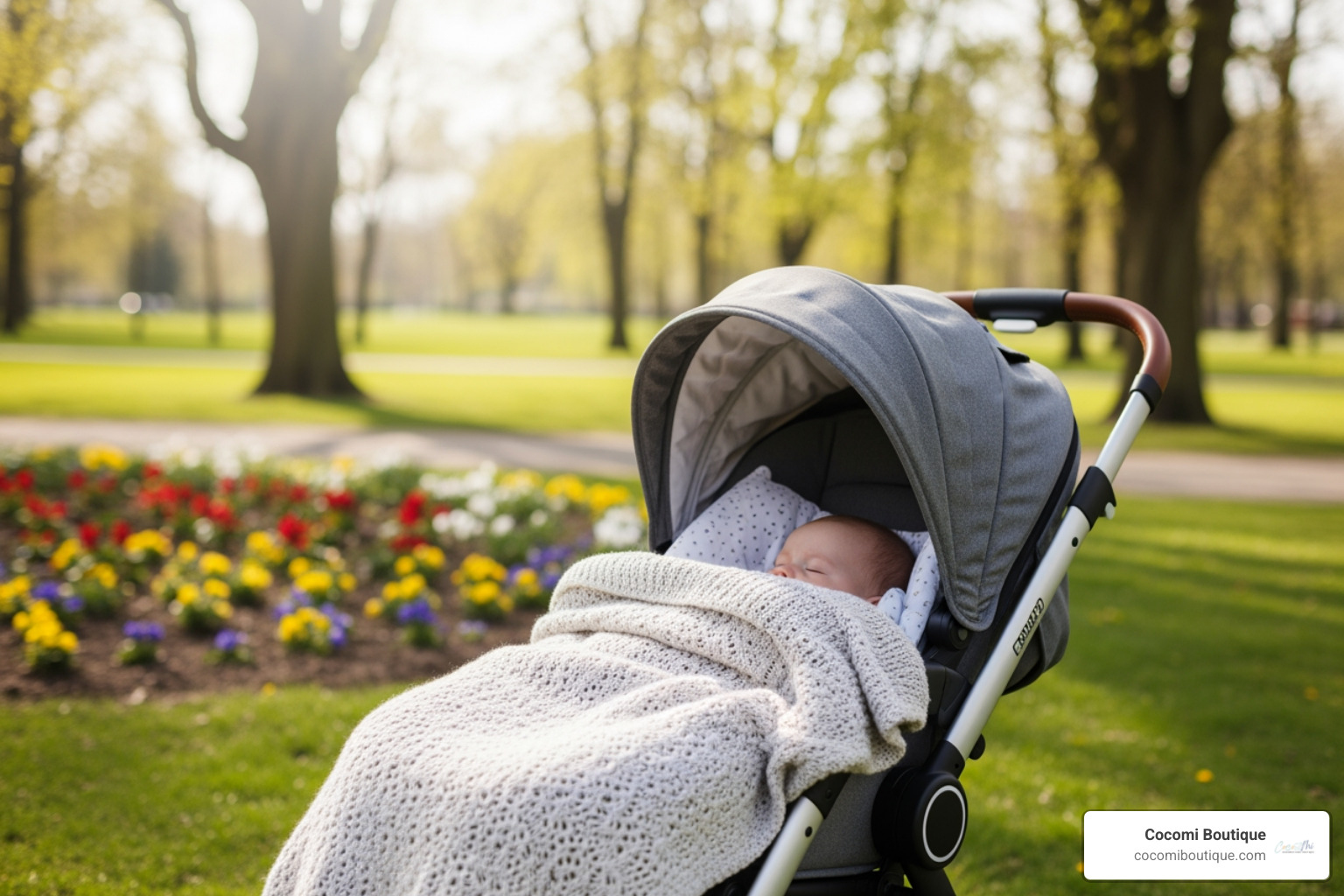
When you are "out and about," safety is paramount. If you are using a sling or carrier, you must ensure the baby's face is never covered by a blanket. The Lullaby Trust: how to use a sling provides excellent guidance on ensuring your baby stays safe and visible while being carried.
Selecting the Best Cotton Baby Blankets for Newborns
For a newborn, the blanket isn't just a piece of fabric; it's a transition from the womb to the world. This is where cotton baby blankets designed for swaddling shine. Swaddling mimics the snug environment of the womb, preventing the startle reflex (Moro reflex) from waking the baby.
When selecting a newborn blanket, look for:
- Stretch: A bit of natural "give" in the knit helps for a secure swaddle.
- Texture: Pointelle or waffle knits provide tactile stimulation for developing senses.
- Weight: Lightweight is always safer for newborns to prevent overheating.
We recommend checking out organic cotton swaddle blankets a guide to the softest snuggles to see how different weaves offer different levels of security. For tummy time, a thicker cotton quilt provides a soft barrier between your baby and the floor, giving them a comfortable space to practice lifting that heavy (and adorable) head.
Material Comparison: Cotton and Muslin
One of the most common questions we get at our locations from Wheeling to Glenview is: "Is muslin different from cotton?" The answer is that muslin is cotton, but it's all about the weave.
| Feature | 100% Standard Cotton | Cotton Muslin |
|---|---|---|
| Weave | Tight, often twill or jersey | Loose, open plain weave |
| Weight | Medium to Heavy | Ultra-lightweight |
| Warmth | High (Great for winter) | Low to Medium (Great for layering) |
| Durability | Very High | High (Softens significantly) |
| Best Use | Crib quilts, stroller rides | Swaddling, nursing covers |
Standard cotton blankets, like a cable knit or a heavy flannel, are excellent for those chilly Chicago winters. They provide a sturdy weight that feels like a warm hug. On the other hand, muslin is the king of versatility. Because the weave is so open, it is incredibly breathable. You can find a deeper dive into this fabric in our article muslin explained from weave to wonder a fabric deep dive.
Many parents choose to layer. A muslin swaddle close to the baby's body, topped with a heavier cotton quilt for a stroller walk, ensures the baby stays warm without the risk of synthetic fibers irritating their skin.
Safety and Care for Your Cotton Baby Blankets
As parents, safety is our North Star. When choosing cotton baby blankets, the gold standard for safety is the GOTS (Global Organic Textile Standard) certification. This isn't just a fancy label; it means the cotton was grown without toxic pesticides and processed without harmful chemicals like azo dyes or formaldehyde. For a baby who is likely to chew on the corner of their blanket, this peace of mind is priceless.
To keep your blankets safe and in top condition, follow these care tips:
- Wash Before Use: Always wash new blankets to remove any dust from the manufacturing process.
- Temperature Matters: Machine wash in warm water. Avoid boiling temperatures that can shrink natural fibers.
- Skip the Softener: Fabric softeners can actually reduce the absorbency of cotton and may contain fragrances that irritate a baby's respiratory system.
- Tumble Dry Low: High heat can make cotton fibers brittle. A low tumble dry keeps them "cloud-like."
For more on maintaining a safe sleep environment, read sweet dreams ensuring muslin blanket safety for your little one. The safest crib is an empty crib—blankets should only be used for supervised sleep or once the child has reached the appropriate age. For those specifically looking for organic options, our guide on gots certified goodness finding the perfect organic muslin blanket is a must-read.
DIY Methods and Popular Design Trends
There is something incredibly special about a handmade blanket. It becomes an heirloom, a piece of history passed down from one generation to the next. If you're feeling crafty, making a custom cotton baby blanket is a rewarding project that can be completed in about 30 minutes.
One popular DIY method is the "Cotton and Minky" combo. While we love 100% cotton, some parents enjoy the velvety feel of minky on one side for extra "cuddle factor." You can follow a Cotton Print Blanket tutorial to create a designer-style blanket at home.
Current Trends in Cotton Blanket Design:
- Floral Patterns: Vintage-inspired botanicals and soft "Country Floral" prints are having a major moment.
- Gender-Neutral Earth Tones: Shades of sage green, oatmeal, and "Riverstone Blue" are replacing the traditional "strictly pink or blue" palettes.
- Textured Knits: Pointelle, popcorn knits, and scalloped edges add a touch of luxury and sophistication to a nursery.
- Personalization: Embroidered names or initials turn a standard blanket into a one-of-a-kind keepsake.
Whether you buy or make your blanket, the goal is the same: providing a safe, soft, and stylish environment for your little one to grow.
Frequently Asked Questions about Baby Bedding
How do I properly wash organic cotton blankets?
We recommend machine washing on a gentle cycle with a mild, fragrance-free detergent. Use warm water rather than hot to prevent shrinkage. Tumble dry on low heat. One of the best things about organic cotton is that it naturally softens with every wash, so you don't need to use chemical fabric softeners!
Are cotton blankets safe for overnight sleep in a crib?
According to safe sleep guidelines, the crib should be free of loose blankets, pillows, and toys for the first 12 months to reduce the risk of SIDS. For overnight sleep during the first year, we recommend using a wearable blanket or "sleep sack" made of cotton. Once your baby is over a year old, a lightweight cotton blanket can be introduced for overnight use.
What is the difference between a receiving blanket and a swaddle?
While the terms are often used interchangeably, a receiving blanket is usually a versatile, rectangular piece of thin cotton used for many purposes. A swaddle blanket is often larger (around 47" x 47") and made of a stretchy or lightweight muslin specifically designed to wrap a baby snugly. Swaddles are about the "wrap," while receiving blankets are about the "utility."
Conclusion
At Cocomi Boutique, we believe that the smallest details make the biggest difference. Our commitment to quality, care, and customer satisfaction drives us to source and create the finest cotton baby blankets for our community in Northbrook, IL, and beyond. Whether you are preparing for your first newborn or looking for the perfect baby shower gift for a friend in Prospect Heights, a high-quality cotton blanket is a gift of timeless comfort.
From the breathable layers of a muslin swaddle to the heirloom quality of a hand-knit cotton quilt, these essentials are designed to support your parenting journey every step of the way. We invite you to explore our collection and experience the softness that only natural, chemical-free cotton can provide.