

Why Best Infant Sleep Matters for Your Baby's Safety and Your Peace of Mind

Best infant sleep is about more than just rest—it's about safety. Annually, around 3,700 U.S. babies die from sleep-related causes like Sudden Infant Death Syndrome (SIDS) and accidental suffocation. Fortunately, following evidence-based safe sleep practices can dramatically reduce these risks, helping both you and your baby rest easier.
Quick Answer: The Essential Safe Sleep Guidelines
Follow these ABCDs of Safe Sleep to protect your infant:
- A is for Alone - Baby sleeps alone in their crib, without soft items like toys, bumpers, or blankets
- B is for Back - Always place baby on their back for every sleep time
- C is for Crib - Use a firm, flat sleep surface (crib, bassinet, or play yard that meets safety standards)
- D is for Don't Smoke - Keep your baby away from smoke and nicotine exposure
Additional critical practices include:
- Room-share (but don't bed-share) for at least 6 months—this can reduce SIDS risk by up to 50%
- Keep the room at a comfortable temperature (68-72°F) and avoid overheating
- Consider offering a pacifier at sleep time
- Stop swaddling when baby shows signs of rolling (around 4 months)
As the founder of Cocomi Boutique, I'm Monika Jarog. I've dedicated my career to crafting baby essentials from 100% natural materials that prioritize comfort and safety. This guide will show you how to create a safe sleep environment and establish healthy habits, giving you the peace of mind every parent deserves.
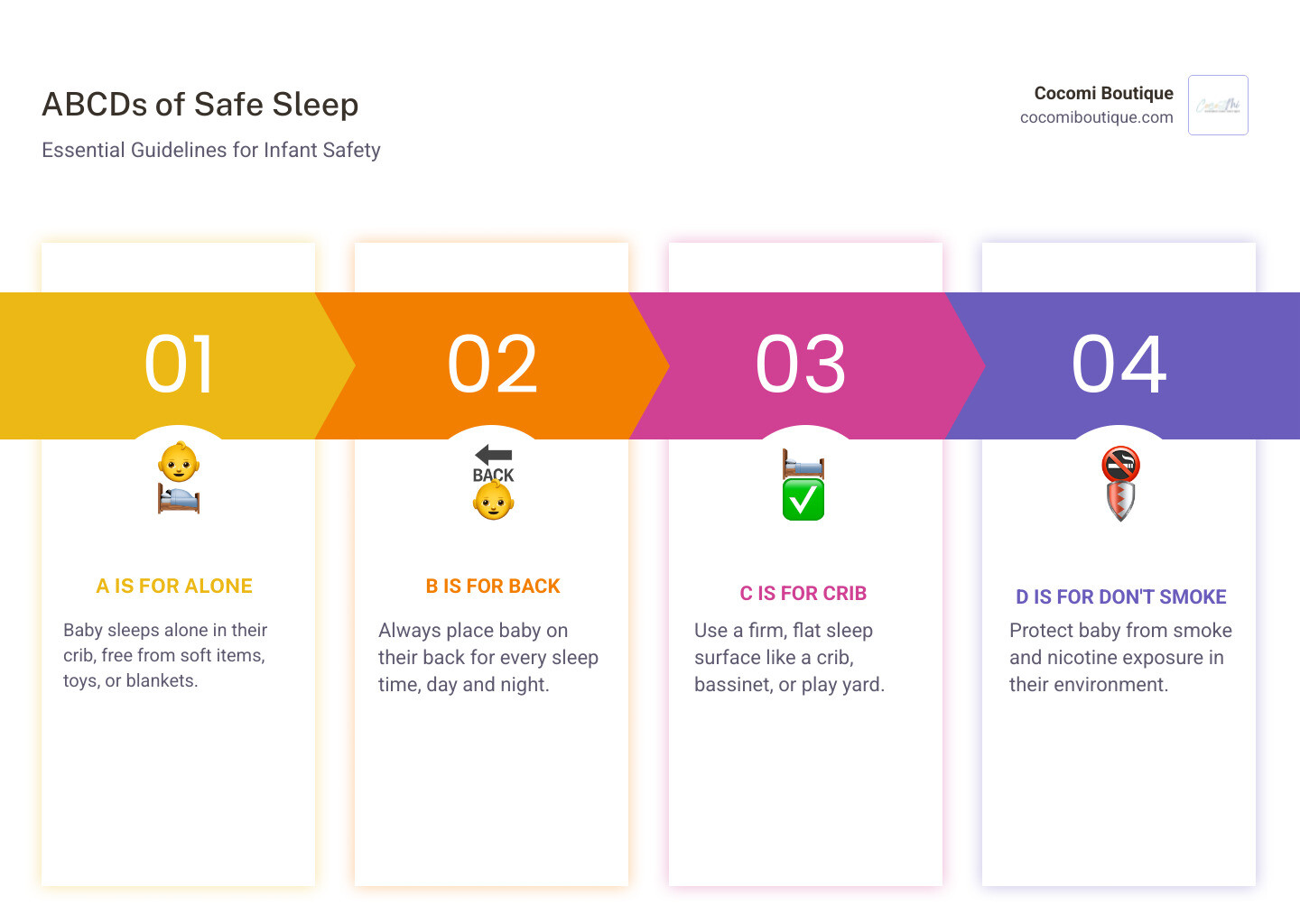
Quick look at Best infant sleep:
The Cornerstones of Safe Sleep: AAP Recommendations
Ensuring safe sleep is one of the most critical aspects of infant care. Each year, thousands of families are affected by Sudden Unexplained Infant Death (SUID), which includes Sudden Infant Death Syndrome (SIDS) and accidental suffocation. In 2022, there were about 3,700 sleep-related deaths among U.S. babies.
Fortunately, education on safe sleep has led to a more than 50% decline in the SIDS rate since 1994. The American Academy of Pediatrics (AAP) provides evidence-based guidelines to reduce these risks. Following these steps is crucial for your baby's safety and achieving the best infant sleep. For comprehensive details, see the American Academy of Pediatrics recommendations here.
The ABCDs of Safe Sleep Explained
The "ABCDs" make safe sleep practices easy to remember:
- A is for Alone: Your baby should sleep alone in their designated space, free of loose items like blankets, pillows, bumper pads, or soft toys, which are suffocation hazards.
- B is for Back: Always place your baby on their back for all sleep, including naps. A baby's anatomy and gag reflex prevent choking in this position, making it the safest.
- C is for Crib: Use a firm, flat surface like a crib, bassinet, or play yard that meets current safety standards. The surface should be covered only with a fitted sheet.
- D is for Don't Smoke: Avoid smoking or vaping during pregnancy and ensure a smoke-free environment for your baby. Smoke exposure significantly increases SIDS risk.
Consistent application of these rules by all caregivers is vital. For a visual guide, you can watch a video on the ABCDs of Safe Sleep for Babies.
Creating a Safe Sleep Surface and Environment
A safe sleep surface is the foundation of best infant sleep. Use a safety-approved crib, bassinet, or play yard with a firm mattress that fits snugly, leaving no gaps. Cover the mattress only with a fitted sheet.
The rule for the crib is simple: nothing soft or loose. This means no soft bedding, comforters, loose blankets, plush toys, or bumper pads. These items can cover a baby's face and lead to suffocation. A report found soft bedding increased suffocation risk by 16 times. Adult beds are also unsafe, as a baby can become trapped or a parent could accidentally roll over them.
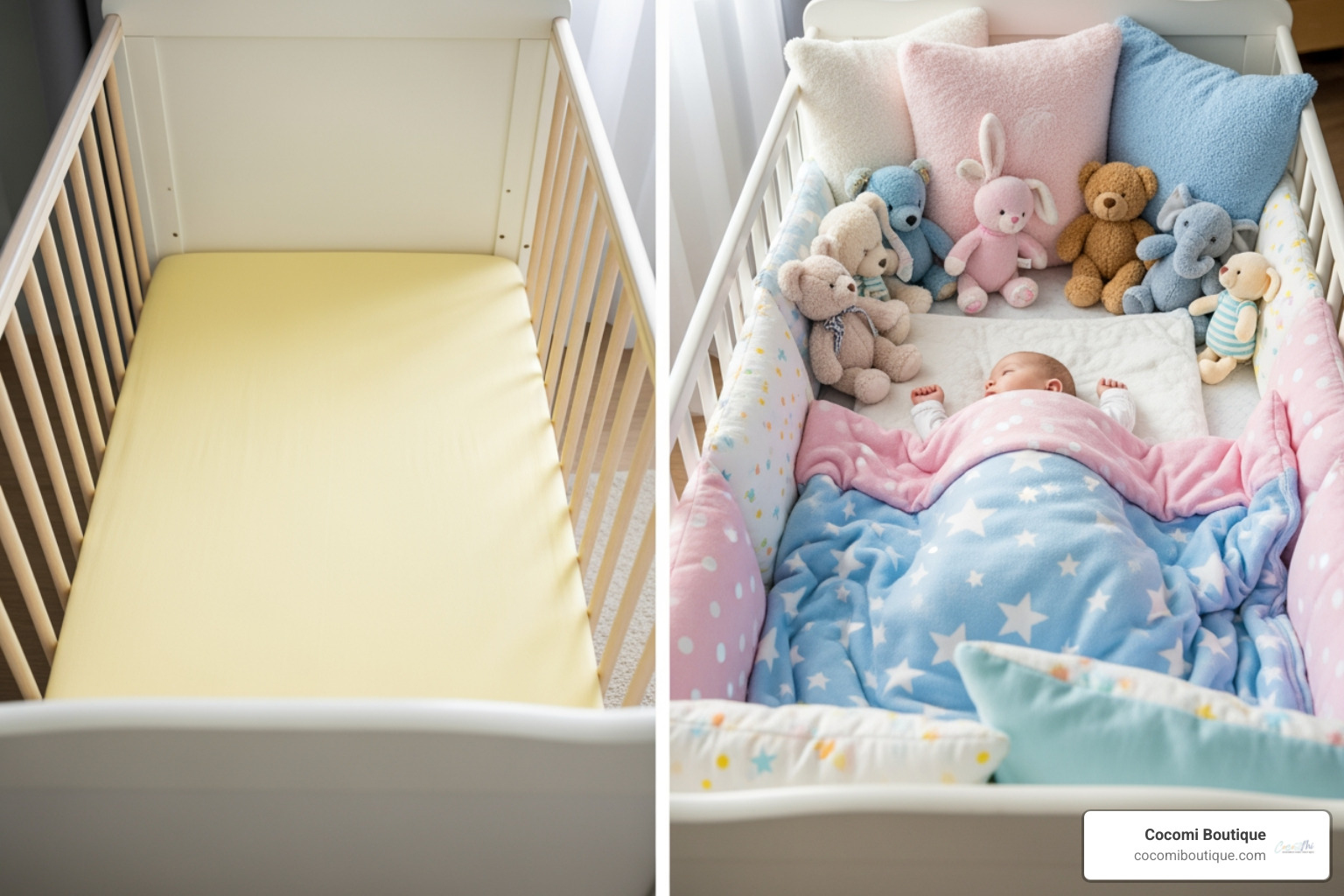
Always check that your sleep products meet current safety standards by visiting the CPSC website for recalls and safety information.
Room-Sharing vs. Bed-Sharing
The AAP strongly recommends room-sharing without bed-sharing to promote the best infant sleep. This means your baby sleeps in their own crib or bassinet in your room. This practice can reduce SIDS risk by up to 50% and is recommended for at least the first six months. Room-sharing makes nighttime feeding and monitoring easier and is significantly safer.
Bed-sharing, however, increases the risk of SIDS and accidental suffocation from:
- Entrapment: Between the mattress and headboard, wall, or other objects.
- Suffocation: From soft bedding, pillows, or comforters.
- Overlaying: A parent accidentally rolling onto the baby. The risk is higher if the parent is tired or has used alcohol, drugs, or certain medications.
If you bring your baby into your bed for feeding, return them to their own safe sleep space afterward. For more insights, see our guide: Crib or Nest? Navigating Safe Sleep for Your Baby.
Preventing Overheating
Maintaining a comfortable temperature is key to reducing SIDS risk. The ideal room temperature is between 68° and 72°F (20° and 22.2°C).
To prevent overheating:
- Dress lightly: Use one more layer than you would wear. A sleep sack or lightweight sleeper is often enough.
- Use wearable blankets: Sleep sacks are a safe alternative to loose blankets. Our Cocomi Boutique collection offers safe and cozy options.
- Avoid hats indoors: Babies regulate temperature through their heads.
- Check for signs of overheating: Look for sweating, damp hair, flushed cheeks, or a hot chest.
For safe sleepwear ideas, explore our guide: Dreamy Duds: Top Newborn Sleepers, Sacks, and Suits for Your Little One.
Essential Practices for the Best Infant Sleep
Beyond a safe environment, other practices contribute to your baby's safety and comfort, leading to the best infant sleep. This includes using pacifiers and swaddling correctly and avoiding unsafe sleep products.
The Role of Swaddling and Pacifiers for the Best Infant Sleep
Swaddling: Swaddling can calm newborns by mimicking the womb and reducing the startle reflex. For safe swaddling:
- Ensure the swaddle is snug but allows for hip movement.
- Always place a swaddled baby on their back.
- Stop swaddling when your baby shows signs of rolling over (around 4 months). A baby who rolls onto their stomach while swaddled is at high risk of suffocation. Transition to a sleep sack at this time.
For a detailed guide, see our article: The Ultimate Guide to Safe Swaddling for Newborns.
Pacifiers: Offering a pacifier at sleep time may reduce the risk of SIDS.
- If breastfeeding, wait until it's established (3-4 weeks) before introducing a pacifier.
- Never force it or use attachments like strings or clips, which are strangulation hazards.
- If it falls out during sleep, there's no need to reinsert it.
Unsafe Sleep Products and Locations
Many products marketed for infant sleep are unsafe.
Dangers of sitting devices for routine sleep: Car seats, swings, and bouncers are not for routine sleep. The semi-reclined position can cause a baby's head to fall forward, obstructing their airway (positional asphyxia). If your baby falls asleep in one, move them to a flat, safe surface immediately.
Unproven SIDS-reduction products: Be wary of products claiming to reduce SIDS. The AAP does not endorse items like:
- Home monitors: They can provide a false sense of security and are not a substitute for safe sleep practices.
- Wedges and positioners: These pose a suffocation risk.
- Weighted blankets, sleepers, and swaddles: These are not safe for infants as they can restrict movement and breathing.
The safest sleep space is a firm, flat, and clear surface.
Special Considerations: Illness and Medical Needs
Extra vigilance is needed for infants who are ill or have medical conditions.
Illness: Babies with illnesses, especially respiratory infections, are at a higher risk for SUID. It is critical to strictly follow all safe sleep rules. Always place them on their back in a clear sleep space, even if they seem more comfortable in another position.
NICU Graduates and Preterm Infants: Preterm infants and NICU graduates are also at higher risk for SIDS. Back sleeping is crucial. Though they may have been positioned differently in the NICU for medical reasons, they should transition to back sleeping once stable. The same safe sleep rules apply. If there is medical equipment, ensure cords are routed safely away from the baby. For more guidance, see Safe Sleep for Infants with Medical Conditions.
Developing Healthy Sleep Habits and Routines
Beyond safety, establishing healthy sleep habits is key to promoting the best infant sleep and helping you get much-needed rest. We can help our babies learn to sleep well.
Understanding Your Baby's Sleep Needs
Newborns sleep about 16-17 hours a day in short 1-2 hour bursts due to frequent feeding needs. About half of their sleep is REM sleep, which is vital for brain development. As babies grow, their sleep needs change:
- Newborns (0-3 months): 16-17 hours total, in short segments.
- 3-6 months: Total sleep is around 12-16 hours, with some babies sleeping for five-hour stretches at night.
- 6-12 months: Total sleep is 12-16 hours, with many sleeping about 10 hours at night.
Here's a quick reference table for typical sleep hours:
| Age Group | Total Sleep Hours (24 hr) | Night Sleep (approx.) | Nap Frequency |
|---|---|---|---|
| Newborn | 16-17 hours | 1-3 hours at a time | Frequent |
| 3-6 months | 12-16 hours | 5+ hours at a time | 2-3 naps |
| 6-12 months | 12-16 hours | 10+ hours | 2 naps |
Every baby is different, but a consistent routine helps them learn to sleep through the night (6-8 hours) safely.
How to Establish a Soothing Bedtime Routine
A consistent, soothing bedtime routine signals to your baby that it's time to sleep, promoting the best infant sleep.
A great routine includes:
- Consistent timing: Start the routine around the same time each night.
- Calming activities: A warm bath, gentle massage, reading a book, or singing a lullaby can be relaxing. Keep lights dim and voices low.
- Final prep: Finish with a final feeding and diaper change.
- Drowsy but awake: Place your baby in their crib when they are drowsy but still awake. This teaches them to fall asleep independently and self-soothe if they wake up.
- Sleep-conducive atmosphere: Keep the room dark, quiet (or use white noise), and at a comfortable temperature (68-72°F).
Consistency helps babies develop positive sleep associations and the skill of self-soothing.
Recognizing Sleep Cues for the Best Infant Sleep
Learning your baby's sleep cues helps prevent them from becoming overtired, which makes falling asleep harder.
Common signs of sleepiness include:
- Rubbing eyes
- Yawning
- Fussing or crying
- Looking away or disengaging
- Staring blankly
- Becoming quiet
When you see these signs, it's time to start the sleep routine. Responding promptly increases the chances of them falling asleep easily and getting the best infant sleep.
Frequently Asked Questions about Infant Sleep Safety
Here are evidence-based answers to common questions about infant sleep safety.
Can my baby choke if they spit up while sleeping on their back?
No, placing your baby on their back is the safest position and does not increase the risk of choking. A baby's anatomy is designed to prevent this. When on their back, the trachea (windpipe) is above the esophagus (food pipe). Gravity helps any spit-up flow away from the airway, and their natural gag reflex helps clear fluid. Studies confirm that back-sleeping is safest. You can learn more about how babies' anatomy and gag reflex help prevent them from choking on their backs.
When can my baby start sleeping with a blanket?
The AAP recommends waiting until your baby is at least 12 months old. Before this age, loose blankets pose a significant suffocation risk, as a baby may not be able to move it away from their face. Safe alternatives to keep your baby warm include:
- Sleep sacks or wearable blankets: These provide warmth without covering the face. Our Cocomi Boutique collection offers soft, breathable options.
- Appropriate sleepwear: Dress your baby in layers suitable for the room temperature.
After 12 months, a baby typically has the motor skills to safely use a blanket.
Is it ever safe to bed-share with my baby?
The AAP advises against bed-sharing due to a significantly increased risk of SIDS, suffocation, and entrapment. The risks are even higher if a parent is very tired, has used alcohol or drugs, or if the bed has soft bedding.
The safest alternative is room-sharing, where your baby sleeps in their own crib or bassinet in your room. This provides closeness without the dangers of bed-sharing. If you bring your baby into your bed for feeding, always return them to their separate sleep space once you are finished.
Conclusion: Ensuring Peaceful Nights for You and Your Baby
Navigating infant sleep can feel overwhelming, but focusing on safety and healthy routines ensures your baby gets the best infant sleep. Remember the ABCs: Alone, Back, Crib, and Don't Smoke. These guidelines, along with a clear sleep space and room-sharing, are your best tools for preventing sleep-related tragedies.
Consistent practice protects your baby and builds a foundation for healthy sleep habits. A well-rested baby often means a more rested and happier parent!
At Cocomi Boutique, we support your journey with soft, stylish, and comfortable baby clothing and sleepwear from 100% natural materials that align with safe sleep recommendations. Our commitment to quality ensures your baby is both cozy and safe, giving you peace of mind.
We invite you to explore our collection of safe and comfortable baby sleepwear to help provide the best infant sleep for your little one.