

Understanding Safe Sleep: What Every Parent Needs to Know About Muslin Blankets
Are muslin blankets safe for babies to sleep with? The short answer is: not for unsupervised sleep before age one. Here's what you need to know:
Quick Safety Guidelines:
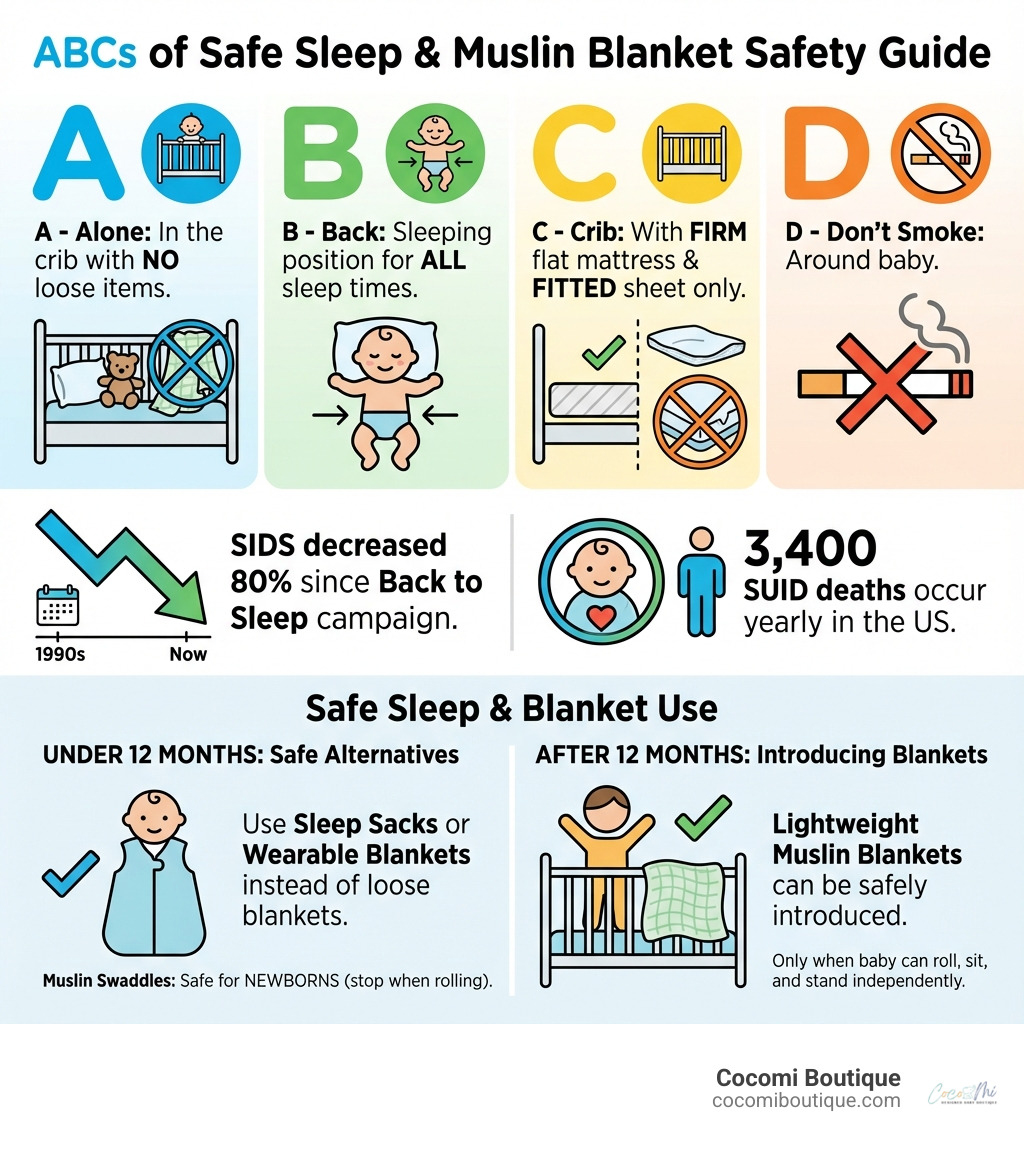
- Under 12 months: No loose blankets of any kind (including muslin) in the crib during unsupervised sleep
- Muslin swaddles: Safe for newborns when used properly, but stop swaddling when baby shows signs of rolling (around 2-4 months)
- After 12 months: Lightweight muslin blankets may be introduced once baby can roll, sit, and stand independently
- Safe alternatives: Use sleep sacks or wearable blankets instead of loose blankets for babies under one year
Each year, approximately 3,400 sudden unexplained infant deaths occur in the United States. Many of these tragedies are linked to unsafe sleep environments, including loose bedding in cribs. While muslin is breathable and lightweight, these properties don't eliminate the suffocation risk that any loose blanket poses to infants.
The American Academy of Pediatrics is clear: babies should sleep on a firm, flat surface with nothing else in the crib—no pillows, bumpers, toys, or blankets. This "bare is best" approach has contributed to an 80% decrease in SIDS since the Back to Sleep campaign began in the 1990s.
But muslin blankets aren't without their place in your baby's life. They're wonderful for supervised swaddling in the early months, as nursing covers, stroller shades, and tummy time mats. The key is understanding when and how to use them safely.
I'm Monika Jarog, and I've dedicated my career to creating handcrafted baby essentials from 100% natural, chemical-free materials that meet the highest European safety standards. Through my work, I've helped countless parents understand whether muslin blankets are safe for babies to sleep with and how to use them appropriately at every stage.
In this guide, I'll walk you through the science-backed safety guidelines, explain why loose blankets pose risks even when made from breathable muslin, and show you exactly how to keep your baby warm and safe at every age.
Handy are muslin blankets safe for babies to sleep with terms:
Understanding the Golden Rules of Infant Sleep Safety
Ensuring a safe sleep environment for our little ones is paramount. We believe that understanding and implementing the foundational "ABCs" of safe sleep are the first steps toward peace of mind for every parent in Northbrook, Chicago, Deerfield, and beyond. These guidelines, endorsed by leading health organizations like the American Academy of Pediatrics (AAP), are designed to significantly reduce the risk of Sudden Infant Death Syndrome (SIDS) and other sleep-related infant deaths.
The core principles of infant sleep safety are simple yet critical:
- A is for Alone: Your baby should sleep alone in their crib, bassinet, or play yard. This means no bed-sharing with parents or other children, which is a significant risk factor. While room-sharing (baby in their own safe sleep space in the parents' room) is recommended for at least the first six months, sharing a bed is not advised.
- B is for Back: Always place your baby on their back for every sleep—naps and nighttime. This position helps keep their airway clear and has been proven to dramatically reduce SIDS rates. Since the "Back to Sleep" campaign in the 1990s, SIDS has decreased by an impressive 80%.
- C is for Crib: Use a safe sleep surface that meets current safety standards. This includes a firm, flat mattress in a crib, bassinet, or play yard that is free from any soft bedding or loose items. The space between crib bars, for instance, should be no more than 2-3/8 inches apart to prevent entrapment. We always emphasize that babies should sleep on a firm, flat surface and avoid inclined sleepers or angled surfaces.
- D is for Don't Smoke: Exposure to smoke (including secondhand smoke) significantly increases the risk of SIDS. We always advise keeping your baby's environment smoke-free.
These guidelines are not just suggestions; they are evidence-based practices that have saved countless lives. By following them diligently, we can create the safest possible sleep sanctuary for our babies.
The "Bare is Best" Crib Environment
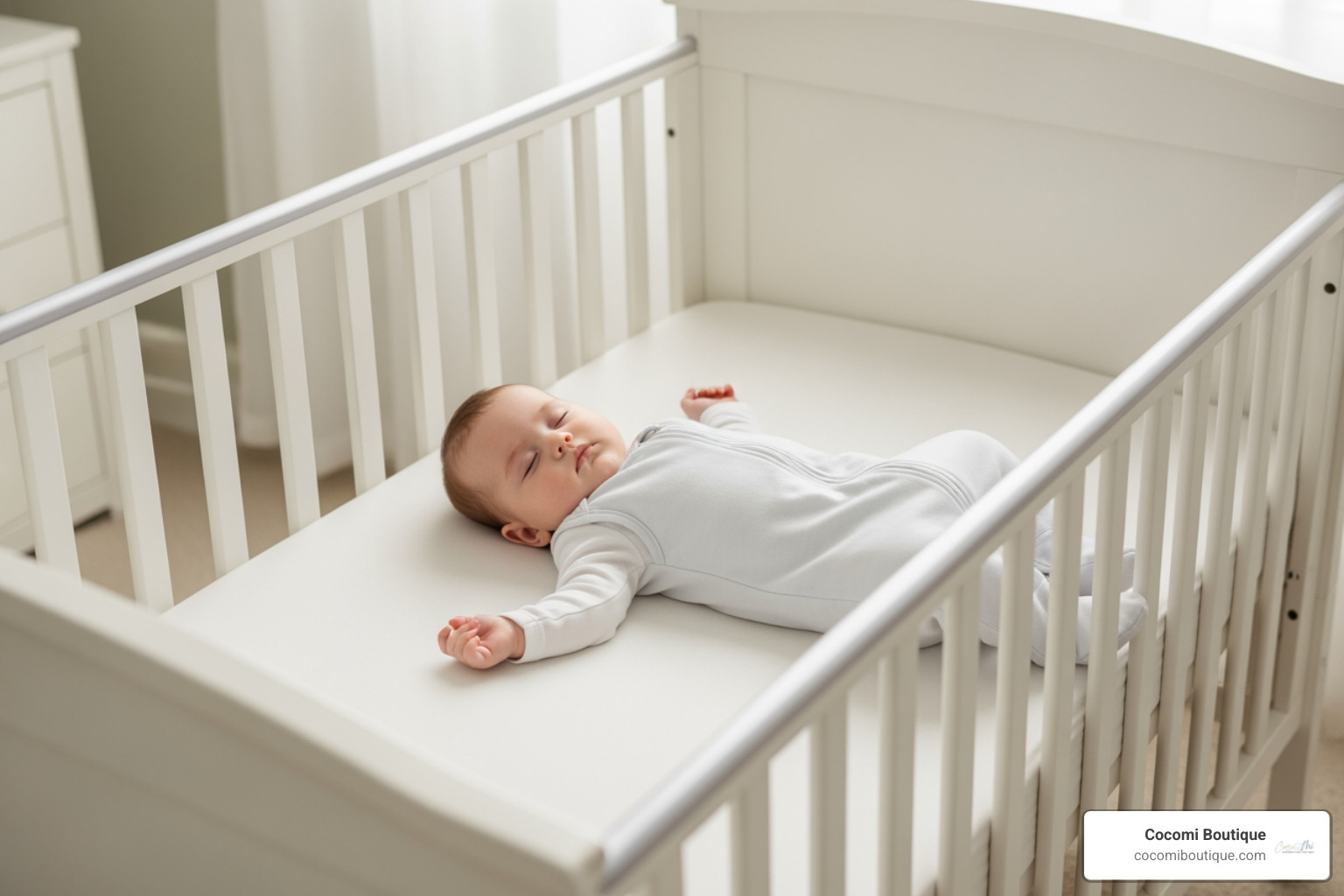
When we talk about a safe sleep environment, the phrase "bare is best" cannot be stressed enough. This means that your baby's crib or bassinet should be completely free of anything soft or loose that could pose a suffocation or strangulation hazard. This includes:
- No pillows: Pillows are designed for older children and adults; they can easily cover a baby's face and obstruct breathing.
- No bumpers: While they might seem cute or protective, crib bumpers (both padded and mesh) have been linked to infant deaths due to suffocation or strangulation. They serve no safety purpose.
- No soft toys: Cuddly animals, dolls, or other soft toys should never be left in the crib with a sleeping baby.
- No loose bedding: This is where our discussion about are muslin blankets safe for babies to sleep with becomes crucial. Any loose blanket, regardless of how lightweight or breathable it is, can accidentally cover a baby's face, making it difficult for them to breathe. This risk is present even with muslin.
The recommendation is to use only a fitted sheet on a firm mattress. This stark simplicity is the safest choice for our infants in Illinois and across the country. You can find More on creating a safe nursery from trusted sources.
Why Back is Best
The "Back to Sleep" campaign, launched in the 1990s, revolutionized infant sleep practices and is a prime example of how scientific evidence can dramatically improve public health. Prior to this campaign, many parents were advised to place babies on their stomachs, which we now know is a significant risk factor for SIDS.
Placing a baby on their back ensures that their airway remains open and clear. If a baby sleeps on their stomach, their face might be pressed against the mattress, potentially rebreathing exhaled air (carbon dioxide) or obstructing their breathing.
We often get questions about what happens when a baby starts to roll over. Babies typically develop the ability to roll from back to stomach and vice versa around 6-7 months old. Once your baby can consistently roll from back to stomach and stomach to back on their own, it's generally safe to let them find their comfortable sleep position. However, we must always continue to place them on their back to start with.
The Hidden Dangers: Blankets, Overheating, and SIDS
The desire to keep our babies warm and cozy is natural, but understand the significant risks associated with blankets and loose bedding in a baby's sleep space. These risks are directly linked to two primary concerns: suffocation/strangulation and overheating, both of which are major risk factors for SIDS.
Loose blankets, including those made from seemingly harmless muslin, pose a suffocation risk if they cover a baby's face. Infants, especially newborns and young babies, lack the motor skills and strength to remove a blanket from their face, even if it's lightweight. This can lead to rebreathing their own exhaled carbon dioxide, which reduces oxygen levels and can be fatal. There's also a strangulation risk if a baby gets tangled in a loose blanket.
Overheating: A Major Risk Factor
Overheating is a silent danger that significantly increases a baby's risk of SIDS. Babies regulate their body temperature differently than adults and can easily become too warm, especially if they are overdressed or their sleep environment is too hot.
Signs that your baby might be overheating include:
- Sweating
- Damp hair
- Flushed cheeks
- Rapid breathing
- Heat rash
We recommend maintaining a comfortable room temperature, typically between 68-72°F (20-22°C), for your baby's sleep space. If you're comfortable in the room, chances are your baby is too. It's also important to remember that babies do not need hats when they're indoors; a hat can make them too hot.
When dressing your baby for sleep, opt for simple, fitted sleepwear. Natural materials like organic cotton or bamboo are excellent choices as they are breathable and help regulate body temperature. We often refer to guidance on dressing your baby for sleep which emphasizes these practices to prevent overheating.

The Problem with Loose Bedding
It’s easy to think that a thin, breathable fabric like muslin wouldn't pose a risk, but unfortunately, this is not the case for unsupervised infant sleep. The danger with loose bedding isn't solely about the material's thickness; it's about its ability to cover a baby's face and obstruct their breathing.
Even the most breathable muslin, if it ends up over a baby's nose and mouth, can create a pocket where carbon dioxide accumulates, leading to rebreathing. Because infants lack the ability to push the blanket away, this seemingly innocuous item becomes a serious hazard. We must remember that babies do not need blankets until they are at least 12 months old.
Furthermore, we strongly advise against any weighted blankets, sleepers, or swaddles for infants. Health organizations universally state that these items are not safe for your baby, as they can restrict movement and pose additional suffocation risks. We believe in following these clear guidelines to prioritize our baby's safety above all else.
So, Are Muslin Blankets Safe for Babies to Sleep With?
This is the central question for many parents considering muslin for their little ones. Given all the benefits of muslin fabric, it's natural to wonder about its safety during sleep. The definitive answer from pediatric experts is that loose muslin blankets are not safe for unsupervised infant sleep for babies under 12 months of age.
The key distinction here is between supervised use and unsupervised sleep. While muslin blankets are wonderfully versatile for many supervised activities, they should never be left in a crib with a sleeping baby who is under one year old. The American Academy of Pediatrics (AAP) guidelines are very clear: no loose bedding in the crib, period.
The Unique Properties of Muslin Fabric
Muslin fabric is a true marvel, and it's no wonder why it's a favorite among parents for so many baby products. Muslin is a lightweight, finely woven cotton fabric renowned for its unique properties:
- Breathability: The open weave of muslin allows for excellent airflow, which is fantastic for keeping babies comfortable and helping to prevent overheating during supervised use. This breathability is why it's so popular for swaddles and light covers.
- Lightweight Material: Muslin is incredibly light, making it easy to drape and carry. This also contributes to its comfort for babies.
- Softness: Muslin is known for its incredible softness, which only gets better with each wash. This gentle texture is perfect for a baby's delicate skin.
- Absorbency: Muslin is surprisingly absorbent, making it ideal for burp cloths, washcloths, and cleaning up spills.
These properties make muslin an exceptional fabric for a wide range of baby products, and we explore them further in our article All About Muslin Baby Blankets. However, even with these wonderful characteristics, the risk of a loose blanket covering a baby's face during unsupervised sleep still exists.
For Unsupervised Sleep: Are muslin blankets safe for babies to sleep with?
Let's address this directly. When your baby is sleeping unsupervised, such as during naps or overnight in their crib, muslin blankets are not safe to be used as loose bedding. This recommendation holds true for any type of loose blanket for infants under one year old. The "breathable" nature of muslin does not negate the suffocation risk if the fabric covers your baby's nose and mouth.
The official recommendations from health organizations like the AAP are unequivocal: the crib should be bare. This means no loose blankets, including muslin, until your baby reaches at least 12 months of age. This strict guideline is a critical component of safe sleep practices and has been instrumental in reducing SIDS.
Safe Uses: Swaddling and Beyond
While loose muslin blankets are a no-go for unsupervised sleep, muslin fabric has many safe and incredibly useful applications in a baby's life.
One of the most popular and beneficial uses for muslin is swaddling. Muslin swaddles are large, thin, and breathable, making them perfect for wrapping newborns snugly. Swaddling can help mimic the secure feeling of the womb, calm the startle (Moro) reflex, and promote longer, more settled sleep. We have a detailed guide on The Ultimate Guide to Safe Swaddling for Newborns that walks you through the proper technique.
However, it's crucial to know when to stop swaddling. We must discontinue swaddling as soon as your baby shows any signs of trying to roll over, which can happen as early as 2 months of age, and definitely by 4 months. Swaddling an infant who can roll over is dangerous because they might roll onto their stomach and be unable to roll back, increasing the risk of suffocation.
Beyond swaddling, muslin blankets are incredibly versatile for supervised use:
- Tummy time mat: Their softness makes them a comfortable surface for supervised tummy time, which is essential for developing core strength and motor skills.
- Stroller cover: When out and about in places like Glencoe or Winnetka, a muslin blanket can be draped over a stroller to provide shade from the sun or a light barrier from wind, but always ensure proper airflow and never cover the entire opening.
- Nursing cover: Muslin provides discreet and breathable coverage for breastfeeding mothers.
- Burp cloth: Highly absorbent and soft, they are perfect for protecting clothes from spit-up.
- Changing mat cover: Lay one down for an extra layer of comfort and hygiene during diaper changes.
The key to safe use is always supervision. When your baby is awake and under your watchful eye, muslin blankets are a fantastic, multi-purpose tool.
Safe Alternatives and the Transition to Blankets
Since loose blankets, including muslin, are not safe for babies under one year old, we need effective alternatives to keep our little ones warm and comfortable during sleep. Fortunately, several excellent options align with safe sleep guidelines.
The primary alternatives are wearable blankets and sleep sacks. These are designed to be worn over sleepwear and zip up, providing warmth without the risk of covering the baby's face or becoming tangled. They are essentially blankets that your baby wears, ensuring they stay warm and cozy while maintaining a safe, bare crib environment. When selecting these, ensure they are the correct size to prevent your baby from slipping down inside (if too big) or having restricted hip and leg movement (if too small).
Appropriate sleepwear itself also plays a huge role. Simple, fitted sleepers made from natural, breathable fabrics are often sufficient, especially in warmer climates like an Illinois summer night.
Keeping Baby Warm Safely
Our goal is always to keep our babies warm, but never hot. We recommend dressing your baby in layers that are appropriate for the room temperature, rather than relying on loose blankets. For instance, a onesie under a sleep sack might be perfect for a cooler night.
When choosing sleep sacks or swaddles, you might encounter TOG ratings. TOG stands for "Thermal Overall Grade," and it's a measure of thermal insulation. A higher TOG rating means more warmth. While the research didn't dig into TOG ratings specifically, it's expert knowledge that many modern sleep sacks come with these ratings to help parents select the right warmth for different room temperatures. This eliminates guesswork and ensures your baby is comfortable without overheating.
For those early weeks when swaddling is appropriate, our guide on Finding the Best Swaddle for Sweet Dreams can help you choose the safest options. Once your baby shows signs of rolling, it's time to transition out of swaddles and into sleep sacks.
The Big Transition: Are muslin blankets safe for babies to sleep with after age one?
The question of are muslin blankets safe for babies to sleep with finally shifts to a "yes" once your child reaches a specific developmental stage. The general age recommendation for introducing a loose blanket is 12 months and older. At this point, most toddlers have developed the motor skills and cognitive ability to move a blanket away from their face if it obstructs their breathing.
However, age is just one factor. We also look for developmental readiness. Your child should be able to:
- Roll over easily in both directions.
- Sit up independently.
- Stand independently.
- Move freely around their sleep space.
When introducing a blanket, choose a lightweight, breathable option like a single-layer muslin blanket. Ensure it is appropriately sized—not too big that it could easily become tangled around your child. We recommend starting with a small, lightweight muslin blanket, firmly tucked in initially, to help your toddler adjust to it.
Choosing the Best Muslin Products
Not all muslin is created equal, and making informed choices about the specific types and construction methods can further improve safety and comfort.
When considering muslin products, we often recommend:
- Open-weave construction: This characteristic of muslin is what gives it its superior breathability. A more open weave allows for better airflow, which is a key benefit.
- Natural fibers: We prioritize 100% cotton muslin, or blends with other natural fibers like bamboo. We've explored the differences in our guide Bamboo or Cotton? Your Guide to the Best Organic Muslin Swaddles. Bamboo muslin, for example, is often praised for its exceptional softness and eco-friendly properties.
- GOTS certification: For organic cotton muslin, look for GOTS (Global Organic Textile Standard) certification. This ensures that the fabric is made from at least 95% organic fibers and meets strict environmental and social criteria throughout the entire supply chain, from harvesting to manufacturing. This certification means fewer harmful chemicals come into contact with your baby's delicate skin.
- Avoiding embellishments: For any item that will be near your baby's sleep space or face, avoid muslin products with ribbons, buttons, tassels, or other embellishments that could pose choking or strangulation hazards. Simplicity is key for safety.
By choosing high-quality, thoughtfully constructed muslin products, we ensure our babies benefit from this wonderful fabric in the safest possible way.
Conclusion
Navigating baby products can feel overwhelming, especially when it comes to sleep safety. Our primary goal is always to prioritize the safety of our little ones. While the question are muslin blankets safe for babies to sleep with has a nuanced answer, the overarching principle is clear: bare is best for unsupervised infant sleep until at least 12 months of age.
Muslin blankets are incredibly versatile and beneficial for many aspects of baby care—from supervised swaddling and tummy time to nursing covers and stroller shades. Their natural breathability, softness, and lightweight nature make them a favorite for parents in communities like Glenview, Glencoe, and Highland Park. However, these wonderful properties do not eliminate the suffocation risks that any loose blanket poses to infants during unsupervised sleep.
By understanding the risks of loose bedding and overheating, embracing safe alternatives like sleep sacks and wearable blankets, and following expert guidelines from organizations like the American Academy of Pediatrics, we can create a secure and nurturing sleep environment for our babies. When your child reaches the developmental milestones, typically around 12 months, you can then safely introduce a lightweight muslin blanket.
At Cocomi Boutique, we are committed to providing soft, stylish, and comfortable baby essentials that meet the highest safety standards. We believe in empowering parents with the knowledge to make the best choices for their families, ensuring every little one can enjoy sweet dreams safely. For more insights into this beloved fabric, explore The Ultimate Guide to Cotton Muslin Baby Blankets: Softness, Safety.