

Why Every New Parent Should Know About the Newborn Baby Wrap Carrier

The best newborn baby wrap carrier styles at a glance:
| Wrap Type | Best For | Weight Range | Key Material |
|---|---|---|---|
| Classic Stretchy Wrap | Versatility & all body types | 7–35 lbs (best up to 20 lbs) | 95% French Terry cotton, 5% spandex |
| Bamboo Viscose Wrap | Breathability & softness | 7–35 lbs (best up to 20 lbs) | 68% bamboo viscose, 25% cotton, 7% spandex |
| Lightweight Organic Wrap | All-season use & petite frames | 8–25 lbs | Ultra-soft organic cotton |
| Premium Multi-use Wrap | Budget-friendly & durability | ~7–35 lbs | Stretchy premium fabric blend |
A newborn baby wrap carrier is a long piece of soft, stretchy fabric that you tie around your body to hold your baby snugly against your chest — keeping both hands free while your little one sleeps, feeds, or simply feels close to you.
Unlike structured carriers with buckles and frames, or ring slings that loop over one shoulder, a wrap distributes your baby's weight evenly across both shoulders and your back. That means more comfort for you, and a cozy, womb-like feeling for your baby.
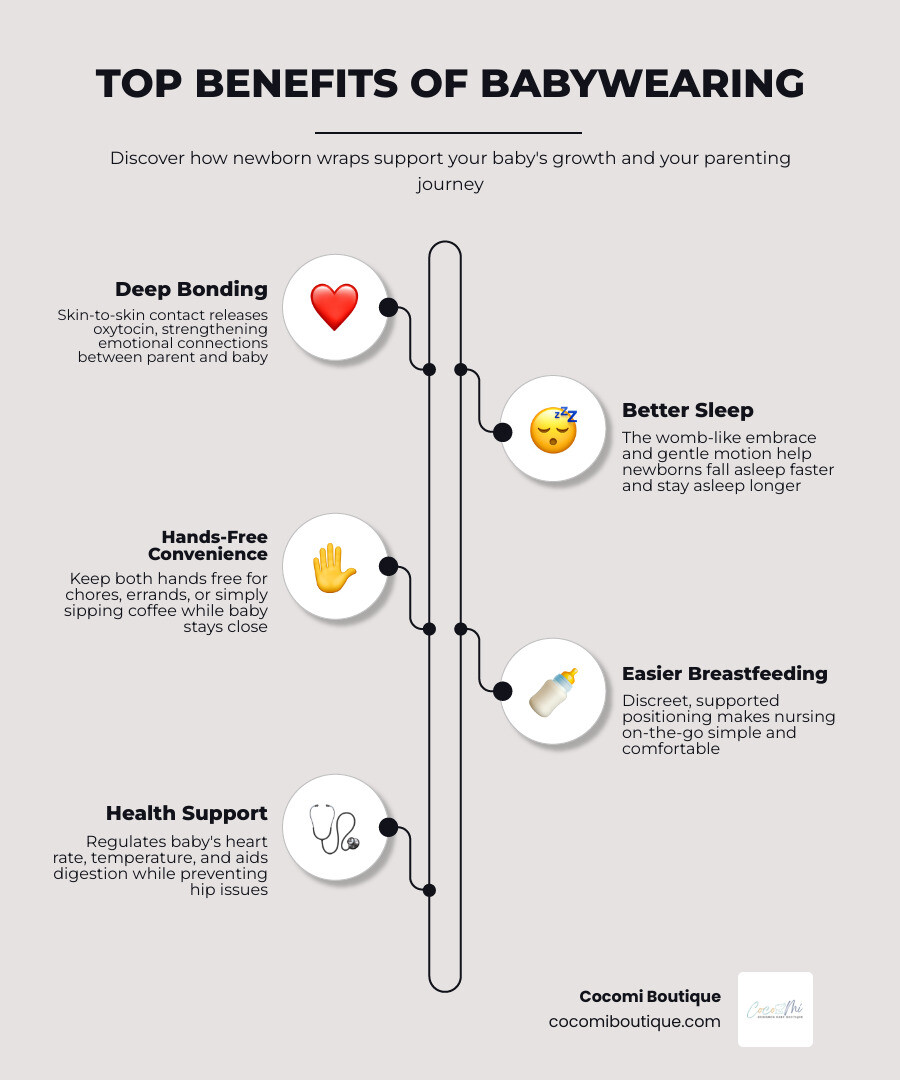
New parents quickly discover what makes wraps so appealing: less crying, easier breastfeeding, and the ability to actually get things done. Science backs this up too — skin-to-skin contact during babywearing supports your baby's heart rate, temperature regulation, and emotional bonding.
But with so many options — stretchy vs. woven, cotton vs. bamboo, one-size vs. sized — choosing the right wrap can feel overwhelming, especially on three hours of sleep.
I'm Monika Jarog, founder of Cocomi Boutique and a passionate advocate for thoughtfully designed, natural baby essentials — and helping parents find the right newborn baby wrap carrier is something I care deeply about. With years of experience curating premium, handcrafted baby products made from chemical-free, natural materials, I've seen how the right wrap can transform those early weeks for both baby and parent.
This guide breaks it all down simply, so you can make the best choice for your baby, your body, and your lifestyle.
Know your newborn baby wrap carrier terms:
Choosing the Perfect newborn baby wrap carrier for Your Lifestyle
When we talk about the newborn baby wrap carrier, we are usually looking at three main categories: stretchy wraps, woven wraps, and ring slings. For those of us in the "newborn trenches," the stretchy wrap is often the gold standard. It provides that essential womb-like environment that mimics the snugness of the fourth trimester.
Most stretchy wraps are designed for babies starting at 7 or 8 lbs and can safely carry them up to 25 or 35 lbs. However, many parents find the "sweet spot" is between birth and 20 lbs. Beyond that weight, the fabric may start to sag, and you might find yourself reaching for a more structured option.
| Feature | Stretchy Wrap | Woven Wrap | Ring Sling |
|---|---|---|---|
| Best For | Newborns & Beginners | Versatility & Longevity | Quick "ups" & Toddlers |
| Learning Curve | Moderate | High | Low to Moderate |
| Weight Support | Best up to 20 lbs | Birth to Toddlerhood | Birth to Toddlerhood |
| Fabric Type | Jersey/French Terry | Cross-weave cotton/linen | Single piece with rings |
Choosing the right style depends on your daily routine. If you plan on wearing your baby primarily around the house while tackling light chores or soothing a colicky infant, a stretchy wrap offers unmatched softness. If you want a carrier that will last until your child is a walking toddler, a woven wrap provides the durability you need. For more detailed insights, check out our best-baby-wraps-ultimate-guide.
Material Matters: Cotton, Bamboo, and Breathability in a newborn baby wrap carrier
The fabric of your newborn baby wrap carrier isn't just about fashion; it's about function and safety. Since newborns have difficulty regulating their body temperature, breathability is a top priority.
- French Terry Cotton: This is the classic choice found in many popular wraps. It is soft, durable, and has a bit of "bounce" thanks to a small percentage of spandex (usually around 5%). It provides even weight distribution and a very secure hold.
- Bamboo Viscose: Often blended with cotton, bamboo is incredibly buttery-soft and naturally moisture-wicking. It feels cooler to the touch, making it an excellent choice for summer babies or parents who "run hot."
- Organic Muslin and Cotton: At Cocomi Boutique, we prioritize natural, chemical-free fabrics. Organic materials are gentler on a newborn's sensitive skin and offer peace of mind for parents worried about dyes or synthetic treatments.
A high-quality wrap should offer a "4-way stretch," meaning the fabric expands both horizontally and vertically. This allow the wrap to mold to your body and your baby's shape without losing its elasticity over time. For those seeking the ultimate in soft, natural materials, you might enjoy discovering the perfect organic baby wrap.
Finding the Right Fit: A newborn baby wrap carrier for Every Body Type
One of the most common frustrations we hear from parents in our Chicago and Northbrook communities is the "one size fits all" myth. While many wraps are technically one long piece of fabric (often around 5.5 yards), the way they fit can vary wildly based on your frame.
For plus-size parents, a wrap with generous length is essential to ensure you can tie the final knot securely. Stretchy wraps are often more inclusive than structured carriers because there are no restrictive waistbands or short straps to worry about. The fabric simply conforms to your curves, providing custom back support and even weight distribution.
Petite parents, on the other hand, may find that some wraps have too much "tail" fabric. In this case, choosing a thinner, more streamlined wrap can prevent you from feeling swallowed by fabric. The goal is always to have the baby at a "kissable height" while maintaining your own comfort.
Safety and Ergonomics: The "Hip-Healthy" Standard
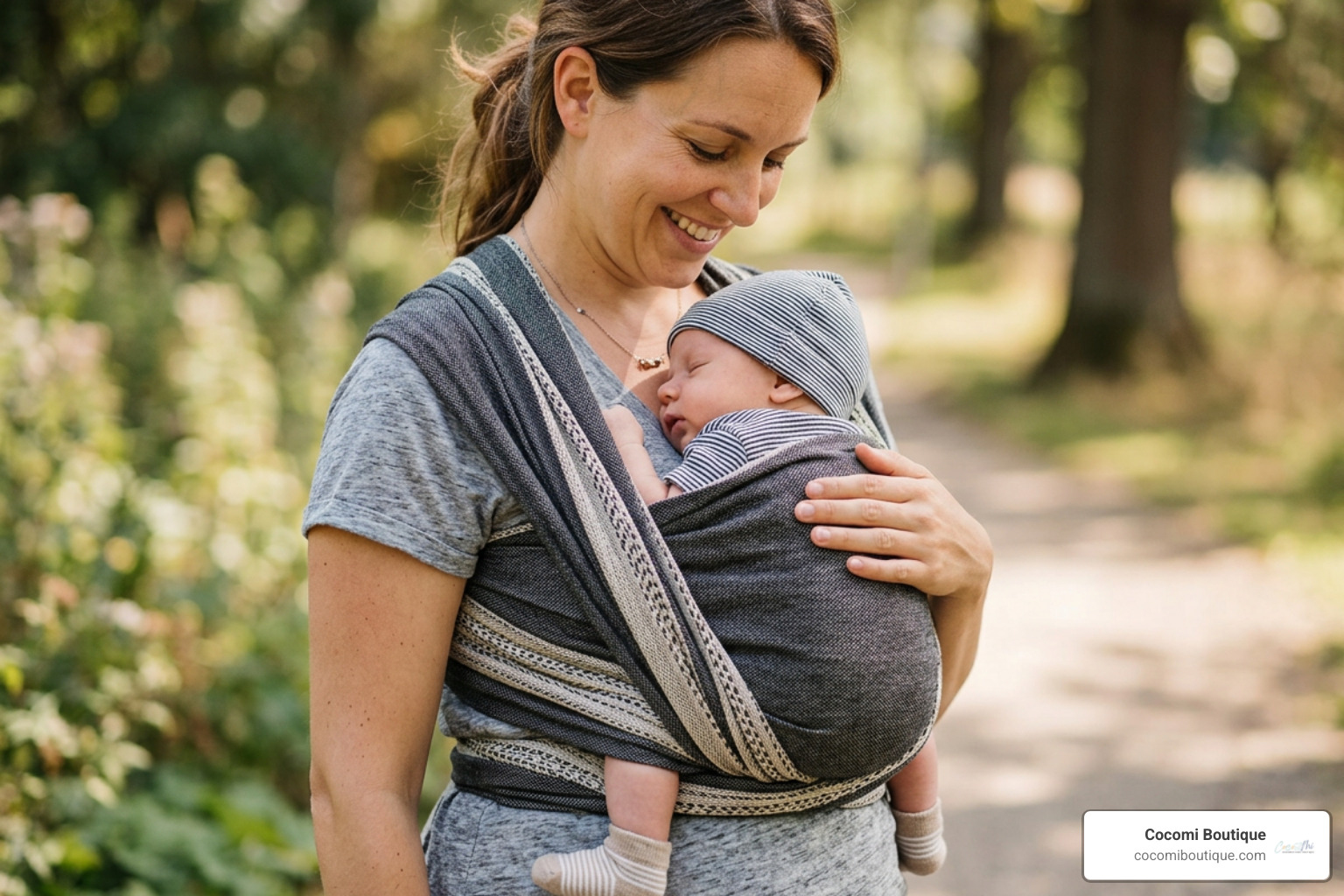
Safety is the non-negotiable part of babywearing. When using a newborn baby wrap carrier, we always follow the TICKS rules to ensure the baby is safe and their airway is clear:
- Tight: The wrap should be snug enough to hug your baby close.
- In view at all times: You should always be able to see your baby's face by simply looking down.
- Close enough to kiss: Your baby’s head should be as close to your chin as is comfortable.
- Keep chin off chest: Ensure there is at least a finger’s width of space under your baby’s chin.
- Supported back: The baby's back should be supported in its natural curve.
Ergonomics also play a huge role in physical development. You want to look for carriers certified as "Hip-Healthy" by the International Hip Dysplasia Institute. This means the carrier supports the "M" position, where the baby's knees are higher than their bottom and their legs are spread in a squat position. This prevents strain on the developing hip joints and promotes healthy growth.
Stretchy vs. Woven: Which Wrap is Right for You?
If you are a first-time parent, the debate between stretchy and woven can be confusing. Let's break it down.
Stretchy Wraps are the "entry-level" favorite. They are forgiving, soft, and you can usually tie the wrap on before you put the baby in. This "poppable" feature is a lifesaver when you're running errands in Glenview or Buffalo Grove and need to get the baby in and out of the car seat quickly.
Woven Wraps are made from sturdier, non-stretch fabric. While they have a steeper learning curve (you usually tie them around the baby), they are incredibly versatile. You can use them for front, hip, and even back carries as your child grows. They don't sag under the weight of a heavier infant, making them a better long-term investment for some families.
Whether you choose the cozy stretch of a jersey knit or the firm support of a woven textile, the key is practice. For more guidance on making this choice, see our ultimate-guide-to-baby-wraps.
Step-by-Step: Mastering the Art of the Newborn Wrap
Don't let the long piece of fabric intimidate you! Most parents can master the basic "Pocket Wrap Cross Carry" in just a few tries.
- Find the Center: Most wraps have a center tag. Place this against your chest.
- Cross and Toss: Take the ends, cross them behind your back, and bring them over your shoulders.
- The X Factor: Tuck the ends under the horizontal piece at your chest, crossing them to create an "X."
- Secure the Waist: Wrap the ends around your waist and tie a double knot.
- Load the Baby: Gently slide your baby into the "X" straps, ensuring their legs are in the M-position and the fabric reaches from knee to knee.
Using a newborn baby wrap carrier also makes breastfeeding on the go much easier. You can slightly loosen the wrap to lower the baby to breast height, using the fabric as a built-in nursing cover. Just remember to always move the baby back to a high, upright, and snug position once they are finished.
Beyond convenience, wraps provide significant colic relief. The upright position and the gentle "thump-thump" of your heart help babies expel excess air and soothe their digestive systems. For a deeper dive into the mechanics, read how-to-use-baby-wrap.
Frequently Asked Questions about Newborn Wraps
How long can I safely keep my baby in a wrap?
There is no "hard" time limit, but we recommend taking breaks every 1 to 2 hours. This allows you to check your baby's diaper, offer a feeding, and give both your back and the baby's body a chance to stretch and move. As long as the baby is positioned safely with a clear airway and both of you are comfortable, you can wear them for several stretches throughout the day.
Are wraps safe for newborns with reflux or colic?
Yes, they are often recommended by pediatricians for these issues! Keeping a baby upright for 20-30 minutes after a feeding can significantly reduce reflux symptoms. The gentle pressure of the wrap on the baby's tummy can also help soothe the discomfort associated with colic and gas.
How do I care for and wash my baby wrap?
Most modern wraps are machine washable. We suggest using a gentle, scent-free detergent (especially important for newborn skin!) and washing on a cold cycle. While some wraps can be tumble-dried on low, air-drying is often better for maintaining the elasticity of stretchy wraps over time. Always check the specific manufacturer's label, as bamboo blends may require more delicate care than 100% cotton.
Conclusion
At Cocomi Boutique, we believe that the early days of parenthood should be filled with as much comfort and closeness as possible. A newborn baby wrap carrier is more than just a piece of gear; it’s a tool that fosters deep emotional bonding while giving you back the freedom to move through your day.
Whether you are strolling through the Chicago Botanic Garden in Glencoe or simply trying to enjoy a warm cup of coffee in your Northbrook home, the right wrap makes all the difference. We take pride in offering premium, European-quality baby essentials that prioritize natural materials and handcrafted excellence.
If you’re looking to complete your newborn toolkit with other high-quality items, we invite you to discover more newborn essentials and boutique gifts at Cocomi Boutique. From organic muslin swaddles to handcrafted Moses baskets, we are here to support your journey with style, safety, and care.