

Why Every New Parent Is Talking About Premium Handcrafted Muslin Swaddles

Premium handcrafted muslin swaddles are worth it — and here's the short answer for parents ready to buy:
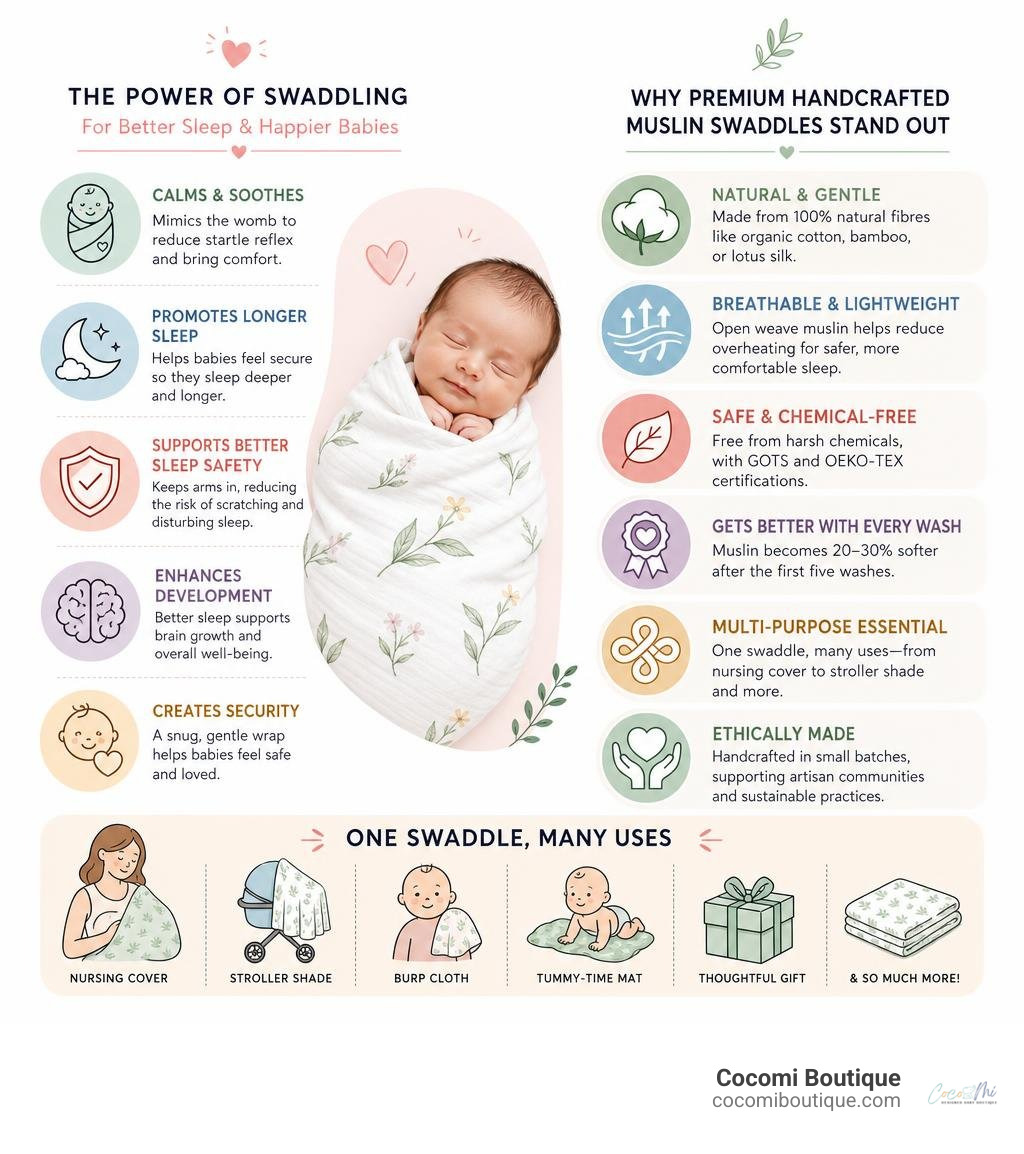
- Softer and safer than mass-produced alternatives, made from natural fibres like organic cotton, bamboo, or lotus silk
- Breathable open weave reduces overheating risk, which is one of the top concerns for newborn sleep safety
- Free from harsh chemicals, with leading options carrying GOTS and OEKO-TEX certifications
- Multi-purpose — one swaddle works as a nursing cover, stroller shade, burp cloth, tummy-time mat, and more
- Get better with every wash — muslin is known to become 20-30% softer after the first five washes
- Ethically made in small batches, often supporting artisan communities and sustainable production
From the moment a newborn arrives, parents instinctively want to recreate the snug, secure feeling of the womb. Swaddling has done exactly that for thousands of years — calming the startle reflex, encouraging longer sleep, and giving babies a sense of comfort and security. But not all swaddles are created equal.
The global baby swaddle market was valued at around USD 1.2 billion in 2023, growing at nearly 7% annually. More parents are moving away from cheap, synthetic options and toward natural, thoughtfully crafted alternatives. And muslin — especially when handcrafted in small batches — sits at the very top of that shift.
Over 70% of new parents now cite breathability and natural materials as their top priorities when choosing a swaddle. Muslin consistently ranks highest among premium choices.
I'm Monika Jarog, and at Cocomi Boutique I've spent years curating handcrafted baby essentials — including premium handcrafted muslin swaddles — made from 100% natural, chemical-free materials that meet the highest European safety standards. In this guide, I'll walk you through everything you need to know to choose the right one for your baby.
Premium handcrafted muslin swaddles helpful reading:
Why Premium Handcrafted Muslin Swaddles Outperform Mass-Produced Alternatives
When you stroll through big-box stores in the Chicago area, from Northbrook to Deerfield, you will find shelves lined with mass-produced baby blankets. At first glance, they might look fine. However, once you touch a mass-produced blanket alongside a premium handcrafted alternative, the differences in quality, safety, and ethics become immediately clear.
Mass-produced swaddles are manufactured in massive, automated factories using harsh chemical softeners to mimic initial softness. Unfortunately, these chemical coatings quickly wash away, leaving behind a stiff, scratchy fabric that can irritate a newborn's delicate skin. Furthermore, large-scale manufacturing often relies on synthetic polyester blends that trap heat and moisture, increasing the risk of overheating.
In contrast, premium handcrafted options are produced in small batches. This slower, intentional process prioritizes the structural integrity of the natural fibers. By avoiding heavy industrial machinery and harsh chemical treatments, the fabric retains its natural elasticity and structural strength. This results in a blanket that is not only safer for your baby but also built to last through years of daily use.
The Artistry Behind Premium Handcrafted Muslin Swaddles
True luxury is rooted in the details of its creation. Handcrafted muslin swaddles represent a beautiful partnership between modern safety standards and ancient textile traditions. Many of our premium swaddles are crafted by skilled artisans in India, a region globally renowned for its centuries-old mastery of cotton weaving.
These artisans use traditional wooden looms to weave delicate threads into a breathable, lightweight gauze. Because the process is completed in small batches, there is an extraordinary level of quality control. Every hem is carefully finished, and every seam is inspected to ensure it won't unravel.
The artistry extends to the visual design as well. Instead of generic, digitally generated graphics, handcrafted swaddles often feature hand-drawn illustrations and unique patterns inspired by nature and classic architecture. These elegant designs elevate the swaddle from a simple utility item to a beautiful piece of nursery decor. If you are looking to build a cohesive, stylish nursery space, our Ultimate Luxury Muslin Swaddle Guide offers excellent inspiration for selecting pieces that balance aesthetics with unmatched comfort.
Sizing and Versatility: The 47x47 Inch Standard
When choosing a swaddle, size matters far more than most parents realize. Many standard hospital blankets or budget swaddles measure around 44 by 44 inches (or even smaller). While this might seem sufficient for a tiny newborn, that small shortfall is exactly why wraps work loose in the middle of the night.
The gold standard for a versatile, secure swaddle is 47 by 47 inches (120 cm x 120 cm). This generous square provides the perfect amount of fabric to execute a secure, snug wrap that keeps your baby's arms safely tucked inside without restricting natural hip movement.
Additionally, this larger footprint ensures the blanket grows with your child. A 47x47 inch premium swaddle easily transitions into a multi-use tool for everyday parenting:
- Nursing Cover: The lightweight, breathable fabric drape provides 360-degree privacy while ensuring your baby stays cool and comfortable during feeds.
- Stroller or Car Seat Shade: Easily draped over a canopy to protect your little one from the sun while allowing fresh air to circulate freely.
- Tummy-Time Mat: A clean, soft surface for your baby to practice rolling and building neck strength, whether you are at home in Highland Park or visiting a park in Winnetka.
- Burp Cloth: Highly absorbent muslin can hold up to 300ml of liquid, making it a reliable shield during messy moments.
To learn more about the incredible versatility of these blankets, check out our comprehensive guide on how to Wrap Up In Comfort Everything You Need To Know About Muslin Swaddles.
Comparing Premium Fabrics: Organic Cotton, Bamboo, and Lotus Silk
The specific fibers woven into your baby's swaddle directly impact its softness, temperature regulation, and durability. Let's look at the three most popular high-end materials used in premium baby textiles today.

| Fabric Type | Softness Level | Breathability | Durability | Key Benefit |
|---|---|---|---|---|
| Organic Cotton | High (gets softer with every wash) | Excellent (open weave) | Outstanding (withstands 200+ washes) | Hypoallergenic, highly durable, and completely natural |
| Bamboo Viscose | Ultra-Soft (silky, cool to the touch) | Superb (moisture-wicking) | High (requires gentle washing) | Naturally odor-resistant and ideal for warm, humid climates |
| Lotus Silk Blend | Luxury (exceptionally smooth) | Unrivaled (clinical grade) | High (requires delicate care) | >99% clinical antibacterial protection, zero-energy handwoven |
Organic Cotton and Bamboo Blends
Organic cotton and bamboo viscose are the two most popular choices for premium baby swaddles, and for good reason.
GOTS-certified organic cotton is grown without the use of synthetic pesticides or fertilizers. This ensures that the fibers remain pure, hypoallergenic, and incredibly gentle on eczema-prone or sensitive skin. Organic cotton is highly durable; while standard cotton can degrade after 50 washes, premium organic cotton muslin can easily withstand over 200 washes while maintaining its shape. For families looking for regional pride or custom options, you can find beautiful regional designs like the Illinois Fighting Illini Swaddle Blanket - Three Little Anchors or even design your own using custom printed cotton muslin swaddles .
Bamboo viscose (such as high-quality Tanboocel®) offers a silky, cool-to-the-touch texture that is perfect for regulating temperature. Bamboo is naturally moisture-wicking and highly absorbent. Premium bamboo viscose is often produced via a closed-loop process that recycles 99% of the water and non-toxic solvents used, making it an eco-friendly choice. Many premium brands offer a blend of 70% bamboo and 30% organic cotton, giving you the best of both worlds: the unmatched silkiness of bamboo and the structural durability of cotton.
For a deeper dive into choosing between these two incredible materials, explore our detailed comparisons:
- Bamboo Or Cotton Your Guide To The Best Organic Muslin Swaddles
- Beyond Soft A Roundup Of The Best Organic Bamboo Swaddle Blankets
The Luxury of Lotus Silk Muslin
For parents seeking the absolute pinnacle of luxury and sustainability, lotus silk is a fabric. Handwoven on traditional wooden looms without the use of water, electricity, gas, or oil, lotus silk is widely considered one of the most eco-friendly fibers on earth.
When blended with organic cotton (typically in a 10% lotus silk to 90% organic cotton ratio), it creates an incredibly lightweight, breathable swaddle with a clinically proven breathability rating of 0.54 mm H2O/cm²—which is six times more breathable than synthetic alternatives.
Furthermore, lotus silk possesses natural, clinical-grade antibacterial properties, showing a greater than 99% reduction in common bacteria like Staphylococcus aureus. This makes it an extraordinary choice for newborns with highly sensitive skin, severe eczema, or allergies. Learn more about choosing safe, pure fabrics in our Organic Cotton Swaddle Blanket Guide.
Understanding the Weave: Gauze Layers and Temperature Regulation
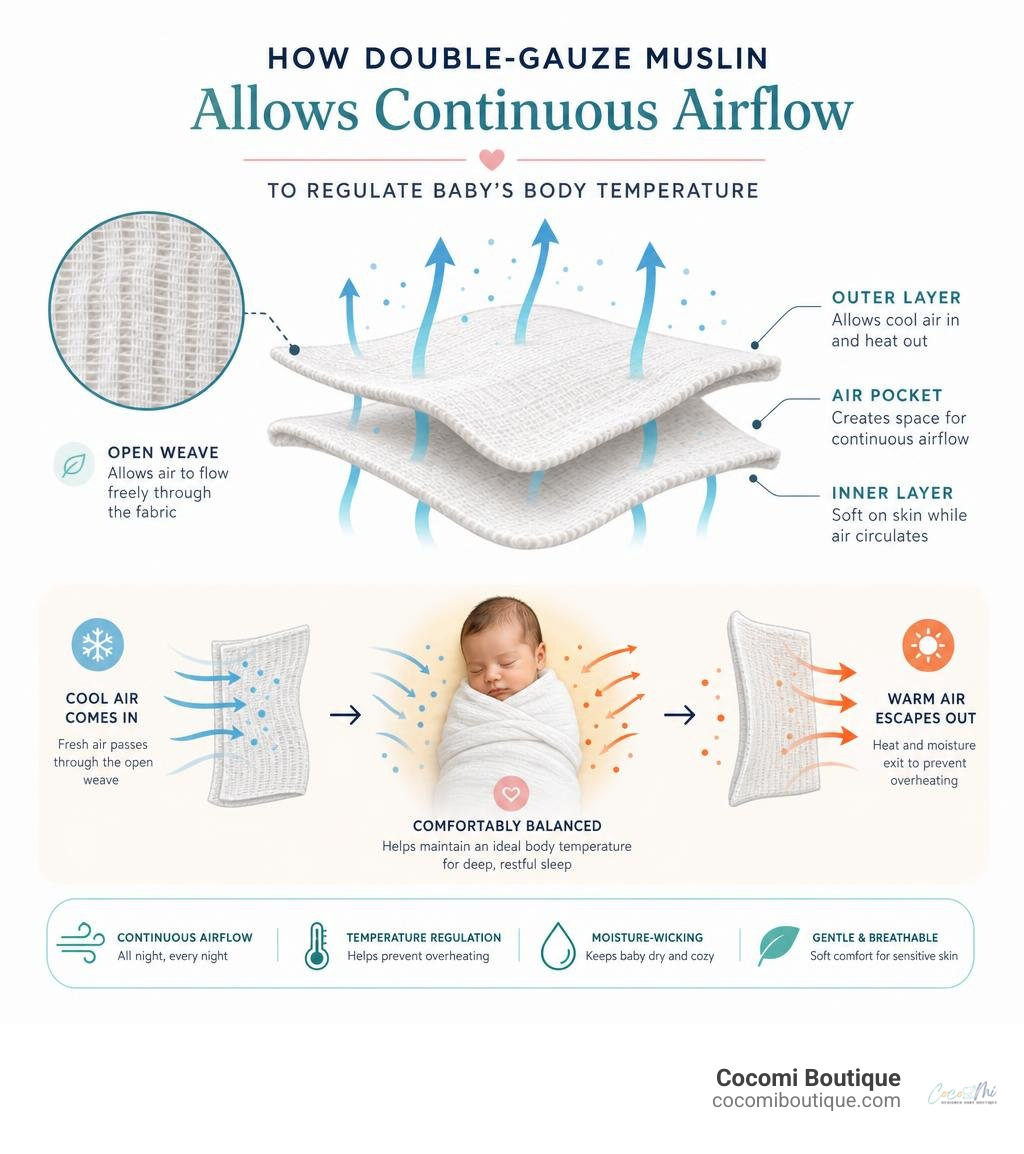
The way a fabric is woven is just as important as the raw material itself. Muslin's legendary status as a baby fabric comes from its unique gauze weave. This open-weave structure features a loose, checkered pattern of intersecting threads that allows air to flow freely through the fabric. This continuous airflow is crucial for preventing heat from getting trapped against your baby's body, significantly reducing the risk of overheating.
When shopping for swaddles, pay close attention to the fabric's density, measured in grams per square meter (GSM). Standard muslin blankets often have a density of around 75 GSM, which can feel thin and rough. Premium handcrafted muslin swaddles typically feature a 120 GSM density, which provides 60% more density. This higher density delivers a plush, comforting weight while maintaining excellent breathability. It also ensures a remarkably low shrinkage rate of just 3% after washing, compared to the 8-10% shrinkage common in cheaper blankets.
For parent-approved tips on choosing the right weave for your nursery, check out The Ultimate Guide To Choosing The Perfect Muslin Swaddle Blanket For Your Baby.
Single vs. Double Gauze and 4-Layer Construction
Muslin swaddles generally come in two primary configurations: double gauze and four-layer construction.
- Double Gauze: This construction features two incredibly thin layers of muslin gauze that are invisibly basted together at regular intervals. This creates tiny, insulating air pockets that keep your baby warm in cool air-conditioned rooms while remaining light enough to prevent sweating on hot summer days.
- 4-Layer Muslin: For cooler months or air-conditioned nurseries, a 4-layer muslin blanket provides a cozier, weightier embrace. This structure is highly durable and often transitions into a favorite toddler sleep blanket or play mat.
Some premium brands offer curated sets, such as a Triple-Swaddle Sleep System, which includes two lightweight double-gauze swaddles for daytime use and one cozier 4-layer swaddle for cooler nights. For more details on choosing the perfect weight, read our Ultimate Luxury Muslin Swaddle Guide.
Safety Certifications: GOTS, OEKO-TEX, and CPSIA
Because your baby's skin is incredibly thin and absorbent, ensuring your textiles are free from toxic chemical residues is paramount. When investing in premium swaddles, look for these three key certifications:
- GOTS (Global Organic Textile Standard): This is the gold standard for organic fibers. It certifies that the entire supply chain—from harvesting the raw materials to environmental and socially responsible manufacturing—is free from toxic pesticides, heavy metals, and genetically modified seeds.
- OEKO-TEX Standard 100: This independent certification tests every single component of the product (including threads, buttons, and dyes) to ensure it is completely free from over 100 harmful chemicals and synthetic finishes.
- CPSIA (Consumer Product Safety Improvement Act): This compliance certification ensures that products designed for children under 12 are thoroughly tested for lead, phthalates, and flammability.
By choosing certified organic swaddles, such as the Organic Cotton Muslin Swaddle Blankets Set - Oilo™ Studio , you can rest easy knowing your baby is wrapped in pure, chemical-free comfort. For a deeper look at safety standards, explore our Organic Cotton Swaddle Blanket Guide.
Frequently Asked Questions About Muslin Swaddles
How to Care for Your Premium Handcrafted Muslin Swaddles
To maintain the luxurious feel and longevity of your handcrafted swaddles, follow these simple care steps:
- Wash Cold: Machine wash on a gentle cycle using cold water with like colors. This prevents the delicate threads from getting caught on zippers or hooks.
- Use Mild Detergent: Choose a gentle, baby-safe, clean-rinsing detergent. Avoid bleach and harsh chemical stain removers.
- Skip the Fabric Softeners: Fabric softeners and dryer sheets leave behind a synthetic coating that actually reduces the natural absorbency and breathability of muslin fibers.
- Tumble Dry Low: Dry on a low heat setting or line dry in a shady spot. Promptly remove the swaddles from the dryer to preserve their soft, crinkled texture.
When should parents stop swaddling a baby?
According to safe-sleep guidelines from the American Academy of Pediatrics (AAP), you should stop using an arms-in swaddle the very moment your baby shows any signs of trying to roll over.
This transition typically occurs between 8 to 16 weeks of age. Swaddling a baby who can roll onto their stomach poses a serious safety risk, as they won't have their arms free to adjust their position. Once your baby reaches this developmental milestone, transition them to an arms-free sleep bag or a lightweight muslin sleep sack to keep them cozy and safe.
Why does muslin get softer after washing?
Unlike synthetic fabrics that degrade and become scratchy over time, high-quality natural muslin actually improves with age.
When muslin is woven, the natural cotton or bamboo fibers are held under tension. Washing the fabric relaxes these natural fibers, allowing them to expand and bloom. Parents using premium handcrafted muslin swaddles report that the fabric becomes 20% to 30% softer after the first five washes. This unique characteristic ensures your blanket gets cozier the more you use it.
Conclusion
Investing in premium handcrafted muslin swaddles is about more than just buying a baby blanket—it is about choosing safety, comfort, and peace of mind for your little one's most delicate early months. From their exceptional breathability and chemical-free certifications to their incredible multi-purpose versatility, these premium textiles are built to support you and your baby through every cuddle, nap, and milestone.
At Cocomi Boutique, we are proud to serve families throughout Chicago's North Shore—including Northbrook, Deerfield, Glencoe, Highland Park, Winnetka, and the surrounding suburbs. We believe that every baby deserves the finest, safest, and most beautifully crafted essentials.
If you are ready to experience the unmatched softness of artisan-crafted baby essentials, we invite you to Explore Cocomi Boutique's Premium Baby Collection and find the perfect pieces for your family today.