

How to Make an Infant Hooded Towel

Here’s how to make an infant hooded towel: Prewash soft cotton terry, then cut a 30-inch square for the towel and a 12-inch square for the hood. Cut the hood square diagonally to make a triangle. Bind its long edge, stitch its two short edges to a corner of the towel, and bind the towel’s perimeter to cover the raw edges.
The result is a simple, absorbent wrap you can make for your baby or give as a handmade gift. Check every seam and trim loose threads before use.
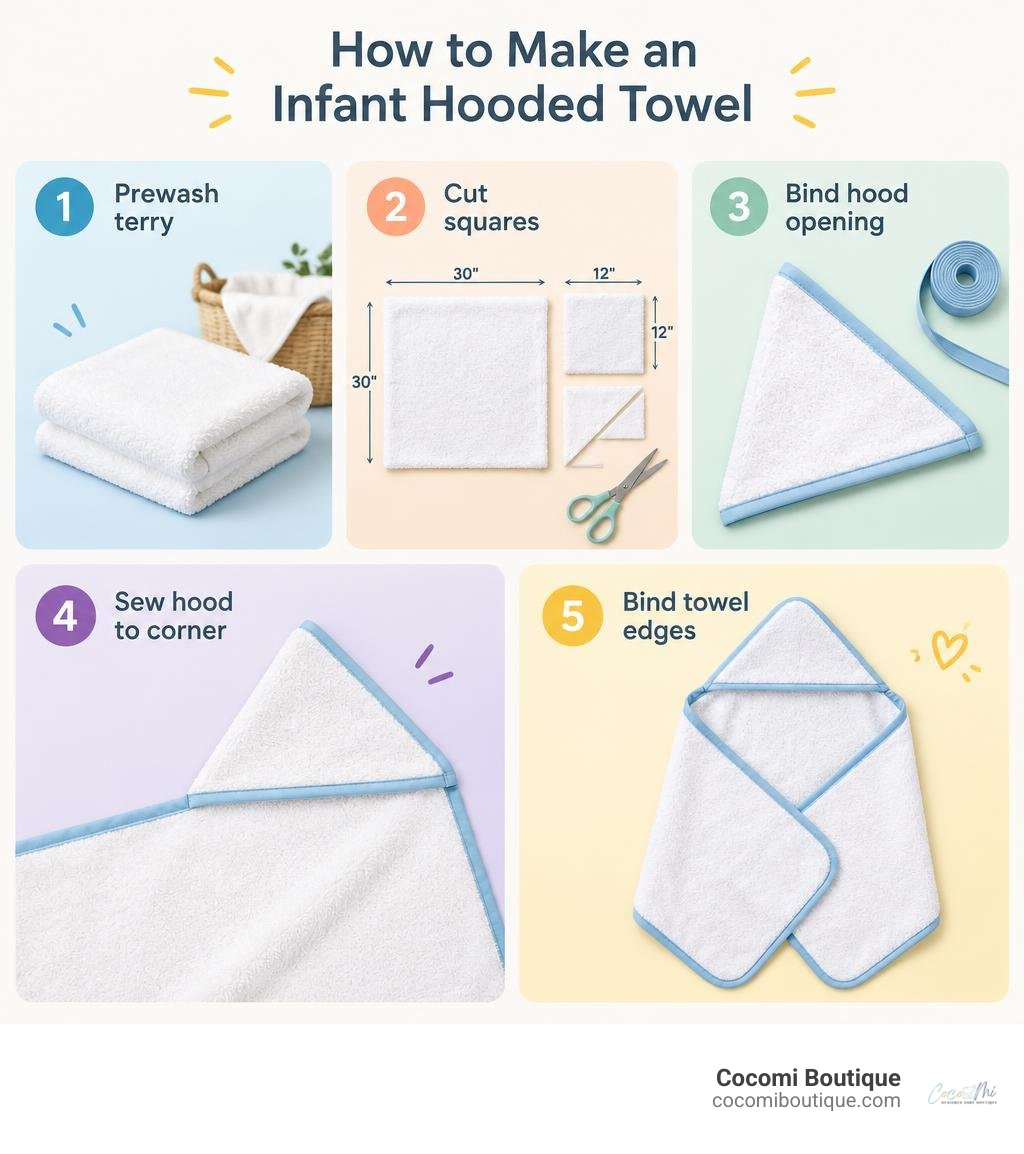
Must-know how to make an infant hooded towel terms:
Essential Materials and Tools for Sewing a Baby Towel
Creating a gentle, high-quality bath wrap at home requires selecting the proper textiles and sewing notions. Because newborn skin is delicate, prioritizing plush, natural fibers ensures the finished item provides immediate warmth and moisture absorption without irritating sensitive skin.
| Fabric Type | Absorbency Level | Softness & Hand Feel | Sewing Difficulty | Best Use Case |
|---|---|---|---|---|
| 100% Cotton Terry (350–450 GSM) | Very High | Plush, classic loop texture | Moderate (sheds loops) | Daily bath time, high moisture absorption |
| Organic Bamboo Terry | Superior | Silky, ultra-soft, drapeable | Moderate (stretchy) | Sensitive or eczema-prone newborn skin |
| Cotton Flannel | Moderate | Smooth, brushed softness | Easy (stable weave) | Lightweight hood lining or decorative trims |
| Double Gauze (Muslin) | Light to Moderate | Breathable, airy crinkle | Easy to Moderate | Decorative backing and breathable accents |
When sourcing your yardage, checking for certifications like the OEKO-TEX® STANDARD 100 confirms the textile is free from harmful levels of toxic chemicals and heavy metals.
Selecting Safe, Absorbent Fabrics: Cotton Terry vs. Bamboo
Choosing between traditional cotton terry and bamboo baby hooded towels comes down to fiber structure and texture preference. Standard cotton terry with a weight around 360 to 400 grams per square meter (GSM) delivers reliable looped absorbency. Organic cotton offers peace of mind by eliminating pesticide residues during fiber growth.
Bamboo terry or stretch terry cloth features finer loops that feel exceptionally silky against delicate areas. Many experienced sewists praise stretch terry for maintaining its plush hand feel across repeated washings. Pairing absorbent terry with an outer layer of breathable double gauze or lightweight printed cotton elevates both comfort and style.
Essential Tools and Notions Needed for the Project
Working with looped toweling goes smoothly when using the appropriate notions:
- Walking Foot Attachment: Evenly feeds thick, stretchy layers under the needle without stretching or dragging the fabric.
- Ballpoint or Stretch Needles (Size 80/12 to 90/14): Prevent snagging or breaking fibers in looped knit terry.
- Double-Fold Bias Tape (1/2 inch wide): Encloses raw edges smoothly around straight sides and curved corners.
- Sewing Clips: Hold bulky terry fabric together firmly without distorting the weave like traditional straight pins can.
- Disappearing Ink Fabric Marker and Clear Ruler: Allow accurate measuring and marking for trimming corners.
- Steam Iron and Pressing Cloth: Help flatten bulky seams during assembly.
How to Make an Infant Hooded Towel: Step-by-Step Tutorial
Careful preparation ensures your towel turns out square, functional, and durable.
Preparing and Cutting Your Towel Pieces
Before making your initial cut, wash and dry all fabrics thoroughly. Terry cloth and woven cotton shrink at different rates; pre-shrinking prevents puckered seams later.
- Cut the Main Towel Body: Measure and cut one square measuring 30 inches by 30 inches (or up to 33 inches by 33 inches for larger infant sizing). Consult our cotton hooded towel guide for sizing details.
- Cut the Hood Pieces: Cut one 12-inch by 12-inch square of terry cloth and an identical square of your decorative cotton or flannel fabric.
- Form the Triangles: Slice each 12-inch square diagonally from corner to corner, creating two triangles of each fabric (one set serves as your hood, while the other can be saved for a second towel).
- Round the Towel Corners (Optional): Place a small bowl or cup at each corner of the main towel body, trace the curve with disappearing ink, and trim away the excess square point for easier bias binding.
How to Make an Infant Hooded Towel: Constructing and Sewing the Hood
Assembling the hood cleanly keeps interior seams comfortable against a baby's head.
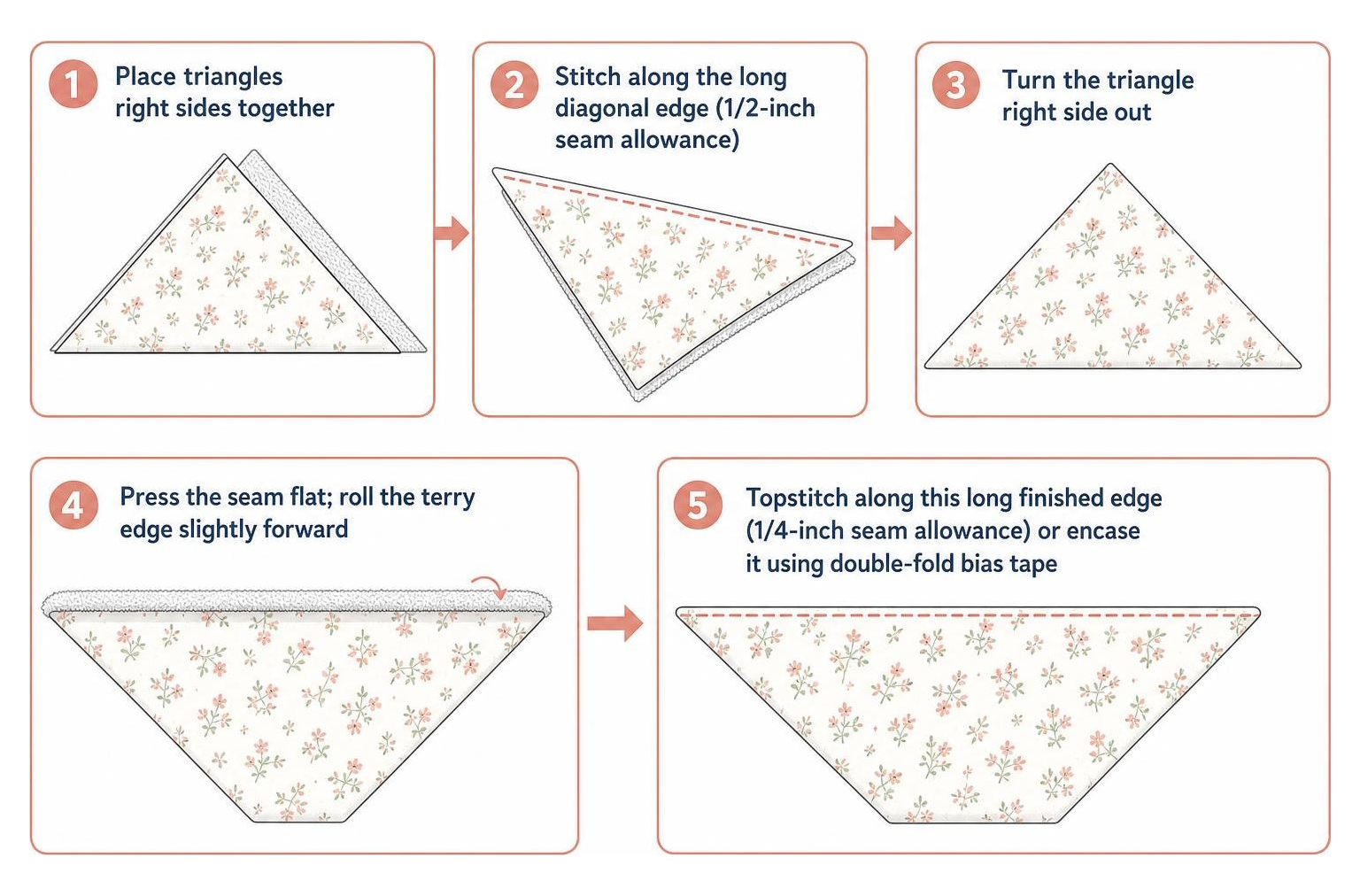
- Place the terry triangle and the decorative cotton triangle right sides together, aligning all edges.
- Stitch along the long diagonal edge using a 1/2-inch seam allowance.
- Turn the triangle right side out so the right sides of both fabrics face outward.
- Press the long diagonal seam flat with an iron. Roll the terry edge slightly forward so it forms a soft lip over the printed fabric.
- Topstitch along this long finished edge with a 1/4-inch seam allowance or encase it using double-fold bias tape.
- Baste the raw bottom and side edges together using a wide straight stitch 1/4 inch from the raw edge to keep the layers aligned.
How to Make an Infant Hooded Towel with Secure Seams and Edges
- Lay the main 30x30-inch terry towel flat on your work table with the right side facing up.
- Place the assembled triangular hood onto one corner of the towel, matching the raw edges along the top and side.
- Pin or clip the hood securely to the towel corner.
- Baste the hood to the main towel using a 1/4-inch seam allowance.
- Open one side of your 1/2-inch double-fold bias tape and pin it along the perimeter of the towel, encasing the raw terry edges and the attached hood.
- Sew the binding in place with a straight stitch or reinforced zig-zag stitch, mitering the corners or curving gently around rounded edges.
- Backstitch firmly at the start and end of your stitching line, then trim all thread tails.
Customizing Sizing and Adding Decorative Embellishments
Personalized touches transform a practical bath essential into a cherished nursery keepsake.

Adjusting Dimensions from Newborn to Toddler
Infants grow rapidly, and adjusting your pattern dimensions ensures the wrap provides ample coverage as your baby develops:
- Newborn (0–6 Months): A 30" x 30" towel body with a 10" x 10" hood triangle provides a secure, snug wrap without overwhelming small limbs. Understanding what makes a great baby hooded towel helps balance fabric weight with appropriate coverage.
- Infant to Small Toddler (6–18 Months): Use a 33" x 33" or 34" x 34" square towel body paired with a 12" x 12" hood triangle to wrap securely around sitting and standing babies.
- Toddler & Preschooler (2–4 Years): Expand dimensions to a 36" x 36" square or adapt a standard 30" x 54" bath towel by attaching a hood centered along the wide edge.
Adding Trims, Appliqués, and Matching Washcloths
You can customize the towel's design with clean decorative elements:
- Soft Animal Ears: Cut small rounded ear shapes from matching terry and accent fabric, stitch them right sides together, turn right side out, and insert them into the top diagonal seam of the hood before topstitching.
- Braid and Rick-Rack Trim: Insert cotton rick-rack along the hood's diagonal seam for subtle texture.
- Matching Washcloth Set: Use leftover fabric scraps to cut 9" x 9" squares. Pair terry with coordinating printed cotton, sew right sides together leaving a 2-inch gap, turn right side out, and edge-stitch around the perimeter to craft a complete newborn bath towel set.
For parents looking to complete their nursery with complementary handcrafted textiles, explore our collection of organic swaddle blankets and breathable baby nests.
Care Instructions and Common Sewing Mistakes to Avoid
Proper laundering and construction techniques preserve the softness and structural integrity of handcrafted toweling.
Washing and Preserving Towel Softness
- Use Mild Detergent: Choose baby-safe, fragrance-free liquid detergent. Powder residues can settle within dense terry loops and reduce softness.
- Skip Fabric Softeners: Liquid softeners and dryer sheets coat natural fibers with silicone residues, which dramatically lowers water absorbency. Add 1/2 cup of distilled white vinegar to the rinse cycle instead to naturally soften fibers.
- Tumble Dry Low: Dry on low heat to prevent over-drying cotton fibers. Adding wool dryer balls helps fluff terry loops naturally.
Troubleshooting Bulky Terry Cloth and Uneven Edges
- Preventing Wavy Seams: Loosen your machine's presser foot pressure slightly or use a walking foot to prevent stretching the knit backing of the terry cloth.
- Managing Seam Bulk: Clip triangle points and grade seam allowances at the corners where multiple terry layers converge before applying bias binding.
- Reducing Thread Shedding: Terry cloth sheds lint when cut. Keep a small handheld vacuum or lint roller nearby, and finish all raw edges promptly with serging, zig-zag stitching, or binding tape.
Frequently Asked Questions About Sewing Baby Towels
Can a beginner sewer complete a baby hooded towel project?
Yes. A square baby hooded towel is an accessible project for beginners because it relies primarily on straight stitching. Using double-fold bias tape makes enclosing the edges straightforward, and forgiving terry loops naturally disguise minor variations in stitch length.
How do you prevent terry cloth edges from fraying while sewing?
Encase all raw cut edges within double-fold bias tape or finish them with an overlock serger stitch or a wide three-step zig-zag stitch on a standard sewing machine.
Why is pre-washing fabrics essential before cutting baby towels?
Cotton and bamboo fabrics experience natural shrinkage during their initial wash cycle. Pre-washing balances the grainline and ensures the terry cloth and decorative trim shrink before being stitched together, preventing puckering later.
Conclusion
Sewing an infant hooded towel creates a soft, practical bath-time essential that keeps your baby warm and cozy after every wash. Handcrafting your baby's items lets you choose natural, chemical-free textiles that support delicate skin. When you are looking for heirloom-quality nursery essentials, visit our Chicago-area showroom in Northbrook, Illinois, or browse our handcrafted baby towels online. To discover more nursery inspiration and helpful preparation guides, explore the Cocomi Boutique Baby Blog.