

How to Find the Best Swaddle for Newborn Sleep

The best swaddle for newborn sleep is one that stays secure around the chest, leaves room for the hips and legs to move, and suits your baby's preferred arm position. A breathable muslin blanket offers a flexible wrap. An adjustable wrap may be easier to fasten, while an arms-up design can suit a baby who resists having their arms tucked in.
Swaddling may help settle a newborn's startle reflex, but it is optional. Always place a swaddled baby on their back, and stop swaddling at the first sign of an attempt to roll. This guide will help you compare designs, fabrics, and fit without losing sight of those safety basics.
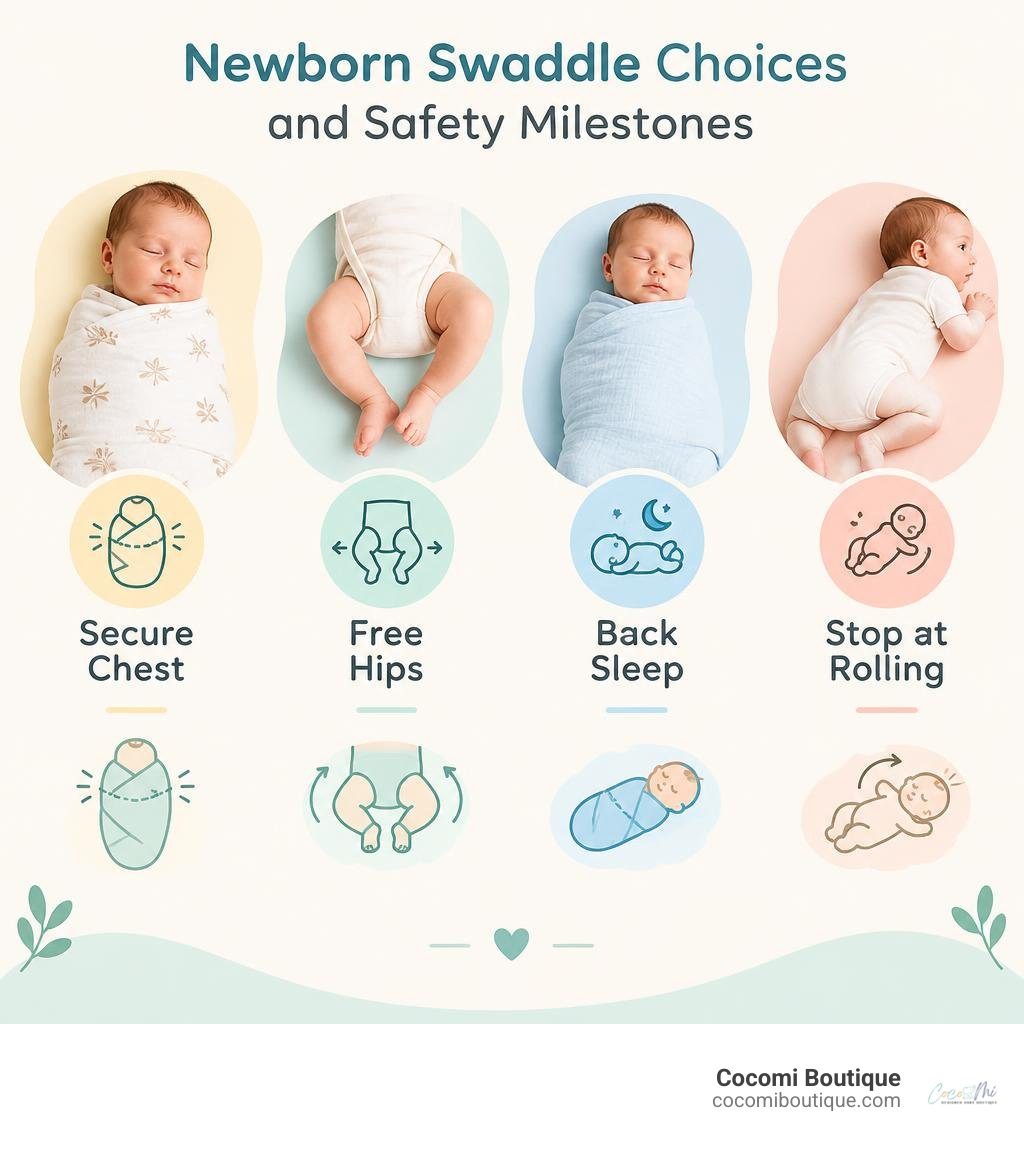
Key terms for best swaddle for newborn:
Understanding Swaddle Types: Which Design Is Right for Your Baby?
During the fourth trimester, newborns adjust to a world vast and unbound compared to the gentle boundaries of the womb. Swaddling recreates that soothing containment, helping dampen the involuntary Moro (startle) reflex that frequently jolts infants awake during active sleep cycles.
Finding the right swaddle category comes down to ease of use, fabric safety, fastener preference, and how quickly you can manage midnight diaper changes. Learning about the types of swaddle blankets allows you to choose a style that supports healthy rest for both you and your little one.
| Swaddle Category | Closure Style | Learning Curve | Stretch & Flexibility | Best Suited For |
|---|---|---|---|---|
| Traditional Muslin Square | Custom Fold / Tuck | Moderate | High natural elasticity | Newborns 0–2 months, custom fit, versatile uses |
| Structured Wing Wrap | Adjustable Hook-and-Loop | Low | Moderate | Quick fastening, parents wanting extra security |
| Zipper Pod / Sack | Two-Way Inverted Zip | Very Low | High (knitted stretch) | Effortless midnight diaper changes, minimal fuss |
| Arms-Up Swaddle | Zipper with Wing Sleeves | Very Low | High compression blend | Babies who self-soothe by touching their faces |
Traditional Blanket vs. Structured Wraps: Finding the Best Swaddle for Newborn Comfort
A classic blanket wrap remains a timeless nursery staple. Using pure, breathable muslin swaddle blankets allows parents to tailor the tightness across the chest while ensuring the lower pouch stays loose and comfortable around the hips. Whether you prefer the classic diamond fold technique or a square wrap, natural open-weave textiles adjust seamlessly to your baby's unique body proportions. For a closer look at how different wraps fit into daily routines, the American Academy of Pediatrics offers guidance on safe swaddling practices.
Structured wraps with wings or hook-and-loop fasteners offer convenience for bleary-eyed 3 AM changes. However, some fastenings can produce an audible tearing sound that might startle a lightly sleeping infant, and stiff synthetic tabs can sometimes feel rough against delicate newborn skin. For parents who cherish mindful craftsmanship, a soft, breathable wrap crafted from gentle cotton offers a tranquil, whisper-quiet alternative.
Swaddle Fit and Easy Diaper Changes
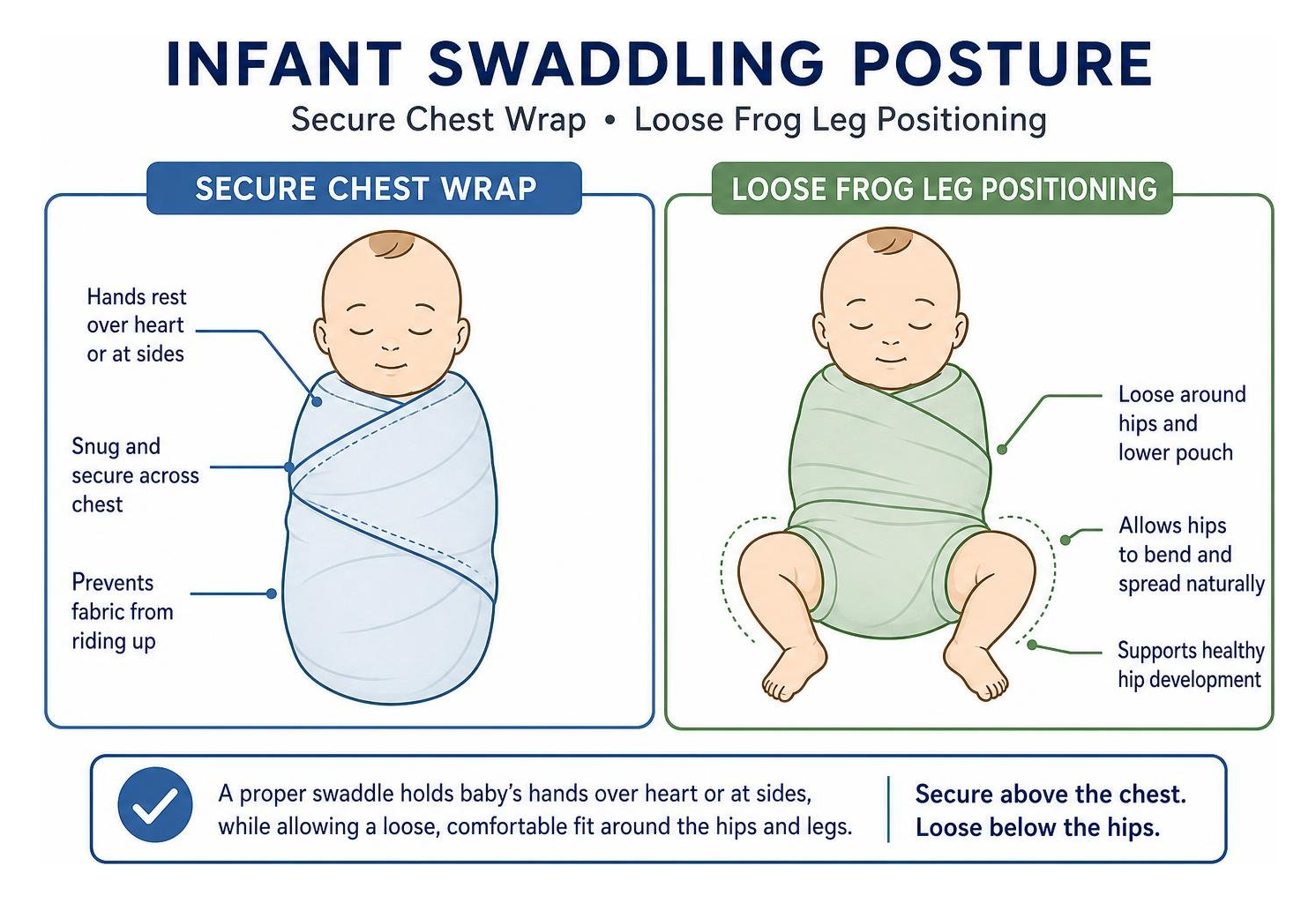
A proper swaddle should hold baby's hands resting gently over their heart or flat against their sides. This hands-to-heart orientation satisfies natural self-soothing instincts while keeping the fabric secure and preventing stray edges from riding up near the chin.
When evaluating various designs, look for features that simplify diaper changes. Traditional lightweight blankets can be easily unwrapped from the waist down without disturbing the chest wrap, while structured zippered sacks should feature a two-way bottom zipper. This ensures you can change a diaper quickly in dim nursery light without exposing your baby’s chest to cool room air.
How to Choose the Best Swaddle for Newborn Sleep and Safety
Creating a safe sleep sanctuary begins with following evidence-based pediatric guidelines. When selecting baby sleepwear, thermal regulation and anatomical alignment must always take priority over design trends. Reviewing AAP safe sleep recommendations alongside safe newborn swaddling practices ensures every nap promotes peaceful, protective rest.
Fabric Breathability, TOG Ratings, and Temperature Control
Newborns cannot regulate their body temperature as efficiently as older children. Keeping the nursery between 68°F and 72°F is standard pediatric guidance, making fabric choice a crucial factor in avoiding overheating.
Thermal Overall Grade (TOG) measures a textile's thermal insulation:
- 0.5 TOG: Ultra-lightweight and breathable, ideal for warmer climates or nurseries maintained around 72°F–75°F.
- 1.0 TOG: Standard year-round comfort for rooms kept between 68°F and 72°F.
- 2.5 TOG: Reserved for cooler nurseries below 65°F (typically used in layered sleep sacks rather than tight newborn swaddles).
Lightweight, open-weave fabrics like organic cotton and breathable muslin allow ambient air to circulate naturally, wicking away excess body moisture. Parents can consult tips for keeping babies cool in summer as well as cold-weather swaddling strategies to adapt their baby's sleep layers across changing seasons. To build a beautiful nursery collection, you can explore our handcrafted organic swaddle blankets made from pure natural fibers.
Safety Guidelines: Hip Dysplasia Prevention and Safe Sleep Milestones
A swaddle must never bind a baby's legs straight down or pin the knees together. According to the International Hip Dysplasia Institute and established pediatric guidance on how to practice safe swaddling to protect baby's hips, infants should always rest in a natural "frog-leg" position with hips flexed upward and thighs spread apart.

Every safe sleep routine relies on core non-negotiable rules:
- Back to sleep: Always place your infant flat on their back on a firm, flat mattress free of pillows, loose sheets, bumpers, or plush toys.
- Snug chest, loose hips: Ensure you can comfortably slide two adult fingers between the wrap and your baby's chest, while leaving the bottom roomy enough for their legs to kick and bend freely.
- No loose bedding: A well-secured wrap prevents extra cloth from wandering near your baby's airway. Pair your safe wrap with natural sleep solutions such as our handcrafted Moses baskets or cozy, breathable baby nests for supervised daytime lounging and resting.
Expert Strategies for Common Swaddling Challenges
Many parents experience moments when their newborn squirmy newborn seems to "fight" the swaddle. During active sleep phases (REM sleep), infants frequently grunt, twitch, and shift their limbs. This natural reflex is often misinterpreted as resistance, leading parents to abandon swaddling prematurely.
Understanding the difference between normal sleep movements and genuine discomfort can help you respond with confidence. The American Academy of Pediatrics notes that swaddling can be a useful settling technique when done safely.
Selecting a Swaddle for a Newborn Who Fights Sleep or Breaks Out
If your baby constantly wriggles out of their blanket, consider these practical techniques:
- Timing your wrap: Swaddle your baby when they are calm or drowsy, rather than waiting until they are overtired and crying.
- The secure arm tuck: When wrapping with a natural muslin square, ensure the fabric passes snugly over the shoulders and under the back, using baby's own body weight to anchor the fold.
- Hands-up preference: If your little one insists on keeping their hands near their face to suck on their fingers, choose an arms-up design or swaddle them with one arm freed.
- Nursery ambiance: Pair your swaddling routine with gentle shushing or low-volume white noise (kept below 50 dB) to soothe a heightened startle reflex.
When to Stop Swaddling
Swaddling is a temporary tool for the earliest stage of life. As soon as your infant shows any signs of attempting to roll over—typically between 2 and 4 months of age—you must discontinue chest-binding swaddles immediately.
A 2016 meta-analysis published in Pediatrics highlighted that swaddled infants placed on or rolling onto their stomachs face a substantially heightened risk of SIDS due to restricted arm mobility. When rolling signs emerge, transition smoothly to an arms-free wearable blanket or sleep sack to maintain warmth safely.
Essential Buying Factors: Quantity, Budget, and Organic Materials
When setting up your registry or preparing your nursery, quality and fabric safety matter far more than sheer volume. Because newborn skin is remarkably thin and permeable, choosing textiles certified under OEKO-TEX Standard 100 ensures that every fiber touching your baby is thoroughly tested and free from harmful chemicals, heavy metals, and toxic dyes.
Opting for certified organic cotton swaddle blankets provides peace of mind. Pure organic cotton and chemical-free linen become softer with every wash without breaking down or irritating sensitive skin prone to eczema or heat rash.

Frequently Asked Questions About Newborn Swaddling
Are weighted swaddles safe for newborns?
No. The American Academy of Pediatrics (AAP) 2022 safe sleep guidelines explicitly advise against using weighted blankets, weighted sleepers, weighted swaddles, or any weighted objects on or near a sleeping infant. Regulatory agencies such as the CPSC have issued clear warnings that added weight can compress an infant's fragile chest, impair normal breathing, and suppress their natural arousal reflexes during sleep. Stick exclusively to lightweight, unweighted, breathable fabrics.
How many swaddles do I actually need for a newborn?
A practical baseline is three to four high-quality swaddles. This allows for a simple "one in the wash, one in use, and one or two in reserve" rotation to handle inevitable spit-up incidents and nighttime diaper leaks without stress.
When should I stop swaddling my baby?
You should stop swaddling as soon as your baby shows initial signs of attempting to roll over, which often occurs between 8 and 12 weeks (2 to 4 months). Once rolling begins, babies require their arms completely free to push themselves up and protect their airway.
Conclusion
Guiding your newborn toward restful sleep is a journey built on patience, gentle routines, and safe practices. By choosing high-quality, breathable textiles that support healthy hip development and respect natural sleep milestones, you create an environment where your baby can rest soundly and safely.
At CocoMi Baby Boutique, our mission began from our own experience as parents searching for baby essentials that unite timeless European craftsmanship, natural elegance, and uncompromising OEKO-TEX safety standards. We invite you to explore our nursery journal for more expert parenting insights, or discover our heirloom-quality collections designed to bring quiet beauty, comfort, and peace of mind to your family's earliest days.