

Why Finding the Best Baby Wraps Matters for Your Family

Best baby wraps provide a safe, comfortable way to keep your newborn close while freeing your hands for daily tasks. Here's what you need to know when comparing options:
| Consideration | What to Look For |
|---|---|
| For Newborns | Stretchy cotton knit wraps that create a womb-like environment (8-25 lbs) |
| Ease of Use | Pre-tied or hybrid designs for beginners; ring slings for quick adjustments |
| Climate | Breathable cotton or bamboo for summer; thicker weaves for winter |
| Parent Comfort | Even weight distribution across back and shoulders; padded support |
| Safety | Proper positioning with baby's face visible, airway clear, and hips in "M" position |
| Maintenance | Machine-washable fabrics that hold up through multiple children |
The early weeks with a newborn can quickly turn from a "blissful haze" into a "bleary-eyed blur" if your little one struggles to settle. Baby wraps solve this challenge by mimicking the snug security of the womb, helping babies sleep longer while allowing parents to move freely.
Research shows that babywearing offers significant benefits beyond convenience. Wraps promote bonding through skin-to-skin contact, support healthy hip development when used correctly, and can even help with colic relief by keeping babies in an upright position. Testing of over 36 baby carriers since 2012 reveals that wraps excel in child comfort due to their soft, flexible fabrics, though they require more practice than structured carriers.
The choice between stretchy wraps, woven wraps, and hybrid designs depends on your baby's age, your climate, and how often you'll use it. Stretchy wraps work beautifully for newborns up to about 25 pounds, while woven options support toddlers up to 45 pounds or more. Materials matter too—breathable cotton prevents overheating, bamboo blends offer buttery softness for sensitive skin, and organic fabrics ensure chemical-free comfort.
I'm Monika Jarog, and I've spent years designing handcrafted baby essentials from 100% natural materials that meet the highest European safety standards, helping parents find the best baby wraps for their families. My experience with thoughtful design and premium fabrics has shown me that the right wrap transforms both baby's comfort and parent's confidence.
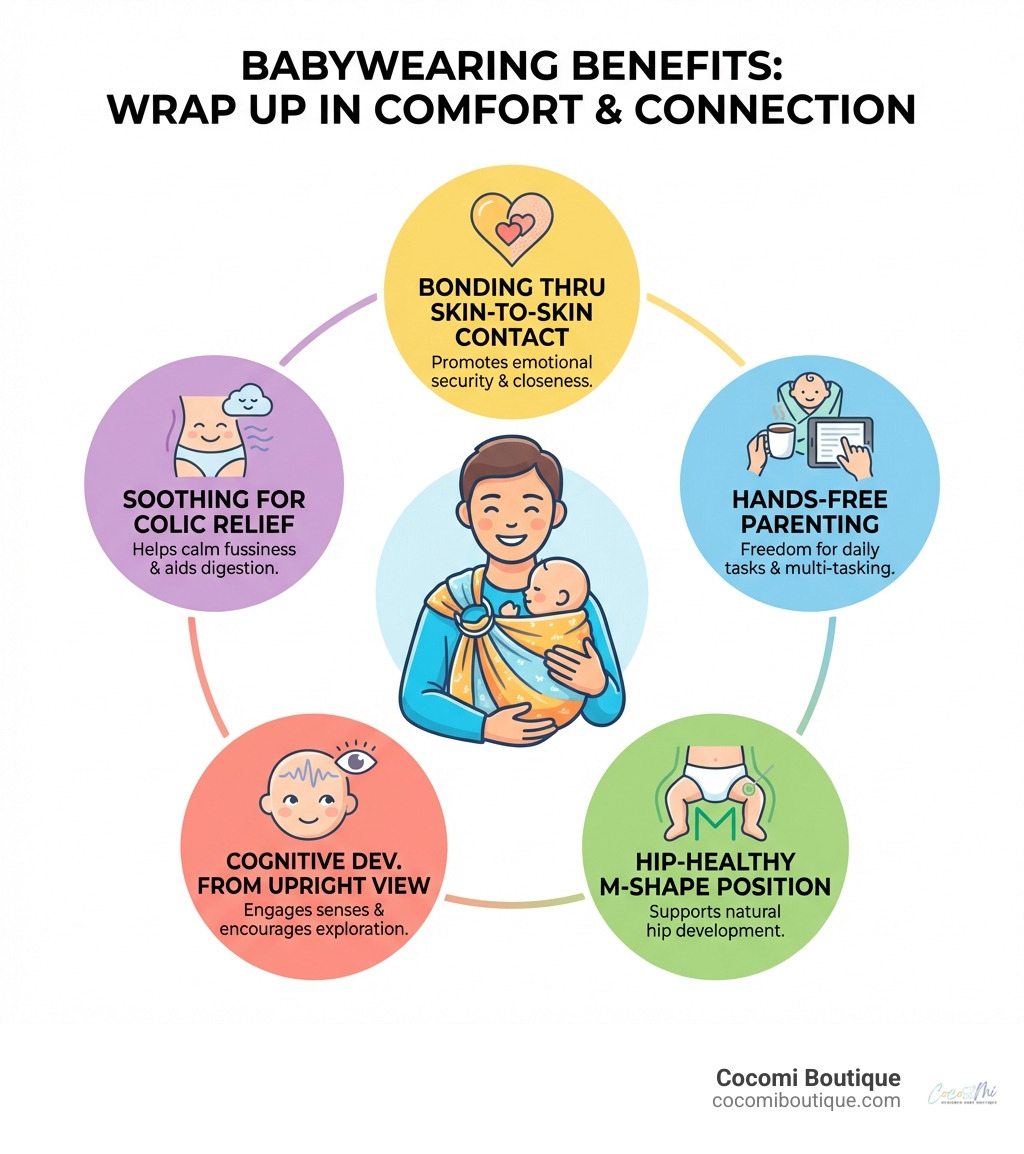
Best baby wraps terms explained:
Understanding the Different Types of Cocomi Boutique Baby Wraps
Navigating babywearing can feel like trying to solve a Rubik's Cube while sleep-deprived. At Cocomi Boutique, we believe that finding the best baby wraps shouldn't be a source of stress. Whether you are strolling through Northbrook Court or enjoying a quiet afternoon in Glencoe, the right wrap should feel like a natural extension of your hug.
There are three primary categories of wraps and swaddles that we specialize in, each serving a unique purpose in your parenting journey:
- Stretchy Wraps: These are often considered the "starter" wraps for new parents. Made from soft, jersey-like materials (usually cotton knit with a touch of spandex), they offer a snug, elastic fit that is incredibly forgiving for beginners.
- Muslin Swaddles: These are the "do-it-all superheroes" of the diaper bag. While traditionally used for swaddling a baby for sleep, their breathable, open-weave structure makes them versatile for shielding a stroller in Buffalo Grove or providing a clean surface for tummy time in Deerfield.
- Organic Cotton Wraps: For parents who prioritize sustainability and skin health, our organic cotton options provide a sturdy yet soft support system. These are often woven, offering more support for heavier babies as they grow.
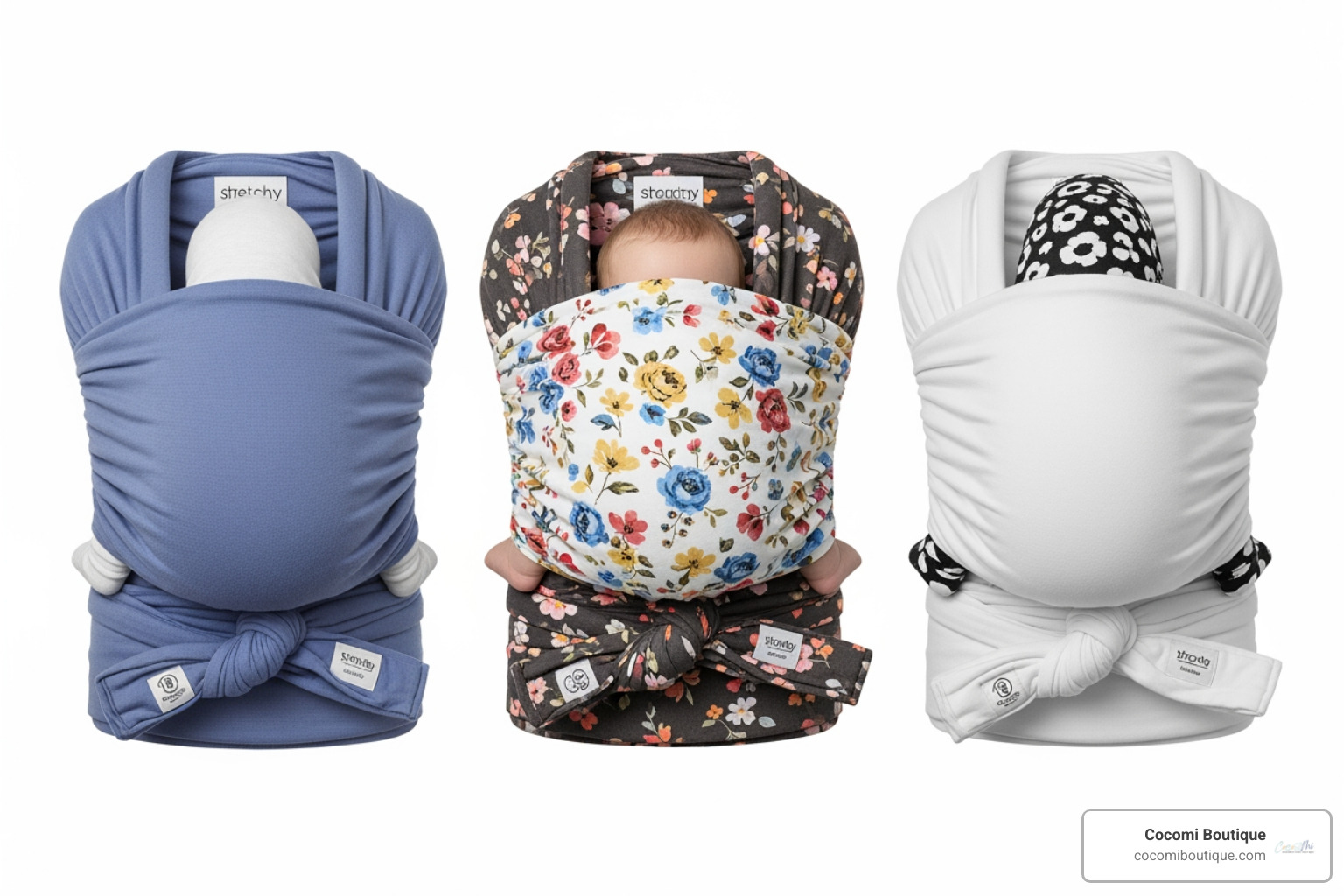
To help you decide, we've put together a quick comparison of our favorite styles:
| Wrap Type | Best For | Weight Limit | Ease of Use |
|---|---|---|---|
| Stretchy Knit | Newborns & Bonding | Up to 25 lbs | Moderate (requires tying) |
| Muslin Swaddle | Sleep & Multi-use | N/A (Swaddling) | High |
| Organic Woven | Long-term Support | Up to 45 lbs | Moderate to High |
| Hybrid Wrap | Beginners | Up to 35 lbs | High (slips on) |
Why Cocomi Boutique Stretchy Fabrics are the Best Baby Wraps for Newborns
When we talk about the fourth trimester, we are referring to that delicate period where your baby is adjusting to life outside the womb. This is where stretchy fabrics truly shine. A high-quality cotton knit wrap provides that "womb-like" environment that infants crave. It’s snug, it’s warm, and it keeps them close enough to hear your heartbeat—a sound they’ve been comforted by for nine months.
We often recommend these as the best baby wraps for newborns because they facilitate skin-to-skin contact. This isn't just a sweet bonding moment; it’s scientifically proven to help regulate a baby's temperature, heart rate, and even their stress levels.
However, because stretchy wraps rely on the elasticity of the fabric, they do have a "sweet spot." Most parents find them most comfortable until the baby reaches about 15-20 pounds. After that, the fabric may start to sag, signaling it's time to transition to a more structured or woven option. To ensure you're using these safely from day one, we recommend checking out The Ultimate Guide to Safe Swaddling for Newborns.
Selecting the Best Cocomi Boutique Baby Wraps for Different Climates
Living in the Chicago area, we know that the weather can change faster than a newborn's diaper. One day it’s a humid 90 degrees in Wheeling, and the next, there’s a brisk wind off the lake in Winnetka. Choosing the best baby wraps for the climate is essential to keep both you and your baby from overheating.
- Summer and Humidity: When the heat is on, breathability is your best friend. We love bamboo fabrics for their moisture-wicking properties and "cool-to-the-touch" feel. Bamboo is also naturally hypoallergenic, making it ideal for babies with eczema or sensitive skin. Our summer swaddling secrets guide highlights how lightweight muslin can prevent the dreaded "sweaty baby" syndrome.
- Winter and Wind: For the colder months in Lake County, a thicker organic cotton or a wool-blend woven wrap provides the necessary insulation. Your own body heat acts as a furnace for the baby, so you rarely need to "over-bundle" them inside the wrap.
- Year-Round Versatility: If you want one wrap that does it all, look for a linen-cotton blend. Linen is famous for being cool in the summer and warm in the winter, offering incredible durability. You can explore more about these fabrics in our article on Breathable Bliss: Discovering the Perfect Organic Baby Wrap.
Key Factors for Choosing the Best Baby Wraps
If you're feeling overwhelmed by the sheer number of options, don't worry. We’ve broken down the essential metrics we use when evaluating the best baby wraps. Whether you're shopping in Northfield or Highland Park, keep these four factors in mind:
- Fabric Durability: You want a wrap that won't lose its shape after three washes. Quality fabrics like long-staple cotton or bamboo viscose maintain their "rebound" (the ability to snap back into shape) much longer than cheaper alternatives.
- Weight Distribution: This is for you, the parent! A good wrap should distribute the baby’s weight evenly across your shoulders and back. If you feel a sharp pull on your neck, the wrap isn't doing its job.
- Parent Comfort: Look for wide straps that can be spread out across your shoulders. This prevents the fabric from digging in and allows you to wear your baby for longer periods—essential for those long walks through the Chicago Botanic Garden in Glencoe.
- Ease of Cleaning: Let's be real—babies are messy. Spit-up and diaper leaks are part of the territory. The best baby wraps are machine washable and, ideally, tumble-dryable.
Safety is also a non-negotiable factor. All high-quality wraps should meet the Consumer Product Safety Commission (CPSC) standards to ensure they have been rigorously tested for weight-bearing and structural integrity.
Adjustability and Sizing for Every Body Type
One of the greatest myths in babywearing is that you need to be a certain size to use a wrap. In reality, one of the reasons wraps are often considered the best baby wraps is their incredible adjustability. Because a wrap is essentially a long piece of fabric, it is inherently size-inclusive.
Whether you are petite or plus-size, a standard 5-meter wrap can be custom to your specific body shape. This ensures an ergonomic fit for the baby and a comfortable experience for the wearer. For those who find the long tails of a traditional wrap intimidating, we offer hybrid options that provide the softness of a wrap with the simplicity of a structured carrier.
If you are new to wrapping, we recommend mastering the muslin swaddle first. It’s a great way to get used to handling the fabric before moving on to more complex babywearing ties. You can learn more about finding your perfect fit in our guide, Wrap up in comfort.
Maintenance and Longevity of Quality Fabrics
We often get asked, "Is it worth investing in a premium wrap?" Our answer is always a resounding yes. A high-quality wrap isn't just for one baby; it's an heirloom that can be passed down or used for multiple children.
Cheaper fabrics often suffer from "pilling" (those annoying little fuzz balls) or lose their elasticity after a few trips through the laundry. Our organic cotton guide explains why natural fibers hold up better over time. To keep your wrap in top shape, we recommend:
- Washing in cold water on a gentle cycle.
- Using a mild, baby-safe detergent.
- Avoiding fabric softeners, which can make the fabric too "slippery" for a secure tie.
- Air drying when possible to preserve the fibers, though many of our cotton wraps can handle a low-heat tumble dry.
For a deeper dive into fabric care, check out The Ultimate Guide to Cotton Muslin Baby Blankets.
Safety First: Essential Guidelines for Babywearing
Safety is our top priority at Cocomi Boutique. While babywearing is a wonderful tool, it must be done correctly to protect your little one’s developing body. We follow the TICKS rule for safe babywearing:
- Tight: The wrap should be tight enough to hug your baby close to you.
- In view at all times: You should always be able to see your baby’s face by simply looking down.
- Close enough to kiss: Your baby’s head should be as close to your chin as is comfortable.
- Keep chin off chest: Ensure there is always a space of at least one finger-width under your baby’s chin.
- Supported back: The baby’s back should be supported in its natural curve.
One of the most common mistakes is allowing the baby to "slump" down in the wrap. This can restrict their airway. Always ensure their neck is straight and their face is clear of any fabric. For more detailed safety information, we highly recommend reviewing the AAP's safe sleep and carrier recommendations.
Preventing Hip Dysplasia with Proper Positioning
Proper leg positioning is crucial for preventing hip dysplasia, a condition where the hip joint doesn't develop correctly. The best baby wraps allow for the "M-position," where the baby's knees are higher than their bottom, and their legs are spread across the wearer's torso.
Here are our top tips for ergonomic positioning:
- Knee-to-Knee Support: The fabric of the wrap should reach from the back of one knee all the way to the back of the other.
- Avoid Danging Legs: If the legs are hanging straight down, the weight is being placed on the hip joints rather than being supported by the thighs and bottom.
- The "J" Curve: Viewed from the side, your baby's spine should form a gentle "J" or "C" shape, not be forced into a straight line.
By ensuring this M-position, you are helping the hip sockets develop naturally. Our commitment to safety extends to all our products, and you can read more about it in Sweet Dreams: Ensuring Muslin Blanket Safety.
Frequently Asked Questions about Baby Wraps
How long can I carry my baby in a wrap each day?
There is no "hard" time limit for babywearing, but we recommend taking breaks every two hours. This gives both you and the baby a chance to stretch, change positions, and check for any diaper needs.
Listen to your baby's cues. If they are fussing or seem restless, they might need a break from the restriction of the wrap. Similarly, listen to your own body. If your back or shoulders start to ache, it’s time to sit down or take the wrap off. For many parents in the Buffalo Grove and Riverwoods areas, babywearing is the secret to a long afternoon nap. You can find more tips on this in Finding the best swaddle for sweet dreams.
Are wraps better than structured carriers for newborns?
"Better" is subjective, but wraps are generally preferred for the newborn stage (0-3 months). Why? Because a wrap is perfectly customizable. A structured carrier has buckles and straps that might not adjust small enough for a 7-pound infant.
Wraps offer a level of softness and closeness that structured carriers often lack. They provide that skin-to-skin contact that is so vital in the early days. However, wraps do have a steeper learning curve. It takes a few tries to get the tie exactly right. If you’re looking for a comprehensive look at why we love them, check out Swaddle Savvy: Your Complete Handbook.
When should I transition from a stretchy wrap to a more supportive wrap?
Most parents feel the need to transition when their baby hits the 15-20 pound mark. You'll notice the fabric starts to "bounce" more when you walk, or you find yourself constantly readjusting the wrap to keep the baby at the "close enough to kiss" height.
At this point, you might move to a woven wrap, a ring sling, or a soft-structured carrier. Woven wraps are made from non-stretchy fabric and can support children up to 45 pounds, making them great for back carrying older toddlers during a trip to the zoo or a local park in Glenview. For a look at some of our sturdier, yet soft options, see Beyond Soft: A Roundup of the Best Organic Bamboo Swaddle Blankets.
Conclusion
At Cocomi Boutique, our mission is to simplify your life with products that blend style, comfort, and uncompromising quality. From our home base in Northbrook to the surrounding communities of Prospect Heights and Glencoe, we are dedicated to helping you find the best baby wraps for your unique family.
We believe that every stitch matters. By choosing natural, organic materials and adhering to the strictest safety standards, we ensure that your baby is wrapped in nothing but the best. Whether you are looking for the buttery softness of bamboo or the classic versatility of cotton muslin, we are here to support you every step of the way.
Ready to find your perfect match? Explore our full collection of baby essentials and find why so many Chicago-area parents trust Cocomi Boutique for their babywearing journey. Happy wrapping!