

Choose a Breathable, Safe Muslin Swaddle Blanket

A swaddle blanket muslin is a lightweight, breathable cotton wrap that can help settle a newborn's Moro, or startle, reflex. Choose a generously sized, soft muslin blanket made with natural, chemical-free materials, then use it only for supervised wrapping or a secure swaddle routine. For sleep, always place baby on their back on a firm, empty sleep surface and stop swaddling as soon as they show signs of rolling.
Muslin's open weave allows airflow and feels gentle against delicate newborn skin. It is also wonderfully practical: the same elegant blanket can serve as a burp cloth, nursing cover, stroller layer, tummy-time mat, or changing-pad liner when it is not being used for wrapping.
At CocoMi Boutique, we value thoughtfully made newborn essentials in premium natural fabrics, including OEKO-TEX certified materials chosen with safety, comfort, and lasting beauty in mind. I am Monika Jarog, and my work with handcrafted, chemical-free baby essentials has shown me why a well-chosen swaddle blanket muslin can be one of the most useful and reassuring items in a new family's daily routine.
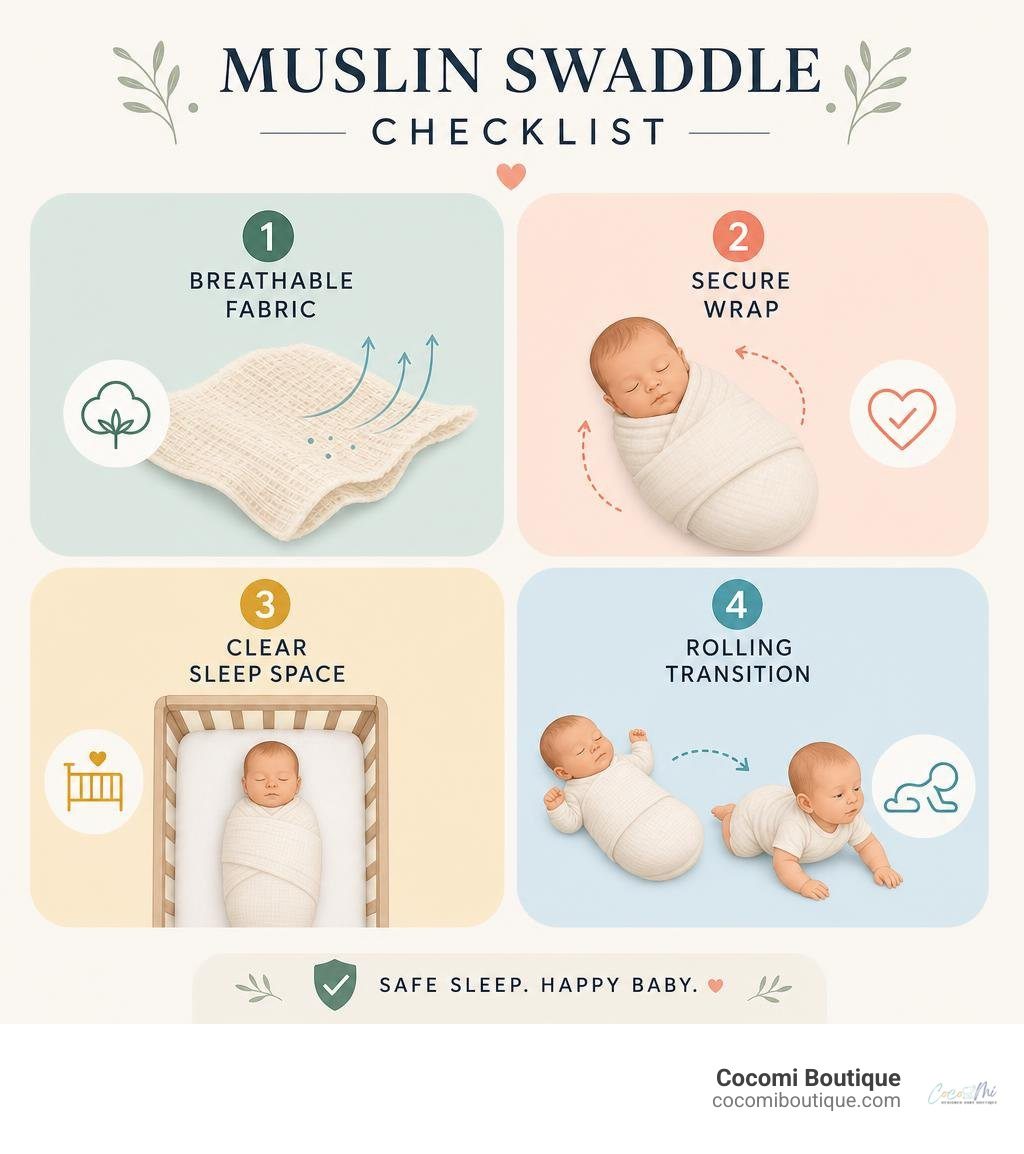
Easy swaddle blanket muslin glossary:
Receiving Blanket vs. Swaddle vs. Muslin Blanket: Key Differences
When preparing a nursery, new parents and gift-givers often find the terminology around baby linens confusing. You will encounter receiving blankets, traditional swaddle wraps, and muslin blankets. While they may look similar at first glance, each serves a distinct role in newborn care.
To understand their differences, consider fabric construction, cut, and elasticity. All muslin blankets can technically function as receiving blankets, but not all receiving blankets are crafted from muslin.
A traditional receiving blanket is typically made from a plain woven flannel or cotton blend. Many of us recognize the iconic pink-and-blue striped flannel blankets provided in hospital maternity wards. These blankets are generally smaller, measuring around 30 by 30 inches, and are designed to warm baby immediately after birth, clean up spit-up, or provide a protective surface. However, their compact size and denser fabric can make swaddling a rapidly growing baby difficult.
In contrast, a high-quality muslin blanket features an open-weave structure and generous proportions—often 47 by 47 inches. This larger square shape gives parents the fabric allowance needed to create a snug wrap around the shoulders while leaving ample space for the hips and legs to rest naturally.
Wearable swaddles and sleep sacks represent an alternative category altogether. These are pre-shaped garments featuring built-in fasteners, snaps, or two-way zippers. They are designed to prevent loose cloth from shifting during sleep, offering an easy option for caregivers who find traditional folding techniques challenging. To better understand how each style fits into your daily routine, explore our ultimate guide to swaddle blanket types.
| Feature | Traditional Receiving Blanket | Premium Muslin Swaddle Blanket | Wearable Swaddle / Sleep Sack |
|---|---|---|---|
| Primary Fabric | Brushed cotton flannel or knit | Lightweight open-weave natural cotton | Cotton knit, bamboo, or microfleece |
| Typical Dimensions | Compact (approx. 30" x 30") | Generous square (approx. 47" x 47") | Sized infant garment (0–3M, 3–6M) |
| Breathability | Moderate | High (exceptional airflow) | Moderate to high (depends on TOG rating) |
| Swaddling Ease | Can be restrictive as baby grows | Flexible fabric allows custom wrapping | Effortless zip or hook-and-loop closure |
| Multi-Use Utility | Burp cloth, light padding | Nursing cover, stroller layer, play mat | Sleep space use only |
Multi-Functional Everyday Uses for Muslin Blankets
One of the greatest advantages of natural cotton muslin is its versatility beyond bedtime. Because muslin is soft, absorbent, and quick to dry, parents can repurpose a clean blanket across countless daily scenarios:
- Elegant Nursing Cover: Draping a breathable muslin square over your shoulder provides shade and privacy during feedings while maintaining fresh airflow for your baby.
- Absorbent Burp Cloth: Fold the blanket several times over your shoulder to protect clothing against unexpected spit-ups during post-feeding burping sessions.
- Stroller Sunshade: When out for a stroll, drape the lightweight blanket across the canopy opening to shield delicate eyes from gentle breezes and direct glare without trapping stagnant heat.
- Tummy Time Play Mat: Lay the clean fabric over your living room rug or lawn to create a hygienic, chemical-free barrier for daily tummy time exercises.
- Portable Changing Pad Liner: Place a folded blanket across public changing stations or portable mats for a soft, skin-friendly surface during on-the-go diaper changes.
Why Choose a Swaddle Blanket Muslin Fabric for Newborn Sleep
During the fourth trimester, newborns are adjusting to life outside the womb. In the womb, babies are accustomed to a secure, enclosed environment. The open world introduces sensory stimuli that can trigger the Moro reflex—an involuntary response where infants suddenly extend their arms and legs, often waking themselves from deep sleep.
Swaddling recreates that familiar sensation of maternal security. However, newborn thermal regulation requires careful attention. Babies cannot regulate their core body temperature as effectively as adults, making overheating a key risk factor in infant sleep environments.
This is where the natural properties of an open cotton weave excel. The grid-like structure of muslin allows excess body heat and moisture to disperse effortlessly, supporting a comfortable resting temperature throughout the night. If you want to learn more about how different textiles perform in the nursery, read our guide on the best material for swaddle blanket options.

Choosing the Best Swaddle Blanket Muslin Weave for Sensitive Skin
A newborn's skin barrier is significantly thinner and more delicate than adult skin, leaving it vulnerable to synthetic dyes, chemical sizing agents, and rough textures. Selecting swaddles crafted from certified, untreated fibers protects your baby from preventable contact irritations and eczema flare-ups.
At CocoMi Baby Boutique, we craft our baby essentials from 100% natural, chemical-free textiles that comply with strict European safety criteria, including OEKO-TEX Standard 100 certification. This guarantees that every thread, dye, and finished hem is thoroughly tested and verified free from harmful substances, heavy metals, and irritating processing agents.
For families seeking eco-conscious craftsmanship and heirloom beauty, browse our eco friendly comfort explore our organic muslin swaddle collection alongside our curated selection of luxury baby swaddle blankets. These refined collections combine everyday durability with an ultra-soft hand feel that grows softer with every wash.
Essential Safe Sleep Practices and Swaddling Guidelines
Safe sleep practices are essential whenever you prepare your infant for rest. The American Academy of Pediatrics (AAP) provides clear guidance designed to protect infants from sleep-related hazards and Sudden Infant Death Syndrome (SIDS):
- Back to Sleep: Always place your infant flat on their back for every sleep period—both nighttime rest and daytime naps. Never place a swaddled infant on their side or stomach.
- Clear Sleep Surfaces: Keep the crib, bassinet, or Moses basket completely free of loose items. Do not place pillows, quilts, stuffed animals, or unbound loose blankets in the sleep environment.
- Firm Foundation: Ensure your mattress is firm, flat, and fitted with a tight, properly sized crib sheet.
- Appropriate Room Climate: Maintain a nursery room temperature between 68°F and 72°F (20°C to 22°C) and dress baby in light layers beneath their swaddle to prevent overheating.
Another critical consideration during early infancy is hip joint health. In the first months of life, the hip socket consists of soft cartilage. Swaddling legs tightly together in an extended, rigid position significantly increases the risk of developmental hip dysplasia or joint dislocation. A hip-healthy swaddle should always allow baby's legs to naturally bend upward and outward in a gentle "frog-leg" position, providing ample space inside the blanket pouch for active kicking and joint mobility.
How to Safely Wrap Baby in a Swaddle Blanket Muslin Style
Mastering a secure, hip-healthy swaddle wrap with a flat muslin square takes just a few simple steps. Follow this safe wrapping routine:
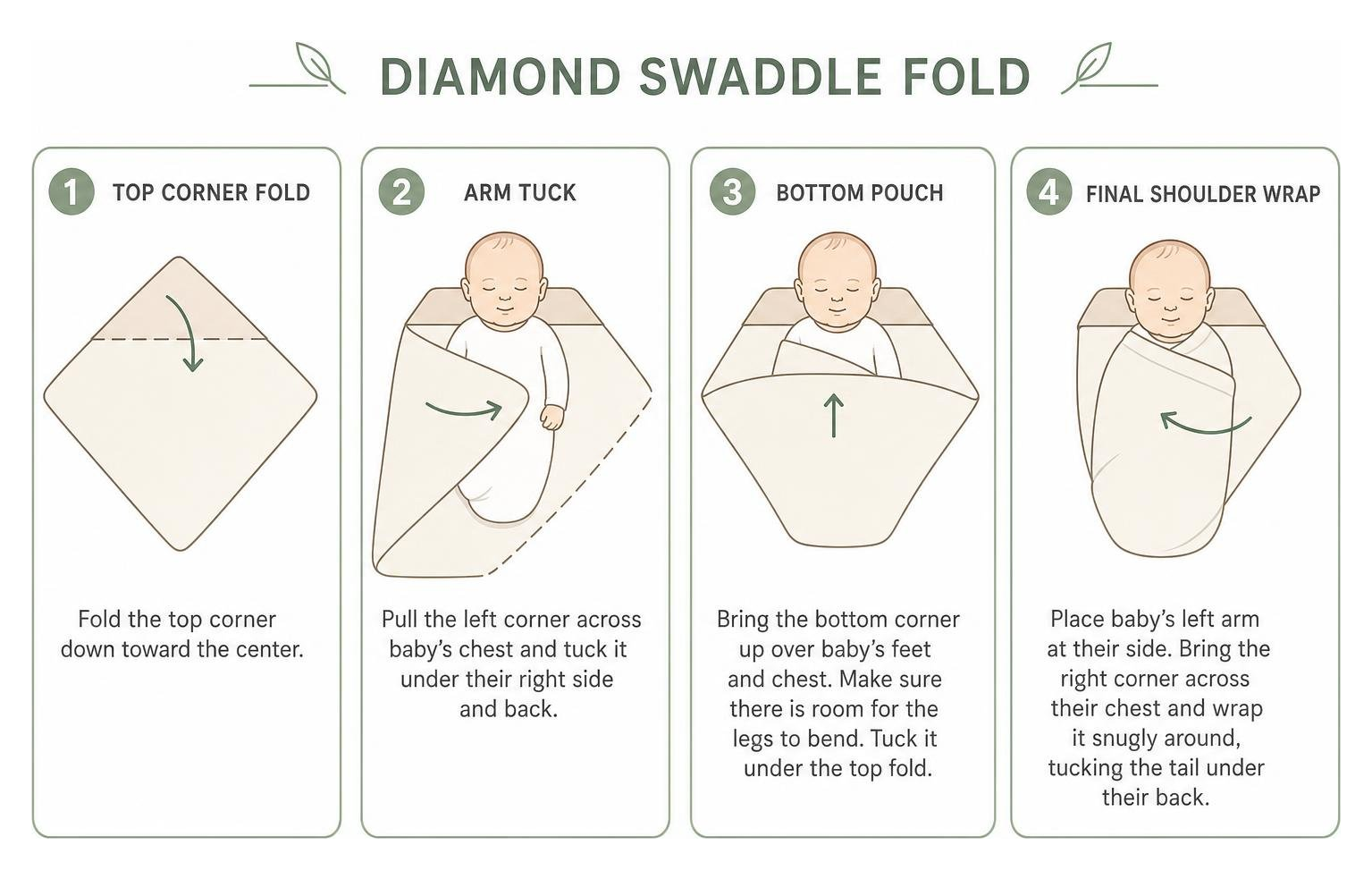
- The Diamond Setup: Lay your square muslin blanket flat on a safe, clean surface in a diamond orientation. Fold the top corner down about 6 inches toward the center.
- Positioning Baby: Gently place your baby on their back so their neck rests along the top folded edge, keeping the fabric away from their chin and mouth.
- First Arm Wrap: Place baby's right arm straight or slightly bent at their side. Pull the left corner of the blanket securely across their chest, tucking the edge under their left side and back.
- The Roomy Bottom Pocket: Gather the bottom corner of the diamond and bring it up over baby's feet and chest. Ensure there is plenty of loose room around the hips and knees so the legs can bend freely. Tuck this corner securely under the top fold.
- Final Secure Fold: Place baby's left arm at their side, bring the right corner across their chest, and wrap the remaining fabric snugly around their torso, securing the tail underneath their back.
To master this technique with detailed visual advice, check out our practical tutorials on mastering the muslin swaddle how to wrap your baby for sweet dreams and our muslin swaddle blanket ultimate guide.
When to Stop Swaddling and Transition Away
While swaddling is wonderful for soothing newborns, it is a temporary stage. You should discontinue traditional chest swaddling as soon as your baby shows any signs of attempting to roll over.
This developmental milestone commonly occurs between 2 and 4 months of age, though some active babies may attempt to roll onto their side much sooner. Once an infant can roll, having their arms bound creates a serious safety hazard, as they cannot use their hands to adjust their head or push away from the mattress surface.
When you notice your baby wiggling vigorously, kicking their way out of wraps, or rolling onto their shoulders, transition to an arms-free wearable sleep sack. This provides cozy warmth and comfort without restricting their arms.
How Many Muslin Swaddles Do You Really Need?
When setting up your nursery registry or packing your hospital bag, it is easy to wonder how many swaddle wraps you will realistically use. Between frequent feeding spit-ups, unexpected diaper leaks, and regular daily laundering, having a dependable rotation is essential.
For home nursery care, most experienced parents find that keeping 4 to 8 go-to swaddles provides a manageable routine. This quantity ensures you always have clean blankets ready while others are in the laundry or resting in the diaper bag.
If you are packing your hospital bag for delivery, plan to include 2 to 3 muslin blankets. While hospitals supply standard utility linens, having your own soft, pre-washed, chemical-free blankets allows you to wrap your baby in gentle comfort for first photos and the ride home.
If you are curating an intentional nursery palette or shopping for an expecting friend, explore our timeless gender neutral baby swaddles designed to complement any refined nursery aesthetic.
Frequently Asked Questions About Muslin Swaddles
What is the main difference between a receiving blanket and a muslin blanket?
The main distinction lies in the fabric weave, weight, and cut. Standard receiving blankets are usually made from brushed cotton flannel or simple cotton weaves and measure roughly 30 by 30 inches. Muslin blankets use a lightweight, breathable open weave and are typically cut in larger 47 by 47-inch squares. This generous size and flexible weave make muslin blankets far more adaptable for secure swaddling, nursing covers, and on-the-go shading.
Can swaddling too tightly cause hip dysplasia in newborns?
Yes. Wrapping an infant's legs too tightly in a straight, extended position forces the femoral head out of its natural resting position in the hip socket. To support healthy hip development, swaddles should remain comfortably snug around the shoulders and chest to calm the startle reflex, while leaving the bottom portion loose enough for baby's hips and knees to flex freely.
At what age should a baby stop being swaddled?
Most infants transition away from swaddling between 2 and 4 months of age. However, the true indicator is developmental readiness rather than age alone. As soon as your baby begins showing signs of rolling onto their side or stomach, breaking their arms out of the wrap, or actively squirming during sleep, you should immediately transition them to an arms-out sleep sack.
Conclusion
Choosing the right essentials for your newborn sets the foundation for peaceful rest and everyday peace of mind. A premium muslin wrap provides a soothing, womb-like embrace that helps calm the startle reflex while its breathable open weave supports safe thermal regulation.
At CocoMi Baby Boutique, we believe new families deserve baby essentials crafted with care, uncompromising safety, and enduring elegance. Founded by parents who experienced the search for truly chemical-free baby goods firsthand, our boutique collection is handcrafted from natural, OEKO-TEX certified materials that protect delicate newborn skin. Whether you are welcoming your own little one or selecting a timeless gift, explore our complete nursery and baby care guides to discover our handcrafted Moses baskets, cozy baby nests, and artisanal muslin swaddles.